Table of Contents:
- Beyond Aesthetics: The Strategic Imperatives of Frosted Window Film for Project Managers
- Specifying for Performance: Navigating 3M Frosted & Decorative Film Options
- Frosted Film vs. Etched Glass: A Project Manager’s Strategic Comparison
- Mastering Multi-Site Execution: The Logistical Advantage of a National Frosted Film Installer
- Illustrative Scenarios: Strategic Film Applications in Diverse Commercial Settings
- Conclusion: Embracing Frosted Film as a Strategic Project Management Tool
- Frequently Asked Questions
- Related Posts from Window Film Depot
Frosted Window Film: From Cubicles to Collaborative Spaces
The paradigm of commercial office design has undergone a significant transformation, moving decisively from segmented cubicle farms towards dynamic, open-plan collaborative environments. This shift, driven by a desire to foster innovation, communication, and a sense of community, has fundamentally altered the demands placed on architectural finishes.
While open layouts promote synergy and natural light distribution, they inherently introduce new challenges regarding visual privacy and acoustic control, particularly for large-scale projects encompassing hundreds or thousands of square feet. By reading this article on frosted window films, project managers will be able to make core commercial project decisions.
Identifying the Core Challenges: Visual Clutter, Distractions, and Lack of Privacy
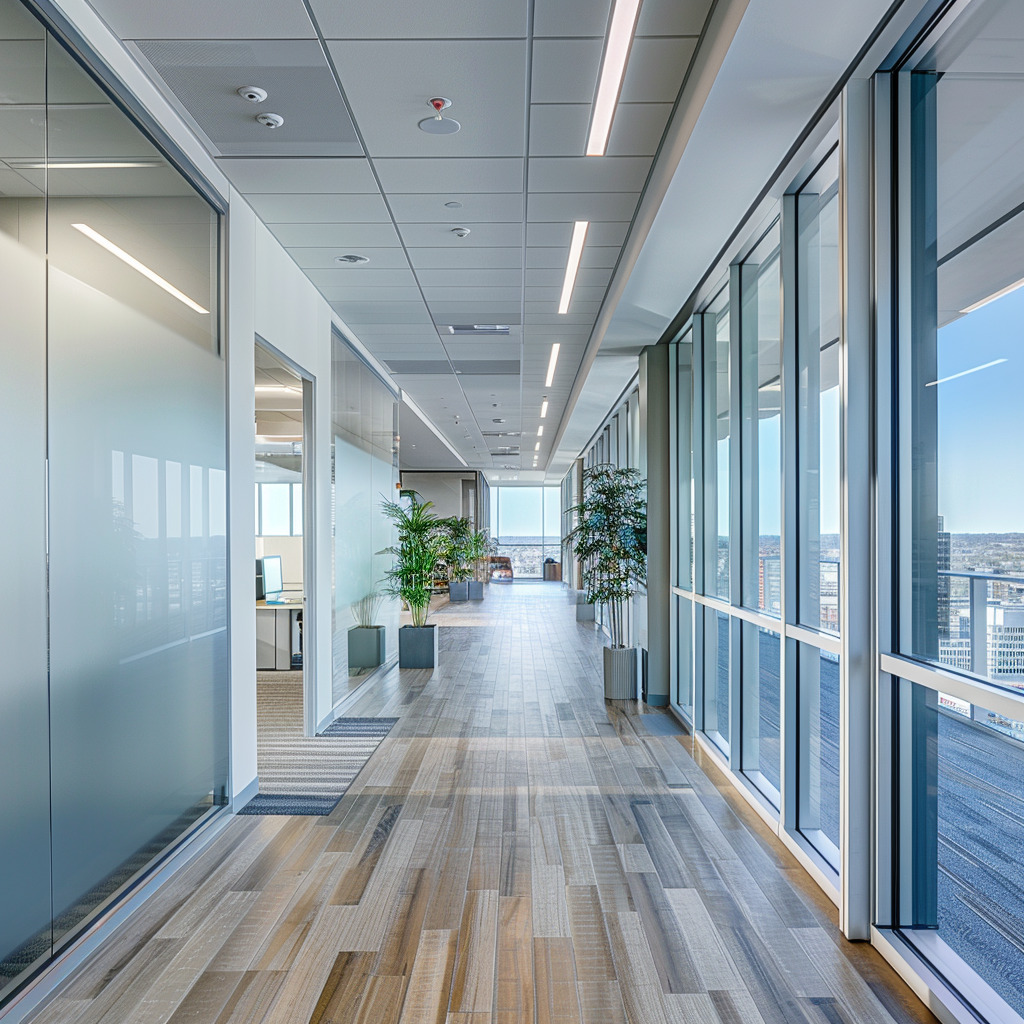
In these expansive, open environments, project managers frequently grapple with a delicate balance. Unmanaged glass partitions, while aesthetically modern, can lead to pervasive visual clutter and constant distractions, impeding concentration and productivity. The absence of clearly defined private zones hinders confidential discussions, focused work, and the psychological comfort critical for employee well-being. This lack of strategic visual division can inadvertently undermine the very collaboration and efficiency goals that open-plan designs aim to achieve.
The Project Manager’s Role in Optimizing Functionality and Design
For the project manager, navigating this modern office dilemma involves more than merely selecting finishes. Optimizing functionality and design requires a strategic approach aligning aesthetic goals with operational and budget constraints. Solutions must adapt to evolving spatial needs while maintaining consistent quality across diverse project sites. High-performance frosted film demonstrates value by bridging the gap between design, practicality, and project delivery. It effectively mitigates logistical complexities often associated with managing multiple specialized contractors.
Beyond Aesthetics: The Strategic Imperatives of Frosted Window Film for Project Managers
Elevating Design: Enhancing Brand Identity and Interior Architecture with Decorative Films
High-performance frosted film transcends privacy, emerging as a potent tool for elevating design narratives and reinforcing brand identity. Unlike traditional etched glass, architectural films offer unparalleled design flexibility without permanent surface alteration. They enable integration of custom logos, intricate patterns, and gradients directly onto existing glass surfaces. Managers achieve bespoke aesthetics indistinguishable from etched glass at a fraction of the cost. The technology offers significantly faster lead times for both design iterations and final installation. Such adaptability ensures design consistency across multiple buildings or large commercial development phases.
Cultivating Privacy: Controlled Visibility Without Sacrificing Natural Light
Frosted window film privacy technology obscures views without compromising the ingress of natural light. This is a critical advantage over opaque barriers, which often necessitate artificial lighting and create enclosure. Frosted films maintain a bright, open feel while effectively screening visual distractions and ensuring discretion. This controlled visibility is paramount for fostering productive work environments and maintaining client confidentiality.
Optimizing Functionality: Defining Spaces with Adaptable Architectural Finishes
One of the most compelling strategic imperatives for project managers is the inherent adaptability of frosted window tint for house windows. It provides an efficient and non-permanent method for defining and redefining spaces within a commercial interior. As tenant needs evolve, film can be easily removed and replaced for swift, low-cost space reconfigurations. This flexibility avoids the expense, disruption, and waste associated with demolishing and rebuilding permanent glass partitions. The speed of installation and removal minimizes downtime and offers exceptional long-term flexibility for space utilization.
A single, nationally recognized installer ensures consistent application standards and streamlined project management across all your locations. This approach directly addresses concerns regarding subcontractor coordination and maintains strict quality control for the entire project.
Indirect Cost Efficiencies: Energy Savings and UV Protection Benefits
Beyond its direct contributions to design and privacy, specifying frosted window film often yields indirect cost efficiencies that impact a project’s long-term operational expenses. Many high-performance films are engineered with advanced UV inhibitors, blocking up to 99% of harmful ultraviolet rays. This protection significantly extends the lifespan of interior furnishings, flooring, and artwork by preventing premature fading and degradation. Furthermore, certain film types can contribute to improved energy efficiency by reducing solar heat gain, thus lessening the load on HVAC systems during warmer months. While not the primary driver for frosted film selection, these ancillary benefits contribute to a more sustainable and cost-effective building operation over its lifecycle, potentially aiding in LEED certification efforts and enhancing the asset’s overall value.
Specifying for Performance: Navigating 3M Frosted & Decorative Film Options
Understanding Film Categories: A Project Manager’s Guide to Material and Application
Selecting the appropriate film category is paramount to achieving desired performance and aesthetic outcomes for large-scale projects. Project managers must move beyond generic “frosted” labels to appreciate specialized material compositions and application methods. These films are engineered for specific environmental conditions and functional requirements across diverse commercial settings. They can enhance privacy in high-traffic corridors or diffuse harsh sunlight in open-plan offices.
Their intended use and material properties typically categorize high-performance films. For instance, some films prioritize light transmission and diffusion, while others offer greater opacity for privacy. Material considerations include adhesive type for long-term durability, scratch resistance for high-traffic areas, and UV stability to prevent discoloration over time. Understanding these distinctions ensures the specified film aligns precisely with project goals, avoiding costly reworks or premature degradation.
The Versatility of 3M Fasara Glass Finishes: Aesthetic Freedom and Functionality
3M Fasara Glass Finishes replicate the appearance of etched, cut, sandblasted, or textured glass with sophisticated detail. Their versatility allows for complex aesthetic designs without the high cost of traditional glass treatments. These films offer an extensive palette of patterns, ranging from delicate gradients to bold geometric designs. Fasara finishes enable seamless integration with diverse interior design schemes while maintaining functional performance for the space.
Beyond their aesthetic appeal, Fasara films deliver critical functional benefits:
- Privacy Enhancement: They obscure direct visibility while still allowing ample natural light to penetrate.
- Light Diffusion: They soften harsh daylight, reducing glare and improving visual comfort within interiors.
- Branding Opportunities: Custom patterns and logos can be cut or printed, transforming ordinary glass into branded elements.
- Damage Mitigation: In the event of glass breakage, the film can help hold shattered pieces together, reducing immediate hazards.
This broad utility makes Fasara an invaluable tool for creating dynamic spaces, from executive suites and retail storefronts to healthcare facilities and educational institutions.
Precision and Privacy with 3M Dusted Crystal Film: Classic Solutions for Modern Demands
For applications demanding reliable privacy with a clean, classic aesthetic, 3M Dusted Crystal Film remains an industry benchmark. This film category excels in creating a uniform, sandblasted or etched glass effect, providing a dignified level of obscurity without completely blocking light. It is particularly well-suited for environments where visual separation is required, such as conference room walls, office partitions, or client-facing areas.
The precision of Dusted Crystal film allows for crisp, clean-cut applications, making it ideal for incorporating corporate logos, architectural lines, or subtle wayfinding elements. Its consistent texture and light diffusion properties maintain a bright, open feel while effectively segmenting space. This film’s robust construction ensures longevity and ease of maintenance, providing a durable and aesthetically pleasing solution that addresses both privacy concerns and modern design sensibilities.
Customization Opportunities: Incorporating Brand Elements and Wayfinding
Frosted window films offer unparalleled customization capabilities, transforming glass surfaces from transparent barriers into strategic communication and design assets. Unlike the inherent limitations of etched glass, film provides a dynamic canvas for incorporating a wide array of visual elements.
- Brand Integration: Corporate logos, brand guidelines, and unique patterns can be precisely cut from opaque films or digitally printed onto clear or translucent films. This reinforces brand identity consistently across an entire facility or portfolio of properties.
- Wayfinding Solutions: Film can be used to create clear, visually appealing directional signage on glass doors, panels, and partitions. This aids visitor navigation, reduces confusion, and maintains a professional aesthetic throughout the building.
- Architectural Accents: Custom film designs can mimic high-end architectural features, adding texture, color, or visual interest to plain glass surfaces, contributing significantly to the overall interior design.
This level of customization empowers project managers to deliver tailored solutions that meet specific client requirements for both functionality and aesthetic expression, often at a fraction of the cost of traditional methods.
Frosted Window Film vs. Etched Glass: A Project Manager’s Strategic Comparison
For renovation managers navigating complex commercial projects, the choice between frosted film and etched glass is not merely aesthetic; it is a critical strategic decision impacting budget, timeline, and long-term facility management. A thorough comparison reveals significant advantages for high-performance frosted window film.
Initial Investment and Long-Term Value: Cost-Benefit Analysis
The initial investment for professionally installed frosted window film is consistently lower than for equivalent etched or sandblasted glass. Fabricating and installing custom architectural glass panels involves high material costs, specialized handling, and often requires structural modifications to accommodate weight. In contrast, film is a lightweight, material-efficient solution.
From a long-term value perspective, film provides superior flexibility and cost-effectiveness:
- Lower Material Costs: Film is substantially less expensive per square foot than custom-etched glass.
- Reduced Labor Expenses: Installation is less labor-intensive and quicker, contributing to lower overall project costs.
- Maintenance Savings: Film is easy to clean and, in case of damage or a desire for a new design, individual panels can be replaced without the need to replace entire glass units, significantly reducing maintenance and update expenditures over the asset’s lifecycle. These factors contribute directly to optimizing project budgets and realizing greater return on investment.
Installation Timelines and Project Impact: Speed, Efficiency, and Minimal Disruption
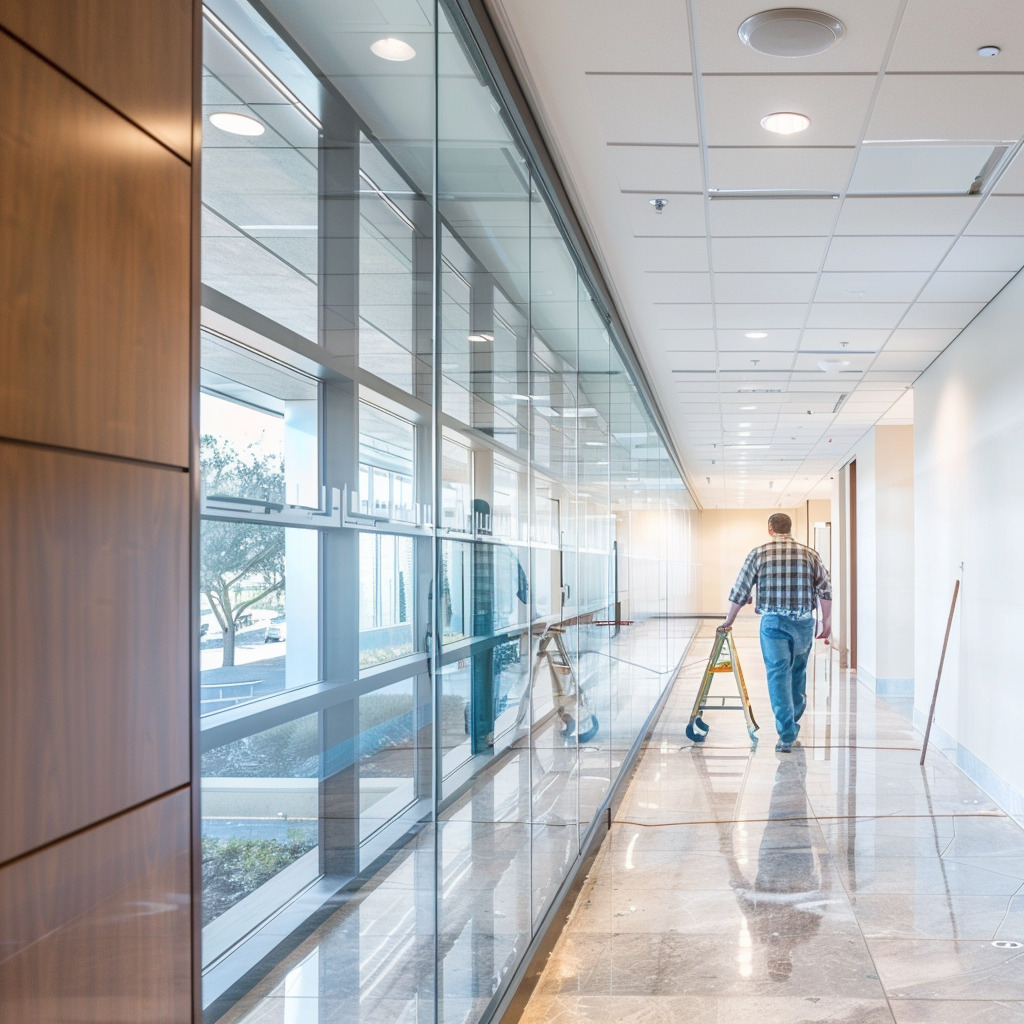
One of the most compelling advantages of frosted window film for large-scale commercial projects is its rapid installation timeline and minimal site disruption. Traditional etched glass requires extensive lead times for custom fabrication, followed by precise, often disruptive, installation that can involve heavy lifting equipment and prolonged work periods. Breakage during transport or installation can halt progress, incurring significant delays and additional costs.
Film installation, on the other hand, is a relatively clean and quiet process:
- Expedited Schedule: Film can be cut and prepared off-site, then applied quickly and efficiently on-site, often completing large areas in a single day.
- Reduced Disruption: No heavy machinery, minimal dust, and less noise mean business operations can continue with little interruption, a critical factor for active commercial environments.
- Simplified Logistics: Partnering with a single, national installation expert streamlines subcontractor management. This centralizes communication, ensures consistent quality across multiple locations or phases, and guarantees adherence to tight project schedules, directly addressing project manager pain points related to subcontractor coordination and quality control.
This efficiency translates directly into faster project completion, reduced labor costs, and a smoother overall project flow.
Design Adaptability and Future Modifications: Flexibility for Evolving Needs
Commercial environments are dynamic, with tenant turnovers, branding updates, and evolving design trends necessitating frequent changes. Here, frosted window film offers unmatched design adaptability and ease of modification compared to permanent etched glass.
- Easy Removal and Replacement: Film can be cleanly removed from glass surfaces without damage, allowing for swift updates to designs, branding, or privacy levels. This is invaluable during tenant fit-outs or corporate rebranding initiatives.
- Cost-Effective Changes: Modifying a film design is significantly less expensive and time-consuming than replacing an entire etched glass panel, which is often the only option for change with traditional methods.
- Trial and Error: New designs or privacy levels can be prototyped with film at a low cost, allowing for iterative adjustments before final implementation across an entire facility.
This inherent flexibility protects the project’s long-term value, allowing spaces to evolve without major financial or logistical hurdles.
Durability, Maintenance, and Replacement Considerations
High-quality frosted window films are engineered for durability, offering a robust solution that performs reliably in commercial settings. When properly installed, these films are highly resistant to scratches and everyday wear, maintaining their aesthetic integrity over many years.
- Simple Maintenance: Routine cleaning involves standard glass cleaning methods, with no special procedures required.
- Targeted Replacement: In the rare event of damage, such as a scratch or tear, only the affected film panel needs to be replaced, not the entire glass unit. This contrasts sharply with etched glass, where a single damaged panel often necessitates the costly replacement of the entire glass fixture.
- UV Protection: Many commercial-grade films also offer UV protection, safeguarding interiors from sun damage and reducing fading of furnishings, which adds another layer of long-term value and maintenance mitigation.
These attributes contribute to a lower total cost of ownership and simplified facility management over the lifespan of the property.
The Logistical Advantage of a National Frosted Window Film Installer
For renovation managers navigating complex, large-scale projects, the logistical intricacies often present the greatest hurdles. While the aesthetic and performance benefits of frosted window film are clear, its true strategic advantage emerges when considering its application across multiple sites or extensive single locations. Partnering with a national frosted film installer transforms a fragmented process into a streamlined operation.
Addressing Project Manager Paul’s Pain Points: The Challenge of Subcontractor Management
The core challenge for project managers like Paul often lies in vetting, onboarding, and coordinating a diverse array of local subcontractors. Each new vendor introduces a unique set of contracts, invoicing procedures, communication styles, and quality standards, exponentially increasing the administrative burden and potential for miscommunication. A single, national installer significantly reduces this complexity. It consolidates multiple vendor relationships into one, simplifying procurement, scheduling, and oversight across all project phases and locations.
Ensuring Consistent Quality Across Diverse Project Scales and Geographies
Maintaining a uniform quality standard across different sites, especially those spread geographically, is paramount for brand consistency and functional performance. Local installers may vary in their expertise, equipment, and material sourcing, leading to inconsistencies in application, finish, and durability. A national partner, by contrast, operates under centralized training programs, standardized installation protocols, and consistent material specifications. This ensures that whether film is applied in a New York high-rise or a California retail outlet, the finished product adheres to the same high-quality benchmarks and aesthetic expectations.
Need More Info?
The Window Film Depot team is happy to help.
Streamlining Procurement and Installation: A Single Point of Contact Solution
The logistical efficiency gained from a single point of contact cannot be overstated for large-scale projects. Instead of managing separate bids, contracts, and invoices for each location or phase, project managers interact with one dedicated account manager. This centralizes all aspects of the film installation process:
- Unified Bidding & Contracts: Eliminates the need for multiple RFPs and legal reviews.
- Centralized Scheduling: Simplifies coordination across multiple sites or large areas within a single facility.
- Consolidated Invoicing: Reduces administrative overhead and streamlines budget tracking.
- Consistent Material Sourcing: Guarantees uniform film types and quality.
This streamlined approach accelerates project timelines and minimizes the administrative workload, allowing the project manager to focus on broader strategic objectives.
Mitigating Risks: Compliance, Warranty, and Post-Installation Support with a Trusted Partner
Risk management is an inherent part of project oversight. Working with a national frosted film installer provides substantial advantages in this area. These organizations typically carry robust insurance coverage, ensuring protection against unforeseen issues, and are well-versed in national building codes and safety regulations. Furthermore, they offer consolidated product and installation warranties, providing a clear and unified channel for any post-installation support or maintenance needs. This single-source accountability dramatically reduces potential liabilities and simplifies problem resolution for the project manager.
Illustrative Scenarios: Strategic Film Applications in Diverse Commercial Settings
The versatility of professionally installed frosted window film extends its strategic application across an extensive range of commercial environments. Its ability to balance aesthetic appeal with practical functionality makes it an invaluable tool for project managers in various sectors.
Enhancing Corporate Environments: Multi-Floor Office Renovations and Conference Room Privacy Solutions
In corporate settings, frosted film offers sophisticated privacy solutions without sacrificing natural light. For multi-floor office renovations, it provides a consistent, high-end look across all glass partitions and doors. This includes:
- Conference Rooms: Ensuring confidential discussions remain private.
- Executive Offices: Offering seclusion for focused work.
- Open-Plan Workspaces: Creating semi-private cubicles or defining collaborative zones.
- Branding Elements: Incorporating company logos or architectural patterns directly into the film design. Such applications enhance employee comfort, optimize space utilization, and reinforce corporate identity.
Optimizing Retail Spaces: Branding, Customer Flow, and Visual Merchandising with Commercial Privacy Film
Retail environments leverage frosted film for both aesthetic enhancement and functional utility. On storefronts, custom-cut film can display branding, promotional messaging, or even seasonal designs, drawing customer attention. Internally, it can be used to:
- Create Privacy: For fitting rooms, stock areas, or cash wraps.
- Direct Traffic: Subtly guiding customers through the store layout.
- Enhance Displays: By obscuring less appealing views or providing a neutral backdrop for merchandise. These applications contribute to an optimized shopping experience and reinforce brand presence.
Creating Functional Educational Hubs: Privacy and Light Control in Modern Learning Spaces
Modern educational facilities demand flexible, adaptable spaces that support various learning modalities. Frosted window film is a strategic asset in designing these environments. It can provide essential privacy for:
- Classrooms and Lecture Halls: Offering visual separation without feeling isolated.
- Laboratories: Protecting sensitive equipment or experiments from view.
- Administrative Offices: Ensuring confidentiality for staff. It also effectively manages glare on interactive whiteboards and computer screens, improving visibility and concentration for students and instructors alike.
Healthcare Facilities and Hospitality: Balancing Patient Privacy with Aesthetic Appeal
In sensitive sectors like healthcare and hospitality, the need for privacy is paramount, yet must be balanced with creating a welcoming and aesthetic environment. Frosted film is ideal for:
- Healthcare Facilities: Ensuring patient confidentiality in examination rooms, recovery areas, and consultation offices, adhering to HIPAA requirements, while still allowing light.
- Hospitality Venues: Creating intimate dining areas in restaurants, private alcoves in lounges, or offering subtle privacy for guest room windows without blocking views entirely. Its durable nature and ease of cleaning also make it a hygienic and practical choice for these demanding environments.
Conclusion: Embracing Frosted Window Film as a Strategic Tool
Reaffirming the Core Argument: Superiority in Design, Speed, and Cost for Large-Scale Projects
Throughout this discussion, the strategic advantages of high-performance frosted window film for large-scale commercial projects have become clear.
Frosted film is a superior alternative to traditional etched glass treatments for architectural applications. It offers unparalleled design flexibility, significantly faster installation cycles, and compelling cost-efficiency.
For renovation managers, this translates into expedited timelines and strict adherence to budget constraints. It allows the seamless realization of complex design visions without compromising quality or functionality.

Custom designs, branding, and privacy solutions can be implemented rapidly and reversibly for project agility. This versatility allows projects to adapt to evolving requirements with significant speed. Frosted film costs significantly less in materials and labor than bespoke etched glass panels. It is a cornerstone technology for modern commercial fit-outs and renovations. Strategic application mitigates risks associated with delicate materials and extended construction phases. This ensures a smoother execution from concept to completion for project managers.
Key Takeaways for the Discerning Project Manager
For project managers navigating the complexities of large-scale commercial undertakings, integrating frosted window film into your specifications offers several critical advantages that directly impact project success. Consider these core benefits when planning your next endeavor:
- Optimized Project Timelines: Film installation is inherently quicker than glass fabrication and replacement, drastically reducing on-site labor hours and minimizing disruption to ongoing operations. This speed facilitates earlier project completion and occupancy.
- Significant Cost Efficiencies: Beyond the initial material cost savings, film reduces labor expenses, avoids the logistical challenges and costs of transporting heavy glass panels, and offers a more budget-friendly option for future design modifications.
- Unparalleled Design Versatility: Frosted film allows for intricate patterns, gradients, and branding elements to be applied with precision, providing a broader canvas for architectural expression than static etched glass. It can be removed and updated easily, offering long-term adaptability.
- Enhanced Operational Flexibility: The non-destructive nature of film application means less construction waste and noise. This is particularly valuable in active commercial environments where maintaining business continuity is paramount.
- Simplified Logistics and Procurement: Specifying film, especially through a national installer, centralizes procurement and installation processes, reducing the number of subcontractors to manage and streamlining coordination efforts.
Partnering for Success: Selecting the Right National Installation Expert for Your Next Project
Addressing the persistent challenge of managing multiple subcontractors and ensuring consistent quality across diverse project sites, the selection of your installation partner becomes a critical strategic decision. For large-scale or multi-location commercial projects, engaging a single, national installation expert for frosted window film is not merely a convenience; it is a fundamental pillar of streamlined project management and quality assurance. This approach directly alleviates the burden of vetting, coordinating, and overseeing numerous local contractors, significantly reducing administrative overhead and mitigating potential inconsistencies in workmanship.
A reputable national installer offers a standardized process, from initial consultation and material selection to professional application and post-installation support. This consistency ensures that every window, across every facility, meets the same high standards for aesthetics, performance, and durability. Such a partner typically possesses:
- Consistent Quality and Expertise: A national provider maintains uniform training protocols and quality control measures across their teams, guaranteeing a predictable level of craftsmanship regardless of location.
- Streamlined Project Management: Consolidating the film installation scope under a single entity simplifies scheduling, communication, and invoicing, freeing up your project team to focus on other critical elements.
- Scalability and Reach: They have the resources and logistical networks to handle projects of any scale, from a single building to a portfolio of properties across different states, ensuring timely execution nationwide.
- Comprehensive Warranty and Support: A national partner typically offers robust warranties that cover both the film product and the installation, providing long-term peace of mind and simplified service requests.
By strategically partnering with a proven national installer, project managers can leverage their expertise to transform frosted window film from a mere architectural detail into a powerful tool for achieving superior project outcomes, marked by efficiency, consistency, and cost-effectiveness.
Frequently Asked Questions
How does the cost of frosted window film compare to traditional etched glass for a large-scale project?
Frosted window film is significantly more cost-effective than traditional etched or sandblasted glass. The initial investment is lower due to reduced material costs and less labor-intensive installation. Beyond the initial phase, film offers superior long-term value because it can be targeted for replacement if damaged, whereas etched glass often requires the replacement of the entire fixture. Additionally, film avoids the heavy machinery and structural modification costs sometimes associated with custom architectural glass.
Can frosted film be customized with corporate branding or specific architectural patterns?
Yes, high-performance films like 3M Fasara and 3M Dusted Crystal offer unparalleled customization. Unlike the permanent and static nature of etched glass, these films act as a dynamic canvas where logos, intricate geometric patterns, gradients, and wayfinding elements can be precisely cut or digitally printed. This allows project managers to reinforce brand identity consistently across a facility while maintaining the ability to update designs easily as brand guidelines evolve.
What is the impact of film installation on active office environments and project timelines?
Film installation is a clean, quiet, and rapid process that minimizes site disruption. Unlike etched glass, which requires extensive lead times for fabrication and disruptive on-site installation, film can often be applied to large areas in a single day. Because it requires no heavy machinery and produces minimal dust or noise, business operations can typically continue uninterrupted, which is critical for meeting tight project schedules and ensuring occupancy deadlines.
How does frosted film address the privacy vs. light balance in open-plan offices?
The primary functional advantage of frosted film is providing “controlled visibility”. It obscures direct views into sensitive areas like conference rooms or executive offices while still allowing up to 80-90% of natural light to penetrate. This eliminates the need for artificial lighting often required with traditional blinds or drapes and prevents the “enclosed” feeling of solid walls, maintaining a bright, synergetic atmosphere conducive to productivity.
Why should a project manager use a national installer instead of multiple local contractors?
Partnering with a single national installation expert is a strategic move to ensure quality and streamline logistics. It addresses the common “pain point” of managing diverse subcontractors by consolidating bidding, scheduling, and invoicing into a single point of contact. A national partner guarantees:
Consistent Quality: Centralized training and standardized protocols ensure the same finish in every location, regardless of geography.
Simplified Procurement: Reduces administrative overhead by eliminating multiple RFPs and legal reviews.
Unified Warranty: Provides a single-source accountability for both product and labor across all project phases.