Jump straight to the section that matters most-whether that’s privacy levels, common applications, cost, installation advice, FAQs, or how to get a quote.
Table of Contents:
- What Is a Frosted Glass Window (and Why It Matters Right Now)?
- How Frosted Glass Works: From Permanent Glass to Removable Films
- Common Applications for Frosted Glass Windows and Films
- Frosted Glass Window Film vs. Other Frosting Methods
- Key Benefits of Frosted Glass Windows and Films
- DIY Frosted Glass Projects vs. Professional Installation
- Planning a Frosted Glass Window Project: What to Decide Before You Buy
- FAQs About Frosted Glass Windows and Films
- Why Choose Our Team for Frosted Glass Windows and Films
- Next Steps: Plan Your Frosted Glass Window or Film Project
What Is a Frosted Glass Window (and Why It Matters Right Now)?
A frosted glass window is any window whose glass surface has been treated to scatter light and blur the view through it. Unlike clear glass, which lets people see straight through from one side to the other, frosted glass allows natural light to pass while obscuring visibility of shapes, faces, and details. The result is a bright room without the fishbowl effect.
The frosted look can be achieved in two fundamentally different ways. Traditional methods-sandblasting and acid etching-physically roughen the glass surface to create a permanent, pitted surface that diffuses light. Modern frosted glass window film, on the other hand, is a thin polyester or vinyl layer applied directly to existing glass, mimicking the same diffused appearance without any permanent alteration. Window film is a cost-effective alternative to replacing frosted glass entirely, and it can be installed in hours rather than weeks.
The core benefit is simple: you add privacy without blocking natural light or making a living space feel dark. Frosted windows are commonly used in bathrooms, entryways, and ground-floor windows-anywhere a person needs separation from outside eyes. Frosted glass creates an illusion of openness compared to solid walls or heavy curtains, which is exactly why it’s become the go-to for modern retrofits.
You don’t always need to replace glass. Frosted glass films and frosted film overlays can upgrade existing panes at a fraction of the cost and disruption.
What you’ll learn next:
- How frosted glass and films actually diffuse light
- Where frosted windows work best (bathrooms, offices, doors, storefronts)
- Cost comparisons between film and replacement glass
- DIY projects vs professional installation
- FAQs on durability, nighttime privacy, and removal
How Frosted Glass Works: From Permanent Glass to Removable Films
“Frosted glass” in 2026 covers both permanently etched glass panels and frosted glass window film-both scatter incoming light and blur visibility, but through different materials and methods. Frosted glass scatters incoming sunlight evenly across a room rather than letting it pass in sharp beams, which reduces hotspots and harsh shadows.
Permanent frosted glass is manufactured with a roughened glass surface, produced through sandblasting or acid etching at the factory level. This approach is typically specified in new construction or major remodels where replacing glass is already planned. The effect is embedded in the glass itself, making it extremely durable but impossible to reverse.
Frosted glass window film and frosted glass films offer the same visual diffusion as a removable or semi-permanent overlay. These films are manufactured in varying thicknesses and opacity levels. Various styles of frosted glass offer different levels of opacity and privacy, from “lite frost” films transmitting around 87–90% of visible light to heavy frost options dropping transmission to as low as 7%. Frosted glass techniques allow for various levels of opacity, so you can fine-tune how much you see (or don’t) from either side.
Films also deliver flexibility that permanent glass cannot: you can swap in custom designs, update corporate branding, or change patterns without touching the base glass.
Permanent frosted glass vs frosted glass window film:
- Cost: film typically runs $8–$22 per square foot installed; replacement decorative glass ranges $50–$200 per square foot
- Reversibility: film can be removed; etching and sandblasting are permanent
- Lead time: film ships and installs in days; custom glass may take weeks
- Disruption: film installation requires no demolition or framing work
Common Applications for Frosted Glass Windows and Films
Frosted glass and frosted film are used wherever people need to add privacy without sacrificing daylight. Here are the most common applications:
- Bathroom windows and shower doors: Frosted glass is ideal for bathroom windows and shower enclosures, keeping silhouettes indistinct while the room stays bright. Frosted glass is ideal for bathrooms, providing privacy and light. Since around 2020, walk-in showers with full glass panels and banded frosting have become a standard design choice.
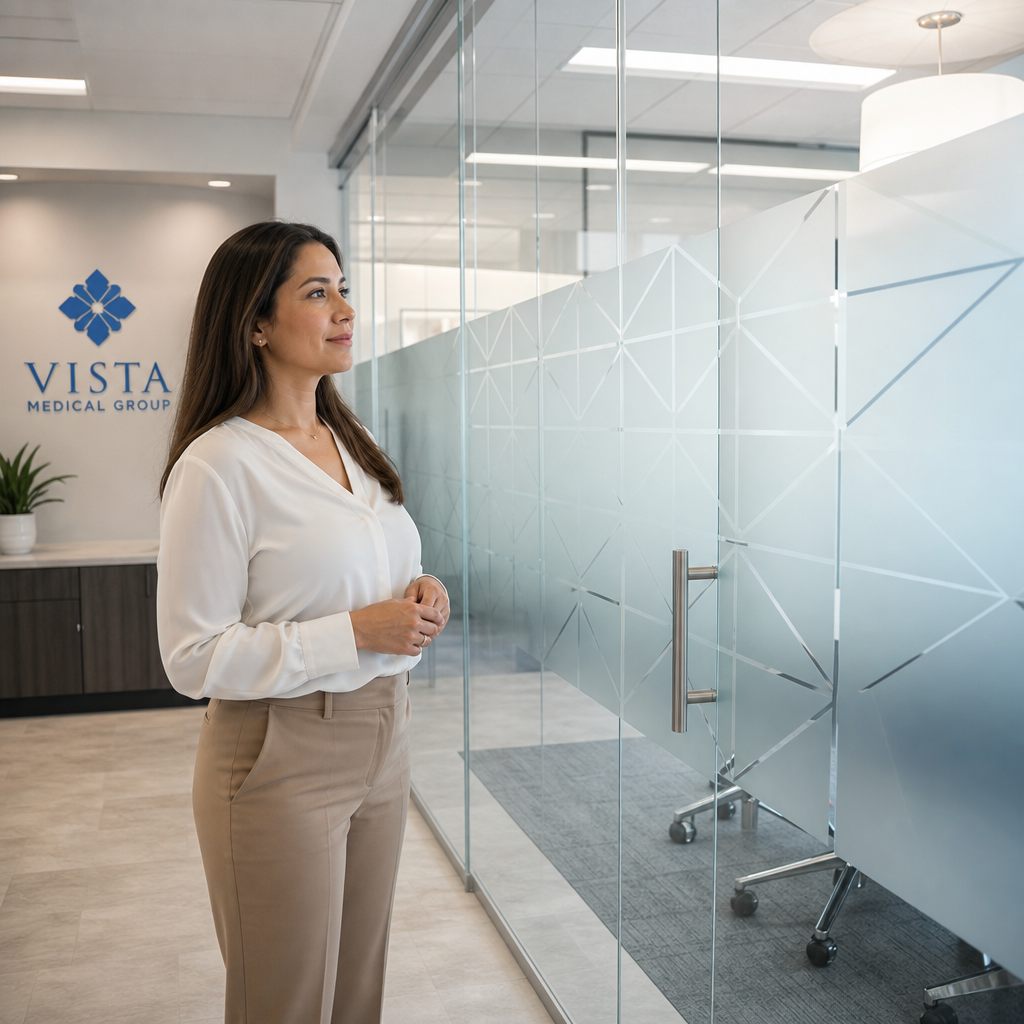
- Office glass partitions and conference rooms: Frosted glass can be used in glass office partitions to meet HR privacy standards and confidentiality requirements. Partial frosting-stripes or bands at seated eye level-maintains openness while giving employees visual relief from constant exposure.
- Front doors, sidelights, and entryway glass: Frosted glass enhances privacy in entryway windows, blocking direct street views while allowing morning and evening light into the home. This has been a popular choice in townhomes and urban main doors since about 2018.
- Interior glass doors and cabinet doors: Frosted glass is popular for decorative cabinet doors in kitchens and breakrooms, hiding clutter behind semi-opaque panels while showing subtle outlines. French doors and patio doors between living areas also benefit from light frost for separation without isolation.
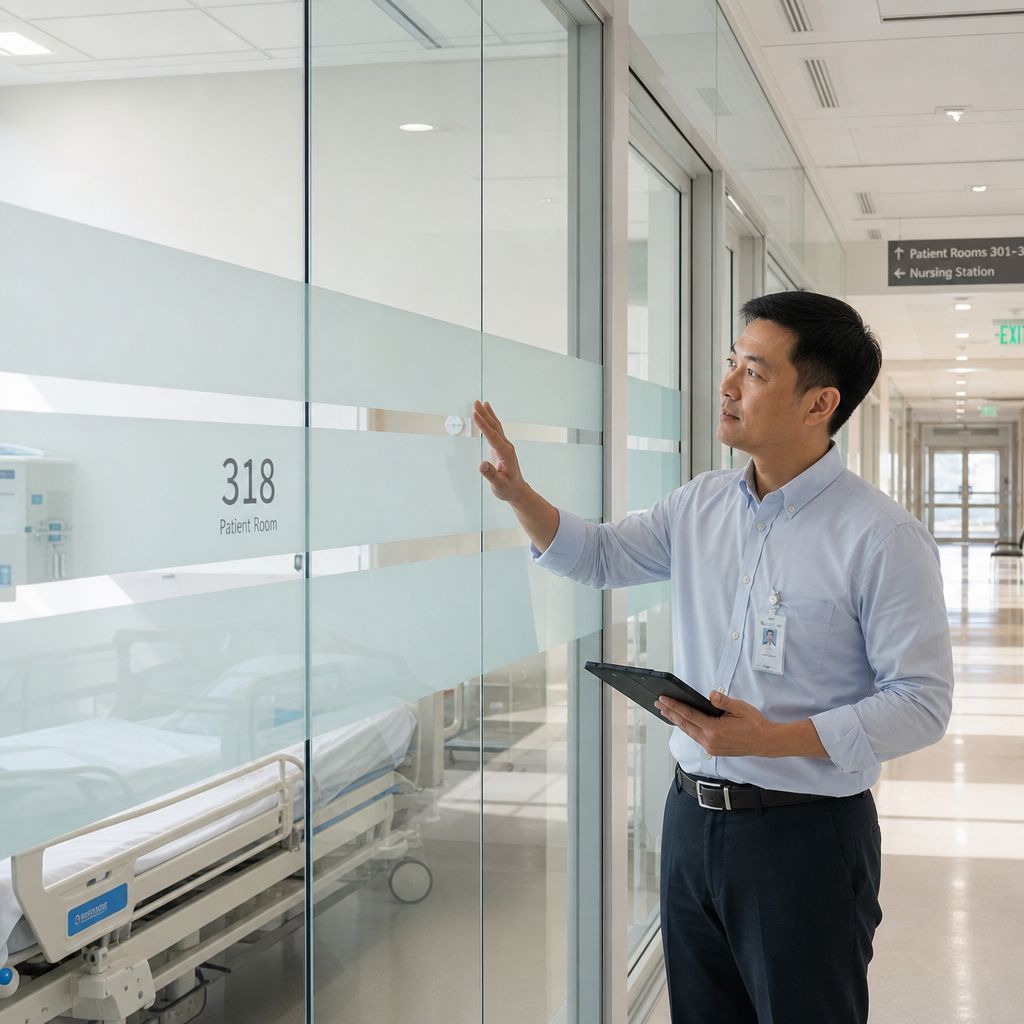
- Healthcare and education facilities: Patient rooms, counselor offices, and testing rooms in HIPAA-sensitive areas commonly use frosted glass windows or film to maintain privacy without creating closed-off, institutional corridors.
- Retail storefronts and fitting rooms: Frosted film creates separation between public and staff zones while still broadcasting a bright, open brand feel. Fitting rooms use frosted panels for modesty at minimal cost.
- Multi-family corridors and stairwells: Glazed areas with frosted glass are good for safety glazing and glare reduction, and manifestation bands help prevent accidental collisions with large glass surfaces.
Map these examples onto your own space-home, small office, school, or commercial building-and you’ll likely find two or three areas where frosted glass solves a problem you’ve been working around.
Frosted Glass Window Film vs Other Frosting Methods
There are four main ways to achieve a frosted look on windows and doors: replacing glass, applying frosted glass window film, using spray coatings, or using etching cream.
- Frosted replacement glass: A full glass swap using factory-etched or sandblasted panels. Higher material and labor cost, best reserved for permanent architectural features in new builds or high-end remodels where the glass is already being replaced.
- Frosted glass window film and frosted film: Applied to existing glass on-site, these films range from basic privacy frost to branded, custom designs with logos and geometric patterns. Frosted window film is a popular DIY option for privacy and a go-to for commercial projects alike.
- Frosted glass spray: Frosted glass spray paint offers a semi-permanent finish and provides a semi-permanent finish suitable for small residential jobs. Overspray and streaking are common risks, making it less reliable for commercial or code-regulated work. DIY frosted glass techniques include window film and spray paint.
- Etching cream: Etching cream creates a permanent frosted appearance on glass by chemically roughening the surface. It works well for small craft and hobby projects but isn’t practical for large windows or commercial applications.
Frosted film is usually the ideal choice for occupied offices, schools, retail roll-outs, and residential projects where downtime and demolition need to stay minimal. Professional-grade frosted glass films in 2026 often include UV rejection, scratch-resistant backing, and warranties stretching 10 or more years.
When to choose what:
- Tenant improvement or leased space → frosted window film (reversible, fast)
- Gut renovation or new construction → permanent frosted glass (durable, no maintenance)
- Quick weekend project on a single small window → spray or etching cream
- Nationwide roll-out across dozens of sites → commercial-grade frosted film with standardized specifications
Key Benefits of Frosted Glass Windows and Films
Frosted glass windows deliver a combination of privacy, comfort, and aesthetic appeal that plain clear glass cannot match on its own.
- Privacy without darkness: Frosted glass provides maximum privacy while allowing natural light into the room. Many films maintain 70%+ visible light transmission while blurring views within an inch or two of the glass surface. Frosted glass provides privacy without heavy curtains or blinds-while blinds and shades provide adjustable privacy and light control, frosted glass works passively around the clock with zero adjustment needed.
- Glare control: Frosted glass reduces glare and creates a comfortable atmosphere indoors, particularly in offices and classrooms facing east or west where direct sun hits screens.
- Aesthetic upgrade: Frosted glass delivers a modern aesthetic that fits contemporary architecture and provides a clean, minimalist appearance favored in modern interiors. Horizontal bands, gradients, and elegant geometric patterns have been trending since around 2022.
- Safety and code compliance: Decorative frosted bands on large glass partitions and glass doors make them visible, reducing accidental collisions-a requirement in many building codes.
- Low maintenance: Frosted glass requires little maintenance compared to traditional window treatments. Fingerprints and minor smudges are far less noticeable than on clear glass, especially on busy doors and cabinet doors.
- UV protection: Frosted glass can block harmful UV rays, protecting interiors from fading of furniture, flooring, and artwork. Many commercial films reject 99%+ of UV radiation.
- Security: Frosted glass enhances security by obscuring visibility from outside, making it harder for passersby to identify valuables or occupants.
- Custom designs: Logos, gradients, patterns, and branded graphics can be cut into frosted film to align with corporate identity or interior design schemes.
These benefits are most obvious in bathrooms, entryways, conference rooms, and reception areas-anywhere the balance between openness and discretion matters. Privacy films can sometimes be combined with security or solar films in layered systems depending on glass type and project requirements.
DIY Frosted Glass Projects vs Professional Installation
Frosted glass window film appears in countless DIY projects online, and for good reason-frosted window films are easy to install and remove on small, manageable surfaces. Typical DIY uses include small bathroom windows, interior sidelights, cabinet doors, and craft projects where homeowners buy pre-cut frosted glass films or rolls from home improvement stores.
That said, common DIY challenges add up fast on larger panes: trapped air bubbles, creases, miscuts, visible seams, dust particles under the film, and difficulty aligning patterns across multiple glass panels. On a single 24-inch cabinet door, these issues are minor inconveniences. On a 10-foot conference room wall, they’re dealbreakers.
Professional installation follows a different process: site survey, glass inspection (checking whether it’s tempered, laminated, or coated), precise measurement, film selection for the right opacity and style, and application using slip solutions and specialized squeegees. Professional installation ensures a perfect fit and finish every time. Frosted window film can be easily removed without residue when it’s time for a change, but only if the right film was selected for the glass type in the first place.
When to call a pro:
- Multi-story buildings, large curtain walls, or atriums
- Hospitals, schools, and code-regulated corridors
- Projects requiring dozens of windows to match in opacity and pattern
- Any situation where rework would mean significant downtime or cost
DIY saves on labor but risks rework and wasted materials. Professional installation adds labor cost but reduces waste, downtime, and aesthetic issues.
Planning a Frosted Glass Window Project: What to Decide Before You Buy
Clear decisions up front lead to better results and fewer change orders. Before contacting a film specialist, work through these points:
- Where privacy is needed most: Bathroom windows, ground-floor bedrooms, street-facing offices, or interior conference rooms with glass walls.
- How much privacy you need: Full opacity for maximum privacy, lite frost that allows faint shades of shapes to pass through, or banded designs that preserve some view lines on one side.
- Light direction and climate: South- and west-facing windows in sunny climates may benefit from combining frost with solar control film for heat and UV reduction, avoiding fading of interior materials.
- Glass type and condition: Frosted glass can be applied to double-pane windows, but some films are not recommended for certain coated or textured glass. Chips, cracks, or failed seals should be addressed first.
- Durability and maintenance: Frosted glass can be customized with patterns or decorative elements, but decide whether you want a permanent solution or something changeable as your space evolves. Regular cleaning requires mild soap and a soft cloth-no harsh glass cleaner or abrasive tools.
- Budget and timeline: A small residential project differs vastly from a nationwide retail roll-out with hundreds of stores and strict schedules. Most orders for standard frost film ship quickly; custom designs need more lead time.
Take photos and basic measurements before reaching out, so conversations about options and pricing can be more precise from the start.
FAQs About Frosted Glass Windows and Films
These are the questions property owners, facility managers, and homeowners ask most often.
Can you see through frosted glass windows at night?
Properly frosted glass and quality frosted glass window film blur details both day and night. Strong interior backlighting can reveal vague silhouettes right up against the glass, but faces and details remain indistinct beyond an inch or two. For bedrooms where complete nighttime privacy is critical, consider pairing frosting with shutters, shades, or curtains.
Is frosted glass good for bathroom windows and showers?
Absolutely. Frosted glass is one of the most common solutions for bathroom windows and shower enclosures because it allows daylight while obscuring the body outline. Moisture-resistant frosted glass films are designed for high-humidity environments and can be installed on shower doors, side panels, and adjacent bathroom windows. Full-height frosting or higher opacity films are recommended for urban settings with close neighbors.
How much do frosted glass windows or films cost?
Frosted glass window film typically costs $8–$15 per square foot installed for residential projects and $10–$22 for commercial work. Full frosted glass panel replacement runs $50–$200 per square foot depending on glass type. Larger commercial projects often achieve lower per-square-foot pricing due to economies of scale. Custom designs, gradients, or branded graphics increase cost, while simple full-privacy frost stays more budget-friendly.
Does frosted glass film damage the window or void warranties?
Reputable frosted glass films are designed to be non-destructive when installed on compatible glass types. Professional installers check glass type and existing coatings before work begins. Confirm any existing glass warranty terms-especially on insulated or low-E units-and request documentation on film warranty coverage before installation.
How long does frosted glass window film last?
Basic DIY film may last a few years before showing wear. Commercial-grade frosted glass films, properly installed indoors, routinely last 10 or more years, with some manufactured products carrying warranties up to 15 years. Factors that affect longevity include direct sun exposure, cleaning practices, and whether the film sits on an interior or exterior surface. Avoid abrasive tools and harsh chemicals to maintain clarity and edge adhesion.
Can frosted glass films be removed or changed later?
Yes-this is one of the biggest advantages. Frosted glass window film can be removed and replaced if branding, layout, or tenancy changes. Removal involves softening the adhesive, peeling the film, and cleaning any residue from the glass surface without damage. This flexibility is particularly valuable for leased offices, retail chains, and evolving interior design trends where inspiration strikes and the look needs to change.
Can I combine frosted glass with clear glass in one window or wall?
Many modern designs intentionally mix clear and frosted zones. Clear bands at eye level maintain views; frosted areas handle privacy or add a pattern for visual interest. Films make this easy to achieve on existing glass through cut shapes, stripes, gradients, or logo cut-outs. Think about sightlines, desk heights, and circulation paths when deciding which sections to frost-the difference between a well-planned layout and a random one is immediately noticeable.
Why Choose Our Team for Frosted Glass Windows and Films
Window Film Depot has specialized in high-performance window films and architectural surface solutions for both commercial and residential projects since 1992.
- Decades of hands-on experience installing decorative, privacy, solar, and security films across government, retail, education, and healthcare facilities nationwide.
- Nationwide project management capable of coordinating multi-site roll-outs, remodel programs, and standardized frosted glass specifications-whether that’s five windows or five hundred locations.
- Access to premium frosted glass films and privacy products, including options that combine frost with solar or security performance when the building program requires it.
- Certified installation crews who understand glass types, safety codes, and the technical nuances of large-format film installation on curved glass, tall atriums, and stairwells.
- Wholesale support for trade partners and glazing contractors who need reliable stock, technical guidance, and fast fulfillment.
We provide consultative design help, mockups, and sample boards so architects, facility managers, and homeowners can see and touch the options before committing. Every project starts with a conversation about what you need-not a sales pitch.
Next Steps: Plan Your Frosted Glass Window or Film Project
Once you’ve identified where you need privacy and what look you want, the rest moves quickly.
- Walk your space and list every window, glass door, partition, and cabinet door where frosted glass could enhance privacy or aesthetics.
- Take quick measurements and photos of each area, noting which side of the glass is accessible and what direction the windows face.
- Decide on a look: full privacy frost, lite frost, bands, or branded custom designs that match your interior style or corporate standards.
- Reach out by phone or web form to request a consultation, sharing your project notes so our team can recommend specific frosted glass films and pricing.
- Schedule on-site measurements and installation at a time that minimizes disruption to your household, office, or facility operations.
Upgrading to frosted glass windows or films is one of the fastest ways to add privacy and polish to any space without a major renovation. The materials exist, the process is proven, and the results show up the same day the film goes on.