Table of Contents:
- What Is Privacy Film and How Does It Work?
- Types of Privacy Film for Different Spaces
- Choosing the Right Window Privacy Film: Key Factors to Consider
- Installation, Maintenance, and Longevity
- Why Choose Window Film Depot for Privacy Film Projects
- FAQs About Privacy Film, Window Films, and Glass Applications
- Next Step: Talk to Window Film Depot About Your Privacy Film Project
What Is Privacy Film and How Does It Work?
If people can see straight through your glass doors, bathroom windows, or office partitions, you already know the problem. Privacy film is a thin polyester or vinyl laminate applied directly to existing glass that changes how light passes through it, giving you immediate control over who sees what. Installation on a single window can take less than 30 minutes, and the results are permanent until you decide otherwise.
Privacy film enhances privacy by controlling how light passes through glass. Different types of privacy film are designed to balance privacy, light transmission, and aesthetics, so the right choice depends on your space. Here are the main categories:
- Frosted and etched films scatter incoming light, obscuring direct views while still letting natural light fill the room. A frosted film on an Atlanta medical office door, for example, hides patient intake areas without darkening the corridor.
- Decorative and patterned films include designs that mimic stained glass, geometric patterns, or textured surfaces. They serve double duty as decor and as a privacy barrier.
- Reflective / one way mirror film uses a metallic coating to create a mirror effect on the brighter exterior surface while allowing visibility from inside during the day. A reflective film on a Dallas office tower can reject roughly 80% of solar energy and block 99% of UV.
- Blackout and whiteout films completely block both light and visibility for maximum privacy, ideal for a server room, projection lab, or any space that needs total darkness.
Smart privacy films represent a newer option: they change from transparent to opaque with an electrical current, though cost limits them to premium projects for now.
Privacy films are versatile and can be used in residential and commercial spaces alike. Key benefits at a glance:
- Visual privacy without sacrificing natural light (frosted and decorative options)
- Glare reduction from sunlight, improving screen visibility in offices
- UV blocking-most quality films block 99% of harmful UV rays, protecting interiors from fading
- Aesthetic upgrades that match any style
- Easy retrofit to existing glass, no full window replacement needed
It’s worth noting the difference between privacy window film, decorative window film, and solar control film. Privacy film is built to limit sightlines. Decorative film prioritizes pattern and visual appeal. Solar control film targets heat and UV rejection. Many modern window films combine all three functions into a single product.
Types of Privacy Film for Different Spaces
The right privacy film depends on where the glass is, how the space is used, and whether you need to hide views around the clock or only during daylight. Below, we break it down by residential and commercial applications.
Privacy Film for Homes: Bathrooms, Bedrooms, and Glass Doors
Frosted window films obscure direct views while allowing natural light, making them the top pick for bathroom windows and shower enclosures. Choose a film rated for moisture resistance and clean it with mild soap-never ammonia-to prevent hazing. Frosted films obscure visibility both day and night, so you won’t need curtains as backup.
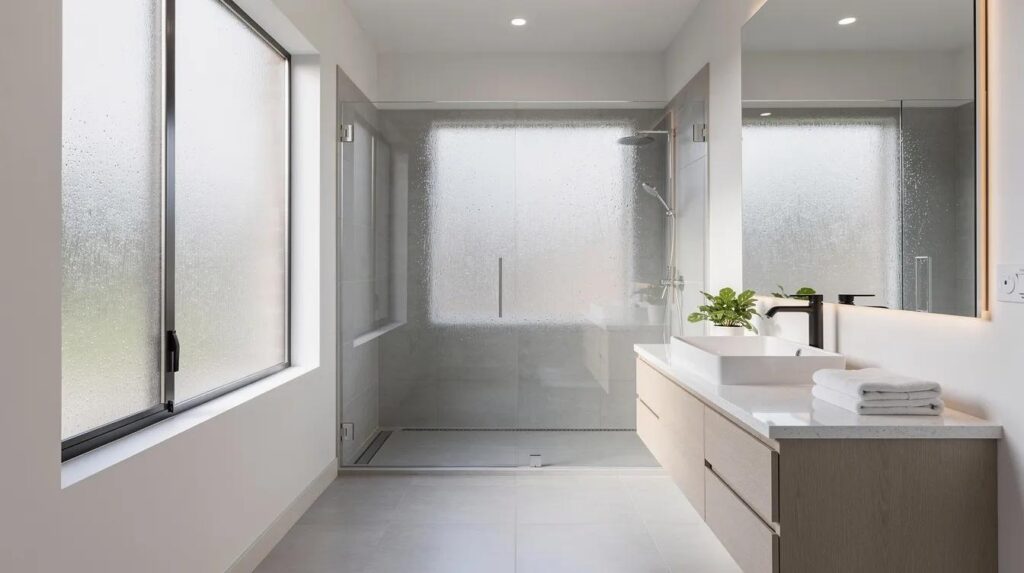
For front door sidelights and door sidelights, decorative window films can transform plain glass into focal points. A white frosted band or a geometric pattern blocks the view from the street while keeping an attractive entry. Window Film Depot regularly retrofits homes like 1990s-era townhouses with decorative privacy film on street-facing glass doors, pairing ribbed frosted patterns with accent bands that complement existing decor.
Sliding patio doors and bedroom windows facing neighbors benefit from films that combine privacy with solar heat rejection-especially on south- or west-facing exposures. Privacy films can reduce UV exposure and protect furnishings like hardwood floors and upholstered furniture from fading. Homeowners who bought low-cost DIY kits from Amazon often find the adhesive quality and optical clarity fall short within a year, so following a detailed guide to do-it-yourself window film installation can help avoid common problems. Professional-grade film from manufacturers like 3M provides years of reliable performance.
Privacy Film for Offices, Schools, and Healthcare Facilities
Conference rooms with floor-to-ceiling glass walls need confidentiality without blocking daylight. Banded stripes, gradient fades, and logo-integrated films let people see that the room is occupied without revealing what’s on the whiteboard. Privacy films can reduce UV rays and energy costs across large commercial facades, making them a practical line item in any building envelope upgrade, especially when paired with a wide range of window glass film products and brands selected for performance and aesthetics.
In schools and universities, administrative offices, counseling rooms, and classroom doors with vision lites must meet safety codes while limiting line of sight. Privacy films can increase the tensile strength of glass, enhancing security-an added benefit for institutional settings where impact resistance matters.
Healthcare applications demand HIPAA-compliant sight barriers in patient corridors, labs, and consultation areas. Films in these environments need hard-coat surfaces for easy cleaning and infection control. Window Film Depot can execute multi-site rollouts across North America, ensuring consistent standards for national medical groups, banks, or retail chains through its nationwide window film locations and service coverage.
Decorative films provide aesthetic appeal with varying degrees of privacy, making them ideal for boutique retail entry doors or church interior glass where a stained glass look is desired at a fraction of the cost of real leaded panels. Plenty of options exist to sort through, from subtle nature-inspired etchings to bold contemporary patterns, and exploring the different types of decorative film for glass can help narrow the choices.
One way mirror film works best when the reflective side faces a brighter environment-typically exterior glass during daytime. At night, reflective films do not provide privacy if the interior is bright, so plan accordingly or pair with blinds, keeping in mind how one-way mirror film works in real projects and the role of light levels.
Special considerations apply for double-pane insulated glazing units and tempered glass. Highly reflective films can alter thermal dynamics, risk cracking, and void original glass warranties. A professional installer like Window Film Depot will conduct a glass audit to confirm compatibility before any work begins.
Choosing the Right Window Privacy Film: Key Factors to Consider
Not all window films perform equally, and choosing incorrectly can mean nighttime visibility problems, excessive darkening, or even glass damage. Here are the critical decision factors:
| Factor | What to Evaluate |
|---|---|
| Privacy level | Day-only vs. 24/7; partial height vs. full coverage |
| Natural light | VLT range: reflective films 5–20%, frosted films 50–70% |
| Aesthetics | Frosted, etched, stained glass pattern, or subtle texture |
| Energy performance | SHGC, total solar energy rejected, UV blocking |
| Code compliance | Safety glazing in schools, fire-rated assemblies, healthcare |
| Budget | DIY static cling vs. professional architectural film |
| Frosted films provide privacy without sacrificing light quality-a simple choice when you need round-the-clock coverage and reliable day and night privacy window film performance. One way mirror film is appropriate for exterior glazing on sunny facades where outward view is needed, but if after-dark privacy matters, frosted or dual-reflective films are the better specification. |
UV protective films help reduce cooling costs by blocking solar heat, and privacy films block 99% of harmful UV rays, protecting interiors from fading. When evaluating the best window film for nighttime privacy, it’s important to balance these energy benefits with after-dark sightline control. These energy benefits can offset film costs over the life of the product.
Be aware that applying privacy film may void some window manufacturers’ warranties, particularly on low-E coated or laminated safety glass. A site visit or glass audit before large projects protects both your investment and your warranty coverage. This is where access to an experienced installer with permission to review manufacturer specs saves you from costly mistakes.
Installation, Maintenance, and Longevity
A homeowner can install static cling film on a small bathroom window in under 30 minutes. Static cling films eliminate the need for adhesives, making them super easy to apply and remove. For adhesive-based films, window films apply easily using just water and soap-use a squeegee to remove bubbles during installation, then allow several days for the adhesive to cure. The process is simple, and for a single room it’s straightforward enough for most people.
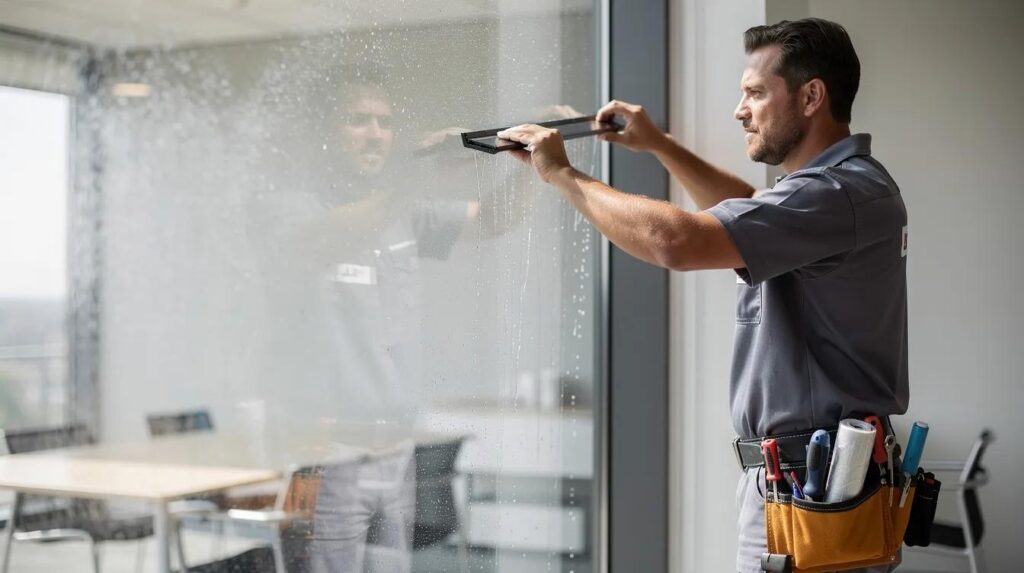
Commercial projects are a different matter. Window Film Depot’s process includes a site survey, film selection based on performance data, glass preparation, precision cutting, wet application, and post-install inspection. A typical home job wraps up in a few hours; a mid-size office or campus project may take several days.
Privacy film can last several years with proper care, and some users report privacy film lasting over 20 years on interior glass with low sun exposure. Humidity can affect the longevity of privacy film, especially in bathroom or coastal environments. Proper cleaning prevents mildew buildup on privacy film-stick to non-ammonia, non-abrasive cleaners and wait at least 30 days after install before the first wipe-down.
Signs it’s time to replace: bubbling, peeling at edges, discoloration, or visible scratching. When removal is needed, high-quality films do not leave residue upon removal, and films can be removed without leaving residue when the glass was properly prepared beforehand. Window Film Depot handles removals for retail rebrands and office remodels nationwide as part of its broader Window Film Depot services and solutions.
Why Choose Window Film Depot for Privacy Film Projects
Window Film Depot is a family-owned company founded in 1992 in Marietta, Georgia. For over three decades, we’ve helped facility managers, architects, and building owners find and install the right privacy film for every situation-from a single set of bathroom windows to a 200-location retail rollout, as detailed in our about Window Film Depot company overview.
Our work goes beyond privacy. We offer 3M solar control films, security glazing, anti-graffiti film, decorative and architectural surface finishes, and commercial graphics, along with a full portfolio of privacy window film solutions for glass windows and doors. That means one partner for your full building envelope upgrade, backed by certified installers who understand building codes, glazing specifications, and the nature of large-scale project logistics.
Reviews from government, education, healthcare, and retail clients reflect decades of consistent, on-time delivery. Whether you need a spec package for an architect’s review or sample boards for a design committee, we make it easy to move from concept to completed install.
FAQs About Privacy Film, Window Films, and Glass Applications
Does privacy film work at night?
It depends on the type. Frosted and decorative films obscure the view both day and night. Reflective one way mirror film, however, relies on the outside being brighter than the inside. At night with interior lights on, the mirror effect reverses and outsiders can see in. If nighttime privacy is needed, frosted or blackout films are the better option.
Can I use privacy film on bathroom windows and shower enclosures?
Yes. Frosted films are the most popular choice for bathroom applications. Choose a film rated for moisture exposure and clean it regularly with mild, non-ammonia soap and water. Avoid abrasive pads. If your glass is tempered (common in shower enclosures), have a professional confirm film compatibility to prevent thermal stress.
Will privacy film damage my windows or void my warranty?
Applying privacy film may void some window manufacturers’ warranties, especially on double-pane IGUs, laminated, or low-E coated glass. A professional glass audit before installation identifies any risks. High-quality, professionally installed films are designed to be removed cleanly without damaging the glass.
Should I install privacy film myself or hire a professional?
For a single window, static cling films are easy to install and remove without residue, making DIY a reasonable option. For multi-window homes, commercial buildings, or specialty glass, professional installation ensures proper fit, eliminates bubbles, and protects warranties. Large-scale projects with cutting and edge-suite fabrication tolerances benefit most from professional teams.
How does privacy film save energy and protect furnishings?
Privacy films can reduce UV rays and energy costs simultaneously. By blocking up to 99% of UV radiation, they slow fading of flooring, artwork, and merchandise. Solar-rejecting varieties reduce cooling loads, which can lower HVAC expenses-particularly on south- and west-facing facades.
What are lead times and logistics for commercial projects?
Standard films typically ship within days. Custom decorative patterns, logo prints, or gradient films may require two to six weeks depending on complexity. Window Film Depot coordinates after-hours installation in occupied buildings and manages multi-site rollouts so every location meets the same standard-no matter how many are on the list.
Call to Action: Talk to Window Film Depot About Your Privacy Film Project
Privacy film delivers immediate results: a more private, comfortable, and polished space without replacing a single pane of glass. Whether you need to hide a street-level view for a residential entry or equip a 50-location healthcare network with code-compliant privacy glazing, the solution starts with a conversation.
Request a privacy film assessment from Window Film Depot. Our team will survey your glass, recommend the right film, and handle every step from specification to final install. Reach out by phone or through our contact form to schedule a walkthrough for your facility-residential or commercial, single site or nationwide.