Table of Contents:
- Introduction: Why Privacy Window Film Matters in Today’s Offices
- How Privacy Window Film Works on Office Glass
- Types of Privacy Window Film for Offices
- Frosted, Decorative, and Stained Glass Films: Balancing Privacy and Design
- Reflective and Solar Control Films for Daytime Privacy
- Where to Use Privacy Film in Offices and Commercial Spaces
- Installation: Static Cling vs. Professional Adhesive Films
- How to Choose the Right Office Privacy Window Film
- Common Mistakes to Avoid with Office Privacy Film
- FAQs About Office Privacy Window Film
- Why Choose Window Film Depot for Office Privacy Window Film
- Next Steps: Plan Your Office Privacy Window Film Project
Introduction: Why Privacy Window Film Matters in Today’s Offices
Glass-heavy office spaces look beautiful on day one. By week two, employees sitting in fishbowl conference rooms and sun-drenched open floors start noticing the problems: passersby glancing at digital screens, glare washing out monitors, and zero confidentiality for sensitive meetings. Since 2015, and especially through 2020–2026 renovations, architects have doubled down on transparency with curtain walls, floor-to-ceiling partitions, and glass doors. The result is bright, modern-and often uncomfortably exposed.
Privacy window film for office environments is the retrofit fix that addresses all of this without replacing a single pane of glass. It minimizes visual distractions in open-plan offices, enhances productivity by reducing distractions and glare, and provides aesthetic flexibility with a modern look. Whether you manage a corporate headquarters, a medical clinic, or a multi-tenant building, privacy film enhances office aesthetics and reduces distractions across conference rooms, sidelights, interior partitions, and street-facing windows.
This guide covers the major film categories-frosted window film, reflective window film, decorative window film, and stained glass window film-along with installation methods, decision factors, and common mistakes. The focus is on commercial spaces and the facility managers, architects, and building owners who shape them, though smaller offices and clinics will find equal value here.
How Privacy Window Film Works on Office Glass
Privacy window film is a thin polyester or vinyl layer applied directly to glass. It alters light transmission, reflectivity, or visibility-diffusing, obscuring, or reflecting-to control what people see through the glass while still letting natural light pass through. Privacy window film optimizes natural light in office spaces rather than blocking it, which matters because access to daylight has been linked to better cognitive performance and satisfaction among employees.
Two attachment methods dominate. Adhesive films use a pressure-sensitive adhesive designed for long-term commercial use, commonly lasting 10–15 years on interior glass. Static cling films hold via water and micro-suction forces, making them ideal for leased suites or temporary setups, though they have a shorter lifespan and are prone to edge lifting in humid or high-heat environments.
The distinction between daytime privacy and 24/7 privacy is critical. Reflective window film creates a one-way mirror effect when the outside is brighter than the inside-think a street-level storefront office where the sun is the dominant light source. Day and night performance of reflective films depends on light differential, so at night with interior lights on, the effect can reverse. Frosted window film, by contrast, diffuses light to obscure shapes and faces from both sides regardless of lighting conditions, giving you round-the-clock coverage for spaces like HR offices or exam rooms.
Performance add-ons extend the value further. Privacy window film blocks up to 99% of harmful ultraviolet rays, protecting furnishings and skin. It reduces glare and eye strain from sunlight on computer screens. Solar-control films reduce solar heat gain to improve comfort and reduce cooling demand, and privacy window film aids in thermal regulation for stable room temperatures, keeping the environment comfortable without overworking the HVAC system. Privacy window film also improves energy efficiency by reducing solar heat, with commercial projects commonly reporting 5–20% reductions in cooling costs.

Types of Privacy Window Film for Offices
Not every glass surface in an office calls for the same solution. Privacy window films come in various sizes and patterns, and the best option depends on how much visibility you need to block, how much light you want to keep, and what the space is used for. Here is how the main categories compare:
- Frosted window film – Frosted film allows light while obscuring views from both sides, making it the go-to for conference rooms, HR offices, and reception areas. VLT can reach 80–90%, so the room stays bright. Gradient films maintain an open feel while providing partial privacy, which is why designers commonly use frosted bands at eye level on glass partitions.
- Decorative window film – Decorative films can incorporate branding while serving as privacy screens. Printed or plotter-cut decorative patterns-geometrics, lines, dots, logo elements-add character to lobbies and corridors. A Syracuse corporate office used roughly 300 square feet of decorative film across 21 panes to create translucency and privacy at a fraction of the price of replacing glass.
- Reflective window film – Reflective film creates a mirror-like appearance for privacy on the exterior side during daylight. One-way mirror film provides daytime privacy while allowing views outside, making it ideal for south-facing façades and downtown towers. Dark tinted film increases daytime privacy without full visibility, offering a subtler form of the same effect.
- Blackout film – Blackout film completely blocks light and visibility through glass. It is designed for secure rooms, media spaces, or confidential storage-anywhere total opacity is the priority.
- Cloaking film – Cloaking film prevents outsiders from seeing digital screens through glass walls. Cloaking film obscures screens from outside views in offices, so employees can present confidential data in a conference room without worrying about corridor foot traffic. PGA TOUR installed cloaking film in 14 conference rooms across its headquarters and studios for exactly this reason.
- Stained glass window film – A niche but beautiful choice for creative agencies, hospitality offices, or faith-based organizations, stained glass window film adds colored light and artistic textures to select windows.
Frosted, Decorative, and Stained Glass Films: Balancing Privacy and Design
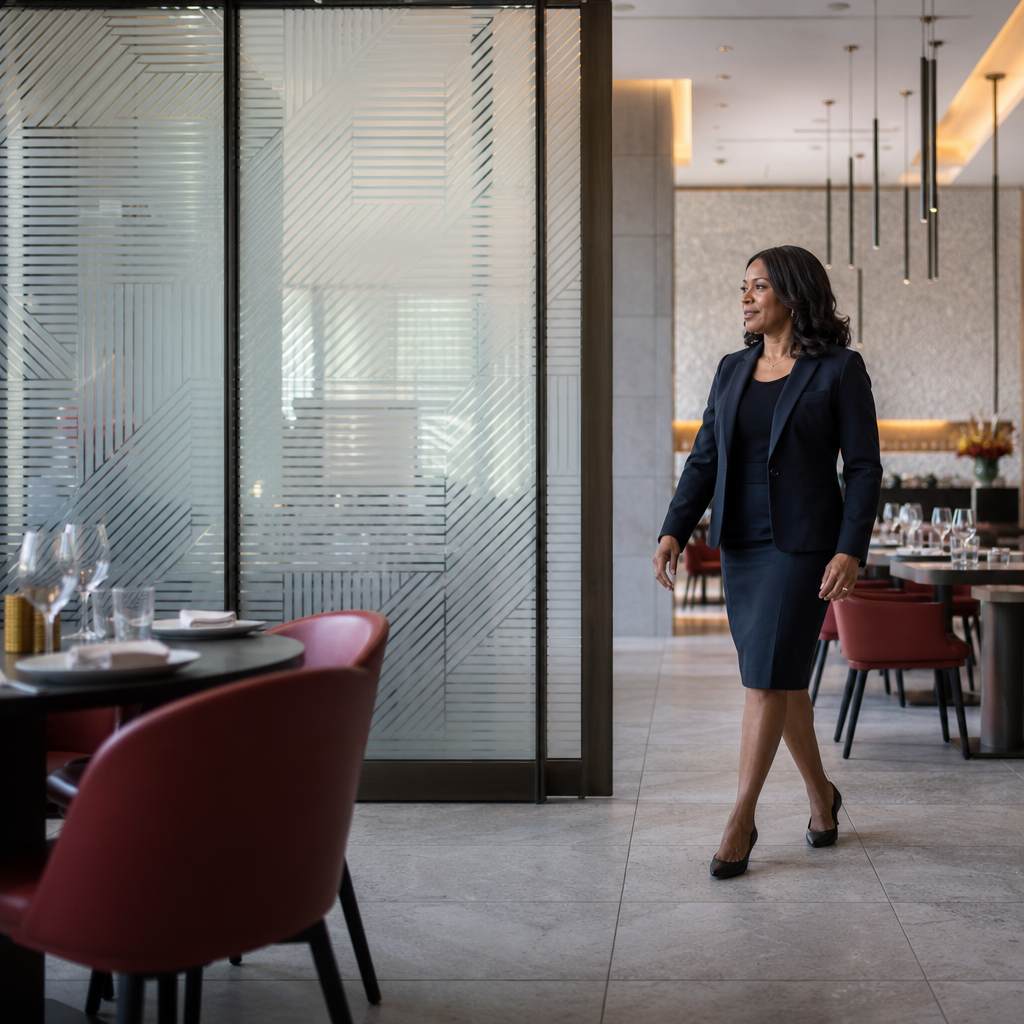
Interior designers and architects love frosted and decorative window film because these products create zones and soften glass without building solid walls. They give you the ability to add privacy while keeping an open, airy environment-which is the dream for most modern office buildouts.
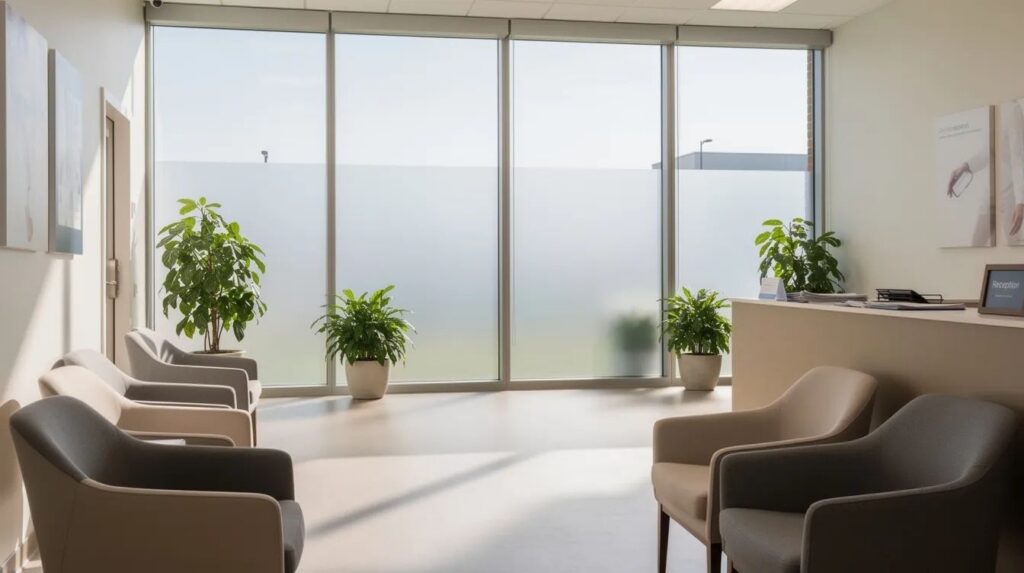
Frosted window film allows light while obscuring views, making it the workhorse for offices. You can apply it in full coverage, horizontal stripes, or gradient patterns that transition from opaque at the bottom to clear at the top. New York Presbyterian Hospital used gradient frosted film in its lobby to conceal staff workstations while preserving views above the eye line, giving the space a clean, professional feel without sacrificing natural light.
Decorative window film takes it further by layering in decorative accents, brand colors, or custom patterns. Companies use these films on glass doors and meeting room partitions to transform plain glazing into a collection of subtle brand moments. Whether you choose geometric lines, organic textures, or frosted logos, decorative films offer a range of creative possibilities at a fraction of the cost of etched or specialty glass. Stained glass window film is less common in corporate settings but can add striking color and artistic privacy to select feature windows-particularly in hospitality or creative environments. Keep in mind that colors may shift over time unless you choose color-stable materials.
Maintenance across all three is simple. These films are easy to clean with standard non-abrasive cleaners-no special tools needed. They hold up well in busy office environments and resist scuffing better than fabric blinds or curtains.
Reflective and Solar Control Films for Daytime Privacy
When your office faces heavy sun or sits along a busy street, reflective window film is often the best option. One-way reflective films provide daytime privacy while reducing glare, letting employees see outside while keeping passersby from looking in. This is especially valuable for ground-floor offices, call centers, and any space where visibility from the street creates discomfort.
Many reflective films also function as solar control products, rejecting 50–80% of total solar energy. The Embarcadero Center in San Francisco retrofitted five office towers with 3M Night Vision film, cutting glare by up to 72%, blocking 99% of UV, and generating an estimated $350,000 per year in energy savings with a 3–5 year payback. That kind of return makes reflective film easy to justify for multi-story buildings.
The trade-off is appearance. Some offices and municipalities restrict mirrored façades, and not every brand wants a brown or silver mirror look on the outside. For offices that want performance without the mirror, neutral or lightly tinted privacy film options exist that still improve privacy and reduce heat without the strong reflective character. Privacy window film also enhances safety by holding shattered glass together in the event of breakage-an added benefit that facility managers appreciate.
Where to Use Privacy Film in Offices and Commercial Spaces
Not all glass in an office needs the same treatment. Prioritize zones by function:
- Conference rooms and huddle rooms – Privacy window film increases psychological safety in glass-walled meeting rooms, so employees speak freely during sensitive discussions.
- Glass doors and sidelights – Entry doors with full-height glass panels and sidelights beside office doors are high-traffic visibility points.
- Reception areas – A frosted or decorative band at the right height lets customers see in while keeping other details private.
- HR, legal, and financial offices – 24/7 privacy is non-negotiable here.
- Medical exam rooms and wellness rooms – Full-coverage frosted or blackout film is commonly required.
- Open-plan corridors – Decorative films can break up long glass runs, reduce line-of-sight distractions, and help with wayfinding by giving each zone a distinct look.
One important note: always verify that film installations do not block required vision panels for fire egress. Local building codes may require certain glass areas to remain clear for safety.
Installation: Static Cling vs. Professional Adhesive Films
The installation path depends on the scale and permanence of your project.
Static cling films work well for:
- Leased suites where you need easy installation and removal
- Temporary upgrades or seasonal privacy needs
- Small areas like a single door lite (e.g., a 24 × 78 inch panel)
- Situations where you want to shop different looks before committing
Professional adhesive films are the standard for:
- Multi-room or multi-floor rollouts
- Glass doors, oversized lites, and insulated glass units that require precise fitting
- Custom decorative patterns that need plotter-cut accuracy
- Any project where you want a 10–15 year product lifespan
High-performance films on large or insulated glass should always be evaluated by experienced installers to prevent seal failure or thermal stress. Commercial providers can coordinate after-hours or weekend installs so employees walk into a finished space the next business day-ideal for occupied headquarters or multi-location rollouts.
How to Choose the Right Office Privacy Window Film
Start with function: how much privacy do you need, and at what times of day? Then layer in aesthetics.
Key decision factors include:
- Privacy level (partial bands vs. full coverage)
- Daytime privacy only vs. 24/7 coverage
- Desired light levels and glare control
- Existing glass type (tempered, laminated, insulated)
- Interior design standards and brand guidelines
Before calling a vendor, gather the details that matter: approximate glass sizes, floor level, orientation, and whether the glass is tempered or laminated. Suggest testing with sample swatches in one conference room before committing to an entire floor. Budget-wise, simple frosted bands are typically the most affordable starting point, while custom-printed decorative films and full-height coverage carry a higher price depending on complexity and quantity.
Common Mistakes to Avoid with Office Privacy Film
Privacy film is low-risk when planned well, but a few missteps create headaches:
- Choosing reflective film for rooms that also need nighttime privacy. One team discovered post-move-in that their one-way mirror film reversed at night-interior reflections reduced clarity from inside and provided zero privacy from outside when corridor lights were bright.
- Ignoring existing glass warranties. Applying high-solar-rejection film to older insulated glass units can cause thermal stress and void the original manufacturer’s coverage.
- DIY installs on oversized lites. Bubbles, misalignment, and edge peeling are almost guaranteed without professional tools and a clean environment.
- Going too dark. Overly dark films can make an office feel closed in, increase artificial lighting costs, and work against the open feel employees love.
- Mismatched opacities across floors. Without a site visit and mockups, different batches or pattern densities can look inconsistent from the outside.
Always request a walk-through and mockup before finalizing film selections-especially for multi-floor or multi-building projects.
FAQs About Office Privacy Window Film
How much privacy window film does an average office need?
A typical 3,000–5,000 square foot office might treat glass doors, sidelights, and three to six conference rooms, amounting to roughly 400–800 square feet of film. High-visibility zones like reception and meeting spaces are usually prioritized first, with secondary areas added in later phases as budgets allow. Multi-floor corporate offices or call centers can easily exceed several thousand square feet when interior partitions are mostly glass. Most professional installers will measure and estimate quantities during an initial walk-through at no charge.
Will reflective privacy film give my office a mirror look inside?
The strong mirror effect is mainly on the brighter side of the glass-usually the exterior during the day-while the inside appearance is more neutral or slightly tinted. At night, with lights on inside, occupants may see more reflections in their own windows, similar to regular untreated glass. Offices concerned about interior reflections should consider lightly tinted or frosted solutions instead of highly mirrored films. Sample panels can be temporarily applied on one window so decision-makers can see the effect from desks and corridors before committing.
How long does office privacy window film typically last?
Quality commercial-grade films commonly last 10–15 years on interior glass and 8–12 years on sun-exposed exterior windows, depending on climate and maintenance. Interior frosted and decorative films often outlast design trends and can be removed and updated when branding or tenant needs change. Warranties vary by product, but many architectural films include coverage for peeling, bubbling, and discoloration when professionally installed. Ask your installer for written warranty details and expected lifespan at the proposal stage.
Can privacy film be removed if we remodel the office?
Both adhesive and static cling privacy films can be removed from standard office glass without permanent damage when proper techniques are used. Professionals typically use steam, safe adhesive removers, and specialized blades to ensure glass doors and windows are not scratched. Remodels and rebranding projects often involve removing older patterns and installing new decorative film that matches updated interior design standards. Plan film updates alongside other tenant improvement work to minimize disruption to staff.
Is privacy window film compatible with all types of office glass?
Most films are compatible with common office glazing-tempered, annealed, and laminated glass-but certain high-absorption solar films may not be suitable for some insulated glass units. A brief glass survey by a knowledgeable installer is recommended for buildings with specialty glazing, low-e coatings, or older double-pane units installed before the mid-2000s. Correct film-to-glass matching helps avoid thermal stress, seal failure, and warranty conflicts with the original window manufacturer. Share any available glazing specs or as-built drawings during initial consultations.
Can decorative window film include our logo or custom patterns?
Many decorative window film options can be custom printed or plotter-cut to incorporate company logos, typography, and unique decorative patterns. Designers often create repeating motifs or subtle frosted logos across conference room glass to reinforce brand identity without overwhelming the space. Production lead times for custom films are typically longer than for standard frosted or solid patterns-sometimes two to four weeks including approvals. Align custom film artwork with broader brand guidelines and any existing environmental graphics in the office.
Why Choose Window Film Depot for Office Privacy Window Film
Window Film Depot has been solving glazing challenges for commercial and institutional clients since 1992. As a family-owned company with nationwide reach, we deliver turnkey project management for everything from a single headquarters upgrade to multi-site portfolio rollouts across different states. Our teams coordinate with general contractors, architects, and facility managers in government, education, healthcare, and retail environments every day.
We carry a wide variety of high-performance solar, security, decorative, and privacy film lines, giving us the ability to meet your exact requirements instead of forcing a one-size-fits-all product. Our certified installation crews work in occupied offices with clean methods, after-hours scheduling, and strict quality control for seams, edges, and pattern alignment. Whether you need to install frosted bands on six conference rooms or apply reflective film across a 20-story façade, we have the experience and the range of products to deliver results that hold up for years.
Next Steps: Plan Your Office Privacy Window Film Project
Privacy window film for offices can quickly transform glass doors, conference rooms, and open work areas into more focused, confidential, and visually polished spaces. The process starts with a simple step: document your problem areas, take photos of key glass surfaces, and outline your privacy priorities-whether that means confidentiality, aesthetics, daylight control, or energy savings.
Reach out to request a consultation, on-site assessment, or quote. Share your floor plans and glass counts so we can provide accurate pricing and product recommendations tailored to your space. Projects can often be scheduled during evenings or weekends, allowing most offices to see completed privacy upgrades by the next business day.
Contact Window Film Depot by phone or through our online form to discuss privacy window film options for your specific office and timeline. We would love to help you create the workspace your team deserves.