Every house, apartment, and office space has at least one window that lets in a little too much of the outside world. Whether it’s a street-facing bathroom, a ground-floor bedroom, or a glass conference room wall, the challenge is the same: you want natural light without giving prying eyes a free pass. Frosted glass film solves that problem at a fraction of the cost of replacing your windows – and you can install it yourself in an afternoon.
This guide covers everything from choosing the right privacy level to applying the film step by step, so you can make a confident decision and get it done without hiring a professional.
Table of Contents:
- What Is Frosted Glass Film and Why People Choose It
- Frosted Glass vs. Frosted Window Film
- Key Benefits: Privacy, Light, and Style
- Popular Uses for Frosted Glass Window Film in Homes and Offices
- Types of Frosted Window Films and Privacy Levels
- How to Choose the Right Frosted Glass Film for Your Space
- FAQ: Common Questions About Frosted Glass Film
- Upgrade Your Windows with Frosted Glass Film
What Is Frosted Glass Film and Why People Choose It
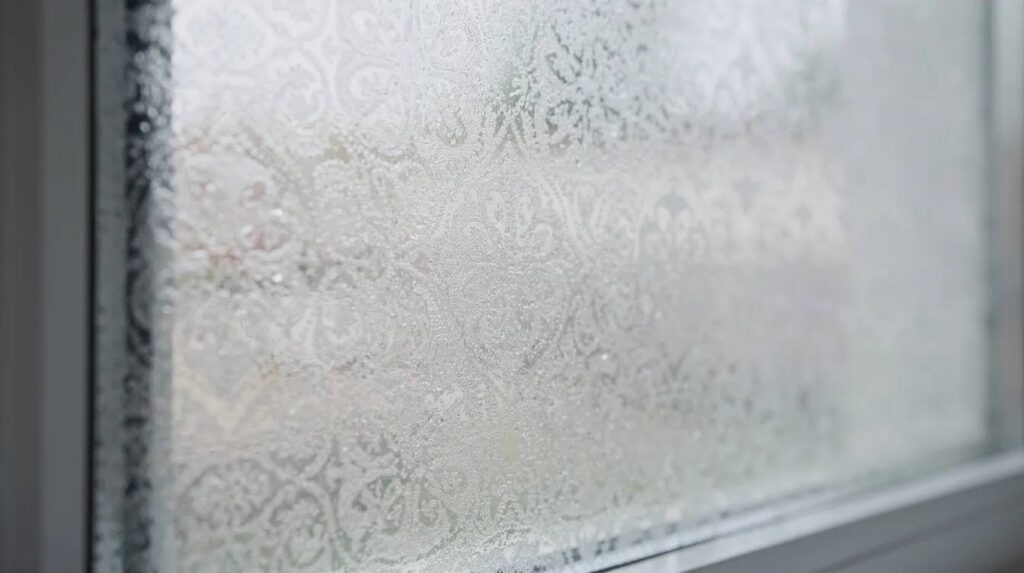
Frosted glass film is a thin layer of vinyl or polyester applied directly to a clear glass surface. It mimics the look of sandblasted or etched frosted glass, creating a translucent finish that obscures visibility while allowing natural light to pass through. Instead of blocking sunlight, it diffuses it, filling your room with a soft glow rather than harsh direct rays.
What separates frosted glass window film from standard clear window film is the matte, textured finish. A clear film is nearly invisible. A frosted film creates a sandblasted glass look that provides privacy without making rooms feel dark or closed off.
People choose it for relatable reasons. Bathrooms need privacy. Street-facing living rooms and balcony doors feel exposed. Office partitions look better with a frosted band than with taped-up paper. Frosted glass film enhances aesthetics with a modern look while solving a practical problem, and it works on virtually any smooth glass surface.
It is also removable. Unlike permanent sandblasting or acid etching, film can be peeled off and updated when your needs or tastes change. That makes it a cost effective alternative for renters, businesses that rebrand, or anyone who simply wants flexibility.
Modern films available in 2025 and 2026 have improved significantly. Many now block up to 99% of harmful UV rays, feature scratch-resistant topcoats, and use adhesives designed to last 10 to 20 years indoors without yellowing or edge-lifting. Established retrofit specialists with nationwide reach, such as professional window film installation companies, routinely work with these high-performance products.
Frosted Glass vs. Frosted Window Film
Most buyers compare permanent frosted glass with removable frosted window film before deciding which route to take. The difference comes down to permanence, price, and flexibility.
Frosted glass is a permanent addition to windows. The texture is built into the pane itself through chemical etching, acid treatment, or sandblasting. Once installed, it cannot be adjusted, removed, or swapped for a different pattern. Frosted glass offers greater durability in high-traffic areas because the texture is embedded in the material, but that durability comes with a steep price tag and zero flexibility.
Frosted window film, on the other hand, is a vinyl or polyester layer applied on top of existing clear glass using adhesive or static cling. It can be cut to size, repositioned during installation, and removed entirely when the time comes. Frosted glass film is easy to remove and update, which makes it popular for both residential and commercial projects.
The cost difference is significant:
| Option | Cost per sq ft | 15 sq ft window |
|---|---|---|
| Frosted window film (installed) | $8–$15 | $120–$225 |
| Frosted/etched glass replacement | $50–$150+ | $750–$2,250+ |
| Frosted window film is generally more affordable than frosted glass and delivers a comparable visual result. It is also the more sustainable choice – keeping existing glass in place means less waste and no energy spent manufacturing or transporting new panes. |
Key Benefits: Privacy, Light, and Style
Frosted window film balances a high privacy level with generous natural light and decorative design. That combination is hard to achieve with curtains, blinds, or tinted films.
Privacy that works. Quality frosted film provides 96% privacy protection, meaning it minimizes shapes and silhouettes from outside while blocking visibility from the street or corridor. During the day, a person standing outside sees only a uniform matte surface. Frosted glass film creates private areas while maintaining a spacious feel inside the room.
Light without glare. Unlike blackout curtains or heavy blinds, frosted glass film diffuses sunlight instead of blocking it. The result is even, ambient illumination that reduces glare on screens and furniture without plunging the space into darkness. Frosted window film allows natural light while ensuring privacy – you get both at once.
UV protection. Frosted glass film blocks up to 99% of harmful UV rays, which helps protect furniture, flooring, and artwork from fading over time. Frosted window film also blocks harmful UV rays that can harm skin with prolonged exposure, making it a practical addition to sun-facing rooms.
Design flexibility. Films come in a wide range of styles: plain frosted glass for a clean minimal look, gradient bands that transition from opaque to clear, geometric patterns, and even custom logos for offices. You can apply them in full-window coverage or custom bands at eye level, matching the aesthetic of any space.
Popular Uses for Frosted Glass Window Film in Homes and Offices
Frosted glass film can be applied to any smooth glass surface, not just traditional windows. Here is where it shows up most often.
Residential applications:
- Bathroom windows and shower doors – maximum privacy with durable, tasteful bathroom window films using moisture-resistant adhesive film
- Front door sidelights and balcony doors – gradient frost for curb appeal and security
- Kitchen cabinet doors and glass pantry doors – a uniform frosted look that conceals clutter behind glass partitions
- Street-facing bedroom windows in a house or apartment – full frost to keep out prying eyes
Commercial applications:
- Conference rooms and meeting rooms – frosted bands at seated eye level on glass walls
- Private offices and reception areas – decorative frost that signals professionalism
- Medical and dental clinics – full frost for compliance with patient privacy requirements
- Storefronts – lower panels frosted to hide back-of-house, upper glass clear for visibility
Frosted glass film also allows for corporate branding options, with logos and text cut into or printed onto the film. This turns plain office space partitions into branded design elements.
From a security standpoint, frosted film on ground-floor or street-level windows reduces visibility into the interior, discouraging opportunistic break-ins. For businesses, working with a provider of security, solar, and decorative window films can extend these benefits across an entire facility. And because frosted window films can be easily removed without damage, they suit rented apartments and leased offices equally well.
Types of Frosted Window Films and Privacy Levels
Not all frosted films offer the same level of opacity. Choosing the right product means matching the film to your required privacy level and the function of the room.
Full frost / standard frosted film. This is the go-to for bathrooms, clinics, and any space needing great privacy. It provides 96% privacy protection, making it nearly impossible for anyone outside to distinguish shapes or details. Frosted window film is a cost-effective alternative to frosted glass while delivering a nearly identical visual result.
Lite frost / semi-opaque film. Lite Frost films allow for an indistinct view while providing privacy – you can sense movement and general shapes, but details are obscured. This works well in open-plan offices and living rooms where total opacity would feel isolating.
Textured and patterned films. Reeded Glass Film, for example, offers a medium privacy level of 3/5, combining a decorative ribbed texture with partial obscuration. Other options include decorative geometric patterns, 3D textures, and stripe designs. Frosted glass film is available in geometric patterns and textures that let you match any interior style.
Static-cling vs. adhesive:
| Feature | Static-cling film | Adhesive film |
|---|---|---|
| Installation | No glue required | Adhesive backing |
| Repositionable | Yes, easily | Limited window during install |
| Lifespan | 1–3 years | 10–20 years indoors |
| Best for | Renters, temporary use | Long-term installations |
| Static cling films require no glue for installation, making them ideal for renters or anyone who wants the ability to swap films seasonally. Adhesive films bond more firmly and handle humidity better, which matters in bathrooms and kitchens. Frosted window film is removable and reusable in many cases, particularly with static-cling products. |
Think in terms of privacy level – low, medium, or high – and match that to your room type and comfort needs.
DIY Installation: How to Apply Frosted Glass Film Step by Step
Installing frosted glass film is a realistic DIY task. You do not need professional tools or experience – just patience and attention to detail.
What you need:
- Measuring tape and pencil
- Sharp utility knife or razor blade
- Spray bottle filled with soapy water (a few drops of dish soap per liter)
- Squeegee or firm plastic card
- Lint-free cloth
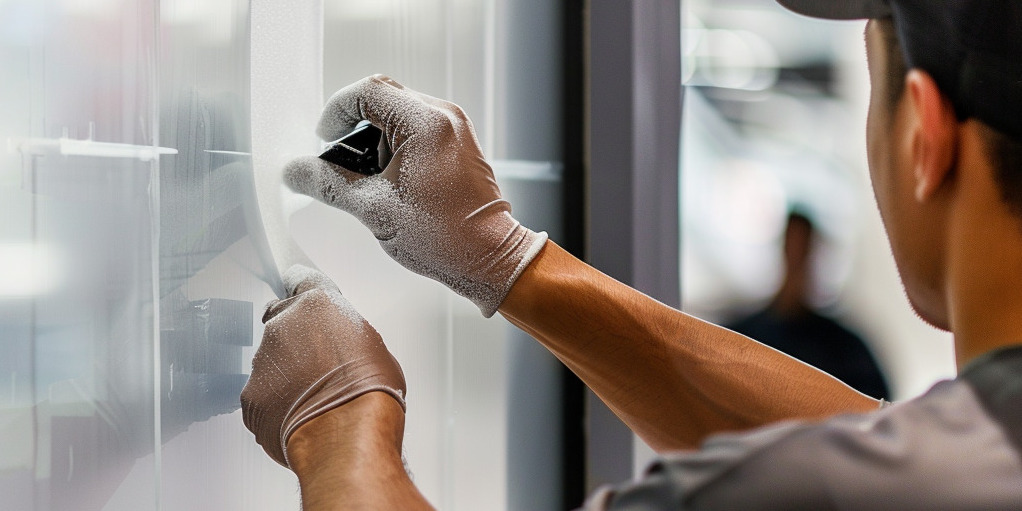
Step 1: Clean the glass. Glass should be thoroughly cleaned before applying frosted glass film. Remove all dirt, oils, stickers, and dust from the glass surface. Use isopropyl alcohol for stubborn residue, then wipe dry with a lint-free cloth. Applying frosted glass film requires careful cleaning and moisture – any trapped particle will show through the finished film, as any DIY window film installation guide will emphasize.
Step 2: Measure and cut. Measure the pane and cut your film roughly 1–2 inches larger on each side. Frosted film can be easily trimmed to fit any window after it is in place, so do not worry about a perfect cut at this stage.
Step 3: Wet and apply. A soapy water solution helps position frosted glass film during application. Spray the glass generously, then peel the backing from the film and lay it against the wet surface. The moisture lets you slide the film into position before it grips.
Step 4: Squeegee out air and water. Squeegeeing should start from the center and move outward toward the edges. Work slowly, pressing firmly to push out bubbles and excess water. Installation may require two people for large windows – one person to hold the film while the other squeegees.
Step 5: Trim the edges. Excess frosted glass film should be trimmed after application. Trim excess film using the window frame as a guide, running a sharp blade along each edge for a clean finish.
Troubleshooting tips: Small air bubbles can be pricked with a needle near the edge and flattened with the squeegee. If the alignment is crooked, peel the film back gently, re-wet the glass, and reposition. Trapped dust particles are best prevented by cleaning in a low-dust environment.
Cost, Durability, and Maintenance
Frosted glass film is an affordable alternative to replacing glass, and the ongoing costs are minimal.
Price ranges:
- DIY film (material only): $1–$5 per square foot per roll
- Professional installation: $8–$15 per square foot
- Custom or decorative patterns: up to $18–$20 per square foot
For a standard 15 square foot bathroom window, expect to spend $15–$75 for a DIY project or $120–$225 with professional installation. Compare that with $750–$2,250+ for a frosted glass replacement and the inexpensive way forward is clear.
Lifespan. Quality adhesive films last 10 to 20 years indoors when maintained properly. Static-cling films typically hold up for 1 to 3 years. Factors that shorten lifespan include direct sun exposure on west- or south-facing windows, high humidity, and cleaning with abrasive materials or harsh chemicals.
Maintenance. Frosted glass film resists fingerprints and is easy to clean. Wipe it down with a soft cloth and mild soapy water. Avoid ammonia-based cleaners and abrasive pads, which degrade the film surface over time.
Removal. Frosted window film can be removed without damaging glass. For adhesive films, soften the bond with warm soapy water or a hair dryer, then peel at a 45-degree angle and clean off any residue with a plastic scraper. The mess is minimal compared with scraping paint or replacing entire panes.
How to Choose the Right Frosted Glass Film for Your Space
The “best” frosted film depends on your location, privacy needs, and design style – not just price. Here is a simple framework.
Define your goal. Are you after maximum privacy for a bathroom? A softer, diffused look for a living room? Decorative elegance for an office using 3M frosted glass finishes for architectural projects? Your answer determines the opacity and pattern.
Match privacy level to room type:
- Bathrooms, ground-floor bedrooms, clinics: heavy frost for maximum privacy
- Offices, entry doors, reception areas: medium frost or patterned bands
- Kitchen cabinets, internal doors: light frost or decorative texture
Consider natural light. If a window already receives limited sun (north-facing or shaded), choose a lighter frost so you do not make the room feel dim. South- or west-facing windows with intense afternoon sun benefit from films with UV and heat rejection properties available from a wide range of window glass film products.
Check your glass type. Tempered, double-glazed, or Low-E glass may have compatibility requirements. Some manufacturers restrict film application on certain safety glazing assemblies. Always check the film and glass manufacturer guidance before purchasing.
Test before committing. Sample swatches, where available, let you hold a piece of film against your window to see the real-world effect on privacy and light before covering large panes. This small step can save you from a costly mismatch.
FAQ: Common Questions About Frosted Glass Film
Can frosted glass film be removed without residue?
Yes. Static-cling films peel off cleanly with virtually no residue. Adhesive films may leave some adhesive behind, but warm soapy water and a plastic scraper handle it quickly. Frosted window films can be easily removed without damage to the glass surface underneath.
Is frosted film suitable for showers and bathrooms?
It is, provided you use a moisture-resistant adhesive film rather than static cling. Seal the edges thoroughly during installation to prevent condensation from lifting the film. Expect to inspect edges periodically and clean with mild soap and a soft cloth.
How much privacy does frosted film really provide at night?
When interior lights are on and it is dark outside at night, heavy frost still obscures detail, but faint silhouettes may be visible to a person standing close to the window. Full-frost film provides strong privacy in this scenario, but it is not the same as an opaque wall. If total nighttime privacy is critical, consider pairing film with a curtain or blind and looking into specialized nighttime privacy window film solutions.
Can I use frosted film on double-glazed or Low-E windows?
In most cases, yes, but some films can trap heat between the glass panes and cause thermal stress. Consult the film manufacturer’s compatibility guide and, if in doubt, ask your glazing manufacturer before application or review guidance on day-and-night privacy window film specification.
Does frosted film affect energy efficiency or UV protection?
Frosted glass film blocks up to 99% of harmful uv rays, which protects interiors from fading. It also provides modest solar heat gain reduction, which can help lower cooling costs in sun-exposed rooms. However, it does not significantly improve insulation in cold weather – the R-value contribution is minimal compared with specialized privacy and solar-control window films.
Conclusion: Upgrade Your Windows with Frosted Glass Film
Frosted glass film lets you add privacy, keep natural light flowing, and elevate the style of any room – all without the cost or commitment of replacing glass. It is a flexible, cost effective solution that works in a house, an apartment, or a business, and it can be swapped out whenever your needs change.
Start by identifying which windows or doors would benefit most. Choose a film type that delivers the privacy level you need – whether that is a full frost for bathrooms or a decorative pattern for office partitions. Then grab a spray bottle, a squeegee, and a roll of film, and give your windows a weekend upgrade you will hear positive feedback about for years.
Customers across Singapore and beyond have talked about how this simple, inexpensive piece of film made a real difference in their daily comfort. Read any helpful review from someone who has done it, and you will see the same thing: once you install frosted glass film, you wonder why you did not do it sooner. Whether you watch a quick video tutorial or follow the tips above, the process is straightforward enough for any person willing to invest an afternoon.