Table of Contents:
- Introduction: Why Commercial Glass Tinting Matters in 2026
- How Commercial Glass Tinting Solves Common Building Problems
- Types of Commercial Window Films and What They Do
- Energy Efficiency, Comfort, and Cost Savings
- Privacy, Branding, and Interior Design with Decorative Window Film
- Security and Safety: Protecting People, Assets, and Operations
- How the Commercial Window Tinting Process Works
- What to Consider Before Choosing a Commercial Window Tinting Partner
- FAQs About Commercial Glass Tinting
- Why Choose Window Film Depot for Commercial Window Tinting
- Next Steps: Get a Commercial Glass Tinting Proposal
Introduction: Why Commercial Glass Tinting Matters in 2026
Commercial glass tinting applies specialized laminate films to glass surfaces on existing commercial buildings, turning underperforming windows into high-performance assets. Since 2020, rising energy costs, stricter building codes, and higher tenant comfort expectations have made commercial window tinting a strategic priority rather than an afterthought.
If your building has large expanses of glass, you already know the symptoms: excessive solar heat driving up air conditioning costs, harsh glare on screens, uneven indoor temperatures, privacy gaps in open-plan offices, and security vulnerabilities at street level. Commercial window film addresses all of these without the cost or disruption of full glass replacement.
Real-world performance data consistently shows that energy savings from window films range from 5-15% annually in office buildings, schools, and retail stores. Businesses use commercial glass tinting to increase occupant comfort and stabilize operating budgets, making it a cost-effective upgrade for buildings of nearly any age or type.
Window Film Depot is a family-owned, national 3M window film dealer and installer founded in 1992 in Marietta, Georgia. We serve commercial, government, education, and institutional clients across the U.S. This guide covers the main film types—solar control, security, privacy film, and decorative window film—along with how commercial window tinting services impact energy efficiency and business operations, how professional installation works, and what to ask before you buy.
This article is written for facility managers, building owners, architects, and project teams evaluating commercial window tinting for a single site or a multi-location portfolio.
How Commercial Glass Tinting Solves Common Building Problems
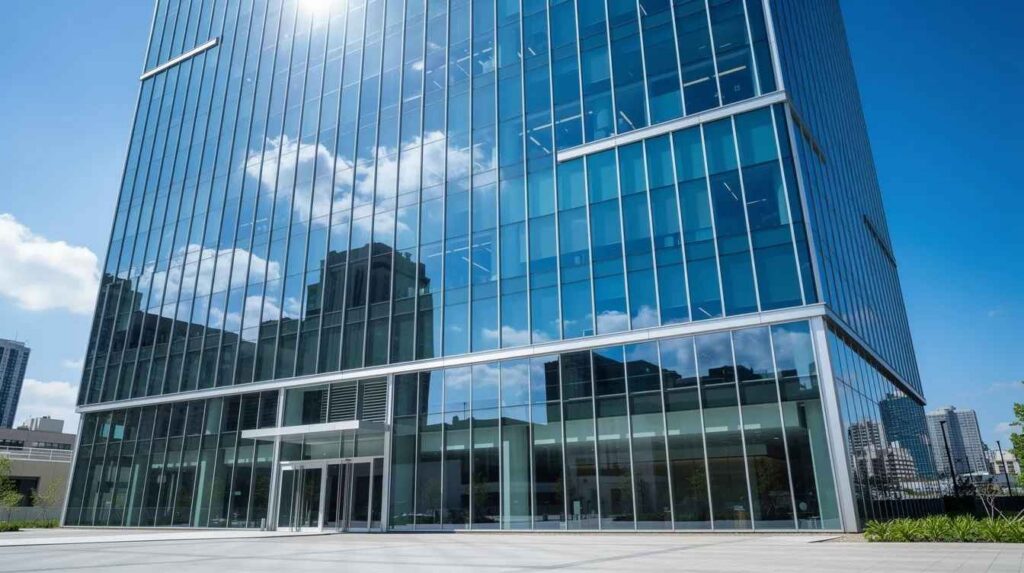
Many comfort and performance issues in commercial properties start at the glass, especially in post-2000 curtain wall and storefront designs where glass-to-wall ratios are high.
Solar heat gain is the primary culprit. Large south- and west-facing windows let in massive amounts of solar infrared heat, which drives up indoor temperatures, forces HVAC systems to run longer, and creates hot spots near the perimeter while core zones stay cool. Tinted films block a significant portion of solar infrared heat—window films reduce solar heat gain by up to 75% on treated facades, meaningfully lowering HVAC strain and cooling costs.
Glare is the second most common complaint. Unshaded glass causes harsh glare on monitors, televisions, and digital displays in offices, classrooms, medical facilities, and retail environments. Tinting reduces glare on monitors and televisions, directly improving productivity and reducing eye strain for occupants who sit near windows.
UV damage compounds over time. Untreated glass allows 90% or more of harmful UV rays to pass through. Window films can block up to 99% of harmful UV rays, protecting furniture, flooring, retail merchandise, and artwork from fading—extending the life of interior finishes by years and reducing the cost of protecting furniture and fixtures.
Standard annealed glass is also a weak point for forced entry, vandalism, storm damage, and natural disasters. Window protection films and systems address this by holding broken glass together after impact, reducing the risk of injury and slowing unauthorized access.
Unlike full glass replacement, commercial window films retrofit onto existing glass and frames. That means no structural work, no exterior scaffolding, and significantly less disruption to tenants—whether you manage a 20-story office tower or a ground-floor retail storefront.
Types of Commercial Window Films and What They Do
Commercial glass tinting is an umbrella term covering several distinct film categories, each designed for specific building performance goals. Most commercial buildings end up using a combination of window films on different elevations or floors rather than a single product.
Solar control films: Solar control window film is the most widely specified category. Solar control films reduce heat and glare effectively while blocking up to 99% of UV rays—without sacrificing natural light in the process. Modern spectrally selective solar films reject infrared energy while maintaining high visible light transmission, so daylight strategies in open-plan office spaces stay intact. Solar control films reduce air conditioning costs by improving occupant comfort and lowering the load on cooling equipment.
Safety and security films: Security films reinforce glass against break-ins and accidents by using multi-layer polyester construction with strong adhesives. They hold broken glass in place during impacts, improving resistance to break ins, smash-and-grab theft, and windborne debris. Security films reinforce glass surfaces against break-ins and accidents across retail stores, schools, government buildings, and commercial installations.
Decorative films: Decorative window film includes frosted, gradient, patterned films, and branded options. Decorative films can mimic frosted glass or display custom branding on conference rooms, glass partitions, and storefronts. They deliver enhanced privacy and aesthetics without replacing the glass itself.
Privacy and specialty films: Privacy films limit outside visibility while allowing natural light to pass through. Specialty products include anti-graffiti films that protect glass from vandalism and allow easy removal of tagging, and bird-safety films for mid- and high-rise glazing. Certain films address very specific problems—like anti-graffiti protection on transit shelters or one-way privacy on medical exam room doors.
Window Film Depot installs high quality window films from 3M—solar, security, and decorative—nationwide and supplies commercial window film wholesale to trade partners across North America.
Energy Efficiency, Comfort, and Cost Savings
For most commercial properties, the primary driver for commercial window tinting is reducing energy costs and stabilizing indoor temperatures across the building envelope.
Properly specified solar control window film can cut solar heat through treated glass by 40–70%, which directly lowers cooling loads. Chillers, rooftop units, and VRF systems cycle less frequently, especially in hot markets like Atlanta, Dallas, Phoenix, and Las Vegas. Commercial window tinting can lower utility bills by 15% to 35% depending on glass area and climate zone, and it can lower HVAC energy consumption significantly across all seasons. Low-emissivity films improve energy efficiency throughout the year by reflecting interior heat back during winter months.
Comfort improves measurably. Films narrow the temperature differential between perimeter offices and core zones, reducing hot and cold complaints and creating a more comfortable environment for occupants. Fewer after-hours service calls to facility teams is a tangible operational benefit.
ROI is compelling. Many businesses recover window film installation costs within 3-5 years, with faster returns on high-rise glass towers in Sun Belt cities. Installing window films can qualify buildings for tax deductions up to $1.80 per square foot, and utility rebate programs in many regions further reduce the upfront investment. Installing energy efficient upgrades like commercial window film also contributes to LEED points and helps meet updated energy code requirements. Tax incentives and lower energy bills make this one of the most straightforward energy efficient upgrades available to building owners.
Consider a 10-story, 150,000 sq. ft. office building built in 2005: after installing 3M solar control film on south and west elevations, summer peak demand drops by several kW, energy consumption falls meaningfully, and tenants report noticeably more consistent indoor temperatures. Businesses investing in this kind of retrofit see measurable energy savings that compound year after year.

Privacy, Branding, and Interior Design with Decorative Window Film
Not all commercial glass tinting is about solar heat and energy. Many projects are driven by aesthetics, branding, and interior privacy needs.
Decorative films can mimic frosted glass for aesthetics, converting clear glass conference rooms and office fronts into semi-private spaces while preserving natural light—unlike blinds or solid walls that block it entirely. Frosted and patterned films provide a modern, upscale look that elevates the appearance of any commercial space. This approach works especially well for glare reduction in conference rooms where presentations happen daily.
Common applications include frosted bands on medical exam doors, full-height gradients on law firm conference rooms, patterned films in coworking spaces, and branded window tint with logos or mission statements in corporate lobbies. Decorative films enhance commercial spaces with unique designs that reflect each organization’s identity. Custom branding films reinforce a company’s image effectively during tenant improvements or corporate rebrands.
Decorative films are more affordable than specialty glass options like acid-etched or sandblasted glass. They can be updated or replaced for new tenants, seasonal campaigns, or a 2026 rebrand at a fraction of the cost of custom frosted glass panels. Films also help with wayfinding and compliance—visually differentiating glass walls to reduce walk-in collisions and support ADA-compliant markings.
Window Film Depot offers design assistance, samples, and nationwide installation for decorative and branded films across office, retail, higher-education, and healthcare environments.
Security and Safety: Protecting People, Assets, and Operations
Risk managers and security directors increasingly view commercial window film as part of an integrated physical security plan. Tinted windows limit outside visibility, enhancing workplace security for sensitive operations.
Security window films, when properly anchored to frames, help hold shattered glass in place during forced entry attempts, blast events, or severe weather. Safety films help hold glass together during impacts, reducing injury risk from flying shards. Security films improve entry-point resistance against forced entry, buying critical delay time for response.
Use cases span many building types: street-level retail storefronts prone to smash-and-grab theft, schools and universities focused on forced-entry delay, government buildings needing blast-mitigation glazing retrofits, and medical facilities with ground-floor exposure. Many security films are tested to standards such as ANSI Z97.1 and CPSC 16 CFR 1201 for safety glazing, and blast-resistant systems often incorporate engineered attachment systems.
By limiting glass fallout, security films help keep key areas operational after an incident, reducing downtime and cleanup costs—a meaningful boost to business continuity. Some security films combine solar control properties, delivering both energy savings and impact resistance in a single product. This is particularly valuable for schools, hospitals, and older office buildings where budgets are tight.
Window Film Depot has delivered national roll-outs of security film for banks, big-box retailers, and government agencies, coordinating installation around business operations to minimize disruption.
How the Commercial Window Tinting Process Works
Professional commercial window tinting services are designed to minimize disruption to daily business operations from start to finish.
Assessment: The process begins with a site walk and glass survey. Installers identify existing glazing types (tempered, laminated, IGUs), measure sun exposure by elevation, review tenant complaints, and discuss energy or security goals. Local regulations may require permits before installation, and this is identified early.
Proposal and film selection: Window Film Depot recommends specific commercial window films by elevation or zone, provides performance data (TSER, VLT, SHGC), and outlines installation phasing tailored to the building’s schedule.
Installation: Windows must be thoroughly cleaned before film application. Film is applied using pressure-sensitive adhesive for a seamless look, then squeegeed to remove solution and air. Professional installers ensure proper adhesion and warranty coverage on every pane. Installation typically takes a few days depending on window quantity, and crews can work after hours or on weekends to keep offices, classrooms, and retail areas open during business hours.
Curing and close-out: Films may look slightly hazy for a few days to a few weeks while adhesive cures—this is normal and resolves on its own. Close-out packages include warranty coverage documentation, and any energy modeling or before/after data that larger clients require.
What to Consider Before Choosing a Commercial Window Tinting Partner
Film performance depends as much on correct product selection and installation quality as it does on the film itself. A poor installation on a great film will underperform.
Look for experience with commercial buildings—not just automotive work. Evaluate manufacturer certifications, familiarity with local energy codes and safety standards, and the ability to handle multi-site roll-outs. Ask for recent project references from similar building types: Class A office towers, K–12 schools, medical office buildings, or national retail chains completed in the last 2–3 years.
Proper glass-to-film compatibility analysis is essential. Applying the wrong film to certain insulated or tinted glass types can cause thermal stress cracking. Any reputable provider performs this review before quoting.
Compare more than price. Evaluate projected energy savings, warranty terms (including labor), installation phasing plans, and how the provider will communicate with tenants or occupants during the project.
Window Film Depot has specialized in commercial and institutional window film projects since 1992 and operates as a single-source partner for architects, GCs, and facility teams nationwide.
FAQs About Commercial Glass Tinting
Below are the questions facility managers, owners, and architects most frequently ask when evaluating commercial window tinting.
Will commercial window tinting make our building too dark?
No. Modern solar films maintain high visible light transmission (VLT), often 35–70%, while rejecting the majority of solar heat. Many films are virtually clear. Designs can preserve the natural light and daylighting strategies used in open-plan offices and commercial spaces without sacrificing natural light.
How long does commercial window film last on a building?
Interior-applied solar control films typically last 10–20 years depending on exposure, climate, and maintenance. Exterior films have shorter but still substantial lifespans of 7–10 years. Professional installation and proper maintenance are the biggest factors in longevity.
Can window film be installed on existing insulated or low-e glass?
Generally yes, but a glass-to-film compatibility review is critical to manage thermal stress risk. Window Film Depot performs this assessment as part of every project to ensure the film won’t cause cracking or seal failure.
Does commercial glass tinting really reduce energy costs enough to justify the investment?
Yes. Whole-building energy savings of 5–15% are typical, and commercial window tinting can lower utility bills by 15% to 35% on heavily glazed facades. Payback periods of 3–5 years are common in high-solar-gain climates, and many clients see measurable reductions in summer peak demand after installation. The investment is a cost effective path to lower energy bills.
Will installation disrupt tenants or require us to close areas of the building?
Most work is done from the interior with small crews. Phasing, night work, or weekend schedules keep office spaces, classrooms, and retail open during business hours. Coordination with building management ensures smooth access and minimal impact on tenants.
Can security window film replace impact-resistant or ballistic glass?
Security film is a significant upgrade over bare glass for forced-entry delay and injury mitigation, but it does not turn standard glass into ballistic glazing. It is best understood as a cost-effective enhancement and part of a layered security strategy—not a standalone solution. For most commercial buildings, it provides a meaningful improvement in safety at a fraction of the cost of full glass replacement.
Why Choose Window Film Depot for Commercial Window Tinting
Window Film Depot is family-owned, founded in 1992, headquartered in Marietta, Georgia, and focused exclusively on commercial, government, education, and institutional work nationwide.
We combine national reach with local-level service. Whether you need a multi-site program for a retail chain or a single-building retrofit for an office tower, the same standards and project management apply. Our team manages multi-location roll-outs for banks, retailers, and corporate portfolios while supporting individual property owners with the same attention to detail.
As a leading 3M window film dealer and installer, we carry deep experience with 3M solar control, safety, decorative films, and specialty products like anti-graffiti film. We handle everything from energy analysis and product selection to installation, tenant communication, and warranty documentation—a turnkey approach that simplifies the process for architects, GCs, and facility teams.
We also supply high-quality window films and tools wholesale to glazing and trade partners across North America. Our focus is on long-term building performance and property-specific recommendations, not one-size-fits-all solutions. Every project gets a tailored plan designed to deliver measurable results for the building and its occupants.
Next Steps: Get a Commercial Glass Tinting Proposal
Commercial glass tinting can improve comfort, reduce cooling costs, enhance security, and refresh interior design—all without replacing your existing windows. It is a versatile solution for buildings at every stage of their lifecycle.
Contact Window Film Depot for a site assessment, energy savings estimate, or security glazing consultation for your commercial building or portfolio. You can call us, submit a request through our website, or email project plans and specs directly. We work with owners, facility managers, architects, and general contractors at every phase.
We can provide budget pricing from architectural drawings for projects still in design, and detailed proposals for existing buildings after a field survey. The right commercial window film solution stabilizes operating costs, improves tenant satisfaction, and extends the life of your interior finishes—starting with a single conversation.