Table of Contents:
- Commercial Frosted Window Film: Key Considerations for Project Managers
- Strategic Deployment: Illustrative Scenarios for Commercial Frosted Film
- Flawless Execution: Project Management Insights for Frosted Film Installation
- The National Advantage: Why Your Installation Partner is Key to Project Success
- Conclusion: Strategic Vision, Flawless Execution, and Project De-Risking
- Frequently Asked Questions
- Related Posts from Window Film Depot
Selecting the appropriate commercial frosted window film extends beyond its aesthetic appeal; it involves a meticulous evaluation of its performance characteristics and suitability for specific architectural demands. The market offers a diverse range of films, each engineered to address distinct functional requirements while contributing to the overall design intent of a commercial space. A comprehensive understanding of these options is critical for project managers tasked with delivering optimal, consistent solutions across varied locations.
From Subtle Diffusion to Full Opacity: Exploring Light Transmission Properties
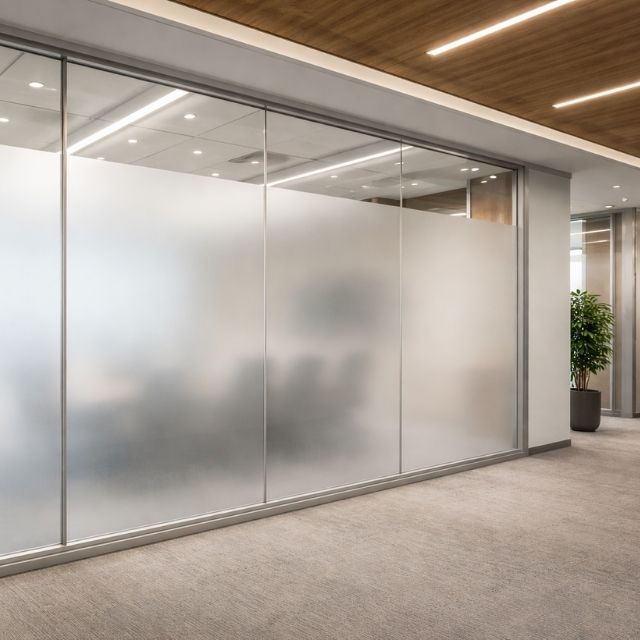
The primary function of frosted window film is to modulate light transmission and visual privacy. Films are available across a spectrum of properties, from subtle diffusion to complete opacity. Lightly diffused films allow maximum natural light penetration while maintaining privacy. These are ideal for conference room walls or internal office partitions. Conversely, higher opacity levels are specified for areas demanding stringent visual security. Data centers or sensitive research facilities require direct sightlines to be fully obscured.
The specification process requires a precise balance between privacy and ambient light. Energy efficiency considerations also vary by specific project and geographic location. Professional selection ensures that the final installation meets every functional and aesthetic requirement.
Aesthetic Variations: Etched, Sandblasted, and Patterned Glass Finishes
Frosted films replicate the sophisticated appearance of etched or sandblasted glass at a fraction of the cost and with greater flexibility. These films provide a matte, textured, or patterned finish that mimics traditional glass treatments without the permanence, weight, or cost implications of custom glass panels.
- Etched Finishes: Offer a classic, smooth frosted look, often used for corporate branding or minimalist design.
- Sandblasted Finishes: Provide a coarser, more opaque texture, effective for enhanced privacy and a distinct visual appeal.
- Patterned Finishes: Include geometric designs, stripes, or custom graphics, allowing for bespoke aesthetic integration while maintaining functional privacy.
The advantage of film in this context is its ability to deliver consistent visual standards across multiple sites, a key concern for national rollouts where brand identity and design continuity are paramount.
The Versatility of 3M Fasara Glass Finishes for Design and Privacy
3M Fasara Glass Finishes stand out for their exceptional versatility and aesthetic range in architectural films. These decorative films transform ordinary glass into striking design elements. They mimic the appearance of expensive etched, cut, sandblasted, or textured glass. The Fasara line offers a broad palette of patterns, textures, and translucencies for any project. This enables managers to specify solutions that align with design aspirations and privacy needs. Consistent quality ensures predictable outcomes for single boardrooms or national retail chains.
High-quality results mitigate variances often associated with local, non-standardized installations. This consistency is a major factor in de-risking project schedules and budgets. Large-scale deployments benefit from the uniform appearance and reliable performance of these advanced finishes.
By utilizing electronically tintable layers, electrochromic glass allows occupants to transition windows from perfectly clear to fully obscured at the touch of a button. Integrating this active technology alongside traditional film finishes gives project managers a tiered approach—deploying cost-effective film for standard glass partitions while reserving smart glass for high-profile spaces that require adaptive, high-tech privacy control.
Specialized Films: Addressing Unique Demands Beyond Basic Privacy
While privacy and aesthetics are primary drivers for frosted film selection, specialized films extend their utility to address a broader array of commercial demands. Modern film technology allows for the integration of properties that deliver multi-functional benefits.
- Enhanced Security: Certain frosted films can be combined with or engineered as security films, adding a layer of shatter resistance to glass while simultaneously obscuring views. This is particularly relevant for ground-floor offices, retail storefronts, or high-security areas where both privacy and protection against forced entry or impact are required.
- Energy Efficiency: Some frosted films incorporate solar control properties, helping to reduce heat gain, mitigate glare, and block harmful UV rays. This contributes to a building’s energy efficiency objectives, lowering HVAC costs and improving occupant comfort.
- Acoustic Management: While less common, certain specialized films can offer minor acoustic dampening properties, contributing to a quieter interior environment in open-plan offices or meeting rooms.
Integrating these specialized functionalities into frosted film solutions transforms them from mere decorative elements into strategic assets that contribute to security, sustainability, and overall operational efficiency. Specifying and implementing these advanced films across diverse sites requires a national installer with deep product knowledge and consistent installation protocols.
Commercial Frosted Window Film: Key Considerations for Project Managers
Navigating the complexities of commercial projects requires a meticulous approach to material specification. For renovation managers, understanding the nuances of frosted window film extends beyond aesthetics, encompassing performance metrics, regulatory compliance, and long-term operational costs. The initial specification phase is critical for de-risking project schedules and budgets, particularly for large-scale or multi-site deployments.
Need More Info?
The Window Film Depot team is happy to help.
Defining Project Goals: Privacy, Branding, Light Management, and Energy Efficiency
The primary driver for selecting frosted window film is often a specific functional requirement. Clearly defining these project goals at the outset is paramount.
- Privacy: Frosted films effectively obscure direct views into or out of a space while allowing natural light transmission. This is crucial for conference rooms, executive offices, healthcare consultation areas, or retail changing rooms. Different opacity levels can be specified to achieve varying degrees of visual obstruction.
- Branding: Custom-cut or printed frosted films integrate corporate logos, wayfinding elements, or decorative patterns directly onto glass surfaces. This transforms functional glass into a dynamic branding opportunity, aligning with a facility’s aesthetic and professional identity.
- Light Management: Excess glare can impair productivity and occupant comfort. Frosted films diffuse harsh direct sunlight, mitigating glare on screens and work surfaces without significantly reducing ambient light levels. This contributes to a more comfortable and functional interior environment.
- Energy Efficiency: While primarily a privacy and aesthetic solution, certain frosted films can offer marginal improvements in energy performance. By reducing solar heat gain, especially in specific orientations, they can lessen the load on HVAC systems, contributing to operational savings and potentially assisting in meeting broader energy reduction targets.
Technical Requirements: Adhesion, Durability, and Long-Term Maintenance
The functional lifespan and performance of commercial frosted film are directly tied to its technical specifications and proper installation.
- Adhesion: The adhesive system is critical for long-term film integrity. High-quality commercial-grade films utilize robust pressure-sensitive adhesives engineered for glass applications, ensuring a strong bond that resists peeling, bubbling, or delamination under varying environmental conditions. Proper surface preparation is non-negotiable for optimal adhesion.
- Durability: Commercial environments demand films capable of withstanding regular cleaning, incidental contact, and environmental exposure. Polyester-based films with scratch-resistant hard coats offer superior durability compared to thinner vinyl alternatives, maintaining their aesthetic and optical properties over time. Specifying films with proven resistance to UV degradation is also essential to prevent yellowing or cracking.
- Long-Term Maintenance: Post-installation maintenance should be straightforward. Films should be easy to clean with standard non-abrasive window cleaning solutions without compromising their appearance or structural integrity. Understanding warranty provisions and recommended cleaning protocols is part of a comprehensive long-term maintenance plan.
Navigating Commercial Building Codes, Safety Regulations, and Sustainability Goals (e.g., LEED certification)
Compliance and sustainability are increasingly vital components of commercial project planning.
- Building Codes and Safety Regulations: Any glass treatment must comply with local and national building codes. This includes considerations for fire ratings, egress pathways, and glass safety standards. For instance, films applied to full-height glass panels may need to incorporate manifestation markings at specific heights to prevent accidental impact. A national installer possesses the expertise to navigate these varied and often complex regulations across multiple jurisdictions, ensuring all installations are compliant.
- Sustainability Goals: Commercial frosted film can contribute to sustainability initiatives. By managing daylight and reducing glare, films can support strategies for maximizing natural light penetration, which is a common criterion for green building certifications like LEED. Projects pursuing energy efficiency credits may also leverage films that contribute to improved window performance, albeit typically in conjunction with other building envelope strategies.
Budgeting and Value Engineering for Large-Scale, Multi-Site Deployments
Efficient project execution, particularly for extensive or geographically dispersed projects, hinges on strategic budgeting and value engineering.
- Budgeting: Accurate cost projections must account for film material, custom fabrication (if applicable), professional installation labor, and any required specialized equipment. For multi-site projects, centralized procurement and consistent pricing models from a national provider offer significant advantages in cost control and financial predictability.
- Value Engineering: This process involves optimizing the film specification to meet project goals within budgetary constraints. It might include selecting different film types for areas with varying privacy or aesthetic requirements, or leveraging volume discounts available through a national installer. The goal is to achieve the desired outcome efficiently without compromising essential performance or quality. A national partner can facilitate this by offering standardized products and services at scale, simplifying the procurement and installation process across all locations.
Strategic Deployment: Illustrative Scenarios for Commercial Frosted Window Film
The versatility of commercial frosted film allows for strategic application across diverse sectors, each benefiting from its unique properties in specific ways. Understanding these sector-specific applications helps project managers tailor solutions that align precisely with operational needs and architectural intent.
Enhancing Office Environments: Collaboration, Focus, and Confidentiality with Decorative Office Window Film
In modern office layouts, frosted film plays a crucial role in creating functional yet aesthetically pleasing spaces. It provides essential visual privacy for meeting rooms, executive offices, and co-working areas, allowing natural light to penetrate without compromising confidentiality. Decorative office window film can also be used to demarcate zones within open-plan offices, create branded statements, or reduce screen glare, contributing to a more focused and comfortable work environment.
Impact in Retail Settings: Branding, Storefront Privacy, and Customer Experience
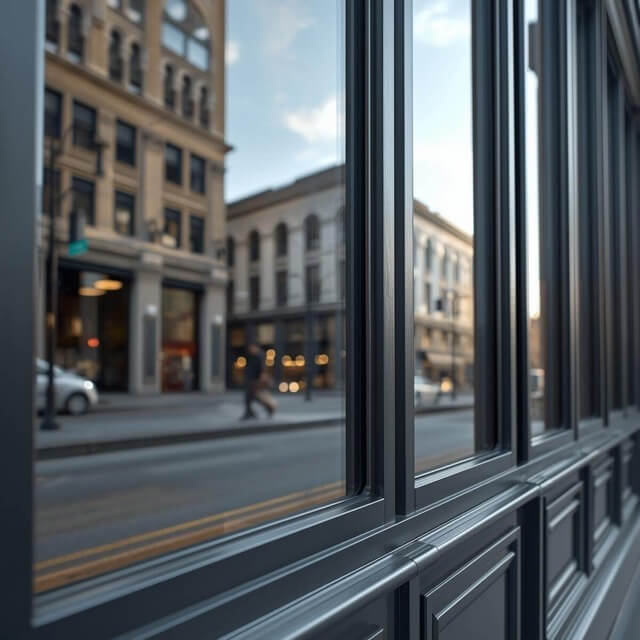
Retail environments leverage frosted film to balance transparency with strategic concealment. On storefronts, it can provide partial privacy during off-hours, obscure cluttered back-of-house areas, or serve as a dynamic canvas for promotional graphics and brand messaging. Internally, frosted film enhances customer experience by providing privacy for changing rooms or consultation areas, and by diffusing harsh sunlight that could damage merchandise or create uncomfortable glare.
Educational Facilities: Promoting Learning, Security, and Student Privacy
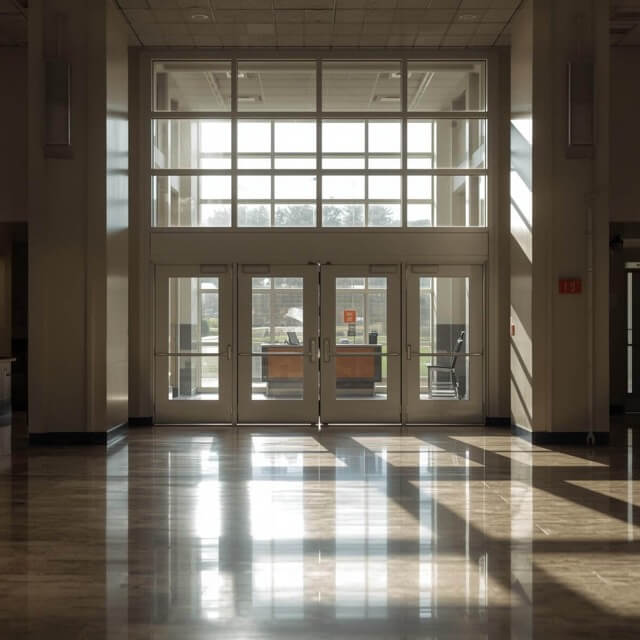
Educational institutions require solutions that enhance both security and the learning environment. Frosted film can obscure views into classrooms from corridors or exteriors, providing a sense of privacy and reducing distractions without blocking daylight. It’s also vital for administrative offices, counseling rooms, and health centers, ensuring student and staff confidentiality. Furthermore, custom manifestation films improve glass safety by making large glass panels more visible, mitigating potential accidents in high-traffic areas.
Adapting Solutions for Healthcare, Hospitality, and Government Sectors
The adaptability of commercial frosted film extends to highly regulated and public-facing environments.
- Healthcare: Patient privacy is paramount. Frosted film is extensively used in examination rooms, waiting areas, and administrative spaces to ensure HIPAA compliance and create a calming, private atmosphere without the need for opaque walls or blinds that block natural light.
- Hospitality: Hotels, restaurants, and event venues utilize frosted film for both aesthetic and functional purposes. It can enhance the sophistication of lobbies and conference rooms, provide guest room privacy, or integrate branding elements seamlessly into interior design, contributing to the overall guest experience.
- Government: Security and a professional appearance are key. Frosted film can be applied to windows in sensitive government buildings to provide visual security, obscure internal layouts from external view, and maintain the aesthetic integrity of public facilities, often meeting specific GSA guidelines for security and durability.
In each of these diverse scenarios, a national installer provides the necessary expertise and logistical capability to deploy consistent, high-quality frosted film solutions, ensuring compliance with sector-specific requirements and standards across all project sites.
Flawless Execution: Project Management Insights for Frosted Film Installation
Pre-Installation Planning: Comprehensive Site Surveys, Detailed Scheduling, and Logistical Coordination
Window tint for house windows installation for commercial spaces begins long before the film is unrolled. Comprehensive pre-installation planning is critical for mitigating risks and ensuring project success, especially across multiple locations. This phase includes thorough site surveys to accurately assess each unique environment, verify measurements, identify potential obstructions, and document specific site requirements such as access limitations, power availability, and safety protocols.
Following the site surveys, detailed scheduling is developed, meticulously synchronizing with other trades and overall project timelines to minimize disruption to ongoing operations. This process often involves managing material procurement, coordinating precise delivery to multiple sites, and organizing on-site staging and waste management. A national installation partner excels at standardizing these planning processes, ensuring consistency and efficiency regardless of geographical location.
Understanding the On-Site Installation Phases for Large-Scale Projects
The on-site installation process for commercial frosted window film rollouts typically follows a structured series of phases, each requiring meticulous attention to detail. Initially, site preparation involves thorough surface cleaning and protection of surrounding areas to prevent damage or contamination. The application phase then demands precise cutting of the film, exact placement on the glass, and specialized tools to ensure a flawless finish.
Managing environmental factors such as temperature and humidity during application is also crucial for optimal adhesion and longevity. The often-overlooked curing phase is vital for the film to bond correctly to the glass surface, impacting its long-term durability. Finally, post-installation activities include a final cleaning and inspection to confirm adherence to specifications. For large-scale projects, maintaining a consistent methodology across all sites is paramount to achieving uniform results.
Quality Control, Inspection Protocols, and Post-Installation Care Guidelines
Maintaining high standards across a multi-site frosted film installation requires rigorous quality control and standardized inspection protocols. These measures extend from pre-installation checks, verifying material integrity and glass condition, to ongoing oversight during application, and comprehensive post-installation inspections. Standardized checklists are utilized to ensure every installation meets defined benchmarks for finish quality, including the absence of bubbles, creases, foreign particles, and proper edge trimming.
Inspection protocols ensure that each application aligns with the original specification and desired aesthetic. Following installation, clients receive clear post-installation care guidelines, detailing recommended cleaning methods and maintenance practices to extend the film’s lifespan and preserve its appearance. Comprehensive warranty information is also provided. A national partner’s ability to enforce these uniform quality control measures across all locations is a significant advantage, guaranteeing consistent project outcomes.
Mitigating Risks and Addressing Unforeseen Challenges During Rollout
Commercial frosted film installations, particularly large-scale rollouts, are susceptible to various unforeseen challenges that can impact timelines and budgets. Common risks include material damage during transit, scheduling conflicts with other trades, unexpected site conditions like unsuitable glass surfaces, weather delays affecting exterior installations, or labor availability issues.
Effective risk mitigation strategies involve proactive contingency planning, including buffer times built into schedules and pre-emptive communication channels. A robust project management framework allows for rapid problem-solving when issues arise. Access to a broader network of resources and expertise enables a national installer to address unforeseen challenges quickly and efficiently, minimizing project delays and maintaining the overall trajectory.
The National Advantage: Why Your Installation Partner is Key to Project Success
Ensuring Consistency and Quality Across Diverse Multi-Site Project Locations
For renovation managers overseeing multi-site projects, a primary challenge is ensuring uniform consistency and quality across diverse geographical locations. A national installation partner addresses this directly by implementing standardized training programs for all technicians, uniform installation processes, and centralized project management. This approach ensures consistent material sourcing and application techniques, thereby eliminating variations in film appearance, quality, and longevity that often arise when engaging multiple local vendors. The result is a guarantee that brand aesthetic and privacy standards are met universally, irrespective of the specific site location.
Leveraging Expert Project Management for Seamless, Scalable Rollouts
Expert project management is the cornerstone of seamless, scalable frosted film rollouts. A national installer provides centralized project management, offering clients a single point of contact that significantly simplifies communication and oversight. This specialized expertise encompasses managing complex logistics, coordinating multiple installation teams, and navigating diverse local regulations across different states or regions. The ability to quickly deploy sufficient resources to meet aggressive project timelines is a hallmark of a national provider, ensuring scalability without compromising efficiency. This strategic approach also optimizes resource allocation, contributing to effective cost control throughout the project lifecycle.
The Value of a Proven Track Record: Partnering with the #1 U.S. 3M Window Film Installer
The selection of an installation partner with a proven track record is a critical decision that directly de-risks commercial projects. Partnering with the #1 U.S. 3M Window Film Installer, for instance, provides tangible value through demonstrated experience and an established reputation. This designation signifies adherence to 3M’s stringent product and application standards, comprehensive product knowledge, and a commitment to advanced installation techniques. Such a track record is indicative of extensive successful project deliveries, financial stability, and a deep understanding of the industry, offering renovation managers a reliable and high-performing partner.
Overcoming Logistical Complexities with a Specialized National Network
Large-scale commercial film rollouts inherently involve significant logistical complexities, from material procurement and transportation to local labor availability, permitting, and waste disposal across varied jurisdictions. A specialized national network is uniquely equipped to overcome these challenges. This capability includes leveraging pre-vetted local installation teams, established supply chains for efficient material flow, and an intricate understanding of regional specificities that might impact project execution. This infrastructure significantly reduces the administrative burden and coordination overhead for the project manager, guaranteeing timely material delivery and skilled labor deployment across all project sites.
Accessing Advanced Film Technology and Expertise (e.g., 3M Fasara Glass Finishes for every application)
A national installation partner offers direct access to the latest film technologies and robust manufacturer support. This connection is crucial for modern commercial applications requiring advanced security and design. Experts specify solutions like 3M Fasara Glass Finishes for aesthetic flexibility and functional performance. They also apply solar control films for energy efficiency or safety films for enhanced security. Partners understand technical specifications, application limitations, and manufacturer warranty conditions. This knowledge allows them to act in an advisory capacity for complex projects. Ensuring clients select appropriate solutions guarantees long-term performance and high satisfaction. This professional guidance transforms technical requirements into a cohesive and reliable facility strategy.
Conclusion: Strategic Vision, Flawless Execution, and Project De-Risking
Commercial frosted window film transcends mere aesthetic appeal in modern office design. It is a meticulously engineered solution offering critical functional benefits for commercial environments. Its strategic application balances visual privacy with the transmission of natural light. This balance enhances interior comfort while simultaneously addressing various security requirements. Frosted films can also contribute to the overall energy efficiency of a building.
The versatility of these films allows for precise control over visual access and daylighting. This makes them indispensable for settings ranging from corporate offices to healthcare facilities. Implementing these solutions ensures a professional atmosphere that prioritizes both function and style.
Realizing these benefits across a diverse property portfolio presents significant logistical and quality control challenges. National deployments and multi-site renovations require a highly coordinated approach to succeed. The product’s inherent advantages are only fully unlocked through consistent and professional installation. Varying local contractor capabilities can quickly undermine the uniformity essential for brand consistency. Inconsistent material sourcing often leads to mismatched finishes across different office locations.
Implementing commercial frosted window film is a strategic decision for optimizing functional office space. This choice aims to elevate the occupant experience while reinforcing your unique brand identity. The successful realization of this vision relies on selecting the right installation partner. You need a partner who can guarantee scalability, precision, and dependable outcomes nationwide. This collaborative approach ensures that the specified film delivers its full intended value. Seamlessly integrating these solutions contributes directly to the broader success of your project. Professional execution transforms a simple material choice into a powerful asset for your facility.
Frequently Asked Questions
Is there any such thing as “ballistic-resistant” window film for a home?
The term “ballistic film” is a common industry misnomer. While advanced security films (like the 3M Ultra Series) are incredibly strong and can hold glass together under intense impact, they cannot stop a bullet on standard residential glass. True ballistic resistance requires multiple layers of specialized glass and polycarbonate, resulting in a panel that is typically 1 to 3 inches thick. If a company claims their film alone makes your windows “bulletproof,” they are providing dangerous misinformation.
If security film doesn’t stop bullets, why is it recommended for home security?
Security film is designed to combat the 99% of threats that homeowners actually face: smash-and-grab burglaries, vandalism, and severe weather. While a bullet may pass through the film, a burglar with a brick or a sledgehammer will not. The film holds the shattered glass in its frame, forcing the intruder to strike the window repeatedly and noisily to create even a small opening. This “delay and deter” effect is usually enough to make a criminal abandon the attempt.
How does the weight and thickness of ballistic glass affect my home?
This is the biggest hurdle for residential applications. Standard home windows are roughly 1/8″ to 1/4″ thick. Ballistic glass is significantly heavier—often weighing 15 to 25 pounds per square foot. Most residential wall studs and window headers are not designed to support this weight, meaning you would likely need to hire a structural engineer to reinforce your home’s framing before installation even begins.
Can security film help during a hurricane or a tornado?
Yes. One of the primary causes of interior home damage during high-wind events is “wind-borne debris” breaking a window. Once a window is breached, the internal air pressure in the home rises rapidly, which can lead to roof failure. Security film acts as a protective membrane, keeping the glass intact even if it is cracked by a flying branch or hail, thereby maintaining the “building envelope” and protecting your family from flying shards.
What is the “Attachment System,” and do I need one for my home?
An attachment system (or “impact glaze”) is a high-strength structural adhesive that bonds the security film to the window frame itself. Without it, the film holds the glass together, but a strong enough blow could pop the entire “sheet” of broken glass out of the frame. For maximum security against home invasions, a professional installer will use an attachment system to ensure the glass remains a permanent part of the wall, even after it is shattered.