Table of Contents:
- Why Professional Frosted Privacy Window Film Outperforms DIY Alternatives
- Essential Specifications: Key Performance Metrics for Precision Frosted Film Selection
- Frosted Privacy Window Film: Unlocking Design Functionality
- The Project Management Advantage: Ensuring Seamless, Consistent Installation Across Large-Scale Rollouts
- Integrating Frosted Privacy Window Film into Your Construction Documents
- Conclusion: Mitigating Risk and Maximizing Value with Strategic Frosted Privacy Film
- Frequently Asked Questions
- Related Posts from Window Film Depot
The Project Manager’s Challenge: Mitigating Risk in Large-Scale Rollouts
For project managers overseeing large-scale commercial rollouts, achieving uniformity, adherence to specifications, and timely execution across diverse geographical locations presents a significant challenge. Sourcing reliable, specialized vendors for each site can introduce variability in material quality, installation expertise, and project timelines. When considering elements like privacy film, neglecting a standardized, technically specified approach can lead to inconsistent aesthetics, premature material failure, and costly reworks. This directly impacts brand consistency and long-term facility operational costs.
The Argument for Specification: Why Frosted Film Deserves Architectural Rigor
Treating frosted privacy film as a superficial decorative element rather than a fundamental architectural finish is a common oversight that carries substantial project risk. In commercial environments, these films are integral to privacy, light management, and interior design continuity. When specified with the same rigor as other architectural finishes—such as flooring, wall coverings, or lighting fixtures—frosted film selection moves beyond mere aesthetics to encompass critical performance criteria. This includes light transmission values, UV stability, expected lifespan, adhesive technology, and cleaning protocols. A robust specification ensures the film contributes positively to the building’s functionality, energy efficiency, and occupant comfort, aligning with the project’s overall architectural intent.
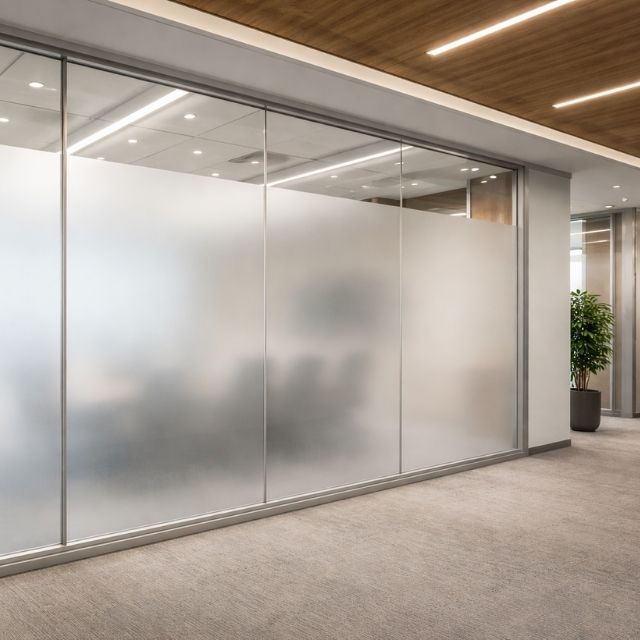
Overview of This Guide: Elevating Your Project’s Privacy and Design Standards
This guide is engineered to equip project managers with the technical acumen necessary to specify professional-grade frosted decorative window security films with confidence. We will delve into the material science, installation methodologies, and performance metrics that differentiate high-quality commercial films from their consumer-grade counterparts. By understanding these nuances, you can navigate vendor selections, anticipate potential project pitfalls, and ultimately deliver superior, long-lasting results that underscore your commitment to excellence and minimize future maintenance liabilities.
Why Professional Frosted Privacy Window Film Outperforms DIY Alternatives
Understanding the Spectrum: From Consumer-Grade to Commercial-Grade Films
The market for frosted window film privacy tech encompasses a broad spectrum, ranging from inexpensive consumer-grade options found in retail stores to highly engineered commercial-grade products. The primary distinction lies in their intended application, material composition, and manufacturing precision. Consumer films are typically designed for short-term use and easy, often temporary, installation by an untrained individual. They commonly utilize calendared vinyl, which is less stable, prone to shrinking, and offers a limited lifespan. Commercial films, conversely, are engineered for permanent architectural integration. They are usually composed of higher-quality polyester (PET) or cast vinyl, featuring advanced multi-layer construction, proprietary adhesives, and specialized coatings for enhanced performance and durability.
Material Science and Durability: The Foundation of Architectural Film Performance
The superior durability of professional-grade frosted film stems directly from its advanced material science. These films feature robust, optically clear polyester substrates or premium cast vinyl that resist yellowing, cracking, and degradation over time. Key performance differentiators include:
- UV Stabilizers: Integrated to protect the film from harmful ultraviolet radiation, preventing premature fading, discoloration, and embrittlement, thereby extending its aesthetic and functional lifespan.
- Scratch-Resistant Coatings: Applied to the film’s surface to withstand daily wear and tear, maintaining clarity and ease of cleaning in high-traffic commercial environments.
- Pressure-Sensitive Adhesives: Formulated for long-term bonding to glass, these adhesives are engineered to prevent bubbling, peeling, and edge lifting, even under fluctuating temperature and humidity conditions. Their stability ensures that removal, when necessary, leaves minimal residue.
- Thermal Stability: Professional films maintain their integrity and appearance across a wider range of temperatures, crucial for exterior applications or interior spaces with significant thermal variations.
This meticulous engineering translates into a product that delivers consistent performance and appearance for a decade or more, significantly reducing the total cost of ownership compared to frequent replacements of lesser-grade alternatives.
Visual Fidelity and Consistency: Achieving Uniformity Across Expansive Glass Surfaces
For large-scale commercial projects, achieving impeccable visual fidelity and consistency across extensive glass surfaces is paramount. Professional-grade frosted films are manufactured with exacting standards to ensure uniform light diffusion and consistent color or frost appearance from roll to roll, and batch to batch. This level of precision is critical for maintaining a cohesive aesthetic across multiple windows, floor plates, or even different buildings within a portfolio. Unlike consumer films, which can exhibit variations in translucency, color shift, or manufacturing defects that become highly noticeable on large installations, architectural films guarantee a flawless, uniform finish. This consistency is not only vital for visual appeal but also for predictable light management and privacy levels throughout the specified areas.
Distinguishing Professional Finishes: Etched Glass Film vs. Sandblasted Vinyl Aesthetics
Within the professional-grade segment, understanding the specific visual characteristics and performance attributes of different finishes is essential for precise architectural specification. The two most common types are etched glass film and sandblasted vinyl.
Etched Glass Film
- Material: Typically a multi-layered polyester (PET) film, such as the 3M Fasara series.
- Appearance: Mimics the smooth, uniform, and translucent finish of acid-etched glass. It provides a soft, diffused light effect without obscuring ambient light. The finish is consistent and often has a very fine, almost undetectable texture.
- Performance: Offers excellent optical clarity and consistent light transmission, allowing for precise control over privacy and natural light. Polyester films are generally more dimensionally stable and less prone to shrinkage over time.
- Maintenance: The smooth surface is easy to clean and less prone to trapping dirt or smudges.
Sandblasted Vinyl Aesthetics
- Material: Often a thicker, calendared or cast vinyl film specifically designed to replicate the look of sandblasted glass.
- Appearance: Typically presents a slightly coarser, granular texture compared to etched films, with a more opaque or ‘frosted’ appearance that can sometimes be more pronounced. Light diffusion may be less uniform, occasionally appearing more speckled.
- Performance: Can provide higher levels of visual obstruction due to its more opaque nature. However, vinyl films can be more susceptible to shrinkage and dimensional instability over prolonged periods, potentially leading to adhesive failure at edges.
- Maintenance: The textured surface might require more careful cleaning to prevent residue buildup.
For critical architectural applications where a refined, consistent, and long-lasting finish is required, etched glass films, especially high-performance series like 3M Fasara, are often the preferred choice. Their superior material science and visual consistency make them an ideal solution for achieving high-end aesthetics with predictable long-term performance.
Essential Specifications: Key Performance Metrics for Precision Frosted Film Selection
When approaching frosted privacy window film for commercial installations, the specification process must move beyond mere aesthetic preference. Project managers must evaluate films based on quantifiable performance metrics to ensure they meet the project’s functional, safety, and longevity requirements. This ensures the film acts as a durable, integrated architectural component rather than a temporary decorative overlay.
Light Transmission and Privacy Levels: Balancing Openness with Confidentiality
A fundamental specification for any frosted film is its visible light transmission (VLT) percentage and its corresponding privacy level. VLT measures the amount of visible light allowed to pass through the film, directly influencing the perceived brightness and openness of a space. Privacy level, while related to VLT, also considers the film’s diffusion properties, determining how effectively it obscures views while still allowing light. For instance, a film with a higher haze factor might offer more privacy at a similar VLT to a film with less haze. Selecting the appropriate balance is critical; a conference room might require maximum visual occlusion, while an internal office partition may only need subtle diffusion to minimize distractions. This precise calibration prevents over-specification, which can lead to unnecessarily dim spaces, or under-specification, which fails to meet confidentiality needs.
Haze and Glare Reduction: Enhancing Comfort and Functionality in Workspace Design
Beyond simple light blocking, the haze factor of a frosted film plays a significant role in managing glare and diffusing harsh light. Glare, whether from direct sunlight or overly bright internal lighting, can lead to eye strain, reduced productivity, and discomfort for building occupants. Frosted films are engineered to scatter light, transforming concentrated glare into a softer, more uniform ambient light. This diffusion not only improves visual comfort but also enhances the functionality of workspaces by reducing reflections on computer screens and other surfaces. Specifying films with optimal haze characteristics ensures a more comfortable and functional environment without compromising internal illumination.
Durability Ratings and Longevity: Specifying for High-Traffic Commercial Environments
Commercial environments, by their nature, experience significantly higher traffic and more rigorous cleaning protocols than residential settings. Therefore, specifying frosted film with robust durability ratings is non-negotiable for long-term performance. Key considerations include resistance to abrasion, impact, and chemical degradation from cleaning agents. Manufacturers often provide data on film thickness, material composition, and surface hardness. Additionally, a comprehensive manufacturer warranty serves as a critical indicator of expected product longevity and resistance to common issues such as yellowing, cracking, or delamination. Investing in industrial-grade films designed for high-traffic use mitigates future replacement costs and maintains the aesthetic integrity of the installation.
Need More Info?
The Window Film Depot team is happy to help.
Adhesion Technology and Glass Compatibility: Ensuring Long-Term Integrity
The long-term integrity of any window film installation hinges on its adhesion technology and compatibility with the specific glass substrate. Advanced film adhesives are designed for strong, stable bonds to various glass types, including annealed, tempered, laminated, and low-emissivity (low-e) coatings, each presenting unique surface characteristics. Improper adhesion can lead to common failures such as bubbling, peeling, or edge delamination, significantly detracting from both appearance and performance. Professional-grade films utilize sophisticated pressure-sensitive or dry-adhesive systems that ensure a lasting bond without damaging the underlying glass or reacting adversely with its coatings. Specifying films that explicitly state compatibility with the project’s glass types and relying on certified installers is paramount for a durable application.
Fire Safety and Building Code Compliance: Non-Negotiable Standards for Commercial Applications
For any commercial building project, fire safety and adherence to local and national building codes are absolute requirements. Frosted privacy films must meet stringent fire safety standards, often classified under ratings such as ASTM E84 Class A (or equivalent international standards). This classification indicates the film’s surface burning characteristics, including flame spread and smoke development. Project managers must obtain certified documentation from manufacturers, confirming that the specified film series complies with all relevant fire codes for the intended application and jurisdiction. Failure to specify code-compliant materials can result in significant project delays, legal liabilities, and compromised occupant safety.
Frosted Privacy Window Film: Unlocking Design Functionality
Moving beyond the fundamental functional specifications, modern frosted film technologies offer significant opportunities for advanced design integration and enhanced building performance. These capabilities transform film from a simple privacy solution into a versatile architectural finish that can contribute to branding, wayfinding, and even acoustic and thermal comfort.
Exploring the Aesthetics of 3M Fasara™ Glass Finishes: From Textures to Patterns
Professional-grade film series, such as 3M Fasara™ Glass Finishes, exemplify how decorative film can mimic the sophisticated aesthetics of etched, sandblasted, or specialty glass at a fraction of the cost and installation time. These film series offer a vast array of textures, patterns, and opacities, from delicate rice paper effects to bold geometric designs and subtle gradient fades. Specifying a recognized, high-quality series like Fasara ensures consistent aesthetic results across multiple installations, which is particularly beneficial for large-scale national rollouts. A single, expert national installer familiar with these advanced film series can replicate precise design specifications across diverse locations, ensuring brand consistency and simplifying logistical challenges for the project manager.
Strategic Application: Leveraging Commercial Decorative Window Film for Branding and Wayfinding
Decorative window film offers a powerful medium for integrating corporate branding and enhancing intuitive wayfinding within a commercial space. Custom-cut logos, branded patterns, or directional indicators can be precision-applied to frosted film, transforming functional privacy elements into dynamic communication tools. This strategic application strengthens brand identity, guides visitors and employees efficiently, and creates a cohesive visual experience throughout a facility. Unlike permanent etching, film offers the flexibility to update or change branding elements as business needs evolve, making it a cost-effective and adaptable solution.
Acoustic Benefits and Energy Efficiency: Hidden Advantages of Advanced Film Technologies
Advanced frosted film technologies can deliver benefits that extend beyond visual privacy and aesthetics, contributing to overall building performance and occupant comfort.
Sound Dampening Properties
Certain multi-layered or specialty frosted films possess inherent sound-dampening properties. While not a replacement for full acoustic panels, these films can help attenuate sound transmission across glass partitions, contributing to improved speech privacy in conference rooms and reducing ambient noise in open-plan offices. This subtle acoustic enhancement can significantly impact employee concentration and overall workplace tranquility.
Thermal Performance
Some frosted films are engineered with solar control capabilities, offering dual benefits of privacy and energy efficiency. These films can reject a substantial percentage of solar heat gain, reducing the load on HVAC systems and leading to measurable energy savings. Additionally, they often block up to 99% of harmful UV rays, protecting interior furnishings from fading and reducing occupant exposure. Specifying films with documented thermal performance metrics can contribute to LEED certification goals and enhance a building’s sustainability profile.
Customization Opportunities: Tailoring Film Solutions for Unique Project Requirements
The ability to customize frosted film solutions is a significant advantage for project managers dealing with unique architectural designs or specific client requirements. Customization extends to bespoke patterns, precise color matching (where applicable), specific levels of opacity, and even multi-layered designs to achieve complex visual effects. This flexibility allows for the creation of truly unique spaces that reflect a client’s brand identity or aesthetic vision without resorting to expensive, custom-fabricated glass. For large-scale projects, leveraging an expert national installer for custom film solutions ensures that these unique specifications are consistently and accurately executed across all project sites, simplifying procurement and quality control for the project manager.
Integrating Frosted Film into Modern Office Partitions and Storefront Glass Designs
Frosted film is an indispensable tool in modern architectural design, particularly in defining spaces within open-plan offices and enhancing storefront aesthetics. For interior glass partitions, film offers a cost-effective and adaptable way to create private offices, meeting rooms, or collaborative zones without constructing opaque walls, preserving natural light and a sense of openness. In storefront applications, film can balance interior privacy and security with opportunities for branding or promotional messaging. It can also be used to comply with specific local ordinances regarding window visibility while maintaining an appealing street-level presence, showcasing its versatility as a critical design and functional element.
The Project Management Advantage: Ensuring Seamless, Consistent Installation Across Large-Scale Rollouts
For large-scale commercial projects, the successful deployment of frosted privacy film transcends mere product selection; it hinges critically on the caliber of installation and the efficiency of project management. Treating film application as a specialized trade, rather than a general contracting add-on, is paramount to achieving uniform results, managing timelines, and controlling costs across multi-location portfolios. This strategic approach ensures the architectural intent is realized consistently, mitigating risks that can significantly impact project success.
The Criticality of Installation Expertise: Mitigating Common Project Pitfalls
The application of high-performance architectural films is a precise skill requiring specialized training, proprietary tools, and a deep understanding of surface dynamics and environmental conditions. Generic glazing or general contracting teams often lack this specific expertise, leading to a range of common and costly project pitfalls.
These can include visible installation flaws such as bubbles, creases, or misalignment, which compromise both aesthetics and durability. Furthermore, inadequate surface preparation can cause premature peeling or delamination, necessitating expensive rework and causing significant project delays. Incorrect film handling or application techniques can also void manufacturer warranties, leaving the client exposed to future repair costs.
The Value of a National Installer: Addressing Logistics Challenges of Product Managers
A project manager’s challenge of sourcing reliable, specialized vendors for national or large-scale rollouts is a common and critical pain point. Engaging a national installer, experienced in high-volume, geographically dispersed projects, offers a strategic solution. This approach centralizes accountability and standardizes the installation process, delivering a singular point of contact for all project phases. Instead of juggling multiple local vendors with varying skill sets, pricing structures, and communication protocols, a national partner streamlines logistics, consolidates invoicing, and ensures a consistent standard of quality across every site. This significantly reduces the administrative burden and inherent risks associated with multi-vendor management.
Streamlining Multi-Location Deployments: A Single Point of Contact for Guaranteed Consistency
A national installation partner brings unparalleled consistency to multi-location deployments. They implement standardized operating procedures, ensuring every application adheres to the same rigorous quality benchmarks, regardless of geographic location. This consistency extends from the pre-installation site assessment to the final quality control checks.
- Centralized Project Management: A dedicated project manager oversees all sites, coordinating schedules, logistics, and communication, ensuring adherence to the master project timeline.
- Uniform Training and Techniques: Installation teams are uniformly trained in manufacturer-recommended application techniques, ensuring consistent seam quality, edge treatment, and overall finish.
- Standardized Material Handling: From procurement to on-site storage, materials are handled consistently, minimizing damage and waste.
- Scalability: A national network provides the resources and flexibility to scale operations up or down to meet fluctuating project demands without compromising quality or schedule.
Quality Assurance and Warranty Management: Protecting Your Investment
Reputable national installers implement comprehensive quality assurance protocols designed to identify and rectify any imperfections before project handover. This typically includes multi-point inspections during and after application, adhering to stringent performance criteria. Crucially, partnering with a certified installer often ensures that the manufacturer’s warranty remains fully intact. For high-performance film series like 3M Fasara, specific installation guidelines must be followed for the warranty to be valid. A national expert manages this entire process, providing transparent documentation of installation conditions and post-installation inspections. This protects the client’s investment by offering recourse for potential material or workmanship issues, simplifying any future warranty claims through a single, accountable entity.
Partnering with the Right Expert: What to Look for in a Specialized Vendor
Selecting the ideal installation partner is a critical step in de-risking a large-scale film project. Key considerations for evaluation include:
- National Reach & Capacity: Verify their ability to service all project locations efficiently and scale to meet project volume.
- Manufacturer Certifications: Confirm they are certified by leading film manufacturers (e.g., 3M Select Partner), indicating adherence to high product application standards.
- Commercial Project Experience: Look for a robust portfolio of large-scale commercial, institutional, or retail projects, demonstrating proficiency with complex logistics.
- Dedicated Project Management: Assess their ability to assign a dedicated project manager who will serve as your single point of contact.
- Comprehensive Insurance & Bonding: Ensure adequate coverage for all aspects of installation.
- Robust Quality Assurance Program: Inquire about their specific QA processes and acceptance criteria.
- Training & Safety Protocols: Verify their commitment to ongoing installer training and strict safety standards.
- Warranty Support: Understand how they manage manufacturer and workmanship warranties.
Integrating Frosted Privacy Window Film into Your Construction Documents
Elevating frosted privacy film from a decorative afterthought to a precisely specified architectural finish is fundamental for delivering predictable outcomes on commercial projects. Integrating the film directly into your construction documents, much like any other finish material, ensures clarity, controls quality, and provides a clear framework for procurement and installation. This proactive specification prevents ambiguity, minimizes change orders, and guarantees that the film’s performance characteristics align perfectly with the project’s functional and aesthetic requirements.
Developing a Comprehensive Project Specification for Frosted Privacy Film
A well-developed project specification for frosted privacy film serves as the definitive guide for all stakeholders, from procurement to installation and final inspection. It transcends simple product selection, detailing performance parameters, installation methodology, and post-installation care. This document becomes an integral part of the overall architectural finishes schedule, providing a contractual basis for quality and consistency. Without this level of detail, there is a significant risk of misinterpretation, substitution of inferior products, or substandard installation, all of which can compromise the project’s long-term value.
Key Elements of a Detailed Film Specification: From Product to Installation Protocols
A robust film specification must leave no room for ambiguity. It provides the precise technical framework for product selection, application, and quality control.
- Product Identification:
- Manufacturer: Specify the exact manufacturer (e.g., 3M Commercial Solutions).
- Series and Product Code: Include the precise film series (e.g., Fasara, Crystal Glass Finish) and specific product number (e.g., SH2EMCH Dusted Crystal).
- Finish Type: Clearly define the desired aesthetic (e.g., etch, sandblast, rice paper, dot matrix).
- Performance Data:
- Visible Light Transmission (VLT): Percentage of light allowed through, impacting privacy and brightness.
- UV Rejection: Percentage of ultraviolet light blocked, crucial for fade protection.
- Glare Reduction: Specific performance metrics for reducing unwanted reflections.
- Thickness: Film gauge for durability and application characteristics.
- Installation Requirements:
- Surface Preparation: Detailed instructions for cleaning and preparing glass surfaces, including acceptable tolerances for dust and contaminants.
- Environmental Conditions: Specify acceptable temperature and humidity ranges during application to ensure optimal adhesion and curing.
- Application Method: Reference the manufacturer’s recommended wet application techniques.
- Seam Details: Precisely define acceptable seam locations, types (e.g., butt joint, overlap), and tolerance for visibility.
- Edge Clearance: Specify the required gap between the film and window frame/gasket to allow for thermal expansion and contraction.
- Quality Control & Acceptance:
- Mock-ups: Requirement for a pre-installation mock-up for client approval of appearance and installation quality.
- Inspection Criteria: Define objective standards for evaluating installation, including freedom from bubbles, creases, lift, and adhesive haze.
- Punch List & Rectification: Procedures for addressing and correcting deficiencies.
- Warranty: Clear outline of manufacturer and installer warranties, specifying duration and coverage.
Pre-Installation Site Assessments: Ensuring Optimal Conditions for Application
Before any film is applied, a thorough pre-installation site assessment is indispensable. This proactive step identifies potential issues that could impact film adhesion, appearance, or durability, preventing costly delays and rework. The assessment typically covers:
- Glass Condition: Inspection for existing damage, scratches, or manufacturing defects that could be highlighted by film application.
- Surface Contamination: Evaluation of dust, paint overspray, silicone, or other residues on the glass that would impede proper adhesion.
- Environmental Factors: Recording ambient temperature, humidity levels, and ventilation to ensure they fall within the film manufacturer’s specified installation parameters.
- Access & Logistics: Verification of clear access to windows, scaffolding requirements, and staging areas for materials and equipment.
- Adjacent Finishes: Protecting surrounding surfaces, flooring, and furniture from water or debris during installation.
Addressing these factors before installation significantly improves the likelihood of a flawless application and expedites the project timeline.
Post-Installation Care and Maintenance Guidelines
The long-term performance and aesthetic integrity of frosted privacy film depend significantly on proper post-installation care. The project specification should include clear, concise maintenance guidelines for facility managers and end-users. This guidance must detail approved cleaning solutions (typically mild, non-abrasive detergents), recommended cleaning tools (soft cloths, rubber squeegees), and prohibited substances or methods (e.g., abrasive cleaners, sharp instruments). Proper maintenance not only preserves the film’s appearance but also ensures the validity of the manufacturer’s warranty. Educating building occupants and maintenance staff on these protocols extends the film’s lifespan and protects the client’s initial investment.
Budgeting and Value Engineering: Achieving High Performance Within Project Constraints
While high-quality frosted privacy film represents a specified architectural finish, its integration also presents opportunities for value engineering. Compared to traditional etched or sandblasted glass, architectural film offers a significantly lower upfront cost with comparable, and often superior, performance. When budgeting, consider the long-term benefits: enhanced privacy, reduced glare for improved occupant comfort, protection against harmful UV rays that can fade furnishings, and, in some cases, improved energy efficiency by reducing solar heat gain. Specifying film as a versatile solution allows for cost-effective aesthetic transformations and functional improvements, enabling project managers to achieve high-performance outcomes within strict budgetary constraints. This strategic perspective positions film as a smart investment, delivering both immediate and enduring value to the client.
Conclusion: Mitigating Risk and Maximizing Value with Strategic Frosted Privacy Film
The decision to incorporate frosted privacy window film into commercial projects extends far beyond a purely aesthetic choice. For discerning project managers, understanding that this material functions as a critical architectural finish is paramount. By approaching film selection with a rigorous specification mindset, projects can proactively mitigate risks associated with performance variability, inconsistent aesthetics, and installation complications, ultimately enhancing long-term value for the client. A well-defined specification for professional-grade film directly translates to predictable performance and durability.
This includes precise control over light transmission, ensuring specified privacy levels are met while maintaining desired ambient light conditions. It also encompasses selecting films engineered for longevity, resistance to fading, and ease of maintenance, contrasting sharply with lower-grade alternatives that often lead to premature failure and costly remediation. Such forethought prevents downstream issues, safeguarding project budgets and timelines.

Ensuring Brand Consistency and Operational Efficiency
One of the most significant advantages of strategic film specification, particularly for multi-location or large-scale rollouts, lies in maintaining absolute brand consistency. Whether replicating a specific “etch” or “sandblast” effect, or ensuring uniform light diffusion across numerous branches, a detailed specification prevents the variances that can arise from using disparate products or installers. This unified approach reinforces corporate identity and delivers a cohesive visual experience.
For project managers like Paul, who face the ongoing challenge of sourcing reliable, specialized vendors for national or large-scale rollouts, a clear specification simplifies logistics dramatically. Rather than vetting multiple local providers who might offer a range of products with varying quality and installation standards, specifying a recognized, high-performance film series—such as a 3M Fasara series—coupled with a certified national installation partner, offers a singular, streamlined solution.
- Consistent Quality Assurance: A specified film from a reputable manufacturer ensures uniform material properties and aesthetics across all locations.
- Simplified Procurement: Consolidating purchasing and installation through a national network reduces administrative overhead and potential vendor management issues.
- Reduced Project Management Overhead: A single point of contact for installation across diverse geographies simplifies scheduling, coordination, and quality control.
- Unified Warranty Coverage: Leveraging a single product line and certified installer provides a cohesive warranty structure, offering long-term peace of mind.
By embracing frosted privacy film as a technical specification, project managers transition from reacting to issues to proactively designing for success. This strategic perspective not only mitigates project risk and ensures brand integrity but also solidifies the project’s long-term value, affirming that meticulous planning at the specification stage is the cornerstone of superior project delivery.
Frequently Asked Questions
Why should I specify architectural-grade frosted film instead of using a standard decorative vinyl?
Treating frosted film as a fundamental architectural finish rather than a superficial decoration significantly mitigates project risk. Professional-grade films, such as polyester (PET) or cast vinyl, offer superior dimensional stability, UV resistance, and thermal stability compared to consumer-grade calendared vinyl. This ensures the installation resists shrinking, yellowing, or cracking, providing a consistent aesthetic and functional lifespan of a decade or more.
How do I balance the need for occupant privacy with maintaining natural light in a workspace?
Precision selection requires evaluating two quantifiable metrics: Visible Light Transmission (VLT) and Haze factor. VLT measures the percentage of light passing through the glass, while the haze factor determines the level of diffusion. By specifying these values, you can achieve “horizontal silence” or visual confidentiality in conference rooms without unnecessarily dimming the space or losing the “open” feel of a modern office.
What are the logistical advantages of using a single national installer for a multi-location rollout?
A national installer serves as a single point of contact, centralizing accountability and standardizing quality across diverse geographical locations. This eliminates the variability in material quality and expertise that comes with sourcing multiple local vendors. It also streamlines logistics, consolidates invoicing, and ensures that manufacturer-recommended application techniques are applied uniformly at every site.
Can frosted film contribute to building performance beyond simple privacy?
Yes, advanced film technologies offer several “hidden” advantages. Certain multi-layered films provide sound-dampening properties that improve speech privacy in glass-walled meeting rooms. Additionally, many professional films feature solar control capabilities that reject solar heat gain and block up to 99% of harmful UV rays, which can protect interior furnishings and contribute to LEED energy-efficiency goals.
What specific details must be included in the construction documents to ensure a high-quality installation?
To prevent ambiguity and costly reworks, your film specification should include:
Product ID: Exact manufacturer, series (e.g., 3M Fasara), and product code.
Performance Metrics: VLT, UV rejection, and fire safety ratings (such as ASTM E84 Class A).
Installation Protocols: Requirements for surface preparation, seam tolerances, and edge clearance.
Quality Control: A mandate for pre-installation mock-ups and specific criteria for final acceptance, such as freedom from bubbles or creases.