Table of Contents:
- What Is Privacy Window Film and Why It’s Often Better Than Blinds
- Top Types of Privacy Window Film (With Real-World Use Cases)
- Best Window Film Choices by Room, Building Type, and Problem
- How to Evaluate the Best Window Privacy Film for Your Project
- Installation: DIY Static Cling vs. Professional Application
- Frequently Asked Questions About Privacy Window Film
- Why Choose Window Film Depot for Your Privacy Film Project
- Next Steps: Talk to a Privacy Film Specialist
Whether you manage a commercial building, run a healthcare facility, or simply want to stop passersby from peering into your living room, privacy window film offers a practical, cost-effective solution that blinds, curtains, and glass replacement often cannot match. This guide breaks down every category of film, helps you decide which option fits your space, and explains what separates a lasting install from a weekend headache.
What Is Privacy Window Film and Why It’s Often Better Than Blinds
Privacy window film is a thin, polyester-based laminate applied directly to existing glass. Depending on its composition-dyes, metallic coatings, ceramic particles, or micro-perforations-it can obscure views, manage natural light, reject UV rays, reduce glare, and even strengthen the glass against forced entry. Unlike blinds or curtains that block light entirely when closed, window films provide privacy continuously while still letting sunlight into a room. And unlike full glass replacement, film is a retrofit you can complete in hours rather than weeks, at a fraction of the cost.
For offices, schools, government buildings, and healthcare facilities, the priorities typically center on code compliance, energy performance metrics like SHGC and TSER, and visual privacy for exam rooms or conference areas. Residential customers care more about maintaining curb appeal, keeping bathrooms and street-facing windows private, and working within HOA restrictions that limit exterior appearance changes.
The main categories you will encounter include frosted privacy film, one-way mirror film, blackout and whiteout films, and decorative window films that replicate etched glass or stained glass patterns. Window Film Depot works nationwide with 3M and other premium manufacturers, helping facility managers and architects select the best window films for performance, aesthetics, and long-term durability.
Top Types of Privacy Window Film (With Real-World Use Cases)
There is no single best window film for privacy. The right choice depends on your application, budget, and how much light you want to keep. Top window privacy film options include frosted, one-way mirrored, and decorative patterns-each with distinct trade-offs for day and night visibility.
Solar / Sun Control Films That Also Increase Privacy
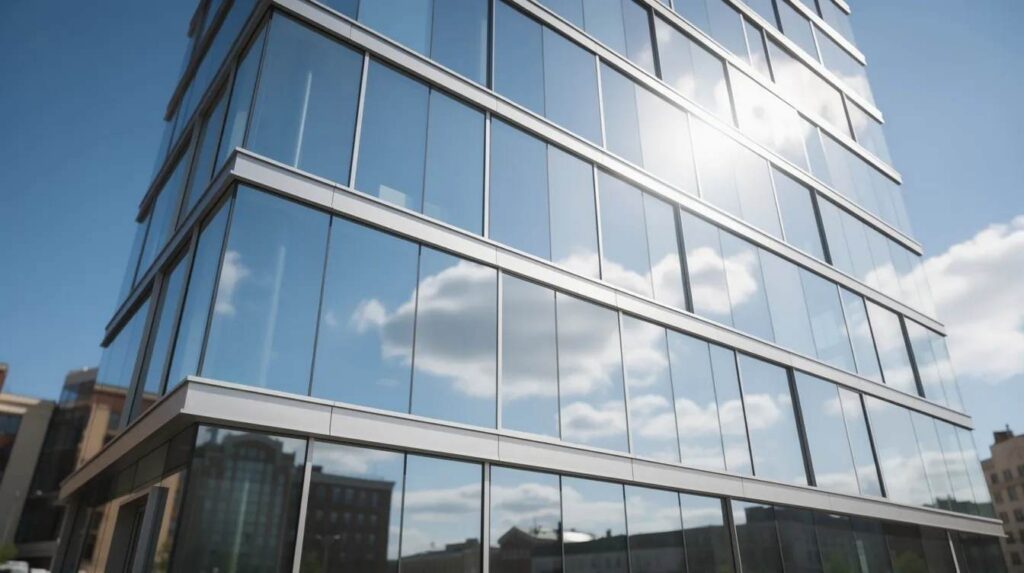
Tinted solar control window films darken the glass enough to provide privacy during the day while cutting heat gain and blocking up to 99% of UV rays. Some advanced solar films can block up to 99.9 percent of UV rays, dramatically slowing the fading of flooring, artwork, and furniture inside. Products like Gila film block up to 99% of UV rays and 93% of glare, while WPCTEV film blocks 97% of UV rays and 85% of infrared rays-numbers that translate to meaningful comfort improvements.
These films are ideal for office towers, schools, and retail façades that need to reduce glare on screens, lower cooling costs, and add style to the exterior without sacrificing outward views. A well-known case study involved Canton Crossing Tower in Baltimore, where ceramic solar film saved approximately 1.3 million kWh per year with a payback period under four years after utility rebates.
The trade-off: privacy at night is limited. Once interior lights are brighter than the exterior, silhouettes and objects become visible from outside, so shades or blinds may still be needed after dark, making it worth evaluating the best window film for nighttime privacy if 24/7 coverage is a requirement. These films can often qualify for utility rebates and support building envelope upgrades, making them a popular choice for facility managers watching both energy efficiency and operating budgets.
Privacy Mirror (One-Way) Films
One way mirror film uses a highly reflective metallic or dual-reflective coating that creates a mirror effect on the brighter side of the glass. During the day, people outside see their own reflection while those inside maintain a clear outward view. This makes it a go-to solution for lobbies, security offices, observation rooms, and industrial facilities.
One-way mirror films provide daytime privacy but not at night. The mirror effect only holds when the exterior is brighter than the interior; once the sun sets and interior lights come on, the effect reverses and outside observers can see in, a limitation that stems from how one-way mirrors work in real projects. For 24-hour coverage, pairing with curtains or blackout shades is necessary. Architects and property managers should also consider that higher exterior reflectivity can cause glare for neighbors and may require landlord permission in some jurisdictions.
Window Film Depot routinely designs mirror-film solutions for security and loss-prevention programs in national retail chains and sensitive government facilities, ensuring the specification accounts for glass type, orientation, and local ordinances.
Blackout, Whiteout, and Frosted Films
These three subtypes cover the full opacity spectrum:
- Blackout film blocks nearly 100% of visible light and view, providing total privacy at all times. Products like Velimax film prevent up to 99% of daylight from entering. Blackout films are best suited for media rooms, storage areas, back-of-house retail, and lab spaces requiring complete light control.
- Whiteout film offers a bright, opaque appearance useful for branding panels, sidelights where visible clutter is undesirable, and light diffusion on storefront base glass.
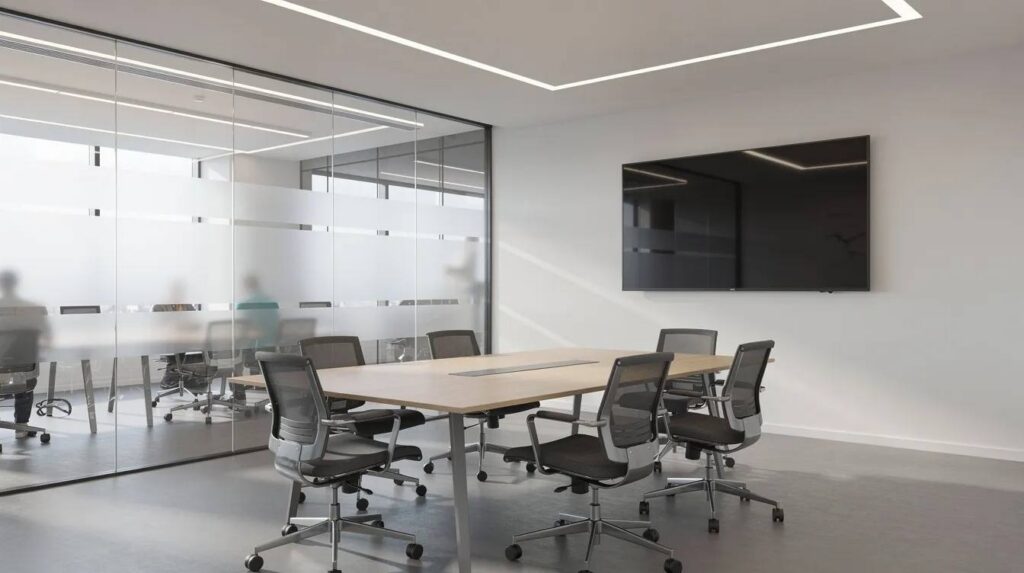
- Translucent frosted film obscures views while allowing natural light to pass through as soft, diffused sunlight. Frosted films have a classic matte etched glass look that enhances modern aesthetics, and they can be cut into bands, logos, or patterns for branded office fronts.
Frosted films provide privacy while still allowing light to enter the room, making them the best blend for spaces like bathrooms, conference rooms, and medical exam rooms, especially when you need reliable day and night privacy window film. These films are popular in both new fit-outs and retrofit projects because they avoid replacing expensive glass while meeting privacy requirements-including HIPAA-type visual barriers in healthcare settings.
Decorative Window Films and Stained Glass Effects
Decorative window films emulate etched glass, rice paper, geometric textures, or stained glass, providing partial-to-high privacy depending on the pattern density and, in commercial settings, can include advanced privacy and decorative window films designed for branded environments. Decorative films can enhance glass with various patterns and colors, and they can act as a permanent design element for interior walls and doors.
Common use cases include front doors and sidelights in a house, conference room glass in creative offices, and hospitality environments seeking branded or artistic treatments. Decorative films can obscure views but may be more expensive than standard frosted or tinted options, so they work best where visual impact justifies the cost. Coavas window film, a popular decorative option, blocks 96% of UV rays while adding a textured appearance, while photochromic options like CoolVu solar window film automatically tint under UV exposure for added comfort and protection.
Decorative films are available in both adhesive and static cling versions. Static cling is a popular choice with renters and small businesses that may relocate or frequently change layouts. Window Film Depot can supply and install both standard catalog designs and custom printed films for national roll-outs and one-off projects alike.
Best Window Film Choices by Room, Building Type, and Problem
The best window films are chosen by application-room type, orientation, climate, and whether security, energy savings, branding, or pure privacy is the priority.
- Bathrooms and showers: Frosted films are ideal for bathrooms, garages, and shower glass because they provide privacy without eliminating sunlight. Heavy frosted film on a shower enclosure keeps the space bright while making objects on the other side completely indistinguishable.
- Street-facing living rooms and bedrooms: Tinted solar control film or dual-reflective mirror film handles daytime privacy well. For continuous coverage day and night, a decorative or medium-density frosted film may be the better solution, since these are typically the most effective day and night privacy window film options.
- Offices and conference rooms: Frosted bands at eye level on glass-front offices and meeting rooms are the industry standard. They provide privacy for seated occupants while preserving the open, light-filled appearance architects and designers prefer.
- Schools and universities: Classrooms and labs typically use frosted or safety-rated translucent film for privacy and shatter resistance. Secure areas like server rooms or testing centers may need blackout film.
- Healthcare and government facilities: Exam rooms and intake areas require films that block visual access to protect patient or customer information. Combo films that layer privacy with safety glazing are common, often using innovative privacy and decorative window films that meet both aesthetic and compliance needs.
In a recent multifamily project outside Atlanta, Window Film Depot retrofitted over 200 bathroom windows with heavy frosted film, giving residents privacy from an adjacent parking structure without reducing the natural light that made those units desirable. That kind of real-world problem-solving is where professional specification pays for itself.
How to Evaluate the Best Window Privacy Film for Your Project
Five core factors should drive your decision: privacy level, light transmission, energy performance, aesthetics, and budget.
- Privacy level: Determine whether you need to block silhouettes (moderate frosted film, ~20–40% VLT) or achieve complete blackout (0–5% VLT). Consider day vs. night needs and any compliance requirements.
- Light transmission: South- and west-facing windows can typically tolerate lower VLT for better heat and glare control. North-facing rooms and interior offices should preserve as much natural light as possible to avoid relying on artificial lighting.
- Energy and UV benefits: Quality solar films can cut cooling energy demand by roughly 29% in some climates, reduce hotspots near windows, and slow fading of furniture and flooring. These savings make window films an energy efficiency investment, not just a privacy upgrade, particularly with adaptive technologies like CoolVu photochromic solar film.
- Aesthetics: Match the film’s appearance-clear, tinted, frosted, or decorative-to your building’s interior design standards. A photo of a sample applied to actual glass is worth more than any spec sheet when stakeholders need to decide.
- Glass compatibility: Single pane, double pane, tempered, laminated, and low-E coated glass each have different thermal tolerances. Installing the wrong film on insulated units can cause seal failure or thermal stress cracks, which is why professional specification is critical.
Window Film Depot frequently collaborates with architects and facility managers early in the design or retrofit process to test film samples, create mock-ups, and right-size specifications before full deployment, drawing on a broad portfolio of window glass film products and brands to match performance and budget goals.
Installation: DIY Static Cling vs. Professional Application
For a single bathroom window or a renter’s apartment, off-the-shelf static cling films are easy to apply without adhesive and can be removed and reused easily when you move. Most window films require soapy water for installation: clean the glass thoroughly with soap and water, mist it with a spray bottle, position the film, squeegee out bubbles, and trim the edges. Installation kits can simplify the window film application process by bundling a squeegee, utility knife, and application solution together.
Commercial and government clients typically choose professional installation for good reasons: larger panes and atrium glass demand specialized tools and safety training, consistent appearance across hundreds of windows matters for brand and building standards, and manufacturer warranties often require certified 3M window film installers. Window films can be removed and reused easily when handled properly, but on large-scale projects the risk of damaging glass or voiding warranties makes professional crews the smarter investment.
Common mistakes to avoid:
- Applying film to dirty or textured glass
- Using a dark, heat-absorbing film on insulated or low-E glass without consulting the manufacturer
- Ignoring curing time before cleaning (typically 30 days)
- Choosing a low-cost film with no UV or safety performance testing
Window Film Depot’s turnkey approach covers site surveys, mock-ups, logistics coordination, and post-install quality checks for roll-outs across North America, supported by nationwide installation locations that can respond quickly to regional and multi-site projects.
Frequently Asked Questions About Privacy Window Film
What is the best window film for daytime privacy without losing my view?
Tinted solar control films with VLT in the 30–50% range let you see out clearly while making it difficult for people outside to see in during brighter daytime hours. One way mirror film is another option that preserves views, though it requires supplemental coverings at night.
Does one way mirror film work at night?
No. One-way mirror films reflect during the day but not at night. When interior lighting is brighter than the exterior, the mirror effect reverses. Pair these films with shades or blinds for total privacy after dark.
Can decorative or stained glass film provide real privacy?
Decorative films offer partial-to-high privacy depending on the pattern density. A light frosted decorative film at 90% VLT provides minimal obscurity, while a heavy patterned film can block nearly all detail. If you need guaranteed full coverage, layer a frosted film beneath the decorative layer.
Will privacy window film make my rooms too dark?
Modern translucent film and light-tint solar films maintain comfortable natural light levels. Frosted films obscure views while allowing natural light to pass through, so rooms stay bright even with full-coverage application. Only blackout films significantly darken a room-those are best reserved for media rooms, server rooms, and storage.
How long does professional window film last?
Premium architectural films from manufacturers like 3M typically carry warranties of 10–15 years or more for optical clarity, adhesion, and color stability. Lower-cost generic films may degrade within one to three years.
Can privacy film be combined with security film?
Yes. Layered or combination products that provide both visual privacy and forced-entry resistance are commonly specified for schools, retail locations, and government buildings. Window Film Depot regularly installs these dual-purpose solutions.
Is window film removable if my lease or branding changes?
Professionally installed film can be removed without damaging glass when handled by trained technicians. Static cling films are even simpler-they peel off cleanly, leaving no residue, which is why they remain a popular choice for renters and pop-up retail.
Why Choose Window Film Depot for Your Privacy Film Project
Window Film Depot is a family-owned company founded in 1992 and headquartered in Marietta, Georgia. For over three decades, we have delivered window film solutions ranging from single-office privacy upgrades to nationwide retail and government roll-outs.
- We carry and install 3M solar control films, security glazing, decorative and privacy films, anti-graffiti coatings, and custom commercial graphics-covering virtually every glazing challenge a facility manager, architect, or homeowner can face.
- Our turnkey project management includes on-site assessment, product recommendations, samples, detailed proposals, professional installation, and post-install service. We are glad to coordinate with general contractors, security consultants, and design teams on any scale.
- Our national footprint means we can execute consistent roll-outs across North America. In 2024, we completed a privacy and security film combination for a major retail chain spanning over 400 locations with uniform appearance and performance at every site.
- We serve commercial, institutional, and residential clients with the same commitment to reliability, clear communication, and adherence to safety and privacy standards.
Next Steps: Talk to a Privacy Film Specialist
The best window privacy film for your project depends on how much privacy you need, how much natural light you want to keep, and whether energy savings, security, or branding are also priorities. There is no reason to guess-our specialists can walk you through samples, performance data, and pricing for your exact glass and building conditions.
Contact Window Film Depot to request a site visit or virtual consultation, send us floor plans or a photo of your windows for a preliminary recommendation, or call for a customized quote. We serve commercial, institutional, and residential clients nationwide and also ship wholesale film rolls to industry partners who handle their own installations. If you are still comparing options, ask for samples or mock-ups so you can see exactly how different privacy window films will look and perform on your glass before you commit.