Rising energy bills and longer heat waves are pushing homeowners to rethink how their windows perform. If your south- or west-facing rooms feel like ovens by mid-afternoon, residential window tinting may be the most practical upgrade you haven’t considered yet.
Table of Contents:
- Why Homeowners Are Turning to Residential Window Tinting in 2026
- How Residential Window Film Works
- Benefits of Tinting Your Home Windows
- Types of Home Window Film (and How to Choose the Right Film)
- Professional Installation vs. DIY Window Film
- Costs, Energy Savings, and Return on Investment
- Common Questions About Home Window Tinting (FAQ)
Why Homeowners Are Turning to Residential Window Tinting in 2026
Since 2022, energy costs have climbed steadily across most of the country. Pair that with summers that keep breaking temperature records, and it’s no surprise that living rooms and home offices with large windows become uncomfortably warm well before noon. Air conditioning systems run longer, energy bills spike, and furnishings near windows slowly fade from constant sun exposure.
Residential window tinting solves several of these problems at once. Window films are specialized coatings applied to glass that create an invisible thermal barrier, reducing the sun’s heat, blocking harmful rays, and improving privacy-all without tearing out your existing windows. Modern residential window film is thin, often nearly invisible, and can be professionally installed across most homes in a single day.
This article walks you through how window tinting works, the real energy savings you can expect, the different film types available, and how to pick the right film for every room in your house. Whether you’re trying to lower energy costs, reduce glare on your screens, or protect your furniture from uv damage, you’ll find actionable answers below.
How Residential Window Film Works
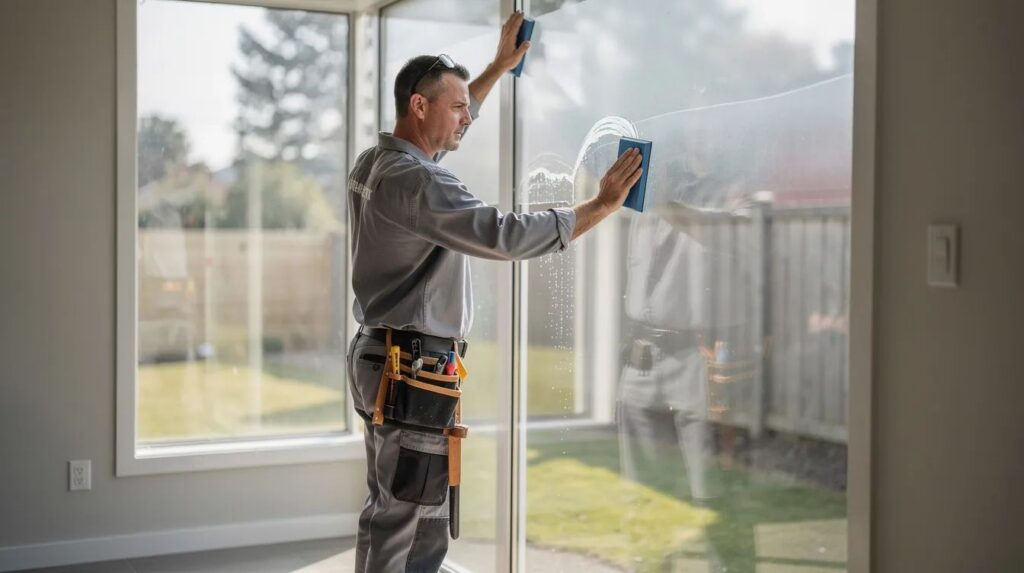
Home window film is a micro-thin polyester layer applied directly to the interior surface of your existing glass. Once bonded, it changes how solar energy interacts with the window.
- Solar heat rejection: Solar control window films reflect and absorb a portion of incoming solar energy-both visible light and infrared heat-forming a thermal barrier that reduces hot spots in sun-exposed rooms. Quality films can drop a window’s Solar Heat Gain Coefficient from roughly 0.70 down to about 0.28, meaning significantly less heat passes through.
- UV protection: Most quality films block up to 99% of uv rays, dramatically slowing fading on hardwood floors, rugs, artwork, and furniture. UV damage can occur even on overcast days, so this protection matters year-round.
- Heat and glare without the dark: Modern ceramic and spectrally selective films target infrared heat while leaving visible light largely intact. The Visible Light Transmission (VLT) percentage dictates how much light passes through the film, so you can choose a film that reduces heat and screen glare without making a room feel dim.
- Security layer: Security film is thicker-often multiple layers of polyester laminate-and designed to hold glass fragments together during impacts, storms, or attempted break ins. It won’t make glass unbreakable, but it prevents dangerous shards from scattering.
- Real-world effect: In practice, homeowners notice cooler rooms, less squinting at screens, and floors that keep their color for years longer. No technical diagrams needed-the results speak when you walk into a tinted room on a summer afternoon.
Benefits of Tinting Your Home Windows
One film upgrade can deliver multiple benefits at once. Here’s what changes after installation:
Heat control and comfort. Quality residential window film can reject 50–79% of solar heat gain on sun-exposed glass. In many homes, that translates to rooms feeling 5–10°F cooler during peak summer afternoons-without cranking the thermostat down. Tinting helps keep homes cooler in summer and warmer in winter, especially when paired with insulating low-e films.
Energy savings. Window films can reduce air conditioning run time significantly. Many homeowners see energy bills drop by 5 to 15% annually, with the highest savings on older single- or double-pane windows. Energy-saving window film can reduce cooling costs by up to 30% in rooms with heavy direct sunlight exposure.
Glare reduction. Tinting significantly reduces glare from the sun, making it easier to watch a screen, read, or work without squinting. Films can cut screen glare by up to roughly 80% while still allowing comfortable natural light into the room.
UV and fade protection. UV rays can cause fading of furniture and flooring over time. Blocking 99%+ of UV helps protect window treatments, curtains, blinds, shades, and furnishings that can cost thousands to replace.
Privacy options. Privacy and reflective films prevent outsiders from looking in during the day by creating a mirror-like effect on the exterior side. Frosted films provide instant privacy without sacrificing natural light-ideal for bathrooms and entry sidelights.
Safety and security. Safety films hold glass together during impacts and storms. This reduces the risk of flying shards from accidents, severe weather, or forced entry attempts, making it harder for intruders to gain entry quickly.
Aesthetics and curb appeal. Decorative films and stained glass window films can add color, pattern, and style to doors and sidelights at a fraction of custom glass cost.
Low maintenance. Films are easy to clean with standard non-abrasive glass cleaners. No special maintenance is required beyond what you’d do for any window.
Types of Home Window Film (and How to Choose the Right Film)
Not every film does the same job. The five main types of window films are solar control, privacy, decorative, security, and undetectable/ceramic. Here’s how they compare:
| Film Type | Primary Benefit | Heat Rejection | Appearance |
|---|---|---|---|
| Solar / Energy-Saving | Lower energy costs, comfort | 60–79% | Slight tint or neutral |
| Ceramic / Spectrally Selective | Maximum heat rejection, clarity | Up to 79% | Nearly invisible |
| Privacy (mirrored, tinted, frosted) | Daytime or 24/7 privacy | Moderate | Reflective, dark, or frosted |
| Security | Impact resistance, break-in deterrent | Varies | Clear or lightly tinted |
| Decorative / Stained Glass | Style, light diffusion, privacy | Low–moderate | Patterns, colors, etched look |
| Insulating / Low-E | Winter heat retention, summer cooling | Moderate–high | Clear or neutral |
Solar / energy-saving films are the workhorses. 3M films block up to 79% of solar heat, and similar products from other brands deliver comparable performance. They reduce air conditioning costs and lower energy costs across your house.
Ceramic and undetectable films offer superior heat reduction without altering window clarity. Ceramic films block infrared heat without darkening spaces, making them ideal for homeowners who want performance without a visible tint.
Privacy films can come in various colors and patterns. Mirrored films create one-way daytime privacy, while frosted films provide privacy while allowing natural light through 24/7. Note that Homeowners Associations may restrict highly reflective tints to maintain neighborhood uniformity.
Security film adds a thick, impact-resistant layer to glass. It’s used in both residential and commercial buildings to deter break ins and protect against storm debris.
Decorative films come in various patterns and colors, mimicking etched or stained glass designs for entry doors, sidelights, and bathrooms without permanent changes to your glass.
Insulating / low-e window film works in both directions. Some films can help retain heat inside homes in colder weather, reducing heating costs during the colder months and making rooms feel less drafty. A study by LBNL and GSA found that low-e film saved roughly 29% in HVAC energy use on average compared to untreated single-pane glass.
No one film works for every window. Match the right film to room orientation, climate, and your priorities-whether that’s energy efficiency, security, or privacy.
Practical Guide: Choosing the Right Film for Each Room
Think of film selection as a room-by-room decision. Each space has different light, privacy, and comfort needs depending on many factors like window direction and daily use.
Living rooms and family rooms. Neutral solar control or ceramic films work well here. They reduce heat and glare while preserving your views and keeping natural light high. Most people spend significant time in these spaces, so comfort matters.
Home offices. Strong glare reduction is the priority. Films that cut screen glare on monitors make long work sessions easier on your eyes. UV protection also helps safeguard electronics and furniture near windows.
Bedrooms. Slightly darker tints or privacy films are a smart match for street-facing bedrooms. They improve sleep quality, block early-morning sunlight, and keep vision from the outside limited.
Bathrooms. Frosted or decorative privacy films are ideal, especially for ground-level windows. They allow daylight through while completely obscuring interior views. Decorative films can enhance privacy while adding style.
Kitchens and dining areas. Lighter films reduce heat at midday without making the space feel dark or closing off the view. You want to keep these rooms bright and welcoming.
Entry doors and sidelights. Decorative, frosted, or stained glass styles enhance curb appeal while keeping prying eyes out. These are high-visibility areas, so film choice affects how your house looks from the street.
Children’s rooms and playrooms. UV protection and safety film reduce the risk from broken glass and long-term sun exposure. Safety films hold glass together on impact, adding a layer of protection in rooms where accidents happen.
Quick tip: Before choosing, stand in each room during the afternoon and note which windows get hit with direct sunlight. East-facing windows heat up in the morning, south and west windows take the worst afternoon load. That orientation drives which film type delivers the most value.
Professional Installation vs. DIY Window Film
Both DIY and professionally installed window film options exist, but the performance gap is wide.
Professional installation means clean, dust-free application with precise trimming around every edge. Professional installers have access to higher-grade films-ceramic, spectrally selective, low-e, and security products-that aren’t always available in retail. Most manufacturers require authorized professional installation to honor lifetime warranties.
DIY kits are fine for temporary privacy or decorative projects. Static cling films require only water for installation and can work well on small bathroom or sidelight windows. But for whole-house solar control or security, DIY rarely delivers the same heat rejection or longevity.
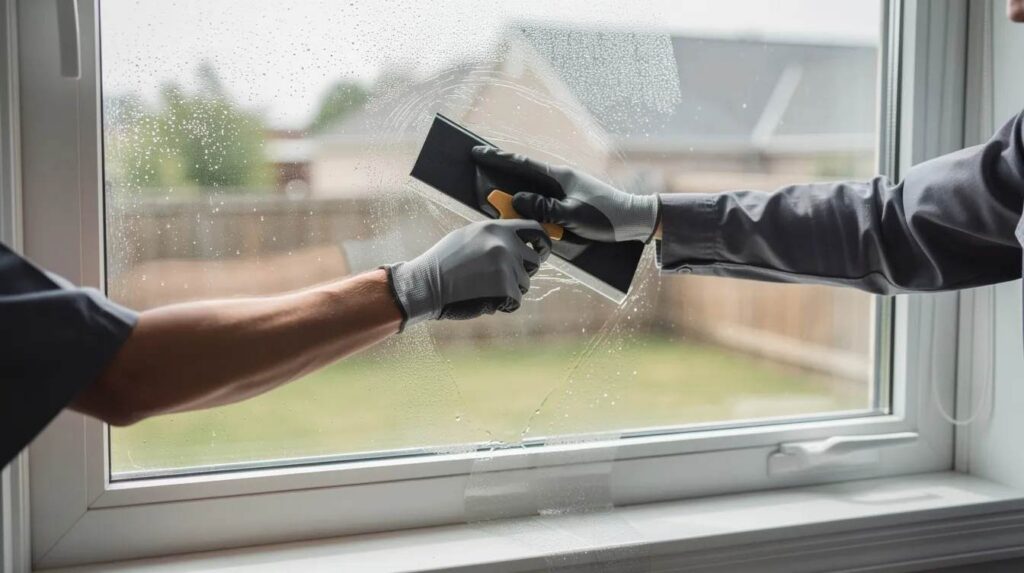
Common DIY issues include bubbles, edge peeling, haze, and adhesive failure. Installation tools include a spray bottle, knife, and squeegee, but technique matters as much as tools. You should cut window film slightly larger than the window pane and use a squeegee wrapped in a cloth to avoid scratches-steps that sound simple but require practice to execute well.
Warranty considerations are a big differentiator. Many premium residential window film manufacturers offer lifetime warranties only when installed by authorized professionals. Security film, in particular, should be professionally installed to ensure proper adhesion under impact.
Dual-pane caution: Dual-pane windows require film rated “dual-pane safe” to prevent thermal shock that can crack sealed glass units. A professional installer will verify compatibility before applying anything.
For whole-home projects, large glass surfaces, or any security or energy-focused films, professional installation is the clear choice.
What to Expect During Home Window Tinting Installation
Most residential projects are completed in a single day with minimal disruption to your routine. Most homes can be tinted in a single day, even for projects covering 15–20 windows.
Pre-installation visit. A specialist visits your home to measure each piece of glass, evaluate existing window types, check for seal failures, and recommend specific films based on your goals. This is where film type gets matched to orientation, glass condition, and your priorities.
Preparation. Installers protect floors and furnishings near windows, thoroughly clean the glass surface, and remove minor stickers or residue. Clean glass is essential for a bubble-free bond.
Application process. Film is cut to size, applied using a slip solution (soapy water), and then squeegeed to push out water and air. The installer trims edges precisely to create a nearly invisible finish.
Drying and curing time. Windows may appear slightly hazy for several days to a few weeks after installation. This is normal-moisture trapped between the film and glass evaporates gradually. Clarity improves as the film fully cures.
Aftercare. Wait about 30 days before cleaning newly filmed windows. Use non-abrasive cloths and ammonia-free cleaners. Avoid using anything that could scratch the film surface. Films install to the interior side of the glass for longevity, easier maintenance, and better access for future service.
Costs, Energy Savings, and Return on Investment
Window film is typically 5–10% of the cost of full window replacement, making it one of the most cost-effective upgrades for comfort and energy efficiency.
Typical cost ranges:
| Film Category | Installed Cost per Sq. Ft. | Whole-Home Estimate (10–20 windows) |
|---|---|---|
| Standard solar films | $6–$12 | $2,500–$4,000 |
| Premium ceramic / low-e | $10–$15+ | $3,500–$5,000+ |
| Security film | $10–$15+ | Varies by coverage |
Prices vary by region, glass type, window access, and film quality.
Energy savings. Homes in sunny or hot climates often see cooling costs drop by 10–30% for the most exposed rooms. Whole-home annual savings commonly land in the 5–15% range. Window tinting can reduce energy costs by 5 to 15% depending on your climate, existing glass, and hvac systems.
Payback period. Most homeowners see payback within 2–5 years depending on energy rates, window size, and local climate. In hot climates with high energy costs, payback can be even faster-one case study at a Texas facility reported payback in about 1.3 years with low-e film.
Rebates and incentives. Check with your utility provider for rebates or local energy-efficiency programs. Some qualifying low-e window films are eligible for federal tax credits under IRS Form 5695. These incentives can shorten your payback period further.
Non-monetary ROI. Beyond lower energy costs, homeowners gain comfort, glare reduction for living rooms and home offices, improved privacy, and protection of valuable furnishings. Most homeowners notice immediate comfort improvements during the first hot or cold season after installation.
Common Questions About Home Window Tinting (FAQ)
Will window film make my home too dark?
This is the most common concern, and for most people, the answer is no. Modern ceramic and spectrally selective films reduce heat and glare while maintaining bright, natural light. VLT can be chosen to match your preferences-films with 50–70% VLT keep rooms feeling open and airy while still rejecting significant heat. Darker films (below 30% VLT) exist for specific needs like media rooms, but they’re not the default.
Can window film go on any type of glass?
Film works on single-pane, double-pane, low-e, and tempered glass, but compatibility matters. Dual-pane windows require film rated dual-pane safe to prevent thermal stress. A professional installer will verify the right film for each glass type in your home before application.
How long does residential window film last?
Premium ceramic, spectrally selective, and low-e films reliably last 15–20+ years with proper care. Most manufacturers offer limited lifetime warranties for residential applications, covering bubbling, peeling, and discoloration. Basic dyed films have shorter life spans-typically 5–10 years.
Will film peel, bubble, or turn purple over time?
Modern, high-quality films are color-stable and resist bubbling when properly installed. The purple-tinted, peeling films some people remember are cheap dyed products from past decades. Today’s ceramic and carbon films hold their appearance for the duration of their warranty.
Can window film be removed or replaced later?
Yes. Films can be professionally removed without damaging the underlying glass. If your style or needs change, an installer can strip the old film and apply a new one. The glue residue is cleaned off during removal.
Does window film affect Wi-Fi, cellular, or smart home signals?
Metalized films can interfere with signals, but most ceramic and spectrally selective films have minimal to no impact on Wi-Fi, cellular, or smart home connectivity. If signal strength matters to you, let your installer know so they can recommend the best option.
Is security film bulletproof or hurricane-proof?
No. Security film improves glass performance under impact by holding shards together and slowing forced entry, but it does not make glass unbreakable. Some films block 99.9% of harmful uv rays and add meaningful impact resistance, but they are not a substitute for hurricane shutters or ballistic glass. Think of security film as a strong deterrent and safety upgrade, not an absolute barrier.
Why Choose Our Team for Your Residential Window Film Project
Choosing the right installer matters as much as choosing the right film. Here’s what sets our team apart:
- Experience and training. Our installers are certified by leading window film brands and specialize in residential projects. We understand how different glass types, window orientations, and local climate conditions affect film performance.
- Quality products. We use professional-grade solar, privacy, decorative, and security film lines backed by strong manufacturer warranties-not the bargain films that fade or peel within a few years.
- Personalized recommendations. Every project starts with an on-site assessment. We evaluate orientation, existing glass, interior design, and your goals-whether that’s energy savings, privacy, safety, or aesthetics-before recommending a single product.
- Clean, respectful installation. Our technicians protect your flooring and furnishings, arrive on time, and leave the work area clean. We treat your home the way we’d want ours treated.
- Transparent pricing. Written quotes clearly outline film type, performance specs, warranty details, and total cost. No hidden fees, no surprises.
- Local expertise. We know the building styles, climate patterns, and HOA considerations in our service area, which helps us recommend films that perform well over the long term.
Conclusion: A Simple Upgrade with Lasting Comfort and Protection
Residential window tinting improves comfort, reduces glare, protects interiors from sun damage and fading, and can meaningfully lower energy costs throughout the year. Whether your priority is cutting summer cooling costs, adding privacy to street-facing windows, or shielding your furniture from constant sunlight, there’s a film that fits.
You don’t need to replace your windows to enjoy these benefits. Adding the right film to existing glass is faster, more affordable, and delivers results you’ll feel the first time the afternoon sun hits your windows.
Ready to find out which films make sense for your home? Request a free in-home consultation and get a custom quote tailored to your windows, your rooms, and your goals. Before your appointment, gather a recent energy bill and make note of your hottest or brightest rooms-that information helps us recommend the install that delivers maximum comfort and energy savings from day one.