Table of Contents:
- Introduction: Why Residential Window Film Matters in 2026
- Core Benefits of Residential Window Film for Your Home
- Types of Residential Window Films and Available Options
- How Professional Residential Window Film Installation Works
- DIY Window Tint vs. Professional Window Film Install
- Cost of Residential Window Film and ROI in 2026
- Common Mistakes Homeowners Make with Window Film
- How to Choose the Right Residential Window Film for Your Home
- What to Expect After Installation: Care, Maintenance, and Longevity
- FAQs About Residential Window Film
- Why Choose Window Film Depot for Your Home
- How to Get Started with Residential Window Film
Introduction: Why Residential Window Film Matters in 2026
If you have ever walked into your living room on a July afternoon and felt like the sun was cooking you through the glass, you already understand the problem. West-facing windows turn rooms into hot spots. Direct sunlight bleaches hardwood floors and fades furniture. Glare makes your home office screen unreadable. And with utility rates climbing steadily across most U.S. states between 2024 and 2026, your HVAC system is working overtime to compensate for heat pouring through untreated glass.
Residential window film is a retrofit solution applied directly to existing window glass. It does not require replacing your windows. Modern films are thin, polyester-based sheets laminated or coated with ceramic particles, metals, or low-emissivity materials that reject solar radiation, block harmful UV rays, reduce glare, and increase privacy. Products like 3M solar control film have moved far beyond the dark, shiny window tint of the 1980s. Today’s films can be nearly invisible while outperforming older technologies on every metric that matters.
Window Film Depot has been installing window films nationwide since 1992. In this guide, you will learn the core benefits of residential window film, explore the available options, understand how professional installation works, and get the practical direction you need to choose the right film and provider for your home.
Core Benefits of Residential Window Film for Your Home
The reason residential window film has moved from a niche upgrade to a mainstream home improvement project is simple: it solves multiple problems with a single application. Here is what a quality film delivers.
Heat Rejection and Year-Round Comfort
Advanced window films can reduce solar heat gain through the glass by up to 80%. On south- and west-facing glass, a solar control film with a Total Solar Energy Rejected (TSER) rating in the 60–70% range can drop surface temperatures near the window by 5–10°F on a summer afternoon. Window film rejects up to 92% of infrared rays, which is the portion of sunlight responsible for most of the heat you feel indoors. Residential window films improve energy efficiency by acting as an advanced thermal barrier. Films reflect solar radiation in the summer and insulate glass in the winter, and low-E films improve energy efficiency by reducing heat loss in winter. The result is a room that stays comfortable without forcing your cooling or heating system into overdrive.
Glare Reduction
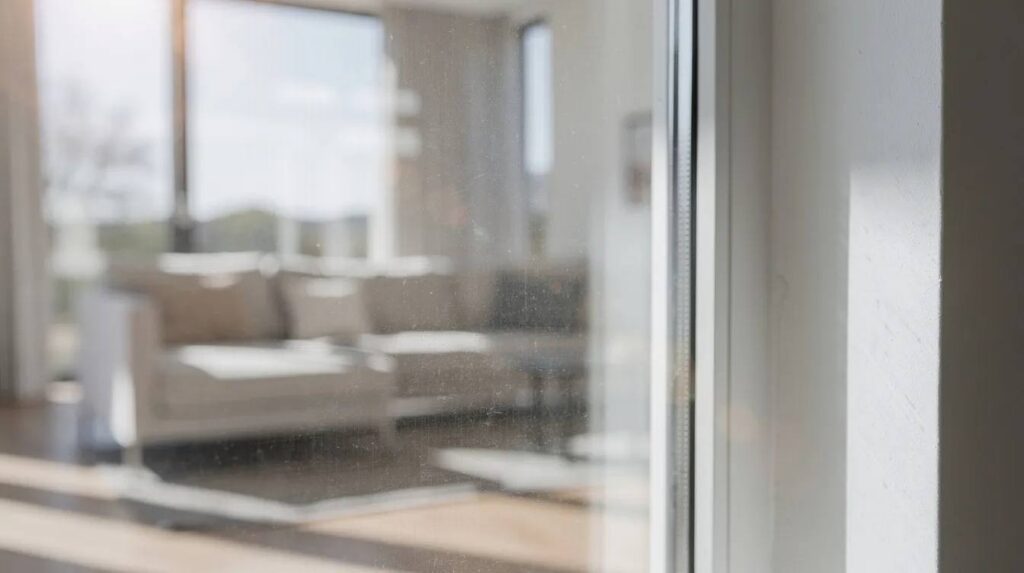
Residential window films reduce glare from the sun, and it reduces glare for more comfortable living spaces. Think about the last time you tried to watch a video during a Sunday afternoon with light flooding your screen, or the glare hitting your monitor while you worked from your home office. A light-to-medium film with a visible light transmission (VLT) of 30–50% can reduce glare by 50–80% while still allowing enough natural light to keep the space bright. You do not have to close curtains or blinds to use your TV or computer.
UV Protection and Fading Prevention
Window film blocks 98% of harmful UV rays. UV blocking window film prevents fading of furniture and floors, protecting wood, carpet, artwork, and upholstery from the slow bleach of daily sun exposure. Over a 5–10 year horizon, this protection can save thousands in replacement costs for items that would otherwise degrade. If you have ever noticed a patch of discolored hardwood near a sunny window, you already know how much damage UV causes over time. Fading is not something you notice day to day, but the cumulative effect is significant.
Energy Efficiency and Lower Utility Bills
Solar control films reduce cooling costs by blocking radiant heat before it enters the room. Window film helps retain indoor heat during winter by reducing heat transfer through the glass. Studies on U.S. residential retrofits show that moderate solar-control films can reduce combined heating and cooling energy use by roughly 11–14%, depending on climate and window exposure. With electricity rates rising in many states, these energy savings translate to faster payback and lower monthly bills.
Privacy and Security
Reflective films provide daytime privacy while allowing visibility outside, meaning you can see your street or porch clearly while passersby see only a reflection, and specialized window protection film solutions to reinforce glass windows and doors can add another layer of security where needed. For nighttime privacy, frosted or dual-reflective films offer better performance than standard reflective options. On the security side, some security films help hold shattered glass together during accidents, slowing forced entry attempts and containing dangerous shards during storm events. These thicker films (4–15 mil) can be paired with anchoring systems for even greater protection at your front door or ground-floor windows.
Aesthetic Upgrades
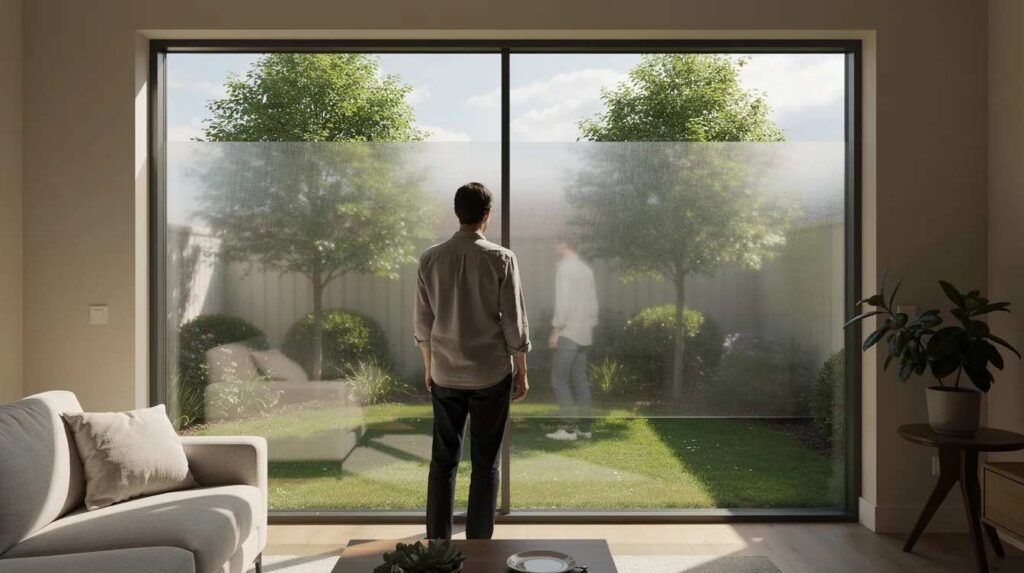
Modern residential window film is not limited to dark or mirrored finishes. Neutral, low-reflective ceramic films blend with any home style without changing the exterior appearance. Decorative patterns, frosted designs, and gradient films add visual interest to sidelights, back door glass, and bathroom windows while keeping the space filled with diffused natural light.
Types of Residential Window Films and Available Options
Not all window films are the same. Different technologies solve different problems, and the choice of window film depends on goals like reducing heat or increasing privacy. Here is how to navigate the main categories.
Solar Control Films
These are the most common residential films. They come in a range of VLT levels:
| VLT Level | Typical Use | Best For |
|---|---|---|
| ~70% (light) | Living rooms, kitchens | Minimal appearance change, moderate heat reduction |
| ~50% (medium) | Home office, bedroom, sunrooms | Balanced light and heat rejection |
| ~35% (medium-dark) | Media rooms, sun-heavy exposures | Strong heat and glare control |
| ~20% (dark) | Extreme solar exposure, privacy | Maximum heat rejection, reduced visibility |
| Solar control films reduce cooling costs by blocking radiant heat, and premium ceramic options reject heat without a heavy tint or mirror effect. |
Low-Reflective and Ceramic Films
Ceramic films use non-metallic nano-particles to achieve high heat rejection with clear visibility and minimal exterior reflectivity. These are ideal for homes in HOA communities or neighborhoods where a mirrored or dark appearance would violate aesthetic rules. A ceramic film might offer VLT in the 50–70% range while still rejecting 30–60% of total solar energy.
Privacy and Decorative Films
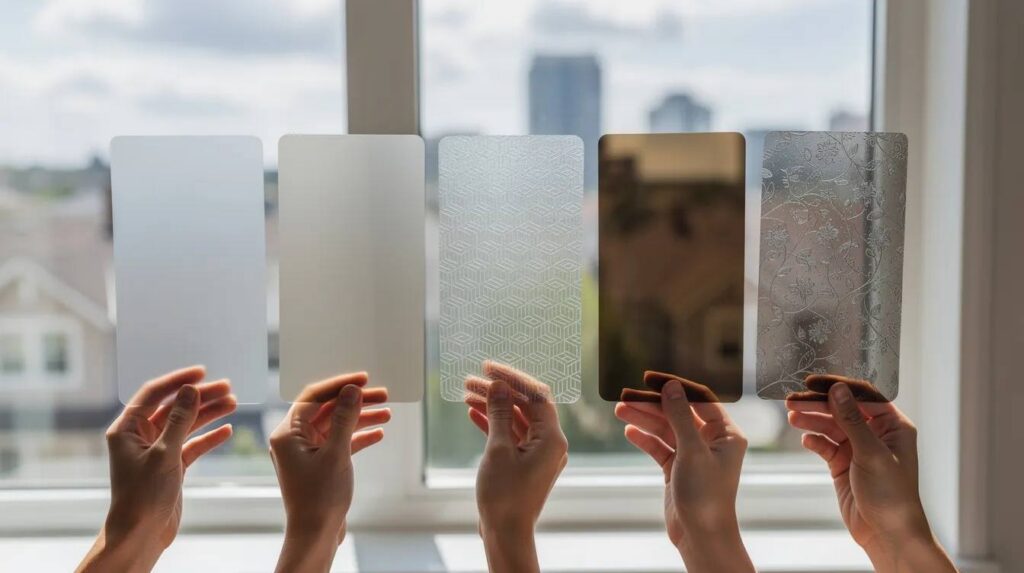
Frosted, patterned, and gradient films obscure the view into bathrooms, street-facing bedrooms, and entry sidelights while still allowing diffused light. Popular series from 3M (FASARA), LLumar, and Avery Dennison provide dozens of patterns and textures. These films leave no permanent marks after removal, making them a flexible option for renters in an apartment or homeowners who like to update their style.
Safety and Security Films
Some thicker safety films improve resistance to breakage and extreme weather, and products like 3M™ Sun Control Window Films, Night Vision™ Series for residential combine strong heat rejection and glare reduction with added comfort and privacy. Security films typically range from 4 to 15 mil in thickness and can be paired with anchoring hardware for enhanced hold-in-place performance. They are most valuable on entry doors, ground-floor windows, and in coastal storm zones. Note that security film complements but does not replace impact-rated glazing where building codes require it.
Anti-Graffiti and Specialty Films
Though more common in commercial settings, anti-graffiti films protect residential glass doors and street-level windows from scratching and vandalism. If your home has glass near a busy street or porch, a sacrificial anti-graffiti layer can save you the cost of glass replacement.
Window Film Depot works with premium brands like 3M and offers comprehensive home window tinting and residential window film installation solutions to help homeowners compare available options based on their specific glass type, orientation, and goals.
How Professional Residential Window Film Installation Works
Professional installation follows a structured process designed to deliver clean results and long-term performance. Here is how it typically unfolds with Window Film Depot.
Step 1 – Consultation and Assessment
A specialist evaluates your home, either on-site or virtually. They inspect each window’s glass type (single pane, double pane, low-E, tempered), measure dimensions, assess sun exposure by orientation, and discuss your goals – whether that is heat reduction, privacy, protection from fading, or security reinforcement.
Step 2 – Product Selection
Based on the assessment, the installer recommends specific films matched to your climate, window directions, and existing glazing. For example, a high-TSER ceramic film might be recommended for a south-facing sunroom with double-pane glass, while a lighter neutral film might suit shaded east-facing bedroom windows.
Step 3 – Preparation
Installers protect your furniture, flooring, and nearby surfaces with drop cloths. The glass is thoroughly cleaned using professional solutions and tools to remove dirt, residue, and oils that could interfere with adhesion. Edges and corners receive extra attention.
Step 4 – Film Application
The film is measured and precision-cut to fit each window. A spray bottle is used to apply a slip solution to the glass surface, allowing the installer to position the film accurately. Squeegees press out water and air, and edges are trimmed for a custom, seamless fit. This wet application technique is the key to avoiding bubbles and creases.
Step 5 – Inspection and Clean-Up
A final quality check ensures every window meets standards. The installer provides instructions on curing time (typically 30–60 days for full clarity) and maintenance. Any remaining haze or small water pockets are normal during this period and resolve as moisture dissipates.
Window Film Depot offers turnkey installation across the U.S. through its nationwide locations and service coverage, including multi-home and multi-location projects for property managers and builders who need consistent quality at scale.
DIY Window Tint vs. Professional Window Film Install
DIY window tint kits are easy to search for and purchase online or at big-box stores, and many homeowners explore do-it-yourself window film and installation options for small projects. They have their place, but it is important to understand the trade-offs.
DIY Pros:
- Lower upfront cost, often $1–$5 per square foot
- Fast access for small, non-critical areas like garage windows, a porch enclosure, or outbuildings
- Custom window film kits are available in six standard widths, and lengths for custom window film kits start at 12 inches
- Custom kits can be ordered for ComforTech Ceramic Series window film, and kits are cut to specific window measurements for easy installation
- Static cling film requires only water for installation
- Installation tools are included for a smooth application
- Installation can take 30-45 minutes for multiple windows
- First-time installers find the process beginner-friendly
DIY Cons:
- Limited film performance compared to professional-grade products
- Risk of bubbles, creases, and poor edge sealing
- No compatibility check for insulated or low-E glass – an error here can cause thermal stress cracks
- ComforTech film is not approved for windows over 40 square feet, a limitation that is easy to overlook
- Warranty coverage is often minimal or nonexistent
Professional Install Advantages:
- Access to higher-performing films (3M Prestige, Ceramic Series) with TSER ratings above 60%
- Precise cutting and application, even on large or unusually shaped glass
- Manufacturer-backed warranties, often limited lifetime for interior residential films
- Expertise in avoiding thermal stress on double-pane and low-E glass
- Professional support if anything goes wrong
Consider a sunroom with 200 square feet of glass. A DIY kit might cost $400 and last 3–5 years with modest heat rejection. A professionally installed ceramic film for the same space might run $2,400–$3,600 but deliver dramatically better comfort, UV protection, and durability for 15–20 years. Over a decade, the professional solution costs less per year and performs far better.
For large glass areas, double-pane windows, and any security or safety application, professional installation is the clear direction to go.
Cost of Residential Window Film and ROI in 2026
Several factors drive cost: film type, performance level, glass size and accessibility, and whether security anchoring is required. Here are typical 2026 price ranges for professional installation:
| Film Category | Cost per Sq Ft (Installed) | Best For |
|---|---|---|
| Basic solar control | $7–$12 | Standard heat and glare reduction |
| Premium ceramic | $12–$18 | High heat rejection, low reflectivity, HOA-friendly |
| Low-E retrofit | $10–$16 | Cold-climate homes, year-round performance |
| Security / safety | $14–$24 | Entry points, storm zones, ground-floor glass |
| Larger projects often receive better per-square-foot pricing. Small, complex windows (skylights, arched glass, high corners) can cost more per unit area due to labor and difficulty. |
Residential window films can be a cost-effective way to improve energy efficiency in homes. Significant savings on heating and cooling costs can occur with window film application, and using window film can reduce energy costs year-round. For a typical 2,000–3,000 square foot home with significant sun exposure, annual energy savings of 5–15% on heating and cooling bills are realistic. In high-cooling-load climates, field studies have shown payback periods of 2–4 years for premium solar control films on clear glass.
Beyond the energy bill, non-monetary ROI is substantial: improved comfort in every room, protection from fading for flooring and furnishings, reduced reliance on shades and blinds, and increased perceived home value. Window Film Depot provides detailed, line-item proposals so homeowners can see cost by area and film type before committing to a project.
Common Mistakes Homeowners Make with Window Film
Avoiding these missteps protects both your comfort and your investment.
Choosing the darkest tint and assuming it is always best for heat. Modern ceramic films can reject enormous amounts of heat at a VLT of 50% or higher. Going too dark can create problems: poor nighttime privacy (interior lights make you visible while you cannot see out), a dark and cave-like room that requires artificial light, and potential HOA violations. Darker is not automatically better.
Ignoring glass type and manufacturer guidelines. Installing the wrong film on double-pane, low-E, or tinted glass can cause thermal stress cracks. This happens when the film absorbs too much heat and the sealed glass unit cannot handle the temperature differential. It can also void your window manufacturer’s warranty. Always check compatibility before you install window film.
Buying solely on price. Discount rolls from unknown brands may look fine on day one, but optical clarity, scratch resistance, and adhesive quality degrade quickly. The difference between a great product from a reputable brand and a bargain-bin roll shows up within 1–3 years as bubbling, discoloration, and peeling at the edges.
Skipping professional consultation for large or high-value projects. A 30–45 minute assessment can prevent expensive re-dos. An installer can identify glass types, measure solar exposure, and recommend films that match your specific situation – something a generic online search cannot replicate.
Having unrealistic expectations about curing. A hazy or slightly streaked appearance during the first 30–60 days is completely normal. Moisture trapped during installation dissipates over time, especially in humid or cool climates. Do not press on the film, peel at corners, or attempt to clean it too early. Patience here is key.
How to Choose the Right Residential Window Film for Your Home
Start with your problem and work backward to the film type. Are you trying to reduce heat? Block glare? Increase privacy? Protect interiors from UV? Enhance security? Each goal points to a different film category and performance range.
Consider orientation and climate. West facing windows and south-facing glass in hot climates need stronger solar control films with higher TSER ratings. East-facing and north-facing windows in cooler or shaded regions can use lighter films. Window film helps retain indoor heat during winter, so in mixed climates, a spectrally selective or low-E film gives you year-round benefit.
Balance visible light and privacy. If you want to maintain bright interiors while cutting glare and preventing neighbors from seeing in during the daytime, a neutral ceramic film with VLT around 50–60% is an amazing starting point. Pair it with a dual-reflective option if nighttime privacy matters.
Review performance data. Look at VLT, TSER, UV rejection, SHGC, and interior reflectivity on manufacturer spec sheets. A quality installer will walk you through these numbers. Do not rely on a photo or marketing image alone – the real world performance depends on your specific glass and sun angle.
Check HOA and aesthetic requirements. Many communities restrict exterior reflectivity and tint darkness. Neutral or low-reflective ceramic films typically satisfy these rules while still delivering excellent solar performance.
Window Film Depot can help you test samples on your actual glass, watch the results at different times of day, and finalize the selection before committing to a full installation. This hands-on approach eliminates guesswork.
What to Expect After Installation: Care, Maintenance, and Longevity
Immediately after installation, your windows may look slightly hazy or show small water pockets trapped beneath the film. This is expected and not an error. The curing process typically takes 30–60 days. In colder or more humid climates, it may take longer. As moisture evaporates through the film, clarity improves steadily.
Maintenance tips:
- Wait at least 30 days before cleaning newly filmed windows
- Use a mild, ammonia-free cleaner and a soft cloth or rubber squeegee
- Avoid razor blades, abrasive pads, and harsh chemical cleaners
- Clean gently around edges and corners to avoid lifting
Durability and warranties: Premium residential window films from brands like 3M carry limited lifetime warranties for interior applications, covering peeling, bubbling, discoloration, and adhesive failure, and detailed 3M™ residential and commercial window film warranty information explains specific coverage by product type. Security films and exterior applications typically carry warranties of 5–15 years. Some manufacturers also include supplemental glass breakage coverage for thermal stress under certain conditions.
High-quality films properly installed can perform for 10–20 years or more, depending on sun exposure, orientation, and product type. Keep your installation paperwork and warranty documentation from Window Film Depot for future reference – it contributes to your home’s maintenance records and can support resale value.
FAQs About Residential Window Film
Will window film make my house too dark?
Not unless you choose an extremely low VLT film. Most homeowners select films in the 35–70% VLT range, which reduce heat and glare while preserving the bright, open feel of a space. Many residential films are nearly invisible from inside. You can still enjoy natural light without the penalties of unfiltered sun.
Can I install window film on double-pane or low-E glass?
Yes, but compatibility matters. Not every film is safe for every glass type. Certain high-absorption films can cause thermal stress on insulated glass units, potentially cracking the glass or breaking the seal. A professional assessment identifies your glass construction and recommends films approved for that configuration. This step is critical.
How long does residential window film last?
With professional installation and a quality product, expect 10–20 years of performance on interior applications. Factors that affect lifespan include sun intensity, orientation, film type, and maintenance. Exterior-applied films have shorter lifespans, typically 5–10 years, due to weather exposure.
Will window film void my window warranty?
It depends on the glass manufacturer. Some window makers restrict aftermarket films, while others allow them with certain performance limits. Reputable installers like Window Film Depot carry supplemental glass breakage or seal failure warranties to bridge any gaps, giving homeowners peace of mind.
How do I clean my windows after film is installed?
After the curing period (30–60 days), use a soft cloth or squeegee with a mild, ammonia-free glass cleaner. Avoid abrasive pads, razor blades, and strong solvents. These can scratch or damage the film surface. Gentle, regular cleaning keeps your windows looking great for years.
Can window film help with storm or impact protection?
Security and safety films (4–15 mil) significantly improve glass shatter resistance. They hold broken glass in place, reducing injury risk and slowing forced entry. However, they are not a substitute for impact-rated glazing in hurricane zones or areas where building codes require specific impact resistance. They are best used as an added layer of protection for your door, window, and glass surfaces.
Why Choose Window Film Depot for Your Home
Window Film Depot is a family-owned company founded in 1992 and headquartered in Marietta, Georgia. With over 30 years in the world of window film, we bring a level of experience that few competitors can match through our broad Window Film Depot product and service offerings. We handle everything from single-home projects to national multi-location roll-outs for property managers and builders.
We specialize in high-performance 3M window film products and professional installation, security glazing solutions, privacy and decorative films, and architectural surface finishes. Our certified installers follow manufacturer protocols on every project, ensuring your warranty is fully backed and your results are built to last.
What sets us apart:
- Turnkey service from consultation through installation and after-care
- Access to top-tier window films and the expertise to match them to your glass
- Transparent, line-item quoting with no hidden costs
- Minimal disruption inside occupied homes – we protect your space and leave it clean
- National service capability with local knowledge and accountability
How to Get Started with Residential Window Film
Whether you are dealing with unbearable afternoon heat, rising energy bills, fading floors, or a lack of privacy on a busy street, residential window film is a proven solution that delivers immediate and long-term results.
Getting started is straightforward. Contact Window Film Depot by phone, website form, or email. Before you reach out, it helps to gather a few basics: an approximate window count, rough sizes, a photo of problem areas, and any HOA requirements that apply. This speeds up the consultation and helps us provide accurate directions for your project.
We also coordinate with builders, remodelers, and property managers for new construction and renovation projects, so whether you are enhancing a single bedroom or outfitting an entire development, we have the capacity and the expertise.
Schedule a no-obligation assessment with Window Film Depot today. Let us show you exactly which residential window film solution is right for your home – and how quickly you can start feeling the difference.