Table of Contents:
- When the Wrong Privacy Film Specification Derails Your Project
- What Commercial Privacy Film Actually Is
- The Performance Specifications That Separate Commercial-Grade Film from Consumer Products
- Privacy Film as a Security and Safety Asset
- Certified Products vs. Generic Aftermarket Films
- Navigating Building Codes and Compliance Requirements for Commercial Installations
- Budget Planning and ROI Framework for Large-Scale Privacy Film Projects
- Conclusion: Choosing a Specification Partner, Not Just a Subcontractor
- Frequently Asked Questions
When the Wrong Privacy Film Specification Derails Your Project
Project teams often treat Privacy Window Film as a simple design choice, but in commercial projects, it directly impacts compliance, glazing performance, and inspection outcomes. Many project delays and costly rework scenarios start when teams specify the wrong film rather than install it incorrectly. This blog explains how privacy window film functions as a performance component, how it interacts with glazing systems, and why proper specification prevents project risk.
Why Privacy Film Is a Performance Decision, Not a Procurement Afterthought
Every delayed project traced back to a privacy film specification error starts the same way: someone treated film selection as a purchasing task rather than an engineering one. The PM had a line item, a budget, and a deadline. They sourced a product that checked the surface-level boxes. And somewhere between installation and final walkthrough, the project hit a wall, sometimes literally, in the form of a failed inspection or a glazing warranty claim.
Commercial privacy film controls solar heat gain, manages glare, determines whether a space meets safety glazing requirements, and in some jurisdictions affects egress compliance. These are performance parameters, not aesthetic preferences. When you specify film the same way you specify office furniture, you expose the project to risks that no change order fully absorbs.
The Hidden Costs of Underspecification
The direct cost of removing and replacing incorrectly specified film on a mid-size office build, typically 5,000 to 15,000 square feet of glazing, runs between $8,000 and $25,000 in labor alone. That figure excludes the cost of the replacement product, the delay to adjacent trades, and the relationship damage with a client who now questions your vendor management judgment.
Failed inspections are the sharper edge of this problem. An Authority Having Jurisdiction (AHJ) that flags non-compliant film on a school or healthcare facility doesn’t issue a courtesy warning. They halt the work, require documentation the installer likely doesn’t have, and put your certificate of occupancy timeline at risk. The film itself may cost $3 per square foot. The rework cost, including inspection fees, scheduling delays, and contractor mobilization, can run ten times that.
Client friction compounds the financial impact. When a tenant improvement project delivers frosted glass conference rooms that turn transparent at night because nobody specified two-way privacy, the client doesn’t file a technical complaint. They call the PM and ask why no one told them.
How This Guide Is Built for Commercial PMs
Most published guidance on privacy film targets homeowners looking to add frosted bathroom windows or reduce street-facing visibility in a home office. That content is accurate for its audience. It is not useful for a PM managing a 40-location retail rollout or a Class A office tenant improvement under an architect’s glazing schedule.
This guide treats commercial privacy bathroom window film installation as a specification discipline. It covers product construction, performance data, compliance triggers, glazing compatibility, and multi-site installation logistics, the decision layers that determine whether your project delivers on time and passes inspection. If you’re already familiar with VLT values and SHGC ratings, this guide moves fast. If some of this technical vocabulary is new, each term is defined in the context where it matters most.
Need More Info?
The Window Film Depot team is happy to help.
What Commercial Privacy Film Actually Is
Opaque, Frosted, Daytime Privacy, and One-Way Film: Functional Definitions
These four categories are frequently conflated in product marketing, and the distinction matters when you’re writing a specification.
- Opaque film blocks all visible light transmission in both directions. It functions like paint on glass, no visibility in or out, no natural light through. Use it where complete visual separation is required and daylight is not a factor.
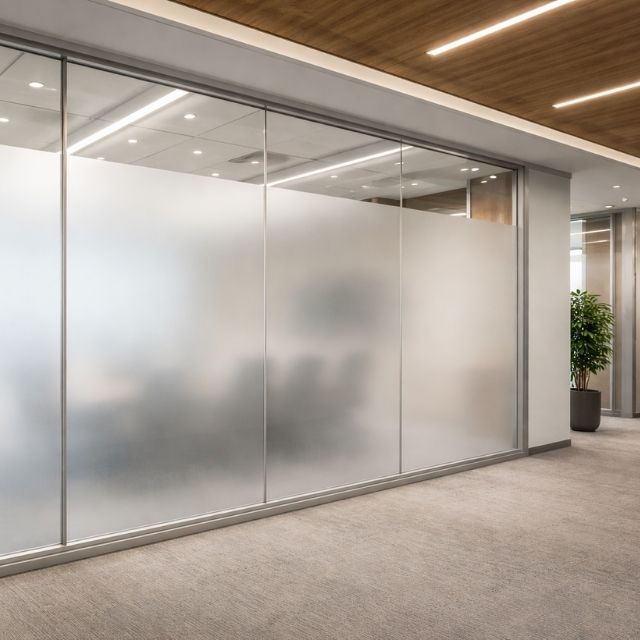
- Frosted window film diffuses light rather than blocking it. It maintains good daylighting while obscuring clear sightlines. This is the most common specification for conference room partitions and interior glazing in office environments.
- Daytime privacy film (also called one-way mirror or reflective film) uses differential light transmission to create a mirrored effect on the brighter side. From outside a building in daylight, the glass reflects. From inside, occupants see out clearly. This film performs exactly as described, during the day.
- One-way privacy film is the same product as daytime privacy film. The “one-way” descriptor refers to the viewing direction under specific lighting conditions, not a permanent physical property.
Adhesive vs. Static-Cling Application Methods
Static-cling film uses electrostatic adhesion with no chemical bonding to the glass. It’s repositionable, removable, and appropriate for temporary applications, trade show environments, short-term lease spaces, or situations where a tenant needs flexibility. It is not appropriate as a permanent commercial specification. Static-cling products are not rated for long-term durability, and most carry no meaningful warranty for commercial applications.
Pressure-sensitive adhesive film bonds to the glass chemically and mechanically. It requires a certified installer for proper application and curing, but it delivers the durability, adhesion integrity, and warranty coverage that commercial projects require. For any permanent commercial installation, pressure-sensitive adhesive film is the correct specification.
Why Daytime Privacy Film Doesn’t Work at Night
The physics of daytime privacy film depend entirely on a light differential. The reflective effect occurs because ambient light on the exterior is brighter than the interior. Reverse that differential, interior lights on after dark with a dark exterior, and the film becomes transparent from outside while the interior is fully visible. This is not a defect. It is how the product is designed to function.
For spaces that require consistent privacy regardless of lighting conditions, conference rooms, medical offices, private offices with exterior glazing, daytime privacy film is the wrong specification. Frosted or opaque film delivers privacy that doesn’t change with the time of day or the lighting environment. When a client asks for “privacy glass” without specifying their operating conditions, the PM’s job is to ask the right follow-up question before the specification is written, not after the film is installed.

The Performance Specifications That Separate Commercial-Grade Film from Consumer Products
PET Substrate Construction and Why Material Composition Determines Durability
Commercial-grade privacy film is built on a polyethylene terephthalate (PET) substrate, a biaxially oriented polyester film that provides dimensional stability, tear resistance, and adhesion compatibility across a wide range of glazing types. Consumer-grade and generic aftermarket films frequently use thinner, lower-density PET or substitute materials that reduce cost but degrade faster under UV exposure and thermal cycling.
Substrate thickness in commercial film typically ranges from 2 to 4 mils for standard privacy applications, up to 8 to 14 mils for safety and security film. That thickness directly determines whether the film maintains adhesive integrity over a 10-to-15-year service life or begins peeling at the edges within two to three years in high-temperature glazing environments. When you’re specifying for exterior-facing glass on a south- or west-facing elevation, substrate quality is not an interchangeable variable.
Solar Heat Gain Coefficient (SHGC) and Visible Light Transmission (VLT)
SHGC measures the fraction of solar radiation that passes through the glass assembly and contributes to interior heat load. A lower SHGC value means less solar heat gain. For commercial buildings pursuing LEED certification or operating under energy codes that set maximum SHGC thresholds, film selection can make the difference between a glazing assembly that passes and one that requires redesign.
VLT measures the percentage of visible light that transmits through the film. A film with 50% VLT transmits half the available visible light. Higher VLT preserves daylighting and occupant connection to the exterior. Lower VLT increases privacy but reduces natural light, a tradeoff that should be calibrated against the space’s lighting design, not selected arbitrarily.
For most Class A office applications, a frosted film in the 40% to 60% VLT range balances privacy with daylighting requirements. Retail environments often require higher VLT to maintain product visibility from the street. Healthcare and K-12 applications may prioritize lower VLT for patient or student privacy regardless of daylighting impact. These are specification decisions that need to be made alongside the mechanical and lighting engineers, not after the interior design package is finalized.
UV Blocking Standards: What 99% UV Protection Actually Means
Nearly every commercial-grade privacy film on the market claims 99% UV blocking. That claim is accurate for most certified products, and it refers specifically to ultraviolet radiation in the 300-to-380 nanometer wavelength range. This matters because UV radiation is the primary driver of fading in flooring, furniture, and artwork, and a secondary driver of skin damage in occupants with extended window exposure.
What 99% UV blocking does not mean is that the glass assembly eliminates all fading risk. Solar heat and visible light also contribute to material degradation. A film that blocks UV but transmits significant solar infrared energy will still accelerate fading in vulnerable materials. For applications where furnishing protection is a specification priority, hospitality, high-end retail, and museum environments, the full solar spectrum performance of the film matters as much as its UV blocking rating.
How Long Commercial-Grade Privacy Film Lasts in High-Traffic Environments
Expected service life varies by application conditions, not just product quality.
- Interior glazing in climate-controlled office environments: 10 to 15 years for adhesive-applied film on standard clear glass
- Exterior-facing glazing with high solar exposure: 7 to 12 years depending on orientation, climate, and glazing system heat load
- High-traffic areas with frequent physical contact (doors, transaction windows, school corridors): 5 to 8 years before edge deterioration or surface abrasion requires replacement
- Safety and security film on exterior-facing glass: 10 to 12 years with proper glazing compatibility

These benchmarks apply to certified commercial products installed by qualified applicators. Generic film in the same environments typically performs at a fraction of these intervals, based on adhesive failure and substrate degradation patterns observed in commercial retrofit projects.
Warranty Coverage: Certified Products vs. Generic Films
Certified commercial film from established manufacturers carries structured warranty coverage that typically includes defects in material and workmanship, adhesive failure, and delamination over a defined term, usually 10 to 15 years for interior applications. That warranty is backed by a manufacturer with a claims process and enforceable terms.
Generic and commodity films frequently disclaim warranty coverage for commercial applications entirely, or limit coverage to replacement product value only, excluding labor costs that represent the majority of the total replacement expense. When a generic film fails early on a 50-location retail rollout, the PM absorbs the rework cost. When a certified product fails within its warranty term, the manufacturer does.
Commercial Film Specification Evaluation Matrix
Use this matrix to evaluate film candidates against your project requirements. Score each category from 1 (does not meet requirement) to 3 (fully meets requirement). A total score below 12 indicates the product requires further qualification before specification.
| Specification Factor | What to Evaluate | Minimum Threshold for Commercial Use |
|---|---|---|
| Adhesive Type | Pressure-sensitive vs. static-cling | Pressure-sensitive adhesive required for permanent installation |
| VLT Range | Percentage of visible light transmission | Must match space lighting design; confirm with mechanical/lighting engineer |
| SHGC Rating | Solar heat gain coefficient | Must comply with applicable energy code or LEED target |
| UV Certification | UV blocking percentage and test standard | 99% UV block minimum; verify test methodology |
| Warranty Term | Duration and scope of coverage | 10-year minimum; verify labor cost inclusion |
| Glazing Compatibility | Manufacturer’s approved glazing list | IGU, tempered, low-e, and coated glass compatibility confirmed in writing |
Before finalizing any specification, request the manufacturer’s Technical Data Sheet and verify that the film’s approved glazing list includes your specific glass assembly. A film that performs correctly on clear monolithic glass may generate excess heat buildup on a coated or insulated unit, potentially cracking the glass and voiding the glazing manufacturer’s warranty. That compatibility check happens before the purchase order, not after.
Privacy Film as a Security and Safety Asset
Fragment Retention, Forced Entry Deterrence, and Blast Mitigation
Most privacy film specifications focus only on aesthetics and solar performance. This focus creates a specification gap and exposes projects in healthcare, education, government, and Class A office environments to liabilities that standard film selection processes never surface.
Safety-grade window film holds broken glass in place after an impact event. When glass fractures from a forced entry attempt, accidental impact, seismic activity, or an explosive pressure wave, the film’s substrate and adhesive layer bind the fragments together, preventing the shower of glass shards that causes the majority of injury in glazing failure events.
The mechanism is straightforward. A thicker PET substrate, typically 8 to 14 mils for safety applications compared to 2 to 4 mils for standard privacy film, absorbs and distributes impact energy across the film surface rather than concentrating it at the point of fracture. Paired with an aggressive pressure-sensitive adhesive that bonds to the glazing frame or attachment system, the film keeps the glass assembly structurally intact long enough to delay entry or contain the hazard.
For forced entry deterrence, delay time is the operative metric. Tests conducted under the ASTM F1233 protocol measure how long a glazing assembly resists attack with common burglary tools. A standard glass pane fails in seconds. A glass pane with properly specified safety film can resist penetration for 30 to 90 seconds depending on film thickness and attachment method, long enough to deter opportunistic entry and trigger alarm response.
Blast mitigation applications reference GSA and Department of Defense standards, specifically GSA TS01-2003, which grade window film systems against pressure wave and fragment hazard levels. This is a specialized specification domain, but it’s increasingly relevant for government tenant improvements, public transit facilities, and high-profile retail locations.
ANSI Z97.1 and CPSC 16 CFR 1201: Safety Glazing Standards You Cannot Afford to Ignore
These two standards define what qualifies as safety glazing in the United States, and they apply directly to commercial window film specifications in any application where glazing is subject to human impact.
ANSI Z97.1, published by the American National Standards Institute, establishes performance requirements for safety glazing materials, including testing protocols for impact resistance. CPSC 16 CFR 1201, the Consumer Product Safety Commission regulation, sets mandatory safety standards for glazing in hazardous locations, specifically doors, sidelights, and any glass within 18 inches of a floor in a walking surface.
When privacy film is applied to glazing in these locations, the combined assembly must meet the applicable standard. A film that independently passes safety testing does not automatically make the glazing assembly compliant. The assembly must be tested or certified as a system. This is where generic film products consistently fail commercial specification requirements: they lack the assembly-level testing documentation that AHJs require.
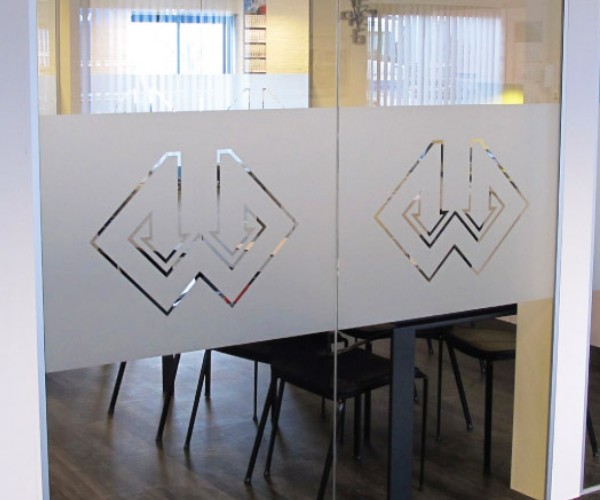
3M Safety Series and High-Performance Film Lines
3M’s safety film portfolio includes products specifically tested and certified to ANSI Z97.1 and CPSC 16 CFR 1201 as glazing assemblies. The 3M Safety Series S140, S200, and Scotchshield Ultra line is engineered as a multi-layer PET window laminate with documented performance data across impact, forced entry, and blast mitigation test protocols.
Critically, 3M provides jurisdiction-ready documentation packages, including product data sheets, test reports, and certified assembly specifications, that support AHJ submissions without requiring custom testing. For a PM managing a permit timeline, that documentation infrastructure is a practical advantage that commodity film products simply don’t offer.
Does Privacy Film Affect Building Codes and Safety Compliance?
Yes, and the variance across jurisdictions is significant enough that a specification that clears permitting in one city may require additional documentation in another. Most jurisdictions adopt the International Building Code (IBC), which references ANSI Z97.1 and CPSC 16 CFR 1201 for safety glazing. Local amendments, enforcement interpretations, and occupancy-specific overlays mean that the AHJ in a K-12 school district may apply requirements that differ materially from a neighboring commercial jurisdiction.
The consistent requirement across virtually all jurisdictions is documentation. The AHJ needs to verify that the film product, the glazing substrate, and the installation method together constitute a compliant assembly. If your installer can’t produce that documentation on request, you don’t have a compliant installation, regardless of what the product label says.
What Happens When Non-Compliant Film Fails an Inspection
The sequence is predictable and expensive. The inspector flags the non-compliant installation, issues a correction notice, and places a hold on the affected area of the certificate of occupancy. The installer must remove the film, provide documentation proving the replacement product meets the required standard, and schedule a re-inspection. Each step adds time and cost, and in occupied or partially occupied buildings, it creates operational disruptions that the client measures in dollars.
On a school project where glazing in corridors and classrooms is subject to CPSC 16 CFR 1201 requirements, a single non-compliant film specification can trigger removal and replacement across hundreds of lites. The rework cost, including labor, material, inspection fees, and schedule impact, routinely exceeds the original film contract value.
Certified Products vs. Generic Aftermarket Films
How 3M Fasara and Performance Film Lines Are Engineered Differently
3M Fasara is a benchmark for commercial decorative and privacy film because the product line is engineered to a manufacturing standard that commodity alternatives don’t replicate. The difference starts at the substrate level. Fasara uses a multi-layer PET construction with a scratch-resistant hard coat, a controlled-adhesion layer matched to specific adhesive formulations, and dimensional stability tolerances that maintain consistent VLT and appearance over the product’s rated service life.
Generic films are manufactured to a price point. The PET substrate is typically thinner, the hard coat is absent or minimal, and the adhesive formulation is optimized for application ease rather than long-term adhesion integrity. These are engineering trade-offs, not quality failures. Generic films are designed for markets where longevity and certification aren’t the primary specification criteria. They are not appropriate for commercial applications where both matter.
Where Generic Films Consistently Fall Short
Three failure modes distinguish generic film performance from certified commercial products in real project conditions.
- Edge lifting and delamination. Generic adhesive formulations lose bond integrity at the film edges under thermal cycling, typically within two to four years in high-solar-exposure applications. Certified commercial films maintain edge adhesion over their full warranty term when installed on compatible glazing.
- Surface degradation. Without a hard coat layer, generic film surfaces scratch and haze under normal cleaning cycles. In high-traffic environments such as retail storefronts, school corridors, and healthcare reception areas, visible surface degradation within 18 to 24 months is common.
- Documentation gaps. Generic films lack the test certifications, assembly approvals, and AHJ submission packages that commercial inspections require. You can install a generic film and have it look acceptable. You cannot use it to satisfy a safety glazing compliance requirement.
What’s the Difference Between Residential and Commercial Privacy Film Specifications?
The functional difference comes down to duty cycle, regulatory exposure, and warranty structure. Residential film specifications assume moderate use, no occupancy compliance requirements, and a homeowner tolerance for periodic maintenance.
Commercial specifications assume continuous occupancy, regulatory scrutiny, and a client expectation that the installed product performs to specification for a decade or more without intervention.
In practice, this means commercial specifications require pressure-sensitive adhesive rather than static-cling, documented glazing compatibility, certification to applicable safety standards where required, and warranty coverage that includes labor costs, not just replacement material.
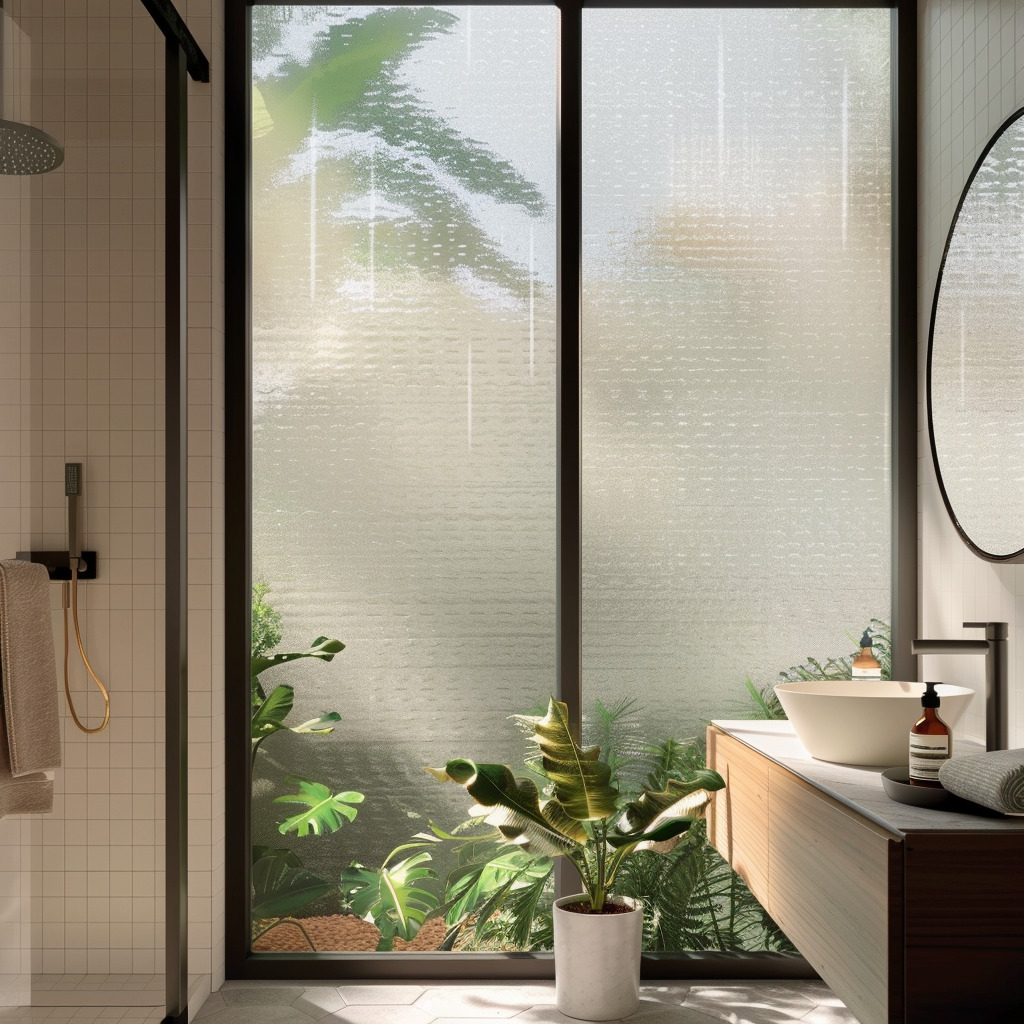
Glazing System Compatibility: The Pre-Installation Assessment That Prevents Costly Mistakes
Reading the Glazing Schedule
The glazing schedule is your first reference for film compatibility, and it’s the document most film subcontractors on low-bid projects never request. Insulated glass units (IGUs), tempered glass, and low-e or spectrally selective coated glass all have specific film compatibility requirements that vary by manufacturer and product line.
IGUs are particularly sensitive. Film applied to the interior surface of an IGU changes the thermal dynamics of the unit, specifically by increasing the temperature of the inner glass pane by trapping solar heat. If the film’s SHGC and the glazing unit’s thermal specifications aren’t matched, the result is elevated glass temperatures that exceed the IGU’s design limits, causing seal failure or thermal stress fracture. The film manufacturer’s approved glazing list defines which IGU configurations are compatible, and that list must be verified before specification, not during installation.
Tempered glass has a lower tolerance for the thermal stress that film-induced heat buildup creates. Low-e coatings can interact with some film adhesive formulations, affecting both adhesion and the coating’s optical performance. These aren’t edge cases. They’re standard conditions in commercial glazing systems built in the last 15 years.
How Incompatible Film Voids the Glazing Manufacturer’s Warranty
Glazing manufacturers publish approved film lists or film application guidelines as a condition of their warranty. Installing a film product not on that approved list, or installing any film on a glazing type the manufacturer excludes, voids the glazing warranty for that unit. On a curtain wall system or high-performance IGU installation, individual unit replacement costs can be substantial. Multiplied across a building elevation, the warranty exposure from an incompatible film specification becomes a material project risk.
The PM’s protection is straightforward: require written confirmation from both the film manufacturer and the glazing manufacturer that the specified film is approved for the existing glazing system before the purchase order is issued. Get it documented. That paper trail is the difference between a warranty claim and a rework cost.
Navigating Building Codes and Compliance Requirements for Commercial Installations
How to Install Privacy Film on Commercial Windows Without Triggering Code Violations
Compliance starts before the first square foot of film is cut. The sequence that keeps projects out of code trouble follows three steps: verify the glazing schedule, confirm the applicable safety glazing requirements for the space type and jurisdiction, and match the specified film to both.
For glazing in IBC-regulated hazardous locations, including doors, sidelights, floor-level windows, and stairwell glazing, the film must be part of a tested and certified assembly. This means the installer needs to know the glass substrate type, the film product, and the attachment method, and needs documentation confirming that combination has been tested to the applicable standard. Applying film without that verification is what generates correction notices.
Permit requirements vary. Some jurisdictions require a permit for commercial window film installation. Others treat it as a maintenance item that doesn’t trigger permit review. Your installer should know the local requirement. If they don’t, that’s a qualification signal.
AHJ Submission, Product Documentation, and the Paper Trail That Protects Your Project
The documentation package for a compliant commercial film installation includes four elements.
- Product data sheet specifying VLT, SHGC, UV blocking, adhesive type, and substrate construction
- Safety glazing certification to ANSI Z97.1 or CPSC 16 CFR 1201 for applicable glazing locations
- Glazing manufacturer compatibility confirmation for the specific glass assembly
- Installer certification or qualification documentation
Certified film manufacturers provide the first three in a format structured for AHJ submission. A certified installer provides the fourth. If your subcontractor can’t assemble this package before installation begins, the project is carrying undocumented compliance exposure that will materialize during inspection.
File this documentation in the project record with the same discipline you apply to structural or MEP submittals. If the building changes tenants, undergoes renovation, or is sold, that film specification documentation becomes part of the building’s compliance history.
Sector-Specific Compliance Scenarios
K-12 School Window Film: Safety Glazing and Forced Entry Standards
K-12 projects carry the highest safety glazing compliance burden, and increasingly they include security performance requirements that go beyond standard ANSI and CPSC thresholds.
Many school districts now reference forced entry delay standards, typically ASTM F1233 Level 1 or higher, for exterior-facing glazing, particularly following updated school safety guidelines from state education agencies.
The specification implication is direct: standard frosted privacy film does not satisfy forced entry delay requirements. Safety film that meets both privacy and security performance criteria must be specified, and the glazing assembly must be documented as compliant with both the safety glazing standard and any district or state security requirement.
Confirm the applicable standards with the district facilities manager before the specification is written. They vary enough by state that a specification sourced from a prior project in a different jurisdiction may not transfer.
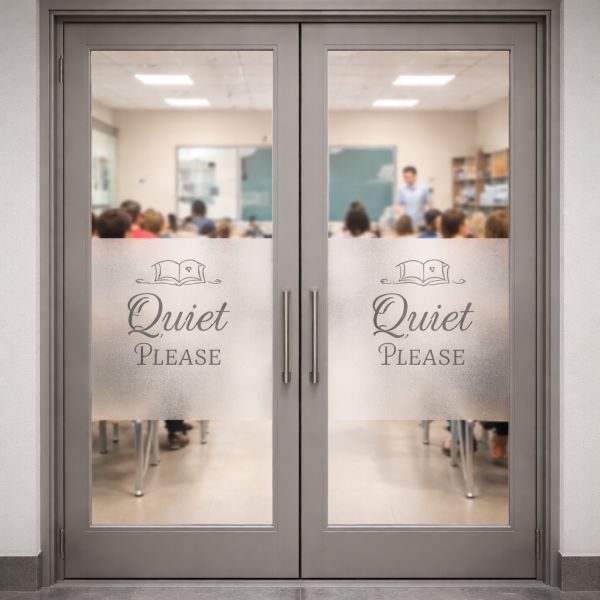
Retail Window Film: Visibility, Branding, and Fire Egress Considerations
Retail window film specifications balance three constraints that don’t always point in the same direction. The tenant wants visibility from the street, consistent branding, and solar control. The building code requires that egress paths remain unobstructed and identifiable, which affects film applied to or near exit doors. The landlord’s base building criteria may restrict VLT minimums or prohibit certain film types on the exterior glazing.
Fire egress considerations are specific: film applied to exit door glass cannot obstruct the door’s visual identification as an egress path. Opaque or high-reflectance film on exit door sidelights may conflict with this requirement depending on the AHJ’s interpretation. Confirm the egress glazing locations on the floor plan before finalizing the retail specification, and review the base building criteria document if one exists. Many Class A retail landlords include film restrictions in their tenant improvement guidelines.
Class A Office Buildings: Tenant Improvement Specifications and Lease Compliance
Tenant improvement projects in Class A office buildings operate under an additional compliance layer that residential and institutional projects don’t face: the landlord’s base building standards and the lease itself. Most Class A office leases include provisions governing what modifications a tenant can make to the glazing system, and window film is explicitly addressed in the majority of them.
Common requirements include landlord or property manager approval of the film product, a minimum VLT threshold to preserve the building’s exterior appearance, and installation by a certified installer with appropriate insurance. Non-compliance with these provisions can trigger a lease default notice, require removal at the tenant’s expense, and create liability for any glazing damage caused by an unapproved product.
Request the building’s standards and approval procedures before specifying. In most cases, a certified installer with a documented product submission can obtain landlord approval within the project timeline without difficulty. The failure mode is skipping that step because the timeline felt tight, and discovering the lease provision during a property manager walkthrough after installation is complete.
Budget Planning and ROI Framework for Large-Scale Privacy Film Projects
Cost-Per-Square-Foot Ranges for Commercial Installations
Material and labor costs for commercial privacy film vary enough by product category, installation complexity, and project scale that a single number misleads more than it informs. The working ranges below reflect current market conditions for certified commercial installations.
- Frosted and decorative film (3M Fasara and equivalent certified lines): $8 to $14 per square foot installed, including material and labor
- Solar control and daytime privacy film: $6 to $12 per square foot installed
- Safety and security film (8 to 14 mil): $12 to $20 per square foot installed, with higher figures for attachment system integration
- Multi-layer safety-privacy combination products: $15 to $25 per square foot installed
Volume matters significantly at commercial scale. A 50-location retail rollout or a 100,000-square-foot office building generates enough aggregate square footage to negotiate material pricing and mobilization efficiencies that single-site projects don’t access. National installer programs with manufacturer partnerships can reduce per-square-foot costs on large portfolios, provided the specification is standardized across locations before procurement begins.
The figure most PMs underestimate is mobilization cost per site. A certified installer traveling to a single location bills travel, setup, and minimum day rates regardless of square footage. On small-footprint locations in a multi-site rollout, mobilization can represent 30% to 40% of the per-location cost. Batching installations by geography and sequencing sites to minimize installer travel is where project management discipline directly reduces budget exposure.
Total Cost of Ownership: Certified Installation vs. Low-Bid Subcontractor Risk
The low-bid film subcontractor looks attractive at the purchase order stage and expensive by the second year of a project cycle. The cost differential between certified and low-bid installation isn’t visible in the initial invoice. It accumulates through warranty claim gaps, early replacement cycles, and rework costs.
A practical total cost of ownership comparison for a 10,000-square-foot commercial installation illustrates the gap. A certified installation with commercial-grade film carries a higher initial cost but delivers a 10-to-15-year service life with warranty coverage for material and labor on qualifying failures. A low-bid installation with generic film carries a lower initial cost but typically shows visible failure within four to six years, and its warranty covers replacement material only, with labor excluded.
At year five, the certified installation is performing to spec with no intervention. The generic installation is showing edge lifting, surface haze, and possibly adhesive failure on high-solar-exposure elevations. A full replacement adds substantial unbudgeted cost to the low-bid project. Over a 15-year building cycle, the certified installation is the lower-cost option.
For multi-location portfolios, failed inspections and non-compliant installations compound this math further. One AHJ correction notice requiring removal and replacement across a large school project can generate significant rework cost from a specification error that would have cost nothing to avoid.
Ensuring Consistent Installation Across Multiple Locations
Vendor Reliability and Quality Assurance for Multi-Site Rollouts
Specification consistency across multiple locations requires more than a standardized product selection. It requires an installation partner with documented quality assurance processes, trained applicators who follow the same installation protocol at every site, and a reporting structure that gives the PM visibility into installation quality without requiring on-site presence at each location.
The failure pattern in multi-site rollouts without these controls is predictable. The first few locations look good because the senior installer is on-site. By location eight, a less experienced crew is working from general instructions, skipping the pre-installation glazing assessment, and applying film to glass types the product data sheet flags as requiring special handling. The first inspection failure surfaces months later when a facilities manager notices edge lifting or files a warranty claim.
Quality assurance protocols for multi-site film projects should include the following.
- Pre-installation site survey at each location documenting glazing type, condition, and compatibility confirmation
- Photographic documentation of installation at each site, filed by location in the project record
- Post-installation inspection sign-off by a qualified supervisor before the installer demobilizes
- Centralized punch list management so the PM can track open items across all locations in real time
Why Multi-Site Consistency Requires a Certified National Installer
A regional installer with strong local performance can deliver excellent results on a single site. They cannot guarantee that the same product, the same installation method, and the same documentation standard will be replicated at a location hundreds of miles away. Multi-site projects need an installer with national infrastructure: trained crews in each geography, a common quality system, manufacturer certification that applies to every installation regardless of location, and a single point of accountability for the PM.
Certified national installers also maintain manufacturer relationships that provide direct access to technical support, product availability at scale, and warranty administration that doesn’t require the PM to manage multiple regional vendors. When a warranty issue surfaces at location 23 of a 40-site rollout, the resolution process runs through a single contact, not a patchwork of regional subcontractors each interpreting the warranty terms differently.
Sector-Based Film Selection Snapshot
Use this reference to match film category to application context before writing the specification.
| Sector | Recommended Film Category | Primary Compliance Trigger | Specification Priority |
|---|---|---|---|
| K-12 Education | Safety film (8-14 mil) with frosted option | ANSI Z97.1, CPSC 16 CFR 1201, forced entry delay standard | Fragment retention and forced entry delay first; privacy secondary |
| Class A Office (TI) | Frosted film, 40-60% VLT | Landlord base building VLT minimums, lease compliance | Glazing compatibility and landlord approval before product selection |
| Retail Storefront | Daytime privacy or solar control, high VLT | Egress door glazing requirements, landlord criteria | VLT preservation for product visibility; confirm egress glazing locations |
| Healthcare | Frosted or opaque for patient areas | Safety glazing in hazardous locations | Consistent privacy regardless of lighting conditions |
| Government / Secure Facilities | Safety film, blast-rated where required | GSA TS01-2003, forced entry standards | Blast mitigation and fragment retention; verify applicable GSA hazard level |
Conclusion: Choosing a Specification Partner, Not Just a Subcontractor
Every privacy film project that derails does so because one or more critical decisions was made by default rather than by specification. These are the five decisions worth locking down before procurement begins.
- Film category selection matched to operating conditions. Daytime privacy film cannot substitute for frosted film in spaces that require 24-hour privacy.
- Glazing compatibility confirmed in writing, from both the film manufacturer and the glazing manufacturer, before the purchase order.
- Safety and compliance requirements verified by occupancy type and jurisdiction, not assumed to transfer from a prior project in a different location.
- Warranty structure reviewed for labor cost inclusion. Replacement material coverage alone does not protect the project budget on a multi-location portfolio.
- Installation partner qualified for multi-site consistency, selected on documented quality systems and national infrastructure, not price alone.
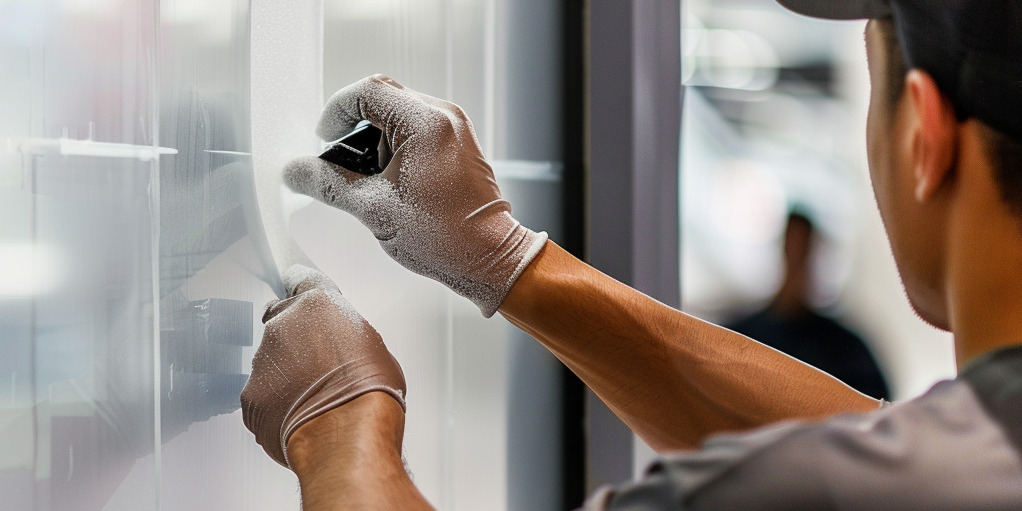
These decisions are not complex. They require discipline and the right specification partner, not specialized engineering knowledge the PM doesn’t have.
Why Window Film Depot’s Certified National Infrastructure Eliminates Vendor Risk
Window Film Depot operates as a 3M Authorized Dealer and certified national installer with the manufacturer relationships, trained installation crews, and quality systems that multi-site commercial projects require. The infrastructure addresses the failure modes this guide documents: inconsistent installation quality across locations, missing compliance documentation, glazing compatibility gaps, and warranty claim processes that leave the PM holding rework costs.
On a practical level, that means a single specification consultation produces a documented product recommendation with glazing compatibility confirmation, a compliance documentation package structured for AHJ submission, and an installation program that applies the same quality standard at every location in the portfolio.
Request a Commercial Specification Consultation
Before the next glazing specification goes to bid, request a commercial specification consultation. Bring the glazing schedule, the occupancy type, and the compliance requirements for the jurisdiction. The consultation produces a specification document you can use directly, covering product selection, glazing compatibility confirmation, and compliance documentation ready for the submittal package.
The consultation costs nothing. The rework it prevents does. Contact Window Film Depot today for a free estimate and expert guidance on privacy window film solutions for your project. Their team will help you specify the right film to meet compliance, performance, and installation requirements.
Frequently Asked Questions
Why does privacy film not work at night?
Daytime privacy film, also called one-way mirror or reflective film, relies on a light differential to create its mirrored effect. When exterior light is brighter than the interior, the glass reflects outward and blocks the view in. After dark, that differential reverses, making the interior fully visible from outside. This is by design, not a product defect. Spaces that require consistent privacy around the clock should be specified with frosted or opaque film instead.
What privacy film works for daytime and nighttime?
Frosted window film is the correct specification for spaces requiring consistent privacy regardless of lighting conditions. Unlike one-way privacy film, frosted film diffuses light uniformly in both directions without depending on a light differential to function. It maintains visual privacy whether the lights are on or off, making it the standard choice for conference rooms, medical offices, and private offices with exterior-facing glazing.
How long does commercial-grade privacy film last?
Service life depends on application conditions. Adhesive-applied film on interior glazing in a climate-controlled office environment typically lasts 10 to 15 years. Exterior-facing glazing with high solar exposure generally delivers 7 to 12 years depending on orientation and climate. High-traffic areas subject to frequent physical contact may require replacement in 5 to 8 years. These benchmarks assume certified commercial products installed by qualified applicators. Generic film in the same environments typically underperforms these intervals due to adhesive failure and substrate degradation.
Does privacy film affect building codes and safety compliance?
Yes. In jurisdictions that adopt the International Building Code, glazing in hazardous locations, including doors, sidelights, and glass within 18 inches of a walking surface, must meet safety glazing standards under ANSI Z97.1 or CPSC 16 CFR 1201. When privacy film is applied to these locations, the combined glazing assembly must be tested and certified as a system. Generic films frequently lack this assembly-level documentation, which is what AHJs require to confirm compliance. A film that looks correct is not the same as a film that is documented as compliant.
What’s the difference between residential and commercial privacy film specifications?
The core differences are duty cycle, regulatory exposure, and warranty structure. Residential film assumes moderate use and no occupancy compliance requirements. Commercial film must withstand continuous occupancy, satisfy applicable safety glazing standards, be compatible with the existing glazing system, and carry warranty coverage that includes labor costs. Commercial installations require pressure-sensitive adhesive film applied by a certified installer, along with documentation that supports AHJ submission. A residential-grade product applied in a commercial setting creates compliance exposure that neither the product nor the installer is equipped to address.
How do you ensure consistent installation across multiple locations?
Consistency across a multi-site rollout requires more than a standardized product selection. It requires an installation partner with documented quality assurance processes, trained crews who follow the same protocol at every site, and a reporting structure that gives the PM visibility without requiring on-site presence everywhere. Practically, this means pre-installation site surveys at each location, photographic documentation filed by site, post-installation supervisor sign-off before demobilization, and centralized punch list management. A certified national installer with manufacturer credentials and a single point of accountability is the structure that makes this achievable across a large portfolio.