Table of Contents:
- Why Improper Window Film Removal Is a Bigger Risk Than Most Project Managers Expect
- Tools and Materials a Competent Removal Team Should Have on Hand
- Step-by-Step Methods for How to Remove Window Tint Film from Commercial and Residential Glass
- How to Remove Adhesive Residue After the Film Is Gone
- The Mistakes That Turn a Film Removal Project into a Glass Replacement Claim
- When Professional Window Film Removal Is the Smarter Technical Decision
- What to Evaluate When Replacing Your Window Film After Removal
- Conclusion: Window Film Removal as a Technical Decision, Not a Maintenance Task
- Frequently Asked Questions
Why Improper Window Film Removal Is a Bigger Risk Than Most Project Managers Expect
How to remove window tint is often treated as a simple maintenance task, but it carries real risk if done incorrectly. Improper removal can scratch glass, damage coatings, and create costly delays in commercial and residential projects. This blog explains how to remove window tint safely, why substrate identification matters, and how the right techniques prevent damage and protect long-term performance.
The Hidden Costs of a Botched Removal
A failed window film removal doesn’t just leave a mess. It can permanently damage the glass and turn a budgeted line item into an unplanned glass replacement. On a commercial retrofit, that means halted work, subcontractor callbacks, potential warranty disputes, and a project timeline that slips while you source replacement glazing units.
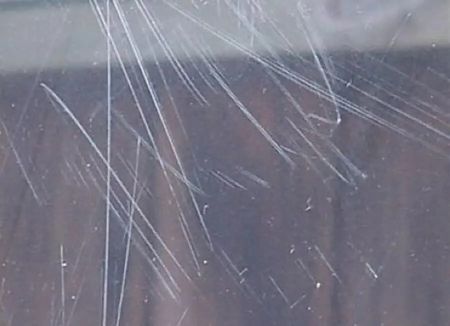
The most common damage scenarios are scratched float glass from improper blade use, stripped low-emissivity coatings on energy-efficient glazing, and adhesive residue that bonds so aggressively to the substrate that mechanical removal becomes unavoidable. Each of those outcomes is preventable, and each one compounds. A scratched pane that gets re-filmed looks bad under direct light and will show defects on final inspection. The cost of getting this wrong consistently exceeds the cost of doing it right the first time.
Understanding What You’re Actually Removing: Film Types and Their Adhesive Profiles
Dyed, Metalized, and Ceramic Films
Not all window film removes the same way. Dyed films are typically single-layer constructions. They age by fading and become brittle, causing the film to tear in small pieces rather than peel in clean strips. Metalized films bond more aggressively because the metallic layer acts as a vapor barrier that traps the adhesive against the glass during heat cycles, increasing adhesion strength over time. Ceramic films, the current high-performance standard, tend to release more cleanly when properly softened, but only if the installer used quality adhesive to begin with.
Age is the variable most crews underestimate. A film installed in the last three to five years behaves predictably. A film from fifteen or twenty years ago may have adhesive that has undergone chemical cross-linking, essentially vulcanizing to the glass surface. The older the film, the harder the removal. Plan your method and labor hours accordingly.
Pressure-Sensitive Adhesive Residue and Why It’s the Real Problem
The film itself is rarely what causes permanent damage. The pressure-sensitive adhesive layer underneath is. Window films use acrylic-based PSA adhesive that, when new, releases cleanly with moderate heat or chemical softening.
When aged or exposed to UV cycling, that same adhesive can become either rock-hard and brittle or gummy and transfer-prone, smearing across the glass rather than lifting off with the film.
Need More Info?
The Window Film Depot team is happy to help.
This residue stage is where most removal projects go wrong. Crews pull the film and assume the job is 80% done. Then they scrape the adhesive dry, generate micro-scratches across the glass face, and hand back a substrate that’s unsuitable for new film installation. Adhesive residue removal deserves its own protocol, not a five-minute afterthought with a razor blade.
How Film Delamination in Aged Commercial Installations Compounds Removal Complexity
Delamination, where the film separates into distinct layers rather than pulling as a single unit, is common in commercial installations over ten years old. When the outer polyester layer separates from the adhesive layer, you’re effectively removing the film twice: once for the film and once for the adhesive matrix left behind. On a multi-floor building with hundreds of panes, that doubles your labor hours and chemical consumption.
Delaminated film also signals that the adhesive has likely undergone significant chemical change. Before any removal crew starts on a large commercial project, they should assess a sample pane by scoring a corner, applying heat, and attempting a controlled peel. How that test peel behaves tells you whether you’re dealing with clean removal, layer separation, or hardened residue. That five-minute test prevents a five-day rework.
The Substrate Integrity Stakes: Float Glass, Tempered Glass, and Low-E Coated Glazing
The glass type determines which removal methods are safe and which ones void warranties or cause irreversible damage. Float glass, the standard annealed glass found in older commercial buildings, is forgiving. It tolerates heat guns, razor scrapers, and most chemical agents without issue, provided technique is correct.
Tempered glass changes the equation. The surface compression layer that gives tempered glass its safety rating is also what makes it vulnerable to surface micro-scratching. A razor blade applied at the wrong angle or with grit caught underneath will leave permanent marks visible under oblique lighting. Those scratches cannot be polished out.
Low-E coated glazing is the highest-risk substrate. The low-emissivity coating on many modern insulated glass units sits on the interior glass surface, sometimes the same surface the film is bonded to. Aggressive chemical agents or excessive heat can degrade or strip that coating, destroying the thermal performance of the entire glazing unit. On an insulated glass unit, that typically means full IGU replacement, not just re-filming. Identifying your substrate before any work begins is not a precaution. It’s the decision that determines your entire method selection.
Tools and Materials a Competent Removal Team Should Have on Hand
Chemical Agents: Ammonia, Isopropyl Alcohol, Acetone, and Dish Soap Solutions
Each chemical agent serves a specific function in the removal process. Ammonia-based solutions soften PSA adhesive and work well for the ammonia-and-solar method on large interior panes. A diluted solution of roughly 10% ammonia in water, applied under a plastic sheet and left to dwell, penetrates the adhesive layer without requiring mechanical force.
Isopropyl alcohol at 70% or higher concentration is the standard residue-removal solvent for general glass surfaces. It evaporates cleanly, leaves no film, and is safe on most substrates including tempered glass. Acetone works faster and more aggressively on stubborn adhesive patches, but it requires substrate verification before use, as it can attack certain coatings and frame materials. Dish soap diluted in warm water serves as both a lubrication layer for razor scraping and a first-pass chemical soak on newer, lightly adhered films.
Mechanical Tools: Heat Guns, Steamers, Razor Blade Scrapers, and Floor Scrapers
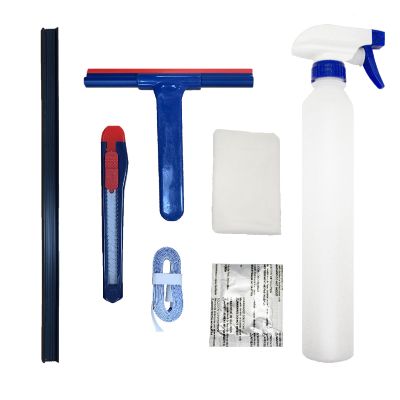
A commercial-grade heat gun with variable temperature control is more reliable than a household hair dryer, which rarely reaches the 150 to 200°F range needed to soften PSA adhesive efficiently. Steamers are the preferred tint removal tool on large commercial panes. They deliver consistent, wide-coverage heat that softens adhesive across a broad area, reducing the tearing that point-source heat guns can cause on brittle aged film.
Razor blade scrapers should use fresh, single-edge blades for every project. A dull blade drags rather than cuts, increasing the pressure required and the risk of scratching. For large floor-to-ceiling commercial panes, a professional floor scraper with a long handle gives the mechanical leverage to work efficiently without the crew crouching or overextending, reducing both fatigue and technique errors over a full-day removal.
Surface Protection Materials and Safety Supplies
Before any chemical or mechanical work starts, adjacent surfaces need protection. Drop cloths cover flooring and sills. Painter’s tape protects frame edges and any adjacent architectural finish. Plastic sheeting contains ammonia overspray and prevents chemical runoff onto non-target surfaces.
Personal protective equipment is non-negotiable when working with ammonia or acetone in enclosed spaces: nitrile gloves, safety glasses, and respiratory protection appropriate to the chemical concentration and ventilation conditions. Ammonia fumes accumulate quickly in poorly ventilated interiors. Plan for cross-ventilation or schedule chemical phases during off-hours in occupied buildings.
Pre-Removal Readiness Checklist
Use this checklist as a go/no-go framework before any removal crew begins work. Complete each stage in sequence and do not proceed to the next stage if any item is unresolved.
Stage 1: Substrate Identification (Complete Before Mobilizing)
- Stage 1: Substrate Identification (Complete Before Mobilizing)
- Confirm glass type on all panes in scope: float, tempered, or low-E coated IGU
- Check for manufacturer labels or markings on the glass edge or corner
- Review building as-built drawings or glazing specifications if available
- Flag any panes with visible delamination, cracking, or prior damage for individual assessment
- Stage 2: Film Assessment (Complete Before Selecting Method)
- Test-peel a corner on one representative pane per film generation or area
- Record behavior: clean peel, layer separation, brittle fracture, or adhesive transfer
- Estimate film age from project records or building maintenance history if accessible
- Identify any specialty films such as safety film or anti-graffiti film that require modified removal protocols
- Stage 3: Tool and Chemical Verification
- Heat gun: variable temperature confirmed functional, set range 150 to 200°F
- Steamer: water reservoir full, pressure stabilized, tested on a non-visible surface
- Razor scrapers: fresh blades loaded, quantity sufficient for full scope (plan one blade per 20 to 30 square feet minimum)
- Chemical agents on hand: ammonia solution, isopropyl alcohol 70%+, dish soap, acetone (if substrate-approved)
- Drop cloths, painter’s tape, and plastic sheeting staged at the work area
- Stage 4: Safety and Site Prep
- PPE issued to all crew: nitrile gloves, safety glasses, respiratory protection
- Ventilation confirmed: windows open or mechanical ventilation active before chemical application
- Drop cloths placed on all flooring and horizontal surfaces within the splash zone
- Adjacent frames and finishes masked with painter’s tape
- Chemical SDS sheets accessible on-site
- Stage 5: Go/No-Go Decision
- Proceed only if all four prior stages are complete and no unresolved substrate risks have been flagged. If low-E coated panes are confirmed in scope, escalate method selection to a qualified film professional before any mechanical or chemical work begins.
Step-by-Step Methods for How to Remove Window Tint Film from Commercial and Residential Glass
With your substrate identified and tools staged, method selection comes down to three variables: film age, glass type, and available dwell time. Each method below suits a specific set of conditions. Choosing the wrong one wastes time and introduces risk. Choosing the right one makes the rest of the process straightforward.
Method 1: The Heat Gun or Steamer Method
When to Use It
This method works on float glass and tempered glass across nearly all film ages and construction types. It is the most reliable approach for commercial-scale removal because heat softens PSA adhesive uniformly, allowing clean peeling with minimal residue transfer. Avoid using a heat gun on low-E coated glazing unless you have confirmed the coating is on the opposite glass surface from the film. Excessive heat on a thin or compromised coating causes irreversible thermal degradation. Steamers are preferred over heat guns on large panes because they distribute heat more evenly, reducing the brittle fracturing that point-source heat causes on aged film.
Step-by-Step Execution
- Set the heat gun to 150 to 180°F. Higher temperatures do not speed the process and increase the risk of glass thermal stress on large panes.
- Hold the tool 2 to 4 inches from the glass surface and move it in steady, overlapping passes. Do not hold it stationary.
- Heat a corner section for 30 to 45 seconds, then test the edge with a fingernail or plastic tool. The film should begin to lift without tearing.
- Peel at a low angle, roughly 15 to 20 degrees from the glass surface. A steep angle pulls the film straight out, tears it, and separates the layers.
- Move the heat source ahead of the peel line continuously. The adhesive needs to stay warm to release cleanly. Let it cool and it re-bonds.
- On large commercial panes, work in 18-inch horizontal strips from top to bottom, reheating any section that cools before you reach it.
Method 2: The Ammonia and Solar Exposure Method
When to Use It and Chemical Safety Considerations
This method suits large interior-facing panes where you can use solar gain to drive the ammonia solution into the adhesive layer.
It requires minimal mechanical effort and works well on films that have begun to delaminate, since the chemical penetration compensates for inconsistent adhesion.
The critical constraint is ventilation. Ammonia at working concentrations produces fumes that accumulate quickly in enclosed spaces. Schedule this phase during low-occupancy periods, open all adjacent windows and doors before application, and ensure the crew has respiratory protection rated for ammonia vapor throughout the dwell period.
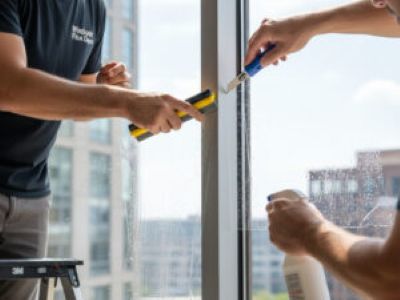
Do not use this method on insulated glass units or any pane with a suspected low-E coating. Ammonia can react with certain metallic coating layers and degrade the thermal performance of the glazing.
Step-by-Step Execution
Mix a 10% ammonia solution in water in a spray bottle. Cut black plastic sheeting slightly larger than each pane.
- Spray the exterior glass surface lightly with plain water to pre-wet.
- Apply the ammonia solution generously to the interior film surface.
- Cover the film immediately with the black plastic sheet, pressing out air pockets to ensure full contact.
- Position the pane in direct sunlight, or use supplemental heat if solar exposure is limited.
- Allow a minimum 45-minute dwell time. On older or more heavily adhered film, extend to 90 minutes.
- Peel back the plastic sheet slowly at a low angle. The film should release with it or lift cleanly from a corner.
- Reapply solution to any sections that resist and allow an additional 20-minute dwell before attempting again.
Method 3: The Soap-and-Scrape Method for Newer or Lightly Adhered Films
Reserve this method for film installed within the last five years with no signs of delamination. It is the lowest-risk approach for lightly adhered films and works well for small-scope residential removals.
Step-by-Step Execution
Mix six drops of liquid dish soap per quart of warm water. Spray the film surface until thoroughly saturated. Score a corner of the film with a fingernail and peel back a starter strip. Keep the surface wet throughout the peel. If the film dries, it tears. Use a floor scraper with a fresh blade for any sections that won’t peel by hand. Hold the blade at 30 to 45 degrees and use short, overlapping strokes in one direction. Never scrub or use circular motion, which drags grit across the glass and introduces scratching. Work top-to-bottom on vertical panes so solution flows downward and keeps the active area lubricated.
Handling Film That Is 20-Plus Years Old: Delaminated Layers and Brittle Adhesive
Film from the early 2000s or older behaves like a different material category. The polyester outer layer has typically become brittle and will fracture into small sections rather than peeling in strips. The adhesive layer beneath it will have either cross-linked to a hard, resinous state or gone tacky and smear-prone. You won’t know which until you test a pane.
Run a controlled test before committing a crew to a full scope:
- Heat a 6-inch corner section with the heat gun.
- Attempt a slow peel at 15 degrees.
- Note whether the film lifts as a unit, separates into layers, or fractures into fragments.
If the film fractures, switch to a steamer and work in very small sections, reheating constantly. If it separates into layers, treat the adhesive matrix as a separate removal phase requiring full chemical dwell before scraping. On large commercial retrofits with this film profile, factor in two to three times the labor hours of a standard removal.
Can Old Window Tint Be Removed Without Leaving Residue?
On film under ten years old with intact adhesive, clean removal with little to no residue is achievable with proper heat application and peel technique.
On film over fifteen to twenty years old, some residue transfer is almost certain regardless of method. The adhesive has chemically changed too much to release completely with the film.
Budget for a dedicated residue removal phase on any aged commercial installation and set that expectation with your client or crew before work begins, not after they see the result.

How to Remove Adhesive Residue After the Film Is Gone
Why PSA Residue Removal Deserves Its Own Protocol
Residue left on glass after film removal is not a cosmetic issue you can film over. PSA residue creates an uneven bonding surface that causes adhesion failures and visible bubbling in any new film installation. More critically, aggressive dry-scraping of residue is the single most common cause of glass scratching during removal projects. Treating residue as a quick cleanup step rather than a distinct technical phase is where well-intentioned crews cause permanent damage.
Chemical Residue Removal: Selecting the Right Solvent for the Glass Substrate
Isopropyl Alcohol for General Use
Isopropyl alcohol at 70% concentration or higher is the default solvent for PSA residue on standard float and tempered glass. Apply it with a clean microfiber cloth, let it dwell for 60 to 90 seconds to penetrate the adhesive layer, then wipe in straight strokes. It evaporates cleanly, leaves no film, and is safe on most glass substrates and frame materials. For heavy residue, apply multiple passes rather than scrubbing harder.
Acetone and Commercial Adhesive Removers on Compatible Substrates
Acetone works faster than isopropyl alcohol on thick or stubborn residue patches, but it requires substrate confirmation first. It can damage certain frame coatings, painted surfaces, and some thermally broken aluminum extrusions. Apply it in targeted applications by holding a small saturated cloth against the residue for 30 seconds, rather than broad wiping. Commercial adhesive removers formulated for glass use a similar approach but are often less aggressive, making them better suited for extended contact on large surface areas.
Adhesive Removers Safe for Commercial Glass Coatings
On low-E coated glass, neither acetone nor ammonia-based products belong anywhere near the coating surface. Isopropyl alcohol is the only broadly safe solvent option. For surfaces where even isopropyl alcohol feels aggressive, a citrus-based adhesive remover designed for glass is a lower-risk alternative. It is slower acting but compatible with most coated substrates. When in doubt on a commercial-spec glazing system, test any solvent in a non-visible corner before applying it across the full pane.
Mechanical Residue Removal: Razor Angle, Pressure, and Stroke Control
If chemical softening has not fully dissolved the residue, a razor blade scraper is the correct mechanical tool, but only on pre-wetted glass. A dry razor on lightly residue-coated glass is the fastest way to generate surface scratches. Wet the glass with isopropyl alcohol or soapy water first, then hold the blade at 15 to 20 degrees, nearly flat to the surface, and use short, consistent forward strokes. Do not push the blade laterally or drag it backward. Lift it between strokes and inspect the edge for grit buildup. Replace blades frequently. One blade per 20 to 30 square feet is not excessive when residue removal is the primary task.
Post-Removal Surface Inspection and Glass Prep Before New Film Installation
Once residue removal is complete, wipe the entire glass surface with a clean microfiber cloth dampened with isopropyl alcohol, then use a window squeegee to clear any remaining solution. Inspect under oblique lighting, either a focused flashlight or natural light at an angle, to catch any remaining haze, smear zones, or micro-scratches. Residue haze appears as a dull, slightly milky cast. Micro-scratches appear as fine parallel lines under directional light.
New film requires a clean, flat, uncontaminated substrate. Any residue or contamination left on the glass will telegraph through the film as bubbles, haze patches, or adhesion voids within the first heat cycle. If inspection reveals scratches on float glass, a light professional polish may recover the surface. On tempered glass, scratches are permanent. Escalate to your glazing contractor for a damage assessment before proceeding with new film installation.
Does WD-40 Remove Tint Glue?
WD-40 does soften and loosen PSA adhesive and will lift tint glue if applied and allowed to dwell. The problem is what it leaves behind: an oily film residue on the glass that requires thorough degreasing before any new film can be installed. On a small residential pane where you have time to fully degrease the surface afterward, it’s a functional workaround. On a commercial-scale removal with dozens or hundreds of panes, introducing an oily contaminant layer across all glass surfaces adds a time-consuming cleanup step that offsets any convenience. Use isopropyl alcohol or a purpose-built adhesive remover instead. They do the same job without generating a secondary contamination problem.
The Mistakes That Turn a Film Removal Project into a Glass Replacement Claim
Using the Wrong Scraper Angle or Blade on Tempered and Coated Glass
A razor blade held at 45 degrees or steeper concentrates force into a narrow edge contact point. On float glass with good surface lubrication, that’s manageable. On tempered glass, it creates micro-scratches along the surface compression layer that scatter light and become visible under any direct illumination. The correct angle is 15 to 20 degrees, nearly parallel to the glass surface, with the blade flat against it. Using a dull blade compounds the problem. The increased drag requires more pressure, and more pressure increases scratch depth. Assign fresh blades at the start of every day and again mid-shift on large projects.
Skipping Dwell Time on Chemical Agents and Forcing the Peel
Impatience during the dwell phase is directly correlated with adhesive residue problems. A chemical agent applied and immediately scraped has not penetrated the adhesive matrix. It has only wet the surface. The adhesive separates from the glass once the solvent has migrated through the full adhesive layer, which takes time determined by adhesive age and film thickness. Rushing it doesn’t save time. It creates a partial release that tears the adhesive into fragments, each of which now requires individual attention. On aged film, extend every dwell recommendation by 50%. The extra time spent waiting is always less than the time spent re-treating resistant patches.
Applying Heat to Low-E Coated Glazing Without Substrate Verification
This mistake warrants a dedicated warning because the consequences are severe and irreversible. A heat gun directed at a low-E coated surface can degrade the metallic oxide layer in minutes. That degradation doesn’t show up immediately as cracking or discoloration. It shows up later as a thermal performance gap in the glazing unit or as a visible haze that only becomes apparent once the new film is installed. An IGU with a compromised low-E coating cannot be repaired. The pane must be replaced. Verify coating position before any heat application. If the spec sheet or building records are unavailable, use a low-E detector. They cost considerably less than a replacement IGU.
Neglecting Rear Defroster Lines in Automotive and Specialty Glass Contexts
Rear defroster grids are printed directly on the glass surface using conductive silver paste. They sit on the glass itself, not under the film. Any razor blade work near defroster lines risks scraping the grid off the surface and rendering the defroster non-functional. For any automotive or specialty glazing with embedded heating elements, confine mechanical scraping to areas clear of the grid lines and use chemical softening exclusively near the grid. This applies equally to heated architectural glass panels in commercial entries, which are increasingly common in northern climate installations.
What Is the Safest Way to Remove Window Tint Without Damaging Glass?
The safest removal sequence is chemical softening first, heat assist second, and mechanical scraping last and only on a fully wetted, pre-softened surface.
For any substrate other than standard float glass, verify the surface type before selecting your method. With low-E coated glass, avoid heat and acetone entirely.
When working on tempered glass, hold blades flat, keep the surface wet, and replace blades frequently.
The majority of glass damage during film removal comes not from the method itself but from skipping the preparation steps that make each method safe.
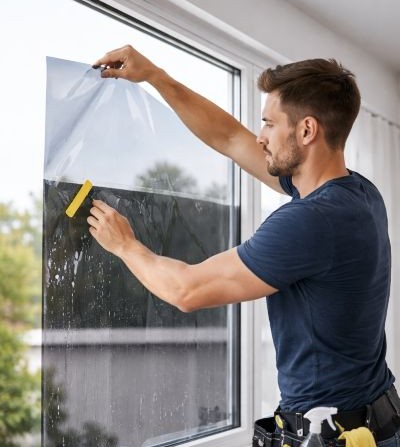
When Professional Window Film Removal Is the Smarter Technical Decision
Defining the Professional Threshold: Scale, Substrate Risk, and Project Compliance
Three variables reliably push a removal project past the point where in-house execution is defensible: scope measured in hundreds of square feet or more, substrate types that carry irreversible damage risk, and compliance requirements tied to building permits or glazing warranties. Any one of these alone warrants a professional assessment. All three together make professional window film removal the only defensible choice from a project management standpoint.
Compliance is the variable most project managers overlook. On tenant improvement projects, glazing warranties and lease terms may specify that film installation and removal be performed by certified applicators. Using an uncertified crew, even a competent one, can void the glazing warranty on affected panes. That exposure doesn’t surface until something goes wrong, and by then the project is closed and the liability is yours.
Large-Scale Commercial Glazing and Multi-Floor Retrofits: The Coordination Factor
At single-floor scale, a capable crew with the right tools can manage film removal as a straightforward subcontract task. At multi-floor scale, the project becomes a coordination problem. Different floors may have different film generations, different glazing specifications, and different occupancy constraints that affect chemical scheduling. A professional removal team brings sequencing experience, knowing which floors to stage first, how to manage chemical dwell phases across multiple zones simultaneously, and how to document substrate conditions floor by floor for the replacement installation that follows.
That documentation matters. On a large retrofit, the removal phase is your only opportunity to identify panes with fogged seals, edge damage, or coating degradation before new film goes on. A professional crew performing removal as part of a full-lifecycle scope will flag those panes. A general labor crew focused only on getting film off the glass typically won’t.
Specialty Glass Scenarios Where DIY Removal Creates Unacceptable Liability
Low-E Coated Panes, Insulated Glazing Units, and Warranty Invalidation Risks
Low-E coated IGUs represent the highest-stakes removal scenario in any commercial building stock built after the mid-1990s. The coating position, which surface of which pane in the unit, determines whether heat and chemical exposure during removal can reach it. That information requires accessing glazing specifications or using a low-E detector on-site. A professional removal contractor carries that detector and knows how to interpret the reading. A crew that skips this step and applies heat to the wrong surface can degrade the coating invisibly, with consequences that only appear during post-installation inspection or the next energy audit.
IGU warranty invalidation follows a similar logic. Most IGU manufacturers require certified installation and removal practices to maintain the unit’s seal warranty. Documented professional removal protects that warranty. Undocumented DIY removal voids it.
Tempered Glass and the Consequence of Surface Micro-Scratching
Tempered glass scratches are permanent. There is no polish or resurfacing option that recovers the optical clarity of a scratched tempered pane. On a commercial facade with floor-to-ceiling tempered vision glass, a crew using incorrect blade angles or dull tools can generate scratches across dozens of panes in a single day. That damage only becomes fully visible when the new film is applied and light transmission makes every imperfection apparent. Professional removal crews working tempered glass maintain strict blade protocols and inspect each pane under oblique lighting before moving on. That inspection step is rarely built into a DIY removal workflow.
Is DIY Tint Removal Risky for Large Commercial Windows?
Yes, and the risk scales with the window size. Larger panes require more consistent heat distribution, longer chemical dwell times, and better mechanical leverage to peel film cleanly. They also produce larger adhesive residue fields that need methodical treatment. The technique tolerances that allow a careful person to remove film from a car window without damage are considerably narrower on a large commercial pane. One angle error or one dry-scrape pass covers a lot more glass.
How Long Does Professional Window Film Removal Take?
A professional two-person crew typically removes film from standard commercial panes at a rate of 150 to 300 square feet per hour, depending on film age and adhesive condition.
A 10,000-square-foot office floor might take one to two full days for film removal alone, plus a separate phase for adhesive residue cleanup before new film installation can begin.
Aged film with delamination or hardened adhesive can reduce that rate significantly. Get a professional assessment of film condition before finalizing your project timeline. An estimate built on clean-removal assumptions will be wrong if the film is older than expected.

Evaluating Professional Removal as a Project Line Item
Professional removal costs more upfront than assigning the task to a general labor crew. The calculation shifts when you factor in rework. A single scratched tempered pane on a commercial project can cost $800 to $2,500 or more to replace, depending on size and specification. A degraded IGU is higher. Against those figures, professional removal is not a premium. It’s insurance against the specific failure modes that unqualified execution on complex glazing is most likely to produce.
Structure the scope to include removal, substrate inspection, and new film installation as a single contract. Splitting removal from installation across different contractors removes accountability for substrate condition and creates disputes when the installing contractor encounters damaged glass they didn’t cause.
What to Evaluate When Replacing Your Window Film After Removal
Using the Removal Phase to Audit Glazing Condition and Performance Gaps
Film removal is the one moment in a glazing system’s lifecycle when the bare glass is fully accessible for inspection. Before new film goes on, assess each pane for seal failure (visible fogging or moisture between IGU panes), edge damage, and any surface degradation that the old film was obscuring. Film installed over a failed IGU seal will not perform to spec and will need to come back off when the IGU is eventually replaced.
This audit also reveals performance gaps. If the original film was installed fifteen years ago for solar control and the building has since updated its lighting and HVAC zoning, the replacement film specification may no longer match the building’s actual thermal load. Removal is the right moment to reassess that specification, not after the new film is already installed.
Matching Replacement Film Specification to Current Building Code and Tenant Requirements
Building energy codes have tightened considerably since most commercial window film was originally specified. Depending on your jurisdiction, replacement film may need to meet updated visible light transmittance minimums, solar heat gain coefficient targets, or glare reduction standards tied to current Title 24, ASHRAE 90.1, or local energy ordinances. Tenant requirements add another layer. A new occupant with specific daylighting requirements or branding standards may need different film than what the previous tenant used.
Confirm the replacement specification against both current code and current tenant criteria before ordering material. A film that complies with the old spec but not the new code will require another removal cycle.
Managing the Full Film Lifecycle as a Single Scope
Managing removal and reinstallation as separate scopes creates gaps in accountability, substrate documentation, and scheduling. When the same qualified contractor handles both phases, they own the substrate condition going into installation and have a direct interest in performing removal carefully, because they are also responsible for the installation quality that follows. Splitting the scope eliminates that alignment.
A single-scope contract also simplifies your project timeline. The contractor sequences removal, inspection, any substrate remediation, and installation without a handoff gap that stalls the project while you re-bid the installation phase.
Can You Remove Window Tint Film Yourself? A Calibrated Answer for Project Managers
On a single residential pane or a small commercial space with verified float glass and film under ten years old, DIY removal is a reasonable choice with the right tools and technique. The methods covered earlier in this article are accurate and executable by a capable person willing to prepare properly.
The answer changes once any of these conditions appear: low-E or specialty coated glass, film over fifteen years old, tempered glass in a commercial facade, or a scope that exceeds a few hundred square feet. At that point, the risk profile of DIY execution, including scratched substrates, compromised coatings, warranty voids, and undetected IGU failures, consistently outweighs the labor cost savings. For those projects, professional removal paired with immediate reinstallation is the more budget-protective decision.
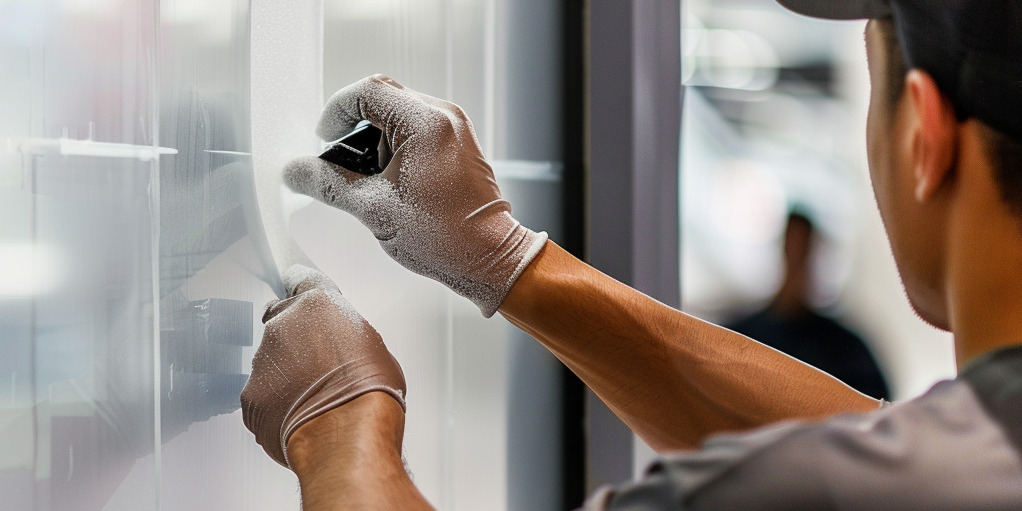
Key Takeaways: Window Film Removal Job-Site Reference
Professional threshold: Engage a certified removal contractor when scope exceeds 300 sq ft, glazing includes low-E or tempered glass, or building warranties require certified applicators.
Critical substrate warnings: No heat or ammonia on low-E coated surfaces. No dry scraping on tempered glass. Verify IGU seal condition before re-filming.
Method selection guide: Heat or steamer for most film ages on float and tempered glass. Ammonia and solar for large interior panes with adequate ventilation. Soap-and-scrape for film under five years old only.
Residue rule: Isopropyl alcohol first, mechanical scraping only on pre-wetted glass at 15 to 20 degrees.
Conclusion: Window Film Removal as a Technical Decision, not a Maintenance Task
Recapping the Method Selection Framework and Substrate Risk Hierarchy
The core framework is straightforward: substrate first, method second, execution third. Identify your glass type before selecting any chemical or mechanical approach. Float glass gives you the most flexibility. Tempered glass narrows your blade technique requirements significantly. Low-E coated glazing eliminates heat and aggressive chemicals from your options entirely. Film age layers on top of substrate risk. Older film demands more dwell time, more labor hours, and a dedicated residue removal phase that cannot be compressed.
Heat softening handles most removal scenarios competently. Chemical dwell methods extend your capability to large panes and delaminating film. Mechanical scraping is always a finishing tool, never a primary one, and always on a wetted surface with a fresh blade at a shallow angle.
The Case for Engaging a Qualified Window Film Specialist for How to Remove Window Tint Film at Commercial Scale
The methods in this article are technically sound and executable. The professional threshold is not about whether the methods work. It’s about where the consequences of execution errors become unacceptable. On a commercial facade, a single substrate mistake can cost more than the professional removal contract would have. On a multi-floor retrofit, undocumented substrate damage discovered during new film installation creates disputes and delays that a single-scope professional contract would have prevented.
A qualified window film specialist brings substrate knowledge, rated equipment, documented processes, and accountability across the full removal-to-reinstallation lifecycle. For large commercial projects, that accountability is the line item that protects everything else in your budget.
Contact Window Film Depot today for a free estimate and expert support on safe, professional window film removal. Their team ensures proper techniques that protect glass and prevent costly damage.
Frequently Asked Questions
What is the safest way to remove window tint without damaging glass?
The safest sequence is chemical softening first, heat assist second, and mechanical scraping only as a last step on a fully wetted surface. On low-E coated glass, avoid heat and acetone entirely. On tempered glass, keep blades nearly flat at 15 to 20 degrees, maintain surface lubrication throughout, and replace blades frequently. Most glass damage during film removal results not from the method itself but from skipping the substrate verification and preparation steps that make each method safe.
Can I take my tints off myself?
On a single residential pane or a small commercial space with verified float glass and film under ten years old, DIY removal is a reasonable approach with the right tools and preparation. The calculation changes if you’re dealing with low-E coated glass, film over fifteen years old, tempered glass in a commercial setting, or a scope exceeding a few hundred square feet. In those scenarios, the risk of scratched substrates, compromised coatings, and voided warranties consistently outweighs the labor savings.
Can old window tint be removed without leaving residue?
On film under ten years old with intact adhesive, clean removal with minimal residue is achievable using proper heat application and peel technique. On film over fifteen to twenty years old, some adhesive transfer is almost certain regardless of method. The adhesive has chemically changed too much to release fully with the film. Budget for a dedicated residue removal phase on any aged commercial installation and communicate that expectation to your crew or client before work begins.
What adhesive removers are safe for commercial glass?
Isopropyl alcohol at 70% or higher is the broadly safe default for most glass substrates, including tempered glass. Citrus-based adhesive removers designed for glass are a lower-risk alternative on coated surfaces where you need extended contact time. On low-E coated glazing, avoid acetone and ammonia-based products entirely. When working with any unfamiliar commercial glazing specification, test your chosen solvent in a non-visible corner before applying it across the full pane.
What equipment do professionals use for film removal?
Professional crews typically work with commercial-grade heat guns with variable temperature control, steamers for large-pane coverage, fresh single-edge razor blade scrapers, and long-handle floor scrapers for floor-to-ceiling glazing. On the chemical side, they use ammonia solutions, isopropyl alcohol, and purpose-built adhesive removers selected by substrate type. Low-E detectors are standard kit for any project involving modern insulated glass units, as they determine coating position before any heat or chemical work begins.
Is DIY tint removal risky for large commercial windows?
Yes, and the risk scales directly with window size. Larger panes require more consistent heat distribution, longer chemical dwell times, and better mechanical leverage to peel film cleanly. They also produce larger adhesive residue fields that demand methodical treatment. The technique tolerances that allow careful removal from a standard residential window are considerably narrower on a large commercial pane. A single angle error or dry-scrape pass on a floor-to-ceiling tempered panel can cause permanent damage across a significant surface area.