Table of Contents:
- The Misconception That Causes Costly Rework: What One-Way Film Actually Promises
- How One-Way Privacy Window Film Works: Construction, Physics, and the Reflectance Principle
- The Daytime vs. Nighttime Reality: Setting Accurate Client Expectations Before the Film Goes On
- Performance Benefits Beyond Privacy: Solar Control, Glare Reduction, and UV Protection
- Choosing the Right Film: Reflectivity Levels, VLT Ratings, and Product Line Navigation
- Application Environments: Aligning Film Specification to Project Type
- Installation Considerations and Specification Mistakes That Trigger Rework
- Conclusion: How to Specify One-Way Privacy Window Film Without the Guesswork
- Frequently Asked Questions
The Misconception That Causes Costly Rework: What One-Way Film Actually Promises
Privacy Window Film One Way is widely misunderstood because many projects treat it as a permanent privacy solution rather than a lighting-dependent system. In reality, its performance depends entirely on the balance between interior and exterior light levels. This blog explains how privacy window film one way actually works, why it fails under certain conditions, and how to specify it correctly to avoid costly rework and client disputes.
Why “One-Way” Is a Conditional Statement, Not an Absolute Guarantee
Privacy window film one way does not provide unconditional privacy. It provides privacy when exterior light is significantly brighter than interior light, and only then.
The moment that lighting ratio reverses, the privacy effect collapses. This is not a product defect. It is the fundamental operating principle of every reflective film on the market, and it is the fact most project managers never learn before they commit to a specification.
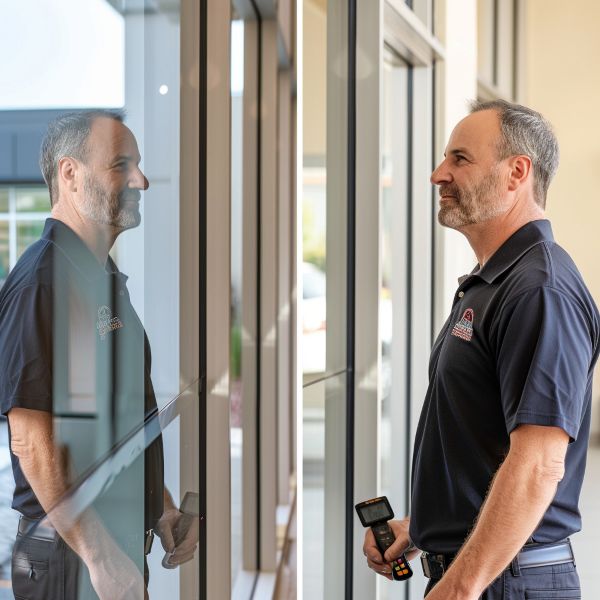
The name “one-way” implies a permanent, directional property, like a one-way valve or a one-way street. That framing is misleading. The film does not selectively block vision in one direction. It creates a mirror effect on whichever side has less light, and that side changes with conditions. Understanding this distinction is what separates a confident specification from a liability.
The Knowledge Gap That Leads to Post-Installation Disputes
Most post-installation disputes with privacy film share the same origin: the client was told the film would provide privacy, and it does, during the day. Then the lights come on at night, and anyone outside can see directly into the space. The client calls it a failure. The installer calls it a misunderstanding. Both are partially right, and neither outcome needed to happen.
The knowledge gap is not about product quality. It is about expectation management at the specification stage. When a project brief simply says “one-way mirrored film,” it leaves open a dozen performance variables that will determine whether the installed product actually meets the client’s intent. What are the interior lighting levels? Which facades face direct sun, and for how many hours? Does the client need privacy after dark, or only during business hours? These questions need answers before a product gets specified, not after the invoice is paid.
What a Precise, Light-Condition-Aware Specification Actually Looks Like
A defensible specification for one-way privacy window film goes beyond product name and tint level. It documents the conditions under which privacy is required and selects the film accordingly.
A complete specification entry should capture:
- Orientation of each glazed facade (north, south, east, west) and peak solar exposure hours
- Interior lighting profile, including ambient lux levels during occupied hours and whether spaces are lit after dark
- Required privacy hours, whether business hours only or after-dark coverage is needed
- Minimum exterior reflectance and maximum visible light transmittance (VLT) targets
- Whether secondary privacy measures such as interior blinds or switchable glazing are needed for nighttime use
Need More Info?
The Window Film Depot team is happy to help.
That last point matters. For spaces with after-dark privacy requirements, film alone is rarely the complete answer. Documenting this upfront protects you, sets accurate client expectations, and gives you a defensible specification if performance questions arise later.
How One-Way Privacy Window Film Works: Construction, Physics, and the Reflectance Principle
Anatomy of the Film: Reflective Metal Layer, Adhesive Layer, and Protective Coating
Reflective window film is a multi-layer product, and each layer serves a distinct function. The core functional layer is a thin metallic coating, typically sputtered or vapor-deposited aluminum, stainless steel, or a titanium alloy, bonded to a polyester carrier film. This metallic layer creates the mirror effect. Its thickness and composition determine how much light it reflects and how much it transmits.
Below the carrier film sits the pressure-sensitive adhesive layer, which bonds the film to the glass surface. On commercial-grade products, this adhesive is formulated for durability under thermal cycling and UV exposure. The outermost layer is a scratch-resistant protective coating that preserves optical clarity and extends service life. On quality commercial film, this hardcoat layer is what separates a 10-year performance product from one that starts hazing within three years.
The Lighting Ratio Principle: Why VLT and Exterior Reflectance Are the Variables That Matter
The physics behind one-way mirror window film reduce to a single principle: light travels toward the darker side. When exterior light intensity is significantly higher than interior light intensity, the exterior surface of the film acts as a mirror, reflecting the outside scene back to observers outdoors while the comparatively dim interior remains obscured. Reverse those conditions, and the film performs the same function in the opposite direction.
The two numbers that determine how well a film exploits this principle are visible light transmittance (VLT) and exterior reflectance. VLT is the percentage of visible light the film allows through. Lower VLT means less light passes into the interior, making it harder for outside observers to see in when exterior light is bright. Exterior reflectance is the percentage of light the film bounces back from the outside surface. Higher exterior reflectance intensifies the mirror effect.
A film with 15% VLT and 55% exterior reflectance will provide stronger daytime privacy than one with 35% VLT and 25% exterior reflectance, but the darker film also reduces interior natural light more aggressively. The right balance depends on specific project conditions, not on a default product choice.
What “Mirrored” Actually Means in Technical Terms
The mirror effect is not a special feature. It is the predictable result of a high exterior-to-interior reflectance ratio. A film described as “mirrored” typically has exterior reflectance in the range of 35 to 60%, while interior reflectance sits considerably lower, often in the 10 to 20% range. That asymmetry is engineered deliberately. It means the film reflects far more light outward than inward, which is what creates the one-way effect under favorable lighting conditions.
Interior reflectance matters too, but for a different reason: high interior reflectance increases glare for occupants looking at the glass from inside. Well-specified commercial film manages both ratios, maximizing the exterior mirror effect while keeping interior reflectance low enough that the glass does not become a secondary glare source within the space.
Can One-Way Privacy Film Be Installed on Existing Windows?
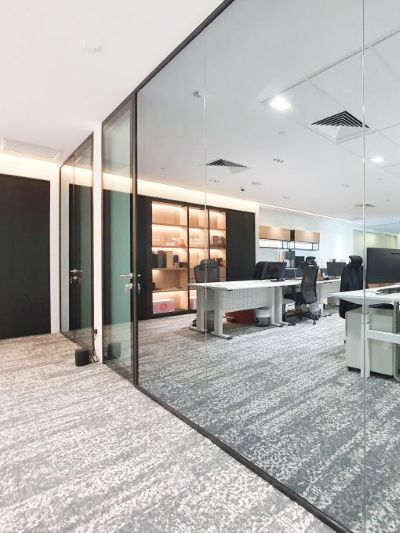
Existing windows do not need to be replaced. This is one of the strongest practical arguments for reflective window film in renovation and fitout projects. The film applies directly to the interior surface of existing glass using a wet application method. No glazing replacement, no structural modification, no extended lead times for custom glass units.
The critical constraint is glass compatibility. Certain glass types, including some low-e coated glass and heat-strengthened units, require specific film products to avoid thermal stress failure. Before specifying film on any existing installation, confirm the glass type from the original glazing specification or have it tested. Your film supplier should provide a written compatibility assessment as part of the project scoping process. On commercial projects where thermal stress cracking would mean glass replacement rather than simple film removal, this step is non-negotiable.
Decision Matrix: One-Way Film vs. Alternative Privacy Solutions by Project Condition
| Project Condition | One-Way Reflective Film | Frosted / Diffusion Film | Interior Blinds or Shades | Switchable (Smart) Glazing |
|---|---|---|---|---|
| Daytime-only privacy required | Excellent | Good | Good | Excellent |
| After-dark privacy required | Poor alone; needs supplement | Good | Excellent | Excellent |
| Outward views must be preserved | Excellent | Poor | Poor when deployed | Excellent |
| Solar heat rejection required | Excellent | Minimal | Moderate | Variable by product |
| Consistent facade appearance | Excellent | Good | Poor | Excellent |
| Budget-constrained project | Excellent | Excellent | Good | Poor |
| Historic or low-e glass present | Requires compatibility check | Generally compatible | No restriction | Requires specialist assessment |
| Nighttime security visibility | Reverses at night, fails | Not applicable | Not applicable | Controllable |
Use this matrix at the brief stage, not after product selection. The conditions that make one-way film the right answer are specific, and projects that fall outside those conditions need a different specification from the start.
The Daytime vs. Nighttime Reality: Setting Accurate Client Expectations Before the Film Goes On
How Daytime Performance Works and What VLT Percentages Mean for Your Project
Daytime performance is where privacy window film one way delivers exactly what clients expect, provided the product is matched to actual site conditions. Under direct or strong ambient daylight, exterior light intensity typically runs many times higher than interior illuminance levels. That differential is what sustains the mirror effect. The film’s metallic layer reflects the bright exterior scene back to outside observers while the comparatively dim interior stays obscured.
VLT percentage tells you how much of that exterior light the film allows through. A 15% VLT film transmits only 15% of visible light into the space. A 35% VLT film transmits more than twice as much. The practical consequence: lower VLT strengthens the privacy effect by keeping the interior darker relative to outside, but it also reduces the natural light available to occupants. On south-facing facades with sustained direct sun exposure, a 15 to 20% VLT film is often appropriate. On north-facing facades with diffuse light, specifying the same product may create an interior that feels unnecessarily dim while delivering only marginal privacy gains over a 30 to 35% VLT option.
The specification decision is not “what is the darkest film we can use.” It is “what VLT maintains the lighting ratio we need while meeting the occupant comfort standard the client expects.”
Does One-Way Privacy Film Work at Night? The Honest Answer and Its Project Implications
No, not reliably, and often not at all. This is the single most important performance limitation to communicate before any contract is signed.
Why the Privacy Effect Reverses After Dark
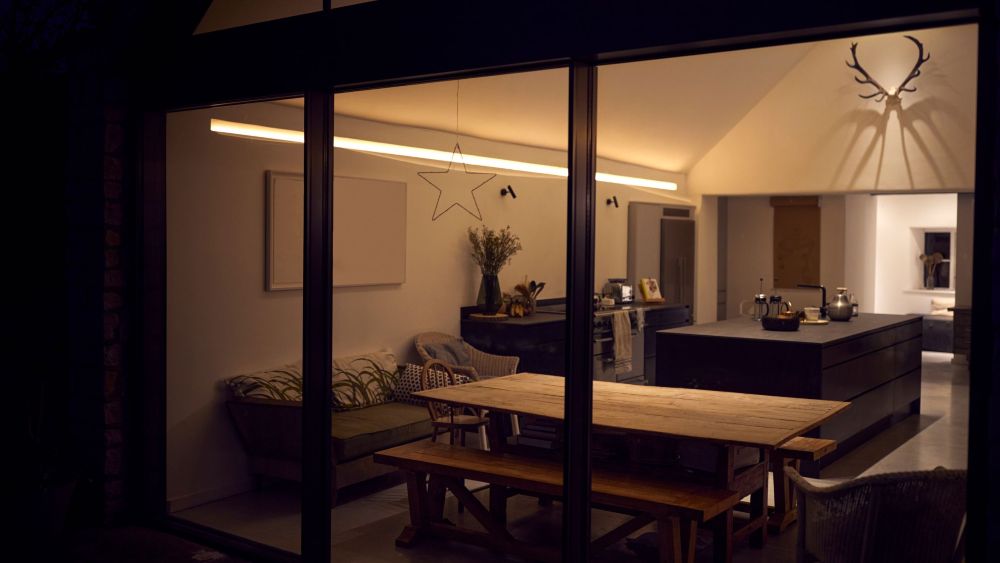
After dark, natural exterior light drops to near zero. Interior lighting remains constant. The lighting ratio that sustained the mirror effect during the day now runs in the opposite direction: the interior is brighter than the exterior. The film responds to that reversed ratio exactly as it responds to any lighting condition. It creates a mirror effect on the darker side, which is now outside. From indoors, occupants see a mirror. From outside, observers see directly into the lit interior.
This is not a product failure. The physics have not changed. The film is performing exactly as designed. What has changed is the lighting context, and a specification that did not account for nighttime use treated the product as something it was never designed to be.
How Interior Lighting Levels Determine When the Film Fails
The transition does not happen precisely at sunset. It happens when interior illuminance exceeds exterior illuminance by a meaningful margin. In a heavily lit open-plan office, that crossover can occur before full dark, particularly during winter afternoons when daylight fades early. In a lightly lit storage corridor, the film may maintain partial obscuration longer into the evening because interior lux levels are low.
This means privacy performance is tied directly to the lighting design of the space. Before specifying film for any glazing that faces occupied areas after dark, confirm the interior lighting levels for that zone. A space running 500 lux for task lighting will lose effective privacy film performance earlier and more completely than a space running 150 lux for ambient lighting.
Angle-Dependent Performance: What Changes at Low Sun Angles and Overcast Conditions
Strong midday sun on a perpendicular facade gives one-way film its best performance conditions. Two scenarios degrade that performance without eliminating daylight entirely, and both require attention at the specification stage.
At low sun angles, during early morning and late afternoon, sunlight strikes the glass at an oblique angle rather than head-on. This reduces effective exterior reflectance because less light is reflected back toward an outside observer at ground level. The practical result is a visible reduction in the mirror effect during those hours, particularly on east and west facades where low-angle sun is a daily occurrence.
Overcast conditions present a different challenge. Diffuse cloud cover reduces exterior illuminance significantly without eliminating it. On heavily overcast days, the difference between interior and exterior light levels may narrow enough that the mirror effect weakens. For most commercial daytime-use applications, this degradation is intermittent and acceptable. For projects where privacy requirements are strict regardless of weather, it is a risk worth documenting in the specification.
Nighttime Privacy Solutions: Pairing Film with Interior Blinds, Switching Film Types, or Specifying Differently from the Start
Three approaches address the nighttime performance gap, and the right one depends on project budget and how often the space is occupied after dark.
Pairing reflective window film with interior roller shades or blinds is the most cost-effective solution for spaces that require after-dark privacy occasionally. The film handles daytime performance and the shades deploy for nighttime. This works well for conference rooms and private offices with predictable usage patterns.
Frosted or diffusion film provides consistent privacy regardless of lighting conditions by obscuring the view through scattering rather than reflection. It sacrifices outward views entirely, which makes it unsuitable for facades where occupants need to see out. It is the right call for glazed interior partitions, restroom windows, or perimeter glazing in spaces where the view is not a functional requirement.
Switchable smart glazing solves the problem completely at a significantly higher cost. For projects with continuous after-dark occupancy and strict privacy requirements, the specification conversation needs to happen at the design stage, not as a film retrofit.
What Lighting Conditions Are Required for One-Way Film to Work Properly?
The working condition is straightforward: exterior light must be meaningfully brighter than interior light. A ratio of roughly 3:1 or greater is generally sufficient to produce a visible mirror effect. Ratios below that threshold produce inconsistent results.
Direct sun delivers the strongest performance. Bright overcast delivers reliable daytime performance in most cases. Interior spaces lit below 300 lux are more forgiving of marginal exterior conditions than spaces running high task lighting. Document the specific conditions for each facade in your project brief, and specify film VLT and reflectance values to match those conditions rather than applying a single product specification across an entire building.
Performance Benefits Beyond Privacy: Solar Control, Glare Reduction, and UV Protection
Solar Heat Gain Coefficient and What Meaningful Heat Rejection Numbers Look Like
Reflective window film reduces solar heat gain, and on commercial projects, that reduction is often as valuable as the privacy function. Solar Heat Gain Coefficient (SHGC) measures the fraction of solar energy that passes through a glazing system. Uncoated clear glass typically carries a high SHGC, and high-performance reflective film can reduce that figure substantially depending on product and glass type, representing a significant reduction in solar heat entering the space.
For a south- or west-facing commercial facade, that translates directly to reduced cooling loads during peak hours. On large floor plates where perimeter zones regularly overheat, the film is not a cosmetic upgrade. It is a mechanical load management tool that reduces HVAC demand and improves occupant comfort simultaneously.
Glare Reduction as a Functional Requirement, Not Just a Comfort Upgrade
Glare from uncontrolled solar exposure is a documented productivity and safety issue. Direct glare in office environments causes occupants to angle screens away from windows and lower blinds, which disconnects them from exterior views and defeats the intent of glazed facades. Screen glare in clinical areas increases error risk in healthcare settings. Glare on presentation walls reduces visual clarity for students in education environments.
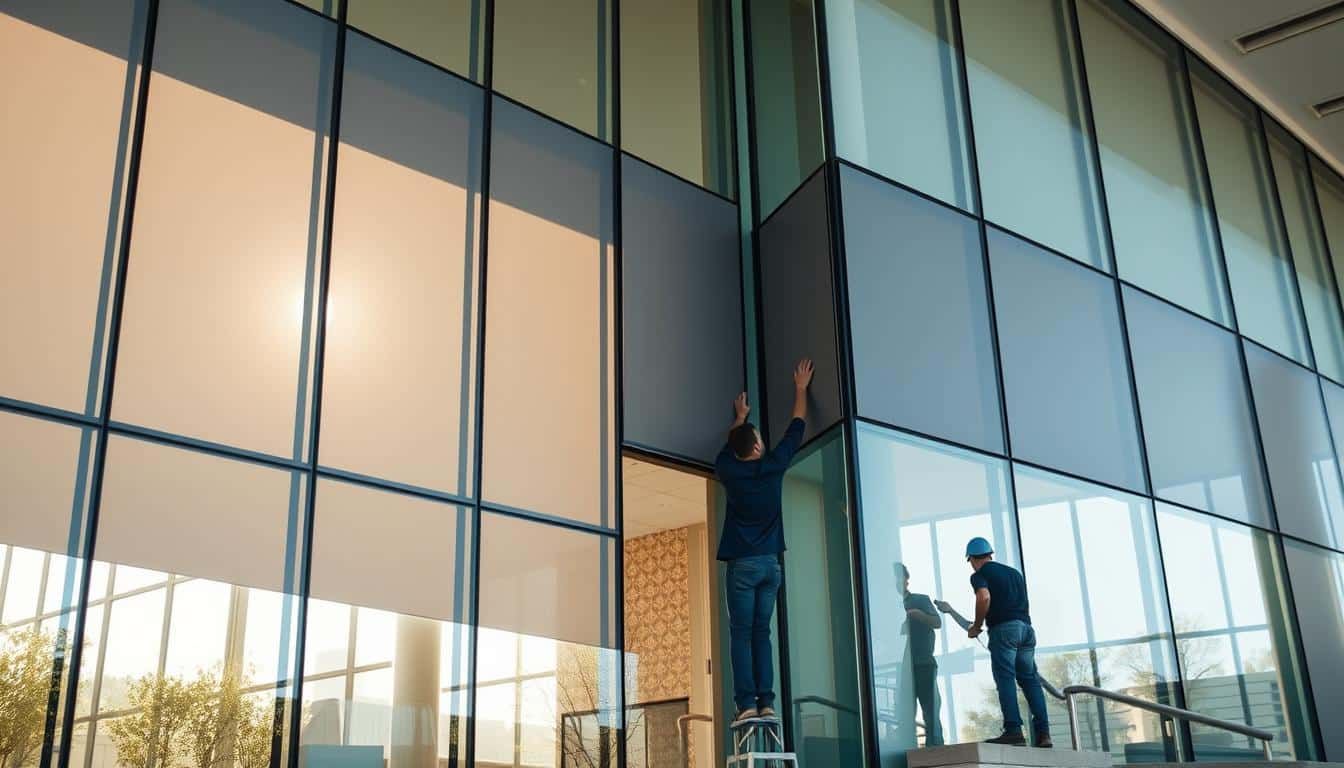
Reflective window film addresses glare by reducing the amount of visible light entering the space. For a space running adequate artificial lighting, a significant VLT reduction is often invisible in terms of interior illuminance while completely eliminating the direct-sun glare that made the space uncomfortable. Specify glare reduction as a measurable performance requirement by targeting VLT and interior illuminance levels, rather than treating it as a subjective comfort goal.
UV Blocking Performance: What the Protection Benchmark Means for Occupant Health and Asset Protection
Most quality reflective films block 99% of UV radiation, representing meaningful protection for both occupants and interior assets. UV is the primary driver of fabric fading, flooring discoloration, and artwork deterioration in sun-exposed spaces. It also contributes to occupant skin exposure over long periods near glazed facades.
The 99% UV rejection figure is consistent across most commercial-grade reflective film products regardless of VLT. A lighter film with 40% VLT blocks essentially the same proportion of UV as a darker 15% VLT product. UV protection does not require specifying the darkest available film. It is a near-universal benefit of the metallic layer construction, not a premium feature exclusive to high-reflectance products.
Does One-Way Window Film Block Heat and UV Rays as Well as Providing Privacy?
Yes, and for many commercial projects the thermal and UV performance is the primary specification driver, with privacy as a secondary benefit. The metallic layer that creates the mirror effect also reflects infrared radiation, the wavelength range responsible for radiant heat gain. High-performance reflective films can reject a substantial proportion of infrared energy, which has a direct bearing on occupant comfort in perimeter zones and on peak cooling loads in the building’s energy model.
Specifying film based on privacy requirements alone, without accounting for SHGC and infrared rejection, often means selecting a product that underperforms on thermal control. Review both sets of numbers on the product data sheet before finalizing the specification.
LEED Credit Eligibility and Building Envelope Efficiency Considerations
Reflective window film can contribute to LEED certification under several credit categories, most directly under Energy and Atmosphere credits tied to reduced cooling energy consumption and under Indoor Environmental Quality credits related to glare control and occupant comfort. The specific credit pathway depends on the project’s certification target and the baseline performance of the existing glazing.
Film is not automatically credit-eligible. Documentation requirements typically include measured or manufacturer-verified SHGC and VLT values, installation records, and in some cases third-party performance verification. If a project is pursuing LEED points through window film, confirm with the certifying body which documentation standard applies before the product is specified. Your film supplier should be able to provide the technical data sheets and performance certifications needed to support the submission.
Choosing the Right Film: Reflectivity Levels, VLT Ratings, and Product Line Navigation
How to Read a Product Data Sheet: The Four Numbers That Define Real-World Performance
A product data sheet for reflective window film contains a range of performance metrics, but four numbers determine whether the product is right for a specific project condition.
- VLT (Visible Light Transmittance): How much visible light passes through the film. Lower values mean a stronger privacy effect and greater glare control, with corresponding reductions in natural light.
- Exterior Reflectance (ER): How much visible light the film reflects from the outside surface. Higher ER intensifies the mirror effect and strengthens daytime privacy.
- SHGC (Solar Heat Gain Coefficient): The fraction of solar energy entering the space through the filmed glass. Lower values mean better heat rejection.
- UV Rejection: The percentage of UV radiation blocked. Look for 99% on any commercial-grade product.
Interior reflectance is a fifth number worth checking. High interior reflectance increases glare for occupants and reduces the quality of outward views. Well-balanced commercial film keeps interior reflectance low relative to exterior reflectance. That asymmetry is what produces the privacy effect without creating a secondary glare problem inside.
Matching Reflectivity Level to Orientation, Facade Exposure, and Interior Lighting Profile
Facade orientation determines the solar exposure conditions the film must perform under. A south-facing facade receives direct high-angle sun for most of the day in northern latitudes. A north-facing facade may never receive direct sun. Applying the same film to both facades is a common specification shortcut that typically over-darkens the north facade and under-specifies thermal control on the south.
The matching process works like this: identify peak solar exposure hours and angles for each facade, confirm interior lighting levels for adjacent spaces, then select VLT and exterior reflectance values that maintain the required lighting ratio during peak hours without reducing interior natural light below acceptable thresholds. For east and west facades, factor in low-angle morning and afternoon sun as a separate performance condition from midday exposure.
Navigating 3M Product Lines: Where Prestige Series and Night Vision Series Fit Different Briefs
The 3M Prestige Series uses multi-layer optical film technology rather than a traditional metallic layer. It achieves high infrared rejection and significant solar heat control with relatively high VLT values, making it a strong option for facades where natural light preservation is a priority alongside thermal performance. It does not deliver the high exterior reflectance of metallic film, so it is not the right choice when a strong mirror effect is the primary privacy requirement.
The 3M Night Vision Series takes a different approach, using a higher-reflectance metallic construction specifically tuned to maximize the exterior mirror effect while keeping interior reflectance low. It is the appropriate product family when daytime privacy is the lead specification requirement on facades with sustained direct sun exposure. Confirming which performance priority leads the brief, whether thermal control, privacy, or natural light, is what determines which product line belongs in the specification.
What Is the Difference Between One-Way Film and Regular Privacy Film?
The distinction matters at the specification stage. One-way reflective film creates privacy through differential reflectance. It works in one direction under favorable lighting conditions but reverses when those conditions change. It preserves outward views for occupants and provides substantial solar control alongside the privacy function.
Frosted or diffusion film creates privacy through light scattering. It obscures the view in both directions regardless of lighting conditions, which means it works at night as well as during the day. The trade-off is that it eliminates the outward view entirely and provides minimal solar heat rejection. The two product types are not interchangeable. One-way reflective film is appropriate for perimeter glazing where occupants need to see out and solar control matters. Diffusion film is appropriate where consistent, light-independent privacy is required and outward views are not a functional need.

How Long Does One-Way Window Film Last Before It Needs Replacement?
Professionally installed commercial-grade reflective film typically carries a manufacturer warranty of 10 to 15 years, and well-maintained installations often perform beyond that range. Service life depends on three variables: film quality, installation quality, and environmental exposure.
UV-stabilized adhesives and scratch-resistant hardcoat layers are what separate commercial-grade products from entry-level retail film. On commercial installations with proper wet application technique, failure modes including hazing, delamination, and adhesive yellowing are rare within the warranty period. The highest-risk factor for premature failure is thermal stress on incompatible glass types, which is why pre-installation glass compatibility assessment is a non-negotiable step on any commercial project. Films installed on incompatible glass can fail within months, and that failure typically voids the manufacturer warranty.
Application Environments: Aligning Film Specification to Project Type
Commercial Office Buildings: Floor-by-Floor Consistency, Facade Uniformity, and Lease Compliance
Multi-story office buildings introduce a specification challenge that single-floor projects avoid: solar exposure changes by floor. Upper floors receive more direct sun with fewer obstructions. Lower floors may be shaded by adjacent structures for part of the day. Applying a uniform film specification across all floors often means the product is optimized for neither condition.
The practical approach is to treat each facade orientation as a distinct specification zone, then verify whether floor-level shading conditions require further differentiation. For a 10-story building with an unobstructed south facade, the same product may perform consistently from the third floor upward. The first and second floors, shaded by neighboring buildings until midday, may require a lighter VLT to avoid over-darkening interiors without delivering the intended privacy benefit.
Lease compliance adds another layer. Many commercial leases include facade uniformity clauses that restrict tenants from applying film that alters the exterior appearance of the building. Before specifying any commercial privacy window film on a tenanted fitout, confirm that the product’s exterior reflectance and visible tint fall within the building owner’s approved parameters. A film that meets the privacy brief but violates the facade appearance clause will need to come off at the tenant’s expense.
K-12 and Higher Education Campuses: Safety Brief Requirements, Glare Control in Classrooms, and Multi-Building Rollouts
Campus projects involve a privacy brief that differs from commercial office work in one critical respect: the privacy requirement is often secondary to a safety or security requirement. Film on classroom door sidelights and corridor glazing is frequently specified to prevent external observation of occupants during lockdown scenarios, not primarily for solar control or aesthetic uniformity.
For security-driven applications, higher exterior reflectance is typically the lead requirement, and the daytime-only limitation of reflective film needs explicit documentation in the brief. Corridors and door glazing are typically lit at lower lux levels than open-plan offices, which extends the effective privacy window slightly, but after-dark performance remains unreliable without supplemental measures.
Glare control in classrooms is a separate functional requirement that film addresses well. A film with 20 to 25% VLT on south and west-facing classroom glazing eliminates the direct-sun glare that forces teachers to close blinds and disconnect students from natural light entirely. Specify this as a measurable outcome, targeting interior illuminance levels at the presentation wall under peak solar conditions, not just a product name.
Multi-building rollouts on campus present procurement and quality-control challenges. Specifying a single approved product and installation contractor across all buildings, rather than allowing building-by-building sourcing, is the most reliable way to achieve consistent appearance and performance documentation across the project.
Retail Storefronts: Balancing Exterior Privacy with Interior Merchandise Visibility
Retail is the application environment where one-way mirror window film creates the most frequent specification conflicts. The client wants privacy or a distinctive mirrored facade aesthetic, but the merchandising team needs products visible from the street. Those two requirements are in direct tension.
Reflective film reduces visibility into the store from outside, which is exactly the privacy effect, and exactly the opposite of what a display window needs. The resolution depends on the specific retail brief. For back-office areas, staff zones, or fitting rooms behind glazed partitions, high-reflectance film is appropriate. For street-facing display windows, it is not.
Where a retail client wants the mirrored aesthetic on display glazing without blocking merchandise views, the specification answer is usually a lightly tinted film in the 35 to 50% VLT range with moderate exterior reflectance. This delivers some solar control and a subtle exterior appearance without creating a strong mirror effect that obscures the interior display. Document the trade-off explicitly: the client gets the aesthetic they want, but not the privacy performance they may have assumed comes with it.
What Is the Best One-Way Privacy Film for Commercial Buildings?
There is no single best product. There is a best product for a specific project condition. A high-reflectance metallic film in the 15 to 20% VLT range is appropriate for south and west-facing facades on office buildings where strong daytime privacy and significant heat rejection are both required. A moderate-reflectance product at 30 to 35% VLT fits north-facing facades, retail environments where some outward visibility matters, or spaces where preserving natural light is a client priority.
The specification process, not the product catalog, is where the right answer comes from. Confirm facade orientation, interior lighting levels, privacy hours, and SHGC requirements before selecting a product. Those inputs determine the VLT and reflectance targets. The product that meets those targets is the right one.
Installation Considerations and Specification Mistakes That Trigger Rework
Professional Installation vs. DIY: Durability, Adhesion Standards, and Long-Term Failure Modes
On a commercial project, the installation method is a specification decision with long-term performance consequences. Retail-packaged film sold for DIY application uses static cling or simplified adhesive systems designed for ease of removal. Those products are not engineered for the thermal cycling, UV exposure, and cleaning regimens that commercial glazing endures over a 10-year service window.
Commercial-grade film uses pressure-sensitive adhesive systems that cure to the glass surface over approximately 30 days, creating a bond that handles thermal expansion without delaminating. The film itself is thicker, with a more durable scratch-resistant hardcoat. Professional installers have the tools, technique, and product access to execute that bond correctly at scale. An improperly installed commercial film, whether from air bubbles not fully squeegeed out, contaminated adhesive, or film cut too short at edges, will show failure within 12 to 24 months regardless of product quality.
On any project with more than a handful of windows, the cost difference between professional and DIY installation is not worth the risk. A failed installation on 40 windows means 40 windows of removal, surface preparation, and reinstallation, plus the warranty dispute that follows.
Wet Application Method and Why Commercial-Scale Installations Require a Higher Standard
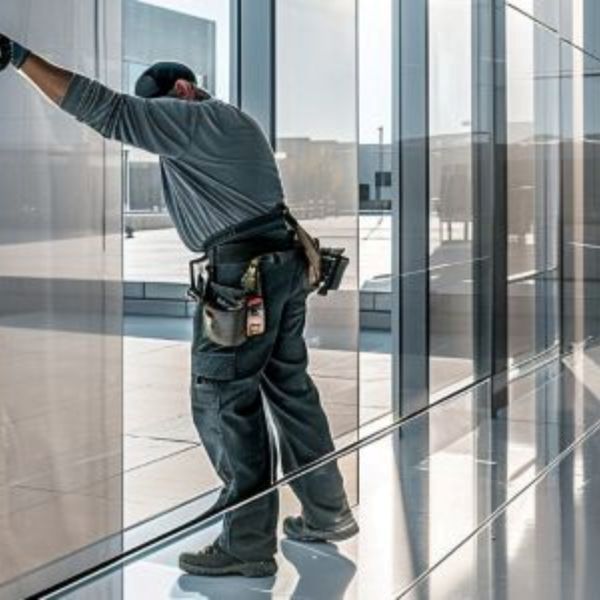
The wet application method is the installation standard for commercial reflective film. A slip solution, typically diluted soap and water or a proprietary mounting solution, is applied to the glass surface, the film is laid into position, and a hard squeegee removes the solution and air from between the film and glass. The film then cures against the glass surface over several weeks.
The technique variables that matter at commercial scale are solution concentration, squeegee pressure, and edge sealing. Over-wet application leaves excess solution trapped under the film, creating clouding that may resolve during curing or may persist as permanent hazing. Under-wet application causes the film to grab too quickly, making repositioning impossible and leaving dry-adhesion zones that bubble over time. Edge trimming to within approximately 1/16 inch of the frame keeps the film from lifting at the perimeter, the most common failure point on improperly finished installations.
Commercial installers also work in sections on large lites, maintaining a wet edge across the glass surface to prevent dry spots. This technique is not described in any retail installation guide and is not achievable without professional training and proper tool sets.
Common Specification Mistakes: Under-Specifying Reflectance, Ignoring Orientation, and Failing to Document Performance Requirements
Three mistakes generate the majority of post-installation disputes on commercial film projects.
Requesting “privacy film” without a minimum exterior reflectance value allows vendors to supply lower-performance products that meet a broad product description but deliver weak privacy performance under real site conditions. Applying a single product specification across facades with different solar exposures produces over-darkened north facades and under-performing south facades simultaneously. A specification that names a product without documenting the VLT, exterior reflectance, SHGC, and UV rejection values provides no basis for a warranty claim or dispute resolution if the installed product underperforms.
A defensible specification names the product, cites the four key performance values from the data sheet, notes the application conditions those values are matched to, and references any glass compatibility assessment completed prior to installation. That documentation is what protects you if performance questions arise 18 months after installation.
Post-Installation Troubleshooting: Warranty Terms, Failure Indicators, and How to Manage Client Disputes
The 30-day curing period after installation is normal and should be communicated to the client in advance. During curing, the film may appear slightly hazy or show small water bubbles. Both conditions resolve as residual mounting solution evaporates. Clients who are not warned about this period frequently mistake normal curing for a defective installation.
Genuine failure indicators beyond the curing period include persistent hazing that does not clear, visible delamination or edge lifting, adhesive yellowing, or cracking in the film surface. These indicate either a product quality issue, an installation failure, or thermal stress from incompatible glass, and each has a different resolution path under the manufacturer warranty.
Managing client disputes starts with the documentation produced at the specification stage. If the performance requirements were documented and the installed product meets those specifications, the dispute is about expectation management, not product failure. If the installed product does not match the specified values, that is a vendor accountability issue. In either case, the specification record is what determines the resolution.
When One-Way Film Is the Wrong Choice: Alternative Solutions to Specify Instead
Reflective film is the wrong specification when the privacy requirement exists primarily after dark, when outward views are not required and two-directional privacy is needed, or when the glazing type is incompatible and replacement is not in scope.
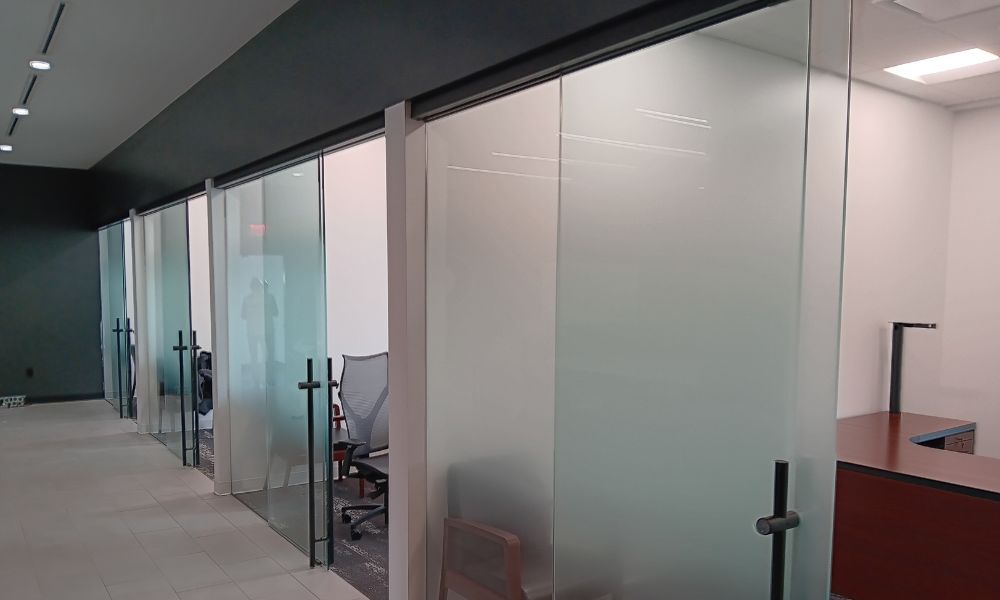
After-dark privacy in occupied spaces points toward frosted or diffusion film for budget-constrained projects, or switchable glazing for projects where continuous controllability is required. Interior glazed partitions in open-plan offices, where the brief is to create visual separation between zones without exterior solar concerns, are almost always better served by frosted or patterned film than by reflective film. Reflective film adds an unnecessary mirror effect to an interior application where the lighting ratio will rarely support it.
When the glass type presents a thermal stress risk and the client cannot accommodate glass replacement or additional compatibility testing, specifying no film is the correct answer. A film project that results in cracked glass units creates a liability far greater than the value of the privacy improvement.
Quick-Pick Specification Guide: Matching Film Type to Project Condition
| Project Condition | Recommended Film Type | Key Specification Targets |
|---|---|---|
| Daytime office privacy, south/west facade | High-reflectance metallic, 15-20% VLT | ER 45%+, SHGC 0.30 or lower |
| Daytime office privacy, north facade | Moderate-reflectance metallic, 30-35% VLT | ER 25-35%, preserve natural light |
| Classroom glare control, privacy secondary | Moderate metallic or spectrally selective, 20-30% VLT | Target interior illuminance at presentation wall |
| Campus security/lockdown glazing | High-reflectance metallic, 15-20% VLT | Document daytime-only performance in brief |
| Retail display window, aesthetic only | Light metallic or neutral, 35-50% VLT | Low ER; confirm merchandise visibility is preserved |
| After-dark privacy required | Frosted/diffusion film or switchable glazing | Not applicable for reflective film |
| Interior partition privacy | Frosted or patterned film | Confirm no solar control requirement |
| Budget-constrained, daytime-only | Commercial metallic film, matched to orientation | Professional installation required |
Conclusion: How to Specify One-Way Privacy Window Film Without the Guesswork
The Five Data Points Every Project Manager Must Confirm Before Specifying
A confident specification for privacy window film one way does not start with a product. It starts with site data. Five questions produce the inputs that determine whether reflective film is the right answer, and if so, which product performs under the actual conditions of the project.
- Facade orientation and peak solar exposure hours for each glazed elevation
- Interior lighting levels during occupied hours, expressed in lux, for each zone adjacent to exterior glazing
- Privacy hours required, whether business hours only or after-dark coverage is needed
- Glass type for all windows in scope, confirmed against the original glazing specification or field-tested for compatibility
- Minimum exterior reflectance and maximum VLT targets based on the lighting ratio analysis for each facade
These five data points convert a vague brief into a specification that a vendor can price, an installer can execute, and a client can evaluate against defined performance criteria. Projects that skip this step are not saving time. They are moving the problem downstream to a post-installation dispute.
How Window Film Depot Supports Large-Scale Project Assessment and Vendor Accountability
Large-scale film projects benefit from a supplier that operates as a specification partner, not just a product source. Window Film Depot provides pre-project technical assessments that cover glass compatibility, facade-specific product matching, and performance documentation to support LEED submissions or lease compliance requirements.
For multi-building rollouts, the value is in procurement consistency and installation quality control across sites. A single approved product specification, vetted installer network, and documented performance standard across the project eliminates the sourcing variability that produces inconsistent results when individual buildings are allowed to procure independently.
The technical team can review your project brief, identify the facade conditions that drive product selection, and provide a specification recommendation with supporting data sheet documentation before any purchase commitment is made.
Your Next Step: From Specification Uncertainty to a Documented, Defensible Project Brief
The goal of this guide is not to make one-way privacy film sound complicated. It is to give you the framework to specify it correctly the first time. The product works. The physics are reliable. The failures that generate rework and client disputes are almost always specification failures, not product failures.
Take the five data points to your next project assessment. Document the facade conditions, confirm the glass types, and match the product to the actual lighting ratios your project will experience. If the conditions support reflective film, specify it with confidence. If they do not, the specification guide above points you to the alternative that does the job.
When you are ready to move from assessment to specification, Window Film Depot‘s project team is the right starting point. Bring the project brief and the facade data. Leave with a product recommendation, a compatibility assessment, and a specification document that holds up if the client ever asks a question.
Frequently Asked Questions
Does one-way privacy film work at night?
Not reliably. After dark, interior lighting typically outweighs near-zero exterior light, which reverses the lighting ratio that creates the mirror effect during the day. From outside, observers can see directly into a lit interior. For spaces requiring after-dark privacy, pair reflective film with interior blinds, specify frosted diffusion film, or consider switchable glazing depending on budget and how frequently the space is occupied after dark.
What is the difference between one-way film and regular privacy film?
One-way reflective film creates privacy through differential reflectance: it works in one direction under favorable exterior lighting but reverses when interior light exceeds exterior light. It preserves outward views and provides meaningful solar heat rejection. Frosted or diffusion film obscures the view in both directions regardless of lighting conditions by scattering light rather than reflecting it. The trade-off is that it eliminates outward views entirely and offers minimal thermal performance. The two products are not interchangeable and should be selected based on the specific privacy brief.
How long does one-way window film last before it needs replacement?
Professionally installed commercial-grade reflective film typically carries a manufacturer warranty of 10 to 15 years, and well-maintained installations often exceed that range. Service life depends on film quality, installation quality, and environmental exposure. The highest-risk factor for premature failure is thermal stress caused by installing film on an incompatible glass type, which is why a pre-installation glass compatibility assessment is essential on any commercial project.
Can you install one-way privacy film on existing windows, or does the glass need to be replaced?
No glass replacement is required. Reflective window film applies directly to the interior surface of existing glass using a wet application method, with no structural modification or custom glazing lead times. The critical prerequisite is confirming glass compatibility. Certain low-e coated or heat-strengthened glass types require specific film products to avoid thermal stress cracking. Your supplier should provide a written compatibility assessment before any film is specified or installed.
Does one-way window film block heat and UV rays as well as providing privacy?
Yes. The metallic layer that creates the mirror effect also reflects infrared radiation responsible for radiant heat gain, reducing the Solar Heat Gain Coefficient and lowering cooling loads in perimeter zones. Most commercial-grade reflective films also block 99% of UV radiation regardless of VLT level, protecting interior furnishings, flooring, and artwork from fading. For many commercial projects, the thermal and UV performance is the primary specification driver, with privacy as a secondary benefit.
What lighting conditions are required for one-way film to work properly?
Exterior light must be meaningfully brighter than interior light, with a ratio of roughly 3:1 or greater generally sufficient to produce a visible mirror effect. Direct sun delivers the strongest performance. Bright overcast conditions typically sustain reliable daytime privacy. Interior spaces running lower ambient lighting levels are more forgiving of marginal exterior conditions than heavily lit task environments. Each facade and adjacent zone should be assessed individually, since applying a single product specification across an entire building rarely matches the actual lighting conditions on every elevation.