If one room in your house feels hotter than the rest, the problem may be your windows-not your air conditioner. Home window film is a thin retrofit film installed on existing glass to reduce heat, glare, UV damage, and visibility into rooms. Many homeowners search for home window film installers near me because professional installation improves comfort, privacy, and energy savings without expensive window replacement. This guide covers film types, cost, installer selection, pricing, warranties, and FAQs.
Table of Contents:
- How Home Window Film Works in a Modern Home (2026 Update)
- Key Benefits of Home Window Tinting for Homeowners
- Types of Home Window Film and Tint Levels
- Home Window Film Costs and Energy Savings in 2026
- Why Choose Our Team for Home Window Film Installation
- Frequently Asked Questions About Home Window Tinting
- Next Steps: Finding the Right Home Window Film Installer Near You
How Home Window Film Works in a Modern Home (2026 Update)
Today’s window film is more advanced than old dark tint. In 2026, nano-ceramic films significantly enhance cooling and comfort, while spectrally selective products reject infrared heat without making a home window look heavily mirrored.
Home window tinting uses multi-layer films combine UV-absorbing and adhesive technologies. A quality film usually includes adhesive, a UV-absorbing layer, tinted or reflective control, ceramic or metallic heat rejection, and a scratch-resistant top coat. Modern residential products may reject 50–80% of solar energy; window films can reduce heat by up to 75%, and advanced films can reduce heat buildup by 75%. Clear UV films protect interiors, light comfort films preserve a natural view, and darker privacy tint can hide views into rooms.

Key Benefits of Home Window Tinting for Homeowners
Homeowners often call home window tinting services for one issue-hot rooms, glare, faded floors, lack of daytime privacy, or rising utility bills-but the benefits usually stack.
- Heat: home window film can reduce heat by up to 75%, improving comfort in east, west, and south-facing rooms.
- Glare: privacy window films can reduce glare by 85%; DuPont’s Nightview 15 film provides 85% glare reduction.
- UV protection: certain window films provide up to 99% UV rejection. Some films offer 99% UV rejection for better protection. Window films can block up to 99% of UV rays, and window films can provide up to 99% UV rejection.
- Energy: home window tinting improves energy efficiency and reduces glare. Solar films can lower cooling bills by rejecting heat and blocking UV rays. Window films can yield significant energy savings, and energy-saving window films can lower energy costs significantly.
- Privacy: frosted or mirrored films provide privacy without heavy curtains or blinds. Home window tinting enhances privacy without blocking outdoor views, and window tinting allows natural light while enhancing privacy.
- Safety: thick security films hold shattered glass together during weather events or break-ins.
- Style: decorative films can enhance aesthetic appeal without extra hardware.
Types of Home Window Film and Tint Levels
Not all options serve the same purpose. A good dealer will help you select the right solution for each room, budget, and unique requirements.
| Film type | Best use |
|---|---|
| Solar control | Heat, glare, and summer comfort |
| UV-only clear | Protect floors, art, and furniture with minimal appearance change |
| Privacy | Bathrooms, street-facing windows, home offices |
| Safety/security | Storm areas, break-in resistance, family safety |
| Decorative | Frosted doors, sidelights, interior glass |
Window tint levels vary based on visible light transmission (VLT). A 70% VLT looks nearly clear, 50% is light, and a medium VLT percentage ranges from 30% to 50%. A 15–25% VLT is darker and improves privacy, but may reduce nighttime visibility outdoors. In-home testing allows clients to see small samples applied to glass before installation, making it easy to compare options in the actual place they will be installed.
How to Choose the Best Local Home Window Film Installer
When hiring for window tinting, look beyond the lowest quote.
- Look for certified professionals when hiring a home window film installer.
- Professional installers should be certified to preserve product warranties.
- Certified installers can provide examples of previous installations.
- Manufacturer directories help locate authorized window film installers.
- Ask about products from proven industry brands; 3M is a leading brand in window film installation.
- Seek installers that offer comprehensive warranties on materials and labor.
- Ask whether installer glass matching warranties protect glass if damage occurs after installation.
- Confirm insurance, licensing, reviews from the last 12–24 months, and experience with residential glass.
Selecting the right film type requires consideration of window compatibility. Not all films are compatible with all types of glass. Applying the wrong film can cause thermal shock and crack the glass, especially on certain double-pane or low-E windows. Also know that most window manufacturers void warranties if a third-party film is applied, so request written information before the project begins.
What to Expect During a Professional Home Window Tinting Service
A strong service process is predictable: consultation, measurement, quote, scheduling, installation, and aftercare. The installer should assess tempered, insulated, and low-E glass, then offer samples based on heat, privacy, glare, and appearance goals.
Proper installation requires surgical cleanliness and precision trimming. On installation day, the team protects floors, cleans the glass, cuts film, applies slip solution, aligns edges, and removes moisture with squeegees. A small project may take half a day; larger homes or high glass may take a full day or more. Curing can take 2–4 weeks, and light haze or tiny water pockets usually disappear. Wait before cleaning, then use non-abrasive cleaner and soft cloths-no razor blades or harsh pads.
Home Window Film Costs and Energy Savings in 2026
Cost depends on film type, total square footage, access, labor, and whether old film must be removed. In 2026, many residential projects fall around $6–$12 per square foot for standard films, while premium ceramic, spectrally selective, decorative, or security products cost more.
Small one-room jobs may have a minimum service fee, while larger projects may lower the per-foot price. Home window tinting can enhance energy efficiency significantly by reducing solar gain, easing AC runtime through summer, and helping stabilize comfort in winter. Besides energy savings, the investment can protect furnishings from UV damage and delay replacement of flooring, rugs, and artwork.
Why Choose Our Team for Home Window Film Installation
We focus on practical recommendations, clean workmanship, and long-term results-not one-size-fits-all tint. Our team evaluates each room’s exposure, glass type, comfort issues, and privacy goals before we provide a written quote.
We offer curated high-performance products, including nano-ceramic and spectrally selective options, and explain warranty terms before work begins. We arrive on time, protect your home, clean up thoroughly, and make sure you know how to care for the film. To learn what fits your windows, schedule your home window film consultation.
Real-World Example: Home Window Film Transforming a Sunny Living Room
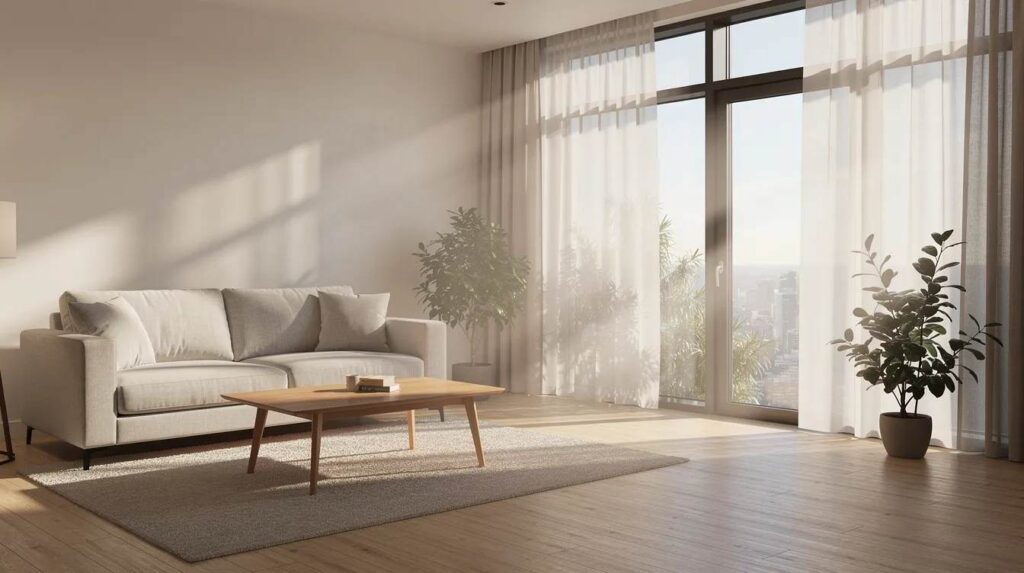
In early 2026, a homeowner contacted us about a living room with large sliding glass doors. Afternoon sun created heavy heat, TV glare, faded hardwood, and poor privacy from the sidewalk.
We checked orientation, measured the glass, reviewed the desired interior and exterior view, and tested samples on-site. The homeowner chose a neutral nano-ceramic 35% film with strong solar heat reduction and high UV rejection. Installation was performed in a few hours with minimal disruption. After the first billing cycle, the room felt more comfortable, glare dropped noticeably, and the homeowner could enjoy the outdoors view without leaving the room exposed.
Frequently Asked Questions About Home Window Tinting
How long does home window film last?
Quality residential film often lasts 10–15 years, and premium products may last longer with proper care and warranty coverage.
Will window tinting make my home too dark?
Not if you choose the right VLT. Light films can reduce heat and glare while keeping daylight.
Can film go on double-pane or low-E glass?
Sometimes, but compatibility must be checked. A professional should match film to the glass to avoid stress issues.
Can window films be removed later?
Yes. Professional removal protects the glass, adhesive surface, and surrounding frame.
How do I clean tinted windows?
After curing, use soft cloths and mild cleaner. Avoid abrasives, blades, and ammonia-heavy products.
Does privacy work at night?
Reflective privacy works best during daylight. At night, interior lights can reduce privacy unless you add shades or select a specialty product.
Next Steps: Finding the Right Home Window Film Installer Near You
Home window film is a fast way to improve comfort, privacy, protection, and energy efficiency without replacing windows. Shortlist two or three local installers, request written quotes, compare warranties, and choose expertise over the cheapest price.
If you want a clear recommendation for your house, request a home window tinting estimate. Acting before the next major heat wave-or before winter comfort issues return-helps you lock in benefits sooner.