If you want to stop passersby from peering into your home without draping every window in heavy curtains, window film for privacy is the most practical solution most homeowners overlook. It takes minutes to apply, costs a fraction of custom blinds, and keeps your rooms bright and open. Below, you will find everything you need to choose, install, and maintain the right film for every room in your own home.
Table of Contents:
- Quick Answer: Best Types of Window Film for Privacy (Day & Night)
- How Privacy Window Film Works on Glass
- Types of Window Film for Privacy (With Pros & Cons)
- Best Window Film Options by Room (Bathrooms, Bedrooms, and More)
- Step‑by‑Step: How to Install Privacy Window Film
- Frequently Asked Questions About Window Film for Privacy
- Conclusion: Choosing the Right Window Film for Lasting Home Privacy
Quick Answer: Best Types of Window Film for Privacy (Day & Night)
Privacy window film enhances privacy while allowing light to filter through, making it ideal when you want to block views without darkening a space. Window film enhances privacy, security, and energy efficiency all at once, and privacy window films offer a stylish way to block views compared to bulky window treatments.
Here are the main options at a glance:
- Frosted / etched glass film – best for 24/7 privacy; diffuses light day and night.
- Decorative stained glass window film – adds color and pattern; partial to full privacy depending on design density.
- One-way mirror film – strong daytime privacy with a reflective exterior; does not work at night with interior lights on.
- Blackout film – total visibility and light blocking; ideal for media rooms or storage areas.
Selecting window film depends on space and lighting conditions. Privacy window film can be applied to bathroom windows, glass doors, sidelights, office partitions, and virtually any plain glass surface. Window films provide an affordable alternative to custom blinds while keeping natural light flowing through your home.
How Privacy Window Film Works on Glass
Window film bonds to glass either through adhesive (a pressure-sensitive glue layer) or static cling (surface friction plus a thin layer of water). Once in place, it changes how visibility and light pass through the pane. Privacy needs should match with the film’s core technology.
- Films that blur or diffuse views (frosted, etched glass style) scatter light so shapes and faces become unreadable from outside. Films that reflect views (mirror / one-way) bounce light back toward the brighter side. Films that completely block views (blackout / opaque) stop both light and visibility.
- Window films prevent outsiders from seeing inside while still maintaining brightness with natural sunlight in most cases.
- Window film blocks glare and harmful UV rays while keeping natural light. In fact, many window films block 99% of UV rays that fade furniture, protecting floors, rugs, and artwork near windows.
- Window films also reject solar heat to save on cooling costs, and window film serves as a shatter-resistant safety layer – thick safety privacy films prevent glass shattering on impact.
Types of Window Film for Privacy (With Pros & Cons)
There is no single “best” film. The right choice depends on the privacy level you need, your preferred style, and whether you require nighttime privacy or daytime privacy alone.
Frosted & Etched Glass Privacy Films
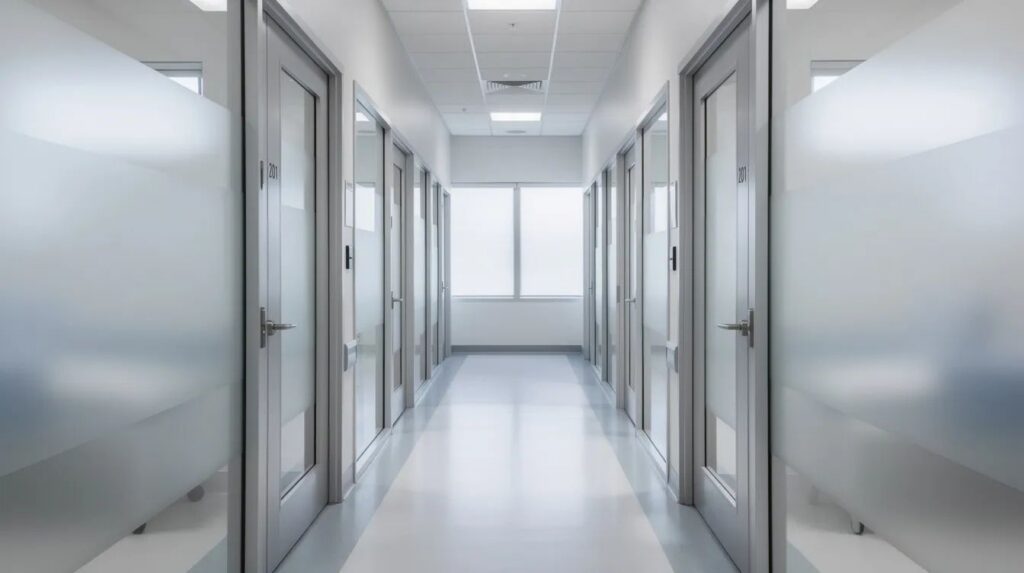
- Frosted films mimic the appearance of acid-etched glass, and frosted window film provides a clean, etched-glass look that suits bathroom windows, shower enclosures, and office doors.
- Frosted films provide 24/7 privacy by diffusing light – they provide complete privacy day and night, even when interior lights are on.
- They still allow a generous amount of natural light through (light frost films can transmit around 90% VLT), making them ideal where blinds feel too dark.
- Whiteout films allow soft glow while blocking visibility entirely. Patterns like lines, dots, or geometric bands can enhance plain glass and create the look of custom etched glass without permanent alteration.
Decorative & Stained Glass Window Film
- Stained glass window film adds color and character to glass, turning a plain glass surface into a design feature that improves home privacy on entry doors, sidelights, and transom windows.
- Decorative films add visual flair with patterns or colors, and stained glass window film adds decorative appeal and partial privacy depending on opacity and design density.
- Decorative films feature printed designs, textures, or patterns – they are available in endless patterns and provide partial privacy. Decorative window film features artistic designs and patterns that can cast colored light into a room, creating a focal point while reducing glare.
- Many decorative films are removable and reusable without residue, and decorative window films can be easily installed without tools, making them accessible for any homeowner.
Static Cling vs Adhesive Privacy Films
- Static cling film is reusable, adhesive-free, and grips the glass using static and a bit of water. Static cling films require no adhesive and leave no residue, making them perfect for renters or temporary privacy needs.
- Adhesive films bond more permanently, often look slightly more “built-in,” and hold up better in high-humidity areas like bathrooms (lasting 5–10+ years vs. 1–3 years for static cling in direct sun).
- Static cling can be repositioned in minutes during installation; adhesive requires more care but is still DIY-friendly with the right tools.
- Choose static cling for seasonal use, leased offices, or testing a pattern. Choose adhesive for frequently used bathroom windows and street-facing living room windows where you need long-term home privacy.
One-Way Mirror & Reflective Films
- One-way mirror film offers daytime privacy with a reflective exterior, and reflective films create a shiny exterior finish that prevents outsiders from looking in during the day.
- One-way window film provides daytime privacy with a reflective finish. It allows visibility from the inside while blocking outside views, so you keep your view while neighbors see only a mirror effect.
- The effectiveness of one-way window film depends on light conditions – one-way mirror films rely on external brightness for effectiveness. One-way window film does not provide nighttime privacy because reflective films lose their privacy effect at night when lights are on and the outside is darker.
- It is commonly used on ground floor and bathroom windows, as well as street-facing living rooms or home offices where you want to avoid heavy blinds. Curtains or blinds may still be needed after dark.
Blackout, Translucent, and Specialty Privacy Films
- Opaque films block visibility and light from both sides. Blackout films completely conceal the interior and block light – blackout films block all light transmission, making them ideal for media rooms, storage areas, or sidelights.
- Translucent films typically allow around 80% of natural light to pass through while significantly blurring views, great for closets with windows or stairwell glass.
- Gradient films (clear at the top, frosted at the bottom) protect privacy at eye level while preserving views of the sky or trees.
- Electrically controlled films transition from frosted to clear with a switch. Electronic films change from opaque to clear, offering adaptable privacy for premium window film installations, though they remain more expensive and less common in residential settings.
Best Window Film Options by Room (Bathrooms, Bedrooms, and More)
Different rooms call for different levels of privacy. Mixing film styles within a home – frosted in bathrooms, stained glass in the entry, reflective on street-facing windows – creates a cohesive but functional look. Window films save space by eliminating bulky treatments, and window film provides a sleek and minimalist look throughout.
Bathroom Windows & Shower Glass
- Frosted or etched glass style films are top choices for bathroom windows, providing full-time privacy even at night.
- Static cling film works well for shower enclosures and rental bathrooms because you can remove it without damaging the glass.
- Quality films are water-resistant, but the glass should be clean and dry during installation to ensure proper adhesion.
- Soft frost bands or subtle patterns let bright daylight into small bathrooms while keeping visibility completely blocked.
Bedrooms and Nighttime Privacy
- Bedrooms typically need reliable nighttime privacy, making frosted, patterned, or blackout films better choices than one-way mirror film alone.
- Pairing decorative privacy film with lightweight curtains creates a cozy, layered look that handles both day and night.
- Tinted films can reduce early-morning glare without making the room feel cave-like when chosen in lighter shades. Window films reduce reflections on screens if you have a bedside monitor or TV.
- Ensure film does not cover hardware labels or safety markings on emergency egress windows.
Living Rooms, Glass Doors, and Open-Plan Spaces
- Privacy film on large living room windows or sliding glass doors can block direct views from sidewalks or neighboring homes while keeping an open feel.
- Semi-opaque patterns or stained glass styles work beautifully on glass doors leading to patios or balconies.
- Gradient or banded films maintain clear views of trees or city skylines at the top of the glass while protecting privacy at eye level.
- Decorative films can transform a room by framing a great view or disguising an undesirable one like a close-by wall or alley.
Home Offices, Studios, and Interior Glass
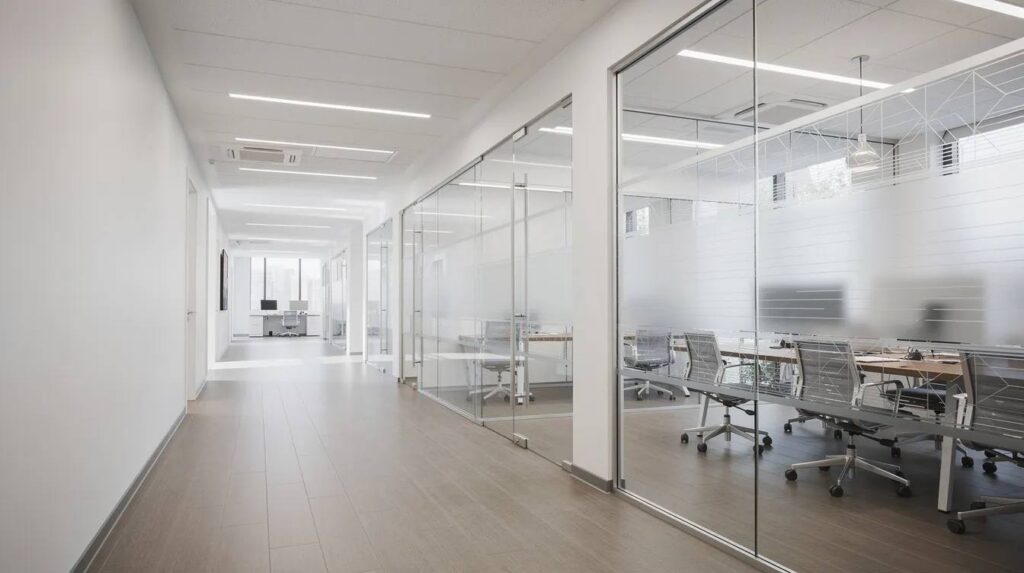
- Privacy window film can turn glass doors or interior partitions into soft visual barriers that reduce distractions while letting light flow between rooms.
- Frosted stripes, geometric bands, or logo-inspired patterns fit a professional or creative workspace. The film reduces glare on computer screens as an added benefit.
- Static cling film is ideal for temporary home offices or studios where layout may change – it is reusable and easy to reposition.
Entryways, Sidelights, and Front Door Privacy
- Narrow sidelights and glass around front doors are common privacy weak spots that window film can easily address and add privacy where it matters most.
- Stained glass and frosted films obscure direct views into hallways while still letting natural light illuminate the entry.
- Patterns can be chosen to complement the home’s architectural style – traditional, modern, craftsman – improving appearance and curb appeal.
- Films also provide uv protection that can prevent fading of welcome mats, hardwood floors, and entry rugs over time.
Step‑by‑Step: How to Install Privacy Window Film
Most window films are designed for DIY installation, and the process is easier than most people expect. Privacy window films can be applied to any glass surface easily with basic tools.
- Clean the glass thoroughly with mild dish soap and water. Remove old stickers, tape, or residue. Use a lint-free cloth.
- Measure and cut each pane precisely, leaving a small margin for trimming. Window films can be cut to fit any size area.
- Wet the glass by mixing water with a drop of mild dish soap in a spray bottle. Window films can be applied using just water and soap – no special chemicals needed.
- Position the film, peel the backing, and slide it into place on the wet surface.
- Squeegee from center outward using a plastic squeegee or flexible card to expel water and air bubbles. Work slowly to prevent creases.
- Trim edges with a sharp utility knife for a clean fit.
- Static cling films can be lifted and repositioned several times. Adhesive films should be aligned carefully before pressing fully into place.
Installation takes less than 30 minutes for most users on a standard-sized window.
Maintenance, Durability, and Safety Considerations
Quality adhesive window films typically last 5–10 years in residential settings, with some premium window film products rated for 10–20 years. Static cling films last 1–3 years in direct sun and up to 5 years in stable indoor conditions.
- Clean film with soft cloths or sponges and non-abrasive, non-ammonia cleaners. Avoid scraping tools that can scratch the surface.
- Many films block up to 99% of UV rays, helping prevent fading of furniture, rugs, and artwork, providing ongoing uv protection.
- Do not cover required safety labels on doors or large glass areas – check local building codes.
- Properly installed interior films usually do not cause condensation problems on standard residential double-pane windows. Verify manufacturer guidance for low-E or specialty glass.
- Window film serves as a shatter-resistant safety layer on impact-prone glass, adding a function beyond privacy alone.
Frequently Asked Questions About Window Film for Privacy
Can window film provide nighttime privacy?
Frosted, patterned, and blackout films provide reliable nighttime privacy because they obscure visibility regardless of lighting. One-way mirror films do not provide nighttime privacy when interior lights are on and the outside is darker – for evening coverage, pair them with curtains or blinds.
Does window film damage glass when removed?
Static cling films leave no residue and remove clean. Adhesive films may leave slight residue if removed improperly, but heat and a mild solvent usually handle cleanup without damaging the glass.
Can I still open my windows and clean them?
Yes. Film does not prevent you from opening windows. To clean, simply wipe gently with a soft cloth and mild cleaner.
Is privacy film suitable for rental properties?
Static cling is ideal for rentals – it is reusable, leaves no residue, and can be taken with you when you move. Some adhesive films also peel cleanly, but check with your landlord first.
Will window film make my rooms too dark?
It depends on the film. Frosted films with high VLT still filter light generously. Translucent films typically allow around 80% of natural light to pass through. Only blackout films dramatically darken a room.
Stained glass vs frosted film – which is better for privacy?
Stained glass window film adds color and character but privacy depends on pattern density. Frosted window film provides a clean, etched-glass look with more consistent privacy day and night. For spaces where you love both style and full privacy, choose a dense stained glass pattern.
Is window film compatible with double-pane and low-E glass?
Most films work fine on standard double-pane windows. However, highly reflective or mirror films can increase heat absorption in the glass assembly. Always check the film specifications and your window manufacturer’s guidance before you apply.
Conclusion: Choosing the Right Window Film for Lasting Home Privacy
Window film is one of the simplest, most affordable ways to upgrade home privacy on bathroom windows, glass doors, entryways, and beyond – without sacrificing natural light. Privacy window films can be applied to any glass surface easily, and the right product can transform a space in under half an hour.
Think through your priorities: 24/7 privacy vs. daytime only, decorative style vs. minimal frosted look, temporary static cling vs. permanent adhesive. Start by measuring your most-needed windows and listing which rooms need the most privacy first. From there, matching each room to the right film becomes easy and even fun. Explore specific privacy window film styles, order a few samples, and find the combination that makes you happy with every room in your home.