Table of Contents:
- Introduction: Why Window Tinting Matters in Sacramento’s Climate
- Types of Professional Window Tinting for Sacramento Buildings
- How Window Tinting Improves Comfort, Energy Use, and UV Protection
- What Sacramento Property Owners Should Know Before Tinting Their Windows
- Why Choose Window Film Depot for Window Tinting in Sacramento, CA
- Schedule Your Sacramento Window Tinting Consultation
- Frequently Asked Questions
Introduction: Why Window Tinting Matters in Sacramento’s Climate
Sacramento averages roughly 90 days per year with temperatures at or above 90°F, with about 14 of those days crossing the 100°F mark. The UV index regularly hits 9 or 10 during summer midday, and solar irradiance on south- and west-facing glass can reach 4.4 kWh/m² per day. For anyone who manages or owns a building in this city, those numbers translate directly into higher cooling bills, faded interiors, occupant discomfort, and security vulnerabilities at street-level glass.
Window Film Depot provides professional window tinting in Sacramento, CA, serving commercial, institutional, and residential properties throughout the region – including Elk Grove, Roseville, Folsom, Rancho Cordova, Citrus Heights, and surrounding communities. Our work focuses on engineered film solutions that address real building performance problems, not cosmetic afterthoughts.
Modern window film is a broad category. It includes solar control films that reject heat and glare, security films that hold shattered glass together, decorative and privacy films for interior partitions, and specialty products like anti-graffiti coatings. These are fundamentally different from basic car window tinting or the DIY kits available at hardware stores. Architectural films are specified to match glass types, meet California building codes, and carry manufacturer warranties that often extend a decade or more.
The benefits are measurable: reduced heat and glare, protection from harmful UV rays that fade furnishings and merchandise, lower energy costs during Sacramento’s long cooling season, added security against forced entry, and improved comfort for employees, students, tenants, or customers. Window tinting blocks 99% of UV rays and can reduce heat by up to 88% depending on the film selected and glass configuration.
Window Film Depot is a national 3M window film dealer-installer, family-owned since 1992, with deep experience on California projects. We provide turnkey service for facility managers, property owners, architects, and building engineers – from initial glass survey through installation, warranty documentation, and multi-site rollout coordination.
In this guide, you will learn about the types of window tinting available for Sacramento buildings, how the installation process works, what professional film costs at a building scale, and why partnering with a specialized installer matters more than most property owners realize.
Types of Professional Window Tinting for Sacramento Buildings
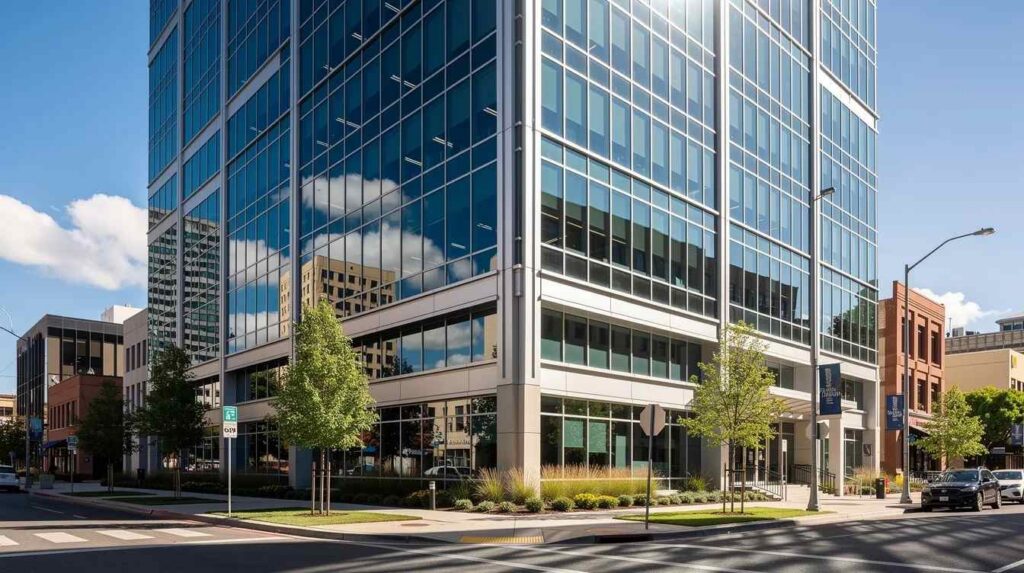
Different facilities have different performance needs. A glass-heavy state office building near Capitol Mall faces different challenges than a ground-floor pharmacy on Arden Way or a school classroom in Natomas. Here is a breakdown of the main categories of professional window films used in Sacramento and how each one solves specific problems.
Solar Control and Energy-Saving Films
High-performance solar window films are the workhorse of the commercial tinting industry. These films cut visible light glare and block up to roughly 79% of solar heat gain – a critical advantage when Sacramento’s summer days routinely push into the mid-90s and beyond. Various tint types include dyed film, carbon film, and ceramic film, each offering different levels of performance and longevity.
Carbon tint blocks heat effectively and provides strong durability over time, making it a solid mid-range option. Standard ceramic tint has up to 88% heat rejection and offers superior glare reduction and clarity compared to older dyed or metallized films. At the top of the performance range, nano ceramic tint blocks up to 98% of heat while maintaining excellent optical clarity and a neutral appearance.
Most premium solar control films block 99% or more of UV rays, which helps prevent fading of flooring, merchandise, artwork, and furnishings in offices, storefronts, lobbies, and classrooms. Premium tint provides 65% heat rejection and UV protection even at lighter shade levels, meaning you do not have to make a space feel dark to get meaningful performance.
Practical use cases in Sacramento include:
- Glass-heavy office buildings near Capitol Mall where west-facing curtain walls create afternoon hot spots
- Retail façades along J Street where sun exposure degrades merchandise and drives up cooling costs
- Schools with large classroom windows in Elk Grove or Natomas, where afternoon sun makes learning environments uncomfortable
Safety and Security Window Films
Thick, multi-layer security films combined with proper edge anchoring help hold glass together against forced entry, smash-and-grab theft, and blast or impact events. The film does not make glass unbreakable – it keeps it in the frame when shattered, buying critical seconds and creating a barrier that is much harder to penetrate.
Common Sacramento applications include pharmacies, cannabis dispensaries, jewelry stores, government offices, and ground-floor glass along busy corridors like Arden Way or Howe Avenue. For any business with high-value inventory visible from the street, security film is one of the most cost-effective layers of physical protection available.
For higher-risk locations, there is a meaningful distinction between retrofit security film and engineered shield systems like DefenseLite or BulletShield. These systems mount a separate polycarbonate panel over existing glass, providing substantially greater impact and forced-entry resistance. Window Film Depot specifies and installs both approaches, matching the protection level to the actual threat profile and budget of each property.
Decorative and Privacy Films
Frosted, gradient, and patterned films serve a different purpose: they address privacy needs on interior glass walls, conference rooms, and medical exam rooms without requiring glass replacement, and there are multiple types of decorative film for interior and exterior glass that can be tailored to branding and design goals. Darker tint levels can increase privacy by making it more difficult to see inside, but decorative films achieve this with style rather than darkness.
Examples across Sacramento include:
- Etched-look films for law offices and lobbying firms near the Capitol
- Branded decorative films for corporate headquarters that want a polished, consistent interior aesthetic
- Privacy bands in clinics, hospitals, and dental offices where patient confidentiality is non-negotiable
These films can be combined with solar control films on exterior glazing for a complete solution – privacy where you need it inside, heat and UV rejection on the building envelope.
Specialty and Anti-Graffiti Films
Anti-graffiti film is a sacrificial layer applied to street-level glass, transit shelters, and elevator interiors. When the surface is tagged, scratched, or etched with acid, the damaged film layer is peeled off and replaced – far cheaper and faster than replacing the glass itself. For retail businesses on Sacramento’s downtown grid, this is a practical line item, not a luxury.
Some specialty films also address bird safety compliance, retrofit daylighting control for older buildings, or aesthetic upgrades to dated façades without major construction. These niche applications are increasingly common as Sacramento’s building stock ages and sustainability expectations rise.
How Professional Films Compare to Auto-Style Window Tint
Sacramento has plenty of shops offering car window tinting, and some property owners wonder if the same product works on buildings. It does not – at least not well.
Architectural films are engineered for different glass types, thermal stress profiles, and performance durations than automotive films. Tints can improve driving comfort by reducing glare from sunlight, and tinting increases privacy and security in vehicles, but the specifications, warranties, and installation methods differ significantly. Window tinting reduces glare inside vehicles using films designed for curved automotive glass, while building films are formulated for flat, often much larger panes with different heat absorption characteristics.
Local auto tint shops like Five Star Auto Tint, which was founded in 2022 and serves both Modesto and Sacramento, or HQ Window Tinting, which has a 4.5+ rating and 10+ years of experience and offers nano ceramic tint blocking up to 98% heat, are solid choices for cars. Basic tint services at HQ start at $149, which is appropriate pricing for vehicle work. But building owners need a partner focused on architectural glass performance, code compliance, manufacturer-backed warranties, and the project management complexity that comes with occupied commercial and institutional facilities.
Window Film Depot understands automotive-grade technologies like nano-ceramic coatings as an analogy for high-end architectural film performance, but our focus is on window film installation in Sacramento and other California markets – not cars. Nano carbon and ceramic materials resist fading and peeling in both contexts, but the engineering, installation, and long-term support requirements are fundamentally different. Ceramic films are highly recommended for heat rejection and UV protection across both automotive and architectural applications, though the product lines are distinct.
How Window Tinting Improves Comfort, Energy Use, and UV Protection
Sacramento’s cooling season stretches from roughly April through October – over half the year. Rising electricity rates make that extended air conditioning demand increasingly expensive, and high-quality tints significantly reduce solar heat and glare that drive those costs.
Heat Reduction and Comfort
Modern films can reduce solar heat gain on west- and south-facing glass by 40–70%, depending on the film type and glass configuration. For facility managers, this translates to fewer hot-spot complaints from perimeter offices, more consistent temperatures across floor plates, and reduced strain on HVAC systems that are already working hard in Sacramento summers. Window tinting reduces heat by up to 88% with the best-performing ceramic products, making a tangible difference in occupant comfort without blocking the view.
Energy Savings
Lowering solar heat gain directly trims cooling loads. Films with a solar heat gain coefficient (SHGC) in the range of 0.20–0.30 can reduce solar heat gain by 60–75% compared to untreated glass. For Sacramento buildings in California’s Climate Zone 12, this performance improvement can support better energy performance scores, contribute to LEED or BREEAM goals, and potentially qualify for utility rebate programs. Tinting can lower energy costs by improving efficiency across the entire cooling season, and Window Film Depot can assist with ROI calculations and utility rebate documentation where available.
3M solar control films are often modeled within energy analysis tools used for Title 24 compliance, meaning the film’s performance can be formally credited in a building’s energy budget.
UV Protection
Most professional-grade films reject 99–99.9% of UV rays. In practical terms, this dramatically slows fading of interior finishes, inventory, artwork, and furniture. Boutique retail stores in Midtown, museums and galleries, and university spaces with large glass walls all benefit from this protection. For occupants, blocking harmful UV rays also reduces long-term skin exposure for people who work near windows day after day.
Glare Reduction and Visual Comfort
Films can reduce eye strain for computer users, teachers, and students without making glass look mirror-like or blacking out the view. Many modern films are neutral or low-reflective, which is important in Sacramento neighborhoods with strict design guidelines or historic preservation standards. Glare reductions of 70–80% are achievable with the right product selection, and the best spectrally selective films maintain 30–50% visible light transmission while still delivering strong heat rejection.
What Sacramento Property Owners Should Know Before Tinting Their Windows
Commercial, institutional, and multifamily projects in Sacramento have considerations that go well beyond choosing a shade level. Codes, glass types, warranties, and even landlord-tenant dynamics all factor into the specification process. Getting these details right upfront prevents costly mistakes and ensures the film performs as expected for years.
Climate and Building Envelope Considerations
Sacramento’s combination of intense summer heat, high UV exposure, and cool winter nights means films must be chosen carefully to avoid thermal stress on certain glass types. Annealed glass – the most common and least expensive type – is more susceptible to thermal stress cracking when a heat-absorbing film creates uneven temperature gradients across the pane. Tempered and laminated glass handle these stresses better.
Window Film Depot reviews glass composition (annealed, tempered, laminated, dual-pane insulating glazing units) and manufacturer guidelines before specifying any film. This step is not optional – it is the difference between a successful installation and a cracked window.
Code Compliance and Aesthetics
Sacramento requires compliance with the 2025 California Building Standards Codes, which became effective January 1, 2026. These codes regulate visible transmittance (VT), solar heat gain coefficients (SHGC), and U-factors for glazing. Sacramento City Code also requires habitable rooms to maintain minimum natural light levels through windows or skylights.
For building-scale projects, maintaining required visible light levels in stairwells, corridors, and egress routes is a safety and code requirement. Exterior appearance also matters: areas governed by design review boards, historic preservation districts, or corporate brand standards require neutral or low-reflective films that do not alter the building’s façade.
For context on automotive regulations – since some property owners ask about these – California law requires front side windows to allow more than 70% of light, a 4 to 5-inch clear strip is permitted on the top of the windshield, and California allows rear side and back windows to be tinted any darkness. These rules apply to vehicles, not buildings, but understanding the distinction helps clarify why architectural film specification is a different discipline entirely.
Warranty and Product Life
Many window tinting services offer lifetime warranty options that cover defects in materials and workmanship. Some warranties include coverage for fading and peeling, which matters significantly in a market with Sacramento’s UV intensity. Warranties typically last for the life of the vehicle or film, depending on the application. However, warranty terms can vary by film type and installation quality, which is why authorized dealer installation is critical.
Professional architectural films from manufacturers like 3M typically come with long-term or lifetime warranty protection against peeling, bubbling, discoloration, and adhesion failure – but only when installed by authorized dealers. Window Film Depot provides both manufacturer warranties and our own workmanship guarantees, including coverage across multiple locations for national accounts.
Common Mistakes to Avoid
- Choosing the darkest or cheapest tint without considering glass type, occupant needs, or HVAC impact
- Hiring non-specialist contractors or relying on car window tinting shops for large commercial facades that require lifts, safety plans, and proper insurance
- Ignoring rooftop or high-rise access challenges until installation day, which can increase cost and delay completion significantly
- Failing to test film appearance on a sample pane before committing to a full building rollout
- Skipping the glass composition assessment, which can lead to thermal stress cracking on annealed glass
Plan Early
Involve a professional window film contractor during early budgeting phases for remodels or energy retrofits – not as an afterthought once the project is underway. Window Film Depot can provide sample installations on a few panes so stakeholders can see real-world appearance, light levels, and heat performance before approving a full rollout. This approach saves time, avoids surprises, and builds confidence among building occupants and ownership groups.

How the Professional Window Tinting Process Works
Window Film Depot follows a predictable, low-disruption process designed for operating facilities in Sacramento – offices with employees at desks, schools in session, retail stores that must stay open, and healthcare clinics with patients in exam rooms.
Consultation and Survey
The process starts with a phone or virtual consultation to understand your goals: heat reduction, UV and glare control, privacy, security, or graffiti protection. From there, we schedule an on-site survey in Sacramento or nearby cities to measure glass, identify orientation, inspect any existing film, and note access requirements – lifts, interior obstacles, security clearances, or after-hours entry procedures.
Film Selection and Proposal
Based on the survey, our team presents a focused set of options rather than an overwhelming catalog. This typically includes:
- Neutral vs. reflective appearance options
- Different solar performance tiers matched to your glass type and exposure
- Clear security film vs. tinted security film, if protection is a priority
- Decorative or privacy films for interior partitions
Proposals include material specs, performance data (SHGC, VLT, UV rejection), estimated energy savings where applicable, project timeline, and detailed warranty terms.
Scheduling and Installation
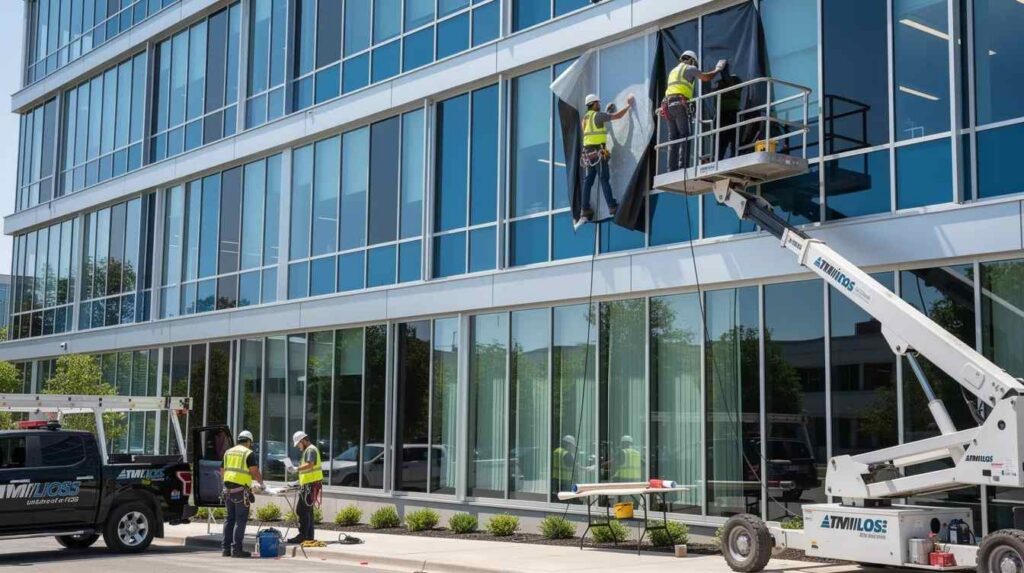
Installations are often scheduled during off-hours, weekends, or school breaks to minimize disruption. Most jobs in commercial settings can be completed efficiently, though large buildings may require phased scheduling over multiple days or weeks. Installation typically takes 2 to 4 hours per room or zone with a curing period required afterward, though most window tint jobs are completed within 1-2 hours for individual spaces.
The basic installation sequence involves:
- Thorough glass cleaning and surface preparation
- Precise film cutting to match each pane
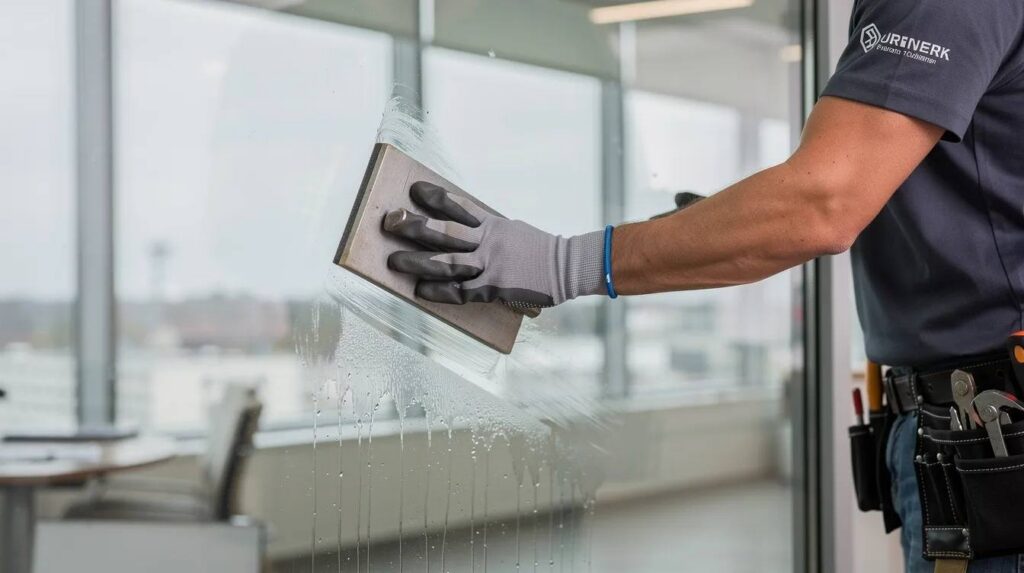
- Wet application using a soapy solution for positioning
- Squeegeeing to remove moisture and air pockets
- Edge detailing and trimming for a clean finish
- Cleanup of the work area
Safety protocols for ladders, scaffolding, and lifts are standard on any project involving glass above ground level.
Curing and Aftercare
Films may appear slightly hazy or show small moisture pockets for a few days while water evaporates from beneath the film surface. This is normal and resolves on its own, though cooler months may extend the curing period slightly. Simple care guidelines include:
- Wait the specified period (usually 30 days) before cleaning the filmed surface
- Use non-abrasive cloths and ammonia-free cleaning solutions
- Avoid razor blades, abrasive pads, or sharp tools near the film surface
Multi-Site Rollout Management
National and regional clients with locations across California can standardize their commercial window tinting specification and rely on one point of contact for project management and warranty support, backed by nationwide window film services across all 50 states. Window Film Depot coordinates logistics, scheduling, and quality control across sites – whether that is three Sacramento-area buildings in Los Angeles and Sacramento, additional facilities in Palm Springs and surrounding Coachella Valley cities, or projects across the broader San Francisco Bay Area market and thirty locations statewide.
Why Choose Window Film Depot for Window Tinting in Sacramento, CA
Sacramento has many local window tinting providers, and plenty of auto-focused shops that handle vehicle work well. But commercial, institutional, and multifamily building projects require a different kind of partner – one with expertise in engineered, warrantied, code-compliant solutions and the project management infrastructure to deliver them without disrupting your operations.
Experience and Scale
Window Film Depot has been in business since 1992. We are family-owned, and we have completed thousands of installations nationwide, including large projects across California. Our team is experienced with complex environments: government facilities with security clearances, schools with active students, hospitals with patient privacy requirements, banks, corporate campuses, and national retail chains with brand standards that must be consistent across all locations.
Manufacturer-Backed Solutions
We are a leading 3M window film dealer-installer with proven experience on complex projects from Sacramento to Washington, DC commercial window film installations and also provide advanced systems like DefenseLite for higher levels of glass security. Our products carry strong manufacturer warranties and are installed by trained, certified crews who understand building performance, safety requirements, and the detail that separates a professional installation from one that peels, bubbles, or cracks glass.
Turnkey Project Management
Our team coordinates site surveys, film specification, logistics, access equipment, union or non-union labor as required, and scheduling that accounts for your operating reality. We have deep experience with occupied buildings, night and weekend work, and projects throughout California markets like Orange County and Santa Monica that must be phased to keep your business, school, or facility running without interruption.
Sacramento Expertise
We are familiar with Sacramento’s climate, local building stock, and the common challenges property owners face here: west-facing glass on mid-rise offices that turns perimeter workstations into ovens, ground-level breakage and vandalism downtown, heat complaints in school classrooms from April through October, and the need for neutral-appearance films that satisfy design review boards.
Our service coverage extends throughout the region: downtown Sacramento, Natomas, Arden-Arcade, Elk Grove, Roseville, Folsom, Citrus Heights, and surrounding communities. Customers across these locations can expect the same level of attention, quality, and warranty support.
Not an Auto Tint Shop
We respect the work that auto tint shops do – businesses like Rocky Mountain Auto Works and similar providers serve the vehicle market well, offering ceramic coating, paint protection, and automotive window tint that keeps cars comfortable. But building owners and facility managers need a partner focused on architectural glass performance, documentation, energy compliance, and long-term support. That is what Window Film Depot does. We understand the difference between tinting a vehicle and engineering a building envelope upgrade, and our clients benefit from that focus.
Frequently Asked Questions
Is window tinting legal on commercial buildings in Sacramento, CA?
Professional architectural films are widely used and fully permitted on commercial buildings. However, certain safety glazing requirements and minimum light-level standards must be respected – particularly in egress corridors, stairwells, and habitable rooms. Window Film Depot specifies only code-appropriate solutions that comply with current California Building Standards and Sacramento City Code requirements.
How much does professional window film cost for a building?
Pricing depends on film type, glass area, access complexity, and project scope. General ranges for installed commercial film in 2026:
| Film Type | Typical Cost per Sq. Ft. |
|---|---|
| Standard dyed or metallized solar control | $5–$8 |
| Reflective solar control | $8–$12 |
| Spectrally selective / nano-ceramic | $9–$18+ |
| Safety / security film | $10–$25+ |
| Decorative / privacy | $8–$15 |
| Total project cost for a mid-rise office with approximately 50,000 square feet of glass could reach $1.1 million or more with premium ceramic film and full project management. We recommend requesting a site-specific quote for accurate pricing on your building. | |
Will window film make my glass too dark?
Not necessarily. Films come in multiple shades and reflectivity levels, and many Sacramento projects choose neutral or lightly tinted films that maintain natural daylight and exterior appearance while still cutting heat and UV. Spectrally selective films can reject significant solar energy while transmitting 30–50% of visible light – far from dark.
How long does window tint last in Sacramento’s sun?
Quality films installed by authorized dealers typically last well over a decade, even under intense California sunlight. Many products are backed by extended or lifetime warranty protection against peeling, bubbling, and discoloration. The combination of premium materials and proper installation is what makes the difference in longevity.
Can window film really help with energy bills?
Yes. Reducing solar heat gain directly lowers cooling loads during Sacramento’s extended cooling season. Films with low SHGC values (0.20–0.30 range) can reduce solar heat gain by 60–75%, which translates to measurable reductions in electricity consumption. Window Film Depot can help estimate ROI and payback timelines for your specific facility based on glass area, orientation, and current energy spend.
What’s the difference between security film and products like DefenseLite?
Security film is applied directly to existing glass to improve impact resistance and hold shattered glass in the frame. DefenseLite is a separate polycarbonate shield system that mounts over the window, providing substantially higher forced-entry and impact protection. Street-level retail, dispensaries, and jewelry stores in Sacramento may benefit from DefenseLite, while interior offices and upper-floor glass may only need security film. Window Film Depot can assess your risk profile and recommend the appropriate solution.
Do you offer window tinting for homes as well as commercial buildings?
Yes. Window Film Depot serves both residential and commercial clients in the Sacramento region. Residential films are tailored for home comfort, fading protection, and daytime privacy – helping homeowners reduce heat in sun-exposed rooms, protect furniture and flooring, and enhance the look of their home without replacing windows.
How soon can you start a project in Sacramento?
Typical timeline from initial consultation to installation is two to four weeks for standard commercial projects, depending on film availability and scheduling. Urgent security or vandalism concerns can sometimes be prioritized with faster turnaround. Contact us by phone or through our online form to confirm scheduling and get a detailed timeline for your specific project.
Schedule Your Sacramento Window Tinting Consultation
If you manage or own a building in the Sacramento area – whether it is a downtown office tower, a retail place on a busy corridor, a school campus, or a home that bakes in the afternoon sun – professional window tinting is one of the most practical investments you can make today. The work pays for itself through improved comfort, reduced UV exposure, potential energy savings, enhanced safety and security, and a cleaner, more updated appearance that makes your happy occupants and customers notice the difference.
Contact Window Film Depot to schedule a no-obligation consultation and glass survey in Sacramento or any nearby community. When you reach out, it helps to have the following ready:
- Type of property (office, retail, school, multifamily, residential)
- Approximate glass area or number of windows
- Main issues you want to solve: heat, glare, privacy, security, fading, or aesthetics
Every project is backed by manufacturer warranties and Window Film Depot’s decades-long track record of delivering results for clients across the country. Whether you are interested in a single storefront or coordinating a multi-site rollout across California, we manage the entire process from survey to final inspection.
Reach out to Window Film Depot today to get a free quote today, explore the right window tinting solution for your Sacramento building, and receive a detailed proposal with performance specs, timeline, and pricing tailored to your place. You can find us active on Instagram and through reviews from happy clients nationwide. Our years of experience, attention to detail, and commitment to service mean your project is in the right hands from day one.