Table of Contents:
- Introduction: Why Commercial Building Window Tinting Matters in 2026
- Key Benefits of Commercial Building Window Tinting for Modern Facilities
- Types of Commercial Window Films and Where They Work Best
- Energy Savings, Comfort, and ROI from Window Films
- Security, Safety, and Anti Graffiti Protection for Commercial Windows
- How to Choose the Right Commercial Window Film for Your Building
- Professional Installation Process with Window Film Depot
- Maintenance, Lifespan, and Warranty of Commercial Window Films
- FAQs About Commercial Building Window Tinting
- Why Choose Window Film Depot for Commercial Building Window Tinting
- Next Steps: Schedule Your Commercial Window Film Consultation
Introduction: Why Commercial Building Window Tinting Matters in 2026
Since 2020, commercial electricity rates have climbed steadily, extreme heat events have become more frequent across major U.S. metros, and ESG reporting requirements have gone from optional to expected. For facility managers and building owners, these pressures converge at one of the most overlooked surfaces in any commercial building: the glass.
Commercial building window tinting is the professional installation of high-performance window films on offices, schools, government buildings, retail locations, healthcare facilities, and institutional properties. Rather than replacing existing glazing, these films upgrade the glass already in place, delivering lower cooling costs and overall energy costs, UV and glare control, improved occupant comfort, reinforced glass with security film, and a refreshed building’s exterior appearance.
Window Film Depot is a family-owned, national 3M dealer and installer headquartered in Marietta, Georgia. Since 1992, our crews have completed projects across the U.S. for Fortune 500 office buildings, K-12 school districts, federal facilities, and national retail chains. This article covers film types, energy-saving benefits, security and anti-graffiti options, selection tips, the installation process, FAQs, and how to get a quote.
Key Benefits of Commercial Building Window Tinting for Modern Facilities
A single commercial window film retrofit can address multiple facility pain points simultaneously: high energy bills, hot spots and cold spots near perimeter windows, excessive glare on monitors, fading interior furnishings, and security vulnerabilities. Different types of films optimize various functions, which means a tailored solution rather than a one-size-fits-all compromise.
Here is what a properly specified commercial window tinting project delivers:
- Energy savings of up to 15–20% on annual HVAC costs in typical office spaces
- Cooling costs reduced by cutting solar heat gain at the glass
- Commercial window films block up to 99% of harmful UV rays, and UV-blocking films protect furnishings from fading
- Window films help shield building occupants from skin cancer caused by prolonged indoor UV exposure
- Elimination of hot spots, creating a comfortable environment across every floor
- Enhanced privacy for ground-level tenants and conference areas
- A uniform appearance on the building’s exterior without the cost of full window replacement
Commercial window films can improve employee comfort by eliminating hot spots, which directly affects productivity and tenant retention. Films also support ESG and sustainability goals, contributing to LEED points under Energy & Atmosphere and lowering operational carbon without the embodied carbon cost of tearing out and replacing glass.
Types of Commercial Window Films and Where They Work Best
Not all window films are the same. Solar control films, security films, privacy and decorative films, and anti graffiti films are each engineered for different performance targets. Window Film Depot primarily installs 3M commercial window tinting films but can source specialty options for unique glazing systems.
Solar Control Films for Energy Efficiency and Comfort
Solar control films block heat and glare while allowing light to pass through, using multi-layer polymer, ceramic, or metalized constructions. Spectrally selective films reject heat-producing light while allowing natural light, so offices stay bright without the sun’s heat overwhelming the HVAC system, especially when sourced from a specialist like Window Film Depot’s commercial window film offerings.
Key performance ranges for commercial solar control window films:
- Visible light transmission: 20–70% depending on grade
- Total solar energy rejected: up to 79% in high-performance lines
- UV rejection: 99–99.9% across most films
Ceramic films utilize microscopic particles to reject heat without visual interference, making them ideal for buildings that need to preserve views and natural light. Reflective films use metallic layers to significantly reduce solar heat, best suited for large glass-heavy facades where aesthetics allow a reflective look. Low-E films improve insulation year-round, making a single-pane window perform closer to double-pane and helping retain indoor warmth during winter. These commercial window tinting solutions for office buildings also help tinting reduce glare from sunlight on screens, which matters in every office building and medical facility with south- or west-facing glass.
These films maintain or enhance the building’s exterior with a professional, uniform glass appearance in neutral, reflective, or nearly invisible options.
Security Film and Safety Glazing Upgrades
Security window films are thick, tear-resistant polyester or multi-layer films anchored to commercial windows to hold shattered glass together under impact. Specialized security window films that prevent glass from shattering make glass more resistant to breakage, creating a delay-and-deter barrier against forced entry, break ins, and flying glass shards from storms or blasts. Security films hold glass together during impacts, preventing shattering and protecting people from broken glass.
Safety and security films are tested against standards like ANSI Z97.1 and CPSC 16 CFR 1201. For federal and municipal buildings, films can meet GSA blast criteria. Common thicknesses range from 4-mil basic safety glazing up to 14-mil for high-risk scenarios. Attachment systems anchor the film to the window frame for stronger edge retention, preventing the entire pane from being expelled during natural disasters or attempted forced entry.
Use cases include retail stores hardening glass doors against smash-and-grab losses, coastal properties preparing for hurricane seasons, and schools adding a protective layer to vulnerable ground-floor windows, all of which benefit from access to a broad range of window glass film products and brands tailored to specific risks.

Decorative Film and Privacy Solutions
Decorative films enhance aesthetics without replacing glass. Frosted glass effects, gradients, patterns, and custom-printed designs transform interior glass walls, conference rooms, and storefronts. Many designers explore different types of decorative film for interior and exterior glass to balance branding, privacy, and daylight. Privacy films limit outside visibility for confidentiality, making them standard in medical exam rooms, HR offices, law firms, and banks. Privacy films make it harder for passersby to see inside, while tinted windows limit outside visibility for enhanced privacy on ground-floor office spaces facing busy streets.
Decorative films improve privacy and branding without energy savings being the primary goal, though most films still block harmful uv radiation. They are a fast, non-permanent way to update interiors during rebranding or tenant fit-outs compared to etched glass or new partitions. Think company logos on conference rooms, wayfinding on interior corridors, or matte white specialized film converting open-plan glass offices into private focus rooms.
Anti Graffiti Film for High-Traffic and Public Spaces
Anti graffiti films protect glass surfaces from vandalism by acting as a clear sacrificial layer over glass, mirrors, or metal panels. When damaged by scratching, acid etching, or spray paint, the film is peeled off and replaced at a fraction of the cost of full glass replacement. A typical anti graffiti film costs roughly $3–$8 per square foot installed, compared to $25–$65+ per square foot for glass replacement, and they are often paired with retail storefront window film solutions to manage sun control and security at street level.
Transit agencies like the LA Metro have cut window replacement needs by approximately 85% using anti graffiti films, saving over $1 million. These films are especially valuable for transit hubs, street-level retail stores, schools, stadiums, and parking garages, particularly in sun-intensive markets that also benefit from residential and commercial window film glass tinting in Los Angeles.
Energy Savings, Comfort, and ROI from Window Films
Commercial electricity rates have risen significantly since 2020, and hotter summers across U.S. cities mean cooling loads keep climbing. Window films reduce solar heat gain in summer by rejecting heat at the glass before it enters the space, easing the load on your hvac system, smoothing indoor temperatures, and reducing peak demand charges. Solar control films can cut cooling costs by up to 50% in sun-heavy exposures, and certain films help retain indoor heat in winter through low-emissivity coatings that improve insulation by 30–37%.
Energy savings from window films can start immediately after installation. Solar control films reduce harmful UV radiation indoors, protecting people and preventing fading of flooring, fabrics, and artwork. Reducing heat and excessive glare also means fewer tenant complaints and lower air conditioning costs.
Typical ROI for solar window films is often 3 years or less. Studies show payback periods as short as 1.4 years on single-pane glass and under 3 years on double-pane in hot climates, with savings of up to 19 kWh per square foot of glass annually. That makes commercial window film a smart investment that also supports LEED certification and local energy benchmarking laws. Indirect savings include longer HVAC life, fewer maintenance calls for faded interior furnishings, and lower energy bills across the portfolio.
Security, Safety, and Anti Graffiti Protection for Commercial Windows
Glass is one of the most vulnerable points in any commercial building. Forced entry, storm damage, accidental impacts, and vandalism all target glass surfaces. Security films reinforce glass against breakage and shattering, creating a delay-and-deter layer that slows intruders and keeps building occupants safer during accidents or severe weather.
Specific risk scenarios where safety security film pays off include retail smash-and-grab incidents, civil unrest, severe storms in Gulf and Atlantic states, and stray projectiles near schools or sports facilities. For higher-risk environments, many facilities look beyond basic tint to integrated window protection film solutions to reinforce glass. Anti graffiti film is often part of a broader risk and maintenance strategy for transit agencies, city governments, and property managers overseeing street-level commercial spaces.
Window Film Depot has deployed security and anti graffiti window films for K-12 school districts, universities, federal agencies, and national retail chains. In one school safety upgrade, security film was installed across ground-floor windows to reduce the risk of flying glass shards during an impact event. A transit agency used anti graffiti film on station glass to cut replacement costs by thousands annually, leveraging the capabilities of a family-owned national window film installer.
How to Choose the Right Commercial Window Film for Your Building
Proper film selection depends on climate, glass type, building orientation, tenant needs, and budget. Installing window film is typically less expensive than replacing windows, but choosing the wrong product can underperform or even risk thermal stress on incompatible glass.
A practical framework for your specific business needs:
- Identify primary goals: energy savings, reducing glare, enhanced privacy, safety security, anti graffiti protection, or aesthetics
- Define constraints: budget limits, historic façade rules, code requirements, reflectivity limits
- Match to film category: solar control window films for energy, security films for protection, decorative films or privacy films for visual control, anti graffiti films for vandalism-prone surfaces
Evaluate the existing glazing system: clear versus tinted glass, single versus double pane, low-e coatings, skylights, and interior glass walls. Consider how films will change the building’s exterior-there are nearly invisible films for strict aesthetic or historic requirements. Most films work on the interior side of the glass, though specialty exterior films exist for certain conditions.
Involve a professional installer early for on-site measurements, solar modeling, and sample viewing on actual commercial windows. Window Film Depot supports portfolio-wide standards for multi-site owners, ensuring consistency across regions, whether you need local service such as window film installation in Washington, DC or coordinated national roll-outs.
Professional Installation Process with Window Film Depot
Expert professional installation is essential for performance, longevity, and warranty coverage. Here is how the process works with Window Film Depot:
- Consultation and goal setting: Identify priorities-energy, security, privacy, aesthetics
- Site survey and glass audit: Verify glass types, measure dimensions, assess frames
- Film selection and proposal: Match products to goals with transparent pricing
- Scheduling: Coordinate around operating hours-nights, weekends, phased floors
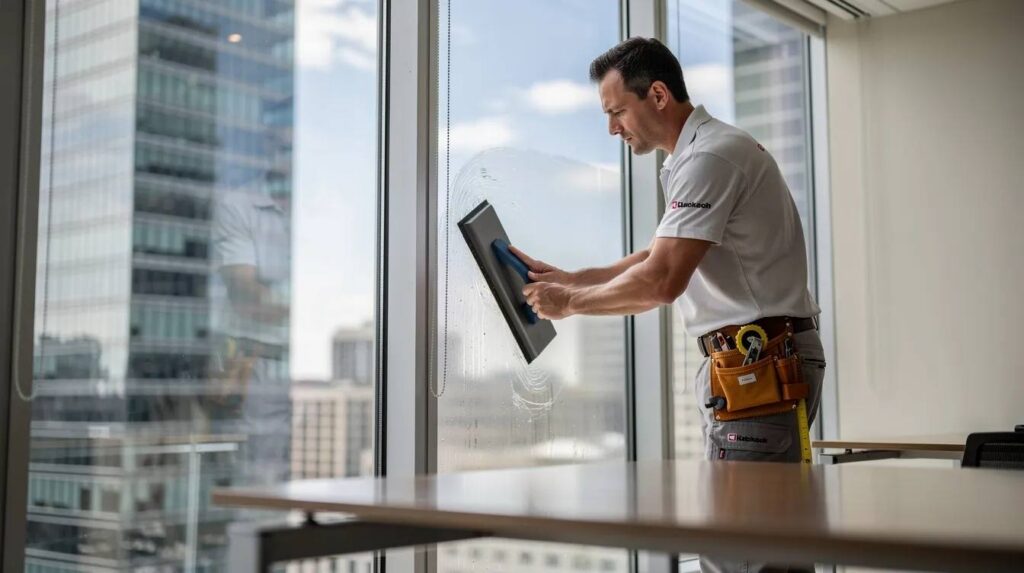
- Installation: Windows must be thoroughly cleaned before film application. The film bonds to glass with a pressure-sensitive adhesive and is applied using specialized tools to avoid air bubbles
- Inspection and cleanup: Post-installation quality check and site restoration
Installation typically takes a few days depending on window quantity. A 10-story office building might take one to two weeks with phased floors; a single retail storefront can be completed overnight. Professional installation ensures proper adhesion and warranty coverage. Minor temporary haze is normal while films cure and clears within days.
Maintenance, Lifespan, and Warranty of Commercial Window Films
Quality commercial window film lasts 10–20 years depending on product type, exposure, and climate. Most films require minimal upkeep:
- Wait approximately 30 days before first cleaning
- Use soft cloths or squeegees with mild, non-ammonia cleaners
- Avoid abrasives and high-pressure washing on filmed glass surfaces
Over many years, signs that a film may need replacement include peeling edges, bubbling, or discoloration. Proper installation dramatically reduces the risk of premature failure. Typical warranty coverage for 3M commercial films runs 12–15 years, covering peeling, cracking, and adhesive failure. Window Film Depot assists clients in registering warranties, maintaining documentation, and handling future claims or upgrades.
FAQs About Commercial Building Window Tinting
How much can commercial window films really reduce my energy costs?
Solar control films typically cut cooling costs by 20–50%, depending on climate zone, glass type, and building orientation. In hot climates, payback periods can be under two years. Lower energy bills are often measurable within the first billing cycle.
Will window tinting make my offices too dark?
No. Modern spectrally selective and ceramic films reject heat while preserving natural light. Films with 50–70% visible light transmission keep offices bright without sacrificing natural light or creating a cave-like feel, while still blocking heat and reducing glare.
Can window films be installed on any type of commercial glass?
Most films work on tempered, laminated, double-pane, and low-e glass, but compatibility must be verified. A professional assessment prevents thermal stress risks. Not all glass types pair well with every film, which is why an on-site audit matters.
How long does installation take and will it disrupt our tenants?
Installation typically takes a few days for a mid-size commercial building. Work can be phased by floor and scheduled during off-hours to minimize disruption.
Can window film be removed or replaced later?
Yes. Films can be professionally removed without damaging the glass, making them ideal for retrofit projects, lease turnovers, or upgrades. This makes commercial window film an affordable alternative to permanent glazing changes.
What’s the difference between residential tinting and commercial window film?
Commercial window film is engineered for larger glass areas, higher performance demands, and tougher durability requirements. Product construction, thickness, and warranties differ significantly from residential tinting. Blackout films, heavy-duty security films, and anti-graffiti films are rarely used in residential settings.
Does window film go on the interior or exterior side of the glass?
Most commercial window tinting is applied on the interior side of the glass. Specialty exterior films exist for situations where interior access is limited or specific performance is needed.
Why Choose Window Film Depot for Commercial Building Window Tinting
Window Film Depot has been family-owned since 1992, headquartered in Marietta, Georgia, and focused on commercial, institutional, and government projects across North America. Our core differentiators:
- National reach with local crews capable of multi-site roll-outs across the outside world of diverse climates and building types
- Deep expertise with 3M solar control films, security glazing, decorative and privacy film, and anti-graffiti film
- Turnkey project management from assessment to installation and warranty support
- Complex environment experience: schools, courthouses, hospitals, airports, high-rise office buildings
We also supply wholesale film rolls for glazing and trade partners who need commercial window film backed by technical support. Our consultative approach includes transparent pricing, realistic energy savings estimates, and a commitment to long-term building performance.
Next Steps: Schedule Your Commercial Window Film Consultation
If you manage commercial spaces dealing with high energy costs, excessive glare, security concerns, or aging glass, commercial building window tinting is one of the fastest-payback envelope upgrades available today. Contact Window Film Depot to request a site survey, send floor plans and utility data, or schedule a virtual consultation.
Whether you are a facility manager, school administrator, architect, or corporate real estate team, we can provide energy modeling, product demos, and sample installations tailored to your buildings. Commercial building window tinting delivers energy savings, comfort, security, and visual upgrades in a single retrofit-an affordable alternative to window replacement that prepares your buildings for the next decade of energy and security challenges.
Reach out by phone, email, or our website form for a fast, no-obligation quote.