Table of Contents:
- Introduction: Why More Homeowners Are Tinting Their House Windows in 2026
- What Is Window Film and How Does It Work on House Windows?
- Benefits of Window Tint for House Windows
- Daytime vs. Nighttime Privacy: What Window Tint Can (and Can’t) Do
- Types of Window Films for House Windows (and How to Pick the Right Film)
- Room-by-Room Guide: Choosing Window Tint for Key Living Spaces
- Pros and Cons of Tinting House Windows
- Cost and Professional Installation for Home Window Tinting
- Maintenance, Lifespan, and Care Tips for Residential Window Films
- FAQs About Window Tint for House Windows
- Why Choose Window Film Depot for Home Window Tinting
- Next Steps: How to Get the Right Window Tint for Your Home
Introduction: Why More Homeowners Are Tinting Their House Windows in 2026
Rising energy costs, hotter summers, and the now-permanent reality of working from home have pushed window tint for house windows from a niche upgrade to a mainstream home improvement. More homeowners are realizing that the glass in their homes is the weakest link in their building envelope – letting in excessive heat, damaging UV rays, and unwanted glare while offering little privacy from the street.
The core appeal is straightforward: improved daytime privacy, better comfort in living spaces, UV blocking to protect furnishings and floors, and reduced glare without sacrificing natural light. Modern window films accomplish all of this at a fraction of the cost of replacing windows entirely.
This article focuses on permanent and removable window films for residential glass – not automotive tint – and draws from Window Film Depot’s experience installing 3M and other high-performance films nationwide since 1992. You’ll learn how window film works, how to choose the right film for different rooms (bathrooms, bedrooms, street-facing windows), the real pros and cons compared to blinds and curtains, what things actually cost, and when professional installation is worth every dollar.
What Is Window Film and How Does It Work on House Windows?
Window films are thin polyester or ceramic-coated laminates applied to the interior or exterior surface of residential glass. They modify how heat, light, and visibility pass through your windows – and they do it without altering the structure of the glass itself.
Here’s the simplified version of how different films work: solar control film reflects and absorbs infrared heat before it enters your room. UV-blocking layers stop up to 99% of harmful UV rays from reaching your furnishings. Privacy or decorative films diffuse or reflect visible light to obscure views from the outside. Each type targets a specific problem, and many films combine multiple functions in a single layer.
A few key terms worth understanding in plain language:
- Visible light transmittance (VLT) measures how much light the film allows through. A film with 70% VLT lets in most daylight and is barely noticeable. A film with 20% VLT makes a room noticeably darker.
- Solar heat gain coefficient (SHGC) tells you how much solar energy passes through as heat. Lower numbers mean more heat is blocked.
- Glare reduction describes how effectively the film cuts harsh brightness from direct sunlight hitting screens or surfaces.
There’s also an important distinction between adhesive films and static-cling films. Adhesive films are professional-grade, designed for long-term performance (10–20+ years), and are bonded permanently to the glass. Static cling films can be easily removed without residue, making them suited for renters, seasonal use, or testing a look before committing.
Benefits of Window Tint for House Windows
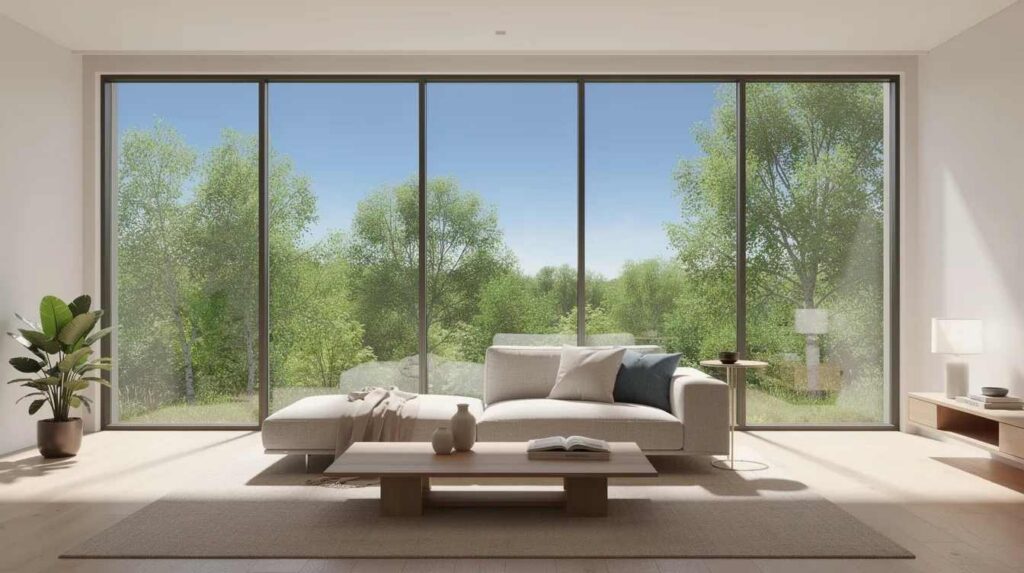
House window tinting improves energy efficiency, comfort, and protection in ways that most homeowners underestimate until they experience the difference firsthand. Here are the benefits that matter most:
- Energy efficiency and lower bills. High-quality solar control film is best for lowering energy bills because it cuts solar heat gain by 40–70% on sun-exposed glass. In practice, this often reduces summer cooling costs by 10–30% in rooms that face south or west. Window tint reduces energy costs by easing HVAC strain, which means your system runs less often and lasts longer. Energy savings from window tint depend on climate and window orientation, but homeowners in hot-climate metros like Atlanta or Phoenix tend to see the fastest payback.
- UV protection and fading control. Window tint blocks 98% of harmful UV rays, and most privacy films block up to 99% of harmful UV rays. UV radiation is responsible for a substantial share of fading in hardwood floors, artwork, upholstery, and rugs. With film in place, fade rates drop dramatically – often to a fraction of what unprotected glass allows.
- Glare reduction. Tinted windows reduce glare on screens, tabletops, and reflective surfaces. Window films can reduce glare for better visibility indoors, especially in home offices and living rooms where direct sunlight creates uncomfortable hot spots. Unlike heavy curtains or closed blinds, film handles glare while still allowing light into the space.
- Daytime privacy. Privacy window tinting reduces visibility from the outside on street-facing windows and ground-level living spaces. Reflective or tinted films let you see out clearly during the day while keeping passersby from looking in.
- Safety and security. Security films are designed to hold shattered glass together during impact – whether from a break-in attempt, a stray ball, or a severe storm. Certain films strengthen glass, enhancing security against breakage without requiring full window replacement. This added layer of protection is especially valuable for ground-floor windows and sliding glass doors.
- Comfort and aesthetics. Tinting improves indoor comfort by maintaining consistent temperatures from room to room, eliminating the hot-side-of-the-house problem. High-performance films can block up to 86% of solar heat. Modern films range from nearly invisible to lightly tinted, preserving your home’s appearance while making the interior measurably more comfortable.
Daytime vs. Nighttime Privacy: What Window Tint Can (and Can’t) Do
Privacy performance is the single most misunderstood aspect of home window tinting, and it comes down to one principle: light levels inside versus outside.
Most one-way privacy films only work when it’s brighter outside than inside. During the day, reflective films provide daytime privacy by acting like a mirror – the bright outdoor light creates a reflective surface on the exterior, so people on the street see their own reflection instead of your interior. Reflective films obscure outside vision during the day while you maintain a clear view out.
Here’s where it gets tricky. At night, when indoor lights are on and the outdoors is dark, the effect reverses. Outsiders can now see in through the same film that protected you all day. No standard solar reflective film alone can guarantee full nighttime privacy. For rooms where nighttime privacy matters, you need either frosted or opaque films, or you need to pair tint with blinds or curtains.
Practical room-by-room advice:
- For living rooms and street-facing windows, use reflective films plus drapes or sheer curtains for flexible day-and-night coverage.
- For bathrooms, frosted or blackout films provide privacy for sensitive areas around the clock, without sacrificing light.
- For bedrooms, consider pairing a solar control film with blackout curtains to handle both heat and nighttime privacy.
Window Film Depot routinely designs combined solutions that address both daytime and nighttime privacy so homeowners don’t have to guess, drawing on specialized guidance on the best window film for nighttime privacy.
Types of Window Films for House Windows (and How to Pick the Right Film)
Not all films solve the same problem. Choosing the right window film starts with identifying what you need most – heat control, privacy, aesthetics, or security – and then matching the technology to your glass.
Solar control films are the workhorses. Available in clear, lightly tinted, and spectrally selective versions, they reduce heat and UV while keeping plenty of natural light. Ceramic films reject heat while providing UV protection, and premium nano-ceramic options can reject up to 95% of infrared energy without the mirror-like look of older metallic films. These are ideal for living spaces and large glass doors where you want sun control without sacrificing your view.
Privacy films range from reflective and tinted options (best for daytime privacy and to increase privacy from the street) to frosted and blackout varieties. Frosted films block views while allowing light to enter, making them a smart choice for bathrooms and sidelights. Darker films reduce natural light entering the home, so they’re best reserved for rooms where dimness is acceptable or desired.
Decorative films offer patterned, textured, or stained-glass-style finishes. Window tinting provides various aesthetic options, including decorative films for interior and exterior glass that dress up entry sidelights, bathroom windows, and interior glass partitions while delivering privacy and light diffusion. They add style without permanent etching.
Security and safety films are thicker, multi-ply laminates that hold glass in place on impact. Homeowners often combine solar or privacy benefits with impact resistance for ground-floor windows, patio doors, or storm-prone areas.
Static-cling vs. professional-grade adhesive films: Static cling is affordable, temporary, and works great for test applications or rental properties. Professional adhesive films last 10–20 years and deliver measurably better performance, clarity, and warranty coverage. For a whole-house project or any window where long-term performance matters, adhesive is the obvious choice.
Room-by-Room Guide: Choosing Window Tint for Key Living Spaces
Every room in your home has different demands for light, heat, privacy, and glare. Here’s how to approach product selection for each:
- Living rooms and family rooms. Use mid-range solar control films (40–60% VLT) that keep rooms bright while providing glare reduction and UV protection. Pair with sheer curtains for flexible nighttime privacy. This combination works great for large picture windows and open floor plans where you want to preserve the view.
- Home offices. Prioritize glare reduction on monitors and consistent daylight for productivity. Films in the 40–55% VLT range typically deliver the right balance – enough light to avoid a dark or cave-like feel, but enough tint to eliminate screen washout. The difference in afternoon comfort is immediate and noticed on day one.
- Street facing windows and entryways. Reflective or lightly tinted films give you daytime privacy and curb appeal. Add roller shades or drapes for nighttime privacy. Avoid highly mirrored finishes if your community has HOA restrictions – spectrally selective or ceramic films are a perfect fit for these situations.
- Bathrooms. Frosted or patterned privacy films deliver 24/7 obscurity while allowing light to enter. Quality window films for bathrooms are moisture-resistant and won’t peel or cloud in humid conditions.
- Bedrooms. If you want to sleep in, darker or blackout films reduce morning light significantly. If you prefer waking up to daylight, pair a lighter solar control film with blackout curtains you can open during the day. Many homeowners find this layered approach the most versatile.
- Sunrooms and large glass doors. These spaces take the most solar punishment. High-performance solar control films cut heat and UV dramatically while preserving views. Consider adding safety film to large, low glass panels to protect against accidental breakage.
Pros and Cons of Tinting House Windows
Home window tinting isn’t a one-size-fits-all solution. Here’s an honest look at what you gain and what to watch for:
Pros:
- Lower cooling costs and improve energy efficiency across sun-exposed rooms
- UV protection that slows fading of interior finishes, flooring, and furnishings
- Glare reduction without blocking your view or closing off daylight
- Daytime privacy on key windows, especially at street level
- Added safety from security films that hold glass together on impact
- Cost-effective retrofit compared to full window replacement (often 10–30% the cost)
- Many options in appearance – from nearly invisible to decorative
Cons:
- Limited nighttime privacy with reflective films unless paired with other window treatments like curtains or blinds
- Poor results with low-quality or improperly applied DIY films (bubbling, discoloration, purple tint over time)
- Risk of thermal stress or seal failure if incompatible films are applied to double-pane or low-E glass – professional film-to-glass matching is essential
- Some homeowners’ associations restrict highly reflective or mirror-finish films on street-facing glass
These considerations are central to any honest look at whether tinting house windows is worth it over the long term.
One thing to keep in mind: window film complements rather than replaces traditional coverings in many homes. Film handles the heavy lifting – heat, UV, fading – while blinds, shades, and curtains give you on-demand control over light and nighttime privacy.
Cost and Professional Installation for Home Window Tinting
Cost depends on film type, window size and access, number of windows, and whether an interior or exterior application is required. Here are typical residential ranges per square foot for professionally installed film:
| Film Type | Approximate Cost (per sq ft, installed) |
|---|---|
| Standard solar control | $5–$8 |
| Premium ceramic / spectrally selective | $10–$12+ |
| Security / safety film | $7–$15 |
| Homeowners may be eligible for tax credits covering up to 30% of installation costs for qualifying energy-efficient window film, which can meaningfully reduce net project cost. |
The professional home window tinting and residential window film installation process is straightforward and minimally disruptive:
- Site visit and measurement
- Glass inspection (type, condition, coatings)
- Film selection based on your priorities (heat, glare, privacy, aesthetics)
- Surface cleaning and preparation
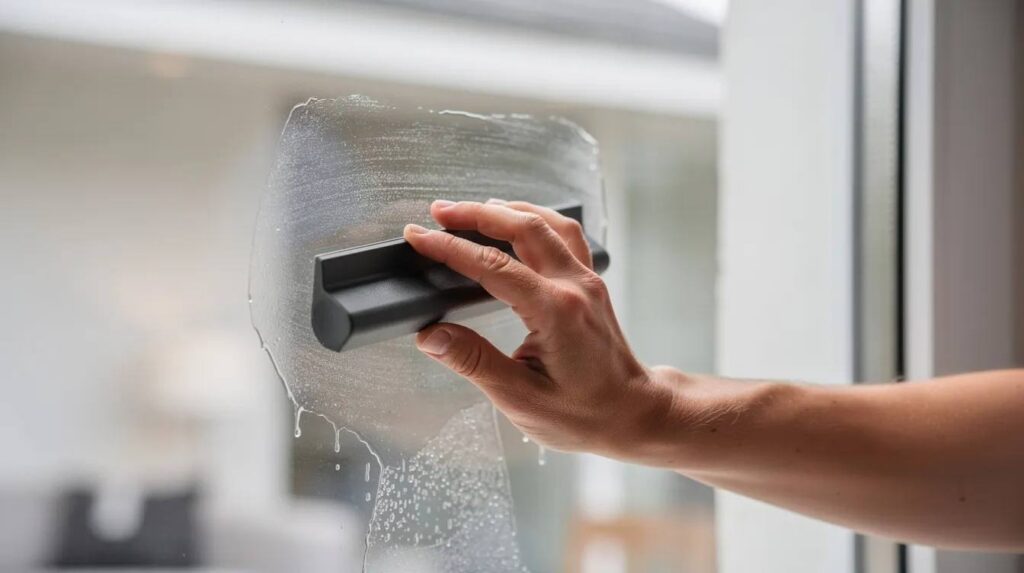
- Film application – the installer will cut window film slightly larger than the window size, apply it using a spray bottle with water, then trim for a precise fit
- Squeegeeing to remove air and water bubbles
- Cure time (typically a few weeks for full adhesion)
Installation can take 30–45 minutes for large windows, and most whole-house projects wrap up in a single day. Professional installation matters because correct film-to-glass matching protects your warranty, prevents edge peeling and seal failure on insulated glass, and guarantees a clean, bubble-free finish that’s installed correctly from day one.
Window Film Depot offers turnkey residential service across key metro areas in the U.S., with nationwide window film service locations, along with wholesale supply to glass and glazing trade partners for larger projects.
Maintenance, Lifespan, and Care Tips for Residential Window Films
Modern, professionally installed window films are remarkably low maintenance. Privacy films can last between 10 and 20 years when installed correctly, and many premium 3M residential films carry limited lifetime warranties for the original homeowner.
Cleaning guidelines:
- Wait at least 30 days after installation before cleaning (the film needs time to cure and fully bond)
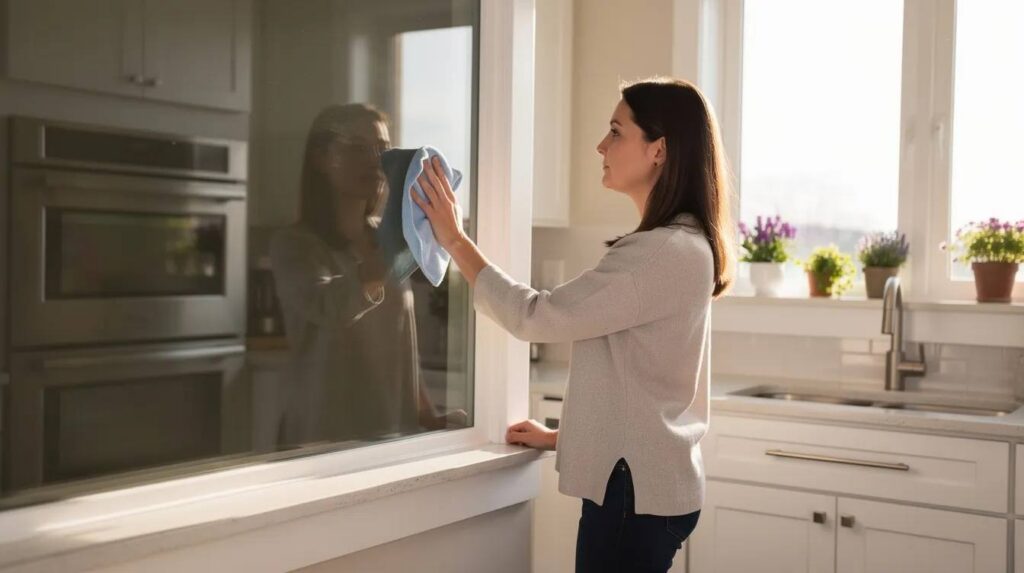
- Use soft microfiber cloths or a squeegee with mild, ammonia-free glass cleaner
- Use a squeegee wrapped in a cloth to avoid scratches on the film surface
What to avoid:
- Abrasive pads, razor blades, or steel wool on the film
- Harsh chemicals like ammonia-based cleaners
- High-pressure steam aimed directly at film edges
Signs film is reaching end of life: gradual hazing, purple or color-shifted tint (common in cheap dyed films), bubbling or delamination near edges, and loss of optical clarity. If your home has film from the early 2000s or 2010s showing these symptoms, Window Film Depot can remove and replace it with current-generation window glass film products and brands that perform significantly better.
Legal, HOA, and Safety Considerations for Home Window Tinting
Residential window films face fewer regulations than automotive tint, but there are still rules worth knowing before you commit.
Local regulations. Some municipalities and coastal areas limit highly reflective or mirror-like films on street-facing windows to prevent glare, light pollution, or interference with traffic visibility. Check with your local building department if you’re considering a reflective finish.
HOA and community rules. Many homeowners’ associations allow interior-applied window film as long as it maintains a neutral, low-reflectivity appearance from the outside. Some require written permission from an architectural committee before installation. Spectrally selective and ceramic films are typically HOA-friendly because they avoid the mirror finish that triggers complaints.
Glass safety and warranty. Using the wrong film on tempered, laminated, or double-pane low-E glass can cause thermal stress cracking or void the window manufacturer’s seal warranty. A professional installer will verify your glass type and recommend compatible films to avoid these risks.
Window Film Depot reviews site conditions, existing glass specifications, and local requirements during every project to recommend safe, compliant solutions, leveraging its role as a leading 3M window film installation company for both commercial and residential buildings.
FAQs About Window Tint for House Windows
Does window film really reduce energy bills, and by how much?
Yes. In sun-exposed rooms, solar control films typically reduce summer cooling costs by 10–30%. The exact savings depend on your climate, window orientation, existing glazing, and how much glass you treat. Homes in the colder months also benefit from low-E retrofit films that help retain interior heat and reduce heating costs.
Will window tint make my rooms too dark?
Only if you choose the wrong VLT. Films in the 50–70% VLT range maintain a bright, open feel while still cutting heat and glare. Darker films with VLT below 30% are better suited for rooms where reduced light is acceptable. A professional installer helps you find the right film that balances performance with the amount of natural light you want.
How does daytime vs. nighttime privacy actually work?
Reflective “one-way” films create a mirror effect during the day, blocking the view in while you see out clearly. At night, when it’s brighter inside than outside, the reflection reverses, and people outside can see in. Frosted or opaque films are the only types that provide consistent nighttime privacy without adding blinds or curtains.
Can I install film on double-pane or low-E windows?
Yes – if the film is properly matched to your glass. Certain high-absorption films can cause thermal stress on insulated glass units or void seal warranties. Professional installation ensures the right film is paired with your specific glass type, eliminating this risk.
How long does window film last, and can it be removed?
Quality residential films last 10–20 years or longer when professionally installed. Many carry manufacturer warranties. Removal is possible – a professional can strip old film and clean the glass without damage. Static cling films peel off easily, while adhesive films may leave some residue that requires cleaning with appropriate tools.
Should I install window film myself or hire a professional?
DIY kits are available for window tint installation, but professional installation is recommended for whole-house projects, large panes, specialty glass, or any situation where warranty coverage matters. Proper film alignment, edge sealing, and surface preparation make the difference between a film that lasts a decade and one that bubbles within months. For a small, temporary application – like a static-cling privacy film on a bathroom window – DIY can save money and deliver acceptable results.
Are there any additional benefits beyond heat and privacy?
Absolutely. Film provides UV protection that slows the fading of floors and furnishings, enhances security by holding shattered glass in place, and can create a more consistent interior temperature that eliminates hot and cold zones throughout the home.
Why Choose Window Film Depot for Home Window Tinting
Window Film Depot is a family-owned window film company founded in 1992 that has specialized in window films and architectural surface solutions since 1992. That’s more than three decades of matching homeowners, facility managers, and architects with the right film for every window and every situation.
What sets Window Film Depot apart:
- Certified installation teams trained on premium 3M solar control and security films
- Proven experience with complex residential projects, including large glass walls, historic homes, and multi-unit buildings
- National reach with the ability to support single-family homes and residential communities across the U.S., plus regional installation teams such as Dallas/Fort Worth window film services, and wholesale supply for glass and glazing trade partners
- A consultative approach: on-site assessments, recommendations tailored to each room’s needs (privacy, heat, glare, aesthetics), and solutions designed around code and HOA compliance
- Manufacturer-backed film warranties and a decades-long track record of standing behind every installation
Next Steps: How to Get the Right Window Tint for Your Home
Whether you’re trying to save on energy costs, protect hardwood floors from UV damage, or finally solve the afternoon glare in your home office, the right window film delivers measurable comfort and savings year after year. The advantage of acting now – especially heading into peak cooling season – is that you start saving immediately.
Contact Window Film Depot for a no-obligation consultation, an online quote request, or a virtual assessment using photos and basic window measurements. Before reaching out, it helps to list your priorities: daytime privacy for street-facing windows, glare reduction for screens, UV protection for artwork, or simply cooling down a hot room. A focused conversation leads to a perfect fit.
For larger residential communities, mixed-use buildings, or projects that require consistent film specifications across many units, Window Film Depot coordinates directly with architects, designers, and facility managers to deliver a seamless, professional result.