Table of Contents:
- Introduction
- Key Benefits of Home Window Tinting
- Types of Window Film for House Windows
- Energy Efficiency & Cost Savings
- Privacy, Security & Safety
- Glare Reduction & Natural Light
- Choosing the Right Film & Avoiding Mistakes
- Professional Installation Process
- Maintenance & Lifespan
- FAQs About Window House Tint
- Why Choose Our Team
- Next Steps
Introduction: Why Window Tinting for House Windows Matters in 2026
Window tinting has become a common upgrade for homes across the U.S. since around 2020. Rising utility rates, more frequent heat waves in states like Georgia, Texas, Arizona, and Florida, and growing interest in energy efficiency have pushed demand for residential window film to record levels.
Is tinting house windows worth it? For most homeowners, yes. Modern window film reduces the sun’s heat inside rooms, lowers energy bills, blocks UV rays that fade furnishings, and can increase privacy and safety without replacing existing glass. Residential window film is applied to the glass rather than replacing windows; it is a thin, retrofit polyester layer installed from the interior surface in most homes.
This article covers types of films, how they affect natural light, energy savings, privacy, security, the professional installation process, costs, and lifespan. The focus is on house windows (not cars or vehicles), written from the perspective of an experienced residential and commercial window film installer working across multiple U.S. regions.
Key Benefits of Home Window Tinting
Modern window films solve multiple problems at once: heat, glare, fading, privacy, and safety. The right combination depends on your glass orientation and room use.
A west-facing living room in Atlanta or Phoenix can see temperatures near the glass climb 10 to 15 °F above the rest of the room on a July afternoon. Solar control film can cut those hot spots by 8 to 12 °F. A homeowner in Palm Springs reported an average interior temperature drop of nearly 12 °F after installation.
Window tinting can block up to 99.9% of UV rays, and some solar window films block up to 99.9% of UV rays. Privacy films can also block up to 99% of UV rays. That level of UV protection slows fading of hardwood floors, artwork, rugs, and furniture over a 5 to 10-year period. Quality films help reduce fading of flooring and furniture, and tinting helps prevent fading of interior furnishings across the life of the film.
Film also upgrades older house windows built in the 1990s or early 2000s that lack low-E coatings, making them more efficient without full window replacement. On the safety side, security film holds glass together if broken by storms, kids’ accidents, or attempted break-ins, reducing injury risk from flying glass shards.
Types of Window Film for House Windows
“Window tint” is an umbrella term. Modern window films are engineered for specific outcomes: heat rejection, privacy, impact resistance, or decoration.
- Solar control films: Available in light, medium, and dark tints. Residential projects commonly use VLT (visible light transmission) ranges of 20%, 35%, and 50%. Solar-control films reject a significant portion of the sun’s infrared energy, keeping rooms cooler. Ceramic window film offers superior heat rejection and UV blocking compared to dyed or metalized options. Metalized window film reflects solar heat and UV rays but can appear shinier. Dyed window film reduces glare and provides privacy at a lower price point.
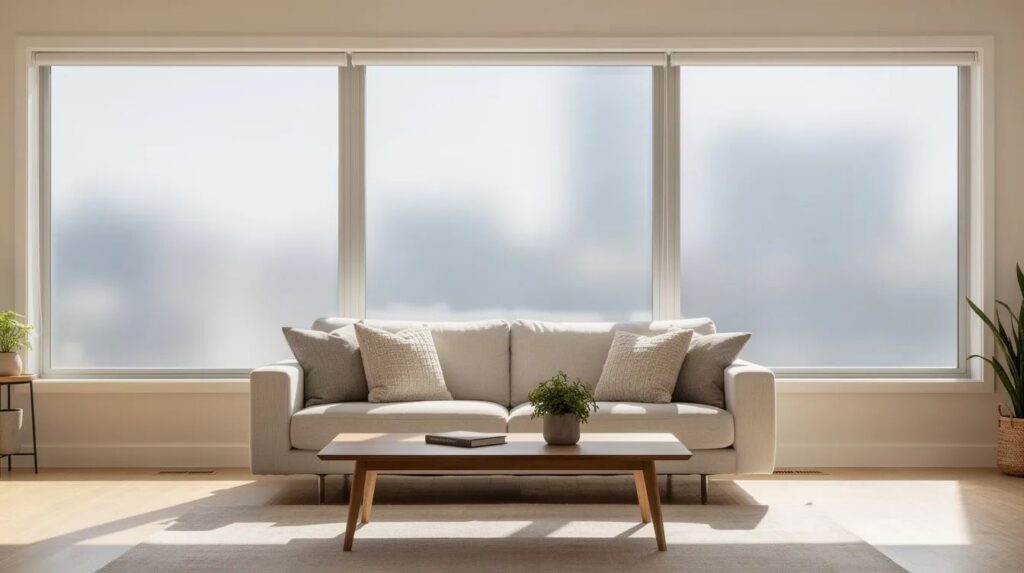
- Privacy films: Frosted, patterned, and reflective options reduce visibility from outside. Frosted films provide constant privacy regardless of lighting. Reflective films create a mirror effect during the day.
- Security film: Multi-layer polyester films, typically 4 to 14 mils thick, engineered to hold glass in place during forced entry or high-wind events. Often clear, but can be paired with tinted solar film.
- Decorative and specialty films: Etched-glass looks, gradient patterns, and custom designs for sidelights, entry doors, and interior partitions that combine style and privacy.
- Low-reflective and neutral films: Designed for neighborhoods and HOAs that restrict shiny or mirrored glass, balancing sun control with curb appeal.
Not all films work on every glass type. Glass compatibility and choosing the right film are covered below.
Energy Efficiency & Cost Savings with Window Tinting
Untreated clear glass allows solar heat gain that drives up air-conditioning use during warm months. Solar heat gain coefficient is a key measure for window performance; lowering it with film reduces cooling load.
Window films can block over 80% of total solar energy. Window tint blocks a significant amount of solar heat gain during the summer, and solar-control window films can reduce air conditioning load during sunny periods. A hotel in Orlando installed 9,000 sq ft of solar control film, saw indoor temperatures drop 5 to 10 °F, and cut monthly utility bills by 25%. Tinting can reduce energy bills by up to 30% in high-sun markets.
Certain low-emissivity films improve winter insulation by reducing radiant heat loss through cold glass. Low-emissivity films are designed for year-round climate control, making them a strong choice for homes in mixed climates concerned about both heating costs and summer cooling.
In colder regions, overly dark films can block useful passive solar heat in winter. Lighter, spectrally selective films keep natural light while still cutting UV and summer glare. Payback on window film typically runs 3 to 7 years in high-sun markets; full window replacement projects often take 15 to 20 years to recoup.
Privacy, Security & Safety: More Than Just a Darker Window
Many homeowners contact installers first for privacy and safety reasons, then discover the energy savings and comfort benefits.
Many residential films offer daytime privacy. Privacy window films reduce visibility from outside during daylight hours. Reflective films create a mirror effect during the day, ideal for street-facing house windows in urban neighborhoods. At night, when interior lights are on, reflective films lose their one-way effect; pairing with blinds or curtains solves the gap.
Frosted and patterned privacy films work well for bathrooms, shower enclosures, and ground-floor bedrooms where 24-hour privacy matters more than clear views. Frosted films provide constant privacy regardless of lighting conditions.
Security films help hold glass together during break-ins. Intruders must strike glass multiple times, and the film causes glass to cling to the frame, buying time to call for help. Tinting can improve home security during break-ins by deterring intruders who expect easy, quiet entry. Security film also protects during natural disasters and severe weather by keeping shards together, reducing injury risk to your family and pets.
Privacy films and security film can be combined or layered as a single system. Professionals will recommend the safest match for your specific glass and frame type.
Glare Reduction & Natural Light: Creating Comfortable, Usable Rooms
Common complaints include glare on TVs, washed-out computer screens in home offices, and eye strain in bright kitchens. Tinting cuts down harsh sunlight and reduces glare by 50 to 90% depending on film shade, allowing comfortable use of laptops, tablets, and screens in rooms that were off-limits during peak sun hours.
Curtains and blinds block glare but also sacrifice natural light and outdoor views. Window films preserve daylight and visibility while cutting harsh reflections. Installers balance VLT to maintain bright, inviting spaces: 40 to 50% VLT in living rooms, slightly darker film in media rooms. Spectrally selective films can appear quite light while still reducing heat and UV at different levels, a perfect fit for homeowners who want to enhance sunlight rather than eliminate it.
Choosing the Right Film & Avoiding Mistakes
Not all window films are equal. Cheap DIY products from big-box stores often discolor, bubble, or offer limited heat rejection compared with professional-grade solutions.
Choosing the right tint depends on your primary goal. Choosing the right film depends on window type and climate. Key factors to consider:
| Factor | What to Evaluate |
|---|---|
| Climate | Hot vs. cold, seasonal sun patterns |
| Window orientation | South/west (high solar load) vs. north/east |
| Glass type | Single pane, double pane, low-E, tempered |
| Primary goal | Privacy, energy efficiency, security, aesthetics |
Certain window films can trap heat and damage double-pane window seals if the wrong product is applied to the wrong glass. Annealed, tempered, and insulated glass react differently to absorbed heat. A professional glass audit identifies window manufacturers’ labels, spacers, and glass thickness to select films approved for that configuration.
Improper installation can void window warranties. Some window manufacturers limit coverage if non-approved films are applied. Quality film manufacturers often back their own warranty that covers glass breakage and seal failure when installed correctly by certified professionals.
In colder regions, avoid very dark films that block passive solar gain in winter. Request physical film samples on your glass and view them at different times of day before making a final selection.
Professional Window Tinting: How the Installation Process Works
Professional installation is recommended for precision cutting, dust control, manufacturer warranties, and safe work on ladders and high glass. Professional installation prevents bubbles and peeling that plague DIY attempts.
Typical process:
- Consultation and glass survey
- Product recommendations and written quote
- Scheduling and on-site prep (drop cloths, moving furniture)
- Thorough glass cleaning
- Film application and squeegeeing
- Final inspection
Expect some moisture between glass and film on installation day; this clears during curing over 30 to 60 days. Most residential projects for a typical three-bedroom home finish in one day. Large or multi-story homes may take 2 to 3 days.
Reputable installers provide a written warranty, care instructions, and return to address visible defects once the film has fully dried.
Maintenance, Lifespan & Long-Term Performance
High-quality films last between 10 and 20 years when installed correctly. Premium products in moderate climates trend toward the upper range; basic films in harsh desert sun may need replacement closer to 8 to 12 years.
Cleaning guidelines: Wait 30 days for curing. Use soft microfiber cloths and non-ammonia, non-abrasive cleaners. Avoid razor blades and scouring pads.
Aging signs: Slight edge drying after many years, gradual lightening of dark tints in high-sun exposures, or minor distortion if glass shifts. When UV protection or heat rejection performance drops, replacement is warranted.
Quality films come with manufacturer warranties covering peeling, bubbling, cracking, and discoloration. Keep your receipt and installation date on file. Schedule inspections every 3 to 5 years on south- and west-facing house windows.
FAQs About Window House Tint
How much does it cost to tint house windows in 2026?
Pricing runs $8 to $18 per square foot installed for solar control film, and $7 to $25 per square foot for security film. A home with 200 sq ft of glass might invest $1,400 to $3,000. Complex windows (high locations, odd shapes, French panes) cost more due to added labor.
Will window tint make my house too dark?
Homeowners can choose films that are almost clear yet block over 80% of solar energy and up to 99% of UV rays. Most residential clients select medium or light tints to preserve natural light. VLT ratings indicate how much visible light passes through; installers demo samples on-site to help you find a comfortable shade.
Can I apply window film myself?
DIY kits exist, but common issues include visible seams, trapped dust, bubbles, and mis-cuts around frames. Professional installation pays off in longevity, appearance, and warranty coverage, especially on large picture windows and multi-story glass where mistakes are costly and safety is a concern.
How long does home window tint last before it needs replacement?
About 8 to 12 years for basic films in harsh sun climates; 12 to 20 years for premium residential window films in average conditions. High-quality films can last 10 to 20 years when installed correctly. Orientation, climate, and cleaning habits all affect lifespan.
Will window tinting damage my house windows or void the warranty?
Correctly matched films from reputable brands are tested for various glass types to avoid thermal stress. Have an installer review your existing glass and warranty documents. Many film manufacturers offer their own glass breakage and seal failure coverage when professionally installed.
Do window films really reduce glare and heat while keeping natural light?
Yes. Spectrally selective window films block heat and UV more than visible light. A bright home office that is unusable on sunny afternoons becomes comfortable after adding tint with a mid-tone solar control film that reduces glare on monitors by more than half.
Why Choose Our Team for Residential Window Tinting
Window Film Depot is a family-owned company founded in 1992, specializing in residential and commercial window films across multiple U.S. markets. Our portfolio includes 3M solar control films, security glazing, privacy films, decorative and architectural films, anti-graffiti film, and commercial graphics.
We handle complex projects: multi-story residences, large glass walls, and phased retrofits for older properties. Every project includes consultation, film selection, professional installation, and warranty support. We work carefully in furnished homes, respect your schedule, leave each property clean, and extend our community reputation built over three decades of consistent quality.
Next Steps: Get a Custom Window Tinting Plan for Your Home
Window tinting can transform comfort, privacy, and energy efficiency without tearing out existing glass. The value compounds over years of lower energy bills, protected furnishings, and stronger security.
Before calling, gather a quick checklist: number of windows, your biggest problem rooms, and any existing condensation or seal issues. That information speeds up quoting.
Contact us by phone or website form to schedule a free consultation. We will evaluate your glass, recommend the right film for your climate and budget, and help you save on cooling costs by next summer.