Table of Contents:
- Introduction to Window Film for Office Buildings
- Key Benefits of Commercial Window Film for Office Buildings
- Types of Window Film for Commercial Buildings
- Energy Efficiency and Heat Control in Office Buildings
- Privacy, Decorative, and Branding Applications on Office Glass
- Safety, Security, Anti-Graffiti, and Specialty Films
- How Window Film Installation Works for Office Buildings
- Cost, ROI, and Payback for Commercial Window Film
- Why Choose Window Film Depot for Office and Commercial Projects
- FAQs About Window Film for Office Buildings
- Conclusion and Next Steps
Introduction to Window Film for Office Buildings
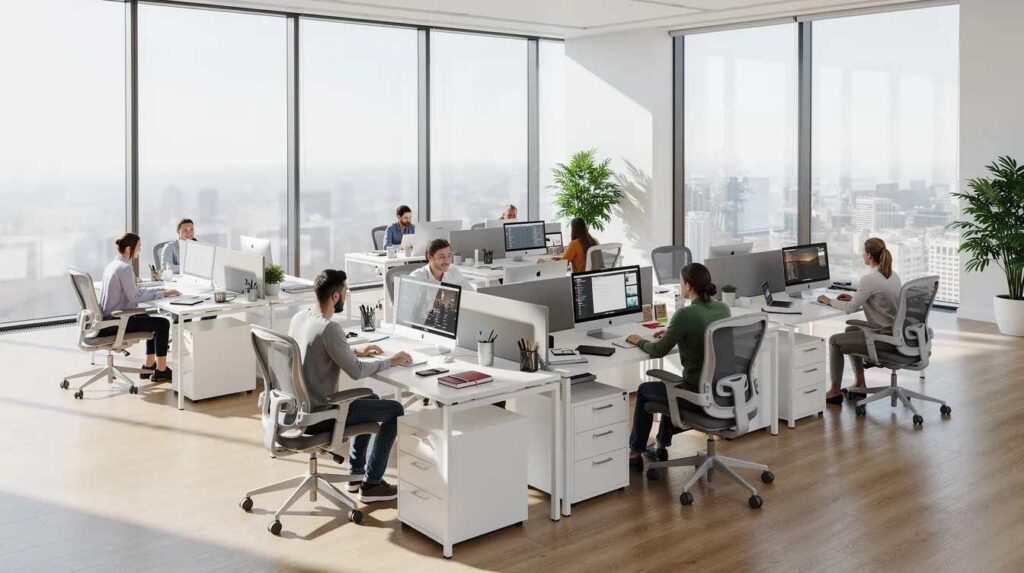
Large glass windows define the look of modern office buildings, but they also create real operational headaches. Excessive solar heat, screen glare, rising energy costs, and a lack of privacy on glass partitions are daily frustrations for building managers and tenants alike. The installation of window films is a low-cost retrofit option that solves these problems without ripping out existing glazing.
Commercial window film is a thin, high-performance layer applied directly to glass. It can be engineered for solar control, privacy, security, decorative design, or a combination of all four. Window films can be applied to improve building performance without full window replacement, making them a go-to upgrade for multi-story office towers in cities like Atlanta, Houston, Chicago, and New York.
Window Film Depot, a family-owned national 3M dealer and installer founded in 1992 in Marietta, Georgia, specializes in turnkey window film solutions for office buildings, government facilities, schools, and retail chains. This guide walks through key benefits, film types, installation, costs, ROI, and how to choose the right partner for your project.
Key Benefits of Commercial Window Film for Office Buildings
A single window film project can address comfort, energy efficiency, privacy, aesthetics, and safety across an entire commercial building. Here are the key benefits that matter most:
- Blocking heat and stabilizing temperatures. Solar control films manage heat and glare in office spaces by rejecting up to 79% of solar heat. That translates to fewer hot spots along perimeter walls and more consistent temperatures for tenants throughout the day. Increased tenant comfort can result from window film installation, particularly in sun-drenched south and west exposures.
- Reducing glare on screens. Employees seated near exterior glass often struggle with sun glare washing out monitors. Window films reduce glare by up to 95%, making every workstation along the façade usable without closing blinds.
- Cutting energy costs. Films lower cooling costs by reducing strain on air conditioning systems. This delivers measurable energy savings, especially in glass-heavy commercial buildings where HVAC systems run at peak capacity for months.
- UV and asset protection. Window films block up to 99% of harmful UV rays, protecting flooring, furniture, art, and technology from fading. UV exposure is also linked to skin cancer risk, so protecting occupants behind large glass facades is a major benefit.
- Privacy and design upgrades. Films turn transparent glass doors and partitions into functional privacy barriers or branded design elements in commercial spaces.
- Sustainability and compliance. Lowering cooling demand supports LEED strategies, ESG reporting, and building performance benchmarking. Installing window films can help buildings earn LEED points and meet energy codes.
Types of Window Film for Commercial Buildings
Different types of window films serve distinct purposes in office environments. Most commercial buildings end up using a combination of film types across exterior glazing, interior glass partitions, and specialty spaces.
Solar control films are the workhorse of commercial applications. Available in neutral, reflective, and low-reflectivity options, they reduce heat and glare while maintaining views. Visible light transmission ranges from roughly 20% to 70%, so building managers can balance daylight retention against heat rejection depending on orientation and tenant preference.
Privacy and frosted films diffuse views without darkening a space. Frosted films blur details while allowing natural light to pass through, making them ideal for conference rooms, HR offices, and phone booths. One-way mirror films block visibility during the day, giving ground-floor offices or storefront windows a layer of protection from outside eyes.
Blackout films completely block visibility and light. They are used in AV rooms, wellness rooms, medical exam areas, and storage rooms in commercial buildings where complete concealment is needed.
Decorative and branded films include patterns, gradients, colors, and custom designs that transform plain glass into architectural finishes. These serve both privacy and design cohesion across corporate floors.
Security, anti-graffiti, and specialty films are covered in detail below. Window Film Depot helps spec the right films based on building orientation, glass type, and tenant needs, drawing on a broad portfolio of 3M window film products and installation services.
Energy Efficiency and Heat Control in Office Buildings
Office towers with glass-heavy curtain walls face punishing summer cooling costs, especially in markets like Georgia, Texas, and Florida. Window films improve energy efficiency in office buildings by reducing the solar heat gain coefficient (SHGC) of existing glass, easing HVAC load, and stabilizing perimeter zone temperatures that cause persistent cold spots in winter and hot spots in summer.
Consider a 10-story office building retrofitting 3M solar control film on its west and south elevations. Window films reduce peak HVAC demand by limiting solar heat gain, which flattens afternoon temperature spikes and cuts occupant comfort complaints significantly. Window films can reduce cooling costs by 15-30%, and energy-efficient films can lower energy bills significantly over the course of a year.
Installing window film leads to significant energy savings beyond the monthly utility bill. Films also help extend the lifespan of HVAC equipment by reducing runtime and peak loads, a factor that matters to facility managers planning capital budgets over 10 to 15 years. Window films block a large amount of heat that would otherwise force chillers and air handlers to work harder.
Low-E window films improve insulation and reduce heat transfer, making them valuable in mixed climates where winter heat loss matters alongside summer solar gain. Energy modeling tools can project savings and payback before installation, and detailed 3M commercial window film warranty information helps facility teams understand long-term performance expectations. Window Film Depot often collaborates with building engineers and 3M for pre-project analysis on large commercial spaces, giving building managers confidence in the numbers before committing.

Privacy, Decorative, and Branding Applications on Office Glass
Modern offices rely heavily on glass partitions and storefront-style entrances. This openness enhances collaboration but creates privacy and distraction issues that privacy window film solves without building new walls.
Common use cases include HR suites, executive offices, nursing rooms, legal departments, and any space where visual privacy is required. Decorative films can personalize internal glass walls and windows while preserving natural light. Decorative films can include customizable patterns and textures such as frosted bands at eye level that prevent the “fishbowl” feeling, or gradient patterns on conference rooms that provide seated privacy while maintaining openness above; there is a wide range of decorative film types for interior and exterior glass to support different design visions.
3M offers decorative films that resemble frosted or etched glass through its Fasara line, delivering high-end glass finishes at a fraction of the cost of specialty glazing. Decorative films provide a cost-effective upgrade to existing glass throughout multi-floor office environments.
Branding potential is significant. Decorative films can enhance branding with printed logos and designs, color blocks matching corporate palettes, or environmental graphics across reception areas and interior windows. These films also provide modest UV protection and glare relief, making them functional as well as aesthetic.
Window Film Depot can work from an architect’s design package or help create custom designs from scratch, providing print-ready artwork, samples, and mockups for multi-floor renovations.
Safety, Security, Anti-Graffiti, and Specialty Films
Beyond comfort and design, many commercial building owners use window film to address safety, security, and maintenance challenges that standard glass cannot handle on its own.
Security window film consists of multi-layer polyester applied with attachment systems that hold glass fragments together under impact. Security films enhance safety by holding shattered glass together after impacts from forced entry attempts, natural disasters, or even explosions. These films delay intruders long enough for emergency response, reduce injury risk from flying glass shards, and help mitigate property damage. They are especially relevant for ground-floor offices, government buildings, and schools where potential hazards demand protective glazing, and building owners should understand the difference between shatterproof window film and true security window films when evaluating options.
Anti-graffiti window films protect glass from vandalism and scratches. These sacrificial layers on street-level storefront windows and lobby surfaces can be peeled and replaced after damage, protecting underlying glass from etching without costly replacement. This addresses unique challenges faced by urban office buildings and retail locations.
Specialty films include bird-deterrent dot patterns for exterior glass near green corridors and smart/switchable films for premium conference rooms. Smart window films provide flexible privacy control in offices by switching from clear to opaque at the push of a button. They use polymer-dispersed liquid crystal technology and can block UV and infrared light. Smart films can be controlled via an app for convenience, though they are more expensive than traditional window films.
These solutions protect against spontaneous glass breakage risks and shattered glass scenarios while being far less disruptive than full glazing replacement. Window Film Depot has extensive experience with security and anti-graffiti projects for national retail chains, federal agencies, and Class A office towers as America’s leading 3M window film installation company.
How Window Film Installation Works for Office Buildings
Professional installation is critical in commercial buildings to avoid bubbles, distortion, and warranty issues. The typical project workflow includes:
- Consultation and site visit – measuring panes, identifying glass type and existing coatings, assessing frame conditions
- Film selection and sampling – matching products to building orientation, tenant priorities, and performance targets
- Proposal – scope, timeline, pricing, and expected performance
- Scheduling – coordinating around tenant operations, often nights or weekends
On-site, installers clean glass thoroughly, cut film to size, apply it using slip solutions and squeegees, trim edges, and inspect for proper adhesion and clarity. Most office installations are done from the interior, minimizing exterior access costs, especially when handled by a specialized 3M window film installation company for commercial spaces.
For large commercial spaces, work proceeds floor-by-floor with staging planned to avoid blocking corridors, doors, and egress routes. Post-installation, slight haze or small moisture pockets are normal and clear within a few weeks. Building managers should wait the recommended curing period before cleaning and use only mild, non-abrasive cleaners.
High-quality films from manufacturers like 3M carry manufacturer-backed warranties and can last many years when properly installed. Window Film Depot’s national installation network manages multi-site and multi-state rollouts for corporate clients and facility portfolios, offering nationwide window film services across all 50 states.
Cost, ROI, and Payback for Commercial Window Film
Window film is one of the most cost-effective building envelope upgrades for office buildings because it reuses existing glass. Primary cost drivers include:
- Total square footage of glass to be covered
- Film type (basic solar vs. ceramic/spectrally selective vs. security vs. decorative film)
- Installation complexity (building height, access requirements, union labor)
- Customization (printed graphics, logos, patterns)
Simple solar control films are typically the most economical per square foot. Decorative and specialty films sit mid-range, while smart switchable films and heavy security glazing carry a higher price. ROI calculations combine projected energy savings from cooling cost reduction, avoided costs like reduced blinds replacement, and non-quantified benefits such as occupant comfort improvements and leasing appeal, all of which depend on selecting the right mix from Window Film Depot’s commercial window glass film products and brands.
For example, an office floor with full-height windows that receives film can often reduce or eliminate blinds usage, improve space utilization along the window wall, and significantly reduce tenant comfort complaints. Energy-efficient films lower energy bills enough that many projects achieve payback within a few years, depending on climate and exposure.
Some utilities and state programs offer rebates for energy conservation technologies like window film. Window Film Depot can help identify potential incentive programs and provides clear proposals outlining expected performance, warranty terms, and estimated payback for your specific building.
Why Choose Window Film Depot for Office and Commercial Projects
Window Film Depot is a specialized, family-owned contractor with over three decades of experience serving commercial building owners across North America. From its base in Marietta, Georgia, the company handles everything from single-building retrofits to multi-location portfolio rollouts for office, government, education, and retail clients, backed by the history and capabilities outlined in the About Window Film Depot company overview.
As a leading 3M window film dealer and installer, Window Film Depot offers access to proven products including 3M solar control films, 3M Fasara decorative glass finishes, security glazing, and anti-graffiti solutions, all backed by manufacturer warranties. The company provides turnkey project management from site surveys through installation, quality control, and warranty documentation.
Window Film Depot coordinates with architects, designers, and security consultants to deliver solutions that align with both aesthetic vision and protective requirements. Trained, insured crews respect occupied office environments with clean worksites, minimal disruption, and clear communication with tenants. Consider them a long-term partner for ongoing maintenance, tenant improvements, and future upgrades as your building needs evolve.
FAQs About Window Film for Office Buildings
Below are answers to the most common questions from office building owners, facility managers, and architects considering commercial window film.
How long does commercial window film last on office windows?
Quality films last 7 to 15 years, reducing replacement costs over time. Privacy films can last between 7 to 15 years with proper care, and premium ceramic or solar films may exceed that range. Many 3M films installed by Window Film Depot carry manufacturer-backed warranties for commercial buildings. Exterior-applied films may have slightly shorter lifespans due to weather exposure.
Will window film make my office too dark or reflective?
Not necessarily. Film options range from nearly clear spectrally selective products to darker tints. Many modern films maintain high natural light transmission while still blocking heat and reducing glare. Samples and mockups can be installed on a test window so decision-makers see actual daylight impact before committing.
Can commercial window films be removed or changed later?
Yes. Professionally installed films are removable without damaging the underlying glass when handled by trained technicians. This flexibility is useful for leased office spaces, brand refreshes, or evolving privacy needs on interior glass partitions.
Is window film installation disruptive for occupied office buildings?
Experienced crews work during off-hours, weekends, or on phased schedules to minimize impact on employees and tenants. Most work occurs inside the space immediately adjacent to the glass and typically involves only temporary access to desks or conference rooms.
Does window film help with building codes or safety requirements?
Certain security and safety films can help meet specific impact or hazard mitigation standards when paired with compatible glass. While film is not a universal substitute for safety glazing, it can significantly reduce risk from forced entry, solar rays damage, and storm debris. Consult Window Film Depot for code-specific guidance aligned with local regulations and your building’s risk profile.
How do I maintain and clean windows after film is installed?
Wait the recommended curing period before the first cleaning. Then use soft cloths or squeegees with mild, non-abrasive cleaners. Avoid harsh chemicals or scrub pads. Proper maintenance helps films look clear and perform well for years. Window Film Depot provides site-specific care instructions at project close-out.
Conclusion and Next Steps
Window film for office buildings delivers a high-impact, low-disruption upgrade that improves occupant comfort, privacy, security, aesthetics, and energy efficiency on existing glass. From reducing solar heat on sun-baked facades to creating polished privacy on glass partitions and protecting against forced entry, commercial window film addresses the full range of challenges that building managers and tenants face daily.
Whether you are tackling glare complaints on a single floor or planning a portfolio-wide energy retrofit, the right film solution paired with experienced installation makes a measurable difference in lower energy bills, happier tenants, and a better-performing building envelope.
Contact Window Film Depot for a site assessment, energy savings estimate, or design consultation. The company supports projects nationwide and can tailor a solution to your specific office building, timeline, and performance goals. Reach out by phone or through the website contact form to get started.