Table of Contents:
- Beyond Glare: Deconstructing the Harmful Effects of Solar Radiation
- Standard Tinted Windows vs. Engineered UV Protection Film: A Critical Distinction
- How 3M Film Technology Blocks 99.9% of Harmful UV Rays
- Translating UV Protection into Client ROI: Protecting Assets and Interiors
- Specifying UV Protection Film: Key Performance Metrics for Your Project Plan
- Partnering for Success on Large-Scale UV Film Installations
- Conclusion: Key Takeaways and Next Steps
- Frequently Asked Questions
- Related Posts from Window Film Depot
Beyond Glare: Deconstructing the Harmful Effects of Solar Radiation
Solar radiation extends far beyond the visible light that creates glare and the infrared light that generates heat. While these aspects are immediately noticeable, the most insidious component for interior preservation is ultraviolet (UV) radiation. This invisible solar spectrum segment includes UV-A and UV-B radiation, which initiates chemical reactions within various materials. Unlike visible light, UV rays penetrate standard glass and continue their destructive work silently within the building. This damage often remains unnoticed until significant and irreversible deterioration has occurred to interior assets and furnishings. That is why UV protection and reflective window tint are paramount.
The Silent Deterioration: How UV Rays Impact Interiors and Merchandise

Prolonged exposure of interior assets to UV radiation leads to photodegradation, a chemical breakdown causing visible fading and discoloration. This silent deterioration affects valuable furnishings, from high-traffic flooring and expensive furniture to delicate artwork and merchandise. Over time, textile hues dim, polymer integrity weakens, and the aesthetic appeal of designed spaces diminishes irreversibly. This continuous process of fading and material degradation poses a significant long-term threat to critical asset protection.
Quantifying the Loss: The Hidden Costs of Fading and Asset Depreciation
While the aesthetic degradation is evident, the financial repercussions of UV damage are often underestimated. For Project Manager Paul, demonstrating tangible ROI requires quantifying these hidden costs. The fading of a retail display can reduce merchandise value, directly impacting sales and brand perception. For offices, hotels, or educational facilities, the premature deterioration of flooring, window treatments, and interior furnishings necessitates costly replacements or refurbishments far sooner than planned. This accelerates asset depreciation and can lead to significant, unplanned capital expenditures. Specifying professional 3M window tint specifically 3M Sun Control Window Film, mitigates these risks. It safeguards long-term asset value and prevents unforeseen financial outlays, thereby providing a clear, measurable return on investment for the building owner.
Standard Tinted Windows vs. Engineered UV Protection Film: A Critical Distinction
The Fundamental Flaw of Standard Tinting: Incomplete UV Protection
A common misconception is that standard house window tint provides comprehensive protection against harmful ultraviolet radiation. While conventional tints reduce visible light and heat, their primary design typically lacks advanced UV filtration capabilities. Many basic tints allow significant percentages of UVA and UVB radiation to pass through the glass surface. This reliance leaves valuable interior furnishings vulnerable to the same cumulative damage and fading as clear glass. To prevent sun damage to interiors effectively, a more specialized and engineered solution is required for protection.
Engineering for Superiority: The Science Behind High-Performance Window Films
Professional-grade commercial window tint for house windows, for example, particularly that engineered by 3M, represents a significant advancement over standard tinting. These films are meticulously designed with multi-layered constructions that incorporate specialized UV inhibitors and absorbers. This advanced engineering ensures near-total blockage of the entire UV spectrum, often achieving rejection rates exceeding 99%. This is not merely an aesthetic enhancement, but a precise scientific solution developed to neutralize ultraviolet radiation. The specialized construction specifically targets the destructive power of UV rays to ensure long-term protection for all assets.
Beyond UV: Exploring Additional Benefits of Advanced Film Technology
While unparalleled UV protection is the cornerstone of high-performance 3M window films, their advanced design delivers a suite of additional benefits that enhance a property’s overall functionality and value:
- Energy Efficiency: These films can significantly reduce solar heat gain, lowering air conditioning costs in summer. Some specialized films also provide insulation to retain heat in colder months, reducing heating expenses and improving the building envelope’s thermal performance.
- Glare Reduction: By selectively filtering visible light, advanced films minimize harsh glare, improving occupant comfort and productivity in offices, retail spaces, and educational environments.
- Safety and Security: Certain high-performance films are engineered with robust, tear-resistant properties. These films help hold shattered glass together in the event of impact, providing an added layer of protection against accidental breakage, severe weather, or even forced entry.
- Enhanced Aesthetics: Beyond functionality, these films can also offer aesthetic advantages, providing a uniform exterior appearance, enhancing privacy, and contributing to the architectural integrity of a building without compromising interior views.
How 3M Film Technology Blocks 99.9% of Harmful UV Rays
Understanding the fundamental technology behind 3M window films is crucial for any project manager seeking to justify their specification. These are not merely decorative tints. They are precision-engineered solutions designed to mitigate specific environmental challenges, primarily the detrimental effects of ultraviolet radiation. The nearly absolute UV rejection offered by 3M films is a direct result of decades of materials science innovation.
The Precision Engineering of 3M™ Sun Control Window Films
3M’s approach to sun control goes far beyond traditional dyeing or simple reflective coatings. Their films are developed using advanced polymer technologies and sophisticated manufacturing processes to create products that deliver targeted performance. This engineering focus ensures that while the 3M Sun Control Window Film effectively blocks harmful UV rays, it often maintains the aesthetic integrity of the glass and the natural light transmission desired for interior spaces. The films are designed to be durable, maintaining their optical clarity and UV protection capabilities for many years without delaminating, bubbling, or peeling.
Leveraging Multilayer Optical Films: The 3M Prestige Series Advantage
3M utilizes multilayer optical film technology in the Prestige Series to provide high-performance solar protection and clarity. Unlike conventional films relying on dyes or metals, these are constructed from hundreds of clear, non-metallized micro-layers. This patented technology allows the film to selectively reflect infrared heat and ultraviolet light while maintaining high visibility. The micro-layer construction ensures that visible light passes through unimpeded, preserving the natural appearance of the windows.
Key advantages of this technology include:
- Superior UV Rejection: Achieves exceptional blockage of both UV-A radiation and UV-B radiation.
- High Visible Light Transmission: Maintains natural light levels and preserves exterior views, avoiding a ‘tinted’ appearance.
- Non-Metallized Construction: Eliminates corrosion issues common with metallic films and does not interfere with cellular signals or GPS devices.
- Reduced Reflectivity: Less reflective than glass, maintaining the building’s aesthetic appeal.
This innovative approach provides robust protection without compromising the building’s design or occupants’ comfort, offering a clear advantage for projects where aesthetics and performance are equally critical.
Documented Performance: Understanding 3M’s 99.9% UV Rejection Rate
3M window films block 99.9% of harmful radiation, a claim backed by rigorous internal testing and independent validation. This rejection rate signifies that the films block virtually all UVA and UVB radiation from entering the building. These specific rays are the primary culprits behind fading, material degradation, and the destruction of interior assets.
For construction and renovation managers, this documented performance means:
- Near-Total Protection: Interiors receive a shield that is far more effective than standard glass, which offers minimal UV filtration.
- Predictable Longevity: The high rejection rate helps slow down the aging process of interior furnishings and surfaces significantly.
- Compliance and Assurance: Provides a verifiable metric that can be specified and delivered, offering peace of mind to clients.
This quantifiable level of protection moves beyond anecdotal claims, offering a data-driven justification for specifying 3M films as a critical component of any long-term asset protection strategy.
Translating UV Protection into Client ROI: Protecting Assets and Interiors
For ‘Project Manager Paul,’ the technical specifications of 3M window films translate directly into tangible return on investment (ROI) for building owners. The proactive measure of installing high-performance commercial window film uv protection is not merely a nicety. It is a strategic decision that safeguards significant capital investments and enhances the overall value and appeal of a property.
Safeguarding Investments: Preventing Sun Damage to Flooring, Furniture, and Fixtures
The insidious effects of UV radiation often go unnoticed until irreversible damage has occurred. Flooring, furniture, artwork, and fixtures represent substantial investments in any commercial, retail, or educational facility. UV exposure causes materials to fade, discolor, and deteriorate prematurely. The ability to prevent sun damage to interiors directly impacts asset value.
Consider the common costs averted by 3M UV protection film:
- Hardwood Flooring: Prevents bleaching, darkening, or uneven fading that necessitates costly sanding and refinishing, or even full replacement.
- Carpeting and Rugs: Protects dyes from breaking down, preserving vibrant colors and uniformity, extending the lifespan of expensive floor coverings.
- Upholstery and Window Treatments: Stops fabrics from fading, weakening, and becoming brittle, delaying the need for re-upholstering or replacement.
- Artwork and Displays: Preserves the integrity of valuable pieces, preventing color shifts and material degradation.
By preventing this deterioration, managers can demonstrate how film installation extends the useful life of interior assets, deferring significant capital expenditures for replacements or refurbishments. This proactive approach ensures interiors maintain their pristine appearance for longer, enhancing the occupant experience and overall property appeal.
Preserving Brand Value: Protecting Merchandise in Retail Environments
In retail settings, product presentation is intrinsically linked to brand perception and sales. Merchandise displayed in windows or near sun-exposed areas is highly vulnerable to UV damage. Faded packaging, discolored apparel, or brittle product materials directly undermine perceived quality and value, leading to reduced sales and increased inventory write-offs.
Implementing 3M UV protection film directly addresses this challenge:
- Maintains Product Integrity: Ensures merchandise retains its original appearance, color, and material quality, upholding brand standards.
- Reduces Spoilage: Minimizes losses from sun-damaged goods that cannot be sold at full price or must be discarded.
- Optimizes Display Space: Allows retailers to utilize window displays and sunlit areas more effectively without fear of product degradation.
For retail clients, the ROI is evident in preserved inventory value, maintained sales margins, and consistent brand image, all contributing to a more profitable operation.
Enhancing Leaseholder Satisfaction and Property Value: A Long-Term Perspective
Beyond immediate asset protection, the installation of high-performance UV protection-tinted windows contributes significantly to long-term property value and leaseholder satisfaction. Tenants, whether commercial or residential, prioritize comfortable, well-maintained spaces where their belongings are protected.
- Increased Tenant Appeal: Properties featuring advanced UV protection offer a tangible benefit to prospective leaseholders, showcasing a commitment to their comfort and the preservation of their assets.
- Reduced Operating Costs for Tenants: By mitigating fading, tenants incur fewer costs associated with replacing or repairing their own interior furnishings.
- Maintained Aesthetics: Interiors remain aesthetically pleasing for longer, reducing the frequency and cost of common area renovations.
- Higher Property Valuation: A well-maintained property with protected interiors demonstrates quality and foresight, contributing to a higher market valuation for sale or refinance.
This foresight in property management creates a more desirable and sustainable environment, directly enhancing occupancy rates and property appreciation.
Contributing to Sustainability and LEED Certification Goals
Modern building projects increasingly prioritize sustainability and seek certifications like LEED. While the primary focus of 3M UV protection film is indeed UV rejection, its broader benefits often align with these environmental objectives. By extending the lifespan of interior materials such as flooring, furniture, and textiles, these films directly contribute to waste reduction. Less frequent replacement means fewer resources consumed in manufacturing new items and less material ending up in landfills. Furthermore, many 3M films also offer significant solar heat rejection properties, which can lead to reduced HVAC loads and energy consumption, indirectly contributing to energy efficiency goals that are central to many sustainability frameworks and LEED certification credits. This holistic benefit presents a compelling argument for specifying these films in projects aiming for green building certifications.
Specifying UV Protection Film: Key Performance Metrics for Your Project Plan
Beyond UV Rejection: Critical Performance Indicators for Film Selection
While high UV rejection is fundamental, a holistic understanding of performance requires evaluating several interconnected metrics. For project managers, this means looking beyond a single percentage to ensure alignment with specific functional requirements. Critical performance indicators include Total Solar Energy Rejected, which quantifies the film’s ability to block solar heat. High TSER ratings contribute directly to significant energy savings and improved occupant comfort within the building. Visible Light Transmitted indicates how much natural light passes through the glass to the interior space. This metric is essential for maintaining aesthetics and visual clarity without causing excessive dimming.
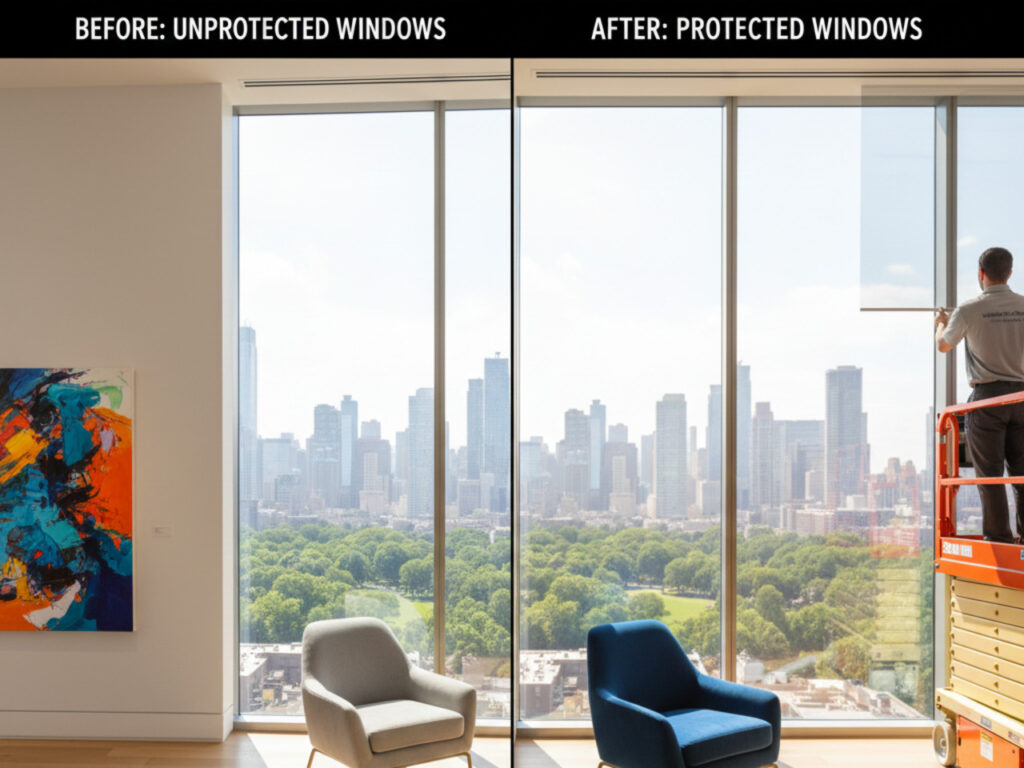
Glare reduction is another vital metric, particularly for commercial offices or retail environments where screen visibility and customer experience are paramount. Infrared rejection specifically targets the heat-generating spectrum of sunlight, offering significant thermal benefits. Finally, while UV rejection is a given, understanding that professional 3M films block virtually 99.9% of both UV-A radiation and UV-B radiation provides comprehensive protection. Evaluating these metrics in concert allows for a balanced specification that delivers maximum asset protection and operational efficiency for the building envelope.
Integrating Film Specifications into Project Timelines and Budgets
Effective integration of high-performance window film into a project plan demands consideration at the early stages, not as a last-minute addition. Specifying the precise 3M film type based on its performance metrics should be included in tender documents and architectural plans. This proactive approach allows for accurate budgeting, factoring in the long-term return on investment (ROI) from reduced energy costs and preventing sun damage to interiors.
For Project Manager Paul, justifying the initial investment to clients becomes simpler when presenting a clear financial case:
- Energy Savings: Reduced HVAC load due to lower heat gain directly impacts operational expenses.
- Asset Protection: Preventing fading of flooring, furniture, merchandise, and digital displays avoids costly replacements or devaluation. This is particularly crucial for retail spaces where product integrity is directly tied to sales.
- Enhanced Occupant Comfort: Improved temperature regulation and glare reduction can lead to increased productivity in offices and a more pleasant experience for customers in retail.
Factoring in installation timelines is also critical. While installation is typically efficient, coordinating with other trades ensures minimal disruption and optimal application conditions.
Custom Solutions: Tailoring Film Selection for Diverse Commercial Applications
The diverse needs of commercial, retail, and educational facilities necessitate tailored film solutions, not a one-size-fits-all approach. 3M offers a comprehensive portfolio designed to meet these varied demands:
- Retail Environments: Films like 3M Prestige Series offer high VLT to maximize natural light for product display while providing exceptional UV and heat rejection to protect valuable merchandise from fading and reduce cooling costs.
- Commercial Offices: Glare reduction films enhance employee comfort and productivity by mitigating reflections on computer screens, often coupled with energy-saving properties to optimize HVAC performance.
- Educational & Healthcare Facilities: Solutions combining UV protection with safety and security film properties provide shatter resistance, enhancing occupant safety while preserving interior integrity and protecting sensitive equipment.
- Hospitality: Aesthetic films can enhance building appearance, provide privacy, and protect valuable interior furnishings, ensuring guest comfort and extending the life of high-end decor.
By understanding the specific challenges and goals of each application, project managers can recommend a 3M film that delivers optimal performance and measurable benefits.
Understanding Warranty and Longevity: A Key Factor in Client Trust
The warranty and expected longevity of window film are paramount in demonstrating long-term value and building client trust. Professional-grade 3M window films come with comprehensive manufacturer-backed warranties that cover issues such as bubbling, peeling, cracking, or discoloration for extended periods, often ranging from 10 to 15 years or more, depending on the film type and application (commercial vs. residential).
This robust warranty provides assurance to building owners that their investment is protected and the film will perform as specified over its lifespan. For Project Manager Paul, presenting this detailed warranty information offers a clear answer to concerns about durability and sustained performance. It underscores that professional 3M film is a durable, engineered solution designed for lasting protection, significantly outweighing the short-term savings of inferior, unwarranteed alternatives. This commitment to longevity is a direct contribution to the long-term asset value of the property.
Partnering for Success on Large-Scale UV Film Installations
The Value of Experienced Installation: Ensuring Flawless Application
The efficacy and aesthetic appeal of high-performance UV protection tinted windows are as dependent on expert installation as they are on the film’s inherent quality. For large-scale projects, entrusting installation to 3M-certified and authorized dealers is not merely a preference, but a critical requirement. These experienced professionals possess:
- Specialized Training: They undergo rigorous training directly from 3M, understanding the unique characteristics of each film type and the optimal application techniques.
- Proprietary Tools and Techniques: Utilizing specific tools and methods ensures a bubble-free, seamless finish and proper adhesion, crucial for maximizing film longevity and warranty validity.
- Meticulous Surface Preparation: Thorough cleaning and preparation of glass surfaces are fundamental to preventing contaminants from compromising adhesion and clarity.
- Quality Control: Expert installers adhere to stringent quality control standards, ensuring every pane meets performance and aesthetic expectations.
Sub-optimal installation can lead to premature film failure, compromised optical clarity, and a diminished return on investment. The value of skilled installers translates directly into a flawless finish and sustained performance, reinforcing the professional image of the project.
Seamless Project Management: From Consultation to Completion
Successful large-scale film installations require a streamlined project management approach that minimizes disruption and maximizes efficiency. Reputable film partners offer comprehensive services that span the entire project lifecycle:
- Initial Site Assessment and Consultation: Experts evaluate specific architectural features, environmental factors, and client objectives to recommend the most appropriate 3M Sun Control Window Film solutions.
- Detailed Proposal and Scope Definition: Clear documentation outlines the chosen films, performance metrics, installation methodology, timeline, and cost.
- Logistics and Scheduling Coordination: Professional teams coordinate material delivery and installation schedules to align with overall project timelines, ensuring smooth integration with other construction activities.
- Quality Assurance Checkpoints: Regular inspections during and after installation verify adherence to specifications and quality standards.
- Post-Installation Walkthrough: A final review with the project manager and client confirms satisfaction and addresses any remaining questions.
This collaborative management approach ensures transparency, efficiency, and a predictable outcome, allowing Project Manager Paul to focus on broader project objectives with confidence.
Illustrative Scenarios: Large-Scale Retail Rollouts and Asset Protection
The application of professional 3M UV film in large-scale scenarios directly addresses the pain points of asset depreciation and operational costs. Consider these examples:
- National Retail Chains: Implementing a standardized 3M UV film across hundreds of store locations ensures consistent brand appearance, protects millions of dollars in merchandise from fading, and creates a uniform, comfortable shopping environment. The combined energy savings across a portfolio of stores can be substantial.
- Museums and Art Galleries: For institutions housing irreplaceable artifacts, 3M films offer critical UV protection without sacrificing natural light. This protects delicate exhibits from irreparable damage, representing a vital strategy for preserving cultural assets.
- Corporate Campuses: Uniform application of high-performance films across multiple office buildings contributes to a cohesive aesthetic, reduces heat load, and protects expensive interior furnishings and technology, ensuring a consistent and productive environment for employees.
In each scenario, the film serves as a strategic investment, mitigating significant financial risks associated with asset degradation and energy consumption.
Post-Installation Support and Maintenance: Sustaining Performance
The partnership extends beyond the installation phase to ensure the long-term performance and durability of the 3M window film. Comprehensive post-installation support includes:
- Cleaning Guidelines: Providing clear instructions on approved cleaning agents and methods to prevent damage to the film’s surface and maintain its optical clarity.
- Routine Inspections: Recommendations for periodic checks to identify and address any potential issues proactively, such as minor edge lifting or accidental damage.
- Troubleshooting and Repairs: Access to expert support for addressing any unforeseen issues or minor repairs that may be required over the film’s lifespan, ensuring the integrity of the warranty.
- Educational Resources: Information on best practices for maintaining peak film performance and extending its operational life.
This ongoing support system ensures that the initial investment in 3M UV protection film continues to deliver its intended benefits for years, reinforcing client satisfaction and the long-term value proposition.
Conclusion: Key Takeaways and Next Steps
Reaffirming the Strategic Value of Advanced UV Protection
Professional 3M window film is more than an aesthetic enhancement; it represents a strategic investment in asset preservation. Unlike standard tinted windows with insufficient filtration, these professional films are engineered to block virtually all harmful radiation. This near-total protection extends the lifespan of furnishings and flooring by preventing irreversible and costly sun exposure damage. For managers, specifying these films is a proactive measure that safeguards long-term property value and installed finishes. This technology remains an essential component of a robust project specification for any high-value commercial construction or renovation.

Empowering Project Managers to Enhance Client Value
Project managers are uniquely positioned to leverage the benefits of advanced UV protection tinted windows to deliver exceptional value to their clients. By presenting these films not as an optional upgrade, but as a critical protective measure, managers can demonstrate a commitment to both the immediate success and the long-term viability of a project. Quantifiable return on investment (ROI) can be clearly articulated through the avoided costs of premature interior replacement, reduced energy consumption from improved thermal performance, and the preservation of valuable merchandise. Educating clients about the tangible savings and enhanced occupant comfort positions the project manager as a trusted advisor, proactively addressing potential issues before they arise and ensuring lasting client satisfaction.
Proactive Planning: Integrating UV Film into Your Next Commercial Project
Integrating professional 3M UV protection film early in the project lifecycle is key to maximizing its benefits and streamlining installation. This proactive approach ensures that the film is considered alongside other critical building materials and systems, rather than as an afterthought.
Consider the following steps for seamless integration:
- Early Specification: Include professional-grade 3M UV film specifications in the initial project documentation and budget. This allows for accurate cost estimation and avoids change orders later in the process.
- Consultation with Experts: Engage with certified 3M window film dealers during the design phase. These specialists can provide tailored recommendations based on building orientation, window types, and specific client needs.
- Educate Stakeholders: Inform property owners, facility managers, and architects about the long-term benefits, emphasizing the protective qualities and the superior performance compared to standard glass.
- Schedule Strategically: Plan film installation after major interior construction is complete but before final furnishings and merchandise are placed. This minimizes disruption and ensures a clean application surface.
By adopting these proactive measures, project managers can efficiently incorporate this critical protective solution, safeguarding assets, enhancing interior environments, and ultimately delivering superior value to their clients.
Frequently Asked Questions
What is the primary difference between standard tinted windows and 3M UV protection film?
Standard tinted windows primarily reduce visible light and some heat, but often allow a significant amount of harmful UV-A and UV-B radiation to pass through. In contrast, 3M UV protection film is engineered with advanced multi-layered technology to specifically block nearly 99.9% of all UV rays, offering superior asset protection against fading and material degradation.
How does 3M UV protection film contribute to a commercial property’s ROI?
3M UV protection film contributes to ROI by preventing costly damage to interior furnishings, flooring, and merchandise, thereby extending their lifespan and deferring replacement costs. It also enhances energy efficiency by reducing solar heat gain, lowering HVAC expenses, and improving tenant satisfaction, which can positively impact property value and occupancy rates.
Can 3M UV protection films interfere with wireless signals or electronics?
The 3M Prestige Series, for example, utilizes non-metallized, multilayer optical film technology. This means it does not contain metals that typically interfere with cellular signals, GPS devices, or other wireless electronics, a common concern with some older or metallic window films.
What types of interior damage does UV radiation cause?
UV radiation causes photodegradation, leading to fading, discoloration, and embrittlement of materials. This affects textiles, flooring, furniture, artwork, and merchandise, causing them to lose their aesthetic appeal and structural integrity prematurely. Effectively, it accelerates the aging process of interiors.
Is professional installation necessary for 3M UV protection film?
Yes, professional installation by 3M-certified dealers is crucial. Expert installers ensure flawless application, proper adhesion, and maximum film longevity. Sub-optimal installation can lead to bubbling, peeling, or reduced performance, compromising the film’s effectiveness and potentially voiding its warranty.