Table of Contents:
From ‘Tinting’ to Architectural Film: A Critical Shift for Large-Scale Projects
The term “tinting home windows” often brings to mind small-scale, aesthetic projects. While that description fits for a handful of windows, it fails to capture the scope, complexity, and technical precision required for large-scale residential, multi-family, or high-end custom home projects. For any installation involving significant square footage, the conversation must shift from simple tinting to the specification and installation of high-performance architectural film. This is a fundamental change in mindset, process, and standards that separates a minor modification from a critical building envelope upgrade.
On a commercial high-rise, no one refers to the process as “tinting.” Architects and engineers specify the installation of architectural film to meet stringent energy, security, or aesthetic requirements. Project teams manage the work with rigorous quality control, detailed logistical planning, and a deep understanding of how the film interacts with the building’s glazing systems and HVAC performance.
When a residential project scales, such as a luxury home with thousands of square feet of glass or a 100-unit condominium, it inherits these same commercial-level challenges. The potential for costly failures, from improper material selection to inconsistent installation, grows exponentially. Success depends on adopting the same disciplined, technical approach used on a downtown skyscraper.
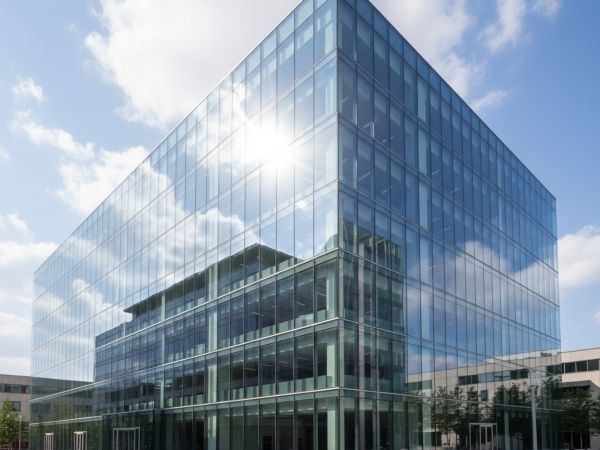
Why Large Residential Projects Demand a Commercial Mindset
Treating a significant architectural film installation as a minor subcontract is a primary source of project risk. A commercial mindset is essential for three key reasons:
- Logistical Complexity and Quality Control: Installing film on 200 uniform windows in a condo tower is a vastly different operation than working on a few windows in a single-family home. It requires a dedicated project manager, a skilled crew accustomed to repetitive, high-quality work, and a robust quality assurance process. Inconsistencies in application are not just aesthetic flaws. They can signal future adhesive failure or thermal stress issues.
- Performance Specification and ROI: A large-scale project’s film selection is rarely about aesthetics alone. It is a capital investment tied to measurable outcomes like energy savings, security enhancements, or the preservation of high-value interiors. This requires a vendor who can model performance using metrics like Solar Heat Gain Coefficient (SHGC) and provide documentation and warranties that validate the investment. A typical “home tint” provider is unlikely to have the tools or expertise for this level of analysis.
- Risk Mitigation and Material Science: Applying the wrong film to a specific type of glass, for example, a high-absorption film on certain double-pane IGUs, can induce thermal stress. This can lead to glass fracture and seal failure. A commercial-grade partner understands the complex compatibility matrix between film and glazing, carries the appropriate insurance, and provides a manufacturer-backed warranty that protects the client’s investment in both the film and the windows.
The Critical Distinction: Architectural Film vs. Automotive Tint
A frequent and costly mistake is confusing architectural film with automotive tint. They are fundamentally different products engineered for entirely different environments. Using an automotive product on a building is a guarantee of premature failure and can even void the window manufacturer’s warranty.
Here are the key technical differences a project manager must understand:
- Adhesive Systems: Architectural films use specialized, clear, and durable Pressure-Sensitive Adhesives (PSAs) designed for flat, stationary glass. They are formulated to cure with exceptional optical clarity and bond for decades. Automotive films use adhesives designed to conform to curved glass and withstand vibrations.
- Material Construction: Architectural films are built for long-term static exposure. They feature harder, more resilient scratch-resistant coatings to withstand cleaning and incidental contact over a 15-to-20-year lifespan. Automotive films are not engineered for this type of longevity in a building setting.
- Solar Performance: The metals and dyes used in architectural films are selected for maximum performance and color stability when installed on vertical, flat glass. Their performance metrics are certified for building energy models, which is essential for calculating ROI and pursuing goals like LEED certification.
- Optical Clarity: Architectural films are available in a vast range of Visible Light Transmissions (VLTs), from nearly invisible films designed for UV protection to highly reflective films for maximum privacy, all while maintaining pristine optical clarity.
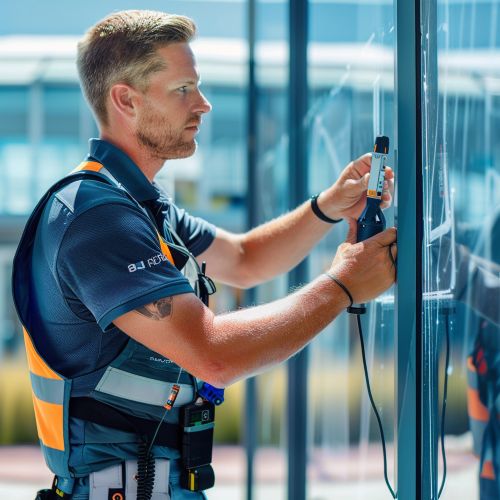
Why 3M Is the Standard for Commercial Grade Window Film for Residential Projects
When a project’s success hinges on the performance of every component, material selection is a matter of data and risk mitigation. In the world of architectural window film, where performance directly impacts energy modeling, occupant comfort, and building security, 3M is the established commercial standard. This distinction relies on a foundation of innovation, comprehensive warranties, and a product portfolio engineered to solve complex architectural challenges.
For any significant residential project, adopting this commercial standard is the first step in de-risking the window film scope.
A Legacy of R&D and Proven Performance
The window film industry exists because of 3M. They received the first patent for sun control window film in 1966 and have driven the technology ever since. Their deep investment in research and development translates into a patent portfolio that is decades ahead of competitors, particularly in the core sciences of nanotechnology, adhesives, and advanced materials.
For a project manager, this provides critical assurance. When you specify a 3M film, like their Prestige Series, you are specifying a product comprised of hundreds of non-metallized, corrosion-resistant nanolayers. This technology delivers exceptional heat rejection with pristine clarity, a feat that was once technically impossible. This proven performance, validated across millions of square feet on commercial projects worldwide, means the energy models and ROI you project are based on predictable, long-term results.
The Manufacturer’s Warranty: A Critical Asset for Long-Term ROI
In construction, a warranty is only as strong as the company standing behind it. The critical document for any project owner or manager is the comprehensive manufacturer’s warranty. A global leader like 3M provides an unmatched level of security for your investment.
A 3M commercial-grade warranty for 3M window film for homes typically covers:
- The film against defects like bubbling, peeling, cracking, or discoloration.
- The glass itself against thermal shock fracture for a specified period.
- The window seal against failure as a result of the film installation.
This last point is crucial. Improper film selection can cause seals to fail, leading to moisture between the panes and costly glass replacement. A warranty from a stable, multi-billion dollar company like 3M mitigates this substantial financial risk. It transforms the window film from a cosmetic upgrade into a warrantied building asset, protecting the owner’s investment for up to 15 years.
A Comprehensive Product Line for Every Architectural Challenge
Large-scale projects are rarely one-dimensional. The west-facing facade of a building has different solar heat gain challenges than the north-facing entrance. A ground-floor amenity space has different security needs than a penthouse residence. A one-size-fits-all approach is a recipe for failure.
3M engineers its architectural film portfolio to provide specific solutions for distinct challenges:
- Solar Control: The Sun Control Window Film Prestige Series offers best-in-class, non-metallic heat rejection to lower energy costs and improve comfort without changing the look of the glass.
- Safety and Security: The Safety & Security Window Film Ultra Series is designed for blast mitigation and to mitigate hazards from shattered glass, whether from forced entry attempts, seismic events, or extreme weather. It provides a critical layer of protection by holding glass fragments together.
- Privacy and Design: Fasara and Crystal Glass Finishes offer an extensive range of decorative options to create privacy, emulating the look of etched or frosted glass at a fraction of the cost.
- Hybrid Solutions: Many films combine benefits. For example, the Ultra Prestige Series delivers both the robust security of the Ultra series and the superior solar control of the Prestige series in a single application.
This breadth allows a general contractor or architect to specify the right product for the right window, optimizing performance across the entire building envelope.
Our Expertise as a Top 3M National Installer
Specifying a superior product is only half the battle. The ultimate performance of any window film installation is determined by the quality of the installer. Our role as a leading 3M national installation partner is to bridge the gap between world-class engineering and flawless execution on your job site.
This designation represents a tangible set of capabilities that directly benefit your project:
- Unmatched Technical Access: We work directly with 3M’s technical teams. If a unique glazing system or complex site condition arises, we have a direct line to the manufacturer’s top experts to develop a validated solution.
- Proven Logistical Scale: Our experience across thousands of projects has allowed us to refine a project management and installation process built for scale. We can deploy multiple, highly trained installation teams to meet aggressive construction schedules without sacrificing quality control.
- Predictable Quality: Every one of our installers is a career professional trained to the highest standards. This ensures consistency, whether we are treating ten windows or ten thousand. This level of quality is what activates the full power of the 3M manufacturer’s warranty and delivers the specified performance your project demands.
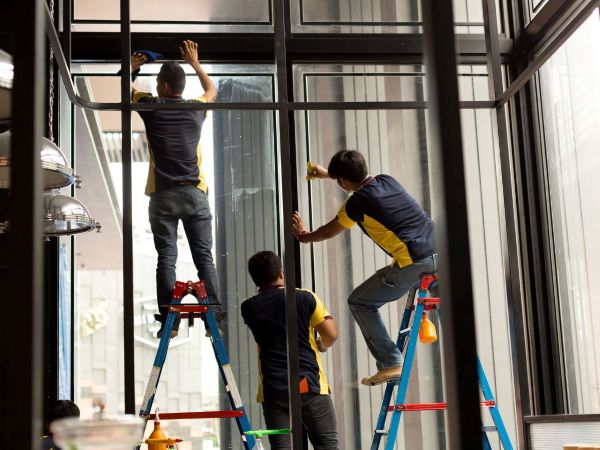
Partnering with a National Installer vs. Local Shops
Once a project moves beyond a handful of windows, selecting an installation partner becomes as critical as choosing the film itself. The decision often comes down to a local shop or a national installation firm. While local businesses can be a great choice for smaller applications, large-scale residential and multi-family projects demand a level of operational sophistication that is the hallmark of a national partner.
Scalability and Manpower for Large or Multi-Site Projects
Consider the logistical challenge of installing film on 1,500 windows in a new multi-family development with a tight construction schedule. A small team, no matter how proficient, can create significant bottlenecks, potentially delaying follow-on trades and pushing back the completion date. A national installer solves this with access to a deep bench of trained manpower. We can deploy multiple crews simultaneously to different floors or buildings, compressing the timeline and minimizing disruption.
Consistency in Workmanship and Materials
For a developer or property manager, brand and quality consistency are paramount. The finish on a window in a penthouse must be indistinguishable from one on the third floor. A national organization achieves this through standardized training, centralized material management, and a uniform quality control process. This systematic approach to professional window film installation removes the variability that can occur when relying on different installers, ensuring a predictable, high-quality result across the entire portfolio.
Advanced Project Management and Communication
On a complex project, communication is currency. You need a partner who can integrate seamlessly into your workflow. National installers operate with dedicated project management teams that serve as your single point of contact. They are fluent in the processes of commercial construction, providing professional oversight that includes:
- Clear, consistent communication with daily and weekly reporting.
- Proactive coordination with other trades and building management.
- Proficiency with project management software like Procore.
- Detailed logistical planning for material staging and site access.
This structure ensures the window film installation is a professionally managed component of the larger project, giving you the visibility and control you need.
The Importance of Insurance, Bonding, and Financial Stability
For any significant construction project, risk management is non-negotiable. A professional partner must carry the financial and legal safeguards to operate on a commercial scale. A credible national partner will provide proof of:
- Substantial Insurance Coverage: Including high-limit General Liability, Auto, and Workers’ Compensation policies to protect the project, its owners, and the general contractor from liability.
- Bonding Capacity: The ability to be bonded provides a financial guarantee that the project will be completed according to the contract, protecting the owner from liens and subcontractor failure.
- Financial Stability: A national firm has the documented strength to procure all materials for a large project upfront and manage cash flow through long project cycles, eliminating the risk of a subcontractor failing mid-project.
Ultimately, pairing a commercial-standard material with a commercial-grade installation partner is the only way to ensure a large residential window film project moves from a line item on a bid to a high-performing, long-term asset.
For expert specification, scalable installation, and proven results, partner with Window Film Depot to deliver your project with confidence.
Frequently Asked Questions
What is the real difference between automotive tint and architectural film?
The core differences are in their engineering. Architectural films use specialized, pressure-sensitive adhesives designed for flat glass and have a durable scratch-resistant coating for longevity in a building. Automotive tints use adhesives designed to conform to curved glass and are not built to last for decades on stationary windows, leading to premature failure if used on a home or building.
Can window film really cause my glass to break?
Yes, if the wrong film is applied. Certain films absorb high levels of solar energy. When applied to specific types of double-pane or treated glass, this absorption can create excessive thermal stress, which may lead to glass fracture or seal failure. A professional installer will perform a film-to-glass compatibility check to prevent this and ensure the manufacturer’s warranty for both the film and the glass remains valid.
How does professional window film installation contribute to LEED certification?
High-performance solar control films can significantly improve a building’s energy efficiency. By reducing solar heat gain, they lower the load on HVAC systems, which can contribute points toward LEED certification in the Energy & Atmosphere (EA) category. A professional partner can provide the necessary product documentation and performance modeling to support this.
Why is a manufacturer’s warranty for 3M window film for homes so important?
A comprehensive manufacturer’s warranty from a company like 3M protects your investment on multiple levels. It not only covers the film itself against defects but can also cover the glass against thermal shock fracture and, crucially, the window seal against failure caused by the film. This transforms the film from a simple upgrade into a warrantied building asset, mitigating significant financial risk for the property owner.