Table of Contents:
- The Vulnerability Gap: Why Standard Glazing Is No Longer a Defensible Security Position
- What Bullet Resistant Film Is, and Precisely What It Is Not
- Performance Standards That Matter: Reading the Ratings Before You Specify
- Where Bullet Resistant Film Delivers the Most Value: High-Priority Applications
- Installation Intelligence: What Project Managers Need to Know Before Committing to Scope
- How to Specify Bullet Resistant Film: A Project Manager’s Evaluation Framework
- Conclusion: Bringing a Defensible Security Specification to Your Client with Confidence
- Frequently Asked Questions
The Vulnerability Gap: Why Standard Glazing Is No Longer a Defensible Security Position
Bullet Resistant Film has become a practical solution for property owners who need stronger glass protection without the expense of replacing every window. Designed to reinforce existing glazing, this security film helps delay forced entry, retain shattered glass, and improve protection at vulnerable openings. For schools, offices, government buildings, and retail stores, it offers a faster, more budget-friendly path to stronger security and safer interiors.
The Threat Reality Facing Commercial and Institutional Buildings Today
Standard annealed or tempered glass, the kind found in most commercial storefronts, school entry vestibules, and government lobbies, offers essentially no resistance to forced entry or ballistic threats. It shatters on first impact. That physical reality has always been true, but the threat environment facing commercial and institutional buildings has changed enough that specifying unprotected glazing in high-occupancy or high-risk environments is increasingly difficult to defend from a liability standpoint, let alone a security one.
Active shooter incidents at schools, government facilities, and retail environments have moved security glazing from an optional upgrade to a line item that risk officers, insurers, and school boards are actively requiring.
Many jurisdictions have introduced building security mandates tied to K-12 funding and public building renovation approvals. The question for project managers is no longer whether to harden glazing. It is how to do it cost-effectively and without derailing an active renovation schedule.

Why Full Glazing Replacement Is Often the Wrong First Answer
The instinct to replace standard glass with true ballistic glazing is understandable, but it introduces cost and schedule risks that make it the wrong specification for most large-scale projects.
The Budget Calculus: What Full Ballistic Glass Replacement Actually Costs at Scale
Ballistic-rated insulated glazing units, including glass-clad polycarbonate and multi-laminate systems rated to UL 752 Level 3 and above, run between $150 and $400 per square foot installed, depending on the rating level, unit size, and frame compatibility. On a mid-size school with 4,000 square feet of glazing, that translates to $600,000 to $1.6 million in glazing costs alone, before accounting for frame modifications, structural reinforcement, and project management overhead. For a distributed government portfolio with dozens of locations, the math stops the conversation before it starts.
Schedule and Disruption: The Hidden Project Risk of Glazing Swap-Outs
Full glazing replacement requires removing and reframing existing openings, coordinating lead times on custom-sized ballistic units that often run 8 to 14 weeks, and sequencing work in occupied buildings where temporary closures create operational and liability problems. On a school renovation running against a summer break window, a single framing complication can push the project past opening day. These are not edge cases. They are predictable risks that experienced project managers account for before committing to a glazing replacement scope.
Bullet Resistant Film as a Defensible Specification: Setting Accurate Expectations
Bullet resistant film addresses this gap directly by applying a high-performance laminate system to existing glazing, hardening it against ballistic threats and forced entry without requiring frame removal or building closure. The performance is real and standards-verified, but the specification has to be handled accurately from the start. Film does not turn standard glass into ballistic-rated glass. What it does is meaningfully extend the time an attacker needs to breach a glazed opening, retain dangerous glass fragments on impact, and in some configurations meet documented UL 752 performance levels when tested as a complete system.
That distinction is not a weakness in the specification. It is the honest framing that lets you put bullet resistant film in front of a risk officer or school board and defend it on the merits.
What Bullet Resistant Film Is, and Precisely What It Is Not
The Mechanism: How Adhesive Laminate Layers Absorb and Contain Ballistic Impact
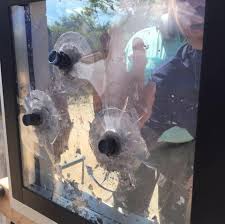
Bullet resistant film is a multi-layer polyester laminate, typically ranging from 8 to 14 mils in total thickness, bonded to the interior surface of existing glass using a pressure-sensitive or wet-applied adhesive system. When a projectile or forced-entry impact strikes the glass, the glass itself still fractures. What the laminate does is hold the fractured glass together, absorbing energy through the tensile strength of the polyester layers and the adhesive bond between layers and glass.
Interlayer Technology and the Physics of Glass Fragment Retention
The performance mechanism relies on the interlayer behaving like a flexible membrane under impact stress. As glass fractures, the fragments are captured by the adhesive bond and held in the plane of the opening.
This prevents the dangerous secondary threat of high-velocity glass shards while also maintaining a physical barrier that an attacker must continue working against. In a forced entry scenario, this delay is operationally significant.
Law enforcement guidance consistently indicates that attackers abandon attempts when entry takes more than 60 seconds.
How Thickness, Tensile Strength, and Adhesive Bond Determine Performance
Three variables determine how a specific film product performs under threat:
- Thickness drives puncture resistance and energy absorption capacity.
- Tensile strength determines how much load the laminate can carry before the film tears away from the glass fracture zone.
- Adhesive bond strength controls whether the film stays anchored to the glass under repeated impact, particularly when an attacker continues striking the same opening.
Higher-performance ballistic shatterproof window film products, those approaching UL 752 Level 1 or Level 2 ratings in tested configurations, use thicker interlayer stacks with aggressive adhesive formulations that maintain bond integrity through multiple impacts. Thinner safety and fragment retention films, typically 4 to 8 mils, provide meaningful protection against accidental breakage and low-energy forced entry but do not approach ballistic performance.
Is Bullet Resistant Window Film Actually Bulletproof?
No film-based product is bulletproof, and any marketing claim using that word should disqualify the product from a defensible specification. Bulletproof implies complete, unconditional resistance to penetration. No laminate film meets that standard, and neither does most true ballistic glazing below UL 752 Level 8.
What bullet resistant film does is reduce threat consequence and extend breach time. A properly specified and installed film system tested to UL 752 Level 1 resists penetration from a .38 caliber handgun at specified distances under controlled conditions. That is a meaningful, verifiable performance claim. “Bulletproof” is not.
Need More Info?
The Window Film Depot team is happy to help.
The Honest Distinction: Ballistic Window Film vs. Ballistic-Rated Glazing Systems
What Film-Based Solutions Are Engineered to Do
Film-based solutions are engineered to harden existing glazing against lower-level ballistic threats, retain glass fragments, delay forced entry, and provide a meaningful upgrade over unprotected glass, all without structural modification to the opening. The appropriate design goal is threat delay and consequence reduction, not threat elimination.
Where Polycarbonate and True Ballistic Glass Take Over
When the threat profile requires resistance to rifle-caliber rounds, sustained automatic fire, or UL 752 Level 3 and above performance, glass-clad polycarbonate and multi-laminate ballistic glazing systems are the right specification. These systems use rigid polycarbonate interlayers that arrest projectile energy in a fundamentally different way than flexible film can. For a secure command center, a hardened government facility, or an armored vehicle application, film is not the right answer.
For the much larger universe of K-12 schools, municipal offices, financial institutions, and commercial lobbies facing realistic threat scenarios, primarily handgun-caliber incidents and forced entry through vestibule glass, film-based solutions deliver standards-verifiable performance at a fraction of the cost.
Glass Fragment Retention Film vs. Forced Entry Film: Understanding the Product Spectrum
Not all security window film for commercial buildings is the same, and the product spectrum matters for specification accuracy. Three tiers address different threat levels:
- Fragment retention film (4 to 7 mils): Holds glass together on impact, prevents shard hazards, provides minimal forced entry delay. Appropriate for interior glazing, skylight protection, and secondary glazing layers.
- Forced entry and attack-resistant film (8 to 12 mils): Resists sustained manual attack with tools or blunt objects, extends breach time significantly. Meets GSA and ASTM forced entry standards in tested configurations.
- Ballistic-resistant film (12 mils and above, typically combined with an anchoring system): Approaches UL 752 Level 1-2 performance in tested assemblies. Requires verified installation methodology and documented test data to specify defensibly.
Understanding which tier matches the project’s threat profile is the first specification decision, and the one that shapes everything downstream, from product selection to installer qualification to budget modeling.
Bullet Resistant Film vs. Full Ballistic Glazing Replacement: Specification Evaluation Matrix
Use this matrix to frame the trade-off conversation with risk officers, clients, and building authorities before committing to a scope.
| Evaluation Factor | Bullet Resistant Film | Full Ballistic Glazing Replacement |
|---|---|---|
| Threat level addressed | Handgun-caliber (UL 752 L1-L2 in tested systems); forced entry; fragment retention | Handgun through rifle-caliber depending on rating (UL 752 L1-L8) |
| UL/NIJ rating achievable | UL 752 Level 1-2 (film + anchoring system, tested assembly); NIJ Level IIA analog in some configurations | UL 752 Level 1-8 depending on glazing unit specified |
| Installed cost range | $15 to $35 per sq ft installed, depending on film tier and anchoring system | $150 to $400+ per sq ft installed, depending on ballistic rating and framing requirements |
| Installation disruption | Minimal: interior application, no frame removal, building remains occupied | Significant: frame removal or modification, temporary closures, lead times of 8-14 weeks on custom units |
| Timeline impact | 1 to 3 days per floor for typical commercial glazing; multi-site rollouts achievable within a renovation window | Weeks to months per location; highly sensitive to supply chain and framing complexity |
| Maintenance requirements | Periodic inspection of film edges and adhesive bond; no special cleaning protocols beyond avoiding abrasive products | Periodic seal and gasket inspection; repair or replacement of damaged units requires custom fabrication |
| Specifier documentation available | Test reports for film-plus-anchoring assemblies; GSA and ASTM compliance documentation; manufacturer certifications | UL 752 listing data per glazing unit; CPSC and ANSI certifications; glazing contractor documentation |
| Best fit | Large-scale security upgrades where budget, schedule, and occupant continuity are primary constraints | New construction, high-security government, or environments where threat profile exceeds film system capabilities |
The cost delta between these two approaches is not incremental. It is typically an order of magnitude. For a 20-location school district or a regional government portfolio, that difference determines whether a security mandate is executable within a capital budget or requires phased multi-year funding. Bullet resistant film does not match every threat scenario, but for the majority of commercial and institutional projects where the realistic threat is forced entry or handgun-caliber attack, it delivers standards-verified performance at a scale that full glazing replacement cannot approach.
Performance Standards That Matter: Reading the Ratings Before You Specify
What the UL 752 Standard Actually Tests and What It Means for Specifiers
UL 752 is the benchmark standard for bullet-resisting equipment in the United States, and it tests complete assemblies, not individual materials. Underwriters Laboratories fires a specified number of rounds from a defined weapon and ammunition type at a test specimen from a set distance. The specimen fails if any round penetrates completely or if spall from the interior face could cause injury. That test methodology has direct implications for how you specify film-based systems: the film alone does not carry a UL 752 rating. The tested assembly, including film, glass substrate, thickness, anchoring system, and installation method, earns the rating together.
UL 752 Levels 1 Through 8: Matching the Rating to the Threat Environment
| Level | Weapon | Rounds Fired | Threat Context |
|---|---|---|---|
| Level 1 | 9mm handgun | 3 | Commercial lobbies, school vestibules |
| Level 2 | .357 Magnum | 3 | Financial institutions, municipal offices |
| Level 3 | .44 Magnum | 3 | Higher-risk government, judicial facilities |
| Level 4 | .30 caliber rifle | 1 | Military, corrections, hardened government |
| Level 5 | 7.62mm rifle | 1 | Armored positions, tactical installations |
| Levels 6-8 | Shotgun/higher | Variable | Specialty applications |
For most commercial and institutional projects, schools, government lobbies, and financial branches, the realistic threat sits at Level 1 or Level 2. Film-based systems tested as complete assemblies can reach Level 1 and, in some configurations with anchoring systems, approach Level 2. That coverage addresses the dominant threat environment for the majority of projects you are likely specifying.
What a UL 752 Rating Does and Does Not Guarantee in the Field
A UL 752 rating certifies that a specific assembly, tested under laboratory conditions, resisted penetration from the listed threat. It does not guarantee performance if the installation deviates from the tested configuration, if the glass substrate differs from what was tested, or if the anchoring method is omitted. This is where specification discipline matters: a film product with test documentation for a particular assembly only performs to that rating when installed exactly as tested. Substituting a thinner glass lite, skipping edge anchoring, or using a different adhesive formulation voids the performance claim.
NIJ Ballistic Resistance Standards: When Government and Law Enforcement Specifications Apply
The National Institute of Justice ballistic standards (NIJ 0108.01 and the updated NIJ Standard-0101.07) are the primary references for law enforcement and federal government procurement. NIJ levels correlate roughly to UL 752 levels but use a different classification structure, Type IIA, Type II, Type IIIA, Type III, and Type IV, based on handgun and rifle calibers. When a federal tenant or law enforcement agency specifies glazing upgrades, their procurement language will likely reference NIJ rather than UL 752. A specifier needs to confirm which standard governs the project and verify that the film system’s test documentation matches. Most high-performance ballistic film manufacturers provide test data referencing both frameworks, but do not assume equivalency without reviewing the actual test reports.
What Security Standards Does Bullet Resistant Film Meet?
The honest answer, framed correctly, is defensible: bullet resistant film installed as part of a tested and documented assembly can meet UL 752 Level 1 performance and in some configurations Level 2.
It meets GSA-TS01 forced entry requirements in verified installations. It satisfies ASTM F1233 and ASTM F588 test protocols for attack resistance and forced entry delay. These are not marketing categories.
They are published standards with documented test methodologies that a risk officer or insurance underwriter can independently verify. Presenting this documentation proactively, rather than waiting for a challenge, is what separates a defensible specification from a liability exposure.
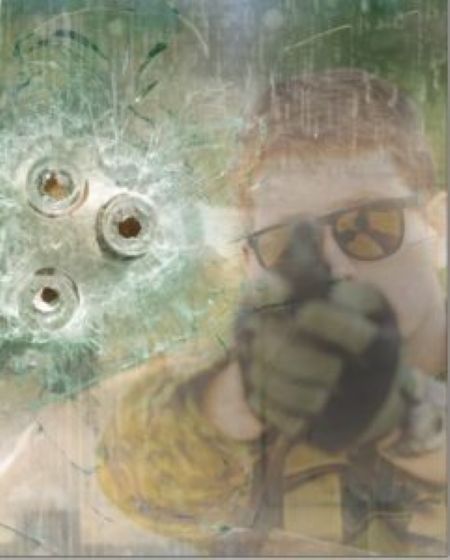
The Language Problem: Why “Bulletproof” Marketing Claims Should Be a Disqualifier
Any product promoted as “bulletproof” signals that the manufacturer is either uninformed about ballistic standards or is prioritizing sales over accuracy. No glazing product below UL 752 Level 8 is bulletproof, and even Level 8 rated assemblies have defined limits. When a risk officer or school board attorney scrutinizes your specification after an incident, “bulletproof” language in your product documentation becomes a liability rather than a defense. Specify to the UL 752 level that matches the threat profile, document the tested assembly configuration, and use the language the standard uses: “bullet-resisting” to a defined level, under defined test conditions.
Specification Language and Documentation: What to Put in the Contract
Specification language should reference the tested assembly, not just the film product. A defensible specification section includes:
- The specific film product by manufacturer name and product designation
- The glass substrate type and thickness required to match the tested configuration
- The anchoring system specification if required by the test assembly
- The UL 752 level claimed, with the test report number and date
- The installer qualification requirement, such as manufacturer authorization or equivalent credential
- A requirement for post-installation documentation confirming that installation matched the tested configuration
This package protects the project manager, satisfies building authority review, and gives the risk officer a documented record that the installation was performed to a verified standard, not to a marketing claim.
Where Bullet Resistant Film Delivers the Most Value: High-Priority Applications
School Security Glazing: Meeting the Mandate Without Derailing the Capital Budget
School districts face a specific constraint that makes bullet resistant film a natural specification fit. Security mandates tied to state funding cycles often require documented glazing upgrades within a defined project window, with budgets that cannot absorb full glazing replacement at scale. A district with 15 buildings and 3,000 square feet of vestibule and entry glazing per building is looking at 45,000 square feet of glazing. At full ballistic glazing replacement costs, that scope exceeds most districts’ total capital improvement budgets. Film-based systems bring that same scope into a realistic budget range while delivering UL 752 Level 1 performance at entry vestibules, the highest-priority glazing in any school security assessment.
Summer break provides the natural installation window. A professional crew can complete a typical school’s priority glazing in three to five days, allowing a district to sequence multiple buildings across a single summer without scheduling conflicts or occupancy disruptions during the academic year.
Government Building Security: Federal, State, and Municipal Glazing Upgrade Scenarios
Federal and state building security upgrades often involve existing facilities where the glazing infrastructure predates current security requirements. Full replacement in occupied government buildings creates operational disruptions, including temporary closures, access control reconfigurations, and contractor security clearance requirements, that compress an already complex project schedule. Film installation requires no frame removal, no temporary closure of secure areas, and significantly shorter on-site time per location.
Municipal projects often operate under procurement rules that require documented standards compliance. The GSA and ASTM documentation available for tested film assemblies satisfies these requirements and supports the audit trail that public-sector project managers need at closeout.
Financial Institutions and Retail: High-Traffic Environments with Compressed Installation Windows
Banks, credit unions, and high-traffic retail environments present a different constraint: installation must happen without closing the location during business hours, or within minimal off-hours access windows. Film application is compatible with occupied installation. Crews work from the interior surface, require no structural access, and can complete most branch-sized locations in a single day or overnight shift. For a regional bank executing a security upgrade across 40 branches, this means the project does not require a single temporary closure.
Is Bullet Resistant Film Suitable for Schools and Government Buildings?
The skeptic’s concern typically falls into one of two categories: either that film does not meet the required threat level, or that it will not satisfy the documentation requirements of a school board attorney or government procurement officer. Both concerns are addressable.
On threat level: for the realistic threat profile at school entries and government lobbies, handgun-caliber attacks and forced entry, UL 752 Level 1-2 performance is the appropriate specification target, and tested film assemblies meet it. On documentation: the test reports, standards references, and installer certifications exist and are presentable in the same format that any other building product specification uses.
The specification fails when film is presented as a substitute for a threat level it cannot address. Present it accurately, as a Level 1-2 ballistic and forced entry solution, and the skeptic’s objection largely dissolves.
Matching Application to Threat Level: Film vs. Full Replacement
Two questions frame the decision:
- What is the verified threat profile? Handgun-caliber and forced entry scenarios support a film specification. Rifle-caliber threats or sustained automatic fire require full ballistic glazing.
- What does the project’s operational and budget envelope require? If the project requires occupancy continuity, compressed timelines, or multi-location execution at scale, film is the appropriate starting point unless the threat profile disqualifies it.
When both answers point toward film, the specification is straightforward. When the threat profile exceeds Level 2, the conversation shifts to hybrid approaches, film on secondary glazing and lower-priority openings with full ballistic glazing at the highest-risk entry points, rather than a binary choice between one solution or the other.
Installation Intelligence: What Project Managers Need to Know Before Committing to Scope
Can Bullet Resistant Film Be Installed on Existing Windows Without Replacement?
Yes, with qualifications. Film applies to the interior surface of existing glass and does not require frame removal or structural modification. The qualifications involve substrate compatibility: the existing glass must be flat, free of significant surface damage, and of a type and thickness compatible with the tested assembly. Tempered glass presents an application challenge, as its surface stress characteristics affect adhesive bond performance and can complicate installation. Insulated glazing units require interior-surface application only, which limits some anchoring system configurations. A pre-installation survey documenting glass type, thickness, and condition per opening is standard practice before committing to scope, and any credible installer should perform one before pricing.
How Long Does Bullet Resistant Window Film Installation Take?
Film installation is fast relative to any glazing replacement scenario, but timeline planning requires more granularity than a single project-level estimate.
Per-Opening Benchmarks and Crew Scaling for Multi-Floor Projects
A two-person crew installs approximately 200 to 300 square feet of film per day on standard commercial glazing, factoring in surface preparation, film application, edge trimming, and any required anchoring system work.
Larger openings and complex geometries reduce throughput. Straightforward rectangular lites in standard frames run faster.
For a multi-floor commercial building, crew scaling is linear: two crews double throughput. Most project managers should plan on one day per floor for standard commercial glazing loads when working with a properly resourced installation team.
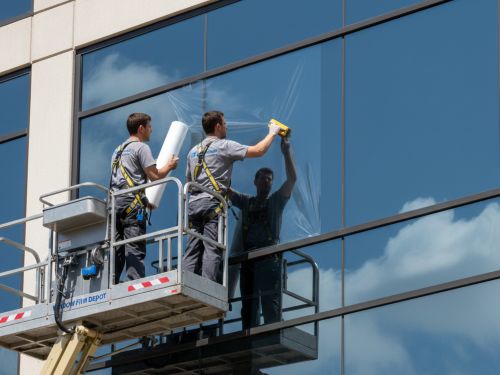
Sequencing Film Installation Within an Active Renovation Schedule
Film installation has a low interference footprint. It does not require adjacent trades to stop work, does not generate significant dust or noise, and does not affect HVAC or electrical systems. The practical sequencing constraint is access: film goes on after any work that requires removing or handling the glass, such as frame painting, caulk replacement, or frame repairs, and before final cleaning and punch list. In occupied buildings, interior access coordination is the primary schedule variable.
Multi-Site Coordination: The Consistency Challenge Across Distributed Locations
Executing a bullet resistant film specification across 20 or 40 locations introduces a consistency problem that single-site projects do not face. Variation in installation quality, including adhesive bond integrity, edge treatment, and anchoring system execution, directly affects whether the installed system performs to the rated assembly. A film system installed correctly at 38 out of 40 locations and poorly at two does not have a 95% success rate in security terms. It has two failure points.
What to Require From an Installer for National or Regional Rollout Projects
Multi-site projects require a national installer with centralized project management, not a network of independent contractors each interpreting the specification independently. Specific requirements to include in the contract:
- A single point of accountability for schedule, quality, and documentation across all locations
- Crews trained and certified on the specific film product and anchoring system being installed
- A documented installation protocol that every crew follows
- Pre-installation surveys at each location with documented findings before mobilization
- Post-installation documentation per location confirming substrate compatibility, film product, and assembly configuration
Quality Control Protocols That Prevent Site-to-Site Variability
Effective quality control on distributed projects requires more than a punch list at closeout. Strong protocols include pre-installation substrate verification documented with photographs, in-process inspection at the first opening of each location to catch technique issues before they propagate across the building, and a post-installation review package per site that includes the film product certification, installation date, crew identification, and a confirmation that the installed configuration matches the tested assembly. This documentation package is also what the risk officer needs at project closeout to update the facility’s security compliance record.
Minimizing Occupant Disruption: Installation Protocols for Occupied Buildings
Film installation in occupied buildings is routine when the installer follows protocols designed for it. Crews work from the interior surface with low-VOC installation solutions, create minimal debris, and can stage work around occupied spaces by completing one zone before moving to the next. The practical requirements are interior access per opening for the installation window, typically two to four hours per opening for standard sizes, a clear 18-inch work zone around each lite, and advance notice to building occupants so that conference room scheduling and adjacent work areas can be coordinated. Most installations in commercial and institutional buildings proceed without any operational disruption to occupants.
Warranty, Performance Guarantees, and Liability Considerations
Warranty terms for bullet resistant film vary by manufacturer and product tier, but credible products carry warranties of 10 years or more against adhesive failure, delamination, and optical degradation under normal conditions. The warranty should be from the manufacturer, not only from the installer. A manufacturer warranty survives installer company turnover and provides recourse at the product level if performance issues arise.
Liability framing matters at specification time. The specification should document that the system was installed to a tested assembly configuration, that the installer was qualified by the manufacturer, and that post-installation documentation confirms compliance. This record demonstrates due diligence, which is the standard a risk officer or legal team will apply if the system is ever tested by an actual event.
How to Specify Bullet Resistant Film: A Project Manager’s Evaluation Framework
The Four Specification Pillars: Product, Standards, Installer, and Documentation
A defensible specification rests on four elements, and weakness in any one of them undermines the others. The product must be certified to a tested assembly configuration, not just marketed with ballistic language. The standards reference must match the threat profile and the jurisdiction’s procurement requirements. The installer must be manufacturer-authorized and capable of executing consistently across every location in scope. The documentation must be complete enough that a risk officer, building authority, or attorney can verify compliance without taking your word for it.
These four pillars interact directly. A correctly specified product installed by an uncredentialed contractor produces an undocumented assembly that no longer matches the tested configuration. Tested documentation without an installer qualification requirement invites field substitution. Build the specification so that all four pillars are addressed explicitly, and the package holds together under scrutiny.
How Much Does Bullet Resistant Film Cost Compared to Replacing Windows?
The installed cost for bullet resistant film runs $15 to $35 per square foot, depending on film tier, anchoring system requirements, and site conditions. Full ballistic glazing replacement runs $150 to $400 per square foot. On a 10,000 square foot glazing scope, that is a cost difference of $1.15 million to $3.65 million. The comparison does not require detailed analysis in most project contexts. It is the primary reason film exists as a specification category.
Building a Total Cost of Ownership Model Over the Project Lifecycle
Total cost of ownership extends the comparison past installation day. Film systems carry a 10-year or longer manufacturer warranty, require no specialized maintenance beyond periodic edge inspection and standard interior glass cleaning, and do not require custom fabrication for repairs. Replacement of a damaged lite involves standard glazing replacement with no special ballistic unit lead times. Over a 15-year lifecycle, the total cost gap between film and full ballistic glazing widens further because custom ballistic units require specialized repair contractors, and unit replacement on damaged openings can run the full per-square-foot replacement cost.
For multi-site projects, build the lifecycle model per location and roll it up. A 30-location portfolio with 1,500 square feet of priority glazing per site represents 45,000 square feet of glazing. At film costs, that scope is $675,000 to $1.575 million installed. At full replacement costs, it is $6.75 million to $18 million. The lifecycle maintenance delta is additive on top of that.
Where Budget Predictability Is Achievable and Where Variables Must Be Scoped
Film installation costs are predictable on standard commercial glazing, specifically flat rectangular lites in accessible frames with confirmed substrate compatibility. Variables that can affect unit pricing include:
- Tempered or heat-strengthened glass requiring modified application protocols
- Insulated glazing units where interior surface access is restricted
- Anchoring system requirements that add labor and material per opening
- High-access glazing requiring lifts or scaffolding
- Historic buildings with non-standard frame profiles
A pre-installation survey per location resolves most of these variables before the contract is signed. Require the installer to survey and document substrate conditions before providing a fixed-price proposal on any multi-site project. Pricing based on assumptions rather than verified site conditions is where budget surprises originate.
What to Look for in a Product: Thickness, Certification, Optical Clarity, and Compatibility
Product selection starts with matching thickness tier to the threat profile established earlier in the specification process. For UL 752 Level 1 performance targets, the film product must be part of a tested assembly at that level. Verify the test report directly rather than accepting marketing summary language. For forced entry applications without a ballistic rating target, confirm ASTM F1233 or GSA-TS01 test data.
Optical clarity matters in occupied buildings and any application where natural light, sightlines, or aesthetics are a factor. High-performance ballistic films have improved substantially in optical quality, but visible haze and color shift vary by product and thickness. Request a physical sample and evaluate it against the actual glass type in the project before specifying.
Substrate compatibility must be confirmed against the existing glazing, including glass type, thickness, and coating condition. A film product’s tested assembly specifies the glass configuration it was tested with. Deviating from that configuration without new test data removes the rating claim.
What to Look for in an Installer: Credentials, National Capacity, and Project Management Infrastructure
Installer qualification is where many specifications are weakest and where post-installation performance risk is highest. The installer’s role is not just application. It is ensuring that every opening receives the tested assembly configuration, that documentation is captured per location, and that multi-site consistency holds across a distributed project.
Why Manufacturer Authorization Matters for Specification Defensibility
Manufacturer authorization, such as the 3M Authorized Installer designation for 3M window film security products, means the installer has completed manufacturer training on the specific product line, follows manufacturer-approved installation protocols, and can access manufacturer technical support when site conditions present challenges. This matters for specification defensibility because it creates a documented chain: the manufacturer tests the assembly, authorizes the installer on that assembly, and the installer documents that the installation matched the tested configuration. That chain is what a risk officer or building authority needs to verify compliance.
An unauthorized installer applying a certified product does not produce a certified installation. Specify installer authorization explicitly and require documentation of that authorization at contract award.
Questions to Ask Any Installer Before Awarding a Multi-Site Security Contract
- How many locations of this scale have you completed in the past 24 months, and can you provide project references?
- Who is the single point of contact for schedule, quality, and documentation across all locations?
- What is your crew certification process for this specific film product and anchoring system?
- What does your pre-installation survey protocol look like, and what deliverables does it produce?
- What post-installation documentation package do you provide per location?
- How do you handle substrate conditions that deviate from the tested assembly specification in the field?
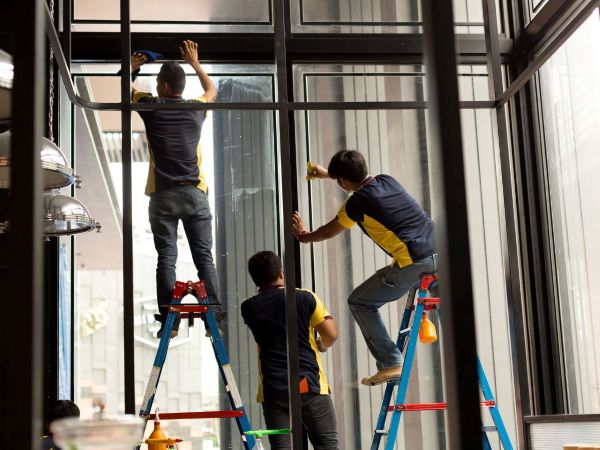
An installer who cannot answer these questions specifically is not equipped for a multi-site security contract, regardless of their single-site capabilities.
Integrating Bullet Resistant Film Into a Layered Glass Security System
Film is one component in a layered security approach, not a standalone solution. Its role is to harden the glazing layer against ballistic and forced entry threats. Other layers address the same opening from different angles.
Pairing Film With Anchoring Systems, Access Control, and Physical Barriers
Anchoring systems, including wet-glazed attachments and mechanical fasteners that bond the film edge to the frame, dramatically improve blast and forced entry performance by preventing the glass-film assembly from being pushed inward out of the frame on impact. For any ballistic or forced entry specification, anchoring should be standard, not optional. Access control systems, including card readers, intercoms, and vestibule door delay sequences, add a behavioral deterrent layer that extends response time before an attacker reaches the glazing. Physical barriers such as bollards, planters, and setback distances reduce vehicle-based threat vectors that glazing alone cannot address.
Where Film Fits in a Passive Security Framework for High-Risk Facilities
In a layered passive security framework, film covers the glass-penetration threat vector at entry points and perimeter glazing. Its value is specific: it delays forced entry, retains glass fragments that would otherwise injure occupants, and in tested configurations resists lower-level ballistic threats. It does not replace access control, it does not substitute for physical standoff distance, and it does not address threats that do not involve the glazed opening. Design it as the glazing layer in a multi-layer system, and it performs exactly as specified. Design it as the entire security response, and it will eventually face a scenario it was not rated for.
Which Film Specification Is Right for Your Project?
| Project Profile | Product Tier | UL/NIJ Rating Target | Installation Approach |
|---|---|---|---|
| School security mandate | 12-mil ballistic film with anchoring system | UL 752 Level 1 at entry vestibules; 8-mil forced entry film at secondary glazing | Summer break window; sequence by building priority; pre-installation survey required |
| Government retrofit | 12-mil ballistic or forced entry film matched to tenant’s NIJ reference | UL 752 Level 1-2 or GSA-TS01 forced entry; confirm NIJ equivalency with test documentation | Occupied building protocol; phased by floor or zone; single-point installer accountability required |
| High-traffic retail | 8-mil forced entry film; 12-mil at teller or transaction glazing if applicable | ASTM F1233 forced entry; UL 752 Level 1 at cash-handling positions | Overnight or off-hours installation; one-day completion per location standard |
Conclusion: Bringing a Defensible Security Specification to Your Client with Confidence
Why Bullet Resistant Film Is the Smarter Default for Most Large-Scale Security Upgrades
The case for bullet resistant film as a first-line specification for large-scale security upgrades is not about compromise. It is about matching the right solution to the actual threat profile, operational constraints, and budget reality of the project. For the dominant threat environment across schools, government buildings, and commercial facilities, forced entry and handgun-caliber attacks, film-based systems deliver standards-verified performance. They install without structural modification, do not require building closures, and cost a fraction of full ballistic glazing replacement at scale. When the threat profile calls for Level 3 and above, full ballistic glazing is the right answer. For everything below that threshold, film is not the fallback. It is the correct specification.
The Project Manager’s Action Checklist Before Submitting a Security Glazing Specification
Before the specification package leaves your desk, verify each of the following:
- Threat profile documented: verified against UL 752 or NIJ level targets appropriate to the facility type
- Product selected: manufacturer name, product designation, tested assembly configuration, and test report number confirmed
- Glass substrate compatibility: existing glazing type and thickness confirmed against the tested assembly specification
- Anchoring system included: specified where required by the tested assembly or threat level
- Installer qualified: manufacturer authorization confirmed in writing for the specific product being installed
- Documentation requirements written into the contract: pre-installation survey deliverables, post-installation confirmation package per location, and crew certification records
- Warranty terms reviewed: manufacturer warranty confirmed, not installer-only coverage
- Standards references correct: UL 752 or NIJ standard matches the jurisdiction’s procurement language
This checklist closes the specification gaps where most performance and liability issues originate.
Partnering With a National Installation Expert
Executing a security glazing specification at scale requires an installation partner with the national capacity, manufacturer credentials, and project management infrastructure to deliver consistent results across every location. Window Film Depot operates as that partner for commercial, institutional, and government projects, providing pre-installation surveys, manufacturer-authorized installation on certified film systems, and post-installation documentation packages that satisfy risk officer and building authority requirements.
For project managers bringing a security glazing mandate to a client, whether it is a school district under a state security funding requirement, a government portfolio owner managing a facility upgrade cycle, or a financial institution executing a branch security program, the specification is only as strong as the team executing it in the field. Contact Window Film Depot to scope your project, review tested assembly options for your threat profile, and build the documentation package your client needs at closeout.
Frequently Asked Questions
Is bullet resistant window film actually bulletproof?
No. Bullet resistant film is not bulletproof, and any product marketed with that claim should be disqualified from a serious specification. What properly installed ballistic window film does is extend the time required to breach a glazed opening, retain dangerous glass fragments, and in tested assembly configurations resist penetration from handgun-caliber threats verified under UL 752 standards. “Bullet-resisting to a defined level” is the accurate and legally defensible way to describe its performance.
What security standards does bullet resistant film meet?
When installed as part of a tested and documented assembly, bullet resistant film can meet UL 752 Level 1 and in some configurations Level 2 performance. It satisfies GSA-TS01 forced entry requirements and ASTM F1233 and ASTM F588 test protocols for attack resistance and forced entry delay. For federal and law enforcement projects, relevant NIJ ballistic standards apply. The film product alone does not carry these ratings. The complete assembly, including the glass substrate, film thickness, and anchoring system, earns the certification together.
How much does bullet resistant film installation cost compared to replacing windows?
Bullet resistant film installs for approximately $15 to $35 per square foot depending on film tier, anchoring system requirements, and site conditions. Full ballistic glazing replacement runs $150 to $400 per square foot. On a large-scale institutional project covering thousands of square feet across multiple locations, that cost difference is the determining factor in whether a security mandate is achievable within a capital budget or not.
Can bullet resistant film be installed on existing windows without replacement?
Yes, with qualifications. Film is applied to the interior surface of existing glass and requires no frame removal or structural modification. The primary requirement is substrate compatibility: the existing glass must match the type and thickness specified in the tested assembly. A pre-installation survey documenting glass type, condition, and any site-specific variables is essential before committing to scope on any project.
How long does bullet resistant window film installation take?
A two-person crew installs approximately 200 to 300 square feet per day on standard commercial glazing, factoring in surface preparation, application, edge trimming, and anchoring work. For most project planning purposes, budget one day per floor for standard commercial glazing loads with a properly resourced crew. Multi-site rollouts across a school district or government portfolio are achievable within a single renovation season when installation is properly sequenced.
What is the difference between laminated safety film and ballistic glass?
Laminated safety film is a flexible polyester laminate applied to existing glass that holds fractured fragments in place, delays forced entry, and in high-performance configurations resists lower-level ballistic threats. Ballistic glass, typically glass-clad polycarbonate or multi-laminate systems, uses rigid interlayers engineered to arrest projectile energy at higher threat levels, including rifle-caliber rounds. Film-based systems are appropriate for UL 752 Level 1-2 threat profiles. Ballistic glazing is required when the threat profile demands Level 3 and above performance.
How do I specify bullet resistant film for a commercial renovation project?
A defensible specification references the complete tested assembly, not just the film product. It should include the manufacturer name and product designation, the required glass substrate type and thickness, the anchoring system where applicable, the UL 752 level claimed with the associated test report number, the installer qualification requirement, and post-installation documentation requirements per location. Installer authorization from the film manufacturer is a non-negotiable requirement. Without it, there is no documented chain of custody from the tested assembly to the installed system.