Table of Contents:
- The ‘Bulletproof’ Label Is Costing Facility Managers the Right Answer
- How Security Window Film Actually Works: The Science Behind the Protection
- Security Window Film vs. Bullet-Resistant Glass: A Decision Framework for Every Opening
- Specifying the Right Protection Level for Schools, Commercial Properties, and Retail Deployments
- Integrating Security Window Film into a Layered Institutional Security Infrastructure
- What Large-Scale Institutional Installations Actually Require: Timelines, Coordination, and Vendor Accountability
- Building the Business Case: ROI, Liability Reduction, and How to Present This Decision Upward
- From Terminology Confusion to a Specification You Can Defend
- Frequently Asked Questions
The ‘Bulletproof’ Label Is Costing Facility Managers the Right Answer
Bullet Proof Film for Windows is a phrase many people search, but it often creates confusion about what window film can truly do. While standard security film does not stop bullets, it can strengthen glass, hold shattered panes together, delay forced entry, and reduce dangerous flying shards. Understanding the difference between security film and ballistic-rated glazing helps property owners choose the right level of protection for schools, offices, retail stores, and homes.
Why the Terminology Misleads and Why It Matters for Your Spec Decision
The phrase “bullet proof film for windows” generates significant search volume, but it describes a product that does not exist. No window film on the market stops a bullet. The terminology persists because it travels well in headlines and school board presentations, but it consistently derails spec decisions by framing the wrong performance question from the start.
This matters for your project in a concrete way. When you evaluate a security glazing solution against a standard it was never designed to meet, you will either reject a genuinely effective technology or accept it under false assumptions about what it will do in a threat scenario.
Both outcomes create exposure. One leaves a gap in your security infrastructure. The other creates liability when the product performs exactly as specified but not as the buyer expected.
The accurate product category is security window film or ballistic-grade security laminate, depending on the protection tier. The terminology in your spec documents, your RFPs, and your client communications should reflect that distinction before a single opening gets assessed.
The Two Dangerous Misreads: Over-Dismissal and Over-Reliance
Facility managers who search “bullet proof film for windows” and quickly learn the product doesn’t stop bullets often make one of two errors.
The first is over-dismissal: concluding that because the film isn’t ballistic-rated in the traditional glazing sense, it offers no meaningful security value. This leads to defaulting to either no upgrade or a full glazing replacement, a $300-to-$600-per-square-foot decision when a $15-to-$25-per-square-foot laminate system might have addressed the actual threat profile at the relevant openings.
The second is over-reliance: spec’ing a mid-range security film across an entire facility and communicating to administrators that the building now has “bulletproof windows.” That framing will be tested eventually, and when it is, the documentation trail will show that the spec decision was built on a misconception. For architects, GCs, and district administrators, that gap between stated expectation and actual product capability is where liability claims originate.
Both errors stem from the same root cause: evaluating the technology against the wrong performance benchmark.
What the Technology Actually Does: Glass Retention, Fragmentation Control, and Forced-Entry Delay
Security window film does three things well, and each one has measurable security value in an institutional context, turning your windows into a “bulletproof shield“.
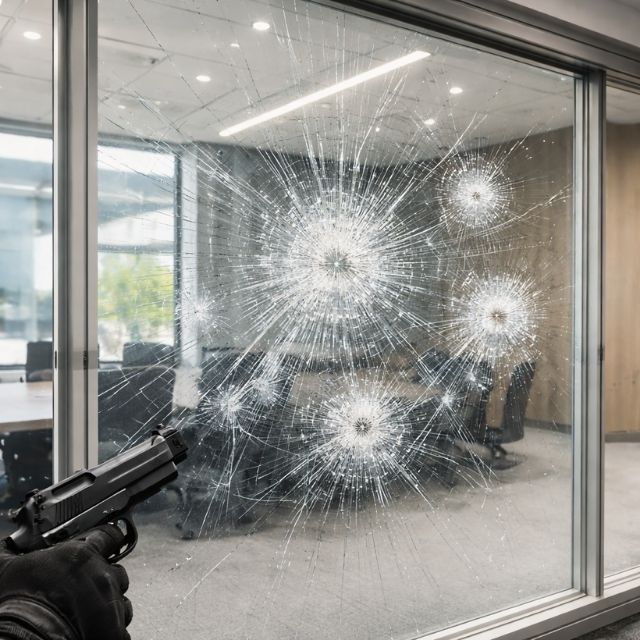
First, it retains glass fragments on impact. When standard glass breaks under a blunt strike, thrown object, or blast pressure wave, it sends shards across a wide area at high velocity. Film-laminated glass fractures but stays bonded to the polyester substrate, dramatically reducing secondary fragmentation injury.
Second, it delays forced entry. A single-pane window without film can be breached in under 10 seconds with a basic hand tool. A properly specified and installed security laminate on the same glass extends that breach time to 60 seconds or more, depending on film thickness and the attachment system used. In an active threat scenario, those seconds matter operationally.
Third, it creates a deterrence effect. Opportunistic actors targeting smash-and-grab retail theft or quick-entry burglary seek paths of least resistance. Glass that visibly resists the first strike redirects that behavior.
None of these capabilities require replacing the glass. That is the actual value proposition, and it is substantial on its own terms.
Setting the Right Evaluation Frame Before You Spec a Single Opening
Before you assess any product, establish what threat you are mitigating at each opening category. A school’s main entrance vestibule, a classroom window on the second floor, and a retail storefront facing a parking lot each carry a different risk profile and warrant a different response.
The evaluation frame should answer three questions: What is the realistic threat at this opening? What delay time or protection level addresses that threat? What is the cost-versus-risk tradeoff at this specific location? A tiered approach, not a uniform solution applied across every pane of glass in the building, is what produces both a defensible spec and a defensible budget.
How Security Window Film Actually Works: The Science Behind the Protection
The Lamination Principle: How Interlayer Adhesion Keeps Glass Intact Under Impact
Security window film is a multi-layer polyester laminate, typically between 4 and 14 mil thick, bonded to the interior surface of existing glass using a pressure-sensitive adhesive. The adhesive layer is the critical variable. It creates a molecular bond between the film and the glass surface that resists separation under impact load.
When glass fractures, it does so along stress fracture lines radiating outward from the point of impact. Without film, those fragments immediately separate and become projectiles. With film, the adhesive bond holds the fractured glass together against the polyester substrate, converting a shattering pane into a cracked but cohesive panel. The glass is broken. It is not scattered.
Higher-grade security laminates add multiple polyester layers with intermediate adhesive bonds between them, increasing both tensile strength and tear resistance. This is what allows thicker-gauge films to withstand repeated strikes before the panel is fully breached.
Threat Response Mechanics: What Happens in a Forced-Entry or Active Threat Event
In a forced-entry scenario, an attacker targeting a glass panel typically uses a blunt instrument to fracture the glass and then clears the opening by pulling or pushing the broken pane through the frame. Security film interrupts the second step. The glass fractures on the first or second strike, but the laminated panel stays in the frame. The attacker must now either continue striking to tear the film or attempt to pull the intact-but-fractured panel through, both of which require sustained physical effort and elapsed time.
In an active shooter scenario, standard glass offers no meaningful delay. A rifle butt or firearm creates an immediate breach point. Security film at the heavy-duty or ballistic-grade tier will not stop the round, but it will maintain the panel’s structural integrity longer after a strike, slowing manual entry attempts that often follow an initial breach.
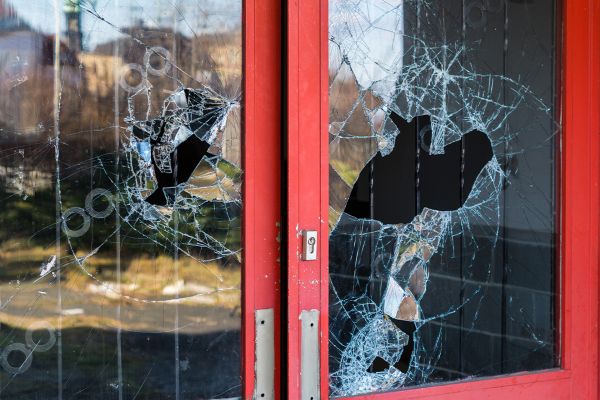
The film’s role in this context is to buy time for lockdown protocols, law enforcement response, or occupant evacuation, not to stop the threat directly.
Is Window Film Actually Bulletproof, and What Does It Actually Stop?
No standard security window film stops a bullet. A 9mm round traveling at 1,200 feet per second delivers kinetic energy that no polyester laminate alone can absorb. True bullet-resistant glazing uses multiple layers of laminated glass, polycarbonate interlayers, or acrylic composites, with 1 to 3 inches of total thickness.
What security film stops or meaningfully mitigates:
- Glass fragmentation from impact, blast overpressure, or seismic events
- Smash-and-grab breaches against tempered or annealed glass
- Forced-entry attempts with hand tools at typical residential or light commercial threat levels
- Secondary injury from glass scatter in explosion or severe weather events
Multi-layer ballistic film configurations, when combined with specific glazing substrates and anchoring systems, can achieve rated blast resistance and limited ballistic resistance in specialized applications. These are distinct, engineered systems, not standard film products applied to existing glass.
The Role of Mil Thickness: What the Numbers Mean for Real-World Threat Scenarios
Mil thickness is the starting point for product selection, not the final answer. A 4-mil film and a 14-mil film are both called “security film,” but their performance under load differs substantially.
Entry-Level Safety Film (4 to 8 Mil): Fragmentation and Smash-and-Grab Applications
Films in this range provide fragmentation retention and modest impact resistance. They are appropriate for interior glazing, skylights, and perimeter windows where the primary risk is glass scatter from an accidental impact, seismic event, or opportunistic smash-and-grab attempt. They add meaningful breach delay against an untrained attacker with a basic tool.
Heavy-Duty Security Laminate (12 to 14 Mil): Forced-Entry Deterrence and Extended Delay
At 12 to 14 mil, the film transitions from fragmentation control to genuine forced-entry deterrence. 3M Scotchshield Ultra series products are the reference products in this tier. These films extend breach time significantly. Independent testing under ASTM F1233 protocols shows resistance to multiple strikes from common break-in tools before panel failure. For school entry vestibules, lobby glazing, and ground-floor retail perimeters, this is the functional specification tier.
Ballistic-Grade Film (Multi-Layer Configurations): Blast Mitigation and Active Threat Contexts
Multi-layer configurations combining 14-plus mil film with polycarbonate interlayers and structural attachment systems move into blast mitigation and limited ballistic resistance territory. These systems are specified against GSA and Department of Defense blast standards and are relevant for government facilities, critical infrastructure, and high-value commercial targets. They require full glazing system engineering, not simply a film product selection.
What Certification and Testing Standards to Require on a Spec Sheet
A product data sheet with no third-party test references is not a security specification. Before any film is written into an institutional spec, the supporting documentation should cite verifiable testing against recognized standards.
ASTM F1233: The Baseline Requirement
ASTM F1233 is the standard test method for security glazing materials and systems. It evaluates resistance to forced entry using a defined series of attacks, including pick-resistant tools and sledgehammers, and assigns a classification based on how long the glazed assembly holds before a passable opening is created. For institutional applications, F1233 Class A or B compliance should be the minimum threshold for any film spec’d at primary entry points.
GSA Standards for High-Security Institutional Facilities
The General Services Administration’s security standards, specifically GSA-TS01-2003 for blast-resistant glazing, apply to federal facilities but are widely referenced in high-security commercial and educational applications as a performance benchmark. If you are spec’ing for a facility with a credible blast threat or a government-adjacent client, GSA compliance provides a more rigorous baseline than ASTM F1233 alone.
UL Listing and Ballistic Ratings: When These Apply and When They Don’t
UL 752 is the standard for bullet-resisting equipment and applies to glazing assemblies, not film products in isolation. A film product that claims UL 752 compliance is making that claim as part of a tested system, covering the specific film, specific glass substrate, and specific frame attachment, not as a standalone material property. When a vendor references UL ratings for a film product, require the full system test documentation. If they cannot produce it, the rating does not apply to your installation configuration.
Security Window Film vs. Bullet-Resistant Glass: A Decision Framework for Every Opening
The Difference Between Ballistic Film, Impact-Resistant Film, and Bullet-Resistant Glazing
These three terms describe fundamentally different products with different performance ceilings, and conflating them in a spec document creates real procurement risk.
Impact-resistant film is the broadest category. It includes everything from 4-mil safety film that contains glass fragments during a hurricane to 14-mil security laminates that resist forced entry with hand tools. The term describes what the product does at the glass surface. It does not imply ballistic capability.
Ballistic film is a narrower, often misused term. In practice, it refers to multi-layer film configurations, sometimes combined with polycarbonate interlayers, that are engineered and tested as part of a complete glazing assembly against specific threat levels. The film alone is not the ballistic element. The system is. When a vendor describes their product as “ballistic film,” require the full system test documentation before accepting that claim at face value.
Bullet-resistant glazing is a different product category entirely. These are laminated glass assemblies, typically 1 to 3 inches thick, using glass-clad polycarbonate or multiple glass plies with PVB or ionoplast interlayers. They carry UL 752 ratings at specific protection levels (Levels 1 through 8, corresponding to handgun through high-powered rifle threats). They cost $150 to $600 per square foot installed and require full frame replacement. Rounds are not stopped by them. Security window film does not.
Can Ballistic Window Film Be Installed on Existing Windows, or Does the Glass Need Replacement?
Standard security window film, including heavy-duty 12-to-14-mil laminates, installs directly on existing glass in most configurations. No glass replacement is required. This is the primary cost and scheduling advantage over bullet-resistant glazing, and it is the reason film is the practical choice for retrofitting large institutional buildings where replacing hundreds of window units would create months of disruption and capital expenditure measured in millions.
The exceptions matter. Certain high-performance film systems require compatible glass substrates, and some films are not recommended for use on existing insulated glass units without accounting for solar heat gain and seal warranty implications. A qualified installer will assess existing glazing type before specifying the film product. The more significant variable is the attachment system. Film applied without a structural edge-to-frame bond transfers impact load to the adhesive layer alone, which limits the system’s forced-entry resistance. Proper installation on primary security openings requires edge attachment or a mechanical anchoring system that connects the film to the frame.
Need More Info?
The Window Film Depot team is happy to help.
Security Window Film vs. Bullet-Resistant Glazing: Key Decision Criteria
| Criterion | Security Window Film (12 to 14 Mil) | Bullet-Resistant Glazing (UL 752) |
|---|---|---|
| Cost per sq ft installed | $15 to $25 | $150 to $600 |
| 500 sq ft opening budget | $7,500 to $12,500 | $75,000 to $300,000 |
| Retrofit to existing glass | Yes, in most configurations | No, full frame replacement required |
| Project disruption | Low, most installations complete within 1 to 2 days per site | High, structural work, frame removal, extended lead times |
| Stops ballistic rounds | No | Yes, at rated UL 752 protection level |
| Forced-entry delay | 60-plus seconds under ASTM F1233 | Significantly higher, varies by rating |
| Blast mitigation | Yes, with proper attachment system | Yes, engineered to GSA/DoD standards |
| Glass fragmentation control | Yes | Yes |
| Visible light transmission | Typically 85 to 92% (clear films) | Slight reduction, varies by ply count |
| Aesthetics | Nearly invisible | Visible thickness, minor distortion possible |
| Maintenance | Periodic cleaning, no special requirements | Periodic inspection, edge seal integrity checks |
| Warranty | Manufacturer plus installer (requires certified install) | Manufacturer, varies by assembly |
| Replacement protocol | Film replacement without glass removal | Full unit replacement |
Cost Per Square Foot and Total Project Budget Implications
The cost differential between these two approaches does not close at scale. On a large institutional building with significant perimeter glazing, the gap between a film retrofit and a full glazing replacement is measured in millions. For most school districts and commercial property owners, bullet-resistant glazing is financially feasible only at the highest-priority openings, such as primary entry vestibules, administrative windows, and specific chokepoints. Security window film is the viable solution for the remaining majority of the glazed envelope.
Retrofit Compatibility vs. Full Glazing Replacement Requirements
Film’s retrofit compatibility means a security upgrade can move from contract to completion in weeks rather than the months required for glazing replacement projects. For a facility manager responding to a board mandate or a post-incident directive with a compressed timeline, that scheduling reality often drives the decision as much as budget.
Protection Level by Threat Scenario
Neither product is universally superior. The right answer depends on what you are protecting against at each opening. Bullet-resistant glazing is the appropriate specification where a credible, sustained ballistic threat exists at a specific location. Security window film is the appropriate specification where the threat is forced entry, smash-and-grab, blast overpressure, or glass fragmentation injury. Most institutional facilities face the latter category at the majority of their openings.
Aesthetics, Visible Light Transmission, and Occupant Experience
Clear security films at 12 to 14 mil are nearly invisible after installation. Visible light transmission typically stays above 85 percent, which preserves daylighting in classrooms and lobbies. Bullet-resistant glazing assemblies introduce visible thickness and, depending on the product, slight optical distortion. For schools and commercial buildings where daylighting, visibility, and occupant experience are design requirements, film delivers the better aesthetic outcome.
Long-Term Maintenance, Warranty, and Replacement Protocol
Film requires periodic cleaning with non-abrasive products and visual inspection for edge lifting or adhesive degradation, both low-cost, low-effort maintenance tasks. If a pane is damaged, the film can be removed and replaced without disturbing the glass or frame. Bullet-resistant glazing units require full unit replacement when compromised, at full installed cost. For large-building owners managing ongoing maintenance budgets, the lifecycle cost difference is significant.
Choosing the Right Solution for Each Opening Type: A Tiered Approach for Institutional Buildings
The practical spec decision for most institutional buildings is not film versus glazing. It is which openings warrant glazing and which openings get film at what thickness tier. A tiered approach maps product selection to threat profile by opening category:
- Primary entry vestibules and reception windows at high-risk facilities: evaluate bullet-resistant glazing or maximum-rated film-plus-attachment systems
- Ground-floor perimeter windows, side entry doors, and corridor glazing: 12 to 14 mil security laminate with structural edge attachment
- Upper-floor classroom windows, interior glazing, and low-traffic zones: 4 to 8 mil safety film for fragmentation control and basic impact resistance
- Skylights and decorative glass: safety film as a fragmentation mitigation measure
This tiered approach produces a defensible budget and a defensible specification. Every opening gets a specified protection level with a documented rationale, which is exactly what you need when a liability question arises after an incident.
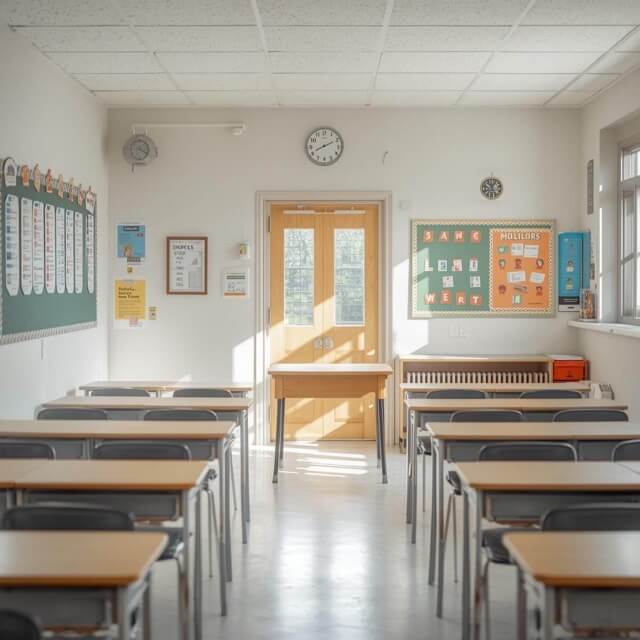
Specifying the Right Protection Level for Schools, Commercial Properties, and Retail Deployments
The Product Tier Decision Framework: Matching Threat Profile to Opening Category
The most common spec error in institutional security film projects is applying a single product tier across all openings in a building regardless of their actual risk profile. The result is either overspending on low-risk panes or underprotecting the openings that matter most. The tier decision should start with the threat assessment, not the product catalog.
Schools and K-12 Educational Facilities: Entry Points, Classroom Glazing, and Administrative Zones
School entry vestibules are the highest-priority opening category in most K-12 facilities. A credible forced-entry or active threat scenario almost always begins at the primary entry point. These openings warrant maximum film thickness, specifically 12 to 14 mil with structural edge attachment, and should be evaluated against ASTM F1233 Class B compliance as a minimum. Sidelight panels adjacent to entry doors are frequently overlooked and should be specified at the same tier as the door glazing itself.
Classroom windows on upper floors carry a different risk profile. The primary threats are glass scatter from accidental impact or severe weather, not forced entry from outside. A 4 to 8 mil safety film is appropriate here. Administrative zone windows, particularly those adjacent to reception areas or counselor offices with public access, should be assessed individually, with the access control configuration factoring into the spec decision.
Commercial Office Buildings: Lobbies, Perimeter Glass, and High-Traffic Corridors
Lobby glazing in commercial office buildings carries both a security and a liability risk profile. Large glass panels in high-traffic areas create fragmentation injury exposure from accidents, not just security events. A 12-mil security laminate on lobby and ground-floor perimeter glass addresses both risks simultaneously. Interior corridor glazing and conference room partitions typically warrant 4 to 8 mil safety film for fragmentation control only.
Retail Environments: Smash-and-Grab Deterrence vs. Active Threat Mitigation
Retail has a specific, well-documented threat profile: organized smash-and-grab targeting display cases and storefront glass.
The appropriate response is a 12 to 14 mil security laminate on exterior storefront glazing, with particular attention to glass adjacent to high-value merchandise displays.
Active threat mitigation at retail is a secondary consideration for most deployments and is typically addressed through access control and response protocol rather than film specification alone.

3M Safety Series and Scotchshield: Understanding Product Line Specifications and Where Each Applies
3M’s security film product lines cover the full specification range, and understanding where each fits prevents both over-speccing and under-speccing.
The 3M Safety Series (S40, S70, S80) covers the 4 to 8 mil fragmentation and safety tier. These products are appropriate for interior glazing, upper-floor classroom windows, and any opening where the primary risk is glass scatter rather than forced entry.
3M Scotchshield Ultra series products are the heavy-duty security tier at 12-plus mil. These carry ASTM F1233 test data and are the appropriate specification for primary entry points, ground-floor perimeter glazing, and any opening in the forced-entry deterrence category. The Scotchshield Ultra 800 is 3M’s most robust standard security laminate and serves as the reference product for institutional security applications where both blast and forced-entry performance are relevant.
For applications requiring blast-rated or government-grade performance, 3M Scotchshield Safety and Security Series products used in conjunction with structural attachment systems and engineered glazing assemblies can meet GSA blast standards. These specifications require a full system design, not simply a film product selection.
What Certification or Testing Standards to Look For When Specifying Window Film for Security
Three standards should appear on any spec sheet for institutional security film. ASTM F1233 for forced-entry resistance at primary entry points. ANSI Z97.1 or CPSC 16 CFR 1201 for safety glazing compliance across all occupied areas. For blast-relevant applications, GSA-TS01 or ASTM F1642 for blast mitigation performance.
A product data sheet that references only the manufacturer’s internal testing without third-party verification is not sufficient for institutional procurement. Require independent test reports, not just standard citations. Require confirmation that the tested configuration, covering the specific film product, specific glass substrate, and specific attachment method, matches your installation specification. Test data for a different configuration does not validate your spec.
Liability Exposure: What Happens If You Spec the Wrong Protection Level
The liability question is not hypothetical for architects and facility managers who have faced post-incident review. The exposure is specific. If a security event occurs and the investigation reveals that the specified product was not appropriate for the threat profile at that opening, or that the product was not installed to the tested configuration, the documentation trail becomes the primary defense.
The Documentation Trail That Protects Architects, GCs, and District Administrators
The protective documentation for a security film project consists of four elements: the threat assessment that informed the spec, the product data sheets and third-party test reports for the specified product, the installation scope of work confirming installation to the tested configuration, and the post-installation inspection report confirming compliance. Each of these needs to exist as a dated, retained document, not as an email thread. For school district administrators in particular, this documentation is the difference between a defensible procurement decision and an indefensible one.
How Certified Installer Status Affects Warranty Validity and Post-Incident Legal Standing
3M’s manufacturer warranty on Scotchshield and Safety Series products is conditioned on installation by a 3M Authorized Dealer. That certification requirement exists because installation quality directly affects product performance. An improperly installed film, particularly one without proper edge attachment, will not perform to the tested specification. In a post-incident legal context, a warranty voided by non-certified installation is a documented indication that the installation did not meet the manufacturer’s performance standard. For every institutional project, certified installer status is a procurement requirement, not a preference.
Integrating Security Window Film Into a Layered Institutional Security Infrastructure
Window Film as One Layer, Not the Whole Solution
Security window film addresses one specific vulnerability: glass as a rapid-breach pathway. It does not address access control failures, alarm response latency, visitor management gaps, or interior circulation vulnerabilities. A facility that installs 14-mil security laminate at every entry point but has no electronic access control and a long law enforcement response time has not solved its security problem. It has slowed the entry timeline while leaving the broader response infrastructure unchanged.
The correct frame for film in an institutional security context is as a delay mechanism within a layered system. Film buys time. Access control channels and monitors entry. Alarm systems detect and communicate. Response protocols define what happens in those gained seconds. Each layer depends on the others to be effective.
How Film Integrates With Access Control, Alarm Systems, and Security Response Protocols
The integration is operational, not technical. Security window film does not connect to an alarm panel. Its contribution to the security system is the time it adds between a breach attempt and a successful entry, typically 60 seconds or more at the heavy-duty tier, which must be matched to the response capability of the facility.
If your alarm-to-response window is 4 minutes, a film system that delays entry by 90 seconds is a meaningful contribution. If your response time is significantly longer and your film delay is only 60 seconds, the film specification alone will not close the gap. The security assessment that drives the film spec must also determine whether the response infrastructure matches the delay time the film is designed to provide. Make these decisions together.
Framing and Anchoring Systems: Why the Film-to-Frame Connection Is a Critical Spec Variable
Film applied to glass without a structural connection to the frame will peel away from the opening under sustained impact load, even if the film itself remains intact. The glass panel held together by the laminate can be pushed or pulled through the frame as a single unit, defeating the delay effect the film is designed to provide.
Structural attachment systems, also called anchoring or daylight installation with wet-glazed edge seals, bond the film’s edge to the frame, transferring impact load from the film to the frame structure rather than to the adhesive layer alone. For any opening specified at the heavy-duty or security tier, the anchoring system is not an optional upgrade. It is part of the tested configuration that produces the documented delay times. A film spec that omits the attachment system is an incomplete spec.
How a Layered Security Spec Looks Across a School Campus or Multi-Tenant Commercial Building
A complete layered security specification for a school campus works from the perimeter inward and from the highest-priority opening categories down.
Primary entry vestibule glazing and sidelights: 12 to 14 mil Scotchshield Ultra with structural edge attachment, specified to ASTM F1233 Class B, integrated with electronic access control and visitor management.
Ground-floor classroom and corridor windows: 12-mil security laminate with edge seal, providing forced-entry delay and fragmentation control across all occupied rooms accessible from grade.
Upper-floor and interior glazing: 4 to 8 mil Safety Series film for fragmentation control, applied as a building-wide safety measure.
Access control at all entry points with monitored alarm integration and a documented lockdown protocol for staff. Response time assessment with local law enforcement to confirm that the delay intervals provided by the film specification are actionable within the facility’s response capability.
For a multi-tenant commercial building, the same logic applies at a per-tenant and per-zone level. Lobby and ground-floor common areas at the security tier, individual tenant suites assessed based on occupancy type and access control configuration. The film specification is one layer of a documented system, and every component of that system should be explicitly specified, installed to standard, and documented at project closeout.
What Large-Scale Institutional Installations Actually Require: Timelines, Coordination, and Vendor Accountability
How Long Does Security Window Film Installation Take, and How Much Downtime Should a Facility Expect?
A single-story school building with 80 to 120 windows typically completes installation in two to four days with an experienced crew. A multi-story commercial building with 300-plus openings runs one to two weeks. These timelines assume the team completed the pre-site assessment, staged the product before mobilization, and works full days without access interruptions.
The facility downtime question matters more than the total timeline. Film installation uses a wet process that requires water to activate the adhesive, and each installed pane needs a 24 to 72 hour cure window before anyone cleans or disturbs it. In practice, rooms and corridors remain accessible immediately after installation. The restriction applies to cleaning staff and anyone applying pressure to the glass surface during the cure period. For occupied schools and commercial buildings, installation phasing by wing or floor keeps the facility operational throughout the project.
The variable that most often extends timelines is site access coordination: elevator scheduling in multi-story buildings, classroom access windows in occupied schools, and after-hours requirements at retail locations. A competent project manager prices and schedules around these constraints before the crew mobilizes, not during.
Can a Single Vendor Handle a Multi-Building Rollout, or Do You Need Local Installers at Each Site?
A single vendor with a national certified installer network can manage a multi-building rollout under one contract, one specification standard, and one project manager. This is the operationally preferable model for district-wide school deployments or multi-location retail chains, because it eliminates the quality variance that comes from coordinating separate local subcontractors in each market.
The practical test for any vendor making this claim is whether they can demonstrate a documented crew deployment process, not just a list of affiliated installers. Ask for a reference project involving five or more locations. Find out how quality control is handled when the primary project manager is not on-site. Also ask whether the same product specification and installation standard applies at every location or whether local installers substitute equivalent products. These questions separate vendors with genuine multi-site capability from those who will assemble a patchwork of local subcontractors under a single contract.
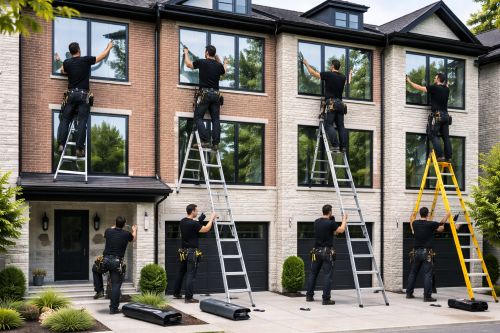
Multi-Site Rollout Logistics: How to Spec and Execute Across 10 or More Locations Without Coordination Overhead
The coordination overhead in a 10-plus-location rollout almost always comes from one source: specification drift. When teams assess each site independently, local installers make product substitutions, choose inconsistent attachment systems, and submit closeout documentation that reflects 10 slightly different projects instead of one standardized deployment.
The fix is a master specification developed before site assessments begin. The master spec defines the product tier for each opening category, the attachment system requirements for primary security openings, the testing standard references, and the closeout documentation requirements. Each site assessment then becomes a scope confirmation against the master spec, not an independent design decision.
Execution across 10 or more sites also requires a phased mobilization schedule that accounts for material lead times, site access windows, and inspection sequencing. Products should ship to a regional staging point rather than directly to each site, so the project manager controls inventory and substitution risk. Conduct the final inspection at each site using a standardized checklist tied to the master spec and require the certified installer and facility representative to sign off before closing the project.
Why 3M Certified Installer Status Is a Procurement Risk-Reduction Factor, Not a Marketing Claim
The 3M Authorized Dealer certification carries a specific procurement implication: the manufacturer warranty on Scotchshield and Safety Series products is only valid when installed by a certified dealer. That is not a marketing preference. It is the warranty condition printed on the product documentation.
In a post-incident context, the warranty status of the installation becomes evidentiary. An installation performed by a non-certified installer, even if the product is genuine 3M film, produces a warranty-voided result that does not meet the manufacturer’s stated performance standard. For any institutional buyer, particularly a school district or government-adjacent facility, that gap between installed product and warranted performance is a documented liability exposure.
Certified installer status also signals training compliance with the manufacturer’s installation protocols. 3M’s edge attachment requirements, substrate compatibility guidelines, and cure process standards are part of the certification training. A certified installer knows when a substrate requires a primer, when an insulated glass unit seal warranty conflicts with a film application, and when an anchoring system is required versus optional. These are judgment calls that directly affect whether the installed system performs to the tested specification.
Compliance Documentation and Project Closeout: What an Institutional Buyer Should Require at Handoff
Project closeout for an institutional security window film installation is not complete without four deliverables: the as-built installation record confirming which product was installed at each opening, the manufacturer warranty documentation registered to the facility, the third-party test reports for the installed product configuration, and the installer’s certification documentation.
These four documents function as the defensible record of the deployment. If a security event occurs at an opening that was specified and installed at the appropriate tier, this documentation demonstrates that the procurement decision was informed, the product was appropriate for the threat profile, and the installation met the manufacturer’s performance standard. Without this record, the decision exists only as an email thread and a purchase order, which is not a defensible position in a post-incident review.
Require these documents as a contractual deliverable before final payment is released, not as a follow-up request after the crew has demobilized.
Building the Business Case: ROI, Liability Reduction, and How to Present This Decision Upward
How Much Does Security Window Film Cost Per Window, and What Drives Total Project Cost?
For a standard 36-by-60-inch window, a 12-to-14-mil security laminate installation runs between $75 and $180 per opening including labor, depending on film tier, site location, and attachment system requirements. Lobby glazing and oversized panels cost more per square foot due to handling complexity. Structural edge attachment adds cost at primary security openings but is not required at every pane.
Total project cost for a K-12 school with several hundred windows varies considerably depending on the product mix across tiers, site conditions, and access requirements. A tiered specification, rather than uniform application of the highest-grade product across all openings, is where most projects find the most defensible balance between protection and budget.
The factors that push projects toward the higher end of the cost range:
- A high proportion of primary security openings requiring structural attachment
- Difficult access conditions such as multi-story buildings, occupied facilities, or after-hours requirements
- Irregular or oversized glazing units requiring custom film cutting and fitting
- Accelerated timeline requirements that necessitate larger crews
Quantifying Risk Reduction: Liability, Insurance, and the Cost of an Under-Specified Deployment
The cost comparison that matters most to a school district administrator or property owner is not film versus glazing. It is the cost of a security upgrade versus the cost of a security failure.
A single premises liability claim arising from a glass fragmentation injury in an unprotected lobby can easily exceed the total cost of a building-wide film deployment. Insurance carriers for educational and commercial properties increasingly treat documented security upgrades as underwriting factors, and some have begun offering premium considerations for facilities with certified security film installations at primary entry points.
The under-specification risk is specific. If an incident occurs at an opening included in a security assessment but specified at an inadequate tier, the assessment documentation shows that you knew the risk and provided an insufficient response. Deferring a modest per-opening upgrade becomes a material fact in a liability proceeding. Framing the investment against that exposure converts the project from a capital expenditure to a risk mitigation measure with a quantifiable floor.
How to Frame the Investment for School District Administrators, Property Owners, and Retail Operations Leadership
Each buyer audience has a different decision filter, and the framing that works for one will not land with another.
For school district administrators, the framing is regulatory and duty-of-care. Most states now have active-threat preparedness requirements or guidelines for K-12 facilities. A documented, tiered security glazing deployment with certified installation and retained compliance documentation directly supports those obligations. The conversation is not about buying film. It is about demonstrating that the district exercised reasonable care in identifying and addressing a known vulnerability.
For commercial property owners, the frame is asset protection and liability management. Security film reduces the cost and frequency of glass replacement after forced-entry events, reduces insurance exposure from fragmentation injuries, and extends the useful life of existing glazing units. The ROI is measurable against both the claims history of the property and the cost of alternative security infrastructure.
For retail operations leadership, the smash-and-grab data closes the case. Organized retail crime represents a significant and growing cost, and storefront glass is the primary entry vector for the most aggressive incidents. A 12-to-14-mil security laminate on storefront glazing increases breach time enough to deter opportunistic attacks and reduce the probability of a completed theft event. The investment pays back against a single prevented incident at most mid-size retail locations.
Matching Facility Type and Threat Profile to Film Tier: A Quick-Reference Guide
| Facility Type | Primary Threat | Recommended Film Tier | First Step |
|---|---|---|---|
| K-12 school (entry vestibule) | Forced entry, active threat | 12 to 14 mil plus structural attachment, ASTM F1233 Class B | Site assessment with certified installer |
| K-12 school (classrooms) | Fragmentation, weather | 4 to 8 mil safety film | Bundled scope with entry-point project |
| Commercial lobby/ground floor | Forced entry, fragmentation injury | 12 mil security laminate | Opening-category audit across building |
| Retail storefront | Smash-and-grab | 12 to 14 mil security laminate | Threat assessment by location risk tier |
| Multi-site portfolio (10-plus locations) | Varies by location | Master spec, tiered by opening category | Master spec development before site assessments |
| Government/high-security facility | Blast, forced entry | GSA-rated system with anchoring | Full system engineering consultation |
From Terminology Confusion to a Specification You Can Defend
What Security Window Film Does, and the Precise Limits of What It Doesn’t
Security window film retains fractured glass, delays forced entry and reduces fragmentation injury. It does not stop a bullet. Those two facts coexist without contradiction, and keeping both in view is what allows you to evaluate the technology accurately and spec it appropriately.
The search term “bullet proof film for windows” will continue to drive buyers toward a performance question the product was never designed to answer. Your job as the specifier is to redirect that question toward the threats the product actually addresses and to build a specification that documents that decision clearly enough to survive scrutiny.
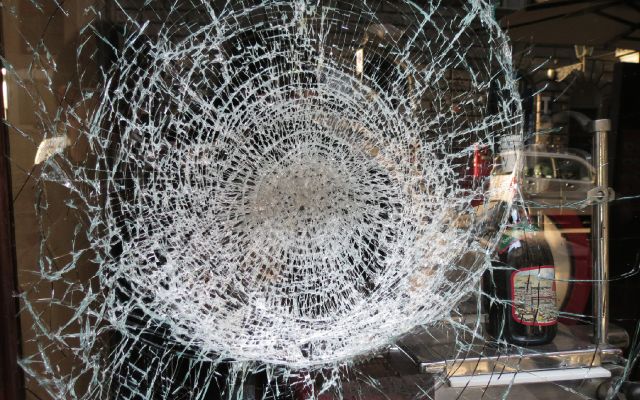
The Single Most Consequential Decision in Any Institutional Security Glazing Project
The decision that most often determines whether a security film project succeeds or fails is not product selection. It depends on whether you engage a qualified, certified installer to assess, specify, and install the system to the manufacturer’s tested configuration. A correctly selected product installed without edge attachment, applied to an incompatible substrate, or missing from a critical opening category does not perform to spec. The product data sheet becomes irrelevant if the installation deviates from the tested configuration it references.
Certified installer engagement is the single decision that most directly determines whether the deployed system performs as specified, carries a valid warranty, and withstands post-incident documentation review.
How Window Film Depot’s Certified Network and National Project Management Capability Reduces Your Exposure at Every Stage
Window Film Depot operates a national network of 3M Authorized Dealers with the project management infrastructure to execute multi-site institutional deployments under a single contract, a single specification standard, and a documented closeout process. That capability eliminates the coordination risk that comes from assembling local subcontractors market by market, and it means the warranty documentation, installation records, and compliance reports you need at project closeout are part of the standard deliverable, not a follow-up request.
For facility managers and construction managers who need to move from evaluation to execution quickly and document every decision along the way, that combination of certified installation and centralized project accountability is the risk-reduction mechanism the project requires.
Your Next Step: Moving From Evaluation to a Documented, Defensible Deployment Plan
A defensible deployment starts with a site assessment, not a product selection. The assessment establishes the threat profile for each opening category, maps it to the appropriate product tier, identifies substrate or attachment system requirements, and produces a scope of work you can review, approve, and retain as the basis for the project.
Contact Window Film Depot to schedule a site assessment with a certified installer in your region. If you are managing a multi-site portfolio, ask specifically about master specification development before individual site assessments begin. That sequence is what keeps a 10-or-20-location rollout coherent from specification through closeout.
Frequently Asked Questions
Is window film actually bulletproof, and what does it actually stop?
No window film on the market is bulletproof. The accurate product category is security window film or ballistic-grade security laminate, and what it does well is retain glass fragments on impact, delay forced entry by 60 seconds or more at the heavy-duty tier, and reduce secondary injury from glass scatter during blast or severe weather events. It does not stop a ballistic round. True bullet-resistant glazing is an entirely different product category, using laminated glass assemblies 1 to 3 inches thick with UL 752 ratings, and it carries a corresponding cost of $150 to $600 per square foot installed.
What is the difference between ballistic film, impact-resistant film, and bullet-resistant glazing?
Impact-resistant film is the broadest term and covers everything from 4-mil safety film to 14-mil security laminates that resist forced entry with hand tools. Ballistic film refers to multi-layer configurations engineered and tested as part of a complete glazing assembly, not as a standalone product. Bullet-resistant glazing is a separate product category entirely, using laminated glass and polycarbonate composites that carry rated ballistic protection levels. Conflating these terms in a spec document creates real procurement risk, so it is worth verifying exactly which system a vendor is describing and requesting the full tested-system documentation before accepting any ballistic claim.
How much does security window film cost per window, and what is the total project cost for a school or commercial building?
A standard 36-by-60-inch window with a 12-to-14-mil security laminate typically runs between $75 and $180 per opening installed, depending on film tier, attachment system requirements, and site conditions. Total project cost varies based on the number of openings, the product mix across tiers, and access complexity. A tiered specification that matches film grade to threat level at each opening category generally delivers the most defensible balance between protection and budget. Requesting a site assessment before finalizing a budget figure is the most reliable way to produce an accurate project estimate.
Can security window film be installed on existing windows, or does the glass need to be replaced?
In most configurations, security window film installs directly on existing glass with no glass replacement required. This retrofit compatibility provides the primary cost and scheduling advantage over bullet-resistant glazing. The exceptions involve certain high-performance film systems that have substrate compatibility requirements or insulated glass unit seal warranty implications, which a qualified installer will assess before specifying the product. The more significant installation variable is the attachment system: film at primary security openings requires structural edge attachment to the frame to perform to its tested delay specification.
What certification or testing standard should I look for when specifying window film for security?
Three standards should appear on any institutional security film spec sheet. ASTM F1233 for forced-entry resistance, with Class A or B compliance as the minimum threshold at primary entry points. ANSI Z97.1 or CPSC 16 CFR 1201 for safety glazing compliance across occupied areas. For blast-relevant applications, GSA-TS01 or ASTM F1642 for blast mitigation performance. Require independent third-party test reports, not just standard citations, and confirm that the tested configuration matches your specific installation, including film product, glass substrate, and attachment method.
What is the liability exposure if I spec the wrong protection level and a security event occurs?
If a security event occurs at an opening you assessed but specified at an inadequate protection tier, the assessment documentation shows that you identified the risk and provided an insufficient response. The protective record consists of four elements: the threat assessment, the product data sheets and third-party test reports, the installation scope of work confirming the tested configuration, and the post-installation inspection report. Without that retained documentation, the spec decision is difficult to defend in a post-incident review. For school district administrators and commercial property owners, requiring these documents as a contractual closeout deliverable is the most direct way to reduce that exposure.
How long does security window film installation take, and how much downtime should a facility expect?
A single-story school building with 80 to 120 windows typically completes in two to four days with an experienced crew. A multi-story commercial building with 300-plus openings runs one to two weeks. Rooms and corridors remain accessible immediately after installation. The primary restriction is avoiding cleaning or pressure on the glass surface during the 24-to-72-hour cure period. Phasing installation by wing or floor keeps occupied facilities operational throughout the project. The variable that most often extends timelines is site access coordination, which a competent project manager accounts for in scheduling before the crew mobilizes.
Can a single vendor handle a multi-building rollout, or do you need local installers at each site?
A single vendor with a national certified installer network can manage a multi-building rollout under one contract, one specification standard, and one project manager, which is the operationally preferable model for district-wide school deployments or multi-location retail chains. The practical test is whether the vendor can demonstrate a documented crew deployment process and a reference project involving five or more locations. Ask specifically how the team maintains quality control when the primary project manager is off-site, and whether they apply the same product specification at every location. Those questions separate vendors with genuine multi-site capability from those who will coordinate a patchwork of local subcontractors under a single contract.