Table of Contents:
- Defining the Standards: What Qualifies as Security Glazing?
- Evaluating Security Glazing: Performance Metrics That Matter
- The Project Manager’s Dilemma: Cost, Timelines, and Installation Logistics
- The National Rollout Advantage: Why 3M Security Film Excels at Scale
- Conclusion: The Strategic Choice for Building Security
- Frequently Asked Questions
- Related Posts from Window Film Depot
Defining the Standards: What Qualifies as Security Glazing?
Before evaluating specific products, it is critical to understand the language of security glazing. Not all “stronger” glass is created equal, and the terminology can be confusing. Making an informed decision requires a clear grasp of the industry benchmarks and performance characteristics that separate a true security solution from a standard building material. This knowledge is your primary tool for writing an effective scope of work and vetting potential vendors.
Understanding Industry Benchmarks: From ASTM to GSA Blast Standards
What is window glazing? When specifying security window glazing, you are essentially defining the threat you need to mitigate. Independent testing standards provide an objective framework for matching a product’s performance to that threat level. While you don’t need to be a materials scientist, you should be familiar with the key standards that govern security performance.
ASTM International, for instance, publishes standards like ASTM F1233, which outlines test methods for the forced entry resistance of security glazing systems. This involves simulating attacks with tools like hammers and pry bars for specific durations. A product’s rating under this standard gives you a concrete measure of how long it can delay intruders.
For facilities at higher risk of explosive threats, standards from the General Services Administration (GSA) and the Interagency Security Committee (ISC) are the benchmark. These protocols define how a window system must perform during a blast event, focusing on its ability to prevent glass shards from entering a building. Ensuring your solution meets a specific GSA blast standard consistently across a multi-site rollout requires meticulous vendor qualification, as performance depends on both the material and the quality of the installation.
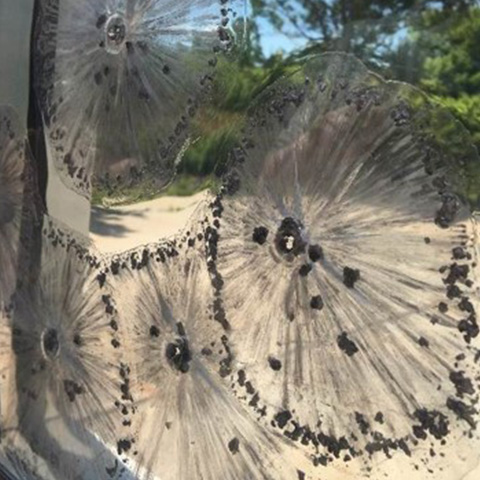
Decoding the security shield means specifying a complete system, not just film, combining tear resistance, proper attachment systems, and certified installation to ensure consistent, tested protection under real-world conditions.
Differentiating Between Safety Glazing and True Security Glazing
One of the most common points of confusion is the difference between safety glazing and security glazing. While they seem similar, their intended purposes are fundamentally different, and specifying the wrong one can lead to a false sense of security and a wasted budget.
Safety glazing, such as tempered or standard laminated glass, meets building codes that protect people from accidental injury. Manufacturers heat-treat tempered glass so it crumbles into small, relatively harmless pebbles upon impact. Basic laminated glass holds together when broken. Both address accidents, not attacks.
Security glazing, on the other hand, withstands intentional, malicious force. Its primary function protects occupants and assets from external threats like forced entry, blast pressure, or severe weather. It does not simply break safely. It maintains a formidable barrier even after the glass itself has failed.
Key Terminology for Project Managers
As you navigate product data sheets and vendor conversations, you will encounter several key performance terms. Understanding their precise meaning is essential for aligning a solution with your project’s security goals.
- Forced Entry Resistance: This measures a glazing system’s ability to withstand a specified level of physical attack for a specific length of time. The goal here is delay. A system with high forced entry resistance provides crucial minutes for occupants to find safety and for law enforcement to respond. It turns a quick “smash and grab” into a prolonged, noisy, and difficult ordeal.
- Anti-Intrusion: Often used with forced entry resistance, anti-intrusion is the primary goal of keeping unauthorized individuals out. A successful anti-intrusion film or system is one that ultimately denies entry, forcing an attacker to give up.
- Glass Fragment Retention: This is arguably the most critical function of any modern security glazing system, especially in a blast scenario. It refers to the system’s ability to hold shattered glass fragments together within the frame. A system with excellent glass fragment retention, like a quality glass fragment retention film, maintains a protective shield, protecting occupants from high-velocity shards and keeping the building envelope sealed.
Evaluating Security Glazing: Performance Metrics That Matter
When evaluating security glazing, the product name, whether laminated glass, polycarbonate, or security window film, is less important than its documented performance characteristics. Specifying the right solution requires moving beyond marketing labels and into the quantifiable data that defines how a product will behave under stress. These metrics are the true measure of a solution’s value.
Measuring Strength: Tensile Strength, Tear Resistance, and Adhesion
The strength of any security glazing solution, particularly window film, can be distilled into three critical technical specifications. Understanding these metrics allows for a more accurate comparison than simply judging by material thickness.
- Tensile Strength: This measures the maximum stress a material can withstand while being pulled or stretched before breaking. In security film, a higher tensile strength means the film is more capable of absorbing the initial shock of an impact.
- Tear Resistance: This is one of the most critical metrics for real-world performance. It measures the film’s ability to resist the propagation of a tear. Once glass shatters, it creates sharp edges. A film with low tear resistance will be “unzipped” by these shards, leading to a rapid breach. Advanced, micro-layered films are engineered to resist this tearing, keeping the broken glass intact as a cohesive barrier.
- Adhesion: This metric defines how strongly the film’s adhesive bonds to the glass surface. A powerful adhesive is vital because the film is only effective if it remains securely attached to the glass fragments. High-performance films use sophisticated, aggressive adhesives that cure over time to form a bond integral to the system’s overall strength.
While laminated glass and polycarbonate have inherent strength, security film uses these three engineered properties to work in concert, turning a standard window into a robust security component.
Forced Entry Resistance: How Each Solution Delays Intrusion
The primary goal in most forced entry scenarios is not to create an impenetrable barrier, but to create a time delay. Every second an intruder is forced to spend at the point of entry increases their exposure and the likelihood of apprehension. This “time to breach” is a critical performance indicator.
The debate of laminated security glass vs film often centers here. Laminated glass holds shards together but can be defeated with repeated, focused impacts. Polycarbonate glazing is exceptionally difficult to break but can be pried from its frame, and its surface mars easily.
Need More Info?
The Window Film Depot team is happy to help.
Security window film, especially when paired with an attachment system, presents a compelling alternative. When a treated window is struck, the glass breaks, but the film holds thousands of sharp pieces together. This creates a flexible, surprisingly strong, and difficult-to-penetrate membrane. An intruder expecting a quick entry encounters a frustrating and time-consuming obstacle. The delay often matches that of traditional laminated glass, yet it avoids the cost, weight, and disruption of replacing the entire window.
Blast Mitigation Film Performance: Analyzing GSA and ASTM Test Data
For projects requiring a higher level of life safety, blast mitigation performance is non-negotiable. This is an area where security window film demonstrates its true engineering pedigree, backed by rigorous, standardized testing.
The two most referenced standards in North America are:
- GSA Test Criteria: The General Services Administration sets performance levels for federal buildings. A high GSA rating indicates a blast mitigation film can prevent glass from becoming a dangerous projectile even under significant explosive loads.
- ASTM F1642: This standard provides a framework for evaluating how the entire window system, the glass, the film, and the frame, responds to a blast event.
Advanced security films, such as 3M’s Ultra Series, are not only tested to these standards but are frequently specified on government and military projects precisely because they meet these demanding criteria. Specifying a film with documented GSA and ASTM performance ratings provides objective, third-party validation that the solution delivers a proven level of protection.
The Technology Behind the Film: Understanding 3M Ultra Series Micro-Layering
The remarkable performance of modern security film is the result of sophisticated materials science. The key innovation that separates advanced films from basic polyester sheets is micro-layering technology, perfected in products like the 3M Ultra Series security window films.
Instead of a single, thick layer, these films are constructed from hundreds of distinct, microscopic layers. This unique structure allows the film to stretch and move, dissipating impact energy across the entire surface. This mechanism allows the film to absorb a tremendous amount of force without tearing. It is this ability to stretch and resist tearing that makes a micro-layered film significantly stronger and more effective at delaying entry and mitigating blast hazards than a standard polyester film of the same thickness.
The Project Manager’s Dilemma: Cost, Timelines, and Installation Logistics
For any security upgrade, a project manager’s evaluation extends far beyond material specifications. The true measure of a solution lies in its total impact on the project’s budget, schedule, and operational continuity. When comparing traditional glazing replacement with security film retrofits, the differences are fundamentally distinct.
Calculating the True Cost of Installation
A simple material quote for laminated glass represents only a fraction of the total installed cost. A full glass replacement is a labor-intensive process involving significant ancillary expenses. Demolition of existing glass, removal of frames, and potential structural modifications require multiple trades. You must account for glaziers, carpenters, and painters, each with their own schedule and cost structure. The logistics of transporting and lifting heavy glass panels often necessitates specialized equipment, adding another layer of cost.
In contrast, a security film retrofit is a model of efficiency. The material cost is significantly lower, and the installation process is streamlined. It is typically performed by a small, specialized team with minimal equipment. There is no demolition, no structural alteration, and no need to coordinate multiple trade schedules. The final invoice for a security film project is remarkably close to the initial quote, providing a level of budget predictability that is difficult to achieve with full-scale replacement.
Minimizing Operational Disruption
Operational downtime is a direct cost to any business. A traditional glazing replacement project can take days or even weeks per location. During this time, work areas must be sealed off to contain dust and debris, creating noise and significant disruption for tenants. The process is inherently invasive.
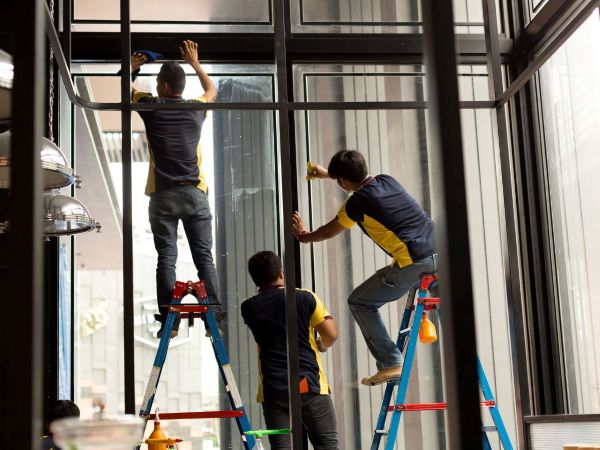
Security film installation presents a starkly different scenario. The process is clean, quiet, and swift. A team of technicians can complete multiple windows in a single day, often working outside of normal business hours to eliminate any impact on operations. Because the film is applied directly to the existing glass, business can continue as usual.
Long-Term Value: Maintenance and Total Cost of Ownership
A project’s success is also measured by its long-term value. Modern security films deliver exceptional durability and a powerful return on investment.
3M security films are engineered with a hard coat for scratch resistance and are warrantied for up to 15 years, aligning perfectly with commercial renovation and leasing cycles. Unlike polycarbonate, which can be susceptible to scratching and yellowing, high-performance films maintain their optical clarity. When you calculate the total cost of ownership, the lower initial installed cost, combined with zero operational downtime and a long, maintenance-free service life, results in a significantly lower financial commitment.
The Hidden Costs of Traditional Glazing Replacement
Experienced project managers know to look for hidden costs that can derail a project. Traditional glazing replacement is fraught with these potential pitfalls. Before committing, you must consider:
- Structural Assessments: Are the existing window frames capable of supporting heavier laminated glass? If not, costly frame replacement is required.
- Demolition and Disposal: The costs of removing and disposing of old glass and building materials can be substantial.
- Multi-Trade Coordination: Juggling the schedules of glaziers, painters, and other contractors introduces significant risk of delays.
- Business Interruption: Every hour your tenants cannot operate or customers cannot enter is a direct loss of revenue.
- Unforeseen Conditions: Demolition can uncover unexpected issues like water damage, leading to costly change orders and project scope creep.
The National Rollout Advantage: Why 3M Security Film Excels at Scale
For project managers overseeing security upgrades across a large portfolio, the challenges of cost and logistics are magnified. Ensuring consistency and quality across hundreds of sites is a monumental task. This is where a retrofit solution with a single-source national installer provides an unparalleled strategic advantage.
Solving the Vendor Puzzle: The Simplicity of a Single Source
Sourcing and managing dozens of regional glazing contractors for a national rollout is a logistical nightmare. It leads to inconsistent pricing, varying standards of work, and a complex web of contracts.
Partnering with a national 3M security film installer consolidates this entire process. You gain a single point of contact responsible for the entire scope of work, from initial site surveys to final installation. This single-source model streamlines procurement, standardizes agreements, and simplifies project management.
Ensuring Quality and Consistency Across All Sites
Brand standards and security protocols demand uniformity. When you rely on multiple regional vendors for glass replacement, you inevitably introduce variability. Different teams may use slightly different techniques, leading to an inconsistent final product.
A certified national installer guarantees consistency. Every technician is trained to the same high standard and uses the exact same 3M products and proprietary installation methods. Whether the site is in Seattle or Miami, you can be confident that the application and performance of the security film will be identical.
The Logistical Superiority of a Retrofit Solution
The physical logistics of a national glazing replacement are daunting. It involves coordinating the shipment of heavy, fragile materials to numerous locations, requiring significant staging areas and specialized handling equipment.
Security film is logistically simple. The material is transported in small, durable rolls. An installation team can carry all necessary tools and materials into a building in a single trip. There is no need for cranes, freight elevators, or large-scale material staging, which dramatically reduces shipping costs and on-site complexity.
Partnering with a Proven Expert
Choosing an installer is as important as choosing the material. Working with the top-ranked national 3M installer provides a level of expertise that becomes a true project partnership. A premier partner brings invaluable assets to your project, including:
- Expert Consultation: Deep knowledge to help select the precise film and attachment system to meet specific threat assessments.
- Proven Project Management: A dedicated team with a track record of managing complex, large-scale rollouts for leading national brands.
- Unmatched Product Knowledge: Comprehensive expertise across the entire 3M portfolio, ensuring you get the optimal solution.
- A Trusted Track Record: The confidence that comes from working with a partner who has successfully secured thousands of locations nationwide.
Conclusion: The Strategic Choice for Building Security
Selecting the right security glazing is a critical decision that impacts safety, budget, and operations. Moving beyond a simple product comparison to a holistic project analysis reveals a clear path for most commercial upgrade scenarios. The goal is to find the solution that delivers the required protection with the greatest efficiency and the least disruption.
Recapping the Core Argument: Performance, Cost, and Logistics
While traditional security glazing like laminated glass excels in specific, high-threat environments, its advantages are often offset by substantial costs and logistical complexities. The capital expense, lengthy lead times, and significant operational disruption required for full window replacement make it a challenging proposition for widespread retrofits.
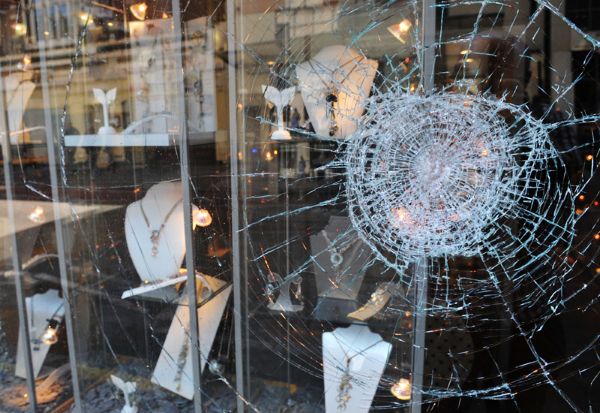
Security film, however, presents a compelling alternative by fundamentally changing the project equation. It provides a tested and certified level of protection against the most common threats, from forced entry to spontaneous glass failure, at a fraction of the cost and with minimal impact on business continuity.
Why Advanced Security Film Is the Smartest Retrofit
For the savvy project manager focused on maximizing value, advanced security film consistently emerges as the most strategic choice for upgrading existing buildings. It is not merely a less expensive option but a smarter one.
This solution is the most intelligent path forward because it delivers:
- Optimized Performance-to-Cost Ratio: You acquire a significant enhancement in security for a capital outlay that is dramatically lower than full glass replacement, allowing for broader application across a portfolio.
- Minimal Operational Disruption: Installation is clean, quiet, and fast. It can be scheduled around business hours to ensure your operations continue uninterrupted, a crucial advantage that traditional replacement cannot offer.
- Simplified Project Scaling: For national rollouts, partnering with a certified security film installer provides a single point of contact and a consistent standard of quality across all locations.
- Enhanced Building Value: Beyond security, these films offer added benefits like UV protection, which reduces fading of interiors and can improve energy efficiency.
Your Next Steps
The first step toward implementing a smarter security strategy is to engage with an expert. A professional consultation will move from general principles to a specific analysis of your property. This process involves a site assessment, a discussion of your security goals, and a review of your existing glazing. Based on this analysis, a specialist can provide tailored recommendations, performance data, and a clear project proposal. This collaborative process ensures the final solution precisely matches your needs, positioning your project for success from day one.
Partner with Window Film Depot to implement a high-performance security glazing solution tailored to your building and project requirements.
Frequently Asked Questions
What is the difference between laminated security glass vs film?
Laminated glass is a composite product where a polymer interlayer, typically PVB, is sandwiched between two or more layers of glass. The entire windowpane is replaced. Security film is a thin, multi-layered polyester product applied directly to the surface of your existing glass. While both aim to hold glass together upon impact, film is a retrofit solution that is significantly faster and less expensive to install, offering comparable forced entry and blast mitigation performance for most commercial applications.
Can security window film stop a bullet?
No. Standard security window film is not bulletproof and is not rated to stop ballistic threats. Its primary purpose is to provide forced entry resistance and glass fragment retention from impacts, blasts, and severe weather. While it strengthens glass, it should not be mistaken for ballistic-rated glazing, which is a much thicker and more complex system.
How long does 3M security film last?
Professionally installed 3M security window films are highly durable and come with a comprehensive manufacturer’s warranty, often for up to 15 years in commercial settings. They are engineered with a scratch-resistant hard coat to withstand normal cleaning and maintain their optical clarity for the life of the product.
Is security film noticeable on the window?
High-quality security films, like the 3M Ultra Series, are optically clear and virtually undetectable once installed. They are designed to provide protection without altering the appearance of your building’s glass, preserving its original aesthetic and allowing for maximum natural light transmission.
Can security film meet GSA blast standards?
Yes. High-performance security films, particularly when used with an attachment system, have been rigorously tested to meet specific government standards for blast mitigation, including GSA and ISC criteria. These films are engineered to retain shattered glass within the frame during a blast event, drastically reducing the risk of injury from high-velocity glass fragments.