Table of Contents:
- What Project Managers Need to Know About Glass Protection
- From Film to System: The Components of a True Security Shield
- How a Security Shield Counters Key Commercial Threats
- Specifying the Right Glass Security System: Key Performance Metrics
- The Installer Is the System: Why National Rollouts Demand a Single-Source Partner
- From Vulnerability to Fortification with an Engineered Security System
- Frequently Asked Questions
- Related Posts from Window Film Depot
What Project Managers Need to Know About Glass Protection
Your search for a security shield for your building’s glass is the right starting point. It indicates a clear need to protect people and property from threats at one of your most vulnerable points. To move from concept to a solution that meets project specifications and mitigates liability, it’s essential to translate this term into a complete technical system.
Moving Beyond a Buzzword to a System Specification
For a project manager, a “security shield” cannot be just a line item. It must define a complete system with measurable performance criteria. A successful specification moves beyond a product name and details the required tear resistance of the window tint film, the type and application of the anchoring system, and the certification level of the installers.
This level of detail is non-negotiable. It ensures that all bids are comparable, that the delivered solution meets your security consultant’s requirements, and that you have a clear standard for quality assurance. Without a precise specification, you risk procuring a solution that offers a false sense of security rather than a tangible delay against forced entry or effective hazard mitigation.
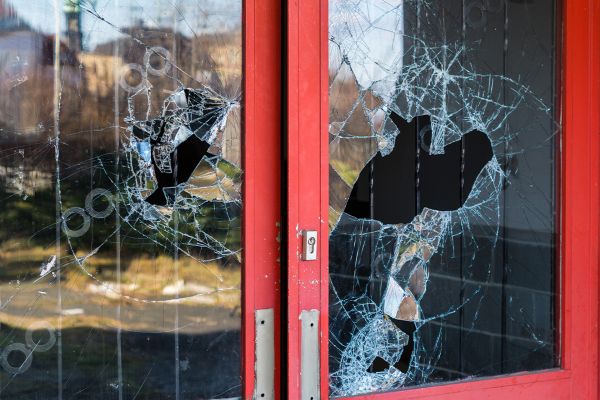
The Project Manager’s Challenge: Securing Glass Across Multiple Properties
The complexity escalates dramatically when your project spans a regional or national portfolio. The core challenge becomes ensuring consistency and quality control across dozens or even hundreds of locations. How can you be certain that the system installed in Dallas provides the same level of protection as the one in Seattle?
Managing numerous local installers introduces significant project risk, including:
- Inconsistent application techniques and quality.
- Variable adherence to material specifications.
- Logistical difficulties in scheduling, communication, and billing.
- Difficulty in enforcing a uniform standard of security across your entire portfolio.
This is where the value of a single-source, national installation partner becomes clear. It shifts the burden of ensuring consistency from your team to a specialized partner who can execute a single, unified project plan with standardized procedures and centralized oversight.
From Film to System: The Components of a True Security Shield
An effective glass security system is not a single product. It is an engineered assembly where each part plays a critical role. Understanding these components is essential for any project manager tasked with securing a commercial property.
The Foundation: 3M™ Safety & Security Window Film
The core of the system is the security film itself. Unlike standard solar films, 3M Safety & Security Films are constructed from a uniquely strong, micro-layered polyester engineered for exceptional tear resistance and tensile strength.
When applied to the interior surface of your existing glass, the film’s primary function is not to stop the glass from breaking. Its job is to hold the countless sharp fragments of shattered glass together. A powerful adhesive bonds the film to the glass, so in the event of an impact from a tool, projectile, or blast wave, the glass may crack but remains a cohesive, contained sheet. This alone transforms a major liability into a manageable hazard, but it is only the first step.
The Critical Component: Security Film Attachment Systems
A security film can hold shattered glass together, but what holds that sheet of shattered glass in the window frame? This crucial question leads us to the most critical, and often overlooked, component: the attachment system.
An attachment system, or anchoring system, mechanically bonds the film and glass unit to the window frame. Without it, a determined intruder or significant blast pressure can simply push the entire sheet of film-covered glass out of its frame, defeating the purpose of the installation.
There are two primary types of 3M attachment systems used to solve this problem:
- Wet Glaze Attachment: This method uses a structural silicone, such as 3M™ Impact Protection Adhesive, to create a flexible, high-strength bond between the film’s edge and the window frame. It is minimally invasive and cures to form a powerful, yet pliable, anchor.
- Mechanical Attachment: This system, like the 3M™ Impact Protection Profile, involves a physical gasket attached to the frame to clamp down on the film’s edges. It provides a robust, immediate bond and is often specified for the highest levels of protection.
The choice between these systems depends on the frame type, threat level, and aesthetic requirements of the project.
Why an Integrated System Outperforms Film-Only Applications
The performance difference between a film-only application and an integrated system with security film attachment systems is significant and measurable. A film-only installation can contain glass shards from an accidental impact, but it offers minimal resistance against a determined, forced entry attempt. The entire pane can be quickly pushed or pulled from the frame.
In contrast, an integrated system creates a formidable, unified barrier.
- The film absorbs the initial shock and holds the broken glass together.
- The attachment system anchors this now-flexible membrane to the building structure via the window frame.
The result is a system that can flex and absorb a tremendous amount of energy, significantly delaying intruders and giving response teams critical time to arrive.
Specifying an integrated system is the only way to ensure you are delivering a true security solution, not just a surface-level treatment.

How a Security Shield Counters Key Commercial Threats
A professionally installed security window film system functions as an invisible yet formidable barrier. It transforms your most vulnerable points of entry into assets for mitigation and delay. This system approach is what allows it to effectively counter a range of common and high-stakes commercial threats.
Delaying Forced Entry and Preventing Smash-and-Grab Attacks
For a perpetrator, time is the enemy. Standard glass offers virtually no resistance, shattering in seconds and granting immediate access. The primary goal of a security film system in a forced entry scenario is not to make the glass unbreakable, but to create a critical delay for smash and grab prevention.
When a window treated with a high-performance film like 3M™ Safety & Security Window Film is struck, the glass will still break. The film’s aggressive adhesive and exceptional tear resistance hold the broken shards together, keeping the shattered pane locked into the frame by the attachment system. An intruder now faces a far more difficult challenge: physically tearing a sheet of tough, flexible polyester to create an opening. This process is noisy, physically demanding, and time-consuming. The 30 to 90 seconds of delay it creates is often enough to deter the attacker or allow security personnel to respond.
Mitigating Hazards from Blast Events and Extreme Weather
In an explosion or a high-wind event, the greatest threat to occupants is often not the event itself, but the flying glass fragments it creates. A blast wave can turn an entire window into thousands of high-velocity projectiles.
A security film system is engineered to absorb and dissipate this sudden pressure. The film’s tensile strength allows it to stretch under load, while the attachment system transfers that energy from the glass to the window frame. This prevents the pane from catastrophically failing and ejecting into the building’s interior. This containment is the fundamental principle of glass fragmentation mitigation and is why these systems are a foundational component of GSA and DoD requirements for blast hazard mitigation.
Containing Spontaneous Glass Breakage and Protecting Occupants
Not all glass breakage is malicious. Spontaneous breakage, often due to thermal stress or imperfections in tempered glass, can occur without warning. In atriums, overhead glazing, and large lobby windows, this can result in a dangerous shower of glass.
A basic safety film application provides an effective, passive safety net, catching and containing all fragments should a pane fail. This simple measure prevents potential injuries, reduces liability, and avoids costly cleanup and downtime in high-traffic commercial spaces.
Specifying the Right Glass Security System: Key Performance Metrics
Selecting the appropriate security film system requires a clear understanding of your asset’s specific threat profile. As a project manager, familiarizing yourself with key performance metrics will enable you to ensure the specified system aligns with your security goals.
Understanding Tensile Strength, Break Strength, and Tear Resistance
These terms describe distinct and critical properties of the film.
- Tensile Strength: This measures the maximum stress the film can withstand while being stretched before breaking. It is a key indicator of how the film will perform under the uniform pressure of a blast wave.
- Break Strength: This indicates the force required to rupture the film. It is directly related to the film’s thickness and composition.
- Tear Resistance: For forced entry scenarios, this is arguably the most important metric. It measures the film’s ability to resist the propagation of a tear after being punctured. High tear resistance is what makes it so difficult for an intruder to create an opening.
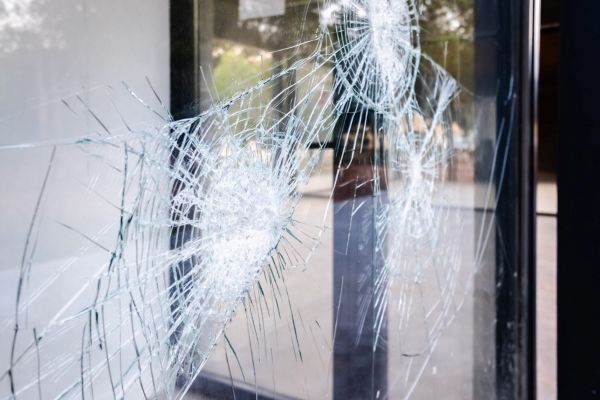
For a retail storefront concerned with smash-and-grab attacks, prioritizing tear resistance is essential. For a facility concerned with blast mitigation, tensile strength becomes a more critical part of the specification.
Navigating ASTM and GSA Standards
Third-party testing provides objective validation of a system’s performance. Referencing these standards is the most reliable way to ensure you are procuring a solution that meets a specific level of protection.
Key standards include:
- ASTM F1642: The standard test method for the blast performance of window systems, often referenced in GSA and DoD projects.
- UL 972: This standard for burglary resisting glazing material tests the glazing itself, not necessarily the entire installed system.
- GSA Security Criteria: The U.S. General Services Administration has tiered criteria for blast hazard mitigation that dictate the required performance of the window system.
Crucially, these standards test the entire system, the specific film, on a specific type of glass, with a specific attachment system. A film alone cannot be “GSA-rated.” It is the installed system that earns the rating, reinforcing the need for a certified installer who understands how to build a compliant assembly on-site.
Matching Film Thickness and Attachment Type to Your Threat Level
A security system combines the right film with the right attachment method for a given threat.
Film Thickness:
- 4-7 mil: “Safety films” ideal for containing breakage and deterring simple smash-and-grab attempts.
- 8-13 mil: The most common “security films,” offering a robust solution for forced entry delay.
- 14+ mil: “High-security” or shatterproof window film, engineered for maximum strength to meet stringent government or industrial requirements.
Attachment Systems:
- Daylight Application: The film is trimmed to the edge of the visible glass. This offers no anchoring and is suitable only for basic safety applications, not security.
- Wet Glaze Attachment: A bead of structural silicone is applied to bond the film’s edge to the window frame. This is a highly effective method for forced entry and many blast mitigation applications.
- Mechanical Attachment: A physical metal system clamps the film to the frame. These systems offer the highest level of protection and are typically specified for high-risk blast mitigation projects.
Balancing Security with Aesthetics and Solar Performance
Upgrading your glass for security does not mean compromising building aesthetics or energy performance. Most premium security films are optically clear and virtually invisible once installed.
Furthermore, manufacturers like 3M offer combination films that integrate security with advanced solar control. Products like the 3M™ Scotchshield™ Safety & Security Window Film Ultra Prestige Series provide exceptional tear resistance while simultaneously rejecting up to 97% of infrared light and 99.9% of UV radiation. This allows you to address security requirements while also lowering HVAC costs and protecting interiors from fading, creating a dual return on your investment.
The Installer Is the System: Why National Rollouts Demand a Single-Source Partner
An engineered security film system is not an off-the-shelf product; it is a solution built on-site. The performance of the most advanced film is directly tied to the skill of the team applying it. For project managers overseeing multi-site rollouts, the installer is not merely a vendor; they are a critical component of the security system itself, particularly when deploying advanced window insulating film systems that require precise installation to perform as specified.
The High Cost of Inconsistent Installation Quality
Engaging multiple local installers for a national upgrade introduces a high degree of variability. One facility may have a flawless installation, while another could have critical errors that compromise the entire system, such as improper edge gaps or contamination beneath the film. An improperly applied film can lift or bubble, but the critical failure is that it will not provide the specified tear resistance during an impact. These inconsistencies create weak points in your security posture, exposing the organization to risk.
How Installer Expertise Dictates Performance
The difference between security film and a high-performance system lies in the execution. An expert installer, certified in 3M’s methodologies, understands the complex interplay between film, glass, frame, and attachment mechanism.
Proper execution involves a meticulous process:
- Surface Preparation: The glass must be surgically clean to ensure a perfect molecular bond with the film’s adhesive.
- Film Application: The film must be applied with precision, ensuring edge-to-edge coverage without blemishes.
- Attachment System Integration: Installing a 3M™ Impact Protection Attachment system requires specialized training to create a seamless connection that transfers impact load from the glass, through the film, and into the window frame itself.
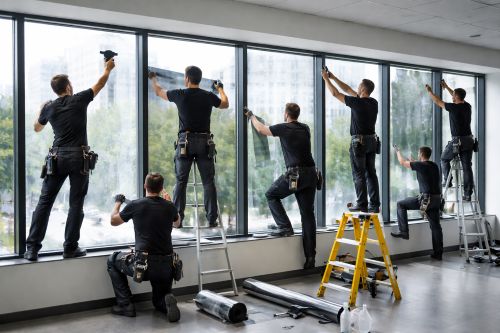
An untrained technician can make the film look right, but if the attachment system is not installed to specification, the system will fail during a forced entry or blast event.
The Logistical Advantage of a Single Point of Contact
For a project manager, coordinating a national rollout is a complex task. Using different local installers multiplies this complexity, creating administrative drag and communication breakdowns. A single-source national partner consolidates all project functions under one umbrella, transforming a logistical challenge into a streamlined process.
This centralized model provides:
- A single master services agreement and simplified billing.
- Coordinated scheduling across all locations to meet your master project timeline.
- Standardized communication and progress reporting.
- A single, accountable partner responsible for quality and outcomes at every site.
Ensuring Consistent Specification and Execution from Site to Site
The most significant advantage of a single-source partner is that it guarantees consistency. When a security consultant specifies a particular system, such as 3M™ Safety and Security Window Film Ultra S800 with an Impact Protection Attachment Profile, they specify a certain level of performance. A national partner executes this exact specification uniformly at every location. This operational discipline upholds your security standard across the board, delivers predictable performance, and mitigates liability.
From Vulnerability to Fortification with an Engineered Security System
A Security Shield is a System, Not Just a Product
Your search for a security shield for your building’s most vulnerable points likely began with a focus on a product. True glass fortification, however, requires a complete, engineered system designed to perform under duress.
An effective system is the synergy of three critical elements. It starts with a high-performance 3M™ Security Window Film, is integrated with a mechanical attachment system that bonds the filmed glass to the window frame, and is brought to life through precision installation by a certified team. Only when these three parts work in concert does a window transition from a fragile barrier to a resilient security asset.
The Inseparable Link Between Material, Installation, and Project Success
For project managers overseeing national portfolios, the greatest risk often lies not in the material specifications, but in the variability of execution. A fragmented approach, relying on different local installers with varying skill levels, introduces unpredictable performance. A security system is only as strong as its weakest installation.
Engaging a single-source national partner ensures the same exacting standards at every property. This approach provides one standard of quality, one point of contact, and one consistent outcome, meets your security specifications without deviation, and simplifies management of the entire rollout.
Your Next Step: Scheduling a National Security Assessment
Understanding the unique vulnerabilities across your property portfolio is the critical first step toward implementing an effective security standard. A comprehensive security assessment provides the data-driven clarity needed to move from concept to a fully scoped project plan.
We invite you to schedule a consultation with our national project team. This initial assessment provides:
- A thorough evaluation of your existing glass and framing systems.
- An analysis of your specific security concerns, from smash-and-grab threats to blast hazard mitigation.
- The development of a unified system specification tailored to your operational needs.
- A clear, actionable roadmap for project logistics and implementation across all locations.
Need More Info?
The Window Film Depot team is happy to help.
This process equips you with the expert analysis required to make informed decisions and transforms a complex security requirement into an executable, managed project.
For a proven, expertly managed solution, partner with Window Film Depot to design and implement a security shield system tailored to your project needs.
Frequently Asked Questions
What is the difference between safety film and a security shield system?
Safety film is a single component, typically a thinner polyester sheet (4-7 mil) designed to hold glass fragments together in cases of accidental impact or spontaneous breakage. A security shield is a complete, engineered system that combines a thicker security film (8 mil or more) with a mechanical attachment system that anchors the film and broken glass to the window frame. This system is designed to resist deliberate forced entry and mitigate blast hazards.
How much delay does forced entry resistant glass film provide?
A professionally installed forced entry resistant glass system is designed to create a critical delay, not to be impenetrable. By holding shattered glass in place, the system can delay an intruder from 30 seconds to several minutes, depending on the film thickness, attachment system, and the tools used. This delay is often sufficient to deter attackers and allow for law enforcement or security to respond.
Can security window film stop a bullet?
No. Standard security window films, even when installed as part of a robust system, are not bullet-resistant. Their purpose is to mitigate threats from manual forced entry, blast pressure, and blunt impact. True ballistic protection requires specialized, multi-layered armored glass and framing systems that are significantly thicker and heavier.
Will security film make my windows look different?
High-quality security films are optically clear and virtually invisible once installed by a professional. There are also combination films available that incorporate solar control properties, which may have a slight tint to reduce heat and glare, but they are designed to maintain excellent visual clarity and preserve the building’s aesthetic.
Why is a single national installer better for a multi-site project?
A single national installer ensures consistency in both materials and installation quality across every location in your portfolio. This eliminates performance variability, simplifies project management with a single point of contact, streamlines billing and scheduling, and guarantees that the specified security standard is met uniformly. It mitigates risk and ensures a reliable, predictable outcome for your entire rollout.