Table of Contents:
- Why Homeowners Search for “Residential Window Tint Near Me” First
- 2026 Residential Window Film Innovations & Energy Savings
- Key Benefits of Residential Window Tinting for Your Home’s Windows
- How the Home Window Tinting Process Works with Window Film Depot
- What to Know Before You Choose a Residential Window Film Installer Near You
- Why Homeowners Nationwide Choose Window Film Depot
- FAQs About Commercial Building Window Tinting
Why Homeowners Search for “Residential Window Tint Near Me” First
Rising energy bills, hotter summers, and the lasting shift to remote work have pushed residential window tinting to the top of homeowner search lists in 2026. Solar heat gain through windows accounts for one third of cooling costs in many homes, and that number climbs fast in sun-heavy metros. When you type “residential window tint near me,” you’re looking for a local professional who can assess your glass, recommend the right home window film, and install it correctly so you actually get results.
Residential window tinting means applying thin retrofit window films to existing house windows to reduce heat, block UV rays, cut glare, and improve privacy, all without replacing glass. In Phoenix, homeowners fight 110°F afternoons. In Atlanta and Dallas, afternoon sun bakes west-facing rooms. In Chicago or Boston, cold drafts through older single-pane windows drive heating costs up. The “near me” part matters because proper film selection depends on climate and desired attributes like privacy or glare control, and because on-site measurement, local code compliance, and HOA approval all require a local presence. Window Film Depot services residential projects nationwide from its Marietta, Georgia base, with regional offices and local installers across major metros. Professionally installed home window tint can deliver 5 to 15% energy savings on cooling and heating, with payback often within a few years.
2026 Residential Window Film Innovations & Energy Savings
Today’s residential window film technology is a different product than the purple-tinted, mirror-finish sheets of the past. Here is what modern films deliver:
- Nano-ceramic and multi-layer 3M solar control films use titanium nitride ceramic particles to reject infrared heat while maintaining a neutral, non-mirrored appearance and high clarity.
- High-performance window films can reduce solar heat gain by over 75%, and window films overall can reject over 50% of heat depending on type and glass pairing.
- Ceramic films block heat and UV rays without dark dyes or metallic layers, preserving curb appeal and nighttime visibility from inside.
- Window tint blocks 99% of harmful UV rays, protecting interiors from fading and sun damage.
- Window Film Depot specifies 3M residential window films engineered for long-term color stability and backed by manufacturer warranties.
- Energy efficiency tax credits may be available for energy-saving window films in certain jurisdictions, and utility rebate programs in southeastern and western states have offered incentives for qualifying installations through 2024–2026.
- Window film installation is much cheaper than window replacement. Home window film typically costs around 5 to 15% of full window replacement while delivering significant comfort and energy gains.
Types of Residential Window Films for House Windows
- Solar control films are designed to block infrared light and reduce heat gain in sun-exposed rooms like west-facing living rooms and two-story foyers. Solar control window film blocks 99% of harmful UV rays.
- Privacy and tinted films offer daytime privacy for street-facing windows and bathrooms. Reflective films provide a mirror-like effect during the day for privacy, and different films offer varied levels of privacy, with some allowing one-way visibility. Common visible light transmission options include 20%, 35%, and 50%.
- Decorative window film enhances privacy and style in homes. Many films are available in decorative patterns for aesthetics, mimicking etched or sandblasted glass at a fraction of the cost of replacement glass.
- Safety and security film adds a protective layer to glass. Safety and security films hold glass together in the event of breakage from break-ins, storms, or accidental impacts, and can be combined with solar control layers for dual benefit.
- Low-E and all-season films improve insulation on older single-pane or aluminum-framed windows, reducing winter heat loss in Midwest and Northeast climates.
While brands like LLumar® Vista films are known for their appearance and comfort, Window Film Depot specializes in premium 3M product lines that deliver proven long-term performance across residential and commercial applications.

Key Benefits of Residential Window Tinting for Your Home’s Windows
Residential window tinting improves energy efficiency and enhances privacy in one upgrade. Window films can reduce energy costs by 5 to 15%, and residential window tinting can lower HVAC energy usage, which means window tinting can extend the life of HVAC systems by reducing runtime during peak demand. Here are the specific benefits that homeowners notice first:
- Energy savings and indoor comfort: films reduce AC runtime during 95–110°F summer days and stabilize temperatures in sunrooms, bonus rooms over garages, and rooms with large glass. Hot spots disappear. Heat buildup drops noticeably.
- UV and fade protection: window films block 99% of harmful UV rays. A south-facing living room in Atlanta that would show visible fading on hardwood flooring, furniture, and artwork within two to three years stays protected for many years with quality film installed.
- Residential window tinting reduces glare from screens and improves comfort. Glare reduction of 50–90% means home offices and media rooms stay usable in afternoon sunlight without closing shades or blinds.
- Privacy without heavy window treatments: window tint complements existing shades, letting you maintain natural light and view while reducing the fishbowl effect on street-facing or neighbor-facing windows.
- No dust, no construction noise, no disruption to your home’s envelope. Unlike window replacement projects, film installation keeps your life running while crews work.
Common Mistakes Homeowners Make with Home Window Tint
- Choosing auto-style dark tint for house windows that makes rooms too dark or violates HOA rules. Use professionally recommended visible light levels based on room use and preference.
- Buying cheap DIY window film online. Proper installation minimizes chances of bubbles, peeling, or warranty issues. Low-quality film leads to purple discoloration and adhesive residue within a year or two.
- Only tinting one or two windows instead of addressing the full sun-exposed elevation. A whole-façade approach maximizes comfort and energy savings.
- Ignoring glass type. Certain films can negatively affect dual-pane windows if not specified as safe. High-absorption film on certain insulated or tempered glass can risk seal failure or thermal stress cracking.
- Not clarifying warranty terms in writing, including coverage length, glass breakage protection, seal failure coverage, and transferability upon home sale.
- Waiting until damage occurs. Floors already faded cannot be restored. Tint proactively when moving in or after a remodel.
How the Home Window Tinting Process Works with Window Film Depot
Installation usually requires experienced professionals to ensure quality work, and Window Film Depot has refined this process over 30-plus years. Professional installation ensures optimal performance of window films. Here is how a typical residential project flows:
- Initial contact: You search for residential window tint near me and reach Window Film Depot by phone or online form. Most metro area homeowners receive a response and scheduling within the same week.
- Consultation and assessment: A local estimator visits your home, measures the square footage of glass, identifies glass type, notes existing window treatments, and discusses your goals around heat, glare, privacy, security, or aesthetics.
- Product recommendation: The consultant presents two to three specific 3M residential window film options with performance specs and physical samples you can hold up to your existing glass.
- Transparent pricing: You receive a clear, line-item quote with per-square-foot cost, any travel or minimum charges, and optional upgrades like security film on doors or sidelights.
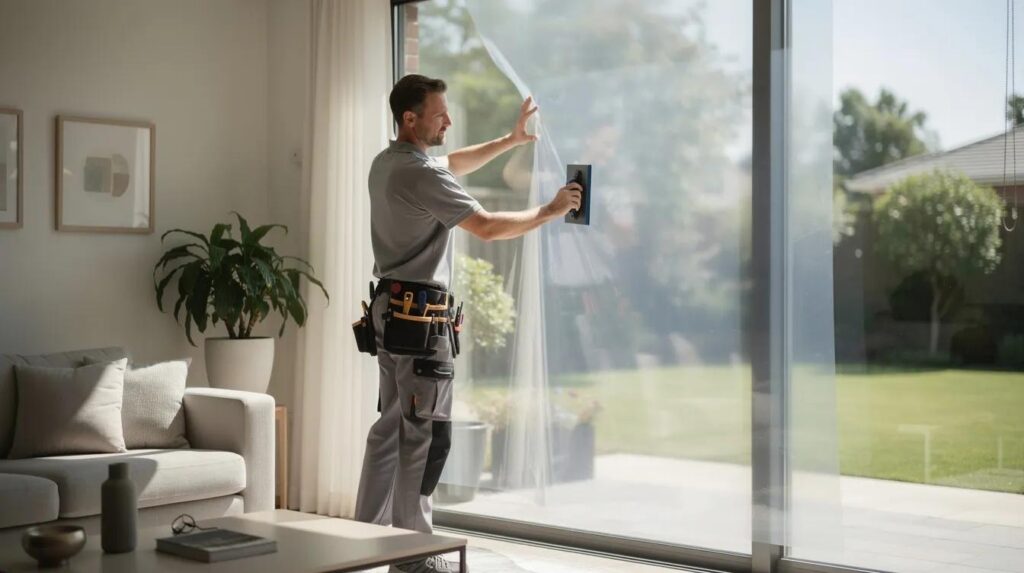
- Scheduling and installation: Most homes are complete in a single day. Move furniture three to four feet from windows, raise blinds, and secure pets. Most windows can be filmed in 15 minutes. Installers clean surfaces, cut film precisely, apply with solution, squeegee out air, finish edges, and inspect every pane. Surrounding flooring and furnishings are protected throughout.
- Post-install care: Expect a curing period of up to 30 days for full clarity. Clean with soft cloths and ammonia-free cleaners. Keep your warranty documents and register your installation.
How to Know It’s Time to Tint Your Home’s Windows
- Rooms that routinely run 5–10°F hotter than the rest of your house in summer despite AC running constantly.
- Noticeable fading lines on hardwood flooring, carpets, or artwork near large glass areas.
- Glare on computer monitors or TVs in the afternoon, forcing you to close blinds during prime daylight hours.
- Feeling on display at night due to bright interiors and unprotected street-facing windows with no privacy.
- High seasonal energy bills that spike during peak heat or cold, especially with large south- or west-facing glass.
- A recently purchased or remodeled home where preserving finishes and lowering operating costs is a priority from day one.
What to Know Before You Choose a Residential Window Film Installer Near You
Not every tint shop is qualified for residential window work. Auto tint dealers and general handymen may not understand glass compatibility, thermal stress, or manufacturer warranty requirements. Choose an experienced, insured, manufacturer-aligned installer. Here is what to evaluate:
- Years in business and volume of residential projects per year. Window Film Depot has operated since 1992 with thousands of installations completed.
- Access to branded, manufactured films like 3M and other leading window film products, with factory-trained installation teams.
- Willingness to provide product data sheets showing solar heat rejection, visible light transmission, UV rejection, and warranty coverage in writing.
- Recent local reviews dated within the last 12–24 months that mention punctuality, cleanliness, communication, and issue resolution.
- Real before-and-after photos of similar home types, whether that is a two-story foyer, lakefront house with large glass, or a downtown condo.
- Ability to support both single-family homes and larger residential portfolios for investors or property managers with consistent quality and standards across cities.
- Knowledge of local tint darkness limits and HOA guidelines, with recommendations that keep your project compliant.
FAQs About Residential Window Tinting Near Me
How much does residential window tinting cost per square foot in 2026?
National ranges for professional installation run roughly $8–$25 per square foot depending on film quality, window accessibility, and location. A typical 200–300 sq ft project costs between $1,600 and $6,000.
Will window tint make my house too dark?
No, if you choose the right film. Films with 50–70% visible light transmission keep rooms bright. Neutral, spectrally selective options cut heat and glare without making your home feel dark.
Can home window film be removed or changed later?
Yes. Professional removal uses safe solvents and scraping techniques. Many homeowners upgrade films after 8–15 years to take advantage of newer technology.
Is residential window film safe for double-pane or Low-E glass?
Yes, when correct film-to-glass matching is done. Window Film Depot uses manufacturer-approved combinations and evaluates your existing glass before recommending any product.
How long does residential window tint last?
Quality residential films last 10–20 years or more. Professionally installed window films come with a lifetime warranty for the original homeowner, covering bubbling, peeling, cracking, and color change.
Will window tinting void my window warranty?
Reputable installers evaluate existing warranties and use compatible films. Premium film manufacturers provide warranties that cover thermal shock and seal failure when films are applied per guidelines.
How soon will I notice energy savings after tinting my home’s windows?
Comfort improvements are immediate: cooler rooms, less glare, more stable temperatures. Energy bill savings typically appear within one to three billing cycles, with full annual savings visible after a complete season cycle. You can save energy starting from the first hot afternoon.
Why Homeowners Nationwide Choose Window Film Depot
Window Film Depot is a family-owned company founded in 1992 in Marietta, Georgia, that has grown into a nationwide leader across residential and commercial applications. With seven regional offices and licensing in all 50 states, the company brings expert installation to your area, whether you are in a suburban neighborhood or a high-rise.
The team specializes in high-performance 3M solar control films, security glazing, decorative films, privacy films, and architectural surface finishes. Every residential project receives turnkey management: local consultation, professional installation, centralized support, and warranty registration.
- National coverage with local installers who understand your climate, codes, and community standards
- Access to premium residential window films with proven energy savings and comfort results
- A variety of film types and options to suit every room, every preference, and every budget
- A track record of thousands of on-time, on-budget installations with strong homeowner trust
- Wholesale film supply to glass and glazing trade partners, reinforcing deep industry expertise
- Repeat work with facility managers, building owners, and homeowners who come back for additional projects
This is not a side business for Window Film Depot. It is the complete focus, and it has been for over three decades.
Schedule Your Residential Window Tinting Consultation
If you searched for residential window tint near me, the next step is simple. Request a no-obligation quote or in-home assessment with a Window Film Depot specialist.
- Call to speak with a project advisor about your home
- Fill out an online form with your city, window count, and main concerns
- Upload photos of your home’s windows for preliminary guidance
Consultations are educational, not high-pressure. You will receive clear recommendations, physical product samples, and a written estimate. Schedule before peak summer or winter to maximize comfort and energy savings in the coming season. Your investment in quality residential window film pays dividends every month on your energy bills, and every year your furnishings hold their color and life.