Finding a reliable window film installer can feel overwhelming when dozens of results pop up on your screen. This guide walks you through exactly how to evaluate local pros, understand the types of film available, and make a confident decision that pays off in comfort, energy savings, and protection for years to come.
Table of Contents:
- Why Home Window Film Is Worth It in 2026
- Benefits of Residential Window Film for Your Home
- Types of Home and Commercial Window Film (And Which You Need)
- Residential vs. Commercial Window Film: What’s the Difference?
- FAQ: Residential Window Film and Home Window Tinting Services
- Conclusion: Next Steps to Get Window Film Installed
Why Home Window Film Is Worth It in 2026
Modern home window film has evolved dramatically. Today’s nano-ceramic and spectrally selective films use multi-layer metal-oxide stacks that filter infrared heat while preserving natural light and clarity – a far cry from the dark, reflective tints of a decade ago. That’s why many homeowners now consider home window tinting worth the investment.
The numbers back it up. Window films can reduce heat by up to 88%, cut glare by up to 84%, and block up to 99% of uv rays. Residential window films can yield significant energy savings, and they reduce HVAC system cycling by lowering the solar load your air conditioner has to fight against. For a typical 2,000 sq ft house with roughly 220 sq ft of glass, installing mid-grade solar film on south- and west-facing windows can reduce summer cooling costs by an estimated 10–20%, often translating to a payback period of three to six years.
Top measurable benefits at a glance:
- Up to 88% heat reduction through glass
- 99% UV blocking to protect interior surfaces
- Glare reduction up to 84% for screens and workspaces
- Year round comfort improvements without sacrificing views
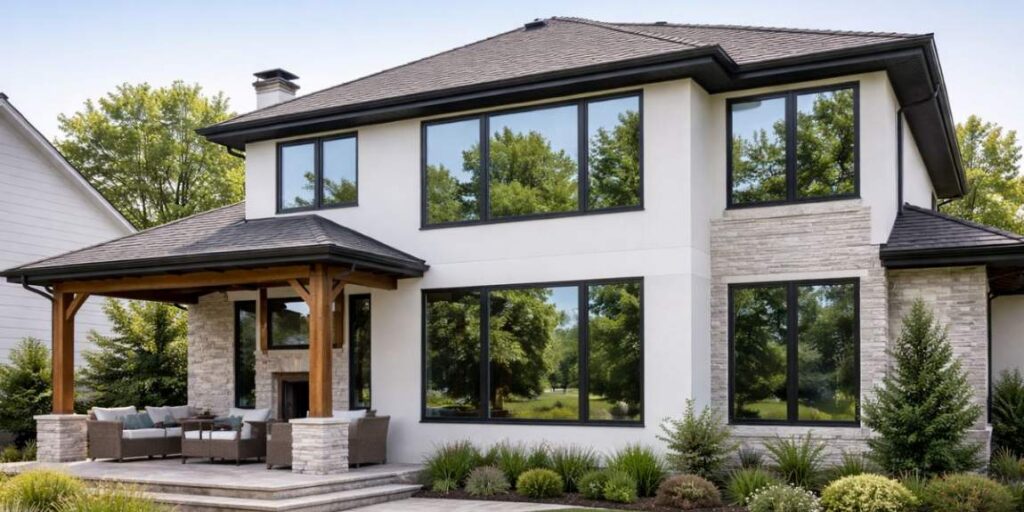
Benefits of Residential Window Film for Your Home
This section breaks down the practical, everyday reasons homeowners choose residential window tinting – beyond the spec sheets.
Energy Savings – Solar control films block up to 79% of solar heat, which directly reduces the energy costs tied to air conditioning. Films that lower the Solar Heat Gain Coefficient from around 0.70 to 0.28 can mean a 60–78% drop in solar heat entering through glass. Window films can reduce energy bills significantly, especially on sun-exposed walls during summer.
Glare Reduction – If you’ve ever closed blinds just to see your TV or laptop screen, window tint film solves that problem. High-performance films cut visible light glare dramatically while maintaining clarity, keeping your room bright and usable without shades drawn at midday.
UV Protection – Up to 99% of UV rays are blocked by quality window films. That protection matters: without film, hardwood floors, furniture upholstery, and artwork can show visible fading in under five years. With film, those interior surfaces stay vibrant for a decade or more, protecting your investment in every piece of furniture and flooring.
Comfort and Privacy – Window films improve indoor comfort by reducing heat buildup in rooms that face the sun. Privacy films provide natural light while ensuring seclusion, so street-facing rooms gain daytime privacy without heavy curtains. Some options offer improving privacy around the clock, depending on the film type.
Safety and Security – Security films hold glass fragments together when a pane breaks, whether from a storm or an attempted forced entry. Security films delay forced entry by up to 2 minutes, giving your family critical response time. These are especially valuable on ground-floor windows and patio doors.
Types of Home and Commercial Window Film (And Which You Need)
Many films serve both residential and commercial window film installation, but the performance goals shift based on the space and its unique requirements.
Solar / Sun Control Film – These films focus on heat and glare reduction. Spectrally selective options stay light while blocking infrared heat, maintaining high visible light transmission (often 50–70%) with strong heat rejection. 3M solar control films reject up to 79% of solar heat, making them a go-to for sun-drenched rooms. Ceramic films block infrared heat without darkening spaces, which is why they’ve become the premium choice for homeowners who want a clear view with serious heat protection.
Privacy Film – Options range from frosted and etched finishes for full-time privacy to reflective films offering daytime privacy only. Frosted films are ideal for bathrooms and sidelights. Reflective privacy films can double as solar control, creating a combination of function and aesthetics.
Security Film – Ranging from 4 mil to 14 mil thick, safety films bond to glass and hold it in place during impacts. They can be paired with frame attachment systems for maximum resistance. 3M safety films meet Miami-Dade hurricane codes, demonstrating the level of protection available for storm-prone regions. This type of film can also help prevent break ins on vulnerable entry points like sliding doors.
Decorative Film – Patterns, gradients, and etched designs upgrade plain glass without replacing it. These are easy to remove if your style changes, making them a low-commitment way of creating visual interest on feature windows and interior partitions.
A critical warning: installing the wrong window film can cause glass to shatter due to excessive heat absorption. Applying dark films to certain glass types can cause heat buildup and thermal cracking. Always have a qualified installer assess your glass before choosing a product.
To match film to your top priority: if you want maximum heat control with a clear view, go spectrally selective or ceramic. For privacy, choose frosted or reflective. For security, opt for thicker safety film with an attachment system. For aesthetics alone, decorative film does the job.
How to Compare Residential Window Film Installers Near You
Not all home window tinting services are created equal. The skill of your installer directly affects how the film performs, how it looks, and whether your warranty holds up.
Here’s what to evaluate:
- Years in business and expertise – the window film industry relies heavily on brand-specific training, so look for installers with certifications from manufacturers they carry. Window Film Depot, for example, has been in business since 1992. American Window Film serves multiple cities including Seattle. Established local dealers tend to have deeper regional knowledge.
- Residential and commercial experience – experience with residential properties is necessary due to specialized handling requirements. Residential windows require different treatment than automotive windows, so verify the installer focuses on flat-glass work for homes.
- Installer certification and glass-film compatibility expertise – the installer should analyze window types to prevent warranty voiding with film applications. Top-tier film brands only back lifetime warranties if the product is installed by certified dealers. Authorized dealers are necessary for major brands to ensure valid warranties.
- Insurance and written warranties – verify liability coverage and ask for warranty details covering both materials and workmanship.
- Local climate knowledge – local installers should understand regional sun exposure and community guidelines regarding reflective tints. This matters for HOA compliance and for recommending the right film for your sun, humidity, or coastal conditions.
- Portfolio and reviews – ask to see photos of projects completed in the last 12–18 months. Read reviews from 2022–2026 focusing on punctuality, cleanliness, and post-install support.
Get two to three quotes, but compare value – not just price. Very cheap bids often mean inferior film or rushed installation. Installers should adhere to IWFA installation guidelines to avoid visible defects, and installers should provide standardized metrics for window performance data so you can compare apples to apples. Kepler offers a dealer finder for local installers, which can also help you locate certified pros in your area.
Questions to Ask a Potential Home Window Tinting Company
- “What brand and line of film do you recommend for my south-facing windows, and why?”
- “What are the exact heat rejection, visible light transmission, glare reduction, and UV blocking percentages for this film?”
- “Is the warranty manufacturer-backed? Does it cover peeling, bubbling, discoloration, and glass breakage due to installation?” The warranty should cover film defects and glass breakage due to installation.
- “Do you use plotter-cut patterns, and how do you protect my floors and furniture during the job?”
- “How long is the curing period before I can clean the windows, and what cleaners do you recommend?”
- Quotes should include detailed measurements and descriptions of the scope of work – if an estimate lacks this detail, consider it a red flag.
What to Expect on Installation Day
Understanding the process removes surprises and helps you prepare your space for a smooth residential window film installation.
Before the installer arrives, clear window sills of plants, photos, and fragile items. The installer will confirm arrival with a call and provide a rough time window. Window film installation requires on-site spatial measurement and precise flat-glass fitting, so expect the crew to spend time measuring before any film goes on.
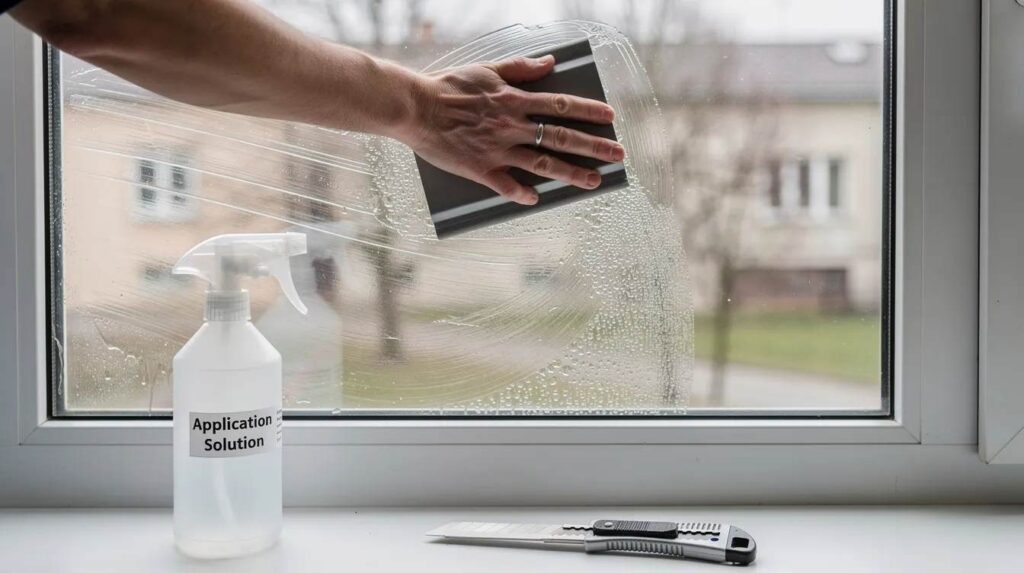
The installation process follows a consistent sequence: protecting floors and furniture, thoroughly cleaning each pane of glass, measuring and cutting film (often plotter-cut for precision), spraying application solution, positioning the film, squeegeeing out water and air, trimming edges, and performing a final inspection for alignment and adhesion.
After installation, you may notice slight haze or small water pockets – this is normal. Film cures over 30 to 60 days depending on temperature and humidity. Avoid cleaning for the first 30 days, then use mild soap with a soft microfiber cloth. Stay away from ammonia-based cleaners and abrasive tools.
Most homes in Austin, for instance, are completed in one day. Smaller projects with a few windows may wrap up in a half-day, while larger homes with many panes or difficult access can take a full day or more. Most installers can schedule your project within 3–7 business days during a typical season.
Is Home Window Tinting Worth It Financially?
The short answer: for most homeowners, yes – with a realistic payback window of three to seven years.
Cost drivers include film type (standard dyed vs. premium ceramic), total square footage of glass, number of stories, access difficulty, and whether security film with edge anchoring is needed. Installed cost typically ranges from $7–$12 per square foot for standard solar film and $9–$15 or more for ceramic or spectrally selective options. A living room with large sliding doors might run $1,500–$3,000 depending on film grade.
Homes in sunny or mixed climates commonly see cooling bill reductions of 10–25% on treated windows. That energy efficiency gain compounds every summer, shortening the payback period – especially on west- and south-facing glass.
Beyond dollars, the non-financial value is substantial: reduced fading on floors and furniture, less eye strain from glare, enhanced privacy, and the added safety of security film on vulnerable doors and windows. Ask your installer for an energy savings estimate using local utility data to see projected numbers specific to your house.
Residential vs. Commercial Window Film: What’s the Difference?
The same installer often handles both residential and commercial work, but the project goals differ. Residential priorities center on comfort, aesthetics, improving privacy, and uv protection. Commercial applications focus on large-area energy efficiency, code compliance (like California Title 24), and sometimes branding or decorative films for business storefronts.
The core technologies overlap – solar control, safety, and decorative innovative window films are used across both sectors. However, commercial projects may require thicker films, different tint levels, and more rigorous documentation. An installer experienced in both residential and commercial work demonstrates the ability to handle complex glazing, large panels, and varied building codes – skills that benefit even high-end residential projects.
How to Maintain Your Home Window Film for Long-Term Performance
Proper care extends the life and appearance of home window film well beyond the standard warranty period.
- Cleaning: Wait at least 30 days after installation. Use mild, non-ammonia soap and a soft cloth or squeegee. Avoid sharp tools and abrasive pads.
- Prevent damage: Be cautious with metal blinds that can scratch the film. Watch for pet nails near lower panes. Avoid applying decals with aggressive adhesives directly to the film surface.
- Seasonal inspections: Check film edges once or twice a year for peeling, bubbling, or seal issues, especially around frames in high-moisture areas like bathrooms.
When properly installed and maintained, high-quality ceramic or spectrally selective films can last 15–20 years or more on residential windows. Lower-end dyed films may show aging in 5–10 years depending on sun exposure.
Why Choose Our Team for Residential and Commercial Window Film
Our team brings years of local experience serving homeowners and businesses with premium window film installation. We work with top-tier products including 3M window film and other leading lines, and our dealer certifications mean your manufacturer warranty is fully valid from day one.
What sets us apart: every project starts with a free in-home consultation where we assess your glass, discuss your goals, and show you film samples in your actual light. You get a clear, written quote with no surprises. Our crews arrive on time, protect your interior surfaces, and leave your home cleaner than they found it.
We stand behind our work with a workmanship guarantee alongside manufacturer-backed film warranties. Our recent reviews and repeat customers speak to the quality and service we deliver on every job. Ready to see what film can do for your home? Contact us to schedule a consultation or request a quote.
FAQ: Residential Window Film and Home Window Tinting Services
Below are answers to the questions homeowners ask most before hiring an installer.
How long does residential window film last?
Premium films that are properly installed typically last 15–20 years. Lower-cost options may last 5–10 years. Lifespan depends on film quality, glass orientation, climate, and maintenance.
Will window tinting make my house too dark?
Modern spectrally selective and ceramic films maintain 50–70% visible light transmission. Your room stays bright with plenty of natural light – the film targets heat and UV, not your view. You won’t notice a dramatic darkening at night either.
Can window film be installed on double-pane or low e glass?
Yes, but film selection matters. Applying the wrong film to dual-pane windows can trap heat and cause thermal shock, potentially cracking the glass. A qualified installer will analyze your glass type and recommend compatible products.
Does film void my window warranty?
It depends on the window manufacturer and the film chosen. A skilled installer should analyze window types to prevent warranty voiding. Many window makers accept film when it’s installed within their thermal stress guidelines.
What rooms benefit most from home window tinting?
South- and west-facing rooms see the biggest improvement, along with any space where glare hits screens. Bathrooms and street-facing windows benefit from privacy film, and ground-floor windows and doors benefit from security film.
How soon will I notice energy savings?
Most homeowners notice a comfort difference immediately – less heat buildup, less reliance on air conditioning. Measurable energy bill reductions typically appear within the first full billing cycle after installation, with cumulative savings growing each season.
Can security film really prevent break ins?
Security film won’t make glass unbreakable, but it holds shattered glass in place and delays forced entry, giving you time to respond. Paired with an attachment system, it’s a meaningful layer of protection for your family.
How long does installation take?
Most residential projects are completed in a single day with minimal disruption. A few windows might take only a few hours; a whole-home project could take a full day.
Conclusion: Next Steps to Get Window Film Installed
Residential window film delivers a compelling combination of comfort, energy savings, glare reduction, UV protection, privacy, and security – benefits you’ll notice from day one and appreciate for years. Finding a reliable installer is straightforward when you verify credentials, compare value over price, and ask the right questions.
Contact our team for a free in-home assessment or digital estimate. Most appointments are available within 3–7 business days, and we’ll walk you through every option so you can make the right call for your home. Your windows are already letting the sun in – let’s make sure they’re working for you.