Table of Contents:
- Introduction: What Glare Reduction Window Film Actually Solves
- How Glare Reduction Window Film Works (Without Making Rooms Feel Dark)
- Key Benefits of Glare Reduction Window Film for Homes and Buildings
- Types of Glare Reduction Window Films and How to Choose the Right One
- Glare Reduction vs. Other Sun Control Options (Blinds, Shades, New Glass)
- Professional Installation Process: What to Expect from Window Film Depot
- Common Mistakes to Avoid When Selecting Glare Reduction Window Film
- FAQs About Glare Reduction Window Film
- Why Choose Window Film Depot for Glare Reduction Window Film
- Next Steps: Get Expert Help Selecting the Right Glare Reduction Window Film
Introduction: What Glare Reduction Window Film Actually Solves
Picture a south-facing open-plan office in Atlanta this July. By 2 p.m., every employee on the sunny side has lowered their blinds, killed their natural light, and is now working under fluorescent panels while the AC struggles to keep up. Glare reduction window film solves exactly this problem. It filters out harsh sunlight so screens stay readable, the space stays bright, and the HVAC gets a break.
In plain terms, glare reduction window film is a thin, retrofitted layer applied directly to existing glass. It controls visible light, heat, and UV radiation without the cost or disruption of replacing windows. These films improve screen visibility and reduce eye strain while keeping indoor comfort intact and natural light flowing in.
This article covers how window films work, the key benefits for commercial and residential buildings, how to pick the right film type, common mistakes, and what professional installation looks like. Window Film Depot is a family-owned, national 3M dealer-installer founded in 1992 in Marietta, GA, with decades of experience on projects for schools, retail chains, federal facilities, and homeowners across the U.S.
How Glare Reduction Window Film Works (Without Making Rooms Feel Dark)
Window films don’t just darken glass. They selectively filter parts of the solar spectrum, reducing the bright light that causes glare while allowing comfortable daylight to pass through. Anti-glare films diffuse light to reduce reflections and improve visibility on monitors, whiteboards, and TV screens.
The key metric is visible light transmission (VLT), which tells you how much light passes through the film. Visible light transmission ratings for window films range from 5% to 70%. A 35% VLT film cuts enough brightness to minimize glare on computer screens, while a 60–70% VLT film offers a lighter touch for spaces where maximum daylight matters. Darker or more reflective films generally reduce glare more effectively, but modern nano-ceramic films have changed the game. Ceramic films block heat and UV rays while remaining nearly invisible, a huge leap from the mirror-like reflective tints common in the 1990s.
Solar control films reflect and absorb sunlight to reduce heat, and the films can reject a significant amount of infrared heat at the same time. Window films help maintain indoor temperatures by blocking solar heat gain, which means a single high-performance film delivers glare control, heat control, and UV protection in one installation. 3M™ Sun Control Window Films, Prestige Series for Commercial can significantly reduce glare without darkening rooms, which is why spectrally selective and ceramic options have become the standard for offices, schools, and homes that refuse to sacrifice their views.

Key Benefits of Glare Reduction Window Film for Homes and Buildings
Glare reduction film is a building performance upgrade that improves comfort, productivity, and energy efficiency without altering the façade or replacing glass.
Visual comfort and productivity. Window films reduce glare, improving visual comfort indoors. In offices, classrooms, and call centers, occupants can finally work without constantly adjusting blinds or repositioning screens. These films allow daylight to enter while minimizing discomfort from direct sunlight, keeping spaces bright enough to feel open while cutting the harsh edge off afternoon sun.
Energy savings. Less solar heat passing through glass means reduced cooling loads. Homeowners can see up to a 30% decrease in cooling costs, and glare reduction window film can reduce energy bills by up to 30% in buildings with significant south or west-facing glass. In hot climates, the difference shows up on the very first utility bill after installation, especially with 3M™ Sun Control Window Film Prestige Exterior Series on commercial façades.
Interior protection. Window films block up to 99% of UV rays, which slows fading of flooring, retail merchandise, artwork, and furnishings. For street-level retail with large display windows or museums with sun-exposed galleries, this UV protection is critical to protecting furnishings and inventory.
Everyday residential wins. For homeowners, the difference is immediate: watching TV in a bright living room without squinting, using a laptop at a breakfast nook comfortably, or enjoying a sunroom in the late afternoon without closing drapes, especially with 3M™ Sun Control Window Films, Night Vision™ Series for residential use designed to balance views, privacy, and comfort.
Types of Glare Reduction Window Films and How to Choose the Right One
Choosing the right window film depends on your glass type, building orientation, climate zone, code requirements, and aesthetic goals. A quick site survey by a professional is the safest way to determine which film type suits your situation.
Here are the main categories:
- Reflective solar films offer strong glare and heat rejection at lower cost, but create a mirrored exterior and may interfere with wireless signals.
- Neutral/gray tinted films blend with most façades and preserve style, but may need lower VLT to match the heat performance of ceramic options.
- Nano-ceramic films (like the 3M™ Sun Control Window Films, Ceramic Series) reject up to 55% of total solar energy and 99% of UV while maintaining color-neutral clarity. They don’t interfere with signals and hold up well over time.
- Dual-reflective films have different reflective properties on each side, offering daytime privacy while keeping nighttime views clearer. Dual-reflective window films can provide daytime privacy, making these a solid pick for residential and hospitality settings.
Anti-glare films reduce glare by diffusing light across surfaces, and the right one depends on exposure. South and west-facing curtain walls with severe glare often need VLTs in the 15–25% range, while mixed-use residential spaces do well at 35–50% when you choose advanced options like the 3M™ Sun Control Window Films, Prestige Series for Residential.
| Film Type | VLT | Glare Reduction | UV Rejection | Best For |
|---|---|---|---|---|
| 3M Ceramic CA35 | ~37% | ~58% | ~99.8% | South/west office façades |
| 3M Ceramic CA45 | ~45% | ~49% | ~99.8% | Mixed-use, moderate glare |
| 3M Ceramic CA60 | ~62% | ~30% | ~99.7% | High daylight priority |
| 3M Ceramic CA80 | ~77% | ~13% | ~99.6% | Maximum daylight, mild glare |
Glare Reduction vs. Other Sun Control Options (Blinds, Shades, New Glass)
Building owners often default to blinds, roller shades, or full glazing replacement before considering film. Each has real trade-offs.
Blinds and shades cut glare but also block natural light, views, and access to daylight. They require daily occupant interaction, can be left open or closed inconsistently, and dump absorbed heat into the room rather than reflecting it at the glass surface. Film keeps the glass usable all day with no intervention.
Exterior shading (awnings, louvers) can be effective but involves structural work, higher upfront cost, and potential façade restrictions. For retrofits on buildings constructed between 1980 and 2015, film is typically a fraction of the cost with a payback period of two to five years.
Replacing glazing with new low-E or dual-pane glass is the most expensive and disruptive option. A K–12 school district in the Southeast, for example, can solve projector glare in dozens of classrooms by installing window film over a single summer break, something that a full window replacement project could never match on schedule or budget.
Once installed, window film requires no daily interaction, works consistently across all seasons, and doesn’t interfere with furniture layout, sprinkler coverage, or security camera sight lines.
Professional Installation Process: What to Expect from Window Film Depot
Professional installation is essential for large glass areas, multi-story buildings, and projects where warranty, safety, and code compliance matter. Professional installation ensures a precise fit and smooth finish, which is the difference between a long-lasting retrofit and a do-over.
Here’s the typical Window Film Depot process:
- On-site assessment – light measurements, glass identification, orientation mapping
- Film recommendation – samples, performance data, and ROI estimates
- Proposal and scheduling – coordinated with property management or homeowners
- Surface preparation – thorough cleaning and scraping; installation requires a clean workspace to avoid bubbles
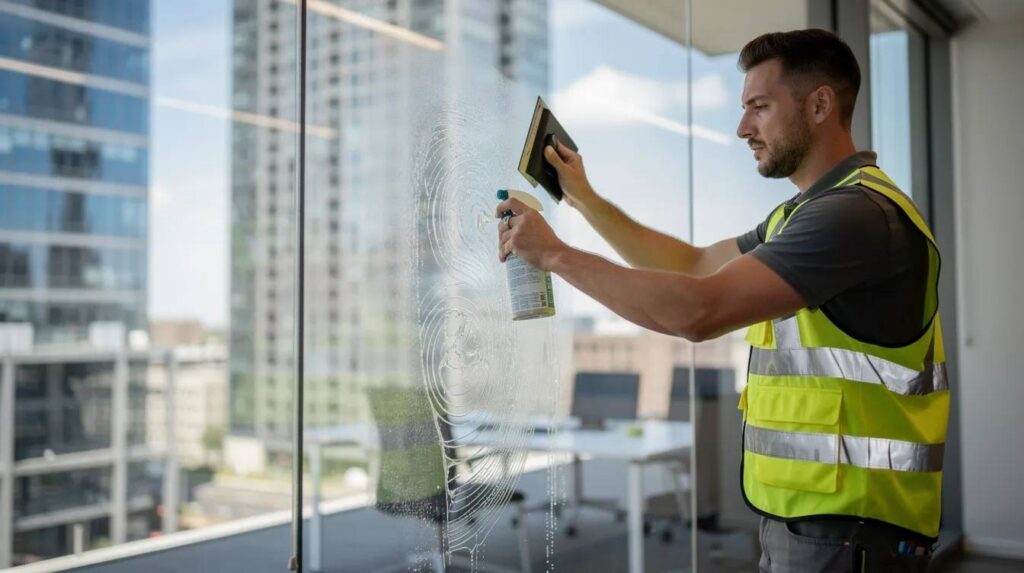
- Film application – using specialized tools, slip solution, and squeegees, managing seams on oversized panes
- Final inspection – edge detailing and quality check
Professional installation ensures optimal performance and warranty coverage, and professional-grade films are tested for safety and compatibility with your specific glass. For B2B clients, Window Film Depot handles lift access and safety planning, night and weekend work for retail roll-outs, and full documentation including spec sheets and warranties as part of its full suite of 3M window film products and installation services.
Timelines vary: a 5,000 sq ft storefront can often be completed in one to two days. A 200,000 sq ft corporate campus may be phased by building over several weeks to minimize disruption.
Common Mistakes to Avoid When Selecting Glare Reduction Window Film
Not all window films are right for every glass type or building. Choosing purely on darkness or price creates problems, so it pays to understand the range of window glass film products and brands we offer before you commit.
Mismatching film to glass. Applying extremely dark, high-absorbing films to certain insulated or tempered units in hot climates can cause thermal stress and cracking. Professional installers check glass type and manufacturer guidelines before recommending any product.
Over-darkening. Chasing maximum glare reduction by going too dark can conflict with daylighting strategies, LEED or WELL goals, and tenant satisfaction. Run mock-ups on critical façades before committing to a film across an entire building.
DIY on the wrong project. DIY installation works well for flat, single-pane windows in a house or small room. But on large commercial or institutional projects, DIY kits lead to bubbles, contamination, visible seams, and voided warranties. We’ve seen offices where DIY film had to be stripped and replaced before professional work could begin.
Relying on marketing names. Always request actual performance data: VLT, SHGC, TSER, and UV rejection. Ask for manufacturer-backed warranties. Anti-glare window films typically require no additional maintenance once installed, but that only holds true when the right film is matched to the right glass by an experienced installer.
FAQs About Glare Reduction Window Film
How much can glare reduction window film actually reduce screen glare?
High-performance solar films typically cut perceived glare by 50–80%, depending on VLT and window orientation. Solar control films reduce heat buildup and glare effectively. Even shifting from clear glass to a 35% VLT ceramic film can make previously struggling, unusable screens comfortable all afternoon. For conference rooms or media rooms facing direct sun, films with VLTs around 15–25% deliver improving visibility that’s immediately noticeable.
Will glare reduction film make my office or home feel too dark?
Modern neutral and ceramic films are engineered to preserve natural light while controlling harsh brightness. Most corporate offices land in the 30–50% VLT range to balance how much light enters with comfortable monitor use. You won’t feel like you’re sitting in a dark corner – you’ll feel the difference in comfort without losing the sense of an open, daylit space.
How long does quality glare reduction window film last?
Most residential window films last between 10 and 20 years. Glare reduction films can last between 10 and 20 years depending on quality and conditions. Premium ceramic window films last 20–25 years with proper maintenance, and premium ceramic films last 20–25 years when professionally installed on interior glass. Films from manufacturers like 3M installed in the early 2000s are still performing well in 2026 with basic upkeep.
Is window film compatible with double-pane or low-E glass?
Most commercial and residential insulated glass units can accept correctly specified films. However, a glass and film compatibility check is critical, especially on heat-absorbing tints and certain low-E coatings. Window films can block up to 99% of UV rays on compatible glass without causing seal failure when the right product is selected.
How do I clean glare reduction window film without damaging it?
Wait 30 days after installation for the adhesive to fully cure. Then use soft cloths or squeegees with mild, non-ammonia cleaners. Avoid abrasives and razor blades. Wipe edges gently to protect the film’s lifespan over the long term. These films maintain their clarity with minimal effort.
Can Window Film Depot handle multi-location or nationwide glare issues?
Yes. Window Film Depot routinely manages national roll-outs for retailers, banks, restaurant chains, and school districts, coordinating surveys, logistics, and installation crews across multiple states under one point of contact with standardized specs and consistent performance.
Why Choose Window Film Depot for Glare Reduction Window Film
Window Film Depot has been solving glare, heat, and security challenges for commercial and residential clients since 1992. As a 3M Authorized Dealer and Installer, we have access to the full range of advanced solar, ceramic, and spectrally selective film technologies – solutions that deliver real performance, not just a purchase of dark tint. You can learn more about our history, awards, and national footprint on the About Window Film Depot page.
What sets us apart:
- National reach with local care – in-house project management for multi-site rollouts across the U.S.
- Full-service and wholesale – we install window film for end clients and supply wholesale film rolls to glass contractors and trade partners across North America
- Proven track record – government, education, healthcare, retail, and residential projects of every scale, from vehicles and storefronts to curtain wall office towers
- Consultative approach – on-site assessments, energy and comfort analysis, and side-by-side film mockups so your decision is based on real data
Next Steps: Get Expert Help Selecting the Right Glare Reduction Window Film
In conclusion, glare reduction window film is a fast, non-invasive way to reclaim sunny spaces, protect occupants and interiors, and improve building energy efficiency – without the cost or timeline of replacement glass.
Commercial and institutional readers: gather basic information on your locations, glass types, key problem rooms, and utility costs, then contact Window Film Depot for a site visit or remote consultation, whether you’re in a major hub like our Washington, DC window film installation service area or elsewhere in the country.
Homeowners: note the rooms and times of day with the worst glare – that south-facing living room from 3–6 p.m., the breakfast nook where you can’t comfortably read your screen – and request film samples or a professional evaluation instead of guessing online.
Call Window Film Depot, submit a quote request on our website, or email your plans and specs for larger projects. Our team will recommend specific 3M glare reduction window films tailored to your glass, climate, and budget.