Table of Contents:
- Introduction: Why Reflective Window Film Matters in 2026
- Understanding Reflective & Defense Window Film Options
- Materials Needed and Site Preparation
- Step-by-Step Reflective Window Film Application (Standard Wet Method)
- Dry Installation & Reflective Defense Film for Exterior Glass and Screens
- Common Installation Mistakes to Avoid
- When to DIY and When to Hire a Professional Installer
- FAQs About Reflective Window Film Installation
- Why Choose Our Team for Reflective and Defense Window Film Projects
- Next Steps: Plan Your Reflective Window Film Installation
Introduction: Why Reflective Window Film Matters in 2026
Reflective window film can improve comfort in sunny rooms and reduce A/C demand by bouncing solar energy away from glass before it heats interior spaces. The film reduces glare, improving comfort for activities like working at a computer or reading digital signage. It also blocks 99% of harmful UV rays, which helps prevent fading of furniture and flooring over time.
A reflective window creates a mirror effect on the exterior glass surface during daylight hours, giving occupants privacy while still allowing visible light through. Reflective window film helps manage indoor climates and provides privacy across homes, offices, schools, and retail spaces. Because it reduces reliance on air conditioning, the payback on cooling costs alone can justify the project for south- and west-facing facades.
This guide covers reflective window film installation for flat architectural glass (not automotive), including standard solar films, defense window film for security applications, and Reflect Defense window film for protecting outdoor materials. You will find a complete materials list, film application steps for both wet and dry installation methods, common mistakes, and FAQs for commercial and residential buildings.
Understanding Reflective & Defense Window Film Options
Reflective window film, defense window film, and Reflect Defense window film each solve different problems. Here is how they differ:
- Standard solar reflective window film uses metalized or sputtered coatings to reject 50-80% of solar heat and glare. Window film can reject up to 82% of solar energy on high-performance products. Reflective window film rejects a high percentage of incoming infrared solar energy, keeping interiors cooler. It creates a mirrored effect for daytime privacy on sun-facing glass.
- Defense window film is thicker (typically 8-14 mil) and adds anti-shatter, forced-entry resistance, or blast mitigation to glass while still providing solar and UV control. Common on street-level glass, school corridors, and government buildings.
- Reflect Defense window film targets the intense reflected heat that energy-efficient Low-E windows can focus onto neighboring surfaces. Synthetic turf melts at roughly 167-175°F; triple-silver Low-E glass can concentrate enough reflected energy to reach those temperatures. Reflect Defense products reduce that outward reflection to protect turf, vinyl siding, and patio furniture finishes.
Typical use cases: reflective solar film on high-rise curtainwalls and office windows; defense window film on doors and classroom sidelites needing safety and energy benefits; Reflect Defense films on properties where neighboring turf or facade materials show signs of warping.
Materials Needed and Site Preparation
Preparation and the right tools determine whether a film application looks professional or ends up hazy and bubbling. Gather these materials before starting:
- Window film rolls (reflective, defense, or Reflect Defense depending on the project)
- A spray bottle filled with installation solution: use a mixture of water and Slip Tack, or clean water with a few drops of baby shampoo or mild soap as a soapy water solution
- A tape measure for accurate window dimensions
- A soft plastic squeegee; a rubber squeegee for final passes
- A sharp utility knife and a razor blade for trimming and scraping
- A lint-free cloth and glass cleaner (ammonia-free)
- Low-tack masking tape, safety glasses, cut-resistant gloves, and drop cloths
Move or tarp patio furniture, planters, and outdoor electronics near the work area. Indoors, pull blinds, shades, and desks at least 3-4 feet from the glass. Inspect each pane for cracks, chips, or seal failures, and document them before proceeding.
Installation conditions should be cool and out of direct sunlight. Install window film on a mild day without humidity; ideal temperature range is 60-80°F (15-27°C) with low dust and minimal wind on exterior jobs.
Step-by-Step Reflective Window Film Application (Standard Wet Method)
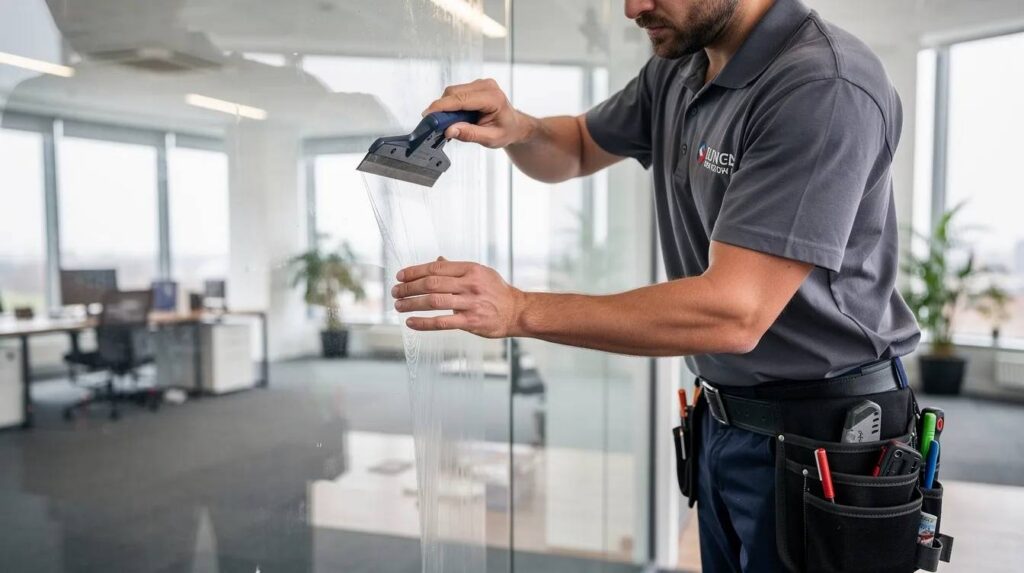
Installing reflective window film requires a wet application method to push out bubbles and allow repositioning on the glass surface.
1. Clean the glass. Spray the glass with your soapy water and scrape at a low angle with a razor blade to remove paint specks, tape, or construction residue. Wipe with a lint-free cloth, paying close attention to corners and gaskets where dirt collects. Clean glass is crucial for a successful installation of window film; even a single grain of dust can create a visible bump under reflective film.
2. Measure and cut. Use your tape measure to record each pane’s window dimensions. Cut the film approximately one inch larger than the glass dimensions before application; this extra margin gives you room to trim without leaving gaps at the window frame.
3. Remove the liner. Apply two small pieces of tape on opposite corners to separate the liner from the adhesive side. Peel carefully and spray the exposed adhesive side with solution immediately to prevent dust from sticking.
4. Position the film. Spray the glass generously with soapy water. Applying soapy water allows the film to slide during installation, so float the film onto the wet surface with the adhesive side toward the glass. Align the upper edge first, keeping the film properly aligned with an even overlap at all edges. Lightly press the upper corners to anchor the position.
5. Squeegee. Use a squeegee to remove air bubbles during application. Start with a light tack-down stroke across the top center, then work outward from the center in overlapping passes, applying light pressure initially. Increase to firm, even strokes to push liquid and air toward the edges. Spray the outer surface of the film to reduce friction and protect the reflective coating.
6. Trim and re-squeegee. Carefully trim the excess film along the window frame using a sharp utility knife for a precise fit. Trim the film around the window frame, leaving about 1/8-inch clearance from gaskets. Use a rubber squeegee to remove any remaining air bubbles with at least two more passes, pressing edges firmly to ensure strong adhesion. Remove the unneeded portion of film and wipe the surface with a soft cloth.
7. Cure time. Let the film cure undisturbed for 30 days after installation. During this period, small water pockets, haze, or a slightly milky appearance are normal and will dissipate as moisture evaporates through the film. Avoid cleaning with ammonia-based products until curing is complete.
Dry Installation & Reflect Defense Film for Exterior Glass and Screens
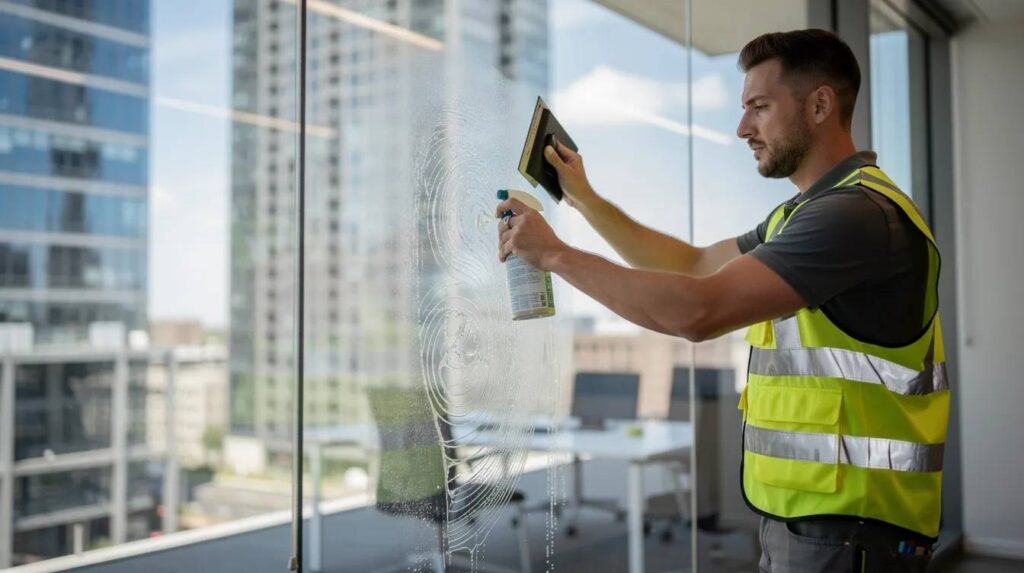
Some specialty products, including certain Reflect Defense window film panels and anti-reflective screen films, use a dry installation method where no liquid sits between film and substrate.
- When dry installation is used: exterior film on vinyl frames or painted metal mullions where water intrusion could damage coatings; Reflect Defense products applied to screens or architectural panels to cut reflected heat that can damage artificial turf or patio furniture finishes.
- Surface prep: Clean screens or exterior glass with a non-residue cleaner and a soft cloth or brush. The surface must be completely removed of all dust and debris and fully dry before film application.
- Dry install materials: an approved adhesive promoter, felt-edge squeegee, and masking tape to hold one edge of the film while you align.
- Application sequence: Tack one edge and verify the film is properly aligned before committing. Work methodically from the anchored edge, pressing with firm squeegee strokes. There is no solution to slide or reposition; once pressed, the film cannot be lifted without risk of damage.
- Schedule for calm, dry days with no chance of rain. Wind introduces debris and makes handling large reflective panels difficult.
Properly installed Reflect Defense films reduce the temperature of reflected sunlight reaching neighboring turf and facades, preventing the melting, warping, or discoloration that high-performance Low-E windows can cause.
Common Installation Mistakes to Avoid
Reflective films show flaws more than clear films. Avoiding these errors saves time and material:
- Skipping a thorough cleaning of the glass surface and frame edges, which leads to contamination lines and poor adhesion.
- Applying the wrong film type on insulated or Low-E glass without checking manufacturer compatibility, which can raise glass temperature and lead to thermal stress cracks.
- Working in direct, intense sunlight or on very hot glass, causing the solution to dry too quickly and trapping bubbles under the reflective coating. Reflective window films can create visible bubbles if dust is trapped underneath.
- Over-squeegeeing corners with hard tools, which can scratch the reflective layer on mirror-finish films.
- Cutting film too small, leaving light gaps at the window frame visible from outside.
- Neglecting to protect interior finishes or outdoor items like patio furniture during installation.
- Skipping manufacturer instructions on cure times and warranty registration.
When to DIY and When to Hire a Professional Installer
DIY reflective window film installation works well on a few ground-floor office windows, a home office, or a small storefront with simple rectangular glass and no existing coatings. The tools are affordable, and the wet method is forgiving enough for a careful first-timer.
Professional installation is the better choice for:
- Multi-story buildings requiring lifts or swing stages
- Institutional projects (schools, hospitals, government) needing coordinated scheduling, documentation, and compliance with standards like ASTM F1642
- Defense window film tied to security or blast mitigation, where edge sealing and frame anchoring determine whether the film performs under impact
- Large-area commercial jobs where professional crews reduce material waste and finish faster, offsetting labor costs
Ask any contractor about their experience with reflective and defense window film, references from similar buildings, proof of insurance, and whether they handle both interior and exterior film options.
FAQs About Reflective Window Film Installation
How long does reflective window film take to dry and fully cure?
The surface feels dry within a few hours, but full curing takes 7-30 days depending on film thickness, temperature, and whether the install is interior or exterior. During this period, small water pockets and haze are normal and will clear on their own. Do not wipe or clean aggressively until curing is complete.
Will reflective window film damage my glass or window seals?
Professionally specified reflective films are engineered to stay within safe temperature ranges for IG units and Low-E coatings. Problems arise when an incompatible film is applied to glass it was not designed for. Always follow the manufacturer’s compatibility charts for your specific glass type.
Can reflective window film really protect patio furniture and artificial turf?
Standard reflective films reduce UV and heat reaching interiors, which slows fading on fabrics and flooring. Reflect Defense window film goes further by managing the harsh reflected sunlight that bounces off energy-efficient windows and can melt turf or distort vinyl furniture outdoors.
Is dry installation better than the wet method for reflective window film?
Wet installation is the default for most interior glass because it allows repositioning and bubble removal. Dry installation is reserved for specific products and surfaces where water could be problematic, such as exterior screen films or Reflect Defense on certain substrates.
Can reflective window film be removed or replaced later?
Quality architectural films are removable with careful heating and adhesive removal but are not reusable. Large commercial removal is best handled by professionals to avoid scratching the glass.
Will reflective film make my windows too dark inside?
That depends on visible light transmission (VLT). Films range from 10% VLT (very dark, high mirror effect) to 50% VLT (moderate tint). Lighter dual-reflective options maintain interior views while giving daytime privacy. Daytime privacy from reflective window film reverses at night when interior lights are on and outdoor light drops. High-quality window films can last 10 to 20 years, so choosing the right VLT matters long-term.
Do building codes or HOA rules affect reflective window film installation?
Some municipalities restrict exterior reflectance on street-visible glass, and historic districts may ban mirrored facades. HOA covenants sometimes specify maximum reflectance levels. Check with local authorities or property managers before applying high-reflectance films, and verify that safety glazing locations (floor-level glass, doors) meet ANSI Z97.1 requirements.
Why Choose Our Team for Reflective and Defense Window Film Projects
Window Film Depot has installed and supplied solar control, reflective, defense, and specialty films since 1992 across commercial, institutional, and residential buildings nationwide.
- Hands-on expertise with a broad range of glass types, building ages, and retrofit scenarios, including existing Low-E windows
- Turnkey project management for multi-site portfolios, national retail rollouts, education campuses, and government facilities
- Access to solar control, safety/security, privacy, decorative, anti-graffiti, and architectural surface films so solutions match specific goals rather than a single product line
- Wholesale window film supply and installation guidance for trade partners, glass contractors, and facility maintenance teams across North America
- Responsive estimating, clear communication with facility managers and architects, clean job sites, and respect for occupied environments
If you are unsure which reflective or defense window film fits your situation, send photos, drawings, or energy bills for a tailored recommendation.
Next Steps: Plan Your Reflective Window Film Installation
Reflective and defense window films offer a fast, non-invasive way to upgrade glass performance without full window replacement.
- Walk your property and identify problem areas: hot spots, screen glare, fading furniture, or turf and siding damage near reflective windows.
- Gather basic information before contacting a specialist: glass sizes, floor level, access constraints, and any existing coatings on the glass.
- Request a professional assessment or quote for reflective window film, defense window film, or Reflect Defense solutions, including energy savings estimates where applicable.
Ready to move from research to results? Schedule a consultation, send your project details online, or speak directly with a film specialist at Window Film Depot to get your installation planned.