Jump to the section that matters most to you, whether that’s performance data, cost per square foot, or installation guidance.
Table of Contents:
Introduction: 3M “Ballistic” Film vs. Bulletproof Glass; Clearing Up the Confusion Fast
Schools, retail storefronts, and office buildings across the U.S. have accelerated security window upgrades since 2024. The term “3M ballistic film” appears in product searches thousands of times per month, but here is what most searchers do not realize: 3M does not make bulletproof window film. 3M explicitly states its safety and security window films are not bullet-resistant. What the company does manufacture is advanced security film designed to hold shattered glass together and delay forced entry.
These security window films slow break-ins, reduce injuries from flying shards, and integrate with attachment systems to keep broken glass seated in the window frame. They are not a substitute for fully rated ballistic glass. This article covers how 3M safety and security window film works, how performance is tested, what it costs in 2026, and how to choose the right product for your building and threat profile. If you are a facility manager, school administrator, architect, or property owner trying to protect people and harden existing glazing without replacing every pane, this guide is for you.
What Is 3M “Ballistic” Window Film and What Can It Actually Do?
3M safety and security window film is a heavy-duty multi-layer security window laminate applied to existing glass to create a safety and security window system. The film bonds to the glass surface with pressure-sensitive adhesive, turning brittle glazing into a flexible membrane that resists impact, tearing, and shattering.
The label “ballistic film” or “bulletproof window film” circulates in marketing, but the technical reality is different. The function of 3M security film is primarily glass-fragment retention and delaying entry. 3M security window film delays forced entry by intruders; in many tested conditions, it can delay forced entry by 30 to 45 seconds when combined with proper attachment systems. That window of time allows alarms to sound, occupants to lock down, and responders to arrive.
3M security films maintain high optical clarity while improving security. Modern products in the Ultra Series feature 8 mil thickness for enhanced protection, while lighter Safety S-Series films range from 4 to 7 mil. 3M security films are used in various applications, including retail and office buildings, schools, government buildings, and houses of worship. Since 2018, these films have been specified as part of layered security programs that also include cameras, access control, and alarms.
Inside the Technology: How 3M Safety and Security Films Reinforce Glass
Multi-layer construction matters more than raw thickness for security performance. Films like the Ultra S800 use a micro-layered design: dozens to hundreds of ultra-thin polyester layers bonded together. This construction delivers exceptional tear resistance and tensile strength without making the film excessively thick.
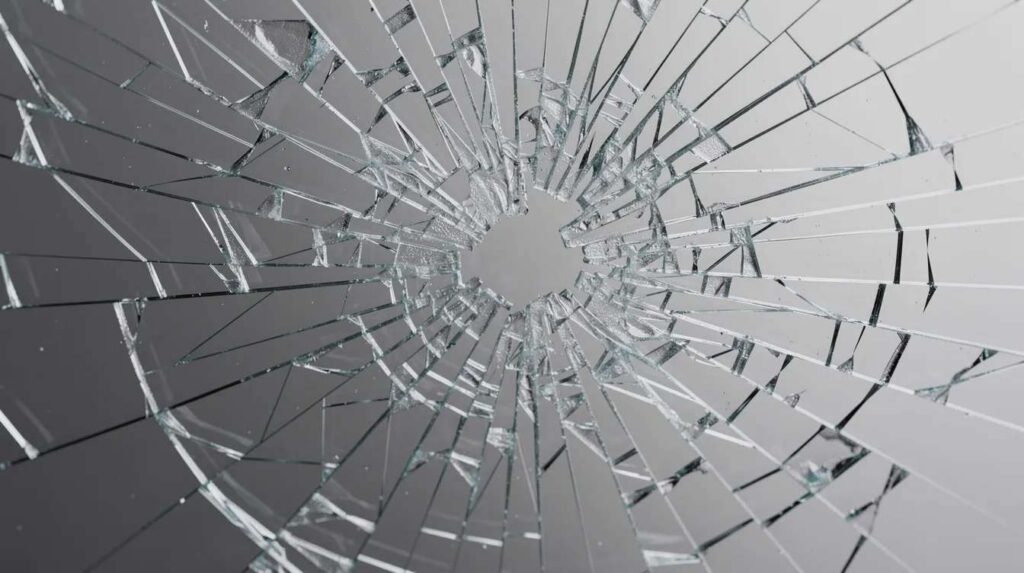
The Ultra Series film has a tensile strength of 25,000 psi. The S140 film offers break strength around 350 lbs/in. 3M security films are designed to absorb kinetic energy and stretch without tearing, so when glass breaks under blunt force or impact events, the film holds the fragments in place. This spall mitigation reduces the risk of injury from flying glass shards during impacts, protecting building occupants from lacerations during break ins, blasts, natural disasters, or seismic events. 3M films can contain shattered glass during storms or seismic events where flying shards pose the greatest danger.
Beyond security, 3M security film blocks up to 99% of harmful UV rays, protecting interior furnishings and occupant safety from prolonged sun exposure. The same technology appears across different product lines, so projects can combine security film with solar control, privacy, or decorative films on a single building.
The Critical Role of Attachment Systems: Film, Glass, and Frame Working as One
Security film alone, without proper attachment systems, cannot deliver high-level forced entry protection. When a window breaks, the weakest link is often the perimeter where film meets the window frame. Without anchoring, filmed glass can simply pop out of the frame under sustained force.
Attachment systems solve this. The 3M impact protection attachment (IPA sealant) is a structural wet-glaze sealant applied around the perimeter of the filmed glass, locking the pane to the frame so the entire assembly resists penetration. No window film can stop a high-velocity bullet or provide UL 752 ballistic resistance on its own, but film combined with attachment and a sound frame creates a system that forces an attacker to spend far more time and energy trying to gain entry.
Typical use cases: ground-floor retail storefronts exposed to smash-and-grab theft, school entrances where forced entry attempts are the primary concern, and commercial buildings where blast standards apply. The failure point in most filmed-glass breaches is a gap in the attachment bead or a weak frame; continuity of the sealant line around every door and window is essential.
3M Security Film vs. Ballistic Glass: Matching Solutions to Real Threats
Correct selection starts with an honest assessment of specific threats. Ballistic glass is a thick, multi-layer assembly of laminated glass and polycarbonate, usually 1 to 3 inches thick and tested to resist penetration from specific firearms. True ballistic resistance requires multi-layered glass and polycarbonate systems. True ballistic protection requires UL 752-rated glass systems; Riot Glass is an example of true ballistic protection.
3M security films excel at forced entry delay, glass retention during glass breakage, and blast mitigation on existing glazing. Ballistic glass is required when the project must actually stop bullets from penetrating the building envelope. True bullet-resistant glass costs $60 to $200 or more per square foot installed, compared to $8 to $25 for security film.
For most offices, retail stores, churches, and whole-house residential projects, upgraded safety and security window film plus attachment systems is the cost-effective solution. For courtrooms, cash-handling areas, and police facilities facing direct ballistic threats, UL 752-rated ballistic glass or hybrid assemblies are appropriate. No solution is 100% bulletproof; even rated systems carry the label “bullet resistant” because sufficient rounds or higher-caliber threats can defeat them over time.
Performance Standards and Testing: UL 752, Forced Entry, and Real-World Results
Verifiable performance data matters for liability, code compliance, and insurance, especially in schools and government buildings. UL 752 is the primary bullet resistance standard for glazing systems, defining 10 levels from handguns (Level 1: three shots of 9mm) through high-powered rifles. Ratings apply to complete assemblies, not to a generic “ballistic film” product in isolation.
Forced entry and impact testing is separate from ballistic testing. These evaluations measure how long a filmed window resists penetration from repeated hammer or sledgehammer strikes, simulated smash-and-grab entry attempts, and blast overpressure per standards like ASTM F1642. Cherry Creek School District in Colorado awarded a 300,000 square footage project across 70-plus schools in 2025 using 3M Scotchshield film with IPA, and live ballistic and impact testing were part of the selection process. That project is the largest U.S. school security film deployment to date.
Cost, Specification, and Project Planning for 3M Security Window Film
3M security window film costs $8 to $25 per square foot installed, depending on film type, thickness, attachment systems, and installation complexity. Here is how specific products break down:
| Product | Installed Cost per Sq Ft | Typical Use |
|---|---|---|
| 3M Safety S70 | $3–$6 | Basic safety glazing, upper floors |
| 3M Safety S140 | $5–$10 | Mid-level security, interior glass |
| 3M Ultra S800 | $10–$16 | Forced entry delay, ground-floor security |
| Thicker films + IPA | $15–$25 | High-risk storefronts, schools, government |
Professional installation adds $2 to $8 per square foot to material costs. Installation labor adds $2 to $8 per square foot depending on access, height, and night-work requirements. Applying 3M film can retrofit existing windows at a lower cost than replacing them, and 3M security films can be applied to most standard glass types.
A 150 square foot residential project using Ultra S800 with IPA runs roughly $1,500 to $2,500. A 1,000 square foot retail facade with tinted security film and attachment might cost $12,000 to $20,000. Compare that to full ballistic glazing replacement at $60,000 to $200,000 or more for the same storefront.
Prioritize thicker films and full attachment on ground-floor, street-facing, and high-occupancy areas. Use lighter safety films on upper stories. A good proposal should list exact film product names, thickness, visible light transmission, warranty coverage terms, and any referenced test reports for the film application specified.
Installation, Maintenance, and Common Mistakes to Avoid
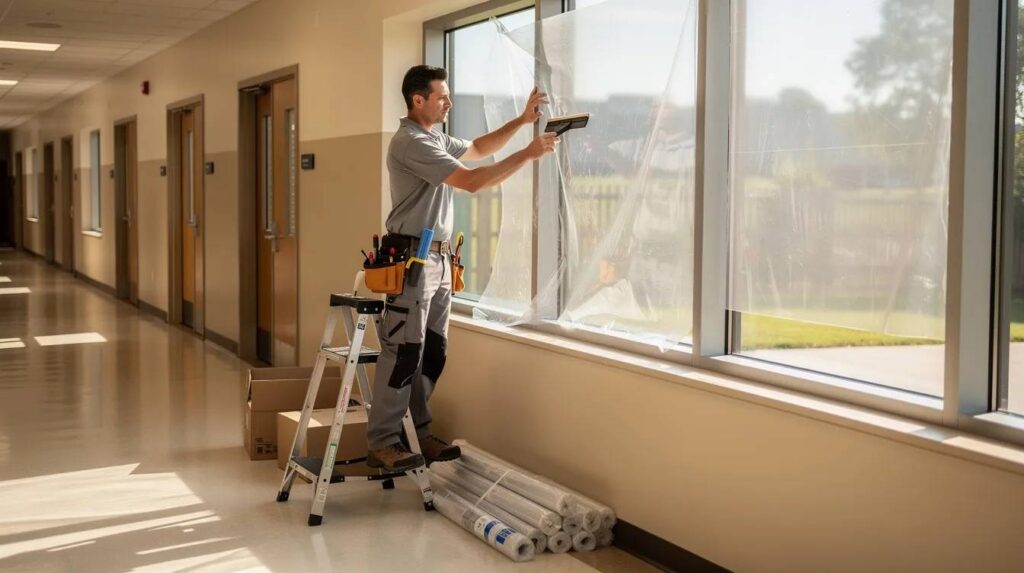
Professional installation by certified security film specialists is essential for performance, warranty validity, and liability protection. The installation process follows a defined sequence: detailed site survey and glass inspection, cleaning, film application, squeegeeing to remove solution and bubbles, edge trimming, then applying the impact protection attachment sealant around the perimeter where specified.
Common mistakes to avoid:
- Hiring generic “tint” installers with no security-film training
- Skipping perimeter attachment on doors and accessible windows
- Choosing film based on thickness alone instead of tested performance
- Believing “ballistic film” marketing claims without requesting test data
- DIY installation, which can void manufacturer warranties
Certified installation is required for warranty validity. After the application process, allow a 30-day cure period before cleaning. Use standard glass cleaning methods; avoid abrasive tools. Inspect film and attachment bead periodically. Well-installed safety and security films remain nearly invisible with high clarity and should not peel, bubble, or distort. Visible failure signs indicate improper installation or outdated material.
Why Choose Our Team for 3M Safety and Security Window Film Projects
Since 1992, our team has specialized in 3M safety and security product lines across government, education, retail, and commercial projects nationwide. We handle multi-site rollouts, complex retrofit glazing conditions, and coordination with architects, insurers, and code officials.
Our turnkey service covers threat-focused consultation, product selection (security film vs. ballistic glass, or hybrid solutions), professionally installed film and attachment systems, and coordination with access control and alarm providers. Every project is designed around a people-first outcome: protecting occupants, maintaining operations, preserving daylight and aesthetics, and fitting within realistic budgets. We handle everything from a single door to a district-wide deployment covering hundreds of thousands of square feet.
FAQs About 3M Ballistic Film, Security Window Film, and Glass Protection
These FAQs address the most common questions from facility managers and property owners about 3M ballistic film, security window film, and alternatives to ballistic glass.
Is there such a thing as true 3M bulletproof window film?
No. 3M does not manufacture bulletproof window film. Their products are safety and security window films that hold shattered glass together and delay forced entry. Any claim of “3M bulletproof film” is technically inaccurate. Ballistic resistance requires a complete system, including glass, film, and attachment systems, tested under UL 752. Always request actual test reports for any proposed solution rather than relying on marketing language.
How does 3M security window film help during a break in or forced entry attempt?
When glass breaks, the film keeps broken glass in the opening. Intruders must continue striking or cutting through the filmed pane, which can delay forced entry attempts by 30 to 45 seconds or longer with strong attachment systems. That delay is often enough to trigger alarms, alert law enforcement, or allow occupants to move to safer areas. The film does not make a window impenetrable, but it changes attacker behavior; many abandon the attempt when quick access is not possible.
Can 3M safety and security film stop bullets at all?
On standard commercial or residential glass, 3M security window film does not stop bullets from common handguns or rifles. In some engineered systems, security film is applied to ballistic-rated glass to improve spall control and multi-hit durability, but the bullet-stopping power comes from the underlying ballistic glazing. Treat security film as a forced entry and glass hazard mitigation tool, not a standalone ballistic solution.
What is the difference between security film and ballistic glass in terms of cost and installation?
Security film retrofits onto existing glazing with minimal disruption to building operations. Ballistic glass requires full unit replacement, potential window frame reinforcement, and more invasive construction. Installed security film systems run $8 to $25 per square foot; ballistic glazing assemblies often cost $60 to $200 or more per square foot. Most building owners use security film to upgrade vulnerable windows first, reserving ballistic glass for limited high-threat locations where bullet resistance is necessary.
How do I know which 3M security film thickness or product line I need?
Product choice depends on glass type, frame condition, threat profile, and whether attachment systems will be used. Thinner films (4 to 7 mil) improve safety and basic protection against property damage. Thicker films or ultra-micro-layer products (8 to 14 mil) with attachments provide an additional layer of forced entry resistance on ground-level glass. Request a site-specific assessment so film type, thickness, and any combination with solar control or privacy films can be tailored to your building and environmental conditions.
Will adding security window film change the look of my glass or reduce natural light?
Clear 3M safety and security films preserve views and daylight with visible light transmission often around 87 to 89 percent. Occupants typically do not notice the film once it has fully cured. Tinted or reflective versions are available when projects also need to reduce heat gain, glare, or improve daytime privacy, though these trade some optical clarity for solar performance.
How long does 3M security film last, and what kind of warranty is typical?
3M security films last 10 to 15 years before noticeable optical or adhesive degradation under normal conditions. A lifetime warranty is available for residential installations. Commercial installations have a 10-year warranty coverage. Warranties cover defects in material and manufacturing. Confirm exact warranty terms, including coverage for peeling, bubbling, discoloration, and glass breakage, in writing from your installer before work begins. A limited lifetime warranty on residential projects and a standard commercial warranty both require professionally installed film using approved methods.
Next Steps: Plan Your Security Film Project and Protect Your Building
3M safety and security film is not bulletproof, but it is one of the most practical ways to harden existing glass against forced entry, flying debris, and glass hazards when combined with proper attachment systems and professional installation. Start with a vulnerability review: identify ground-floor glass, public-facing windows, entry doors, and high-occupancy areas that would benefit most from an upgrade.
When you are ready, reach out for a consultation. Have your approximate square footage, building type, location, known threats (crime history, previous break-ins), and any energy or privacy concerns ready. Our goal is straightforward: protect people, maintain operations, and create a safer environment through tested safety and security window solutions tailored to your property.