This guide covers everything homeowners need to know about residential window tinting for privacy, from how privacy films work and which rooms benefit most, to real costs and long-term care. The focus is on privacy window film installed in existing homes, with an emphasis on maintaining natural light.
Table of Contents:
- Why More Homeowners Are Choosing Residential Window Tinting for Privacy
- What Is Privacy Window Tinting and How Does It Work?
- Daytime vs Nighttime Privacy
- Choosing the Right Privacy Window Film for Each Room
- Additional Benefits of Residential Privacy Window Tinting
- Cost, Installation, and Why Professional Installation Matters
- Maintenance, Lifespan, and Care Tips
- Common Questions About Residential Privacy Window Tinting
- Why Choose Our Team
- Get a Quote
Why More Homeowners Are Choosing Residential Window Tinting for Privacy
Denser neighborhoods, larger street-facing windows, and the rise of home offices have turned residential privacy into a daily concern. Homeowners who once relied on blinds or curtains are discovering that those coverings darken rooms, block views, and make spaces feel smaller. Privacy films reduce visibility into your home while allowing you to keep windows uncovered, preserving outward visibility and sunlight.
Privacy window film can be targeted to specific problem areas like bathrooms, sidelites, or street-facing living rooms rather than treating every opening. Modern options go far beyond dark automotive-style tint. Homeowners can now choose options from frosted glass and etched looks to stained glass patterns and decorative films that enhance aesthetics while providing privacy. Many homeowners in hot and mixed climates also choose privacy films for their UV protection, glare reduction, and energy efficiency gains.
What Is Privacy Window Tinting and How Does It Work?
Privacy window film is a retrofit product applied to existing interior or exterior glass surfaces to reduce visibility while managing light transmission. Residential window tinting uses a micro-thin polyester film applied to glass surfaces, and this film is constructed with multiple layers: scratch-resistant coatings, functional layers (dyed, metallized, ceramic, or nano-ceramic), and a pressure-sensitive adhesive that bonds to the glass.
Window tinting manipulates light and solar energy through absorption, reflection, and filtration. Dye or nanoparticle compositions in films block specific spectra of light and UV rays. Depending on the product, people outside see a blurred image, a mirrored surface, or nothing at all. The main privacy film categories include:
- Frosted and translucent films
- Tinted sun-control films
- Reflective (mirror-like) films
- Blackout and whiteout options
- Decorative patterned films
Once properly installed, quality films bond to glass to form a durable surface that resists scratches. Window film can also help hold shattered glass shards together, enhancing safety in the event of breakage.
The Basics of Privacy Films
Choosing the right window film starts with understanding a few core attributes. The Visible Light Transmission (VLT) rating affects light entry: lower VLT means more tint and stronger daytime privacy but potentially less natural light. Visible Light Transmission regulations may apply to window films in some jurisdictions, so it is worth checking local codes.
- Clear or near-clear films (70–90% VLT): ideal where you need partial privacy without sacrificing natural light, such as entry sidelites
- Lightly tinted films (40–65% VLT): good for living rooms and shared spaces, moderate glare and privacy control
- Heavily tinted or reflective films (15–35% VLT): strong daytime privacy, best for south and west exposures, but rooms may feel dark
Surface finishes range from matte frost and etched textures to geometric shapes, nature-inspired patterns, gradients, and colored decorative films. These can be selected to match existing interior style and elegance. Quality privacy films are designed to be removable without permanent damage to most standard residential glass when installed by a professional.
Daytime vs Nighttime Privacy: What Homeowners Need to Know
Different types of residential privacy films offer varying levels of daytime and nighttime effectiveness. The key factor is light contrast: privacy films behave differently when it is brighter outside than inside versus when indoor lights are on after dark.
Picture a street-facing living room window in full afternoon sun. With a reflective film, passersby see only their own reflection. Now picture that same window at 9:00 p.m. with interior lights on. The privacy effect reverses. Understanding this difference is essential before you choose options for each room.
Why Daytime Privacy Works Best with Reflective and Tinted Films
Reflective films create a one-way mirror effect during the day by bouncing visible light back from the brighter side. Reflective films provide daytime privacy by reflecting light, making them a popular choice for living rooms, home offices, and street-facing façades. Homeowners inside can still see out clearly.
Ceramic films provide solar control while increasing daytime privacy without being highly reflective, offering a subtler appearance. Darker solar control films around 15–35% VLT provide meaningful reduction in street-level visibility while lowering heat and glare.
Note that local laws may limit window film darkness or reflectivity. Homeowners’ associations may have specific window film guidelines, and some regions restrict highly reflective films to prevent glare to neighbors.
The Nighttime Privacy Challenge
Window tinting effectiveness reverses at night if interior lights are on, allowing visibility from outside. This is commonly called the “aquarium effect.” Privacy mirror films require a dark room to function effectively, so reflective and tinted films alone will not hide silhouettes when lamps are on.
Homeowners using reflective or solar films should still plan on interior window treatments like blinds or curtains for bedrooms and bathrooms after dark. Even in kitchens and living rooms, nighttime gatherings can make shapes visible through tinted glass. Pairing privacy window tinting with dimmable LED lighting and strategic lamp placement helps reduce interior brightness near street-facing windows at night.
Best Films for 24-Hour Privacy and Nighttime Privacy
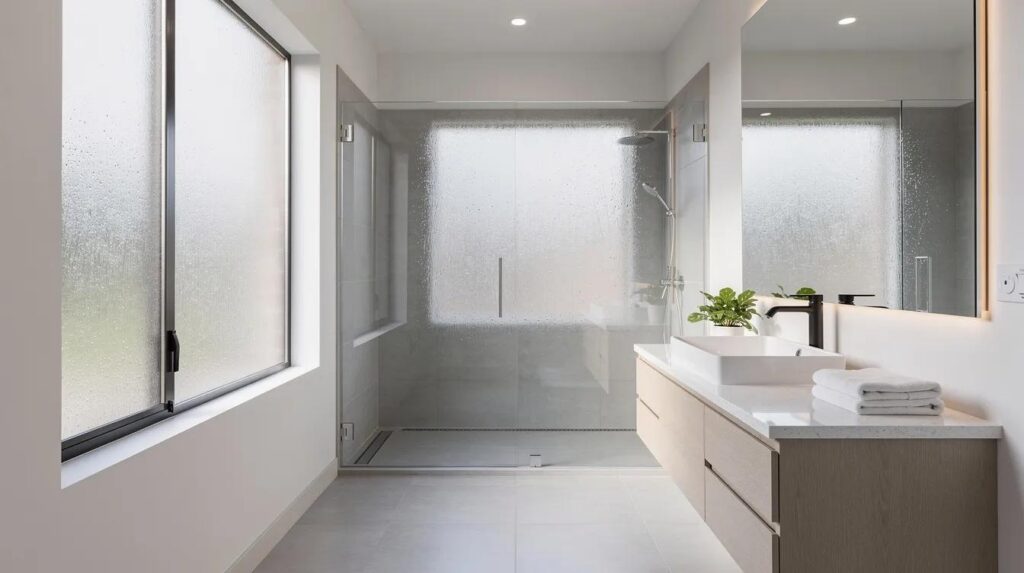
Frosted films allow natural light while blocking views around the clock, making them ideal for bathrooms, ground-level bedrooms, and entry doors with sidelites. Frosted films provide total privacy while allowing natural light to fill the room regardless of time of day.
Blackout films completely block light and visibility, suitable for nurseries, studios, or first-floor bedrooms where complete privacy is non-negotiable. The trade-off is losing any view and sunlight.
Switchable films can change between transparent and opaque states, providing privacy on demand through a switch or smart-home control. These premium films carry higher cost and require electrical wiring. To keep rooms bright with 24-hour privacy films, pair them with light-colored walls and reflective interior finishes.
Choosing the Right Privacy Window Film for Each Room
The best privacy solution depends on window orientation, room function, and how much natural light you want to preserve. Walk through your home room by room and note where you feel on display or where you keep blinds closed during the day. Professionals can bring privacy window film samples on-site so you can see how different options look in your actual space.
Bathroom and Bedroom Privacy
Frosted films are ideal for bathroom privacy, especially for shower doors, above-tub windows, and first-floor powder rooms facing sidewalks. Frosted films are popular for bathroom windows because they hide shapes completely while letting in soft, diffused sunlight. Decorative films with patterns inspired by nature or geometric shapes offer a more design-forward look on plain glass surfaces.
For bedrooms, blackout films offer complete privacy and light control for shift workers or nurseries. A hybrid setup works well: frosted film on the lower bathroom sash with clear glass above, or privacy films paired with blackout curtains for flexible control.
Street-Facing and Neighbor-Facing Windows
Living rooms, dining rooms, and front-facing home offices benefit from reflective sun-control films or medium-tint privacy films that create privacy while preserving natural light and outward visibility. These films also deliver heat rejection and glare control.
At night, these windows typically still need blinds or drapes for full nighttime privacy. Consider how film appearance affects curb appeal, and coordinate film color with exterior finishes. If you entertain frequently after dark in street-facing rooms, plan for layered window treatments.
Home Offices, Living Rooms, and Shared Spaces
Home offices benefit from privacy window film that softens outside views, reduces screen glare, and keeps video calls more private without turning the space into a dark cave. Lightly tinted solar films or subtle decorative films maintain high natural light while blocking fine detail for anyone outside.
For open-plan living and dining areas, decorative films with horizontal bands, gradients, or geometric patterns create privacy zones without blocking all daylight. Privacy films on interior glass doors to home offices or basement doors with glass inserts can shield clutter from guests.
Balancing Privacy with Natural Light
Selecting the right VLT and film type keeps rooms bright while achieving the desired privacy level. Prioritize higher VLT privacy films on north-facing or shaded windows where light is already limited. Consider slightly darker films where intense sunlight is a problem.
Patterned or gradient decorative films maintain clear glass at the top of the window while increasing privacy at eye level and below. Test film samples on glass for several days to observe how natural light changes throughout mornings, afternoons, and evenings before committing.
Additional Benefits of Residential Privacy Window Tinting
While privacy is the primary driver, modern window film technology delivers several additional benefits worth understanding.
- UV protection: many privacy films block up to 99% of harmful UV rays. Many residential films block more than 99% of UV radiation, reducing fading of flooring, artwork, fabrics, and furniture while protecting skin near windows.
- Glare reduction: window tinting reduces glare on screens while maintaining natural daylight, easing eye strain for computer work and TV watching in sunny rooms.
- Energy efficiency: tinting lowers cooling and heating costs by blocking heat gain in summer and retaining heat in winter. Special particle films absorb solar heat, preventing heat from entering living spaces. Reflective and ceramic films can reduce solar heat gain by 45–80%.
- Security: window tinting obscures the interior view, protecting valuables from potential intruders. Tinting allows windows to remain uncovered while providing privacy from the outside, and safety films help glass hold together under impact.
- Aesthetics: decorative films come in various designs and colors for customization, from etched looks to stained glass styles, adding elegance to any room.
Cost, Installation, and Why Professional Installation Matters
Realistic 2026 pricing for professionally installed residential privacy window film:
| Film Type | Installed Cost per Sq Ft |
|---|---|
| Standard frosted or decorative | $7–$10 |
| Premium ceramic, spectrally selective, or smart films | $12–$18+ |
| DIY film kits (materials only) | $1–$5 |
Factors that influence cost include glass size and quantity, film type and pattern complexity, access issues like second-story windows or skylights, and whether old film needs removal. The professional installation process follows these steps: site visit, film selection with samples, precise measuring, surface preparation, film application with slip solution, squeegee work to remove bubbles, edge trimming, and final inspection.
While installation is straightforward with static cling options for simple DIY projects, professional installation ensures a smooth, streak-free finish. Common DIY mistakes include trapped dust, creases, misaligned patterns, and premature edge peeling. Reputable installers provide product and labor warranties, clear curing time expectations, and guidance on first cleaning dates.
The Value of Professional Residential Window Film Installation
Experienced installers account for glass type (tempered, laminated, insulated, low-E) to avoid thermal stress or warranty conflicts. They recommend specific films that balance privacy, natural light, and energy performance for each window orientation. Professional-grade films generally outlast big-box products, maintaining clarity, color stability, and adhesive quality for 10–20 years with proper care. Ask potential installers about certifications, manufacturer partnerships, and sample residential projects.
Maintenance, Lifespan, and Care Tips for Privacy Window Films
High-quality privacy window films can last a decade or more when installed correctly and maintained with simple cleaning routines. Privacy films can last between 10 and 20 years depending on film type and conditions.
After installation, initial haziness and small water pockets are normal for the first days or weeks. Do not poke or press during curing. Expected lifespans by category:
- Premium ceramic or spectrally selective films: 15–20 years
- Reflective or metallized films: 10–15 years
- Frosted and decorative films (interior): 10+ years
Signs of aging include edge lifting, persistent bubbles, discoloration, or reduced privacy performance.
Cleaning and Routine Care
Wait at least 30 days before first cleaning (follow your installer’s specific recommendation). Use mild, ammonia-free glass cleaner or water with a small amount of dish soap, applied with a soft microfiber cloth or rubber squeegee. Avoid abrasive pads, razor blades, and strong chemicals. Wipe gently along film edges and clean on cooler parts of the day to reduce streaks. With proper care, quality films maintain their appearance and performance for years.
Longevity of Privacy Films
Longevity depends on film quality, exposure to direct sun, glass type, and whether film is on interior or exterior surfaces. Premium architectural privacy films are engineered to resist peeling, bubbling, and fading far longer than inexpensive generic products. Periodic visual inspections once or twice a year catch minor issues early. If you want to change your look later, professional removal and replacement is straightforward on most residential windows. Most films can be removed without damaging glass.
Common Questions About Residential Privacy Window Tinting
These answers address the questions homeowners ask most during real-world consultations.
Does privacy window film really provide privacy at night?
Most reflective and tinted privacy films are optimized for daytime privacy. At night, the one-way mirror effect reverses when interior lighting is brighter than the exterior. For true nighttime privacy, choose frosted, patterned, or blackout privacy films, or combine solar films with blinds or curtains after dark.
Will privacy window tint make my rooms too dark?
Not if you select the correct VLT. Many residential projects use medium or light shades that preserve brightness in living spaces while adding noticeable privacy. Frosted decorative styles often retain 50–80% visible light, and spectrally selective films block heat without making the room feel dark.
Can privacy films be used on any type of residential glass?
Most standard clear and tempered glass works well with properly selected privacy window films. Special care is needed for certain insulated or low-E units. Professional evaluation helps avoid thermal stress, seal damage, or voiding manufacturer warranties on double-pane or specialty glass.
How long does privacy window film last in a typical home?
Quality films in residential settings commonly last 10–20 years, influenced by sun exposure, climate, and maintenance. Many manufacturers back residential privacy films with multi-year or limited lifetime warranties when installed by authorized professionals.
Can privacy window film be removed if I change my mind or move?
Professional-grade films are designed to be removable from standard glass using heat and safe adhesive removers, typically without damaging the glass surface. This makes privacy window films a flexible option for homeowners planning future remodels or wanting to update from simple frost to decorative stained glass-style designs later.
Will privacy window tint help with energy bills as well as privacy?
Frosted and purely decorative films offer modest thermal change, but solar control privacy films can significantly cut heat gain in sunny rooms, improving comfort and reducing cooling demand. Ask specifically about films with documented solar heat gain coefficient (SHGC) and U-factor performance data if energy savings matter to you.
Why Choose Our Team for Residential Privacy Window Film Installation
Window Film Depot has delivered hands-on window film and architectural surface solutions since 1992 for both residential and commercial clients across the United States. Our product range includes solar control window film, security and safety glazing, decorative and privacy films, anti-graffiti coatings, and specialty finishes for glass and other surfaces.
Every residential project starts with an in-home assessment, light and privacy evaluation by room, and side-by-side sampling of different privacy films, including frosted, tinted, reflective, and stained glass-style decorative films. We manage projects from measurements through professional installation and cleanup, with scheduling that minimizes disruption. We serve individual homeowners, multifamily properties, and townhome communities with consistent quality across every unit.
Take the Next Step: Get a Residential Privacy Window Film Quote
If you feel on display in your own home, privacy window tinting is a fast, non-invasive upgrade that changes the way you experience every room. Before reaching out, gather basic details: approximate number and size of windows, their orientation, and which rooms need daytime privacy, nighttime privacy, or both.
Schedule a consultation to see real privacy film samples on your glass, compare how different options affect natural light, and receive a detailed written quote. You can call, submit an online form, or email photos of your problem windows. With the right privacy window film installed, you can enjoy brighter, more comfortable rooms without feeling like your home life is on display to the neighborhood.