If you have a street-facing bedroom, a bathroom that needs seclusion, or a home office where glare ruins every video call, the right privacy window film can fix all of that without replacing a single pane of glass. This guide walks you through every decision – from film types and room-by-room picks to DIY versus professional installation – so you can confidently choose the best local window films for your home in 2026.
Table of Contents:
- Why People Search for “Privacy Film Near Me” in 2026
- What Is Privacy Window Film and How Does It Work?
- Types of Window Film You’ll Find Locally
- How to Find Quality Window Film Services Near You
- Why Choose Our Team for Your Privacy Window Project
- Frequently Asked Questions About Privacy Window Film
- Conclusion: Next Steps to Upgrade Your Windows with Local Privacy Film
Why People Search for “Privacy Film Near Me” in 2026
Homeowners in 2026 are searching for fast, affordable ways to add privacy to existing windows – not full replacements, not heavy curtains, just a simple solution that works. The most common triggers are front doors with sidelights that expose your entryway, bathroom windows above tubs, ground-floor bedrooms visible from the sidewalk, and home offices where neighbors can see your screen.
When you search for privacy film near me, you are looking for a thin, flexible layer that applies directly to your glass. Unlike full window tint aimed primarily at solar heat control, or blinds that block your view entirely, privacy window film lets you enjoy natural light while keeping prying eyes out. Films also help protect furniture and flooring from sun-fading and offer modern decorative window options that can transform a plain pane into a design feature. The benefits hit immediately: more privacy, better comfort, and potential energy savings on cooling bills.
What Is Privacy Window Film and How Does It Work?
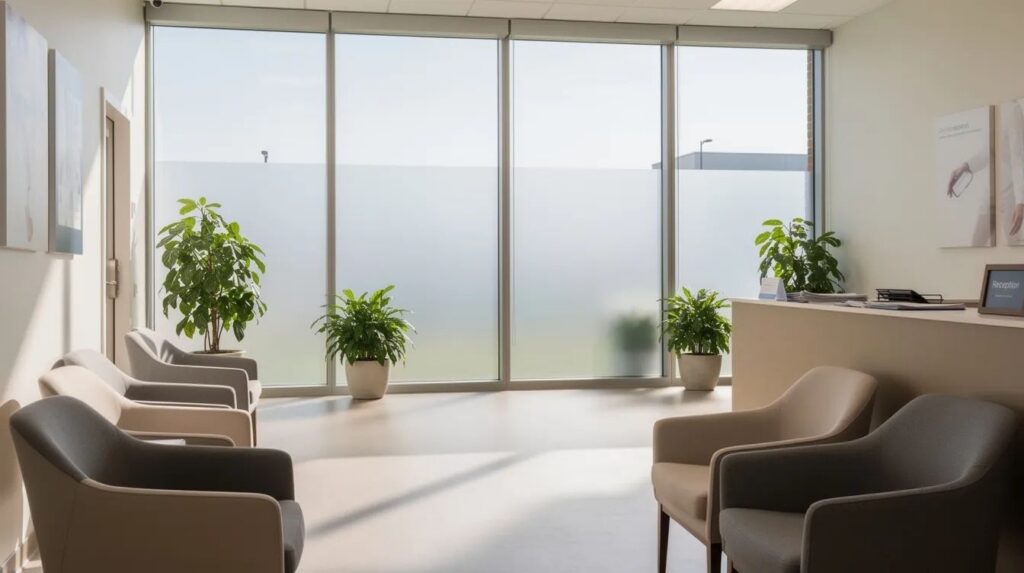
Privacy window film is a thin substrate – typically polyester (PET) or vinyl – applied to the interior surface of existing glass. It changes how the window transmits light and visibility without structural modification. Most films use either static cling or adhesive backing, and each serves a different purpose.
Core types you will encounter:
- Frosted films scatter light through micro-texturing, enhancing privacy without blocking light entirely. Heavier frost versions can provide full light diffusion for maximum seclusion.
- Patterned and decorative films include geometric, fluted, and gradient designs for both style and partial privacy.
- Reflective / one-way films use metallic coatings that provide daytime privacy using light differential – the brighter side becomes the mirror. At night, this effect reverses.
- Tinted films reduce glare and heat with dyed or ceramic layers, offering moderate privacy.
- Blackout films drop visible light transmission (VLT) near zero, suited for media rooms or nurseries.
Privacy film provides seclusion while blocking UV rays and reducing solar heat. Residential products are designed for clear, tempered, and double-pane windows, with thickness typically ranging from 2 to 8 mil.
A real-world example: a frosted non-adhesive film applied to a bathroom window in 2018 still obscures silhouettes years later, though edge lifting has occurred from repeated moisture exposure. On the other end, a reflective film on a south-facing living room window with roughly 15% VLT affords excellent street-side privacy during daylight but shows interior silhouettes once lights come on at night.
Types of Window Film You’ll Find Locally
Local hardware stores and specialist shops carry a range of privacy, decorative, and performance films. Ace Hardware has 124 window film items available, Menards offers window films with free shipping to store, and Walmart offers window films with shipping arriving tomorrow. Artscape window films are also available for purchase online for those who prefer browsing from home.
Key categories and typical local uses:
| Category | Best For |
|---|---|
| Privacy-only (frosted, opaque) | Bathrooms, sidelights, rental apartments |
| Decorative window film | Glass cabinet doors, partitions, entryways – decorative films can mimic stained glass designs without blocking light |
| Heat control window films | South/west-facing windows to cut cooling costs in summer |
| Security and safety films (4–8 mil+) | Ground-floor sliding doors, storefronts |
| Blackout films | Media rooms, shift-worker bedrooms |
Decorative window films come in various stylish designs and styles, from reeded textures to geometric patterns. Static cling versions work well for temporary or seasonal privacy, while adhesive films suit long-term or large-area projects. Common pre-cut sizes you will see in a store include 17 × 77 inches, 24 × 36 inches, and 36 × 72 inches. Local installers can also custom-cut films to exact measurements, which eliminates visible seams on large sliding doors installed in newer homes.
How to Choose the Right Privacy Film for Each Room
Selecting the ideal privacy film requires assessing room-specific light conditions, how close neighbors or the street are to the glass, and whether you need privacy around the clock or just during the day.
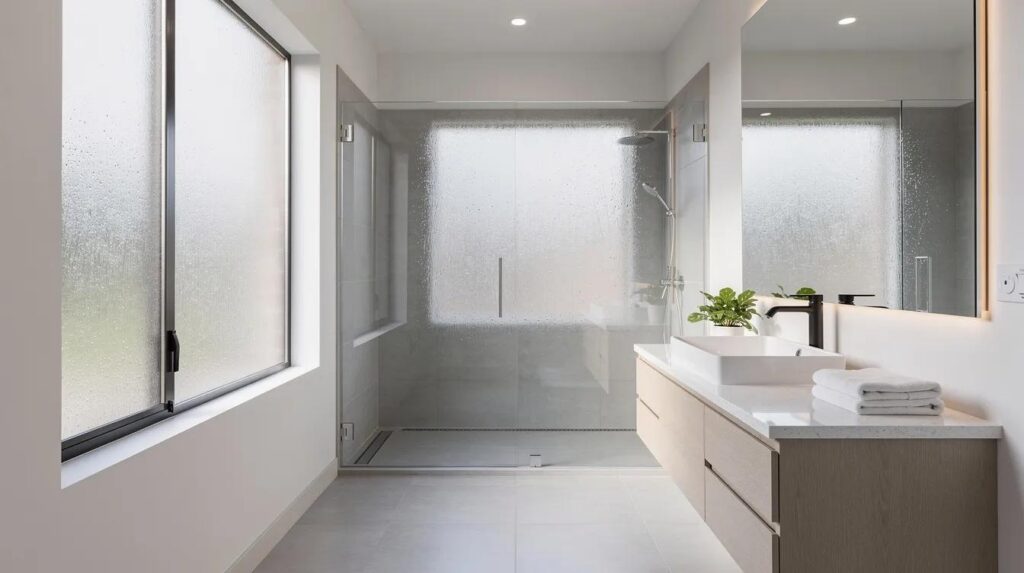
- Bathrooms: Go with high-privacy frosted or dense patterned films (VLT around 30–40%) so silhouettes stay indistinct even with lights on at night. Adhesive films handle moisture better than static cling here.
- Bedrooms: Light-filtering films preserve morning brightness while blocking direct views. For shift workers, blackout or low-VLT options create a dark space. Avoid relying solely on reflective films – they reverse at night.
- Living rooms and home offices: Balance daytime privacy with glare reduction for screens. Glare reduction in privacy films decreases eye strain, and thermal control in privacy films decreases indoor temperatures during summer months. A film with 50–60% VLT and decent solar heat rejection keeps the room comfortable without feeling dim.
- Entry doors and sidelights: Decorative or frosted films add both privacy and curb appeal. Adhesive versions hold up better with daily door use.
Before picking a film, ask yourself: Do you need night-time privacy? Is the window south- or west-facing with heavy sun exposure? Is this a rental where you will need to remove the film later? Your answers will narrow the selection to the right type, VLT range, and adhesive method for each window.
DIY Static Cling vs Professional Installation
DIY static cling films bought locally and professionally installed films from a specialist serve different situations. Static cling films are removable and reusable for easy application, and installation typically takes less than 30 minutes for most users. Professional installation delivers precision on large panes, better-performing films, and warranties that often extend 5 to 10 years.
| Factor | DIY Static Cling | Professional Installation |
|---|---|---|
| Material cost | $1–$5 per sq ft | $7–$24 per sq ft installed |
| Lifespan | 1–3 years | 7–15 years |
| Best for | Small windows, bathrooms, renters | Bay windows, sliding doors, whole-house projects |
| Common pitfalls | Trapped dust, air bubbles, misalignment | Rare with experienced installers |
DIY rolls often start under $15 for a single-window panel. Whole-house professional projects covering 15–20 windows typically run $2,500–$5,000 depending on film grade and window complexity. If you need a quick fix for a bathroom or sidelight, DIY is perfectly reasonable. For large panels, security films, or when warranty coverage matters, professional work pays off.
How to Find Quality Window Film Services Near You
If you searched locally for help, knowing how to evaluate providers saves you from poor results. Look for installers with several years of operation, a portfolio of completed homes through 2025–2026, and clear information about which film brands they carry. For example, Kepler provides home window tinting services in Gilbert, Arizona – a specialist focused specifically on residential work.
Check recent online reviews from 2024–2026 that mention how the film is holding up after at least 12 months. Ask specifically about privacy levels day versus night, UV rejection percentages, and whether films are safe for double- or triple-pane glass in your climate zone. A reputable local installer will offer a clear written estimate and explain which windows may not be ideal for certain films – for instance, older non-tempered double-pane glass may carry thermal stress risk with dark, heat-absorbing products.
Why Choose Our Team for Your Privacy Window Project
Our team specializes in privacy window film and decorative window solutions tailored to local homeowners. We carry a wide selection of both privacy-focused films and design-led options, so you can choose between subtle frosted looks and bolder patterns that add real character to your space.
What sets us apart:
- Careful on-site measurements before every cut
- Clean installation practices – we leave your house the way we found it
- Flexible scheduling, including same-week availability
- Responsive follow-up if any issues appear after installation
- Transparent pricing with clear written warranties covering peeling, bubbling, or discoloration
Whether you need a single bathroom window or a whole-house project, we are ready to help. Contact our team for a quick quote or schedule an in-home consultation to see sample films on your actual glass before you commit.
Step-by-Step: Basic DIY Privacy Window Film Installation
This is a high-level guide for homeowners installing off-the-shelf privacy or decorative window films on flat glass. Window films can be installed using water and soap – no special chemicals required.
- Measure and prep: Measure the glass accurately, adding a half-inch margin on each side. Clean the surface thoroughly with a non-ammonia cleaner to remove all dust and oils. Gather your tools – a spray bottle, squeegee, and sharp knife. Application kits often include a squeegee and trimming knife.
- Cut and wet: Cut the film to size with the extra margin. Fill your spray bottle with water and a few drops of mild dish soap, then mist the glass generously.
- Position and smooth: Peel the backing and apply the film from top to bottom, letting the soapy layer allow repositioning. Use the squeegee to push bubbles and excess solution toward the edges.
- Trim and cure: Trim edges cleanly with a utility knife or snap-off blade. Allow 24–72 hours for the film to fully dry and clear, especially on larger panes in cooler winter months.
Troubleshooting tips: If corners lift, re-mist with solution and squeegee firmly from center outward. Lingering haze typically clears within the cure period – do not peel and reapply too early. Visible dust specks after drying usually mean the glass was not cleaned thoroughly enough; next time, wipe twice. Small bubbles under a quarter-inch often disappear on their own as moisture evaporates.
Frequently Asked Questions About Privacy Window Film
Does privacy window film really provide privacy at night?
Frosted and opaque films provide consistent privacy day and night. Reflective one-way films lose much of their effect after dark when interior lights are on, making silhouettes visible from outside. For bedrooms and bathrooms, high-privacy frosted options are recommended. Combining film with curtains or shades is often the best approach where absolute night-time privacy is needed. An installer can demonstrate samples on-site so you see actual privacy levels before committing.
Will window films damage my glass or void my warranty?
Reputable films designed for residential use are compatible with most modern glass, including tempered and double-pane windows, when installed correctly. Some glass manufacturers have specific requirements, so a professional will check glass type and any existing warranty first. Using automotive tint on home windows can increase the risk of thermal stress, which is why proper architectural films matter. Our team helps homeowners choose products that align with manufacturer guidelines to shield both glass and warranties.
How long does privacy window film last on home windows?
Quality residential films installed indoors commonly last 7–15 years depending on sun exposure, climate, and cleaning habits. High-UV or hot climates may shorten life on west- and south-facing windows, while shaded sides of a house often see films last longer. Professional products usually come with manufacturer warranties covering expected lifespan. A film installed in 2019 on a north-facing living room window, for example, can still look clear and secure in 2026.
Can I remove or replace window film later?
Static cling films peel off easily without adhesive residue and are ideal when future removal is expected – perfect for renters or seasonal privacy. Adhesive films can also be removed with patience, often using soapy water or a mild adhesive remover to soften the glue. Professional installers handle full removals and replacements on large glass areas. Replacing film is a common way to refresh décor or upgrade to more advanced heat control window films after several years.
Will privacy film make my rooms too dark?
Many modern privacy films enhance privacy without blocking natural light. Window films can reduce glare by up to 94%, which actually makes a bright room feel more comfortable rather than gloomy. Darker or fully blackout films will significantly lower light levels and are best reserved for media rooms or light-sensitive spaces. An installer can show different sample shades directly on your glass so you compare brightness in real conditions.
How much does privacy window film cost in 2026?
DIY static cling kits for single windows can start under $15 per roll at your local store. Professional installation is usually priced per square foot – expect a range of $7–$24 depending on film type, window size, and access complexity. For whole-house or mixed privacy and heat-control projects, request an on-site quote for accurate pricing. Window films can block up to 99% of UV rays and can reduce heat buildup significantly, so the investment in quality films often pays back through lower cooling costs, better energy efficiency, and reduced furniture fading over time. Many homeowners report annual savings exceeding $400 in the right climate, with payback periods as short as a few years.
Conclusion: Next Steps to Upgrade Your Windows with Local Privacy Film
Privacy window film offers an affordable, flexible way to improve privacy, comfort, and style without replacing existing glass. Whether you pick up a DIY roll to add to your cart at a local store for a quick bathroom upgrade or invest in professional installation for a whole-house project, the advantages are immediate and lasting.
The key is matching the right film to each room – considering light, exposure, and how long you plan to stay. By working with a local specialist, you get tailored advice for your specific climate, window types, and privacy needs rather than guessing from a product description online.
Ready to find the right window film for your home? Schedule a quick consultation or request a same-week quote from our team. We will help you create the private, comfortable space you have been looking for – one window at a time.