If you manage or own a commercial building, you already know the problems that glass creates. West-facing offices turn into greenhouses by 2 p.m. Employees complain about glare on their screens. Furniture and flooring fade months after installation. And the utility bill keeps climbing because HVAC systems are working overtime to compensate for solar heat pouring through your windows.
These issues have pushed commercial window tinting to the top of many facility managers’ upgrade lists in recent years. Rising energy costs, increased attention to occupant comfort, and stricter sustainability goals have driven steady demand for window film retrofits across offices, retail locations, healthcare facilities, and mixed-use properties through 2024–2026.
At its core, commercial window tint consists of thin, engineered films applied directly to existing glass. These retrofit layers modify how light, heat, and UV radiation pass through your windows-turning standard commercial glass into high-performance glazing without the expense or disruption of full window replacement.
The core benefits include:
- Energy efficiency through reduced solar heat gain and lower HVAC loads
- Glare reduction that improves screen visibility and occupant comfort
- UV protection that blocks harmful rays and slows interior fading
- Privacy for ground-floor offices, conference rooms, and sensitive spaces
- Enhanced aesthetics with decorative or branded film options
- Safety and security through shatter-resistant film layers
Table of Contents:
The rest of this article breaks down exactly how each of these benefits works, what types of films are available, what the installation process looks like, and how to determine the right solution for your building.
Benefits of Commercial Window Tinting
Modern window films convert standard commercial glass into high-performance glazing without requiring a full window replacement. For building owners looking to improve occupant experience and reduce operating expenses, window tinting is one of the highest-ROI upgrades available.
Here is what commercial window film delivers:
- Lower energy costs – Tinting films can lower annual office cooling expenses by up to 30% on heavily glazed façades, with whole-building savings typically ranging from 5% to 15% depending on climate and glass area.
- Glare control – Films reduce harsh light entering the space, cutting glare by up to 80% while maintaining comfortable natural light levels.
- UV protection – High-quality films block up to 99% of UV radiation, protecting occupants and slowing the fading of furniture, flooring, artwork, and merchandise.
- Consistent comfort – Film eliminates hot spots near windows and balances temperatures between perimeter and interior zones, reducing discomfort for employees and visitors.
- Privacy – Reflective or frosted films offer daytime privacy for ground-floor offices, medical facilities, and conference rooms without sacrificing daylight.
- Safety – Thicker security films hold glass in place during impacts, storms, or attempted break-ins.
Commercial window tinting improves energy efficiency and increases privacy-two priorities that show up consistently in tenant satisfaction surveys. For multi-story office buildings and mixed-use properties, these improvements can also enhance property value and make spaces easier to lease, since tenants increasingly expect modern, comfortable, energy-conscious environments.
The combination of lower utility bills, better comfort, and asset protection gives window film a typical payback period of 1.5 to 4 years, making it one of the fastest-returning building envelope investments available.
Types of Commercial Window Films
Different window film technologies target different performance goals. The right product for your building depends on your climate, glass type, orientation, and what problems you need to solve. Visible Light Transmission-the percentage of light that passes through film and glass-determines tint darkness and plays a major role in selecting the right option.
Here are the core categories:
- Solar control / heat rejection films
- Glare reduction films
- UV protection / fade control films
- Decorative and privacy films
- Safety and security films
Each type comes in a range of appearances-from virtually clear to deeply tinted, mirrored, or frosted-and many modern products combine multiple functions into a single film layer. Beyond these core categories, specialty films like dual-reflective and spectrally selective options preserve views and allow high daylight levels while still delivering strong heat rejection. Low-E films provide year-round insulation by reflecting heat back toward its source, keeping warmth in during winter and out during summer-a meaningful advantage in mixed and cold climates.
Solar & Heat Rejection Films
Solar control window films work by reflecting and absorbing a portion of incoming solar energy before it reaches the interior of your building. This directly reduces heat gain through the glass and lowers the load on your HVAC system.
Performance varies by product and glass type, but heat rejection films can reject up to 82% of overall heat. High-quality sun-control films block up to 84% of solar heat gain on certain glass configurations. In practice, most commercial solar control films deliver a Total Solar Energy Rejected (TSER) value between 50% and 80%, depending on the specific product and whether the glass is single pane, double pane, or insulated.
The impact is most dramatic on west- and south-facing façades and buildings with large curtain walls. A multi-story office with significant west-facing glazing, for example, might see summer cooling costs drop noticeably after solar film is installed-reducing peak demand and easing the strain on aging HVAC equipment. The best spectrally selective films achieve this heat reduction while maintaining high visible light transmission, so interiors still feel bright and open rather than dark or closed-in.
Glare Reduction Films
Glare is one of the most common complaints in offices with floor-to-ceiling glass. Harsh afternoon sun creates reflections on computer monitors, forces employees to close blinds (blocking the natural light everyone wanted in the first place), and makes certain workstations nearly unusable for parts of the day.
Glare reduction films address this by filtering the intensity of incoming visible light. Appropriate tint selections can cut glare by up to 80% while still allowing enough daylight to keep interiors comfortable and well-lit. Tinting reduces screen glare and minimizes workplace eye strain-a meaningful benefit in open-plan offices, call centers with multiple monitors, conference rooms, and front desk areas facing strong afternoon sun.
The practical outcomes:
- Fewer headaches and less eye strain among employees seated near windows
- Reduced need for blinds, preserving views and daylight
- Better visibility on screens without needing to reposition desks
- Fewer complaints to facility managers about uncomfortable workstations
When you eliminate the constant battle between sunlight and screen readability, people can actually use the space the way it was designed to be used.
UV Protection & Fade Control Films
Ultraviolet radiation is invisible, but its effects are not. UV light is the primary driver of interior fading-damaging hardwood floors, carpets, upholstery, artwork, and retail merchandise over time. It also poses health risks for employees who spend hours working near unprotected windows.
UV protection films block up to 99% of UVA and UVB radiation, with premium “museum-grade” options reaching 99.9%. Interior fading is caused by a combination of UV light, visible light, and heat. Quality window films target all three to varying degrees, dramatically slowing the degradation of interior materials.
Real-world applications include:
- Retail displays where merchandise color and quality must stay consistent under direct sunlight
- Hotels and hospitality spaces with expensive furnishings and flooring
- Medical and dental offices where patient and staff UV exposure is a concern
- Office environments where furniture and finishes represent significant capital investment
By reducing UV exposure, you protect both the people and the assets inside your building-extending the life of interiors and reducing replacement cycles.
Decorative & Privacy Films
Decorative films offer design flexibility that goes far beyond simple tinting. Frosted, gradient, patterned, and custom-branded films can mimic the appearance of etched or sandblasted glass at a fraction of the cost. Decorative films can enhance the aesthetics of commercial buildings-transforming plain glass partitions into design features and reinforcing brand identity on lobby and storefront windows.
Privacy films serve a more functional role. Translucent or reflective finishes provide visual separation for conference rooms, medical exam rooms, financial offices, and ground-floor windows facing public sidewalks. Reflective films obscure the outside view during the day, giving occupants privacy without sacrificing incoming daylight.
One of the practical advantages of decorative and privacy films is that they are removable and updatable. When branding changes or a tenant turns over, the film can be replaced without modifying the glass itself. Custom logo films, brand colors, and patterned designs give commercial spaces a polished, professional appearance that traditional window treatments cannot match.
Safety & Security Window Films
Windows are often the most vulnerable point of entry in a commercial building. Standard glass shatters into dangerous shards on impact, creating injury risk and making forced entry relatively easy. Safety and security films prevent glass breakage during break-ins, storms, and accidental impacts by holding the glass together even after it cracks.
These films are significantly thicker than standard solar or decorative products-often 8 to 14 mil or more-and are sometimes combined with anchoring systems that secure the film to the window frame for maximum hold strength. Thicker security films hold shattered glass together during impacts, reducing the risk of injury from flying fragments. Thicker films also reinforce architectural glass against break-ins, slowing forced entry and giving occupants and security teams more response time.
Applicable settings include schools, government buildings, healthcare facilities, retail storefronts, and any street-level office where break-in risk or storm exposure is a concern. Many modern security films are combined with solar control or privacy features, delivering multi-benefit performance from a single installation.
Key safety benefits:
- Injury reduction from flying glass during storms, blasts, or accidents
- Theft deterrence by slowing forced entry through windows
- Storm resilience for buildings in weather-exposed areas
- Potential insurance and code compliance advantages depending on jurisdiction
How Commercial Window Tinting Improves Energy Efficiency
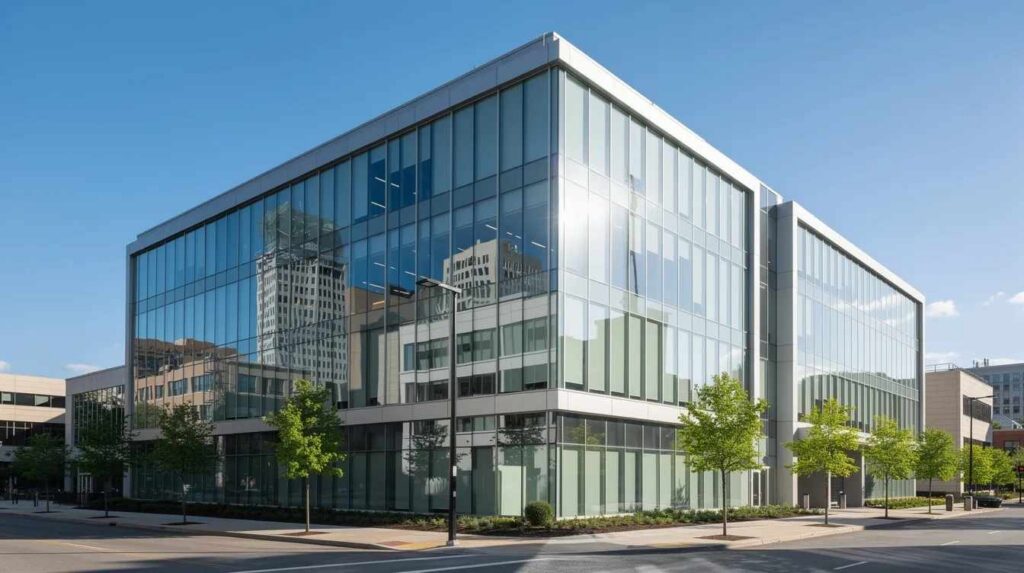
Windows are the weakest link in a building’s thermal envelope. In glass-heavy commercial buildings-curtain walls, floor-to-ceiling glazing, large storefronts-uncontrolled solar heat gain drives up cooling loads and pushes HVAC systems to their limits during peak hours.
Window films change the thermal behavior of glass by increasing solar reflectance and reducing the Solar Heat Gain Coefficient (SHGC). A clear single-pane window might have an SHGC of 0.70 or higher, meaning 70% of solar energy passes through. Adding a quality solar control film can drop that to 0.25–0.40, blocking the majority of unwanted heat before it enters the building. Window films can reject up to 82% of heat, and commercial window tint provides immediate indoor climate control from the moment the film cures.
The real-world numbers are meaningful. Commercial window tinting reduces energy costs significantly, with tinting films capable of lowering annual office cooling expenses by up to 30% on heavily glazed façades. Whole-building energy savings in many retrofits fall into the 5–15% range, and results skew higher in hot, sunny climates. Many energy-efficient window films qualify for utility rebates, which can further shorten the payback timeline.
Beyond raw energy savings, filming reduces peak demand charges-which can represent 30–50% of a commercial utility bill in some jurisdictions. Lower peak loads also extend HVAC equipment life by reducing run time and thermal cycling stress.
Energy-related benefits for property managers:
- Reduced annual cooling and heating costs
- Lower peak demand charges during summer months
- Extended HVAC equipment lifespan from reduced cycling
- Better temperature balance between perimeter and core zones
- Potential eligibility for utility rebates and energy efficiency incentive programs
- Contribution toward LEED, ENERGY STAR, or net-zero building goals
Comfort and Productivity Gains
Energy savings are important to the bottom line, but comfort improvements are what occupants actually feel every day. Window film eliminates the hot spots that develop near south- and west-facing windows, creating more consistent temperatures across open offices, conference rooms, and reception areas.
When perimeter zones are comfortable, facility managers hear fewer complaints, and more workstations become usable throughout the day. Employees no longer need to close blinds to manage glare or heat, which means the natural light that made the space attractive in the first place actually gets used. Glare reduction improves visibility on screens and reduces the discomfort and productivity loss that come with squinting through a bright afternoon.
Industry data consistently links thermal comfort and daylight control to occupant satisfaction and work output. While precise productivity gains are difficult to isolate, the operational signal is clear: fewer complaints, better use of the entire floor plate, and improved tenant retention.
Comfort outcomes at a glance:
- More even temperatures from window wall to core
- Reduced need for blinds or supplementary fans
- Better screen visibility without desk relocation
- Fewer HVAC-related comfort complaints
- More usable square footage near perimeter windows
Commercial Window Tinting Process
The installation process for commercial window film follows a structured sequence: consultation, glass assessment, film selection, professional installation, and final inspection. The goal is to deliver measurable performance improvements with minimal disruption to your daily operations.
Experienced installers will schedule work outside peak business hours, during weekends, or in phased sections-floor by floor or zone by zone-so your team can continue working without significant interruption. Typical timelines range from a single day for a small office floor to several days or a full week for a multi-story building.
What building owners can expect on installation day:
- Furniture near windows moved or covered with protective cloths
- Staff or tenant notification in advance
- Quiet, clean work with minimal dust or odor
- Functional windows throughout (no structural changes to glass or frames)
- A final walkthrough and inspection before sign-off
Initial Assessment and Film Selection
Every project starts with a site survey. The installer measures glass areas, identifies which facades face south, west, east, or north, checks for existing tint or Low-E coatings, and discusses the specific problems you need to solve-whether that is heat, glare, fading, privacy, or security.
From there, a consultant presents film options with performance specifications explained in plain terms: how much light will pass through, how much heat will be rejected, how the film will look from inside and outside, and what warranty coverage applies. Sample films are typically held against your glass so decision-makers can evaluate appearance before committing.
Film recommendations differ based on glass type. Single pane windows can safely have any film applied, giving you the widest range of options. Double pane windows have strict restrictions on film types, because highly absorptive films can cause thermal stress in insulated glass units, potentially leading to seal failure or cracking. A qualified installer will consult manufacturer compatibility guidelines to ensure your warranty stays intact and your glass stays safe.
How the right film is matched to your building:
- Glass type and condition are documented (single pane, double pane, tempered, laminated, Low-E)
- Exposure and orientation are mapped to determine which facades need the most protection
- Performance goals are prioritized (energy savings vs. glare vs. privacy vs. security)
- Product options are narrowed based on compatibility, aesthetics, and budget
Preparation, Cleaning, and Installation
Before any film touches the glass, the installation team prepares the work area. Floors near windows are covered with drop cloths, furniture is shifted back, and staff or tenants are notified of the schedule and any temporary access changes.
Glass cleaning is the most critical preparation step. Each pane gets multiple passes to remove dirt, adhesive residue, stickers, and mineral deposits. Even microscopic contaminants can cause bubbles or adhesion failures, so this step is not rushed.
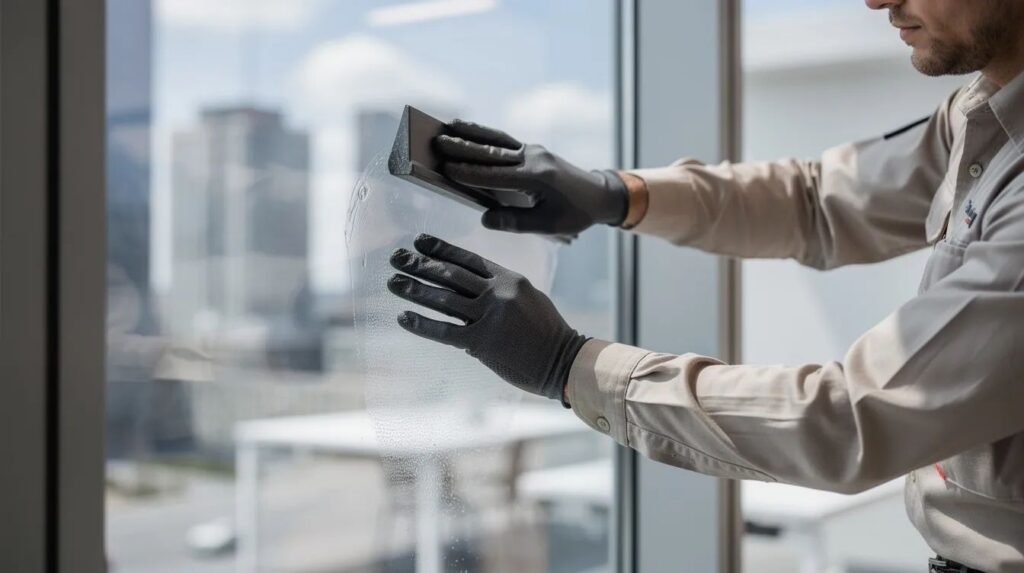
The installation sequence itself is straightforward: the installer measures and cuts the film precisely to size, applies a slip solution to the glass surface, positions the film, and uses a squeegee to push out water and air from beneath the film. Edges are trimmed cleanly, and the finished surface is inspected for any imperfections.
Windows remain fully functional after installation, but the film needs time to cure. Depending on the product type and climate conditions, full optical clarity and adhesion can take several days to a few weeks. During this curing period, minor haziness or small water pockets may be visible-these resolve on their own.
Post-installation care tips:
- Wait at least 30 days before cleaning newly filmed windows
- Use soft microfiber cloths or rubber squeegees for cleaning
- Avoid ammonia-based cleaners, abrasive pads, or razor blades near the film
- Do not apply additional film layers over existing film
Maintenance & Longevity of Window Films
Modern commercial window films are engineered for long service lives. Interior solar control and ceramic films typically carry warranties of 10 to 15 years, with real-world performance often lasting 15 to 20 years or more when professionally installed on compatible glass. Exterior-applied films have shorter lifespans-generally 3 to 10 years-due to direct weather exposure.
Cleaning tinted windows is simple. Use soft cloths, microfiber towels, or rubber squeegees with a mild, non-abrasive cleaning solution. Avoid ammonia-based products, abrasive pads, and metal scrapers, which can scratch or damage the film surface.
Typical warranty coverage includes protection against peeling, bubbling, cracking, delamination, and color change beyond manufacturer tolerances. These warranties are generally tied to certified installation and proper glass compatibility. It is worth noting that most commercial film warranties are non-transferable-if building ownership changes, the warranty may not carry over to the new owner.
Best practices to maximize film life:
- Clean with approved, non-abrasive products only
- Inspect film edges annually for lifting or adhesive failure
- Address minor edge damage early before it spreads
- Keep window frames and seals in good condition
- Never layer new film over existing film-remove the old product first
- Maintain documentation of installer, product type, and warranty terms
Signs It May Be Time to Replace Film
Even the highest-quality film eventually reaches the end of its useful life. Watch for these indicators:
- Noticeable bubbling or peeling at edges or across the film surface
- Persistent hazy or cloudy appearance that does not clear after cleaning
- Significant color shift-dyed films may turn purple or brown over time
- Severe scratches or physical damage from cleaning or contact
- Performance changes: increased heat, glare, or fading in previously tinted areas
If you notice any of these signs, schedule an inspection with a qualified installer. In most cases, film replacement is still far less disruptive and less costly than full window replacement-especially on older commercial buildings where the glass itself remains structurally sound. A fresh film application restores performance to current standards and can be an opportunity to upgrade to newer, higher-performing products.
Why Choose Window Film Depot for Your Commercial Window Tint Project
We specialize in commercial window tinting for a reason: commercial buildings have unique challenges that require more than a one-size-fits-all approach. Every project we take on starts with a thorough understanding of your building’s glass, orientation, occupancy, and performance goals-because the right film for a west-facing curtain wall is not the same product that belongs on a ground-floor retail storefront.
Our team brings years of experience across a wide range of commercial project types, including multi-story office towers, retail chains, medical facilities, schools, and industrial buildings. We use reputable, industry-leading window film brands and provide detailed, transparent proposals that include product specifications, expected performance, and full warranty information. Columbus, Ohio offers commercial window tinting services through our team, and we bring deep knowledge of the local climate and building styles to every consultation.
We believe that quality installation is just as important as the product itself. Our certified installers follow manufacturer guidelines for glass compatibility, surface preparation, and curing protocols-ensuring that your film performs as specified and your warranty remains fully valid.
Reasons to work with us:
- Experienced with diverse commercial building types and glass configurations
- Certified installers trained on leading film brands
- Transparent proposals with performance data, not just sales promises
- Flexible scheduling to minimize disruption to your operations
- Tailored recommendations based on your building’s specific needs
- Strong local knowledge of climate conditions and building codes
Ready to see what commercial window tint can do for your building? Contact us to schedule a site assessment or request a detailed quote.
FAQs About Commercial Window Tint
The following questions come up frequently from facility managers, property owners, and tenants evaluating window film for their commercial spaces.
How long does commercial window tinting installation take for an average office floor?
A single office floor with standard-sized windows can typically be completed within one business day. Larger floors or buildings with complex glass configurations may require two or more days. Our team can schedule work after hours or on weekends to avoid disruption to your operations.
Will window film make my commercial windows too dark?
Not necessarily. Films are available across a wide range of Visible Light Transmission levels, from nearly clear (60–70% VLT) to darker tints (15–30% VLT). Spectrally selective films offer strong heat rejection while maintaining high daylight levels, so your space stays bright. We hold samples against your glass during the consultation so you can see exactly how each option looks before making a decision.
Can window films be installed on double pane or Low-E glass safely?
Yes, but product selection matters. Double pane windows have strict restrictions on film types because certain absorptive films can cause thermal stress in insulated glass units. Single pane windows can safely have any film applied. A qualified installer will check glass type and manufacturer compatibility guidelines to ensure safe, warranty-compliant installation.
How does window tinting affect my building’s exterior appearance?
The effect depends on the film type. Some films are virtually invisible from the outside; others create a subtle tint, a neutral tone, or a reflective finish. Reflective films obscure the outside view during the day, providing privacy while maintaining outward views from the interior. We help you choose a film that complements your building’s architectural style and meets any local appearance regulations.
Are there building codes or regulations I need to consider?
Some municipalities regulate window reflectivity, color, and visible appearance-particularly in historic districts or dense urban areas. Energy codes may also require specific Solar Heat Gain Coefficient or U-value ratings. We consult local requirements as part of our assessment to ensure your project is fully compliant.
What is the typical warranty period for commercial window films?
Interior solar control and ceramic films typically carry manufacturer warranties of 10 to 15 years, covering defects like peeling, bubbling, cracking, and color change. Exterior films carry shorter warranties, generally 3 to 10 years. Warranty coverage is tied to certified installation and glass compatibility.
Can I still open and clean my windows after tinting?
Absolutely. Window film does not affect the operation of operable windows. For cleaning, use soft cloths or squeegees with a mild, non-abrasive cleaner. Avoid ammonia-based products and abrasive tools. Wait at least 30 days after installation before cleaning newly filmed surfaces.
How much energy can I realistically save with window film?
Results depend on your building’s glass area, orientation, climate, and existing HVAC efficiency. Most commercial retrofits see whole-building energy savings of 5–15%. On heavily glazed south- and west-facing façades, cooling load reductions of 15–30% are common. Many energy-efficient window films qualify for utility rebates, which can further improve your return on investment.
Conclusion & Next Steps
Commercial window tint delivers measurable, lasting improvements to any building with significant glass area. Lower energy costs, reduced glare, UV protection for interiors and occupants, enhanced privacy, and improved aesthetics-all without the cost or disruption of tearing out and replacing your existing windows.
Window films are a cost-effective retrofit solution that pays for itself quickly and continues delivering value for 10 to 20 years or more. Whether your priority is cutting cooling costs on a sun-blasted curtain wall, protecting retail merchandise from UV fading, or adding security film to a ground-floor office, the right product and a quality installation make the difference.
If you are ready to take the next step, contact our team for a consultation. We will review your floor plans, energy bills, and glass types to recommend the best-performing film options for your specific building. Every recommendation is tailored-because no two commercial properties face the same challenges.
Upgrade your commercial building with high-quality window tinting and start seeing the results where they matter most: in your comfort, your utility bills, and the longevity of your interior spaces.