Table of Contents:
- Why Commercial Sun Control Window Film Matters in 2026
- How Commercial Sun Control Window Film Works & What It Solves
- Energy, Comfort & Glare: Key Benefits for Your Commercial Building
- Choosing & Installing the Right Sun Control Window Film for Your Facility
- FAQs About Commercial Sun Control Window Film
- Why Choose Window Film Depot for Commercial Sun Control Projects?
Why Commercial Sun Control Window Film Matters in 2026
If you manage a commercial building with expansive glass, you already know the pattern: energy costs climb every summer, tenants complain about uncomfortable hot spots near the windows, and employees struggle with glare on their screens. Office towers, schools, hospitals, and retail chains across the U.S. face these problems daily-and replacing all that glass is rarely in the budget.
Commercial sun control window film offers a practical alternative. It is a thin, multi-layered coating applied to glass that controls heat gain, glare, and UV exposure without the cost and disruption of full window replacement. Because it provides a retrofit solution for existing glass, it works with the windows you already have. Installing sun control films is often less expensive and disruptive than window replacement-in many cases, a fraction of the cost-while delivering measurable improvements in occupant comfort, lower cooling loads, better productivity, and protection of interiors from fading.
Window Film Depot has been installing 3M solar control films and other high-performance window film products nationwide since 1992, with projects ranging from single offices to multi-site national rollouts, backed by its history as a family-owned national window film contractor. In this article, we cover how these films work, the energy and comfort benefits they deliver, what facility managers should know before choosing a product, and why partnering with an experienced national installer matters for your next project.

How Commercial Sun Control Window Film Works & What It Solves
Commercial sun control window film is a multi-layer polyester product with metalized or nano-ceramic coatings designed to selectively reflect and absorb solar energy before it passes through your glass. When sunlight hits untreated windows, infrared radiation creates heat inside the space, visible light produces glare, and ultraviolet rays damage furnishings, flooring, and merchandise over time. Window films reduce solar heat gain before it enters a building by intercepting these wavelengths at the glass surface.
The performance numbers tell the story clearly. High-performance films can reject up to 79% of solar heat on certain glass types. 3M films reject up to 97% of infrared light-the wavelength range most responsible for that radiating warmth you feel near south- and west-facing windows. Commercial sun control window film blocks over 99% of harmful UV rays, dramatically slowing the fading of carpet, hardwood, artwork, and retail displays. Films improve a building’s overall insulation and solar management, making them effective for buildings with large glass façades where untreated glazing creates the biggest energy and comfort challenges.
There are two primary installation approaches. Interior-applied films are the standard for most offices, classrooms, and storefronts-crews apply the product from inside the building with minimal disruption. Exterior-applied films are used on hard-to-access spandrel, curtainwall, or specialty glass where interior access is limited; these exterior products can reject even more solar energy but require lift access and weather-appropriate scheduling.
Consider an Atlanta office building where afternoon sun turns west-facing conference rooms into ovens. A spectrally selective ceramic film can cut that heat load dramatically while keeping the view and natural light largely intact. Or picture a retail chain protecting merchandise near storefront glass from UV fading while maintaining clear views into displays-sun control films help protect interiors from UV damage without turning the storefront dark.
Different types of window films suit varying aesthetic and functional needs. Modern sun control films come in highly reflective options (mirrored appearance, strong daytime privacy), neutral tints (subtle, professional look), and spectrally selective products that are nearly invisible yet still reject significant heat and UV. Unlike blinds or shades, control window film manages solar energy at the glass while preserving natural light and views, reducing the need for artificial lighting during the day. Window films can improve energy efficiency without changing window appearance-a critical consideration for Class A offices, landmark buildings, and retail storefronts where aesthetics matter, and many owners rely on commercial window tinting solutions to achieve these results.
Window Film Depot evaluates glass type and existing coatings before specifying any product, ensuring the right film goes on the right glass every time.
Energy, Comfort & Glare: Key Benefits for Your Commercial Building
The most common reasons facility managers invest in commercial sun control window film come down to three things: high summer energy bills, occupant complaints near the glass, and uneven temperatures across open-plan floors. Each of these ties directly to solar energy pouring through untreated windows-and each is measurable after a film installation.
Cutting Energy Costs and Cooling Loads
Solar film lowers a window’s Solar Heat Gain Coefficient (SHGC)-the fraction of solar radiation that passes through the glass and heats your interior. Lower SHGC means your rooftop units and chillers work less to maintain setpoints. Window film reduces heat gain by 35% in typical installations, and films can reduce the sun’s total solar energy by 35% on standard commercial glazing. In real-world terms, window films can lower interior temperatures by 5 to 10°F on sun-exposed floors.
The financial case is straightforward. The typical payback period for window film is 3 to 7 years, depending on glass area, orientation, local utility rates, and hours of operation. A GSA-commissioned study through Lawrence Berkeley National Lab found that Low-E window film retrofits on single-pane perimeter glass yielded roughly 29% average HVAC energy savings. One well-documented case at Temple College in Texas showed payback in as little as 1.3 years on aggressively sun-exposed façades.
Low-E films help retain heat in winter and reject heat in summer, making them a year-round energy management tool rather than just a cooling-season fix. Window film can lower a window’s U-Value significantly-3M films can reduce U-Value to almost that of double-pane glass, meaning your single-pane windows start performing closer to insulated units without the cost of replacement. 3M window film can reduce U-Value to nearly double pane levels, which matters enormously in mixed climates where heating costs are just as important as cooling.
Utility rebates range from $1 to $2 per square foot in many jurisdictions, and custom incentives can cover 40% to 50% of a project’s cost when energy modeling demonstrates measurable savings. Window Film Depot can coordinate with energy consultants and rebate providers to help you conserve energy and capture every available dollar.
Improving Occupant Comfort
More consistent temperatures between perimeter offices and interior zones means fewer complaints and fewer thermostat wars. Sun control films eliminate the radiating heat near glass that forces occupants closest to windows into a different thermal experience than colleagues ten feet away. Employees no longer need makeshift solutions like cardboard taped to windows or repositioned desks to avoid the afternoon sun.
Prestige Series commercial sun control films reject up to 97% of infrared light while maintaining high visible light transmission, creating a comfortable space where the view stays clear but the heat stays outside. Window films reduce glare and improve tenant comfort across the entire occupied zone, not just the areas directly next to the glass.
Reducing Glare on Screens and Instruments
Sun control films enhance workplace productivity by cutting screen glare in open offices, classrooms, conference rooms, and medical facilities. Window films reduce glare on screens by up to 75%, making it dramatically easier to use monitors, read instruments, and conduct presentations without closing blinds and losing the benefits of daylight.
Protecting Interiors from UV Damage
Window films can block 98% to 99% of UV rays, slowing fading of hardwood floors, carpeting, artwork, museum exhibits, and retail merchandise, outperforming basic tint as explained in the distinction between tinted windows and true UV protection. This level of protection extends the life of interior finishes and helps protect occupants from UV exposure without excessively darkening the glass. SunTek solar film blocks 98% to 99% of UV rays as well, giving specifiers multiple product lines to choose from based on performance and appearance goals, and advanced UV protection film performance metrics help differentiate the best options.
Supporting Sustainability Goals
Sun control window films complement broader building envelope upgrades including LED lighting retrofits, HVAC controls, and insulation improvements. Many commercial building owners use energy modeling to justify projects and document results for corporate sustainability reporting. Window film can improve energy efficiency without changing window appearance, making it one of the least visually intrusive upgrades available-an important factor when architectural style guidelines or historic preservation requirements limit exterior modifications.

Choosing & Installing the Right Sun Control Window Film for Your Facility
Not all window films perform the same, and not all installers deliver the same results. Performance, appearance, warranty coverage, and installation quality vary widely across products and companies, so specification matters-especially on commercial projects where a mistake can mean cracked glass, voided warranties, or film that fails in two years.
Key Selection Factors
The right product depends on several interconnected variables:
- Building type and use: A corporate office prioritizes glare control and aesthetics. A hospital needs UV protection and consistent light quality. A retail chain wants clear storefront views with strong heat rejection. Government facilities may have security requirements that influence film selection.
- Glass orientation and climate: West- and south-facing facades in hot-humid markets like Atlanta, Dallas, or Phoenix demand aggressive solar rejection. North-facing glass in cooler climates may need a lighter touch to preserve beneficial winter solar gains.
- Desired appearance: Highly reflective films offer strong daytime privacy and maximum heat rejection but create a mirrored look that may conflict with design guidelines. Neutral and spectrally selective ceramic films maintain a clear, professional appearance while still rejecting significant energy. SunTek offers a variety of film styles for commercial properties, and 3M’s product lines range from nearly invisible to heavily tinted, giving specifiers real options within a broad portfolio of window glass film products and brands.
- Compatibility with existing glass: Integration with low-E coatings and insulated glass units (IGUs) is critical. Too-absorptive films on certain Low-E glass can create thermal stress gradients between the center and edge of the pane, leading to spontaneous cracking or seal failure. This is the single most common-and most expensive-mistake in commercial window film projects.
How Window Film Depot Approaches a Project
Every project starts with a site assessment of existing glazing, solar exposure patterns, and occupant complaints. From there, the team discusses goals-whether the priority is energy cost reduction, glare control, improved comfort, or a combination-and matches those needs to specific 3M window film products and installation options. Product recommendations typically involve 3M Sun Control, Prestige, or other high-performance film lines tailored to the building’s specific glass and exposure conditions.
The Installation Process
Installation follows a minimal-disruption approach designed for active commercial buildings:
- Surface preparation: Thorough cleaning of all glass surfaces to remove contaminants that cause bubbles or adhesion failures.
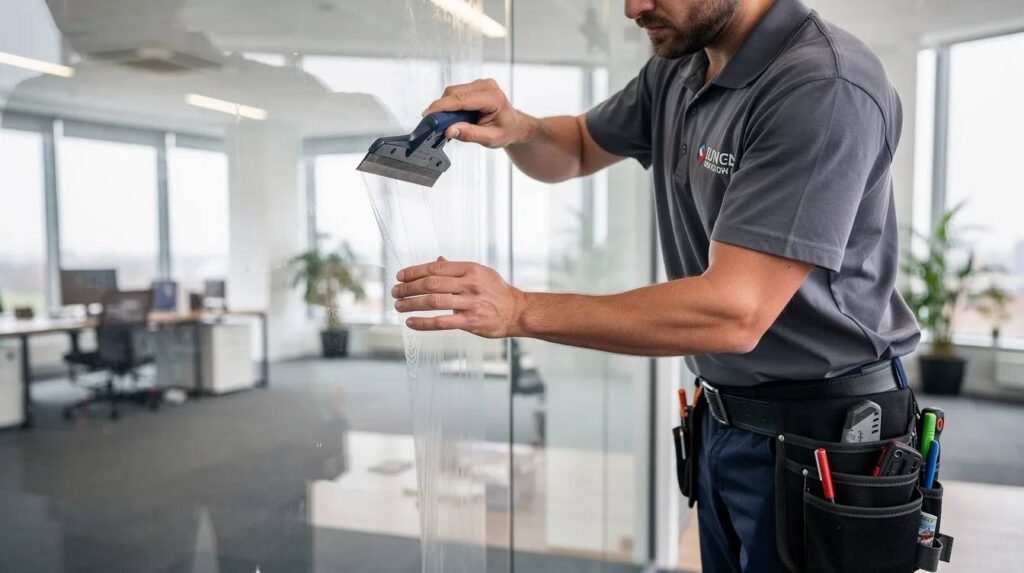
- Precise film cutting and application: Film is applied with a slip solution, then squeegeed to remove moisture and air.
- Edge finishing and inspection: Edges are trimmed and sealed, and every pane is inspected for defects.
- Curing period: Slight haze or small moisture pockets may be visible initially but typically clear within days to a few weeks depending on film type and weather conditions.
Crews work during off-hours, evenings, or weekends in occupied facilities, leveraging the capabilities of a leading 3M window film installation company. Window Film Depot provides turnkey project management nationwide, including union and non-union labor coordination, lift access planning for exterior installations, occupied space protocols, and the documentation needed for corporate sustainability reporting.
Risks and Mistakes to Avoid
Three errors account for most commercial window film failures:
- Choosing non-commercial-grade film that discolors, bubbles, or peels within a few years. Cheap product costs less upfront but delivers poor performance and no meaningful warranty coverage.
- Installing film without verifying glass type. Skipping the thermal stress analysis on IGUs or Low-E glass can lead to cracked panes and tens of thousands of dollars in replacement costs-plus potential liability.
- Working with inexperienced installers who lack protocols for high-rise access, secure facilities, or phased scheduling in occupied buildings, leading to schedule overruns and tenant disruption.
High-quality commercial solar films typically carry manufacturer’s limited warranties covering peeling, bubbling, and discoloration for 10 to 15 years, similar to the coverage available on Night Vision residential sun control films. Professional installation by an authorized dealer is almost always required to keep that warranty valid.
FAQs About Commercial Sun Control Window Film
These are the questions Window Film Depot hears most often from facility managers, architects, and procurement teams evaluating control window film for commercial projects.
How much can commercial sun control window film really reduce energy costs?
Energy savings vary by building, but many commercial customers see cooling energy reductions in the 10% to 30% range on affected façades. The typical window film payback is 3 to 7 years, with faster returns in hot climates or buildings with large, sun-exposed glass areas. Savings depend on climate zone, glass area, orientation, existing HVAC efficiency, and local utility rates. Window Film Depot can coordinate with energy modeling partners or use your utility data to estimate payback for a specific property.
Will window film make my commercial building too dark or reflective?
No-modern solar control films are available across a full range of visible light transmissions. Spectrally selective and ceramic films can reject significant heat while transmitting 60% to 70% or more of visible light, maintaining clear views and daylight quality. Many Class A offices and storefronts choose neutral or prestige-style films that are nearly invisible from inside and outside. The key is matching film to your building’s aesthetic requirements and functional needs during the specification process.
Can sun control films be used on existing low-E or double-pane glass?
Yes, many 3M sun control films are compatible with low-E and insulated glass units, but proper glass-to-film matching is critical. The wrong film on certain coated or insulated glass can cause thermal stress fractures or seal failures. Window Film Depot evaluates glass type, coating location (which surface within the IGU carries the Low-E layer), and local climate conditions before recommending a product. Every installation follows manufacturer guidelines to protect both the glass warranty and the film warranty.
How long does commercial window film last, and what maintenance is required?
High-quality commercial solar films typically last 10 to 15 years or more, depending on exposure, orientation, and product type, backed by manufacturer’s limited warranties that cover defects like peeling, bubbling, and discoloration. Maintenance is simple: use standard glass cleaning methods with non-abrasive tools and mild detergent after the film has fully cured. No special chemicals or coatings are needed to maintain performance over the film’s life.
Is installing sun control window film disruptive to tenants or operations?
Installation is typically low-impact. Film is applied from the inside using small crews with minimal noise and no structural work. There is no dust, no heavy equipment inside the building, and no need to vacate the space. Window Film Depot regularly schedules projects during evenings, weekends, or phased by floor to keep offices, classrooms, and retail spaces open and operational throughout the process, coordinating logistics across its nationwide installation locations.
Can sun control window film improve privacy or security as well?
While solar films primarily address heat, glare, and UV, some reflective film options offer enhanced daytime privacy by reducing interior visibility from the outside-a reflected mirror effect that keeps views clear from inside while limiting what passersby can see. For impact resistance and forced-entry protection, Window Film Depot can combine sun control with 3M anti-glare and security window films, providing both energy performance and enhanced safety in a single upgrade. This combination is popular in government facilities, schools, and ground-floor retail where both solar management and physical security matter, and many owners pair these upgrades with Prestige Series residential sun control films for adjacent housing or mixed-use components.
Why Choose Window Film Depot for Commercial Sun Control Projects?
Window Film Depot is a family-owned commercial window film contractor founded in 1992 and headquartered in Marietta, Georgia, serving clients across the U.S. and Canada. Over three decades, the company has installed 3M solar control films and other performance products for government agencies, Fortune 500 companies, national retail brands, universities, and healthcare systems-with proven capacity for multi-location rollouts from regional portfolios to nationwide chains as a premier 3M window film installation company.
What sets Window Film Depot apart is the combination of technical depth and operational reliability. The team carries deep familiarity with 3M solar, security, and specialty window films and how they integrate with existing glazing systems, including exterior-applied solutions like the 3M Sun Control Prestige Exterior Series for commercial buildings. In-house project management coordinates site surveys, product selection, installer crews, safety protocols, and post-install inspections so you get a single point of accountability from the first phone call through final documentation.
Every project uses manufacturer-authorized installers, follows safety regulations and building access requirements, and produces documentation that supports warranty coverage and sustainability reporting, particularly on advanced 3M ceramic sun control films for commercial use. Proposals are transparent, with clearly stated performance expectations and timelines-no surprises.
Whether you need a single-building upgrade, a phased capital plan across a portfolio, or a rapid-response solution for glare and heat complaints in a newly leased office floor or school wing, Window Film Depot has the experience, the national reach, and the product knowledge to find the right solution and deliver it on schedule, from local projects like Santa Monica commercial window film installations to national rollouts.
Ready to reduce heat, glare, and energy costs in your building? Contact Window Film Depot for a site assessment, energy savings estimate, or specification consultation, whether you operate in major markets such as Dallas/Fort Worth commercial window tinting or elsewhere in North America. Let’s discuss how commercial sun control window film fits into your broader building performance strategy-and how quickly it can start paying for itself.