Table of Contents:
- The Technology Behind Non-Reflective Performance
- How Spectrally Selective Films Target Heat, Not Light
- Decoding Performance Metrics for Project Managers
- Reflective vs. Non-Reflective Film: A Comparison for Commercial Buildings
- Ideal Applications for Non-Reflective Window Film
- Specification and Installation Best Practices
- The Superior Choice for Design and Performance
- Frequently Asked Questions
- Related Posts from Window Film Depot
The Technology Behind Non-Reflective Performance
When clients reject traditional metallized films, the solution lies in advanced materials that manage solar energy through absorption rather than reflection. This technology allows you to specify a film that is virtually invisible yet delivers powerful heat and UV-blocking performance, satisfying even the most demanding architectural requirements.
The Science of Ceramic Window Film
At the core of most high-performance, non-reflective films is ceramic technology. Unlike older dyed films that fade or metallic films that create a mirrored look and can interfere with electronic signals, ceramic window film uses nano-ceramic particles. These microscopic particles are transparent to visible light but highly absorptive of infrared (IR) radiation, the primary source of solar heat.
During manufacturing, these particles are embedded within durable polyester layers. When solar energy strikes the glass, the ceramic layer absorbs the infrared heat and prevents it from passing into the building. The result is a film that maintains crystal-clear views and high levels of natural light while delivering exceptional heat rejection. This advanced composition also ensures extreme durability, color stability, and will not interfere with cellular or GPS reception.

How Spectrally Selective Films Target Heat, Not Light
The term “spectrally selective” is key to understanding how these films achieve a clear appearance with high performance. The solar spectrum consists of ultraviolet (UV) light, visible light, and infrared (IR) light. Spectrally selective films are engineered to precisely filter specific parts of this spectrum.
Instead of darkening a window to block all energy, this technology isolates and rejects the heat-producing IR and damaging UV wavelengths while allowing a high percentage of visible light to pass through. This decoupling of light from heat is the breakthrough that preserves a building’s design integrity. From a specification standpoint, this means you can achieve:
- High Visible Light Transmission (VLT): Often 70% or higher, making the film nearly undetectable. This is critical for projects involving historic landmarks, high-end retail storefronts, or residences where views are a primary asset.
- Exceptional Infrared Rejection (IRR): Blocking upwards of 90% of infrared heat, directly reducing the primary driver of solar heat gain and the load on HVAC systems.
- Significant Total Solar Energy Rejection (TSER): Even with a clear appearance, these films can achieve TSER values that rival much darker, more reflective films, leading to measurable energy savings.
Understanding the Difference: Non-Reflective vs. Low-Reflectivity Films
For project specifications, the distinction between non-reflective and low-reflectivity films is critical. While both avoid a “mirrored look,” they are not technologically identical.
Non-reflective films, typically ceramic-based, are designed for zero change in exterior aesthetics. Their primary mechanism is absorption. The exterior reflectivity of these films is often equal to or even lower than that of untreated glass, ensuring the building’s facade remains exactly as the architect envisioned. This is the superior choice for projects where preserving the original design is a non-negotiable client mandate.
Low-reflectivity films, often called dual-reflective or hybrid films, contain a subtle, sputtered layer of metal. They appear neutral from the interior to preserve views but carry a slight, soft sheen on the exterior. This minimal reflectivity can boost heat rejection performance slightly. However, it does introduce a minor alteration to the building’s appearance, which may not be acceptable for architecturally sensitive projects.
Decoding Performance Metrics for Project Managers
When specifying commercial window tinting, the data sheet is your most critical tool. Understanding key performance metrics allows you to move beyond marketing claims and align a product’s technical capabilities with your client’s specific goals. These numbers provide the objective language needed to justify your selection.
Visible Light Transmission (VLT): Maximizing Natural Light
VLT measures the percentage of visible light that passes through the filmed glass. A lower VLT percentage means a darker tint and greater glare reduction, while a higher VLT allows more natural light into a space.
For clients who prioritize bright, daylit spaces or have properties with expansive views, a high VLT is non-negotiable. This is a primary advantage of advanced non-reflective films. They can offer substantial heat and UV rejection without a dramatic drop in VLT, preserving the very daylight the client values. The goal is to select a VLT that solves the glare problem while maintaining the intended ambiance of the interior.
Total Solar Energy Rejected (TSER): The True Measure of Energy Savings
TSER is the single most important performance metric for evaluating a film’s impact on energy efficiency. It represents the percentage of total solar energy, including UV, visible light, and infrared, that is blocked from entering a building. A higher TSER value directly correlates to a greater reduction in solar heat gain.
This reduction in heat gain lessens the load on your building’s HVAC system, leading to quantifiable energy savings. When comparing films, look closely at the TSER. While some films may boast high infrared rejection, TSER provides a more complete picture of real-world performance. A film with a TSER of 50% or higher will deliver a noticeable improvement in interior comfort and the building’s energy consumption.
UV Rejection: Protecting Interiors from Fading
UV radiation is the primary driver of fading in interior furnishings, flooring, artwork, and merchandise. This is a direct matter of asset protection. Fortunately, nearly all professional-grade window films, including non-reflective options, offer exceptional UV protection.
Most films on the market today block over 99% of harmful UVA and UVB rays. While this metric may not be a major differentiator between high-quality film types, it is a critical specification to confirm. For projects involving retail spaces, museums, or high-end residential properties, documenting 99% UV rejection is essential for protecting valuable assets from sun damage.
Reflective vs. Non-Reflective Film: A Comparison for Commercial Buildings
The choice between reflective and non-reflective film hinges on a single question: what is the primary objective for the building’s exterior? While both film categories offer significant performance benefits, their impact on architectural aesthetics is profoundly different.
Aesthetics and Architectural Finish
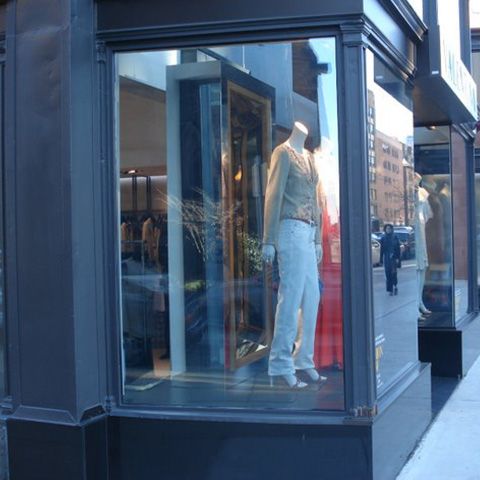
Reflective films contain metallized layers that create a shiny, mirrored surface on the exterior. This look is effective for maximizing privacy and can create a uniform, modern appearance on large glass curtain walls. However, for many clients, this mirrored effect is precisely what they want to avoid. It fundamentally changes the building’s character, which is often unacceptable for historic properties or high-end retail storefronts.
Non-reflective window film is engineered to be virtually undetectable. Using advanced technologies like ceramic nanoparticles, these films absorb solar energy rather than reflecting it. The result is a film that preserves the original look of the glass, allowing the building’s architectural integrity to remain completely unchanged. For any project where maintaining the original architectural finish is a prerequisite, non-reflective film is the only strategic option.
Performance Data: Heat Rejection, Glare, and Low-Emissivity
From a pure performance standpoint, the gap between reflective and non-reflective films has narrowed significantly.
- Heat Rejection (TSER): Traditionally, highly reflective films offered the highest TSER. However, modern ceramic non-reflective films now deliver TSER values well over 50%, providing excellent heat rejection without the mirror effect.
- Glare Reduction: Both film types effectively reduce glare. The level of glare reduction is primarily a function of the film’s VLT, not its composition. You can specify a non-reflective film with the same VLT as a reflective one and achieve identical glare control.
- Low-Emissivity (Low-E): For colder climates, Low-E films are a critical consideration. These films not only reject solar heat in the summer but also reflect radiant heat back into the building during winter, providing year-round energy savings. Advanced Low-E technology is available in both reflective and non-reflective versions.
Long-Term ROI and Payback Period
The return on investment for window film extends beyond the energy bill. For a reflective film, the ROI is almost exclusively tied to energy savings. The payback period is calculated by dividing the project cost by the annual energy cost reduction.
For a non-reflective film, the ROI calculation is more comprehensive. It includes the same energy savings but also adds significant value by preserving the architectural integrity of a building, protecting its market value, and adhering to client or historical commission mandates. In these scenarios, the cost of not using a non-reflective film could be project rejection or a devalued property. The true ROI is the combination of energy savings plus the total value of project approval and asset preservation.
Ideal Applications for Non-Reflective Window Film
Specifying this film is a strategic decision made when a project’s aesthetic and performance requirements converge. For clients who have rejected traditional solar films, non-reflective options reopen the conversation about energy efficiency and UV protection.
High-End Retail and Storefronts
For high-end retail, the view into the store is a critical marketing tool. A mirrored window obstructs product displays and can cheapen a brand’s image. At the same time, unprotected windows allow UV radiation to cause irreversible fading to valuable merchandise.
Non-reflective film directly solves this conflict. By specifying a UV protection film for windows with high VLT, you maintain crystal-clear views that invite customers in. Simultaneously, these films block over 99% of damaging UV rays, acting as an invisible shield for the store’s inventory.
Historic Preservation Projects
Architectural integrity is the central mandate of any historic renovation. The original, inefficient single-pane windows are a core part of a building’s character, and replacement is often not an option.
Non-reflective film is an invaluable tool for modernization in these cases. It can significantly increase a window’s performance, boosting its TSER to reduce HVAC load. Because the film is optically clear and non-reflective, it does not alter the building’s exterior appearance. It allows you to deliver 21st-century energy savings while perfectly preserving the historic facade.
Corporate and Hospitality Spaces
In premium office and hotel environments, the occupant experience is paramount. Solar heat gain creates uncomfortable hotspots, and glare on screens reduces productivity. While traditional films can solve these issues, their reflective nature can create an unappealing exterior.
Non-reflective ceramic films are the superior choice here. They deliver impressive heat and glare reduction while preserving natural light and expansive views. The result is a more comfortable, productive, and energy-efficient environment that feels open and connected to the outdoors, reinforcing the high-end quality of the property.
Specification and Installation Best Practices
Selecting the right film is only half the battle. To ensure success, you must also specify the right product and installation partner. This is a technical partnership crucial for risk management and achieving client goals.
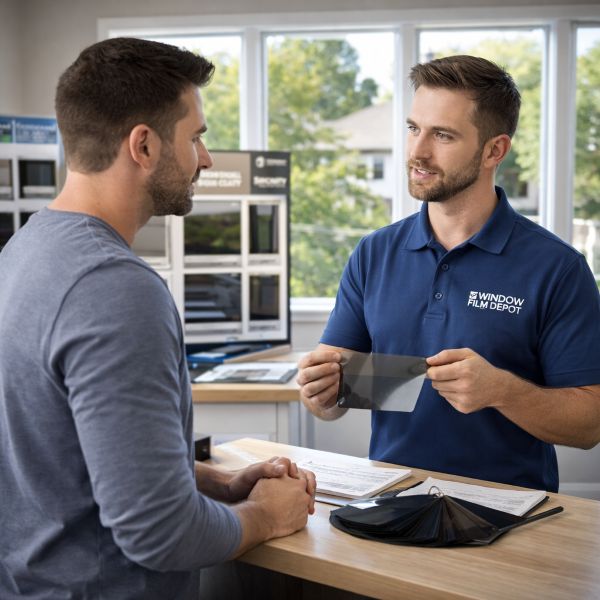
The Importance of Expert Consultation
A spec sheet provides data, but it does not provide context. Factors like glass type, orientation, climate, and the client’s primary objective all influence the optimal film choice.
An expert consultant can analyze these variables to recommend a film that will perform as expected without creating unforeseen issues, like thermal stress on incompatible glass.
This upfront consultation is a critical step in de-risking the project.
A Benchmark for Performance: The 3M Ceramic Series
When specifying non-reflective film, the 3M Sun Control Window Film Ceramic Series is a benchmark for quality. This series employs advanced nano-ceramic technology that is spectrally selective, meaning it can differentiate between different wavelengths of the sun’s energy.
Key performance benefits include:
- High Heat Rejection: Rejects up to 59% of total solar energy and up to 95% of infrared rays.
- Optical Clarity: Low interior and exterior reflectivity maintains clear views.
- UV Protection: Blocks 99.9% of harmful UV rays, the leading cause of fading.
- Guaranteed Durability: The ceramic composition is incredibly durable, color-stable, and backed by a comprehensive warranty from 3M.
This technology provides the high-end performance clients expect without the aesthetic compromises they reject.
Why Certified Installation is Critical
Even the most advanced window film will fail if installed improperly. Contamination, air bubbles, and improper edge finishing can lead to premature delamination. Furthermore, most manufacturer warranties, including the comprehensive warranty from 3M, are contingent upon installation by a certified professional. Specifying certified installation protects the client’s investment and ensures the project delivers on its promises.
The Superior Choice for Design and Performance
For discerning clients who demand high-performance energy savings without compromising their building’s original architectural design, non-reflective window film is not just an alternative, but the superior strategic choice. It represents a mature technology that delivers measurable results while respecting the vision of the architect and owner.
By utilizing advanced ceramic technologies that absorb rather than reflect solar energy, these films provide exceptional heat and UV rejection without creating a mirrored facade. This allows you to meet stringent energy efficiency targets and deliver on ROI promises while assuring your client that the building will look exactly as it was designed to. It is the solution that satisfies both the facility manager focused on operating costs and the owner dedicated to aesthetic integrity.
The most successful window film installations are planned from the outset. Engaging a qualified consultant during the initial specification phase is the most effective way to mitigate risk and ensure optimal outcomes. By treating the window film specification with the same diligence as other critical building envelope components, you can deliver a final product that meets every client demand.
For expert guidance and professional installation, contact Window Film Depot to find the right non-reflective window film solution for your building and performance goals.
Frequently Asked Questions
Will non-reflective window film make my building dark inside?
No. High-quality non-reflective films, especially ceramic window film, are designed to be spectrally selective. This means they can block significant heat and UV rays while allowing a high percentage of visible light to pass through. You can choose a film with a Visible Light Transmission (VLT) of 70% or more, which is nearly undetectable on the glass and keeps interiors bright and full of natural light.
How much energy can I expect to save with ceramic window film?
Energy savings depend on several factors, including your climate, glass type, and building orientation. However, a high-performance non-reflective ceramic film can reject over 50% of total solar energy. This significantly reduces the load on your HVAC system during warmer months, leading to quantifiable reductions in cooling costs and a typical payback period of 3-5 years.
Is non-reflective film a good choice for historic building renovations?
Yes, it is the ideal choice. Historic preservation boards often prohibit any changes to a building’s exterior appearance. Because non-reflective film is optically clear and does not have a mirrored look, it can be installed without altering the historic architectural finish. It provides modern energy efficiency and UV protection while satisfying preservation requirements.
What is the most important metric when choosing a window film for heat reduction?
The most important single metric for heat reduction is Total Solar Energy Rejected (TSER). While some films advertise high Infrared Rejection (IRR), TSER provides a more complete measure of a film’s ability to block heat from all sources of solar energy, including UV, visible light, and infrared. A higher TSER value directly translates to better real-world performance and greater comfort.
Does non-reflective film offer the same UV protection as mirrored films?
Yes. Nearly all professional-grade commercial window tinting options, whether reflective or non-reflective, are designed to be a powerful UV protection film for windows. They block over 99% of harmful UVA and UVB rays, which is the industry standard for protecting interior furnishings, merchandise, and artwork from fading and sun damage.