Table of Contents:
- Security Challenges for Government Buildings Today
- How Security Window Film Works on Government Facilities
- Types of Window Film for Government Buildings
- Key Benefits: Security, Energy Efficiency & Daily Operations
- Where Window Film Delivers the Most Value in Government Facilities
- Project Planning, Installation Process & Cost Factors
- FAQs: Government Building Window Film
- Why Government Agencies Choose Window Film Depot
- Next Steps: Schedule a Government Window Film Consultation
Security Challenges for Government Buildings Today
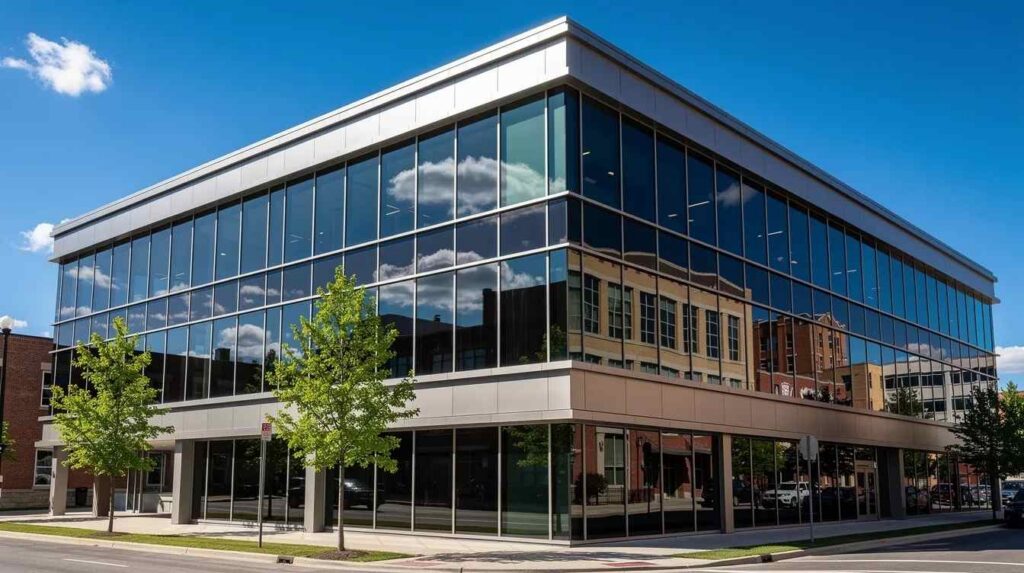
Government buildings-courthouses, city halls, fire stations, police stations, federal buildings, and municipal buildings-face a growing range of security risks in 2026. From forced entry and vandalism to bomb blasts and natural disasters, these public buildings remain high-value targets. Events during the 2020–2022 civil unrest demonstrated how quickly windows and glass doors at service counters, lobbies, and ground floors can be breached, creating dangerous flying glass shards and allowing unauthorized access.
Windows remain the weakest point in any building envelope. Reinforced walls, controlled entries, and security protocols handle most threats, but unsecured glass can fail in seconds under impact, producing shattered glass that injures occupants and opens the facility to intrusion. Government building window film offers a fast, non-invasive retrofit that adds an additional layer of protection to existing glazing without major construction. Today, many facility managers pair security window film with upgraded access control and surveillance as part of an integrated strategy for enhanced protection across government facilities.
How Security Window Film Works on Government Facilities
Commercial window film designed for security is a multi-layer polyester (PET) laminate bonded to the interior face of existing glass using high-tack adhesive. Thickness ranges from 4 mil for basic safety film up to 14–15 mil for heavy blast-mitigation products, making it important to understand the difference between shatterproof and security window films, with premium lines like the 3M Ultra Prestige series featuring 20-plus micro-layers in optically clear or tinted configurations.
Here is how the film works during an incident: when glass takes a blow from a hammer, crowbar, or blast wave, the film holds broken glass together instead of letting it scatter. Safety window film holds shattered glass together after impact, and safety films can delay forced entry attempts by intruders. In real-world testing, thicker security films with mechanical attachment systems delay forced entry attempts for up to 60–120 seconds-giving law enforcement critical response time. Blast mitigation films reduce hazardous flying glass fragments during explosions, turning fragile panes into a flexible barrier.
It is important to note that security film is not bulletproof and should not be marketed as ballistic protection. Professionally installed films meet federal and state building codes, including GSA-TS01-2003 blast criteria and ANSI Z97.1 impact standards, so performance is lab-verified rather than guesswork.
Types of Window Film for Government Buildings
Most government facilities use a mix of film types across different zones. Window Film Depot works with 3M and other leading manufacturers to provide window glass film products and brands matched to each area’s function and risk profile-from public lobbies to secure records rooms and command centers.
Safety & Security Films. Clear or lightly tinted security films protect entrances, public counters, ground-floor exterior windows, glass sidelites, and interior glazing around high-risk areas like holding cells and custody corridors. These films are effective against break-ins and natural disasters, reducing the risk of flying shards during storms and accidental impacts.
Solar & Energy-Efficient Films. Solar control film reduces heat gain and lowers cooling costs across large glass surfaces. These films block up to 99% of harmful UV rays, delivering significant energy savings on facilities with expansive glazing. Sun control and low-emissivity films improve the insulation performance of existing windows, helping reject heat while maintaining natural light, especially when using 3M window film products and installation.
Privacy Films. Privacy window film obscures outside views while allowing natural light into the space. Frosted privacy films are ideal for meeting rooms, conference rooms, and administrative offices. One-way privacy films limit visibility while allowing light through, and they can be customized with various opacity levels and finishes. Privacy films, including one-way privacy window film for glass windows and doors, limit visibility into sensitive areas while allowing natural light, making them a low-maintenance alternative to blinds. Security films also help protect sensitive data from outside view.
Decorative Films. Decorative window film enhances aesthetic appeal in government buildings. These films can be customized with various patterns and colors, and they can incorporate elements of local culture or history. Decorative films create visual privacy without replacing glass, improve privacy while allowing natural light, and create inviting atmospheres in public areas and lobbies.
Specialty Films. Anti-graffiti film protects transit hubs and public restrooms from vandalism. Bird-strike film reduces collision risk on civic campuses. RF-friendly non-metalized films preserve wireless signal integrity near dispatch and communication centers, and a wide range of specialty window film solutions from Window Film Depot can be matched to unique government facility needs.

Key Benefits: Security, Energy Efficiency & Daily Operations
For facility managers building a case for budget approval, here are the measurable benefits that align with 2024–2026 government mandates and performance goals.
Increased security and life-safety. Security window film is effective against break-ins and natural disasters. It can delay forced entry attempts for up to two minutes, providing an added layer of protection that buys response time. During storms, safety films reduce the risk of flying glass shards, and during forced entry attempts, an added protective barrier keeps occupants safer.
Energy performance and comfort. Window film enhances energy efficiency in government buildings by cutting solar heat gain through large windows. Energy-efficient window film reduces heat gain in summer and lowers heating costs in winter. Window film can lower cooling costs in government buildings by reducing HVAC demand, and it improves occupant comfort through more consistent indoor temperatures, creating a more comfortable environment for staff and visitors. Window film improves energy efficiency in large glass buildings, and solar control film reduces heat gain and lowers energy costs. Professional 3M™ window film installation for commercial buildings often pays for itself in energy savings in 36 months, and window film provides a rapid return on investment for energy efficiency improvements.
Privacy and productivity. Window film improves privacy for occupants in government buildings. Privacy window film obscures views while allowing natural light, reducing visual distractions in open-plan offices and protecting sensitive operations. Decorative window film can enhance aesthetic appeal and branding in lobbies and shared spaces.
Preservation and compliance. UV protection safeguards archives, public records, artwork, and historic interiors. Film preserves exterior appearance in historic districts without replacing original glazing.
Operational advantages. Window tinting and film solutions require minimal maintenance compared to blinds, don’t alter egress paths, and install with minimal disruption to daily operations.
Where Window Film Delivers the Most Value in Government Facilities
Government buildings often benefit from window films tailored to function and risk profile. Here is where film for government projects delivers the strongest returns.
City, county, and state offices. Exterior glazing gets solar film for energy savings. Lobby areas receive security film. Internal glass offices use privacy and decorative films for branding and reducing glare.
Courthouses and justice centers. Public lobbies, clerk counters, courtroom glazing, judges’ chambers, jury rooms, and prisoner transfer corridors all benefit from layered safety and security window film combined with privacy films.
Law enforcement facilities. Police stations, sheriff’s offices, holding areas, interview rooms, and dispatch centers need outward visibility with inward privacy-a balance that privacy window film and security films deliver together, especially in high-security markets such as Washington, DC window film installations.
Fire stations and emergency service facilities. Apparatus bay doors, sleeping quarters, and day rooms benefit from solar heat reduction and glare control, helping on-call crews maintain a comfortable environment.
Federal and GSA-managed buildings. Meeting GSA and DoD window protection criteria requires properly tested film. Government agencies managing federal buildings rely on products verified under GSA-TS01-2003 and ASTM F1642 standards, and many take advantage of nationwide window film installation locations to support multi-site portfolios.
Libraries, community centers, and public health clinics. Large glass areas where solar, safety, decorative, and bird-strike films all contribute to community safety and comfort.
Project Planning, Installation Process & Cost Factors
Window Film Depot typically engages with government agencies through a structured process: needs assessment, site survey, and solution design led by experienced project managers who understand security protocols and procurement requirements, backed by a leading 3M window film installation company.
Planning. Coordination with facility managers, security officers, and procurement teams ensures work is phased around public hours and building access rules.
Window film installation steps. Surface preparation, film application, edge sealing with attachment systems where specified, curing time, and final inspection. The right film selection and proper installation determine long-term performance.
Documentation. Product data sheets, test reports, warranty paperwork, and GSA or state contract information are provided for procurement and audit files.
Cost drivers. Total square footage, film type (security vs. solar vs. specialty), number of floors, access equipment, and after-hours scheduling all affect pricing. Typical ranges:
- Basic solar control film: $6–$15 per sq ft installed
- Mid-range energy + security film (8–12 mil): $20–$35 per sq ft
- Heavy security/blast mitigation with mechanical anchoring: $35–$60+ per sq ft
Film is far less expensive and faster to deploy than full glass replacement. Many energy-saving projects see simple payback in 3–5 years, and energy-efficient window film reduces heat gain and energy costs from year one, lowering energy consumption across the facility.
FAQs: Government Building Window Film
Is security window film recognized by federal and state standards?
Yes. GSA uses TS01-2003 and ASTM F1642 for blast performance testing. ANSI Z97.1 and 16 CFR Part 1201 govern safety glazing for human impact. Professionally installed films meet these federal and state building codes.
How long does window film last on government buildings?
Interior films typically last 15+ years. Exterior films exposed to sun and weather carry 10–15 year warranties. Lifespan depends on exposure, film type, and maintenance.
Will window film make my building too dark?
Not if selected correctly. Spectrally selective films reject infrared heat while maintaining natural light with visible light transmission of 70–80%+. Reducing glare does not require sacrificing daylight.
What cleaning and maintenance does film require?
Use non-abrasive, pH-balanced cleaners and soft cloths. Avoid ammonia-based products on metalized films. These practices align with standard janitorial protocols already used in government facilities.
Can film be removed or replaced without damaging the glass?
Yes. Film is removable using heat and specialized solvents. Replacement can be done without replacing the glass itself, making future upgrades straightforward.
How does procurement work for government window film projects?
Window Film Depot supports cooperative purchasing, GSA schedules, and state contracts. We provide competitive bid documentation, product data sheets, and test reports that government agencies commonly require.
Why Government Agencies Choose Window Film Depot
Window Film Depot is a family-owned window film company established in 1992 and a specialist in government and commercial window film projects, operating nationwide since 1992. We have completed thousands of projects across courthouses, municipal complexes, universities, and federal facilities.
As a 3M Authorized dealer, we offer the full range of advanced safety, security, solar control, privacy, and decorative films-backed by in-house project management for complex, multi-site rollouts. Our crews are background-checked and trained to work in secure, occupied environments with full compliance with badging and escort requirements.
We provide turnkey film solutions: consultation, specification support for architects, installation, warranty support, and detailed close-out packages for audit and procurement records. Minimal disruption, clear communication, and a layer of protection your building keeps for years.
Next Steps: Schedule a Government Window Film Consultation
If you manage government facilities and need to address security risks, energy costs, or privacy concerns, start with your most vulnerable or highest-cost buildings. Contact Window Film Depot by phone, email, or online form to request a site assessment or budget estimate. We can help build a phased, multi-year plan that aligns with capital budgets and procurement cycles-delivering the right film solution without the cost of full glass replacement.