Table of Contents:
- Introduction: Why Heat Control Window Film Matters for Businesses in 2026
- What Is Heat Control Window Film and How Does It Work?
- Key Benefits of Heat Control Window Film for Commercial Buildings
- Types of Heat Control Window Films for Businesses
- How Heat Reduction, Heat Rejection, and UV Protection Are Measured
- Choosing the Right Heat Control Film for Your Business
- Installation Process with Window Film Depot
- Maintenance, Lifespan, and Warranty Expectations
- Compliance, Safety, and Building Performance Considerations
- Real-World Commercial Use Cases and Results
- Common Mistakes to Avoid with Commercial Heat Control Window Film
- Frequently Asked Questions About Heat Control Window Film for Businesses
- Why Choose Window Film Depot for Commercial Heat Control Window Films
- Next Steps: Schedule a Heat Control Window Film Assessment
Introduction: Why Heat Control Window Film Matters for Businesses in 2026
After back-to-back record-breaking summers across the U.S. in 2024 and 2025, commercial buildings are facing a harsh reality: rising electricity rates, aging HVAC systems pushed to their limits, and corporate sustainability targets that demand measurable progress. For facility managers and building owners, heat control window film for businesses has emerged as one of the fastest, most cost-effective retrofits available-delivering measurable energy savings without replacing a single pane of glass.
In simple terms, heat control window film is a micro-thin layer bonded directly to your existing windows. It reduces solar heat gain, blocks harmful uv rays, and cuts glare while preserving natural light and views. The result is a cooler, more comfortable interior and lower energy consumption year-round. Heat control films can lead to significant energy savings that make a real difference on operating budgets.
This guide is written for facility managers, building owners, government and education administrators, architects, and national retail brands managing multiple locations. Window Film Depot-a family-owned company founded in 1992 and headquartered in Marietta, Georgia-has spent over three decades helping businesses across the U.S. solve exactly these problems as a 3M Authorized Dealer and installer with turnkey project management capabilities.
Below, you will find everything you need to evaluate, specify, and install the right heat control window film solution for your building or portfolio.
What Is Heat Control Window Film and How Does It Work?
Heat control (solar control) window films are ultra-thin polyester or glass-based laminates applied to existing glass surfaces. They manage the sun’s rays through three primary mechanisms:
- Infrared reflection: Premium films reflect near-infrared energy-the invisible radiation that carries most solar heat-back outside. Some spectrally selective films reject up to 97% of IR in targeted wavelength bands. Heat transfer films reduce solar heat passing through windows this way without darkening the view, and the best window films for heat reduction are engineered to maximize this effect while maintaining clarity.
- Controlled absorption and reradiation: Film absorbs a portion of solar energy and reradiates it, with a meaningful share directed outward rather than into the room.
- UV filtration: Quality commercial films block up to 99% of harmful UV rays (300–380 nm range), providing uv protection that prevents fading of flooring, furniture, displays, and merchandise.
What does this mean in practice? A film with 60% Total Solar Energy Rejected (TSER) stops roughly 60% of all solar energy that would otherwise pass through clear glass-a huge difference for any sun-exposed office space or store. Heat transfer films help maintain cooler indoor environments by intercepting that energy before it becomes a cooling load.
Modern films come in nearly clear, neutral, tinted, or mirrored finishes. Many allow 50–70% visible light transmission (VLT), so the space stays bright. Additionally, heat control films reduce glare on screens and provide modest shatter resistance-secondary benefits that add up across a large facility.
Key Benefits of Heat Control Window Film for Commercial Buildings
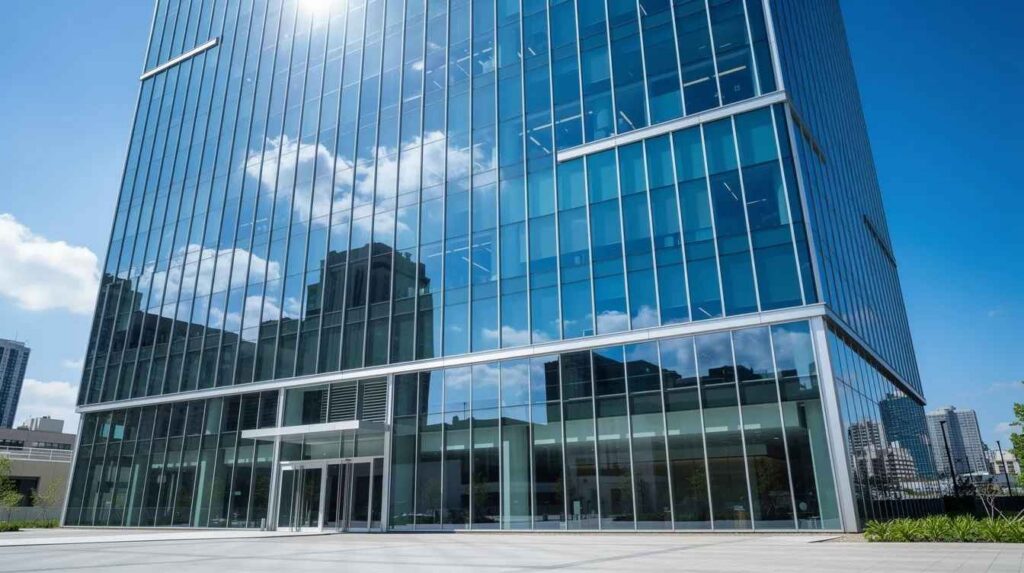
Properly specified window film can deliver 5–15% whole-building cooling energy savings-and in glass-heavy facades, the impact is even greater. These commercial window tinting and film installations address energy use, comfort, and building performance in a single upgrade. Here is what businesses gain.
Energy savings and operating cost reduction. Heat control window film can lower cooling costs by up to 30% by reducing the solar heat load on HVAC systems. Common energy savings from heat control films range from 15% to 30%, with payback periods of 2–5 years in hot climates like Florida, Georgia, and Texas. For facilities where energy bills represent a major line item, those savings free up money for other priorities. Window films can reduce cooling and heating costs year-round when paired with low-E options for winter.
Improved comfort and productivity. Perimeter offices and conference rooms near large windows are notorious for hot spots in summer and cold drafts in February. Film stabilizes temperatures across the floor plate, reducing complaints and making every square foot of space usable. High-performance films can lower interior temperatures by 5 to 10 degrees Fahrenheit near glass-enough to make a previously uncomfortable room genuinely comfortable for occupants.
Glare reduction and screen visibility. Glare drives employees to close blinds and shades, eliminating the daylight and views that make a space appealing. Heat control film cuts glare while still letting light pass through, which is far more effective than relying on blinds or shades alone.
UV protection and asset preservation. Heat control window film protects interior assets from UV damage. UV rejection is essential to protect merchandise and interiors from fading-hardwood floors, textiles, artwork, and branded retail fixtures all degrade with prolonged UV exposure. Every object near a window benefits from this protection, preserving aesthetics and extending the life of interior investments.
Daylighting and natural light. Rather than cover windows with heavy treatments, film lets businesses keep views open and natural light flowing inside-supporting occupant health, reducing artificial lighting needs, and enhancing the overall look of the space.
Types of Heat Control Window Films for Businesses
Not all window films deliver the same performance or appearance. Understanding the main categories helps you determine which solution fits your building.
Spectrally selective films. These non-metallized, nano-optical films prioritize heat rejection while maintaining high visible light transmission. Spectrally selective films reject significant solar heat while maintaining visible light, making them a top choice for Class A office buildings, higher education campuses, and retail storefronts where clarity matters. 3M Prestige Series, for example, rejects up to 97% of infrared heat while allowing 40–70% VLT depending on the variant.
Reflective and dual-reflective films. Reflective films provide significant glare reduction and daytime privacy, making them practical for back-of-house glass, industrial facilities, and older curtain wall systems where aesthetics are secondary to performance. They offer strong TSER values but create a mirrored exterior appearance that may not suit every application.
Ceramic tint and nano-ceramic films. Ceramic tint uses nano-ceramic particles to block infrared heat without metal layers. Nano-ceramic films provide excellent infrared heat rejection without affecting signals-critical in buildings packed with wireless devices and security systems. Ceramic films deliver outstanding optics and low reflectivity, making them ideal for corporate headquarters, hospitals, and airports where both appearance and performance standards are high.
Low-E and insulating films. Low-E window films can prevent internal heating from escaping during colder months. These films improve the window’s U-factor, providing year-round energy efficiency for facilities in mixed or cold climates and 24/7 operations like data centers.
Window Film Depot works with industry-leading manufacturers, including 3M, to match film type to glass type-single-pane, double-pane, low-E, or laminated- drawing from a broad portfolio of window glass film products and brands. 3M Window Films insulate against excessive heat and cold, covering a wide range of commercial needs. Vista films balance performance and aesthetics for commercial use, while LLumar films provide outstanding heat rejection and UV protection. Vista films offer superior solar heat rejection while maintaining clarity. The right manufacturer and product depend on your building’s specific glass and goals.

How Heat Reduction, Heat Rejection, and UV Protection Are Measured
Spec sheets can look intimidating, but a few key metrics give you all the tools needed to compare products confidently.
Total Solar Energy Rejected (TSER). TSER represents the percentage of all solar energy-infrared, visible, and UV-that the film-and-glass system keeps out. Total Solar Energy Rejected is crucial for evaluating window film effectiveness. Quality commercial films typically range from 40% to 80% TSER. A higher number means less heat reaching your interior and less work for your cooling system.
Visible Light Transmission (VLT). VLT tells you how much natural light passes through the filmed glass. For most office and retail applications, a target of 35–60% VLT balances daylight with glare control. Going too low increases dependence on electric lighting.
Solar Heat Gain Coefficient (SHGC) and U-factor. SHGC is the fraction of incident solar heat admitted through the glass system-lower is better for heat reduction. U-factor measures insulating performance; some low-E films improve this metric to cut winter heat loss as well.
UV rejection. Most premium commercial films block up to 99% of UV radiation. This level of protection dramatically slows fading of floors, furniture, displays, and merchandise-preserving the investment you have inside the building.
When comparing products, always request manufacturer data showing performance on the specific glass type in your building, not just film-only numbers. Window films can significantly reduce solar heat gain, but real-world results depend on glass, orientation, and climate. Window Film Depot can interpret these numbers for your exact situation.
Choosing the Right Heat Control Film for Your Business
The “best” film depends on your building, not a product page. Here are practical tips for making the right call.
Assess building conditions. Start by listing your worst problem areas-west-facing conference rooms overheating in july afternoons, south-facing retail glass causing merchandise fading, or glare hitting screens in open-plan offices. Building location and orientation affect energy savings from window films, so a southeast-facing facade in Atlanta will need a different approach than a north-facing wall in Chicago.
Balance light, heat rejection, and aesthetics. Corporate offices often prefer clear or neutral films that maintain a bright, open view. Retail customers want to see into the store, so high-VLT ceramic or spectrally selective films work best. Industrial or warehouse facilities may tolerate darker tint for maximum heat reduction. The difference in approach matters-there is no one-size-fits-all product.
Budget and ROI. Installed cost for commercial solar control film typically ranges from $8 to $18 per square foot, depending on film class, access, height, and project size. Weigh that against annual energy savings and available utility rebates. Many projects pay for themselves within 2–5 years, especially in Sun Belt markets.
Glass safety and warranty. Incorrect film on insulated or tempered glass can cause thermal stress and cracking. Always use manufacturer-approved combinations and professional installers to protect both glass and film warranties. Consider hiring experienced installers for optimal film performance-this is not a place to cut corners.
Window Film Depot acts as a consultative partner, conducting onsite surveys, providing sample installations, and-for multi-site retail and institutional clients-standardizing specifications across entire portfolios before a single roll of film is cut, leveraging its extensive range of 3M window film products and installation services.
Installation Process with Window Film Depot
A well-run commercial installation should feel almost invisible to building occupants. Here is how a typical project progresses.
Site assessment and proposal. A Window Film Depot team member walks your facility, audits glass types and conditions, measures exposure areas, and identifies hot spots and glare complaints. You receive film recommendations, projected performance improvements, and pricing organized by elevation or zone.
Scheduling and preparation. Installation is coordinated around your operations-night shifts, weekends, or phased floor-by-floor schedules-so tenants, customers, and staff are not disrupted. Surface prep includes thoroughly cleaning each window and moving furniture or displays a safe distance from the glass. Crews wet both the window and film before applying for better adhesion, using a soap and water solution that allows precise positioning.
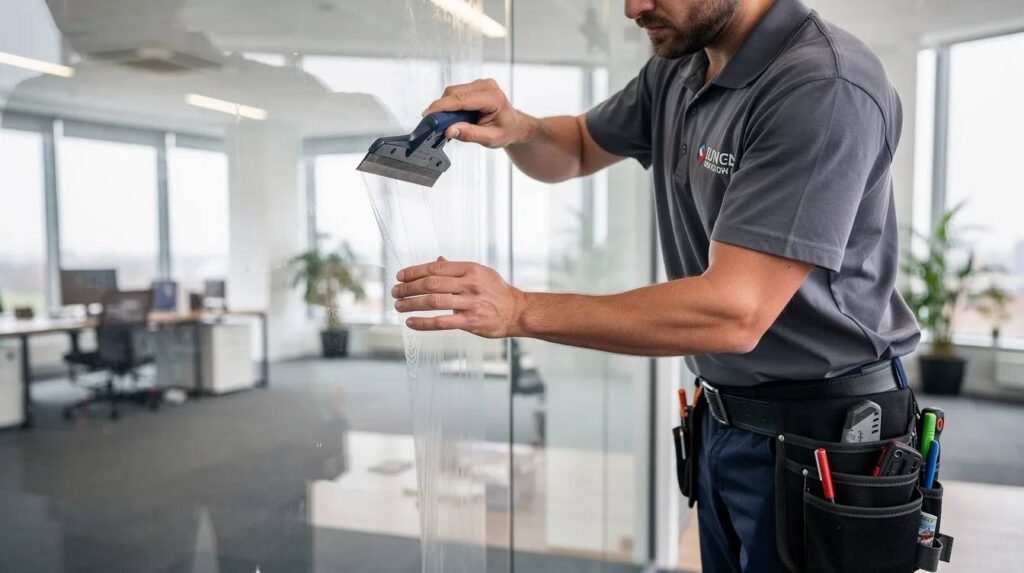
Professional installation. Installers apply the solution, position the film, and use a decent squeegee to avoid bubbles and ensure full contact with the glass. Edges are precision-trimmed, and each pane is inspected before moving to the next. Proper installation of window films enhances their efficiency and ensures the film performs to spec. Proper installation of window films ensures maximum efficiency, which is why Window Film Depot crews are trained, insured, and experienced with security protocols in schools, government buildings, and healthcare facilities.
Post-installation inspection and cure time. After installation, you may notice slight haziness or small water pockets-this is normal. Full cure typically takes about 30 days, during which adhesion and optical clarity improve steadily. Patience during this waiting period pays off. Your team receives care instructions, warranty documentation, and-for large rollouts-a standardized process that keeps quality consistent across every location.
Maintenance, Lifespan, and Warranty Expectations
Commercial window films are low-maintenance and built for durability, but a few simple practices keep them performing at their best.
Lifespan. Quality 3M commercial films typically last 10–20+ years depending on climate, glass orientation, and film type. Interior-applied films generally outlast exterior-applied options, which may be used in certain specialty situations. The long service life is a major reason the cost per year is so low.
Cleaning and care. Wait the manufacturer-recommended period (usually 30 days) before the first cleaning. Use mild, non-ammonia cleaners and soft cloths or a squeegee. Avoid razor blades, abrasive pads, or harsh chemicals that can scratch or degrade the film surface.
Monitoring. Regular inspections help maintain window film effectiveness. Minor edge drying during cure or slight optical variation at certain angles is normal. Peeling, persistent bubbling, or discoloration is not normal and should be reported for warranty service.
Warranties. Reputable commercial warranties cover peeling, cracking, and discoloration for 15–20 years on premium products. When installed by certified dealers like Window Film Depot, you also gain access to manufacturer-backed glass breakage and seal failure coverage, backed by detailed 3M window film warranty information. This level of protection gives facility teams confidence that the investment is fully supported.
Compliance, Safety, and Building Performance Considerations
Commercial window film projects should align with building codes, safety glazing rules, and broader building performance strategies.
Glass type and thermal stress. Film selection must account for whether your glass is tempered, annealed, laminated, or part of an insulated unit. The wrong pairing can cause thermal stress and potential breakage. Experienced installers use manufacturer guidelines and, when necessary, thermal modeling for sensitive facades. Professional installation ensures compliance with building codes and protects your facility.
Fire and safety standards. Reputable commercial films are tested to applicable building and fire codes. Avoid untested, off-brand products-especially in schools, healthcare facilities, and government buildings where code compliance is non-negotiable.
Integration with other upgrades. Heat control window film complements lighting retrofits, HVAC upgrades, and building automation systems. When layered into a comprehensive energy strategy, film amplifies the impact of every other efficiency measure.
Security and privacy combinations. Facilities can pair solar control with security glazing films or privacy films-frosted, blackout, or one-way reflective-to address energy, impact resistance, and visual privacy in a single installation. This multi-function approach is something customers in government, education, and healthcare love because it solves several problems at once without layering multiple projects.
Window Film Depot has deep experience working with government agencies, school districts, and national retail chains where compliance, bid specs, and thorough documentation are required at every step, supported by its role as a leading 3M window film installation company.
Real-World Commercial Use Cases and Results
Seeing real outcomes helps stakeholders justify projects to finance teams and leadership. Here are representative scenarios.
Office portfolio. A multi-story office building in a Sun Belt market retrofitted with 3M solar control film on its west and south facades saw perimeter hot spots drop substantially. Tenants reported fewer comfort complaints, and estimated cooling energy savings of 10–12% delivered a 3–4 year payback. The film maintained an open, bright view through the glass-no blinds required.
Retail chain. A national retailer with large storefront windows across markets including Florida and Georgia used neutral ceramic tint films to reduce merchandise fading and improve shopper comfort near glass. Coordinated by Window Film Depot, the rollout covered dozens of locations with consistent quality. In one documented case study, a Cleveland retail store that applied 3M Prestige Series film to west-facing glass saw summer sales double from approximately $7,000 to $14,000 in July, attributed in part to keeping blinds open, increasing foot traffic and store visibility.
Education facility. A school district installed heat control window film to protect staff and students from heat and UV in classrooms with aging single-pane glass. Glare on classroom screens was dramatically reduced, and the district avoided the cost and disruption of full window replacement. The project met strict budget constraints while also improving energy efficiency across multiple campus buildings.
Each use case highlights how a single national installer with nationwide service locations streamlines multi-site implementation and ensures every location gets the same quality result.
Common Mistakes to Avoid with Commercial Heat Control Window Film
A few common missteps can undermine performance, appearance, and ROI. Here are the ones we see most often.
Choosing film based on price alone. Low-cost films often discolor, peel, or lack meaningful warranties. Early replacement and tenant complaints quickly erase any upfront savings. You should determine long-term value, not just initial cost.
Ignoring glass type and climate. Using the wrong film on insulated or tinted glass in hot climates can cause thermal stress damage or void glass warranties. Always confirm compatibility before committing.
Over-darkening spaces. Picking very dark films for maximum heat rejection can undermine daylighting strategies and increase lighting energy consumption. The goal is to reduce heat, not block all light.
DIY or unqualified installers. Contamination, poor edge finishes, and non-compliance with fire and safety rules are common when installers lack commercial experience. Consider hiring experienced installers for optimal film performance and code adherence.
Skipping post-install education. Not informing occupants about cure time or cleaning do’s and don’ts leads to unnecessary service calls or accidental damage. A comment from a concerned tenant about temporary haziness is normal-but only if they know to expect it.
Working with a specialized commercial provider like Window Film Depot eliminates these risks through proper specification, mockups, professional installation, and aftercare at scale.
Frequently Asked Questions About Heat Control Window Film for Businesses
These answers reflect Window Film Depot’s decades of commercial project experience and current 2026 film technologies.
How much heat can commercial window film actually block?
Quality commercial films reject 40–80% of total solar energy depending on film type, glass, and orientation. In practical terms, these films help maintain cooler indoor environments during summer and can reduce peak cooling loads dramatically. Window Film Depot can provide specific projections based on your building’s climate data and glass inventory. High-performance films can lower interior temperatures by 5 to 10 degrees Fahrenheit near treated windows.
Will heat control window film make my offices too dark?
Many modern films, including spectrally selective and ceramic tint options, allow high visible light transmission while still cutting infrared heat and UV. A film with 50–70% VLT keeps a space bright and open. We recommend testing with pilot panels so stakeholders can see the daylight impact before committing to a full rollout-there is no reason to sacrifice the view.
Can window films be installed on double-pane or low-E glass?
Yes. There are films engineered specifically for insulated and low-E glass units, but correct pairing is critical to manage thermal stress and maintain manufacturer warranties. Window Film Depot follows strict manufacturer guidelines and uses only approved products rated for each glass type.
How long does installation take, and will it disrupt operations?
Experienced crews typically cover several hundred square feet per installer per day. Most projects are scheduled after hours or at night, or in phases, to minimize disruption. Spaces generally remain usable the same day or next day, with only brief access restrictions near active work areas. The process requires patience but not downtime.
Is heat control window film compatible with security or privacy films?
Some products combine solar control and safety features in a single film. In other cases, layered solutions may be appropriate depending on glass type and code requirements. A professional assessment helps determine the best combination for energy, impact resistance, and privacy goals-whether you need to protect a home office, a government building, or a retail location.
What does commercial window film cost per square foot?
Pricing varies based on film type, glass access, building height, and project scope. Basic solar control films fall at the lower end of the installed cost range, while premium ceramic or low-E films cost more. Multi-building or multi-site portfolios often benefit from volume pricing. Visit our page or contact Window Film Depot directly for a site-specific quote tailored to your project.
Why Choose Window Film Depot for Commercial Heat Control Window Films
Window Film Depot has been solving commercial glazing challenges since 1992 as one of the nation’s premier 3M window film installation companies. Here is what sets us apart.
Nationwide reach with local service. Headquartered in Marietta, Georgia, we manage everything from single-location installations to multi-state rollouts with consistent standards-no matter where your buildings are.
Manufacturer partnerships. As a longstanding 3M Authorized Dealer, we offer the full portfolio of solar control, security, privacy, and decorative films. We also work with complementary product lines to cover every commercial need under one roof.
Turnkey project management. We handle assessment, specification, logistics, installation, and warranty documentation so your facility team does not have to coordinate multiple vendors. That means fewer headaches and faster completion.
Consultative approach. We provide energy and comfort analysis, sample installations, and alignment with broader building performance or branding initiatives. We bring all the tools and expertise needed to match the right film to the right glass on the right building.
Customer-centric service. Strong repeat business and referrals reflect our commitment to doing projects right the first time-working carefully in occupied spaces, communicating clearly, and standing behind every installation.
Next Steps: Schedule a Heat Control Window Film Assessment
Heat control window film is a fast, non-invasive way for businesses to cut cooling costs, improve comfort, protect interiors from fading, and reduce energy consumption-without replacing glass or disrupting operations.
Ready to take the next step?
- Gather basic information: building type, location, current comfort or energy complaints.
- Contact Window Film Depot by phone or through our website to request a site visit or remote consultation.
- We offer onsite evaluations in major metros and key regions across the U.S., plus virtual reviews of plans or photos for early-stage budgeting-especially helpful for architects and national accounts.
Whether you manage a single office building or a portfolio of retail locations, Window Film Depot is ready to help you find the right heat control window film solution for your specific building and timeline. Reach out today-and start turning your glass into an asset instead of a liability.