Every glass window and door in your home or office is a potential line of sight for anyone walking past. Frosted window film solves that problem in minutes, turning clear glass into a softly blurred surface that lets filtered light pour through while keeping the view firmly blocked. This guide covers everything you need to know, from choosing the right privacy level to installing and maintaining your film.
Table of Contents:
- A Fast Way to Add Privacy Without Losing Light
- What Is Frosted Window Film and How Does It Work?
- Key Benefits of Frosted Glass Window Film
- Popular Places to Use Frosted Window Film in Homes and Offices
- How to Choose the Right Privacy Level and Style
- Frequently Asked Questions About Frosted Privacy Window Film
- Conclusion: Transform Glass with Simple, Effective Privacy
A Fast Way to Add Privacy Without Losing Light
If you have a street-facing living room with large windows, bathroom windows in an apartment that sits close to neighbors, or office partitions made entirely of glass, you already know the tension between wanting natural light and needing privacy. Curtains and blinds work, but they shut out daylight the moment you close them.
Frosted window film offers a different approach. It stays on the glass surface around the clock, providing full-time security unlike fabric curtains that must be drawn each time. Whether you own a house, rent an apartment, or manage a commercial space, the same product adapts to your situation. Below, you will learn what frosted film actually is, where it works best, how to choose the right privacy level and style, and practical installation tips to get it right on the first try.
What Is Frosted Window Film and How Does It Work?
Window films are thin layers of vinyl or polyester applied directly to smooth glass. Frosted glass window film is a specific type designed to replicate the look of etched or sandblasted frosted glass, giving clear panes a minimalist modern glass appearance with an elegant textured surface.
Here is how it works optically:
- Light diffusion. The matte surface scatters incoming visible light so it cannot pass straight through. The result is a soft glow that brightens a room without sharp glare.
- Shape blurring. Silhouettes and movement remain faintly visible, but fine detail is unreadable from the other side, shielding you from prying eyes.
- UV filtering. Most modern films can block up to 97% of harmful UV rays, protecting interior finishes and skin from sun damage (source).
- Versatility. Frosted window films can be used on various glass surfaces, including sidelights, glass cabinet doors, shower enclosures, and office partitions. The film can be easily cut to fit any window using a craft knife and straightedge.
Most frosted window films rely on static cling rather than adhesives. Static cling films require no glue and leave no residue, making them ideal for renters or anyone who wants a temporary solution. Adhesive-backed films bond more permanently, resist edge lifting, and tend to last longer, which is why they are the standard choice for commercial and long-term residential use. Before applying frosted window film, always consider the window glass type to ensure compatibility.
Key Benefits of Frosted Glass Window Film
Homeowners, tenants, and businesses choose frosted film over replacing glass for several compelling reasons. Here are the most significant.
- Privacy you can tailor. Frosted glass films provide 96% privacy protection, meaning nearly all visible detail is obscured. Frosted window films provide 96% privacy protection across a range of opacity options, so you can pick light, medium, or heavy frost depending on the room. The result is maximum privacy while allowing light in.
- Natural light stays. Unlike blinds that darken a room when closed, frosted window films allow natural light while blocking views. Rooms feel open and bright because the film transforms harsh sunlight into comfortable, evenly distributed filtered light.
- Cost-effectiveness. Frosted films are a cost-effective alternative to etched glass. Professional film installation typically runs $7–$10 per square foot, while custom etched or acid-etched glass panels can cost $50–$150+ per square foot. Frosted window film is cost-effective compared to specialized textured glass panes, often saving 80–90% of the total expense.
- UV and glare reduction. The film blocks damaging UV rays that fade furniture, flooring, and artwork over time. It also reduces glare on screens, which is a practical win for offices and home workstations.
- Safety and security. Film can conceal valuables from outside view and hold small glass shards together if a pane cracks. Frosted window film provides full-time security unlike fabric curtains, working 24 hours a day without any action on your part.
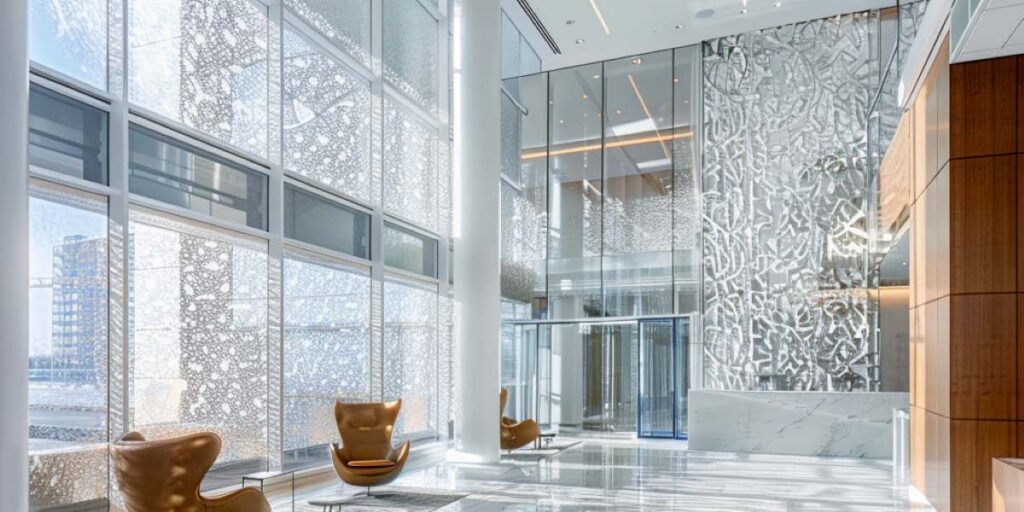
- Style and branding. Decorative options include frosted bands, gradients, geometric patterns, and custom logos. Businesses can elevate the appearance of meeting rooms and reception areas on glass doors and office partitions without major renovation.
Frosted window film enhances home privacy and aesthetic appeal in one step, which is why it remains a popular solution across residential and commercial settings.
Popular Places to Use Frosted Window Film in Homes and Offices
The same product works across many smooth glass surfaces indoors and on certain interior-facing exterior windows. Here are the most common applications:
- Bathrooms. Bathroom windows, shower doors, and toilet partitions are the most popular spots. Medium-to-heavy frost can obscure 80–95% of visible detail while still transmitting around 70–80% of natural light, keeping the space bright and private.
- Front doors and sidelights. Glass doors, sidelights, and transom windows near the street let daylight into entryways, but they also invite attention. A frosted window adds a barrier against prying eyes while preserving a welcoming, light-filled entrance.
- Bedrooms and apartments. Ground-floor bedrooms, balcony doors facing other buildings, and city apartment windows close to neighbors all benefit. Film is an inexpensive way to add privacy without permanent alteration, which is especially helpful for renters.
- Home offices. Frosted film on interior doors or partial glass walls gives you a private backdrop for video calls while keeping the room connected to the rest of the house.
- Commercial spaces. Offices, meeting rooms, reception areas, and healthcare waiting rooms use frosted panels or banded designs on glass to create a professional look with subtle privacy. Reeded glass films provide medium privacy with light diffusion and are increasingly popular in modern commercial interiors.
- Cabinets and interior design. Glass cabinet doors, internal room dividers, and even mirrors can receive a decorative frosted effect that hides clutter and adds elegance to a space.
Frosted films can be used on various glass surfaces throughout a house or office, making them one of the most flexible privacy products on the market.
How to Choose the Right Privacy Level and Style
Choosing the right film means balancing three variables: how private you need the room to feel, how much light you want inside, and which design fits your aesthetics.
- Privacy scales. Manufacturers typically rate films from light to heavy. Light frost allows silhouettes and shapes (VLT around 60–90%). Medium frost blurs most detail (VLT roughly 30–60%). Heavy frost is near-opaque for great privacy (VLT around 5–20%).
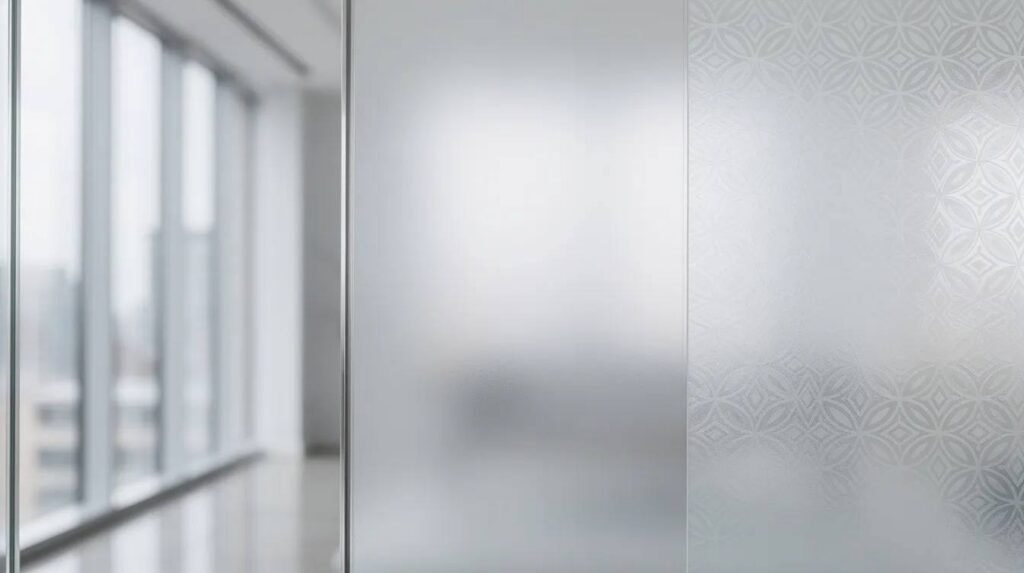
- Full frost vs. lite frost. Standard frosted window film covers the entire pane with a uniform blur. Lite Frost films create a translucent privacy effect that softens detail but still lets outlines show. Choose lite frost for spaces where you want openness with a hint of screening.
- Pattern and coverage. Options include full-coverage film, frosted bands, gradients, and geometric patterns. Sketch where you want frost on your windows before buying so you order the correct dimensions and design.
- Color and finish. White matte frost is the most versatile match for both residential and office spaces. Other finishes include acid-etched satin looks and subtle tints. Reeded Glass Film mimics fluted glass at a lower cost, offering a stylish alternative with a distinct vertical line pattern.
- Glass compatibility. Some films are not suitable for certain double-glazed, low-E, or textured glass. Always check the manufacturer’s compatibility notes before purchase to avoid adhesion problems or thermal stress.
- Measuring and ordering. Measure each pane’s width and height, then add a small margin (roughly 1/8 inch) so you can trim after application. Decide between pre-cut pieces for standard windows and rolls for large or custom shapes.
Step-by-Step Installation Guide for Frosted Window Film
Most DIY-friendly frosted films can be installed in under an hour with basic household tools. Frosted films can be easily applied and removed by users, so even if this is your first time, the process is forgiving.
Tools you will need:
| Tool | Purpose |
|---|---|
| Spray bottle with mild soapy water | Wet the glass for positioning |
| Squeegee or plastic card | Push out water and air bubbles |
| Sharp utility knife | Trim excess film |
| Tape measure | Measure panes accurately |
| Straightedge | Guide clean cuts |
| Microfiber cloth | Dry edges and clean glass |
Preparation. Clean the glass surface thoroughly. Remove old stickers, adhesive residue, and dust. Any particle left on the glass will create a visible bump or bubble under the film.
Measuring and cutting. Measure the glass, then cut the film slightly larger than the pane. You will trim the excess after application for a tight, clean fit. Frosted window film can be easily cut to fit any window with a sharp blade and straightedge.
Application. Static cling films require soapy water for installation. Spray the glass generously, peel the backing from the film, and position it on the wet surface. Slide it into the perfect spot, then use a squeegee from the center outward to push water and air toward the edges. Bubbles can be removed easily with a plastic scraper. Frosted window films can be easily applied without glue when using static cling products.
Curing. Allow 24–72 hours for the film to fully adhere and for any residual haziness to clear. Avoid cleaning or pressing on the film during this period.
Common mistakes to avoid:
- Dust or lint trapped under the film – always clean glass twice if needed.
- Cutting too small – leave extra material and trim after positioning.
- Applying in direct sunlight on hot glass – the film dries too fast, trapping bubbles.
- Installation may require two people for large windows, so ask for help with panes wider than about four feet.
Frosted films are removable and reusable without damage to the glass, so a mistake during installation is easy to correct.
Care, Maintenance, and Removal
Well-installed frosted film requires very little attention. Frosted window film requires low maintenance compared to traditional glass etching, which is one of its strongest practical advantages.
- Cleaning. Use a soft cloth or sponge with mild, non-abrasive cleaners. Avoid ammonia-based sprays, scouring pads, or razor blades, which can scratch the matte finish.
- Longevity. Professionally installed interior adhesive films typically last 10–15 years. DIY self-adhesive films average 3–7 years. Static cling films last around 1–3 years, though they are easy to replace. Sun-facing windows degrade film faster than shaded ones.
- Condensation. In high-humidity rooms like bathrooms, good ventilation prevents moisture from creeping under film edges and causing lifting or mildew.
- Edge lifting. Small lifted corners can be gently pressed or re-squeegeed. If a section is torn or permanently creased, replacing that piece of film is usually the fastest fix.
- Removal. Lift a corner and peel slowly. For adhesive-backed films, warm soapy water or a mild adhesive remover will clean residue from the glass afterward. The process leaves the glass undamaged and ready for a new roll of film if you want to update your design.
Frequently Asked Questions About Frosted Privacy Window Film
Below are answers to the most common questions from people shopping for frosted film.
Does frosted window film work at night when indoor lights are on?
High-privacy films with heavy frost still obscure detail effectively at night. However, lighter films may show silhouettes when interior lighting is bright and the outside is dark. If night-time privacy is critical, choose a film rated for maximum privacy.
Can I still see out through frosted glass window film?
You will see shapes and movement rather than clear detail. The exact visibility depends on the film’s opacity. Heavier frosts block nearly everything; lighter frosts let blurry outlines pass through at close distance.
Is frosted window film suitable for rental properties?
Yes. Static cling, non-adhesive films are removable and typically renter-friendly. They peel off cleanly and leave the glass in its original condition. Check your lease for any rules about temporary window coverings, but most landlords are happy with a solution that causes zero damage.
Will frosted film damage my windows?
Quality window films are designed for glass and will not cause harm. However, always follow manufacturer guidance for tempered, double-glazed, or low-E units. Applying an incompatible film to certain coated glass can cause thermal stress.
Can I install window films on textured or patterned glass?
Most films need a smooth glass surface for full adhesion and a uniform appearance. Textured glass reduces contact area, which can cause visual distortion and poor adhesion. If your glass is textured, look for films specifically rated for that use.
How do I choose between clear, tinted, and frosted films?
Frosted privacy window film is ideal when privacy is the main goal. Clear or lightly tinted films are better suited for UV or heat control when you want to maintain a clear view. For a middle ground, Lite Frost films create a translucent privacy effect that softens the view without fully blocking it.
Why Choose Our Frosted Window Film Solutions
We specialize in practical, long-lasting window film solutions for both residential and commercial customers. Our goal is to make the process simple from first click to final install.
- Product quality. Our films use durable materials with clear privacy level labeling and compatibility notes, so you select the right product the first time. Every film is designed to deliver a clean, professional appearance.
- Easy installation. We provide user-friendly installation directions, sizing advice, and support resources including video guides that reduce DIY frustration and help you apply film with confidence.
- Design range. From subtle lite frost to full-privacy films perfect for bathrooms, offices, and street-facing windows, our lineup covers every privacy level and aesthetic preference, including white matte, reeded, and patterned options.
- Customer support. Our team offers responsive pre-purchase and after-sales support. Whether you need help choosing the right film, troubleshooting bubbles during installation, or getting feedback on a tricky glass type, we are here to help.
- Value and reliability. Our films balance price, appearance, and longevity so you do not need to replace glass or invest in costly renovations. It is an inexpensive solution backed by materials built to last.
Conclusion: Transform Glass with Simple, Effective Privacy
Frosted window film is one of the simplest upgrades you can make to any glass window or door. It delivers privacy, softened light, UV protection, and a polished look – all without replacing a single pane. Whether you are treating bathroom windows, front glass doors, apartment bedrooms, or commercial offices, the key is matching the privacy level and style to the room’s needs.
Browse our full range of frosted privacy window film options to find the perfect match for your space. If you need help with measuring, selection, or installation, reach out to our team for personalized guidance or review our detailed product pages and video resources. Enjoy brighter, more comfortable rooms that feel private and polished, without sacrificing the natural light that makes a space feel like home.