Table of Contents:
- What Is UV Window Film and Why It Matters in 2026
- How UV Film for Windows Works (Without Making Rooms Dark)
- UV Protection, Fading & Heat: What UV Film Can and Cannot Do
- UV Film vs. Blackout Curtains, Blinds & New Windows
- Types of UV Window Film & How to Choose the Right One
- How Professional UV Window Film Installation Works
- FAQs About UV Film for Windows
- Why Choose Window Film Depot for UV Window Film
- Next Steps: Schedule a UV Window Film Consultation
Clear UV window film blocks over 99% of harmful UV rays while preserving natural light and views. Window Film Depot installs 3M and other high-performance films nationwide for commercial and residential buildings.
What Is UV Window Film and Why It Matters in 2026
UV window film is a thin polyester or multi-layer polymer film applied directly to existing glass. It uses UV absorbers and advanced coatings to filter out ultraviolet radiation – both UVA and UVB – while still letting visible light pass through. Since roughly 2020, demand has surged as more people work from home, spend hours near windows, and learn that incidental sun exposure indoors can increase skin cancer risk.
The film is engineered to block up to 99% of UV rays that cause sun damage to skin, flooring, artwork, and home furnishings. UV window film is commonly used in both homes and offices, from school classrooms and hotel lobbies to retail storefronts and private residences. The global window film market reached approximately $13.5 billion in 2026, driven by retrofit demand and tighter energy codes.
Unlike a basic tint, UV film can be nearly invisible. It does not require costly new windows or disruptive construction. You can have it installed on existing glass in hours. Window Film Depot is a national installer and wholesale supplier specializing in 3M solar control, UV, and security window films for commercial and institutional clients, plus select residential projects. Based in Marietta, Georgia, and family-owned since 1992, the company serves clients across North America.
How UV Film for Windows Works (Without Making Rooms Dark)
Think of UV film for windows as sunscreen for glass. It absorbs and reflects ultraviolet radiation in the 300–380 nm range before it enters the room, acting as a clear, invisible shield against UV rays on every exposed surface inside.
Modern UV window film comes in several configurations:
- Clear UV-only film: Maximum natural light and unobstructed views. VLT stays above 80–90%. Ideal where aesthetics matter most.
- Lightly tinted film: Mild glare and heat reduction with a subtle shade, while still allowing daylight to enter and filtering harmful radiation.
- Spectrally selective or ceramic-based film: Advanced control of UV, visible light, and infrared heat. Window films in this category can reduce solar heat gain by 50% to over 70% and cut glare by 50% to 75%.
UV-only films primarily address UV radiation for fade reduction and health protection. Solar control films additionally reduce infrared heat and glare. Window Film Depot helps clients choose the right balance based on orientation, climate, and priorities.
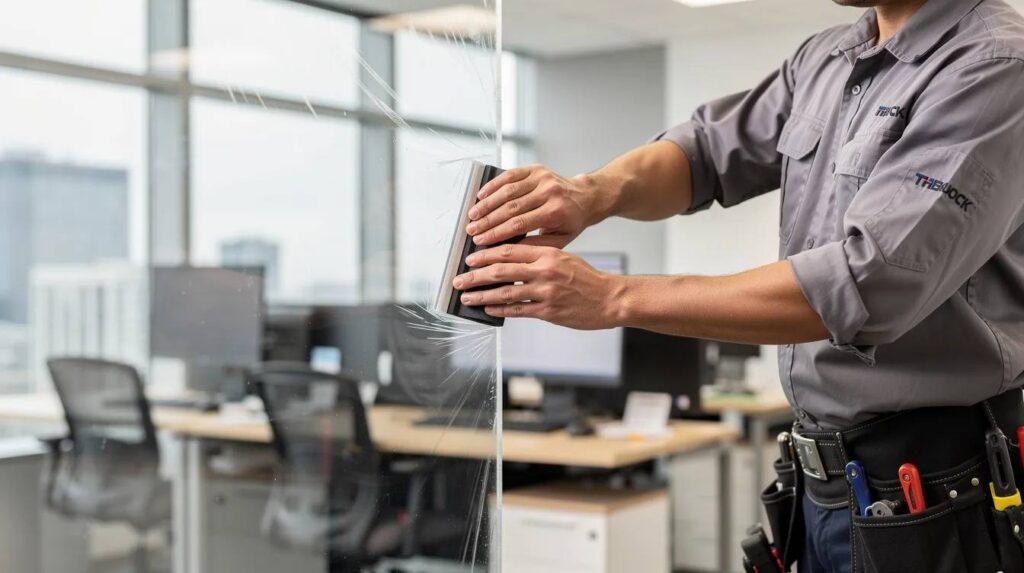
Films are typically applied on the interior side of the glass using a water-based adhesive and professional squeegee techniques, then cured over several days for full optical clarity. UV window film also reduces glare on computer monitors, TVs, and other screens – a meaningful benefit in any office or classroom. When professionally installed and matched to the correct glass type, films do not bubble or peel and are safe for most single- and double-pane windows.
UV Protection, Fading & Heat: What UV Film Can and Cannot Do
Fading and sun damage have multiple causes. Industry data breaks it down roughly as follows: about 40% from uv radiation, approximately 25% from visible light, around 25% from heat, and the remainder from humidity and material quality. Uv rays are the primary cause of fading, but they are not the only factor.
What UV film does very well:
- Clear UV film significantly slows down the fading of hardwood floors, carpets, artwork, retail merchandise displayed near windows, and museum collections.
- UVA rays can penetrate window glass and cause skin damage. UV window film helps reduce the risk of skin cancer indoors by cutting that exposure for reception staff, office workers, and students who sit next to large classroom windows for many years.
- It protects finishes in high-value interior spaces – hotel lobbies, galleries, showrooms – where premature fading and sun damage are expensive to repair.
What UV film cannot do alone:
- Fading won’t stop completely with UV film alone. Visible light and heat also contribute to fading, especially over long time scales. No solution is 100% fade-proof.
- For serious heat and glare reduction, a solar control or spectrally selective film is needed in addition to UV protection.
- A layered strategy works best: film on the glass, light-colored curtains or blinds for supplemental control, and smart furniture layout to limit direct exposure.
A retail store in the south used clear UV film to protect branded displays without darkening the storefront – merchandise color stayed true for years. A residential client combined UV film with light-colored curtains instead of blackout curtains to maintain daytime brightness while cutting UV exposure, keeping the room warm and bright without the risk of skin damage.
UV Film vs. Blackout Curtains, Blinds & New Windows
Facility managers and homeowners in 2026 have several sun-control options. Here is how UV film compares to the most common alternatives:
- UV Film vs. Blackout Curtains: Blackout curtains block nearly all light and views, creating a darkening that makes spaces feel closed off. UV film keeps natural light and visibility while filtering UV rays at the glass surface. Use both where needed – film on the glass plus curtains for occasional full darkening in conference rooms or bedrooms.
- UV Film vs. Standard Blinds: Blinds reduce direct glare but allow UV rays to leak through gaps and still let the glass get hot. UV film works on the glass before sunlight enters and can be layered behind blinds for better comfort and warmth control.
- UV Film vs. New Windows: Replacing glass with new low-E or UV-blocking units is effective but expensive and disruptive. UV film is a cost-effective retrofit, typically installed in hours with far lower capital expense. Occupied offices, hospitals, and universities that cannot shut down for construction routinely choose film over full window replacement.
Window Film Depot often works with architects and building owners to combine UV film with other building-envelope upgrades for LEED, WELL Building, or local energy-code compliance – without the price tag of new glazing.
Types of UV Window Film & How to Choose the Right One
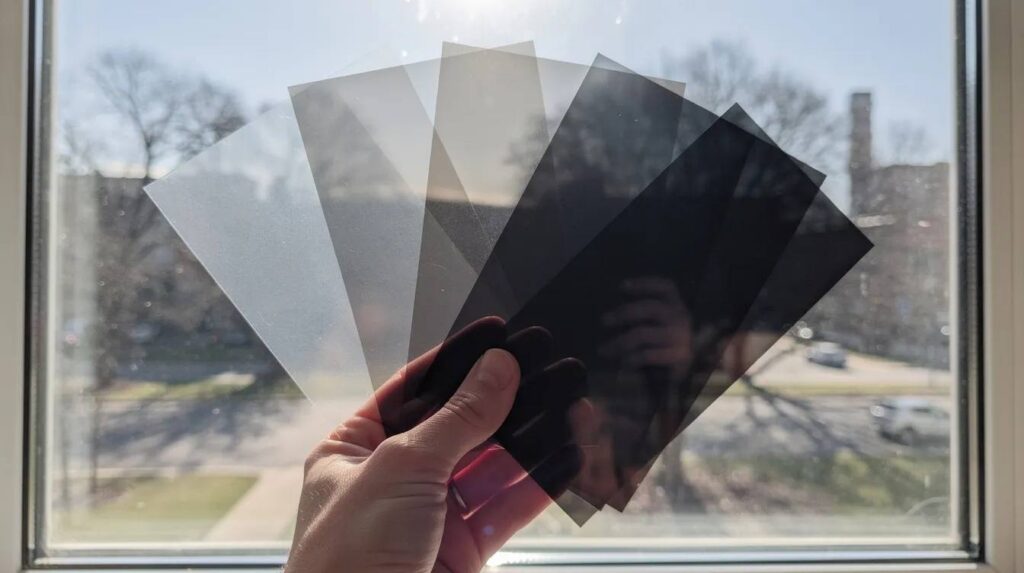
Not all window films are the same. Here are the key categories:
| Film Type | UV Block | VLT | Best For |
|---|---|---|---|
| Clear UV Film | 99%+ | 80–90%+ | Museums, galleries, storefronts, residences |
| Spectrally Selective / Ceramic | 99%+ | 50–70% | Offices, schools, and healthcare facilities |
| Reflective or Tinted Solar | 99%+ | 20–50% | Large commercial facades, retail cooling |
| Security & UV Combination | 99%+ | 70–90% | Government, schools, retail chains |
Specialized security films help strengthen glass against break-ins or natural disasters while also blocking UV rays. These thicker, multi-layer films are suited for facilities concerned about both sun damage and security threats, acting as a security service and uv protection layer in one product.
Before choosing, evaluate:
- Glass type: single pane, dual pane, tempered glass, or laminated glass – and orientation (south-facing windows get far more solar load than north-facing).
- Project goals: UV protection only, or combined glare, privacy, energy savings, or security.
- Aesthetic requirements, including historic facades or brand standards.
- Film lifespan (often 10–15+ years for quality products) and warranty terms.
Window Film Depot provides site assessments, film samples on actual glass, and documented performance data to support capital-planning decisions.
How Professional UV Window Film Installation Works
Professional installation generally provides the best appearance and durability, and it is essential for honoring manufacturer warranties on large commercial jobs.
Here is the typical process:
- Consultation & Glass Survey: On-site review of existing glazing. Identification of problem areas – fading on a floor near a west-facing window, hot spots near a server room, glare on outside-facing workstations.
- Product Recommendation & Proposal: Presentation of specific film options with performance specs, budget ranges, and phased rollout plans for multi-location accounts.
- Surface Preparation: Thorough cleaning, removal of stickers and residues. On sensitive sites like schools and hospitals, crews complete performing security verification checks, obtain permission and access credentials, and coordinate work-hour restrictions. This is similar to how a website uses tools to filter malicious bots – only authorized, background-checked personnel pass through.
- Film Application: Install UV film only on flat glass surfaces. Use soapy water to prevent film from sticking prematurely. Use two pieces of tape to peel off the backing liner. Apply firm pressure with a squeegee to remove water and air. The film may appear slightly hazy at first, but clears fully during the curing and waiting period.
- Final Inspection & Owner Education: Walkthrough to confirm edges, seams, and clarity. Review of curing time, cleaning guidelines, and warranty documentation. Much like a digital system might respond to ray ID data to confirm a transaction or verify that a page loaded correctly on an HTTP server, our team verifies every pane meets spec before sign-off.
Window Film Depot operates as a turnkey partner for national accounts, coordinating multi-site rollouts and working off-hours to minimize disruption. While some thin DIY films exist for a car or small home project, commercial-grade UV and security films require trained installers, specialized tools, and correct glass-to-film matching to avoid seal failure or thermal stress cracking.
FAQs About UV Film for Windows
Does UV window film really block 99% of UV rays?
Yes. Quality films used by Window Film Depot, including 3M UV and solar control films, are tested to block 99%+ of UVA and UVB radiation. The Skin Cancer Foundation recognizes certain window films as effective UV protection products. Clear UV window film blocks 99% of UV rays – a reference point confirmed across multiple product data sheets.
Will UV film make my office or home too dark?
No. Clear or spectrally selective UV film maintains high visible light transmission and preserves natural light. Unlike blackout curtains, which create full darkening, clear film is virtually invisible. Darker tints are optional and intended only for glare-sensitive or heat-heavy spaces.
Can UV window film be installed on all types of glass, including dual-pane?
Most commercial and residential glass can be treated when the correct film is specified. However, you should generally avoid using window film on dual-pane windows without a professional assessment, as the wrong film can trap heat between panes and risk seal failure. Professional installers perform a glass and framing assessment – checking for tempered glass, low-E coatings, and edgesuite seal conditions – to prevent warranty issues or thermal stress.
How long does UV film last, and what maintenance is required?
High-quality UV window films can be effective for up to a decade, and many premium products last 15 years or more. Basic care is simple: wait a few weeks before cleaning after installation, use non-abrasive cleaners and soft cloths, and avoid scraping with blades directly on the film. Over time, wear is minimal on professionally applied products.
Is UV window film better than sunscreen or UV-blocking clothing indoors?
Film complements personal sun-protection habits. It reduces background UV exposure for everyone in the space automatically, unlike sunscreen, which must be reapplied. For people with elevated skin cancer risk or those exposed to sunlight for long hours near windows, film is a passive shield that requires no daily effort.
Can UV film be combined with security window film or decorative film?
Absolutely. Many security and decorative films already include UV protection. Window Film Depot often specifies multi-function films – UV + safety, UV + privacy, UV + branding graphics – so clients do not need to purchase or layer multiple products. A single film can protect, reduce fading, and block a bot-like barrage of solar energy from degrading interior surfaces and color.
What does “verification successful” look like for a UV film project?
Verification of successful completion means post-install checks: confirming light levels, comfort improvements, and UV reduction with meters. The data is displayed in a summary report. The owner signs off that project goals – whether reduced fading, lower glare, or improved occupant comfort – have been met. This is the final step before warranty documentation is delivered.
Why Choose Window Film Depot for UV Window Film
Window Film Depot has been a national leader in window film installation and wholesale supply since 1992, serving commercial, institutional, and residential clients across North America from its base in Marietta, Georgia.
- Deep experience with 3M solar control, UV, safety, and decorative films – product-neutral recommendations focused on performance and budget.
- Turnkey project management for complex, multi-site rollouts across retail chains, government agencies, and school districts, including site surveys, scheduling, and post-install reporting.
- Expertise blending UV protection with energy savings, security glazing, brand graphics, and privacy – so clients never have to choose between performance and aesthetics.
- Proven track record in sensitive environments with appropriate security verification, background-checked crews, and compliance with local regulations.
- Wholesale film supply for glass and glazing partners nationwide, with technical guidance and access to high-performance rolls from leading manufacturers.
Long-term client relationships, documented case studies, and manufacturer-backed warranties remove the risk from every purchase.
Next Steps: Schedule a UV Window Film Consultation
UV window film is a fast, cost-effective way to reduce sun damage, protect occupants from harmful UV rays, and preserve interiors – all without sacrificing natural light or replacing existing windows.
If you are a facility manager, architect, or building owner, contact Window Film Depot for a site assessment, energy and UV analysis, and a customized proposal. Homeowners can request a consultation to compare clear UV film versus heat-rejecting options for problem rooms or sun-exposed elevations. Reach out by phone, web form, or share floor plans and photos to speed up quoting.
UV window film is a smart, future-ready upgrade that will protect your buildings, your people, and your investments well into the 2030s.