Table of Contents:
- Defining Window Tint: Aesthetic vs. Functional Properties
- The Invisible Threat: Understanding UV Radiation’s Damage to Commercial Assets and Occupants
- Beyond Darkness: The Science and Engineering of High-Performance UV-Blocking Films
- Performance Disparity: Why Standard Window Tints Fall Short of 3M UV Protection Films
- Strategic Specification: Key Metrics and Considerations for Commercial UV Film Selection
- Safeguarding Your Investment: The Imperative of Professional UV Protection in Commercial Spaces
- Partnering for Precision: Leveraging Expert Installation and Guaranteed Performance
- Frequently Asked Questions
- Related Posts from Window Film Depot
Defining Window Tint: Aesthetic vs. Functional Properties
A common assumption in commercial projects is that a darker window tint automatically provides superior UV protection. This is a significant misconception that can lead to costly oversight, especially for project managers like Paul seeking reliable, specialized vendors. The visual darkness of a window film primarily indicates its capacity to block visible light, reducing glare and enhancing privacy.
However, this aesthetic property has little direct correlation with its ability to filter harmful ultraviolet (UV) radiation. Many standard, dark tints may block only a fraction of UV rays, while advanced, optically clear films are specifically engineered to block nearly 100% of UV. Relying on standard window tint for UV protection is a critical project risk, jeopardizing asset integrity and client satisfaction. Only professionally specified window tint for home films, such as those from 3M, guarantee the 99.9% UV blockage required to protect client assets and deliver on performance promises.

House window tinting is a broad term often used to describe any film applied to glass, typically for reducing heat, glare, or improving appearance. Fundamentally, most basic window tints are designed with aesthetic or simple solar control functions in mind. Their primary mechanisms often involve absorbing or reflecting a portion of the solar spectrum, primarily visible light and some infrared heat. While some level of incidental UV blockage usually occurs, it is rarely the engineered focus or guaranteed specification. These films are generally not manufactured with the specialized UV-absorbing layers critical for comprehensive protection.
Introducing UV Protection Film: A Specialized Engineering Solution
In contrast, dedicated uv blocking house window tint film, such as that within the 3M portfolio, represents a specialized engineering solution. These are not merely “tints”; they are sophisticated multi-layered films designed with a precise objective: to mitigate the damaging effects of UV radiation. These films incorporate proprietary UV inhibitors and advanced laminates that specifically target the UV spectrum. For instance, high-performance 3m uv protection film is explicitly engineered to block up to 99.9% of both UVA and UVB rays, a critical performance metric that basic tints cannot guarantee. This specialized design ensures maximum protection without necessarily altering the glass’s aesthetic appearance or visible light transmission.
The Invisible Threat: Understanding UV Radiation’s Damage to Commercial Assets and Occupants
The detrimental impact of UV radiation extends far beyond mere cosmetic concerns. For commercial properties, it represents an invisible threat capable of compromising both valuable assets and occupant well-being. Understanding this threat in detail is crucial for specifying appropriate protective measures.
Deconstructing UV Radiation: UVA, UVB, and Their Specific Dangers
Ultraviolet (UV) radiation is categorized into three main types based on wavelength: UVA, UVB, and UVC. While Earth’s atmosphere filters out UVC, both UVA and UVB reach us and pose significant risks.
- UVA Rays: These have longer wavelengths and penetrate deeper into materials and human skin. They are primarily responsible for long-term damage, including fading and degradation of materials, skin aging, wrinkles, and contributing to skin cancer risk in humans.
- UVB Rays: These have shorter wavelengths and primarily affect the superficial layers. They are the main cause of sunburn and are directly linked to skin cancer development, as well as contributing to material damage.
Effective UV protection requires blocking both UVA and UVB rays comprehensively, which is a key performance specification for advanced films.
The Silent Destroyer: How UV Rays Cause Fading and Degradation of Interiors
UV radiation acts as a silent destroyer of commercial interiors. Its cumulative effects on materials are often gradual and overlooked until significant damage is apparent. This is where a reliable window film to prevent fading becomes essential.
- Fading: Textiles, carpets, upholstery, and artwork are particularly susceptible. The dyes and pigments in these materials break down when exposed to UV, leading to irreversible fading and discoloration.
- Degradation: Beyond fading, UV radiation weakens material structures. Wood finishes can crack and warp, plastics can become brittle and discolored, and even delicate electronics can experience accelerated wear.
This degradation shortens the lifespan of interior investments, necessitating premature replacement and incurring substantial costs for property owners.
Health Implications: Protecting Occupants from Skin Damage and Eye Strain
The well-being of building occupants is a paramount concern for any project manager. Prolonged exposure to UV radiation through unprotected windows carries significant health risks.
- Skin Damage: Even indoors, continuous UV exposure contributes to premature skin aging and increases the risk of various skin cancers.
- Eye Strain: While not direct UV damage, the increased glare often associated with unprotected windows contributes to eye fatigue and discomfort, reducing productivity and occupant satisfaction.
By implementing films that block 99.9% of UV rays, project managers directly contribute to creating healthier and safer indoor environments.
Liability and Asset Protection: Mitigating Risks for Commercial Properties
For project managers, selecting appropriate window film extends beyond immediate performance into areas of long-term liability and asset protection.
- Asset Depreciation: Failing to adequately protect interiors from UV damage leads to accelerated depreciation of furnishings, flooring, and other valuable assets, impacting the property’s overall value.
- Client Satisfaction: Clients expect their investments to be protected. Inadequate UV protection can lead to dissatisfaction and potential disputes over damaged property.
- Liability Concerns: A lack of due diligence in specifying comprehensive UV protection could potentially raise liability questions regarding occupant health and property damage. Specifying films like 3M Window Films, with guaranteed 99.9% UV blockage, offers a proactive solution that safeguards both client assets and the project’s integrity against these tangible risks.
Beyond Darkness: The Science and Engineering of High-Performance UV-Blocking Films
The distinction between a standard window tint for house windows and an advanced uv blocking window film is rooted in fundamental scientific and engineering principles. While both modify light transmission, their primary mechanisms and performance objectives are vastly different. High-performance films are engineered with precision to selectively manage the solar spectrum.
The Core Mechanism: How Specialized Layers Filter Harmful Rays
Ultraviolet radiation exists in the electromagnetic spectrum as wavelengths shorter than visible light. It primarily consists of UVA (320-400 nm) and UVB (290-320 nm). High-performance window films address these specific wavelengths through absorption and reflection. These films are complex, multi-layered structures rather than simple sheets of colored plastic. Each layer interacts with UV light by absorbing energy or reflecting it away from the glass. This multi-layered approach ensures comprehensive blockage across the entire UV spectrum.
Advanced Materials: Polyester, Ceramic, and Spectrally Selective Technologies
The efficacy of a uv blocking window film is directly linked to its constituent materials and manufacturing processes. Basic films often rely on dyed polyester. In contrast, advanced films utilize sophisticated components:
- Premium Polyester (PET): High-quality, optically clear polyester film forms the foundational layers, providing stability and optical clarity.
- Ceramic Particles: Some high-performance films integrate microscopic ceramic film particles. These particles are non-metallic, allowing for excellent infrared (heat) and UV rejection without interfering with cellular or GPS signals, and without creating a reflective, mirrored appearance.
- Spectrally Selective Technologies: The most advanced films employ spectrally selective films. These films are engineered to selectively filter out specific portions of the solar spectrum, such as UV and infrared rays, while allowing a high percentage of visible light to pass through. This precision engineering means optimal comfort and protection can be achieved without significantly altering natural light levels or exterior aesthetics.
The 99.9% Promise: Achieving Near-Total UV Blockage
The “99.9% promise” refers to a scientifically validated performance metric, not a marketing claim. Achieving near-total blocking demands rigorous material selection and precise multi-layer construction. This performance level blocks 99.9% of both UVA and UVB rays. Such filtration is critical for preventing the photodegradation of interior furnishings, artwork, and merchandise. Minimizing indoor UV exposure also contributes to the long-term health of building occupants. This specification serves as a benchmark for guaranteed asset protection and occupant well-being.
Dispelling the Myth: Visible Light Transmission (VLT) and UV Protection Are Separate
Many people wrongly believe dark window tints automatically provide superior UV protection. This is not accurate. Visible Light Transmission (VLT) measures the percentage of light passing through the film, affecting its darkness. UV protection depends on chemical composition and specialized layers, not visible light. Clear, high-performance films can block 99.9% of UV radiation. Conversely, dark, basic dyed films might only block 60-80%. You must specify UV protection levels independently of visible light tinting.
Performance Disparity: Why Standard Window Tints Fall Short of 3M UV Protection Films
Commercial or institutional projects require solutions that deliver measurable and guaranteed performance. Standard window tints show clear limitations compared to purpose-built uv blocking window film. Manufacturers like 3M engineer these specialized films for high-demand environments.
Basic Tint’s Limitations: Minimal or Inconsistent UV Blocking Capabilities
Standard window tints usually consist of a single layer of dyed polyester. Manufacturers primarily design them for glare reduction, privacy, and aesthetic enhancement. Most standard tints block some UV radiation, but their capabilities are often inconsistent. These films offer significantly lower performance than specialized high-performance versions.
- Incidental UV Protection: Any UV blocking is often a byproduct of the dye or film material, not a primary engineered feature.
- Varying Blockage Rates: These films typically offer UV blockage in the range of 60% to 80%, which is insufficient for safeguarding valuable assets or providing robust health protection.
- Degradation Over Time: The dyes in basic films are susceptible to fading and degradation from continuous UV exposure, leading to a reduction in their already limited UV blocking effectiveness over their lifespan. This compromises the long-term integrity of the interior environment.
The 3M Advantage: Proprietary Technologies for Superior UV-Blocking Window Film
3M’s leadership in film technology stems from decades of research and development, resulting in patented innovations specifically designed to maximize performance and longevity. Project managers seeking assured performance turn to 3M UV protection film for these critical reasons.
- Multi-Layer Optical Film (MLOF) Technology: 3M Window Films often incorporate MLOF technology, stacking hundreds of micro-thin layers to precisely reflect and absorb specific wavelengths, including UV, while maintaining optical clarity.
- Patented Material Science: 3M utilizes proprietary materials and manufacturing processes that engineer films to deliver consistent, verifiable UV blockage rates up to 99.9%. This is not an incidental feature, it is the core function.
- Consistent Performance: Unlike basic tints, 3M films are engineered to maintain their high level of UV protection throughout their extensive warranty period, ensuring reliable, long-term asset protection.
Data-Driven Performance: Quantifying 3M UV Protection Film’s Effectiveness
For project managers, quantifiable performance data is paramount. 3m uv protection film is subjected to rigorous testing to validate its stated performance specifications.
- Independent Lab Testing: Performance claims, such as 99.9% UV blockage, are verified through independent laboratory testing, adhering to industry standards.
- Specific Wavelength Blocking: These films are designed to block the full spectrum of harmful UV rays (UVA rays and UVB rays), which are the primary causes of fading and skin damage.
- Tangible Benefits: This precise blockage translates into significant benefits:
- Reduced Fading: Minimizing damage to textiles, furniture, wood, and artwork, serving as an excellent window film to prevent fading.
- Occupant Protection: Lowering exposure to UV radiation for employees and customers.
- Preservation of Interior Value: Extending the lifespan and aesthetic quality of commercial interiors.
Durability and Longevity: Why Material Quality Matters for Long-Term Protection
The initial investment in a window film should correlate with its long-term performance and durability. This is a critical factor for managing project budgets and client expectations.
- Material Stability: 3M Window Films are constructed with high-grade, stable materials that resist degradation from solar exposure, temperature fluctuations, and environmental factors. This prevents common issues seen with cheaper films, such as bubbling, peeling, cracking, or color change.
- Advanced Adhesive Systems: Proprietary adhesive technologies ensure a secure, long-lasting bond to the glass surface, preventing delamination and maintaining optical clarity over time. This robust adhesion is crucial for maintaining the film’s structural integrity and its UV blocking capability.
- Extended Warranty: The comprehensive warranties offered on 3M films reflect confidence in their material quality and manufacturing consistency, guaranteeing performance for a specified number of years. This provides project managers with assurance regarding the long-term effectiveness of the installed solution and reduces future maintenance liabilities.
Strategic Specification: Key Metrics and Considerations for Commercial UV Film Selection
While the paramount concern for any commercial project is the robust blocking of harmful UV radiation, a comprehensive film specification extends beyond this singular metric. Effective UV protection, particularly in professional-grade films like those from 3M, integrates seamlessly with other critical performance indicators. These collective factors contribute to the overall building performance, occupant comfort, and long-term asset preservation, underscoring the strategic necessity of a holistic evaluation during film selection.
Beyond UV Blockage: Evaluating Total Solar Energy Rejected (TSER) and Glare Reduction
Understanding Total Solar Energy Rejected (TSER) is crucial for a complete assessment of window film performance. TSER represents the percentage of total solar energy, encompassing visible light, infrared (heat), and ultraviolet radiation, that a film rejects from passing through the glass. Unlike basic tints that may primarily reduce visible light, high-performance solar control film is engineered to maximize TSER, significantly reducing solar heat gain. This translates directly into lower air conditioning loads and measurable energy cost savings, a critical consideration for any project budget.
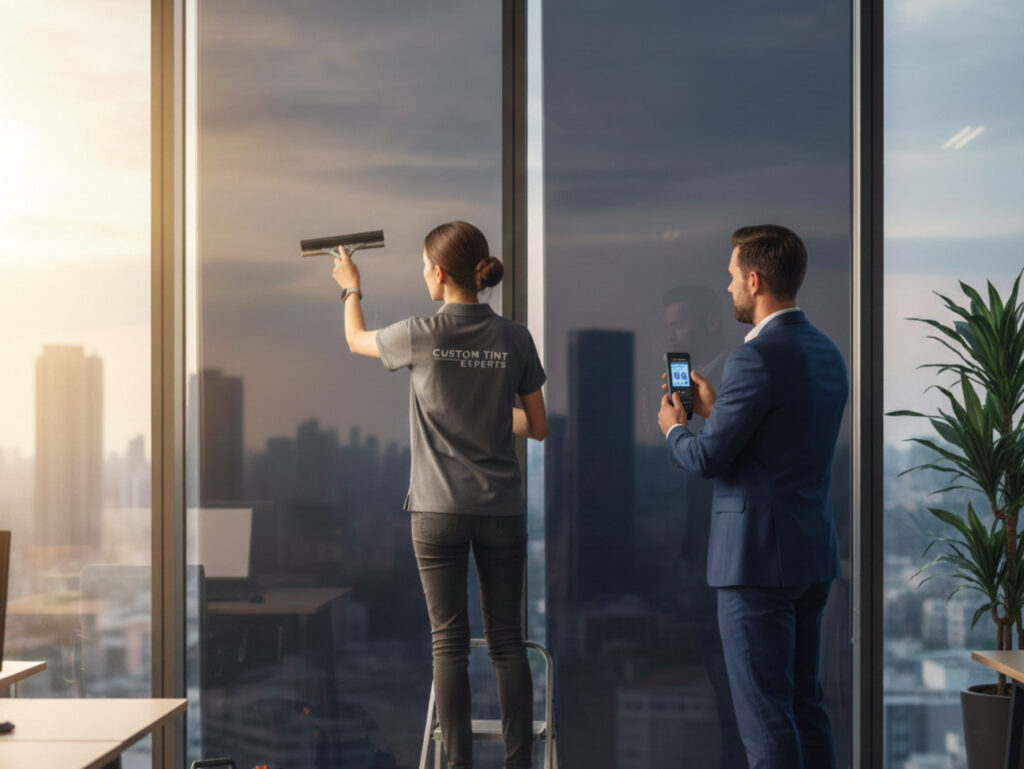
Alongside TSER, glare reduction is a vital component of occupant comfort and productivity. Excessive glare, particularly on computer screens or reflective surfaces, can lead to eye strain and reduce task efficiency. Professionally specified films are designed to mitigate glare without unduly darkening interior spaces or compromising visible light transmission. This careful balance ensures a brighter, more comfortable environment while maintaining outdoor visibility, a key advantage over simple tints which often achieve glare reduction by sacrificing natural light.
Understanding SPF Ratings in Window Films and Skin Cancer Foundation Recommendations
The concept of Sun Protection Factor (SPF), widely recognized in sunscreens, also applies to certain high-performance window films. While SPF ratings directly relate to human skin protection from ultraviolet radiation, some advanced films carry an SPF equivalent or are formally recommended by organizations like the Skin Cancer Foundation. These recommendations are not granted lightly, they signify that a film provides exceptional protection against both UVA and UVB rays, often blocking 99.9% of these harmful wavelengths.
For commercial spaces, particularly those with prolonged occupant exposure to windows, this level of protection is invaluable. It contributes significantly to a healthier indoor environment, mitigating risks associated with skin damage and certain types of cancer. This third-party endorsement from a respected health organization provides tangible assurance of a film’s protective capabilities, far exceeding the minimal or unverified UV claims of conventional tinting.
Aesthetic Considerations: Maintaining Views and Natural Light with High-Performance Films
A common misconception is that effective solar control and UV protection necessitate dark, reflective, or aesthetically intrusive window treatments. Modern, high-performance window films debunk this notion. Advanced film technologies allow for exceptional UV rejection and TSER values while maintaining high visible light transmission (VLT). This means interiors can remain bright and welcoming, preserving architectural aesthetics and occupants’ connection to the outside world.
- Clarity: Many professional films are virtually undetectable once installed, preserving the original appearance of the glass.
- Reduced Reflectivity: Unlike older, highly reflective films, contemporary designs offer low interior and exterior reflectivity, blending seamlessly with building facades.
- Color Neutrality: Films are available in various shades and neutral tones to complement diverse architectural styles, ensuring performance does not compromise design intent.
The ability to achieve superior performance without visual compromise is a defining characteristic of professional-grade films, distinguishing them sharply from basic tints that often sacrifice natural light for limited functionality.
Building Codes and Warranties: Ensuring Compliance and Investment Protection
Selecting window film for commercial projects extends beyond performance metrics to crucial considerations of regulatory compliance and long-term investment security. Reputable film manufacturers and professional installers ensure that their products and applications adhere to local, state, and national building codes. These codes can govern aspects such as fire safety ratings, minimum visible light transmission requirements, and energy efficiency standards. Non-compliance can lead to costly project delays, fines, or mandatory reinstallation, presenting a significant risk to project integrity.
Furthermore, a robust warranty is a cornerstone of investment protection. Professional-grade films, particularly from industry leaders like 3M, come with comprehensive manufacturer-backed warranties that cover the film’s performance, durability, and adhesion for many years—often 10 to 15 years or more for commercial applications. These warranties typically protect against common issues such as bubbling, peeling, cracking, and significant discoloration. In contrast, basic tints often have limited or no manufacturer warranty, leaving project managers and property owners vulnerable to premature failure and additional expenses. Partnering with a specialized installer also ensures that the installation adheres to manufacturer specifications, preserving warranty validity and guaranteeing the advertised performance.
Safeguarding Your Investment: The Imperative of Professional UV Protection in Commercial Spaces
The strategic application of professional-grade uv blocking window film is not merely an amenity but a critical safeguard for commercial investments. Beyond the immediate benefits of energy efficiency and occupant comfort, these films actively protect valuable assets and contribute directly to the longevity and profitability of a commercial enterprise. The cost of neglecting comprehensive UV protection can manifest in tangible losses, diminished appeal, and increased operational expenses across various sectors.
Retail Environments: Protecting Merchandise from Fading and Degradation
In retail, merchandise is a primary asset, and its visual integrity is paramount to sales. UV radiation, combined with visible light and infrared, is a leading cause of fading, discoloration, and material degradation in products displayed near windows. Apparel, furniture, electronics, artwork, and even packaging can quickly show signs of sun damage, diminishing their perceived value and requiring markdowns or removal from display.
Professional UV-blocking window film blocks 99.9% of harmful UV rays, significantly extending the lifespan and preserving the vibrant appearance of retail merchandise. This proactive measure reduces losses from damaged inventory, minimizes the need for frequent product rotation, and maintains the premium aesthetic of storefront displays. It directly protects profit margins and reinforces a brand’s commitment to quality presentation, preventing the silent depreciation caused by unfiltered sunlight.
Office Buildings: Enhancing Employee Comfort, Health, and Productivity
For office environments, the well-being and productivity of employees are directly linked to the quality of their workspace. Unfiltered solar radiation entering through windows can create uncomfortable hot spots, cause excessive glare on computer monitors, and contribute to employee fatigue and eye strain. These factors collectively hinder concentration and reduce overall productivity. Moreover, prolonged exposure to UV radiation, even indoors, poses long-term health risks for occupants.
Installing high-performance 3m uv protection film addresses these challenges comprehensively. By significantly reducing heat gain, films help stabilize interior temperatures, reducing reliance on HVAC systems and creating a more comfortable climate. Glare reduction improves screen visibility and minimizes eye strain, fostering a more focused work environment. Crucially, blocking 99.9% of UV rays protects employees from skin damage and contributes to a healthier indoor air quality profile, aligning with modern wellness initiatives and enhancing the overall employee experience.
Hospitality and Healthcare: Prioritizing Guest and Patient Well-being
In the hospitality sector, guest comfort and the preservation of luxurious interiors are foundational to reputation and repeat business. Hotels, resorts, and restaurants face the constant challenge of maintaining pristine furnishings, fabrics, and finishes while ensuring guest rooms and public areas remain inviting and comfortable. UV radiation accelerates the fading of carpets, upholstery, drapes, and artwork, leading to costly premature replacements and diminishing the establishment’s aesthetic appeal. Professional UV films protect these significant interior investments while simultaneously enhancing guest comfort by mitigating heat and glare, contributing to a premium, undisturbed experience.
Within healthcare facilities, the stakes are even higher, focusing on patient recovery, safety, and staff efficiency. Patients, particularly those with sensitive conditions or prolonged stays, benefit from environments with stable temperatures, reduced glare, and minimal UV exposure. Films that block 99.9% of UV rays ensure that delicate medical equipment, sensitive patient records, and expensive interior finishes are protected from degradation. Furthermore, by improving thermal comfort and light quality, these films support a healing environment and contribute to the operational efficiency of medical staff.
Illustrative Scenarios: The Cost of Neglecting Comprehensive UV Protection
The decision to forgo professional UV protection in favor of basic or no film can result in substantial and often unseen costs over time. Consider these illustrative scenarios:
- Retail Boutique: A high-end apparel boutique, opting for standard, inexpensive window tint that blocks only 70% of UV rays, experiences significant fading of window display mannequins and several racks of clothing within 18 months. Merchandise valued at $25,000 becomes unsaleable at full price, requiring a 40% markdown, resulting in a direct loss of $10,000. Additionally, the faded display deters potential customers, impacting overall sales and brand perception for months until replacements arrive and a more effective window film to prevent fading is installed.
- Corporate Office Space: An office building with large, south-facing windows forgoes professional UV and solar control film, assuming standard window glass provides adequate protection. Over five years, the building’s HVAC system struggles to maintain consistent temperatures, leading to a 15% increase in annual energy consumption, costing an additional $7,500 per year in electricity. Employee complaints about excessive glare and uncomfortable heat become frequent, impacting morale and productivity. Furthermore, the carpets near windows show noticeable fading and wear within four years, necessitating an unscheduled and expensive replacement of $30,000, two years earlier than planned.
These examples highlight that the initial investment in professional, high-performance uv blocking window film is not an expenditure but a strategic preventative measure. It safeguards tangible assets, protects occupant well-being, optimizes operational costs, and preserves brand reputation, ultimately delivering a significant return on investment that basic tints cannot guarantee.
Partnering for Precision: Leveraging Expert Installation and Guaranteed Performance
The Value of Expertise: Why Professional Consultation is Crucial for Project Managers
Selecting the right window film extends far beyond merely choosing a shade or a basic tint. For project managers, navigating the complexities of advanced film technology requires a specialized partner who can provide deep product knowledge and application expertise. A professional consultation focuses on understanding specific project requirements, such as the exact levels of UV radiation exclusion needed, local building codes, and how the film interacts with existing glazing systems. This detailed approach ensures that the chosen solution not only meets immediate aesthetic or comfort goals but also delivers long-term performance and protection for client assets. Engaging with experts upfront helps mitigate risks associated with improper film selection, which can lead to inadequate UV protection, material degradation, or even voided warranties.

Assuring Quality: The Role of Certified Installers, like the #1 U.S. 3M Window Film Installer
The performance of any high-quality window film, particularly one engineered for critical UV protection, is directly dependent on its installation. Even the most technologically advanced film will underperform if applied incorrectly. This is where certified installers become indispensable.
- Manufacturer Training: Certified installers undergo rigorous training directly from manufacturers like 3M, ensuring they understand the precise application techniques, environmental conditions for optimal adhesion, and film-specific requirements. This training is essential for achieving the advertised performance specifications, including the critical 99.9% UV blockage.
- Adherence to Standards: Professional installers adhere to strict industry and manufacturer guidelines for surface preparation, film handling, and application. This precision prevents common issues such as bubbling, peeling, or premature film failure, all of which compromise the film’s protective capabilities.
- Warranty Validation: Many manufacturer warranties, especially those for high-performance films, are contingent upon professional installation by certified technicians. Partnering with a reputable, certified installer, such as the #1 U.S. 3M Window Film Installer, guarantees that the installation meets the exacting standards required to validate these crucial warranties, offering project managers and clients peace of mind.
Comprehensive Solutions: Integrating UV Protection with Other Film Benefits
Modern window films are engineered to provide a multi-faceted approach to interior climate control and protection. While superior UV blockage is often a primary concern, advanced 3M Window Films can simultaneously address several other common building performance challenges. A specialized partner assists project managers in identifying a single film solution that integrates various benefits, optimizing value and efficiency.
These integrated solutions can include:
- Energy Efficiency: Reducing solar heat gain to lower cooling costs through a high-performing solar control film.
- Glare Reduction: Improving occupant comfort and productivity by minimizing harsh light.
- Security: Reinforcing glass to resist impact and deter forced entry.
- Privacy: Offering visual screening without sacrificing natural light.
Project managers achieve multiple client objectives with a single application by specifying comprehensive film solutions. This enhances property value. Strategic integration reinforces why advanced films surpass basic, single-purpose tints.
Documenting Performance: Guaranteeing Specs and Reducing Project Liability
In construction and renovation, tangible evidence of performance is paramount. A critical distinction between generic window tint and professionally specified 3m uv protection film lies in the ability to provide documented performance specifications and robust warranties.
- Quantifiable Data: Reputable film providers furnish project managers with clear, quantifiable data on the film’s performance metrics. This includes precise UV rejection rates, such as the 99.9% offered by 3M films, along with solar heat gain coefficient (SHGC) and visible light transmittance (VLT). This documentation provides objective proof that the specified film will meet or exceed project requirements, directly addressing client concerns about asset protection.
- Manufacturer Warranties: High-performance films from leading manufacturers like 3M come with extensive warranties that cover both the film material and its installation when performed by a certified professional. These warranties provide long-term assurance against defects and performance degradation, significantly reducing potential project liability for the project manager. Unlike basic tints, which often lack verifiable data or comprehensive warranties, advanced films offer a clear chain of accountability and guaranteed performance.
- Compliance and Assurance: Providing documented proof of performance and valid warranties is not just about meeting client expectations, it’s also about demonstrating due diligence and professional accountability. This level of transparency and assurance is a cornerstone for successful project delivery and client satisfaction.
Frequently Asked Questions
Do tinted windows really have UV protection, or is it a myth?
Standard tinted windows often block some UV rays, but their primary purpose is usually glare reduction or aesthetics. It’s a myth that all tinted windows offer comprehensive UV protection. Dedicated UV-blocking window film, particularly from reputable manufacturers like 3M, is specifically engineered to block up to 99.9% of harmful UVA and UVB rays, regardless of how dark or light the tint appears.
How much UV radiation do 3M window films block?
3M Window Films are engineered with advanced technology to block up to 99.9% of both UVA and UVB rays. This high level of protection is a guaranteed performance specification, critical for safeguarding commercial assets and occupant health.
Can UV-blocking window film prevent fading of interior furnishings?
Yes, a primary benefit of high-performance uv blocking window film is its ability to significantly reduce fading and degradation of interior furnishings, artwork, and merchandise. By blocking nearly all UV radiation, these films act as a powerful window film to prevent fading, preserving the color and integrity of your investments and extending their lifespan.
What are the health benefits of installing UV protection film in a commercial building?
Installing uv blocking window film offers significant health benefits for occupants. By blocking up to 99.9% of UVA and UVB rays, these films help mitigate the risk of skin damage, premature aging, and certain skin cancers associated with prolonged UV exposure. They also contribute to overall comfort by reducing glare and stabilizing indoor temperatures, improving productivity and well-being.
What’s the difference between TSER and VLT in window films?
VLT (Visible Light Transmission) measures the percentage of visible light that passes through the film, indicating how dark or light the film appears. TSER (Total Solar Energy Rejected) measures the total amount of solar energy (visible light, infrared, and UV) that a film rejects. A high TSER indicates better heat rejection and energy efficiency, while VLT impacts visibility and natural light levels. High-performance films can have high TSER and UV protection even with high VLT, meaning they can be virtually clear.