Rising energy costs, hot offices, screen glare, and fading interiors are common problems in glass-heavy commercial buildings. commercial window tinting helps solve them without full glass replacement by upgrading existing windows with performance window film.
Table of Contents:
- Why Commercial Window Tinting Is a Smart Move for Businesses in 2026
- What Is Commercial Window Tinting and How Does It Work?
- Types of Commercial Window Films and When to Use Them
- How Commercial Window Tinting Reduces Energy Costs
- Choosing the Right Window Film for Your Commercial Property
- Frequently Asked Questions About Commercial Window Tinting
Why Commercial Window Tinting Is a Smart Move for Businesses in 2026
Commercial window tinting lowers utility costs for businesses by helping windows block heat, reduce glare, and protect interiors from uv rays. In sun-exposed buildings, window films can reduce cooling costs by up to 30%, and energy savings from window tinting can pay back costs in 2-3 years.
Modern films are available in various finishes and shades, including nearly invisible options that preserve natural light instead of sacrificing natural light. For many offices, storefront spaces, and healthcare environments, this means better comfort, reduced energy costs, and improved appearance from the street.

What Is Commercial Window Tinting and How Does It Work?
A commercial window tint is a thin, multi-layer polyester window film applied to existing glass surfaces. Film bonds to glass using a pressure-sensitive adhesive and may include scratch-resistant, UV-filtering, solar-control, and protective layers.
Commercial window film, office window film, tinted windows, and architectural films are related terms. Solar Heat Gain Coefficient measures how well the film blocks solar heat, while Visible Light Transmission indicates the amount of natural light allowed through window films. Low U-Value indicates better insulating properties for window films.
Key Benefits of Commercial Window Film for Modern Buildings
Window film improves the building environment by delivering:
- lower cooling costs and air conditioning costs
- lower heating costs in winter
- glare reduction and reducing glare on monitors
- UV protection for furniture, flooring, merchandise, and interior finishes
- enhanced privacy for customers and employees
- improved security against break ins and forced entry
- less HVAC workload, lowering energy bills
- a cleaner commercial window appearance
When properly installed, films help maintain comfort in a sunny office, lobby, storefront, or shared space.
Types of Commercial Window Films and When to Use Them
Selecting window films involves evaluating specific operational challenges: heat, glare, security, privacy, branding, budget, glass type, and location. The best solution may combine several films across one property.
Main options include solar control window film, privacy films, safety and security films, decorative and branding films, and low-E insulating solutions.
Solar Control Window Film for Energy Savings and Comfort
Solar control films reduce air conditioning costs by blocking heat from the sun. Specialized solar control films block up to 80% of incoming solar heat, and solar window film blocks up to 80% of the sun’s heat. Solar control films block up to 99% of UV rays for strong interior protection.
These films are ideal for florida buildings, open-plan offices, conference rooms, and west-facing glass where heat and glare peak in summer.
Privacy and Security Films for Safer, More Discreet Spaces
Privacy films limit outside visibility while allowing natural light. Privacy films make it harder for passersby to see inside, and tinted windows limit outside visibility during the day.
Security films hold glass together during impacts or breakage. Security films make glass more resistant to breakage, and tinted windows can enhance security against break-ins. They do not make glass unbreakable, but they help secure vulnerable windows and reduce risk.
Decorative, Branding, and Specialty Office Window Films
Decorative films can mimic frosted glass or display branding. Decorative films can mimic frosted glass finishes, custom branding can be displayed on decorative films, and decorative films enhance aesthetics without replacing glass.
Window graphics can turn store windows into advertisements, while low-E architectural films improve efficiency. High-performance architectural films reduce internal heat loss during winter.
How Commercial Window Tinting Reduces Energy Costs
Windows are often the weakest part of the building envelope. Commercial window tinting reduces solar heat gain, cuts cooling load, and helps retain indoor heat during winter months.
Window films reduce HVAC system workload, lowering energy bills. In many projects, energy savings continue for 10–20 years, and commercial window tinting can be a tax-deductible expense in some cases; ask your tax professional.
Cooling Costs, Hotspots, and HVAC Load
Untreated glass lets sunlight create hotspots near desks, waiting areas, and displays. Tinted films reduce glare on computer screens and help balance temperatures between perimeter and interior workstations.
For example, a glass-heavy office can lower afternoon cooling costs after installation by reducing peak heat exposure and keeping blinds or shades open more often.
Heating Costs and Year-Round Performance
Some films reflect interior heat back into the space in winter, reducing cold spots near windows. This can lower heating costs while maintaining daylight and comfort.
UV Protection, Asset Preservation, and Indirect Savings
Quality films block up to 99% of harmful UV rays. That helps protect furniture, flooring, artwork, retail products, and wood finishes from fading.
The indirect benefits matter too: better screen visibility, fewer glare complaints, less dependence on blinds, and a more productive commercial environment.
Choosing the Right Window Film for Your Commercial Property
The right film depends on glass type, orientation, climate, exposure, budget, and how each room is used. Compare performance data such as TSER, VLT, SHGC, UV rejection, reflectivity, and U-value.
Assessing Building Needs and Problem Areas
Walk the property and note glare, hotspots, fading inventory, street-level visibility, and temporary fixes like cardboard or foil. This helps identify which windows need solar control, privacy, or security first.
Balancing Performance, Appearance, and Budget
Basic dyed films cost less, while ceramic, spectrally selective, and low-E films cost more but may last longer and perform better. Request samples to judge appearance, light levels, and exterior reflectivity before full installation.
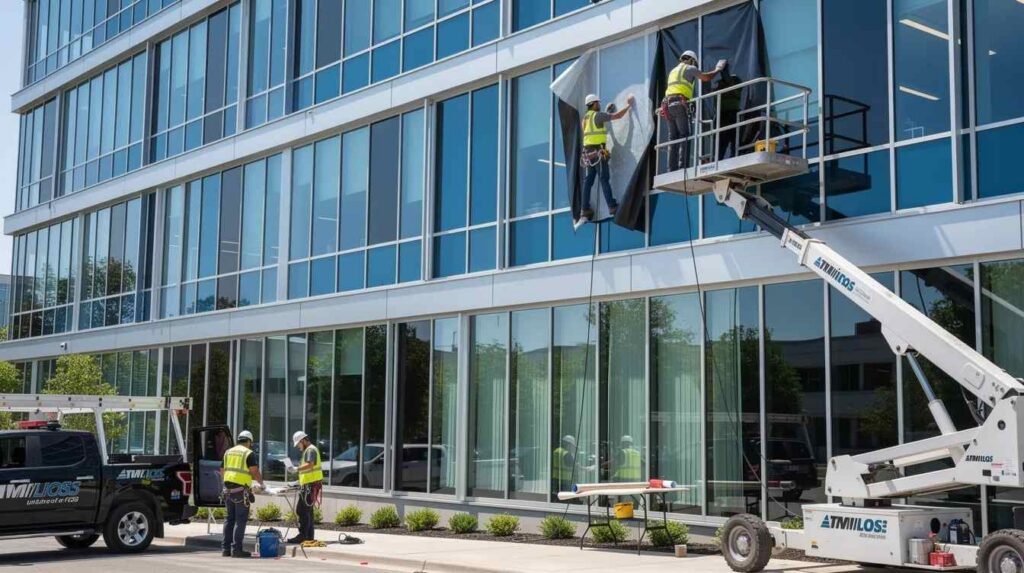
Working With a Professional Commercial Window Film Installer
Professional installation ensures optimal performance and warranty compliance. A professional should provide a site survey, product options, written pricing, realistic energy projections, and clear maintenance instructions.
Installation Process: What Businesses Can Expect
Most commercial installations are completed within a few days, depending on building size and access. Work can usually proceed zone by zone with minimal disruption.
Step-by-Step Commercial Window Film Installation
Windows must be thoroughly cleaned before film application. Film is cut to size and applied with specialized tools, then trimmed, squeegeed, and inspected.
Business Disruption, Safety, and Cleanliness
Installers protect nearby furniture, floors, and equipment. Minor haze or water pockets may appear during curing and typically clear as the film dries.
Maintenance, Lifespan, and Warranty Coverage
Commercial films are low-maintenance when cared for correctly. Warranty coverage often includes peeling, bubbling, cracking, or discoloration, but terms vary by product and application.
Day-to-Day Cleaning and Care
Wait for the recommended cure time, often about 30 days, before cleaning. Use soft cloths, mild non-ammonia cleaner, and avoid razors or abrasive pads.
Expected Lifespan and Signs of Aging
Many interior commercial films last 10–20 years. Watch for edge lifting, haze, color shift, scratches, or reduced heat rejection.
Understanding Manufacturer and Installer Warranty Coverage
Manufacturer warranties usually cover film defects; installer warranties cover workmanship. Keep invoices, product data, and glass specifications for future claims.
Frequently Asked Questions About Commercial Window Tinting
Will window film make our offices or storefront too dark?
No. Modern options range from clear to dark, and high-VLT films preserve natural light while reducing heat and glare.
Can commercial window film be removed or changed later?
Yes. Professional removal is recommended to avoid residue problems or damage to large panes.
How long does commercial window tint typically last?
Most interior films last 10–20 years, depending on product quality, sun exposure, climate, and maintenance.
Does window film really help with glare on computer screens?
Yes. Glare reduction is one of the fastest-noticed benefits, especially in offices with heavy screen use.
Will commercial window films block harmful UV rays?
Yes. Most professional-grade films block up to 99% of UVA and UVB rays.
Can window film improve security and safety for our building?
Yes. Safety and security films help hold broken glass together and delay entry attempts.
Are commercial and residential window films different?
Often, yes. Commercial films are selected for larger glass areas, code concerns, higher exposure, and business performance goals.
Can window film be applied to any commercial glass?
Most glass is compatible, but tempered, laminated, insulated, coated, or specialty glass should be reviewed before installation.
Why Choose Our Team for Your Commercial Window Tinting Project
Not every provider offers the same product knowledge, installation quality, or follow-through. Our team focuses on practical recommendations, clean workmanship, clear proposals, and solutions matched to your building’s real conditions.
We help you choose films that support comfort, energy performance, privacy, security, and long-term value.
Conclusion: Turn Your Glass into a High-Performance Asset
Commercial window tinting turns ordinary glass into a smarter building asset. It can reduce energy costs, improve comfort, block UV exposure, protect interiors, enhance privacy, and improve a building’s exterior appearance.
Instead of paying for full window replacement, start with a targeted site walkthrough and film recommendation. Contact our team to discuss the best commercial window tinting solution for your property.