Table of Contents:
- The Engineering Behind Resilience: How Ballistic Resistant Window Film Systems Function
- Decoding Threat Levels: Mastering UL 752 Standards for Informed Specification
- The Unsung Hero: Why the Anchoring System is Non-Negotiable for System Integrity
- From Assessment to Installation: Key Considerations for Specifying a Robust Security Film System
- The Expertise Imperative: Partnering with a Certified National Installer for Project Success
- Conclusion: Safeguarding Projects, Mitigating Risk, and Securing Your Reputation
- Frequently Asked Questions
- Related Posts from Window Film Depot
The Fundamental Misconception: Film as a Component, Not a Standalone Shield
The term “bulletproof windows” is a widely misused and often misleading descriptor when applied to window film. In reality, no commercially available window film product, when applied to standard architectural glass, can independently provide “bulletproof” protection. True ballistic resistance is always a function of an integrated system. The film serves as a critical component that dramatically enhances the performance of the entire glazing assembly, but it does not, by itself, stop a projectile. This distinction is crucial for project managers, as overlooking it can lead to severe underestimation of actual security requirements and potential liabilities. This article on bullet-resistant window film and unbreakable glass will help the project manager in critical project decisions.
Shifting from Product Selection to Strategic Risk Mitigation
For a project manager, the decision surrounding ballistic-resistant window film must evolve beyond a simple product selection. It transitions into a strategic risk mitigation exercise, directly impacting project integrity, occupant safety, and potential legal exposure. Understanding the nuanced technical specifications and installation requirements is not merely about fulfilling a line item; it is about accurately assessing and addressing defined threat vectors. A thorough risk assessment, coupled with a precise understanding of system capabilities, forms the bedrock of responsible project management in this domain.
The Imperative for a Comprehensive, Engineered Glazing Security Solution
Achieving verifiable ballistic resistance requires specifying and implementing a comprehensive, engineered glazing security solution. This means evaluating the entire fenestration system, including the existing or new glass type, the film’s thickness and performance characteristics, the adhesive system, and crucially, the anchoring mechanism that secures the film and glass to the window frame. Each element must be selected and integrated to function cohesively. Failure to address any single component compromises the overall system’s integrity and its ability to perform under a ballistic threat.
How Bullet-Resistant Window Film Systems Function
The Science of Impact Dispersion: How Film Mitigates Threat
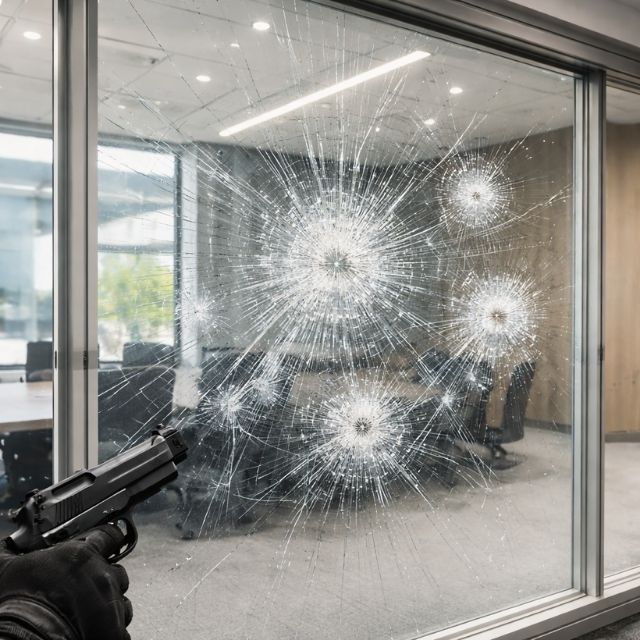
Ballistic glass systems operate on principles of energy management and impact dispersion. When a projectile strikes an unprotected glass pane, the glass shatters almost instantaneously, creating dangerous fragments and allowing penetration. Ballistic-resistant film uses multiple high-tensile polyester layers and robust adhesives to absorb and distribute impact energy. The film holds glass shards together, creating a resilient membrane that flexes to dissipate the projectile’s force. This reduces velocity and often prevents penetration or significantly delays forced entry into the protected space.
Understanding Spall Protection and Glass Fragmentation Management
Beyond preventing penetration, a critical function of these systems is spall protection and glass fragmentation management. Spall refers to the secondary projectiles created when glass on the non-impact side of a window breaks away due to the shockwave from an impact. These glass fragments can travel at high speeds and cause severe injuries to occupants inside a building, even if the primary projectile does not fully penetrate. High-performance security films are engineered to effectively manage these fragments, keeping them adhered to the film layer. This maintains the integrity of the glass pane, prevents hazardous debris from entering the occupied space, and can be critical for achieving life safety objectives.
Differentiating Security Film Types and Technologies (e.g., 3M Scotchshield)
The market offers various types of security films, each with distinct material compositions and performance characteristics. Differentiating these is key to selecting the appropriate solution for a specific threat level.
- Standard Security Films: These typically focus on intrusion resistance and blast mitigation, designed to hold glass together upon impact from forced entry attempts or explosive events. They are generally thinner (e.g., 4-8 mil).
- Ballistic-Resistant Films: These are significantly thicker, often ranging from 12 mil to 21 mil or more, and are constructed with multiple, often cross-ply, layers of polyester. Their primary role is to resist penetration from various ballistic threats.
- Advanced Adhesive Systems: The performance of any film is critically dependent on its adhesive system, which ensures the film remains bonded to the glass and, equally important, to the anchoring system.
3M Scotchshield uses advanced multi-layer constructions for superior tear resistance and elongation properties. These films stretch and absorb energy effectively under extreme stress. When integrated into an engineered, anchored system, these films are vital for achieving certified ballistic resistance ratings. Performance is intrinsically tied to the specific glass and the integrity of the overall installation and frame.
Decoding Threat Levels: Mastering UL 752 Standards for Informed Specification
For project managers tasked with securing facilities, understanding ballistic resistance standards is foundational. The UL 752 standard, “Standard for Bullet-Resisting Equipment,” serves as the authoritative benchmark for specifying bullet-resistant glazing systems. It provides a structured, quantifiable framework for assessing a material’s ability to withstand ballistic attack, moving beyond anecdotal claims to objective performance metrics.
The Structure of UL 752: From Handguns to High-Powered Rifles
UL 752 is a tiered system classifying materials based on their ability to defeat specific firearm calibers. This hierarchy ranges from protection against common handguns to high-powered rifles for precise threat matching. Each level dictates the weapon, ammunition, shot count, and performance criteria like spall absence. This ensures a precise match between the building’s threat assessment and the chosen protective measure.
- Levels 1-3: Primarily address various handgun threats, from 9mm to .44 Magnum. These are common for applications requiring basic protection against street-level threats.
- Levels 4-5: Target higher-power handguns and certain shotguns or rifle rounds, representing an increased threat profile.
- Levels 6-8: Designed for protection against high-powered rifles, including those commonly associated with active shooter scenarios. These levels demand significantly more robust and complex glazing systems.
Specifying a UL 752-rated system means selecting a solution that has been rigorously tested as an entire unit, not just its individual components.
Translating UL 752 Ratings into Real-World Project Requirements
Project managers must translate the abstract UL 752 ratings into tangible security solutions that address specific vulnerabilities and threat landscapes. This involves a comprehensive risk assessment of the facility, considering factors such as:
- Location: Urban areas versus remote sites.
- Occupancy: Schools, financial institutions, government buildings, retail spaces.
- Perceived Threat Level: Historical data, current intelligence, and the value of assets or personnel protected.
- Stand-Off Distance: The typical distance from which an attack might occur, impacting bullet velocity and energy.
A retail bank may require UL Level 1 or 2 protection against common handgun threats. High-security government facilities or high-risk schools might necessitate UL Level 8 resistance to high-powered rifle rounds. The chosen UL rating dictates glass thickness, film layers, and the robustness of the anchoring system. This critical risk management decision impacts both occupant safety and project liability exposure.
Beyond Ballistics: Addressing Forced Entry Resistance and Blast Mitigation Capabilities
While the UL 752 standard focuses solely on ballistic threats, a comprehensive security strategy often extends beyond bullet resistance. Many engineered glazing systems, particularly those incorporating advanced window films, offer additional benefits that address broader security concerns:
- Forced Entry Resistance: The same robust film-to-glass bond that helps mitigate ballistic threats can also significantly delay or deter forced entry attempts using blunt objects or manual tools. The film holds shattered glass together, preventing an immediate breach and buying critical time for security personnel to respond.
- Blast Mitigation: In the event of an explosive blast, untreated glass shatters into deadly shards that can travel at high speeds. Security film, when properly anchored, helps retain these fragments within the window frame, dramatically reducing injury and property damage from flying glass. This capability is critical for buildings in areas susceptible to accidental or intentional explosions.
Therefore, when specifying bullet-resistant window film, project managers should evaluate the system’s broader protective capabilities. The goal is to select an integrated solution that offers layered protection against a spectrum of potential threats, ensuring a holistic approach to facility security.
The Unsung Hero: Why the Anchoring System is Non-Negotiable for System Integrity
While the film and glass quality are critical, system effectiveness hinges on a component often overlooked: the anchoring system. Without a robust attachment, even advanced film and strong glass can fail to provide the intended protection. This oversight can turn a potentially life-saving investment into a critical point of failure for the building’s security.
The Critical Role of Attachment Systems in Preventing Glazing Dislodgement
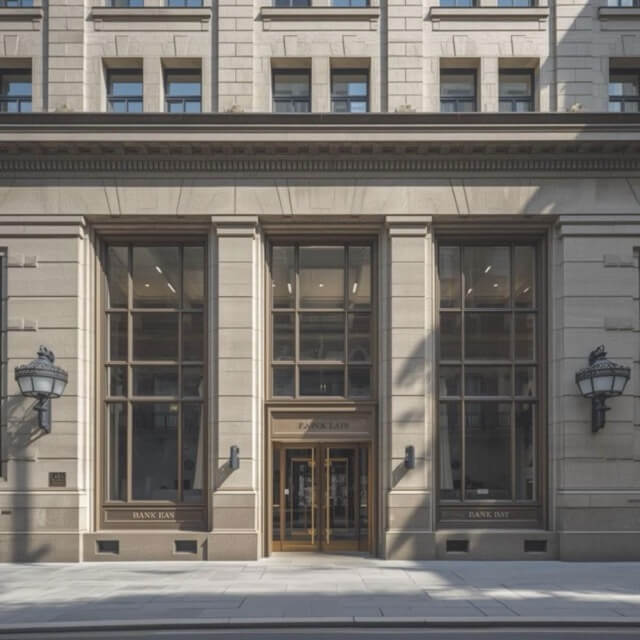
The primary function of an anchoring system is to prevent glazing from dislodging from its frame after an impact. The film and glass may resist penetration, but the entire unit can still be pushed from the opening. If the protected glazing falls out, the security envelope is compromised, negating the protective properties of the system. This failure creates a substantial breach that leaves the facility and its occupants vulnerable to further threats.
The anchoring system ensures that the entire protective assembly—film, glass, and frame—acts as a single, cohesive unit. This prevents the window from becoming a projectile or creating an open breach during a security event. Maintaining the perimeter security integrity fulfills the primary risk mitigation objectives for the project manager.
Exploring Diverse Anchoring Solutions: Frames, Wet Glaze, and Mechanical Fasteners
The selection of an appropriate anchoring system is highly dependent on the specific threat level, existing window frame type, and aesthetic considerations. There are several primary methods, each with distinct advantages and applications:
- Wet Glaze Systems: These involve applying a structural silicone sealant to bond the film-treated glass directly to the window frame. This creates a continuous, flexible bond around the perimeter of the glass, distributing impact energy and maintaining integrity. Wet glaze systems are aesthetically discreet and highly effective for many ballistic and forced-entry applications.
- Mechanical Fasteners: These systems utilize physical hardware, such as metal battens, clips, or full frame systems, that are bolted or otherwise mechanically secured through the film and glass into the window frame or structural opening. Mechanical fasteners offer a high degree of security and are often employed in high-threat environments or where maximum blast resistance is required. They are visibly more prominent than wet glaze systems.
- Frame Reinforcement: In some cases, the existing window frame itself may require reinforcement or replacement to adequately support the added weight and protective capabilities of the bullet-resistant glazing system. This ensures that the frame can withstand the immense forces generated during an attack without deforming or failing.
The choice among these solutions is not arbitrary; it is an engineered decision based on a detailed assessment of the project requirements, ensuring that the anchor is specified to the same protective level as the film and glass.
The Interplay of Film, Glass, and Anchor: A Unified Security Envelope
True ballistic or forced entry resistance is never achieved through a single component. It is the sophisticated interplay of the specific glass type, the chosen bullet-resistant film, and the meticulously engineered anchoring system that creates a unified, resilient security envelope. A high-performance film on standard glass without a proper anchoring system offers minimal real-world protection, as the window could simply be pushed out of its frame. Conversely, a strong anchor on weak glass or an inadequate film will also fail.
Project managers must view these three elements as an inseparable trinity. The failure of any one component—be it the glass breaking, the film delaminating, or the anchor detaching—will compromise the entire system’s integrity and thus the intended security performance. Specifying a complete, factory-tested, and professionally installed system that accounts for this critical interdependency is paramount to minimizing project risks and liabilities, ultimately delivering genuine threat mitigation for the client.
Bullet Resistant Window Film: Key Considerations for Specifying a Robust System
Conducting a Thorough Threat Assessment for Your Specific Project Environment
Project managers must recognize that the initial step in specifying any ballistic-resistant film system is a meticulous threat assessment. This foundational analysis moves beyond a general desire for enhanced security, pinpointing the precise nature and likelihood of potential threats specific to the project’s geographic location, building typology, and operational context. Factors such as proximity to high-risk areas, the occupancy type, and the value of assets protected dictate the required level of protection.
A comprehensive threat assessment directly informs the technical specifications for the security film system. It dictates the necessary performance standards, such as those outlined by UL 752 (Ballistic Resistance of Glazing Materials) or ASTM F1233 (Standard Test Method for Resistance to Forced Entry), which are critical for selecting an appropriately rated solution. Failing to conduct this initial, detailed assessment significantly elevates project risk by potentially underspecifying or overspecifying a system, leading to either inadequate protection or unnecessary expenditure.
Need More Info?
The Window Film Depot team is happy to help.
Integrating Commercial Security Window Film with Existing Building Infrastructure and Design
The integration of commercial security window film is not a standalone product application; it is a critical modification to the building envelope that must harmonize with existing infrastructure and architectural design. Project managers must evaluate the current glazing system to determine its compatibility and structural integrity. This includes assessing the type and thickness of the existing glass, the condition and material of window frames, and the structural capacity of the surrounding substrate.
- Glazing System Integrity: Bullet-resistant film relies on the existing glass to perform as part of a composite system. Understanding the glass’s current strength, potential weaknesses, and thermal performance is paramount.
- Frame and Substrate Analysis: An advanced film solution requires robust anchoring to transfer impact forces effectively to the building’s structure. Weak or inadequate frames, or insufficient mounting substrates (e.g., deteriorated concrete, light-gauge metal studs), will compromise the entire system’s ability to resist ballistic or forced entry threats.
- Architectural and Operational Considerations: Beyond structural elements, the chosen film must also align with aesthetic requirements and maintain essential building functionalities, such as natural light transmission, solar control, and emergency egress protocols. Any solution must account for these operational parameters without introducing new liabilities.
Long-Term Performance, Maintenance, and Warranty Considerations for Ballistic Resistant Glazing Solutions
Specifying a ballistic-resistant glazing solution necessitates a forward-looking perspective on its long-term performance, maintenance requirements, and warranty coverage. Project managers must consider the total cost of ownership, which extends beyond initial procurement and installation to include the expected lifespan of the materials, any required upkeep, and the scope of manufacturer and installer guarantees.
The durability of security films and their anchoring systems can vary significantly based on material composition, environmental exposure, and quality of installation. Understanding the product’s expected lifespan and degradation characteristics is crucial for lifecycle planning and budgeting. Furthermore, establishing clear maintenance protocols, including routine inspections for film integrity, sealant condition, and anchoring system stability, ensures the sustained effectiveness of the security investment. Comprehensive warranty documentation from both the film manufacturer and the certified installer is essential, clarifying coverage for material defects, delamination, and installation workmanship. This documentation mitigates future liability and assures the system’s continued performance.
The Expertise Imperative: Partnering with a Certified National Installer for Project Success
Why Installation Expertise is as Critical as the Technology Itself for System Effectiveness
The most technically advanced ballistic-resistant film is entirely dependent on precise, professional installation to achieve its stated performance specifications. The integrity of an engineered security film system is a direct function of both the product quality and the application expertise. Any deviation from manufacturer-specified installation protocols—such as improper film cutting, inadequate surface preparation, or, most critically, the incorrect application or curing of anchoring systems—can severely compromise the system’s ability to mitigate threats.
Poorly installed systems will not perform as tested, rendering ballistic or forced entry ratings void in practice. This introduces significant, unquantifiable risk, transforming a perceived security enhancement into a potential liability. Expert installation ensures the glass, film, and anchoring mechanism work cohesively to redistribute impact energy effectively. This synergy provides the intended level of protection required for the safety of all building occupants.
The Value of Certifications and Manufacturer-Approved Training (e.g., #1 U.S. 3M Installer Status)
Selecting a certified, manufacturer-approved installer is a non-negotiable step in mitigating project risk and ensuring system effectiveness. These credentials signify the installation team has undergone rigorous instruction and demonstrated proficiency in advanced security film applications. Manufacturer training ensures installers understand product characteristics, application nuances, and critical anchoring system integration with the window frame.
For instance, being recognized as the #1 U.S. 3M Installer indicates a profound level of expertise and adherence to the highest standards set by the manufacturer. Such distinctions are tangible evidence of an installer’s commitment to quality, technical precision, and ongoing education. Partnering with a certified, manufacturer-approved installer ensures the film system meets exacting standards and performance claims. This validation secures the investment in enhanced protection for both project managers and building owners.
Leveraging a Specialist for Custom Glass Security Systems and Holistic Risk Management
Ballistic-resistant glazing solutions rarely fit a one-size-fits-all approach; they demand custom designs tailored to unique project parameters. Leveraging a custom glass security specialist offers a comprehensive approach to holistic risk management. These partners bring extensive experience in evaluating complex scenarios and designing bespoke security solutions. They execute installations that meet the most stringent performance criteria for the safety of building occupants.
Specialist expertise extends beyond product application to provide end-to-end support throughout the entire project lifecycle. Their deep understanding of film technologies and building codes enables the integration of systems into diverse architectural contexts. Engaging a specialist provides a partner dedicated to meeting technical specifications while addressing specific facility vulnerabilities. This partnership effectively mitigates operational risks and robustly reduces long-term liability for the project manager.
Conclusion: Safeguarding Projects, Mitigating Risk, and Securing Your Reputation
Recapping the Pillars of a Truly Resilient Ballistic Resistant Glazing System
Achieving genuine ballistic resistance in glazing systems transcends the simple application of a film. It necessitates the integration of several interconnected components, functioning as a singular, engineered unit. Effectiveness hinges on the glass substrate, film type, and a robust anchoring mechanism to maintain system integrity. Each element must be engineered synergistically to adhere to rigorous UL 752 or NIJ 0108.01 protection standards.
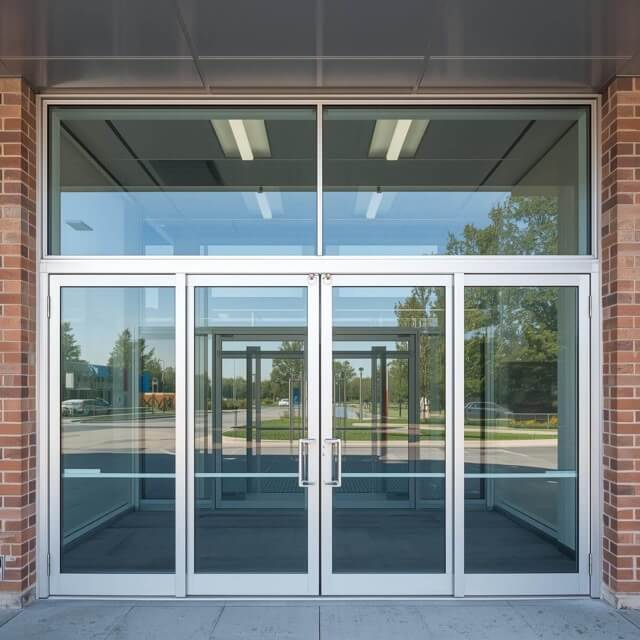
The installation process itself constitutes a critical pillar for a secure project. Even perfectly specified materials will fail if not installed with exacting precision and adherence to guidelines. This includes meticulous surface preparation, precise film application, and secure attachment of the anchoring system. Deviations at any stage compromise the system’s ability to resist ballistic threats, creating a potential point of failure.
The Project Manager’s Role in Ensuring Comprehensive Security and Due Diligence
For project managers, the selection and implementation of ballistic-resistant window film is not merely a procurement task; it is a critical risk management decision. Your role extends beyond evaluating product brochures to conducting thorough due diligence that encompasses the entire solution ecosystem. This involves verifying a vendor’s technical expertise, their adherence to industry testing standards, and their proven track record in specifying and installing complex security glazing systems.
Effective project management in this domain requires a deep understanding of the performance specifications required for the threat level being addressed and the ability to challenge vague claims with precise technical questions. It demands the verification of product certifications, an assessment of installation methodologies, and a clear understanding of the warranty and post-installation support. By exercising this level of scrutiny, project managers directly mitigate potential liabilities, safeguard project integrity, and uphold their professional reputation.
Strategic Partnership: The Path to Expert-Driven Security Solutions for Lasting Protection
Navigating the complexities of ballistic-resistant glazing systems demands a strategic partnership with experienced security integrators. Engaging a specialist early in the project lifecycle ensures that the proposed solution is not only technically sound but also optimally designed for the specific architectural and threat environment. An expert partner provides invaluable guidance on material selection, system design, and the critical nuances of installation that differentiate a compliant system from a vulnerable one.
This collaborative approach transforms a high-stakes decision into a controlled, well-managed process. Experts provide transparent data, articulate system limitations, and ensure every component contributes to certified protection levels. Such a partnership guarantees security glazing investments deliver comprehensive protection, sustained resilience, and lasting peace of mind.
Frequently Asked Questions
If the film doesn’t “stop” the bullet, why is it called ballistic-resistant?
The term “resistant” is used because these systems are engineered to absorb and redistribute kinetic energy. While the glass will fracture, the high-tensile multi-layer film holds the shards together, creating a resilient membrane. This process slows the projectile, often prevents total penetration, and—most importantly—prevents the window from shattering instantly, which maintains a physical barrier against follow-up shots or forced entry.
Can I achieve a UL 752 rating by applying film to my existing 1/4″ commercial glass?
Generally, no. A verified UL 752 ballistic rating (such as Level 1 or Level 2) typically requires a specific “system” that includes thicker glass or specialized laminates. However, applying high-performance film (12–21 mil) to existing glass creates a “ballistic-grade” enhancement that significantly upgrades the window’s resilience and spall protection, even if the specific glass substrate wasn’t originally designed for ballistic resistance.
Why is the anchoring system considered the “weakest link” if ignored?
In a ballistic or blast event, the pressure or impact force can be so great that the entire pane of glass—even if held together by film—is blown out of the window frame. An anchoring system (like a “Wet Glaze” silicone bead or mechanical metal battens) physically bonds the film to the frame itself. Without this, you have a “bullet-resistant blanket” that simply falls into the room, leaving the opening completely unprotected.
How does ballistic-resistant film help with “Spall,” and what is that exactly?
Spall refers to the fragments of glass that break off the inside of a window when the outside is hit. These shards can become secondary projectiles that cause severe injury to occupants even if the bullet is stopped. Ballistic-resistant film is specifically designed to keep these fragments adhered to the film layer, ensuring the interior side of the glass remains intact and safe for people nearby.
What is the difference between a “Standard” security film and a “Ballistic” film?
The primary difference is thickness and construction. Standard security films (4–8 mil) are designed for smash-and-grab theft or storm protection. Ballistic-resistant films are much thicker (typically 12 mil and above) and utilize advanced multi-layer, cross-ply technology to handle the extreme high-velocity energy of a bullet. Using a standard film for a ballistic threat is a common specification error that can lead to catastrophic system failure.