Table of Contents:
- The Science Behind 3M Security Window Film Technology
- It’s More Than Film: The Critical Role of Attachment Systems in Ballistic Resistance
- Decoding Protection: A Project Manager’s Guide to UL 752 Ratings for Glazing Systems
- Strategic Specification: Key Factors When Designing Security Film Solutions for Commercial Projects
- Mitigating Risk and Liability: Why Your Installer is as Important as the Product Itself
- Conclusion: Safeguarding Your Project’s Integrity and Occupant Safety
- Frequently Asked Questions
- Related Posts from Window Film Depot
Having clarified the distinction between myth and reality, project managers must understand the genuine technical underpinnings of an effective 3M bulletproof window film. This knowledge provides the foundation for informed decision-making, proper specification, and ultimately, effective liability mitigation through verifiable performance.
The Science Behind 3M Security Window Film Technology
3M security window films are not merely tinted sheets; they are engineered with advanced materials science to enhance the integrity of glass significantly. The core technology relies on proprietary, multi-layered polymer constructions designed for exceptional tensile strength, elasticity, and tear resistance. These properties allow the film to deform under extreme stress, absorbing and distributing impact energy across its surface rather than tearing or puncturing. This intricate polymer structure is key to transforming brittle glass into a more resilient, ductile system upon impact.
Beyond Simple Lamination: The Role of Multi-Layer Construction and Adhesion

While standard window films offer basic UV protection or glare reduction, 3M’s ballistic-resistant films, such as those within the Scotchshield™ and Ultra Series (e.g., Ultra S800), employ sophisticated multi-layering. These micro-layered films are not simply thicker; they feature dozens of individual, hair-thin layers meticulously stacked to provide superior tear and puncture resistance compared to single-layer films of equivalent thickness.
- Micro-Layered Design: This advanced construction significantly improves the film’s ability to resist penetration and hold glass fragments together.
- Aggressive Acrylic Adhesion: A high-performance, robust acrylic adhesive system forms a chemical bond with the glass. This bond is critical; it ensures that even when the glass breaks, the film remains tenaciously attached, turning what would be dangerous shards into relatively harmless, dull pieces held firmly in place. This adhesion is what transforms the film into an integral component of the window’s defense.
Managing Impact Energy: How the System Absorbs and Distributes Force
Upon impact from a high-velocity projectile, a 3M ballistic-resistant system’s primary function is to manage and dissipate the immense energy. Instead of allowing the projectile to cleanly pass through or create a large breach, the film acts as a flexible membrane, a sort of “catch net.” It works in concert with the glass:
- The glass fractures but remains adhered to the film.
- The film stretches and deforms, distributing the localized impact force over a much wider area of the pane.
- This energy absorption drastically reduces the projectile’s velocity and prevents large-scale glass detachment. The goal is not to entirely stop the projectile within the glass in every scenario, but to significantly slow it, maintain the integrity of the glass opening, and deter or delay forced entry.
Mitigating Spall: Protecting Occupants from Secondary Glass Fragments
One of the most dangerous aspects of glass breakage during an attack is spall. Spall refers to the projection of glass fragments from the interior surface when the exterior is impacted. These high-velocity shards pose a significant threat to occupants, causing severe lacerations or eye injuries. This danger remains even if the primary projectile does not fully penetrate the building envelope.
3M ballistic-resistant films feature engineered adhesive properties and tensile strength specifically designed to mitigate dangerous spall. By holding shattered fragments together on both sides, the film reduces secondary projectile injuries to building occupants. This critical safety feature is often overlooked but provides invaluable and life-saving protection for everyone inside.
Understanding System Synergy: The Interplay of Film, Glass, and Frame Components
Effective ballistic resistance is never achieved by the film alone; it is the result of a meticulously integrated system. The overall performance is fundamentally determined by the synergy between several key components:
- The 3M Security Film: As detailed, its multi-layered construction and robust adhesive are foundational.
- The Glass Type and Thickness: The existing glazing (e.g., annealed, tempered, laminated glass) plays a significant role in how the entire assembly responds to impact. The film enhances whatever glass it is applied to.
- The Attachment System: This is arguably the most critical component ensuring real-world performance. Without a proper frame attachment system, even the strongest film can be peeled away from the frame once the glass breaks. Common attachment methods include:
- Wet Glaze (Structural Silicone): Applying a bead of structural silicone from the film’s edge to the window frame, securely bonding the entire film-glass system to the frame.
- Mechanical Attachment Systems: Utilizing metal battens or other hardware to physically clamp the film to the frame.
The system’s ballistic rating is only as strong as its weakest link. A high-performance film applied to glass but without a robust attachment system will likely fail to perform its intended function under ballistic stress, allowing the entire pane to pop out of the frame. This integrated approach—from material science to certified installation practices—is what defines a truly effective ballistic-resistant window system and forms the basis for mitigating project liability.
It’s More Than Film: The Critical Role of Attachment Systems in Ballistic Resistance
Effective ballistic resistance in glazing systems transcends the film itself. Without a robust attachment system, even the most advanced security film will perform inadequately under attack. The integrity of the entire window assembly, from the glass to the frame, is paramount for true protection.
Why Film Alone Is Never Sufficient for Ballistic Security Claims
The perception that security film equates to “bulletproof” glass is a critical misconception leading to severe project liabilities. While films enhance strength, their primary ballistic function is retaining glass fragments and mitigating dangerous spall. However, if not securely anchored, the entire glass pane can be dislodged from its frame upon impact. This allows an intruder to breach the opening, rendering the film ineffective as a ballistic deterrent. The film needs an integrated system to transfer impact forces away from the glass into the building structure.
Exploring Diverse Attachment Systems: From Wet Glaze to Mechanical Anchors
The method chosen to secure the film-to-glass assembly within the window frame is as critical as the film technology itself. These attachment systems are engineered to absorb and distribute impact energy, preventing the glass and film from being pushed out of the frame.
- Wet Glaze Systems: These involve applying a high-strength, structural silicone sealant around the perimeter of the installed film, bonding it directly to the window frame. This creates a flexible, yet incredibly strong, bond that can absorb significant dynamic load. It essentially turns the film, glass, and frame into a unified, impact-resistant unit.
- Mechanical Anchoring Systems: For higher threat levels or specific structural requirements, mechanical anchors provide an additional layer of security. These systems typically use metal batons or plates that are physically bolted or screwed into the window frame, overlapping the edge of the filmed glass. The film is then often bonded to these anchors, providing a direct, physical impediment to the glass being dislodged. The choice between specific designs depends on the existing frame type, wall construction, and the desired level of protection.
Each system has its engineering considerations and application suitability, dictated by the glazing type, frame material, and the anticipated threat level.
The Engineering of 3M Impact Protection Adhesive Systems for Enhanced Security
3M’s approach to ballistic resistance is deeply rooted in sophisticated material science, particularly concerning their Impact Protection Adhesive Systems. This energy dissipation reduces the localized stress that would otherwise cause the glass to shear clean from its mounting. The proprietary formulations ensure long-term durability and consistent performance, even in varying environmental conditions.
Ensuring Structural Integrity: Preventing Glazing System Failure Under Attack
Ballistic-resistant systems must maintain structural integrity, extending beyond merely preventing bullet penetration through the glass. Systems fail if the entire fragmented pane is forced out of the frame, creating a breach. High-performance film and engineered attachment systems ensure the glazed opening remains an effective barrier, denying entry. This integrated approach ensures the frame, glass, film, and attachment work in concert to resist threats. It is a holistic engineering challenge, not just a simple film application task.
The Integrated Perimeter: Holding the Entire Assembly in the Window Frame
The perimeter attachment is the critical interface where energy transferred through filmed glass is absorbed by the building structure. Without robust perimeter attachment, the filmed pane can be defeated by delaminating from the frame, regardless of strength. The film alone cannot prevent the entire assembly from pushing inward, even while retaining shattered glass fragments. Professional installation integrates the system with the frame and wall construction, creating a continuous, load-bearing barrier. This keeps the filmed glass assembly securely in place, providing protection even after multiple impacts.
Need More Info?
The Window Film Depot team is happy to help.
3M Bulletproof Window Film Cost: Decoding Protection
For project managers tasked with specifying and validating ballistic protection, understanding industry standards is paramount. The Underwriters Laboratories (UL) 752 standard is the authoritative benchmark for assessing the ballistic resistance of various materials, including glazing systems.
What is UL 752? Why it Forms the Industry Standard for Ballistic Resistance
UL 752 is a globally recognized standard defining testing methodologies and performance criteria for ballistic-resistant materials. It provides a standardized, repeatable framework to evaluate and compare the effectiveness of ballistic-resistant products. For project managers, UL 752 offers an objective, data-backed measure of protection against specific firearm threats. Adhering to UL 752 ensures products meet stringent requirements, directly mitigating project risk and liability.
Understanding Ballistic Levels: From Handguns to High-Powered Rifle Threats
UL 752 categorizes ballistic resistance into distinct levels, each corresponding to a specific type of firearm, projectile, and velocity. These levels are critical for matching the protection level to the assessed threat.
- Levels 1-3: Primarily address common handgun threats.
- Level 1: Resists three shots from a 9mm handgun.
- Level 2: Resists three shots from a .357 Magnum handgun.
- Level 3: Resists three shots from a .44 Magnum handgun.
- Levels 4-8: Address higher-powered threats, including rifles.
- Level 4: Resists one shot from a .30-06 rifle.
- Level 5: Resists one shot from a 7.62mm rifle (e.g., AK-47).
- Level 6: Resists five shots from a 9mm handgun (submachine gun).
- Level 7: Resists five shots from a 5.56mm rifle (e.g., AR-15).
- Level 8: Resists five shots from a 7.62mm rifle (battle rifle).
Understanding these distinctions is vital for project managers to correctly specify a system that aligns with the security assessment and the specific threats a building may face.
The Rigorous Testing Process for Ballistic-Resistant Glazing and Film Systems
UL 752 testing is not merely a single shot at a pane of glass. It is a comprehensive and destructive process designed to push materials to their failure point, ensuring consistent performance.
- Sample Preparation: Test samples, replicating the actual glazing system (including glass, film, and attachment if applicable), are prepared according to strict guidelines.
- Projectile and Velocity Control: Specific ammunition types are fired at precise velocities from controlled distances, matching the requirements for each UL level.
- Impact Pattern: Multiple shots are fired at a designated pattern on the sample, typically in a triangular configuration, to evaluate the material’s ability to resist successive impacts without failure.
- Performance Criteria: A system passes if it prevents projectile penetration, and critically, if it prevents “spall” (the ejection of glass fragments from the non-attack side). Spall, even without full penetration, can cause severe injury.
This meticulous testing ensures that any product carrying a UL 752 rating has met a high standard of verifiable ballistic resistance.
Interpreting UL 752 Reports: Moving Beyond Basic Certification Labels
While a UL 752 certification label is a good starting point, project managers must delve deeper into the accompanying test reports. These detailed reports provide critical information beyond the simple level designation.
- System Configuration: The report will explicitly detail the exact components tested, including the glass type and thickness, the specific film used, the application method, and the exact attachment system employed. Any deviation from this tested configuration in a real-world installation can nullify the UL rating.
- Test Conditions: Information on temperature, humidity, and other environmental factors during testing is included.
- Failure Analysis: The report often describes the behavior of the system under attack, noting if spall occurred (and if it passed despite spall, for instance, if spall was contained).
- Installer Certification: Some UL listings may even reference requirements for certified installers to maintain the rating, reinforcing the importance of expert application.
A thorough review of these reports is essential for verifying that the proposed solution precisely matches the validated system and that the installer is qualified to replicate the tested conditions.
Differentiating Between Glass-Only and Film-on-Glass Ballistic Ratings
It is crucial to understand that a UL 752 rating can apply to various glazing configurations, and distinguishing between them is vital for specifying the correct solution.
- Glass-Only Ratings: This typically refers to monolithic bullet-resistant glass or laminated glass compositions designed to stop projectiles without any film application. These are often much thicker and heavier than standard glass.
- Film-on-Glass Ratings: This refers to a standard glazing system where a specialized security film and, critically, an attachment system are applied to enhance its ballistic resistance. In these cases, the UL 752 rating is awarded to the combined system—the original glass, the film, and the specific anchoring mechanism. It is never just the film alone.
Project managers must confirm if a UL 752 rating covers a glass-only product or a film-on-glass system. If it is a film system, insist on detailed documentation for the film, glass, and the required attachment mechanism. Ballistic resistance in filmed applications requires an integrated, multi-component system, not just a standalone product.
Strategic Specification: Key Factors When Designing Security Film Solutions for Commercial Projects
Effective ballistic resistance begins long before installation, rooted in a meticulous specification process. For project managers, understanding these foundational elements is critical to ensuring the deployed system meets genuine security needs and avoids costly missteps.
Assessing Real-World Threat Levels and Vulnerabilities for Your Facility
Before selecting any security solution, a thorough threat assessment of potential risks is paramount. This involves granular analysis of weapon types, attack likelihood, and specific vulnerabilities of the building’s glass envelope. Factors like local crime statistics, facility profile, and asset value dictate the required level of protection. Generic assumptions about ballistic resistance are insufficient; precision in defining the threat directly informs the appropriate defense.
Matching UL 752 Ratings to Specific Project Security Requirements and Risk Profiles
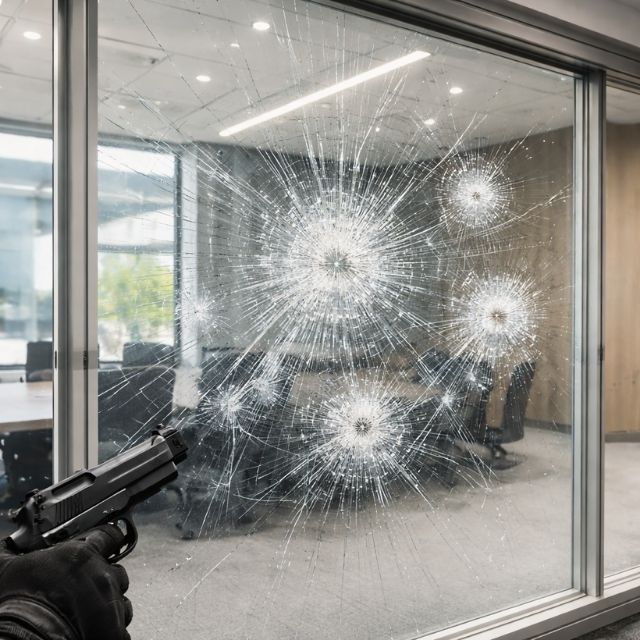
The Underwriters Laboratories (UL) 752 standard provides a crucial framework for evaluating ballistic resistance, classifying products based on their ability to withstand specific projectile types and velocities. Project managers must align their threat assessment with these objective performance ratings. For instance:
- Level 1: Resistant to 9mm full metal jacket (FMJ) rounds.
- Level 3: Resistant to .44 Magnum lead semi-wadcutter gas-checked rounds.
- Level 8: Resistant to 7.62mm multiple-impact rifle rounds.
Selecting a UL 752 rating that precisely matches the identified risk profile ensures optimal protection without over-specifying or under-protecting. This specificity is essential for managing expectations and verifying efficacy.
Considering Existing Glazing: Compatibility with Advanced 3M Film Systems
The performance of any security film system is intrinsically linked to the existing glazing. Not all glass types are suitable for ballistic-resistant film applications. Factors like glass thickness, tempering, lamination, and framing systems significantly influence the overall system’s ability to absorb and dissipate impact energy. A comprehensive pre-installation assessment of the existing glass is mandatory to confirm compatibility and predict performance. Advanced 3M film systems are engineered to integrate with specific glazing configurations, but this integration must be professionally validated to ensure the intended protective capabilities.
Integrating Ballistic Resistance with Forced Entry Protection and Blast Mitigation Objectives
While ballistic resistance is a critical security objective, it rarely stands in isolation. Modern security strategies often require a holistic approach that integrates multiple layers of protection. A well-designed 3M security film system can concurrently address:
- Forced Entry Protection: Films significantly enhance the glass’s resistance to manual impact and blunt force, delaying unauthorized access.
- Blast Mitigation: In the event of an explosion, these systems help contain glass fragments, reducing injury and property damage.
Considering these combined objectives allows for a more efficient and cost-effective security upgrade, ensuring that the chosen solution contributes to a comprehensive hardening of the building envelope against a range of threats.
Balancing Budgetary Considerations with Critical Performance Expectations
Project budgets are a perpetual reality, but security solutions demand a careful balance between cost and critical performance. While initial investment may seem significant, the cost of inadequate protection—ranging from liability exposure to potential loss of life or assets—far outweighs the expense of a properly specified and installed system. Project managers should prioritize solutions that offer proven performance and long-term reliability rather than opting for lower-cost alternatives that may compromise safety or necessitate premature replacement. Value engineering should focus on optimizing the solution, not diluting its effectiveness.
Planning for Long-Term Performance and Maintenance of 3M Security Systems
A security film system represents a long-term investment, and its performance longevity is directly tied to appropriate planning for maintenance and care. While 3M films are designed for durability, establishing clear guidelines for routine cleaning and periodic inspection is crucial. This proactive approach helps identify any potential issues early, ensuring the system consistently operates at its optimal protective capacity throughout its lifespan. Long-term performance also encompasses adherence to warranty conditions, which are often contingent on proper installation and specified maintenance.
Mitigating Risk and Liability: Why Your Installer is as Important as the Product Itself
The selection of a high-performance 3M ballistic-resistant film system is only half the equation. The other, equally critical, half is its professional installation. For project managers, this distinction is paramount in minimizing project risks and mitigating potential liabilities. A superior product, improperly installed, is a compromise of security and a catalyst for legal exposure.
The Non-Negotiable Requirement for Certified 3M Ballistic-Resistant Film Installers
Effective ballistic resistance requires a complex, precision-driven process that can only be executed by certified professionals. A 3M certification signifies rigorous training in specific application techniques, adhesive chemistry, and security film nuances. These installers understand critical components, like attachment systems, which anchor the film to the existing frame. Engaging uncertified personnel for such specialized work is an immediate red flag for liability and project risk.
Precision Installation: The Direct Link Between Expertise and System Effectiveness
The effectiveness of a ballistic-resistant film system is directly proportional to the precision of its installation. Small errors in the application process can lead to significant vulnerabilities. This includes:
- Adhesive Curing: Exact environmental conditions and curing times are vital for optimal bond strength.
- Edge Sealing: The film’s edges must be perfectly sealed to prevent delamination, especially during impact.
- Attachment System Integrity: The robust mechanical or structural silicone attachment system, which is a key component of the ballistic-resistant system, must be installed with meticulous accuracy to ensure it can absorb and redistribute energy effectively.
Even the most advanced film will fail to perform its intended function if the installation lacks this essential precision, leaving the facility vulnerable.
Understanding the Installer’s Role in Warranty Validation and Product Efficacy
A manufacturer’s warranty for advanced security films is typically contingent upon professional installation by a certified expert. An improperly installed film system can void the warranty, leaving the project manager and the client without recourse should the product fail. Beyond contractual obligations, the installer’s expertise directly impacts the system’s efficacy. They are responsible for ensuring every component works synergistically to achieve the specified ballistic resistance. Without their adherence to strict protocols, the film’s demonstrated performance in laboratory settings cannot be replicated in the field.
Protecting Your Project’s Reputation and Minimizing Liability: Avoiding Substandard Work
Substandard work in security installations leads to product failure and directly exposes occupants to severe physical harm. A compromised system creates severe liability implications for the project, its managers, and the facility owners. Reputational damage from a publicized security breach caused by installation shortcomings can be devastating and long-lasting. Project managers have a fiduciary responsibility to ensure critical security upgrades meet the highest possible standards. They must entrust this work only to proven, certified specialists to mitigate risk and ensure occupant safety.
Leveraging Specialized Expertise in Custom Glass Security Systems (E-E-A-T)
Commercial buildings present unique architectural challenges that demand custom security solutions tailored to specific structural needs. Specialized installers bring Experience, Expertise, Authority, and Trustworthiness to these complex and sensitive projects. They understand how to adapt protocols to unique glazing configurations, challenging architectural elements, and specific threat profiles. This expertise helps design security systems that genuinely integrate with the building’s fabric rather than simply being applied.
The Value of Unmatched Project Experience in Large-Scale Commercial Deployments (E-E-A-T)
Large-scale commercial deployments, such as corporate campuses, government buildings, or educational institutions, demand more than just technical skill. They require a proven track record in project management, logistical coordination, and consistent quality assurance across numerous installation points. Experienced installers demonstrate scalability, minimize disruption, and maintain uniform standards across thousands of square feet of glazing. This extensive experience embodies E-E-A-T, mitigating operational risk and ensuring project success from inception to completion.
Conclusion: 3M Bulletproof Window Film Cost
The Imperative of a Complete 3M Ballistic-Resistant Window Film System
The discourse surrounding “bulletproof” film often obscures the technical realities of effective ballistic resistance. True protection for a building’s glass apertures is not derived from a standalone film product. Instead, it is the result of a meticulously engineered and professionally integrated 3M ballistic-resistant window film system. This system fundamentally comprises the advanced security film itself, critically coupled with a robust attachment mechanism designed to bond the film and glass securely to the existing window frame.
Without a complete system, film cannot perform its intended function of containing glass fragments and impeding impact penetration. The attachment mechanism ensures the entire pane remains in place, preventing catastrophic breaches and providing life-saving delays. Specifying film without requiring the full attachment system is an oversight that compromises security and leaves projects vulnerable.

Reaffirming the Criticality of Expert, Certified Installation for Guaranteed Performance
Even the most advanced 3M ballistic-resistant window film system will fail to deliver its rated performance without precision installation by certified professionals. This is not merely about applying a product; it is a specialized craft demanding specific training, adherence to stringent protocols, and an intimate understanding of the system’s components and their interaction with the existing window infrastructure. Installer expertise directly impacts the system’s integrity, from meticulous surface preparation to precise film application and the correct, secure fastening of the attachment mechanism.
An improperly installed attachment system, for instance, can render the entire ballistic-resistant assembly ineffective, creating a false sense of security. Project managers bear the responsibility of vetting installers for 3M certification and a proven track record, specifically with these advanced systems. This due diligence is paramount for mitigating project liability, ensuring the specified security solution performs as intended, and safeguarding the occupants and assets it is designed to protect.
Empowering Project Managers to Make Informed Security Decisions and Mitigate Risk
Navigating the complexities of building security requires project managers to transition from merely specifying a product to understanding the holistic requirements of a protective system. Being an informed decision-maker means asking critical questions, scrutinizing installer credentials, and verifying that all components of a 3M ballistic-resistant window film system—film and attachment—are specified and installed correctly. This proactive approach minimizes ambiguity and precludes costly rectifications or, worse, system failure during an actual threat.
Project managers who prioritize this comprehensive understanding inherently reduce their project’s exposure to risk and liability. By demanding certified installation of complete systems, they ensure compliance with performance standards and provide a verifiable layer of security. This commitment to informed decision-making transforms a security product into a reliable, functional defense.
Protecting Assets, People, and Your Project’s Future with Proven Solutions
Ultimately, the deployment of a correctly specified and expertly installed 3M ballistic-resistant window film system transcends mere product application; it is a strategic investment in the enduring safety, security, and integrity of a facility. Such a system offers a proven, robust solution for hardening a building’s most vulnerable points—its glass—against diverse threats. This provides peace of mind, preserves continuity of operations, and, most importantly, protects human lives.
By embracing the complete system approach and prioritizing certified expertise in its implementation, project managers are not just fulfilling a security requirement. They are actively safeguarding critical assets, ensuring the well-being of occupants, and future-proofing their projects against evolving security challenges. This responsible and informed approach solidifies the project’s foundation, protecting its future and upholding the highest standards of safety and operational resilience.
Frequently Asked Questions
Can 3M security film alone make a window “bulletproof”?
No. There is no such thing as “bulletproof film” in a standalone capacity. A true ballistic-resistant solution is an integrated system consisting of three parts: high-performance 3M security film, the existing glass, and a robust attachment system. Without an attachment system to anchor the film to the window frame, a ballistic impact will likely cause the entire filmed pane to pop out of the frame, allowing for immediate entry.
What is the difference between a UL 752 “Glass-Only” rating and a “Film-on-Glass” rating?
It is vital to distinguish between these two for specification accuracy:
Glass-Only Ratings: Apply to specialized, often thick, monolithic bullet-resistant glass designed to stop projectiles without additional film.
Film-on-Glass Ratings: Apply to a combined system where 3M film and a specific anchoring mechanism are applied to standard glass. The rating is only valid for that specific combination of film, glass type/thickness, and attachment method tested in the lab.
How does the system protect occupants if the bullet still penetrates the glass?
Even if a high-velocity projectile manages to pass through, the system provides a critical second layer of defense by mitigating spall. Spall is the projection of high-velocity glass shards from the interior surface of a window when the exterior is hit. 3M security films use aggressive acrylic adhesives to hold these fragments together, preventing secondary injuries like severe lacerations or eye damage to occupants inside the building.
Which attachment system is better: Wet Glaze or Mechanical?
The choice depends on the existing frame type and the anticipated threat level:
Wet Glaze (Structural Silicone): Uses a high-strength silicone bead to bond the film’s edge to the frame. It is flexible and effective at absorbing dynamic loads.
Mechanical Systems: Use metal battens or plates bolted directly into the window frame to clamp the film in place. These are often used for higher threat levels or specific structural requirements.
Why is 3M certification a non-negotiable requirement for installers?
Ballistic resistance is a precision-driven engineering challenge, not a standard window tint application. 3M certification ensures the installer is trained in the specific Impact Protection Adhesive Systems and curing protocols necessary to replicate laboratory results in the field. Furthermore, manufacturer warranties are almost always contingent on professional installation by a certified expert; using uncertified personnel can void the warranty and create significant project liability.