Table of Contents:
- The Critical Paradigm Shift: From Product Purchase to Engineered Security Solution
- Beyond the Brochure: Deconstructing Bullet Resistance as a Glazing System
- The UL 752 Standard: Interpreting Ballistic Ratings for Real-World Application
- Anchoring Security: The Non-Negotiable Role of Attachment Systems
- Selecting Your Shield: Essential Criteria for a Trusted Installation Partner
- Mastering the Scale: Seamless Execution for National Security Rollouts
- Conclusion: Protecting Assets, Mitigating Liability with the Expert Partner
- Frequently Asked Questions
- Related Posts from Window Film Depot
The Critical Paradigm Shift: From Product Purchase to Engineered Security Solution
Project managers frequently encounter specifications for enhanced shatterproof glass and bullet-resistant window film. This seemingly straightforward request masks a complex reality for modern facility protection. You must shift your perspective from a simple product purchase to an engineered solution. Understanding this distinction is paramount for mitigating project risks and ensuring effective protection.
A fundamental shift in strategy is required to achieve high-security performance goals. Treating these materials as commodities can lead to critical failures during a ballistic event. Proper implementation requires an intricately engineered approach to every specific site requirement. This mindset ensures that all security components work together as a unified shield.
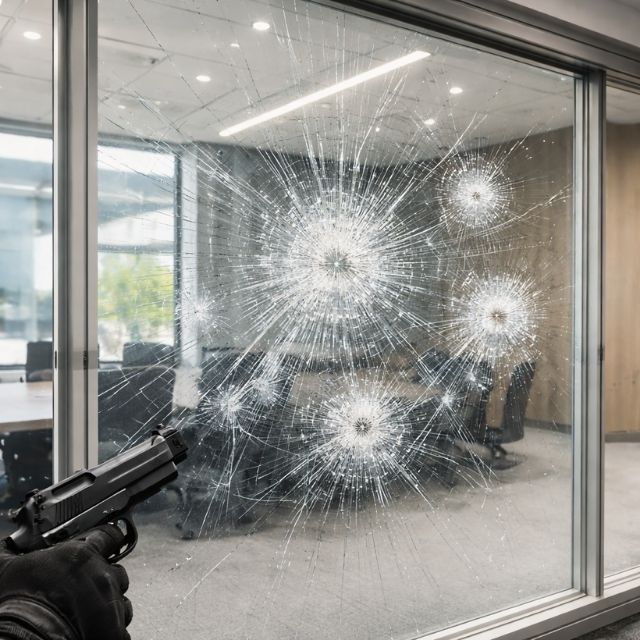
Traditional project procurement often treats materials as standalone components. Project managers might specify a certain steel grade or roofing membrane. They assume the material performs its function once installed. However, high-security applications like bullet-resistant glazing require more than a product-centric view. True bullet resistance is not inherent in a roll of film. It is the outcome of a meticulously designed and integrated system. This demands a critical paradigm shift for modern security planning. View bullet-resistant film as a crucial element within a broader engineered solution. Every component and its installation play a vital role in the final performance. Treating these specialized materials as simple commodities is dangerously insufficient for life safety.
Understanding Project Manager Liability in High-Security Glazing Projects
Underperforming security solutions have implications far beyond budget overruns or aesthetic concerns. A failure in high-security glazing carries significant professional and legal liability. If an installed system fails during a critical incident, the consequences can be catastrophic. These range from severe financial repercussions to lasting reputational damage. Potential legal actions may stem from negligence or a failure to provide safety.
- Financial Ramifications: Costly lawsuits, remediation, and insurance premium hikes.
- Reputational Damage: Erosion of trust with stakeholders, clients, and the public.
- Ethical Obligation: The fundamental duty to ensure the safety and security of occupants.
Mitigating liability requires an unwavering focus on validated performance and systems-engineered approaches. You must partner with installers who possess specialized expertise and a proven track record. Due diligence must extend far beyond simply reviewing product datasheets or marketing claims. You should meticulously vet the entire proposed security system before finalizing any installation plans. Investigating the credentials of your installation partner is equally critical for long-term project success. A thorough evaluation ensures that every component meets rigorous safety and performance standards. This disciplined approach protects your professional standing and the physical safety of your facility.
Defining “Bullet Resistant”: More Than Just a Film on Glass
The term “bullet-resistant” is frequently misunderstood and sometimes misapplied in the security industry. It does not mean a film can stop bullets on its own. Instead, it describes a system’s ability to delay or prevent ballistic penetration. Performance is measured against specific ammunition types and impact forces under controlled conditions. Rigorous standards like UL 752 or ASTM F3071 quantify these critical safety levels. Without meeting these predefined criteria, claims of resistance are merely anecdotal and unverified. Certified systems provide essential protection and necessary liability coverage for your facility. Security film is a critical component, but it relies on the total assembly to function. Performance is intrinsically linked to the glass type, framing system, and anchoring method used.
Beyond the Brochure: Deconstructing Bullet Resistance as a Glazing System
Moving past marketing claims requires a deep dive into the engineering principles that underpin true security. Understanding how each element contributes to the overall resilience of a glazing system is essential for informed decision-making.
The Illusion of “Off-the-Shelf” Security: Why Film Alone Is Not Enough
Applying robust security film to existing glass does not automatically create a bullet-resistant barrier. This common misconception can lead to a dangerous and false sense of security. Advanced security films offer exceptional tensile strength, impact absorption, and fragment retention. However, they cannot unilaterally imbue standard annealed glass with ballistic resistance. Standard glass will still shatter under the force of a ballistic impact.
The film’s primary role is to hold fragmented glass together and delay penetration. It is not designed to stop a projectile as a standalone material. Typical glazing systems have inherent structural limitations that film alone cannot overcome. True protection requires a specific glass thickness, composition, and reinforced framing. Every component must work together to provide reliable ballistic defense for your facility.
The Interplay of Film, Glass, and Frame: A Unified Security Envelope
Achieving certified bullet resistance demands a holistic approach where the film, glass, and frame operate as a single, unified security envelope. Each component contributes uniquely to the system’s overall integrity and performance.
- Security Film: Provides critical post-breakage integrity, absorbing and redistributing impact energy, and most importantly, holding shattered glass in place. This prevents spall (flying glass fragments) and maintains a barrier against penetration, buying crucial time.
- Glazing (Glass): The type and thickness of the glass are fundamental. Specialized laminated glass or polycarbonate compositions are often required to withstand the initial ballistic impact without complete penetration. The film then acts as a secondary layer of defense, managing the integrity of the shattered inner panes.
- Anchoring System (Attachment): This is arguably one of the most overlooked, yet critical, components. Even if the film and glass resist penetration, a compromised or inadequate anchoring system will allow the entire pane to be dislodged from the frame, rendering the security system ineffective. Robust attachment systems, such as structural silicone or mechanical retention systems, are essential to bond the film securely to the frame, ensuring the full system remains intact under sustained attack.
This synergistic relationship underscores that a weakness in any one of these elements compromises the entire system’s ability to perform under duress.
Holistic Threat Assessment: Matching Solutions to Specific Risks
Effective security solutions are always tailored, not generic. A “bullet-resistant” specification is insufficient without a granular understanding of the specific threats an asset faces and the desired performance outcomes.
Differentiating Threat Profiles
The term “bullet-resistant” can encompass a wide spectrum of threats, from low-velocity forced entry attempts to high-velocity ballistic attacks using various calibers. A solution designed to mitigate a basic forced entry might be completely inadequate for a targeted ballistic threat. Conversely, over-specifying for a threat that doesn’t exist can lead to unnecessary costs and operational complexities. A precise threat assessment is the foundation for determining the appropriate system design and performance level. This includes considering the type of weaponry, the anticipated duration of an attack, and the required delay to enable response.
Beyond Ballistics
While bullet resistance is a primary concern, a holistic threat assessment also considers other security risks that may require similar or complementary glazing solutions.
- Forced Entry Protection: Solutions designed to delay intruders using blunt force, cutting tools, or breaching techniques (e.g., specific ASTM F3071 ratings).
- Blast Mitigation: Films engineered to absorb the shockwaves of an explosion, retaining glass fragments and preventing severe injury from flying debris.
- Active Shooter Deterrence: Solutions focused on delaying entry and providing critical time for occupants to react and emergency services to respond.
Each of these scenarios demands specific performance characteristics, often requiring different film technologies, glass compositions, and anchoring methods. An expert partner will conduct a thorough assessment to match the appropriate, cost-effective, and performance-validated solution to the specific risk profile of the facility.
The UL 752 Standard: Interpreting Ballistic Ratings for Real-World Application
For project managers enhancing security, navigating ballistic resistance requires a precise understanding of established standards. UL 752 is the universally recognized benchmark for testing and rating bullet-resistant materials. Crucially, UL 752 certification applies to an entire system, not just an individual component. This distinction is paramount for mitigating liability and ensuring effective facility protection. A film specified outside a tested, integrated system cannot reliably deliver its rated performance. Relying on standalone components rather than certified systems creates significant security gaps and professional risks. True compliance demands that every part of the assembly meets these rigorous testing requirements.
Need More Info?
The Window Film Depot team is happy to help.
Decoding UL 752 Levels: What Each Rating Signifies for Threat Protection
The UL 752 standard categorizes ballistic protection into various levels, each corresponding to specific threat scenarios. These levels are defined by the type of firearm, ammunition caliber, bullet mass, velocity, and the number of impacts the system must withstand without penetration or significant spall.
- Levels 1-3 (Handguns): Typically designed to defeat common handgun rounds, ranging from 9mm to .44 Magnum. These are often considered for general security applications where handgun threats are prevalent.
- Levels 4-6 (Shotguns and Rifles): Addressing higher-energy threats, including shotgun slugs and various rifle rounds. These levels are critical for facilities requiring protection against more severe ballistic attacks.
- Levels 7-8 (High-Powered Rifles): Reserved for extreme threat environments, capable of withstanding multiple impacts from high-powered rifle cartridges like 7.62mm NATO.
Understanding these distinctions allows for a threat-appropriate specification, ensuring that resources are allocated effectively without over-specifying or under-protecting. However, merely referencing a UL level is insufficient; the complete system design and certified installation dictate actual protective capability.
Practical Implications of Ballistic Resistant Film Specifications for Your Project
Translating UL 752 ratings into tangible project specifications demands a holistic view of the existing glazing, frame, and structural integrity. A high-performance ballistic film, even one individually certified, can only achieve its UL 752 rating when integrated into a glazing system that has been tested and validated as a whole. This includes the glass type, thickness, framing material, and, most critically, the attachment system.
- Existing Glazing Assessment: The type and condition of your current windows (e.g., annealed, tempered, laminated) will significantly influence the viable ballistic film and attachment system options.
- Frame Compatibility: The window frame must be robust enough to withstand the immense impact energy without deforming or failing, which would negate the film’s protective qualities.
- System Certification: Relying on documented, independently certified test results for the complete integrated system is non-negotiable. This certification is your primary defense against liability should a security incident occur.
Specifying a “bullet-resistant film” without considering its performance within a certified, comprehensive system is a common pitfall that can lead to a false sense of security and significant liability exposure.
Addressing Spall and Secondary Hazards: A Critical Safety Consideration
Beyond preventing projectile penetration, a fundamental aspect of ballistic protection is the mitigation of spall. Spall refers to fragments of glass or portions of the projectile that detach from the non-attack side of the glazing system during an impact. While the primary projectile may be stopped, ejected spall can cause severe injuries to occupants behind the glass.
A professionally engineered ballistic-resistant system incorporates design elements and specific film properties to significantly reduce or eliminate spall. This often includes specialized film constructions and redundant attachment methods that help hold glass fragments firmly in place, even after impact. For project managers, specifying systems that explicitly address spall protection is not just an added benefit; it is a critical safety and ethical consideration. Overlooking spall mitigation introduces an unacceptable risk of secondary injury, directly impacting occupant safety and heightening project liability.
Anchoring Security: The Non-Negotiable Role of Attachment Systems
While the ballistic film itself forms a critical barrier, its ability to perform under extreme stress is entirely dependent on how it is anchored to the window frame. Without a robust and correctly installed attachment system, even the strongest film will fail catastrophically by simply detaching from the frame, rendering the entire investment ineffective. This makes the attachment system the absolute cornerstone of any true bullet-resistant glazing solution.
Why Attachment Systems Are the Cornerstone of Bullet-Resistant Performance
Consider the immense energy transferred to a window system upon ballistic impact. This energy doesn’t just push through the glass; it also attempts to push the entire pane out of its frame. An attachment system’s role is to absorb and distribute this energy, preventing the glass and film composite from separating from the window sash. Without this critical mechanical bond, the film cannot maintain its integrity or achieve its rated ballistic performance. It’s a fundamental principle: the strongest film is only as effective as its weakest link, and that link is often the method by which it is secured to the structure.
Exploring Advanced Glazing Attachment Technologies (e.g., Dow Corning 995)
Advanced attachment technologies are designed to create a continuous, high-strength bond that effectively integrates the film, glass, and frame into a single, resilient unit. Structural silicone sealants, such as Dow Corning 995, are prime examples of this technology.
- Structural Adhesion: These sealants form a durable, flexible, and chemically bonded connection between the film-glass composite and the existing window frame.
- Energy Absorption: Their inherent elasticity allows them to absorb and dissipate significant impact energy, preventing the entire glazing unit from dislodging or shattering into large, dangerous pieces.
- Integrated System: When correctly applied, these systems transform a standard window opening into a monolithic, bullet-resistant barrier that functions as a cohesive unit.
The specification and expert application of such advanced attachment systems are as vital as the film itself. Improper material selection or poor installation techniques can compromise the entire security envelope.
Ensuring Long-Term System Integrity and Delamination Prevention
The efficacy of a ballistic system extends beyond its initial installation; long-term integrity is paramount for sustained security and liability protection. Delamination, the separation of the film from the glass or the attachment system from the frame, is a critical failure point that can develop over time due to environmental factors, material incompatibility, or improper installation.
To prevent delamination and ensure long-term performance:
- Expert Preparation: Meticulous surface preparation and priming are essential for optimal adhesion.
- Precise Application: Adhering strictly to manufacturer specifications for mixing, application, and curing times is non-negotiable.
- Material Compatibility: Ensuring that all components—film adhesive, glass, and attachment sealant—are compatible is vital to prevent premature breakdown.
- Environmental Considerations: The chosen system must withstand local climate conditions, including temperature fluctuations and UV exposure, without degradation.
Project managers must recognize that the installer’s expertise in selecting the correct attachment system and executing a flawless installation is directly proportional to the system’s longevity and reliability, mitigating future maintenance issues and liability.
The Specific Advantages of 3M™ Scotchshield™ Ultra Safety & Security Window Film within a Comprehensive System
When integrated into a professionally designed and installed system, films like 3M™ Scotchshield™ Ultra Safety & Security Window Film offer distinct advantages in ballistic resistance. These films are engineered with advanced tear-resistant properties and remarkable elongation capabilities, allowing them to stretch and absorb significant impact energy without tearing.
- Enhanced Tear Resistance: This characteristic prevents the film from shredding upon impact, maintaining a cohesive barrier.
- Superior Elongation: The film’s ability to stretch significantly helps dissipate impact forces across a broader area, reducing the localized stress that leads to penetration.
- Fragment Retention: Even if the glass is compromised, the film holds fragments securely in place, significantly mitigating spall hazards.
However, it is imperative to reiterate that these inherent advantages of 3M™ Scotchshield™ Ultra are fully realized only when combined with the appropriate glazing, robust framing, and, critically, a professionally installed and certified attachment system. The film is a high-performance component, but its bullet-resistant capability is always a function of the entire, expertly engineered, and installed system.
Selecting Your Shield: Essential Criteria for a Trusted Installation Partner
Beyond Price: Evaluating a Commercial Security Window Film Installer’s Expertise
While budgetary considerations are always paramount in project management, the procurement of bullet-resistant window film necessitates a fundamental shift in evaluation criteria. True bullet resistance is a meticulously engineered system, not merely a product. Therefore, selecting an installer based solely on the lowest bid introduces unacceptable risk and directly correlates to potential liability should a security incident occur. A reputable installer’s expertise extends beyond applying film; it encompasses a deep understanding of ballistic threats, substrate compatibility, frame integrity, and the critical role of anchoring systems. They assess the entire fenestration system to ensure a holistic defense.
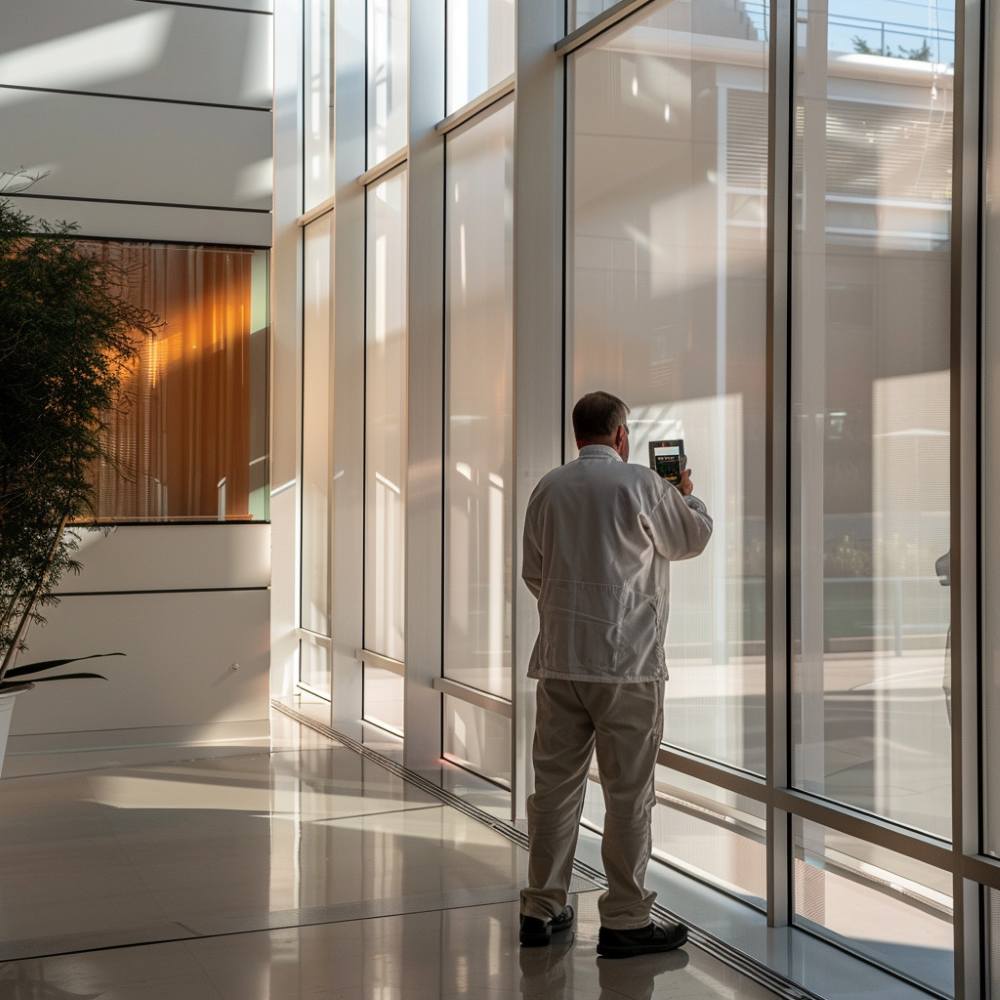
Their expertise is evidenced by a comprehensive understanding of relevant performance standards such as UL 752 for bullet resistance, ASTM F1233 for forced entry, and GSA TS01 for blast mitigation. This technical acumen ensures that the proposed solution is genuinely fit for purpose, mitigating the risk of underperformance and protecting the project manager from the profound liability associated with a failed security measure.
The Power of National Reach: Ensuring Consistent Quality and Project Management Across All Sites
For projects involving multiple locations, a national installation partner provides an indispensable advantage. Inconsistent quality across different sites can create critical vulnerabilities, undermining the entire security program and exposing the project manager to considerable liability. A national provider offers a singular point of contact and unified project management, streamlining communication and execution.
This consolidated approach ensures that every installation adheres to the same rigorous standards, utilizes identical protocols, and benefits from standardized material procurement and logistics. The consistency delivered by a national footprint mitigates the variability often encountered with disparate local contractors, guaranteeing uniform performance and reducing the administrative burden and associated risks for the project manager.
Demonstrating Proven Experience: Project Examples and Technical Acumen in Custom Glass Security Systems
The efficacy of a bullet-resistant film system is directly proportional to the installer’s demonstrated experience. It is not sufficient for an installer to merely claim capability. They must provide concrete evidence of successful deployments in similar high-security or complex environments. This includes detailed project examples that illustrate their capacity to manage intricate logistical challenges.
Installers should demonstrate an ability to coordinate with other security components. They must also engineer custom solutions for diverse architectural designs and site requirements. Proven experience ensures that every specialized installation meets rigorous safety and performance standards.
Technical acumen is crucial, encompassing knowledge of various glass types and complex glazing configurations. Appropriate attachment systems are integral to a bullet-resistant solution’s overall performance. An experienced partner understands that each application is a custom glass security system. These systems require precise engineering and installation to meet specific threat levels. This expertise is a direct hedge against the project manager’s professional liability. Partnering with experts confirms that the specified solution has a documented track record of reliability. This technical depth ensures that every security component functions as a unified defense.
The Advantage of Certified and Specialized Installers for 3M Bullet-Resistant Film Solutions
For critical security applications, the selection of an installer certified specifically for 3M™ Safety & Security Window Films, including their bullet-resistant offerings, is non-negotiable. 3M maintains stringent certification programs that ensure installers possess the specialized training, tools, and methodologies required for optimal product performance. Uncertified installation can void manufacturer warranties, compromise performance, and significantly increase the project manager’s liability profile.
A specialized installer not only understands the nuances of 3M’s advanced film technologies but also has extensive experience in the precise application techniques vital for security films. This specialization goes beyond general window film installation, focusing on the critical detail required for ballistic and forced entry resistance, including meticulous surface preparation, precise film cutting and application, and the proper integration of edge retention systems. Their expertise is a testament to their commitment to delivering robust, manufacturer-approved security enhancements.
Mastering the Scale: Seamless Execution for National Security Rollouts
Navigating the Complexities of Multi-Location Security Enhancements
Implementing security enhancements across numerous facilities introduces a distinct set of complexities that demand specialized project management capabilities. These challenges extend beyond mere installation, encompassing varying regional building codes, diverse structural characteristics of different sites, intricate access protocols, and the logistical intricacies of coordinating materials and personnel across vast geographic distances and multiple time zones. Failure to adeptly navigate these complexities can lead to inconsistencies in protection, project delays, and ultimately, increased risk and liability for the project manager. A capable partner anticipates these variables, incorporating them into a comprehensive deployment strategy.
Centralized Project Management: The Key to Efficiency and Standardization
For national security rollouts, centralized project management is the linchpin for achieving efficiency, consistency, and accountability. This approach provides a single, dedicated point of contact responsible for overseeing all aspects of the deployment, from initial site assessments and detailed planning to scheduling, execution, and final quality control. A centralized system ensures unified communication channels, standardized reporting procedures, and efficient resource allocation, minimizing potential miscommunications or procedural deviations that could compromise the security integrity of individual sites. This structured oversight directly mitigates the project manager’s liability by establishing clear lines of responsibility and consistent performance benchmarks across the entire portfolio.
Quality Assurance and Compliance Across Diverse Project Environments
Maintaining consistent quality assurance and regulatory compliance is paramount for multi-location security upgrades. Discrepancies in installation quality or non-adherence to local codes across different sites can create significant vulnerabilities and legal exposures. A robust quality assurance program includes standardized checklists, routine site inspections, and adherence to manufacturer-specified installation protocols.
A national partner must possess an in-depth understanding of diverse local building codes and fire safety regulations. They must also master relevant ballistic performance standards to ensure every installation meets or exceeds all requirements. This proactive approach to quality and compliance provides project managers with critical assurance for their facilities. All sites will be uniformly protected and legally sound across every geographic location. Such expertise mitigates the risk of non-compliance and ensures long-term operational success for the entire organization.
Illustrative Scenarios: Large-Scale Deployments and Their Unique Logistical Challenges
Securing national financial chains or government facilities presents unique and complex logistical hurdles. Expert partners navigate these challenges by managing tight schedules and secure material staging. Installations in active banks often require off-hours work to minimize operational disruptions.
Government sites involve stringent background checks and sensitive protocols for all personnel. Retail environments demand security upgrades that do not impede customer flow or merchandising efforts. Large-scale deployments require precise coordination of specialized equipment and highly trained crews. These projects often span across diverse geographic locations and varied operational environments.
Seamlessly managing these complexities while maintaining security integrity defines a capable national partner. This high-level coordination ensures minimal client impact and reliable execution across every site.
Conclusion: Protecting Assets, Mitigating Liability with the Expert Partner
Recapping the Imperatives of Bullet-Resistant Glazing Systems and Risk Mitigation
Throughout the evaluation of bullet-resistant glazing solutions, a critical understanding emerges: effective force protection is not achieved through a single product but through a comprehensively engineered system. For project managers responsible for security and asset protection, this distinction is paramount. Specifying “bullet-resistant window film” inaccurately can lead to significant vulnerabilities and substantial liability exposure.
True bullet resistance demands a holistic approach, integrating film, adhesive, attachment mechanisms, and the existing glazing frame into a cohesive, tested performance envelope designed to withstand specific threat levels.
The imperative for risk mitigation extends beyond product selection to the entire implementation process. Any misstep, from inadequate threat assessment to improper installation, compromises the system’s integrity and negates its intended protective value. The consequences of such failures are not merely operational; they carry severe professional and legal ramifications for those tasked with ensuring safety.
The Unwavering Value of Specialized Expertise in Security Film Installation
The proficiency of the installation partner is arguably the most critical determinant of a bullet-resistant glazing system’s operational integrity and long-term performance. This transcends mere technical skill; it encompasses deep system engineering knowledge and a proven track record in national project management. A film, no matter its inherent ballistic rating, is only as effective as its integration into the existing fenestration.
Specialized expertise ensures that:
- System Integrity: The chosen film is correctly paired with appropriate primers, sealants, and anchoring systems, creating a robust assembly that distributes impact energy effectively and retains the glazing within its frame.
- Adherence to Specifications: Experienced installers understand and rigorously adhere to manufacturer specifications and testing protocols, ensuring that the installed system mirrors the performance of tested prototypes.
- Mitigation of Installation Errors: The precision required for these installations leaves no margin for error. A national expert possesses standardized processes, highly trained crews, and quality assurance protocols that minimize installation risks across diverse project sites.
- Documentation and Compliance: Proper documentation of the installation process, materials used, and adherence to established standards is crucial for compliance and defense against potential liability claims, directly addressing project managers’ core concerns.
Your Partner in Peace of Mind: A Strategic Approach to Project Security
Choosing an installation partner is a strategic decision for project managers facing ballistic threats. Selecting the top national 3M installer ensures project success and reduces personal liability. This connection transcends standard vendor roles, building a partnership on trust and technical authority. Expert installers provide peace of mind through proven methodologies and meticulous attention to detail. Every phase, from specification to final certification, meets the highest performance standards. This approach transforms potential liabilities into reliably executed security enhancements. Ultimately, these professional systems protect both your physical assets and your professional standing.
Frequently Asked Questions
If “bullet-resistant film” isn’t a standalone product, why is it sold that way?
The term is often used as shorthand for a ballistic-rated glazing system. While the film is the “hero” component that holds glass together and prevents spall, it cannot function without the mass of the glass and the strength of the frame. In the industry, a “bullet-resistant” claim only holds weight when the complete assembly (film + glass + anchoring + frame) has been tested together to meet standards like UL 752.
Can I achieve a UL 752 rating by retrofitting film onto my existing 1/4″ commercial windows?
Generally, no. Achieving a specific UL 752 Level (e.g., Level 1 or 2) usually requires a specialized glass substrate, such as thick laminated glass or polycarbonate. However, applying high-tensile film like 3M™ Scotchshield™ Ultra to existing windows is a high-value “security upgrade.” It provides significant forced-entry delay and life-saving spall protection, even if it doesn’t meet a specific “bullet-stopping” certification on standard thin glass.
What is the most common failure point in a ballistic film installation?
The anchoring system. If a projectile or high-force impact hits the glass, the film will hold the shards together, but the entire “sheet” of filmed glass can be blown out of the frame if it isn’t physically bonded to the structure. This is why structural silicone or mechanical retention is non-negotiable for system integrity.
How does “Spall” protection impact my liability as a project manager?
Even if a window stops a bullet from entering a room, the energy of the impact can cause the interior side of the glass to shatter into thousands of tiny, high-velocity shards called spall. These fragments can cause severe injury or death. By specifying a system that includes specialized film and proper anchoring, you are mitigating the liability associated with these secondary hazards.
Why should I prioritize a national installer over a local contractor for a multi-site rollout?
National security rollouts require standardization. A local contractor may have different protocols than a contractor in another state, leading to inconsistent protection levels. A national partner (like a top-tier 3M installer) provides a single point of accountability, standardized engineering drawings, and uniform quality assurance across every site, which is your best defense against negligence claims.