Table of Contents:
- Introduction: What “Building Window Tinting Near Me” Really Means in 2026
- Key Benefits of Building Window Tinting Near You
- Types of Commercial Window Film (And Which One You Actually Need)
- How Building Window Tinting Works: From Free Quote to Final Inspection
- Cost, ROI, and Energy Savings: What Building Window Tinting Really Costs in 2026
- How to Choose the Right “Building Window Tinting Near Me” Provider
- Common Questions About Commercial Window Tinting and Building Films
- Why Choose Window Film Depot for Building Window Tinting Near You
- Ready to Upgrade Your Building Glass? Next Steps & How to Get a Free Quote
Introduction: What “Building Window Tinting Near Me” Really Means in 2026
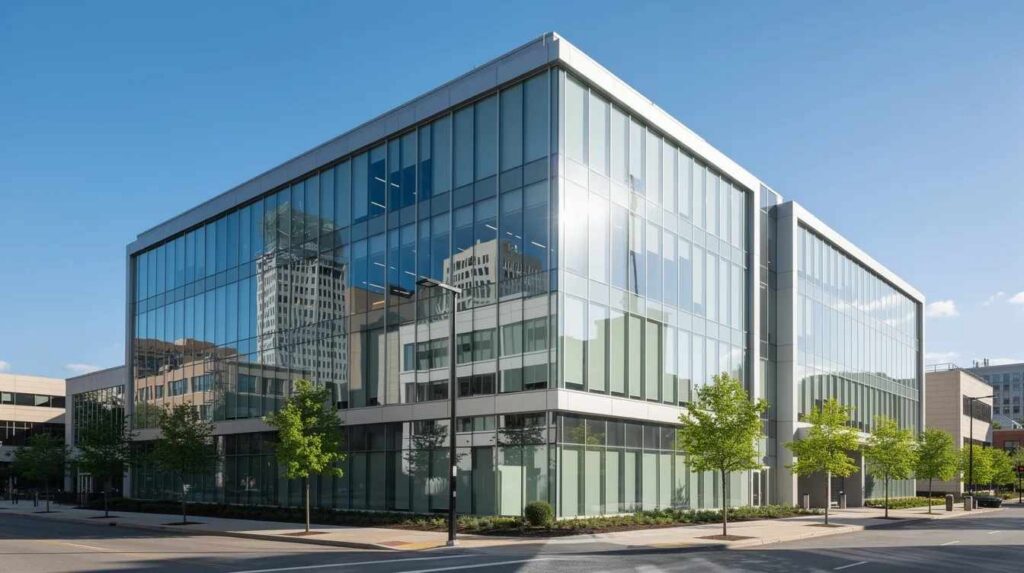
If you’re searching for building window tinting near me, you’re probably dealing with one of a few urgent realities: energy bills that have climbed steadily since 2022, summer heat that overwhelms your air conditioner by mid-morning, or a glass-heavy building that turns into a greenhouse every afternoon. These problems are getting worse, not better, as climate trends push temperatures higher and commercial architecture continues to favor large window expanses.
This guide focuses on commercial window tinting and larger residential window tinting projects for home windows-not automotive work. Window film is a retrofit solution applied directly to existing glass that can reduce solar heat gain, block harmful UV rays, improve energy efficiency, increase privacy, and upgrade a building’s appearance without replacing a single pane. Window Film Depot, a family-owned 3M authorized dealer and installer founded in 1992 and headquartered in Marietta, GA, serves businesses and institutions across the U.S. with local, on-site crews and offers dedicated window film installation services in Marietta, GA and the surrounding region.
Here’s what you’ll learn:
- The measurable benefits of building window tinting
- How to match film type to your building’s needs
- Realistic 2026 cost ranges and ROI data
- How the installation process works, step by step
- What separates a quality provider from an average one
- How to request a free quote and get started
Key Benefits of Building Window Tinting Near You
Modern commercial window film is far more than a cosmetic upgrade. It’s a measurable energy, comfort, and security improvement for any building with significant glass.
Energy savings and HVAC relief:
- Solar window film blocks up to 80% of the sun’s heat, and solar control window film can reduce heat and glare by up to 63%, dramatically cutting cooling loads.
- Buildings with window film can save 5–15% on energy costs annually. Solar control films help maintain consistent temperatures across buildings, so your air conditioner runs less and lasts longer.
- Tinting can reduce air conditioning costs significantly, and window films can also reduce heating costs during winter when low-e options are used.
- Window films can improve energy efficiency in buildings of virtually any age, making them one of the most cost-effective building envelope upgrades available.
UV protection and interior preservation:
- Window tint blocks up to 99% of harmful UV rays. Solar control window film blocks up to 99% of harmful UV rays as well, protecting occupants and interiors alike.
- Fading protection reduces premature fading of furniture and flooring. Think of a south-facing retail storefront in Chicago where merchandise, floors, and displays take a beating from direct sunlight-film addresses that damage at the source and helps protect skin from UV exposure.
Comfort and glare reduction:
- Solar control films reduce indoor temperatures by reflecting UV light, meaning occupant comfort improves without over-darkening the space.
- Glare reduction improves comfort in work and relaxation spaces, especially in office environments, classrooms, and healthcare facilities where screen visibility matters.
- Window tinting can improve indoor comfort by regulating temperatures throughout the day.
Privacy and aesthetics:
- Decorative film and neutral tints create privacy for conference rooms, patient areas, or lobby glass while modernizing the appearance of older buildings. Window tinting improves daytime privacy without relying on shades or blinds.
- Building window tinting offers options for privacy and energy efficiency in a single installation.
Unlike full glass replacement, window film is a minimally disruptive retrofit. Your building stays operational, your business keeps running, and the project is complete in days rather than months.
Types of Commercial Window Film (And Which One You Actually Need)
When you search “building window tinting near me,” you’ll find several distinct film technologies. There are four major types of window films: clear, privacy, decorative, and solar control. Modern films come in various appearances and performance types, and choosing the right film depends on specific building needs. Darker films do not always guarantee better energy efficiency-tint darkness is only one factor among many.
Solar control window film / solar window film: Solar films are engineered to cut solar heat gain and improve energy performance while maintaining natural sunlight. Solar control film can block up to 80% of the sun’s heat. Clear and lightly tinted options exist that preserve visibility and style while rejecting infrared heat. 3M window film products and installation services are a leading line in this category.
Safety and security film: Safety films help keep shattered glass together during accidents, while security films are designed to add tensile strength to glass. Security window films and shatterproof window film make glass impact-resistant and deter break-ins-security film is the first line of defense against break-ins. These multi-layer polyester films are critical for schools, government facilities, retail storefronts, and any location concerned about forced entry or breaking hazards.
Decorative film: Decorative films add color and design without affecting visibility, making them popular for branding, wayfinding, and interior design on office glass, conference rooms, and storefront locations. Frosted films increase privacy while allowing visibility from inside and allowing light to enter-ideal for patient areas and private offices, and there are many types of decorative film for interior and exterior glass that can be tailored to your design goals.
Privacy and one-way films: Reflective films provide one-way privacy during the day and obscure interior views during daylight for privacy. Reflective and decorative films maintain light while providing privacy. Privacy films darken glass to prevent outsiders from seeing in, which is useful for street-level glass, medical offices, and HR suites-no blinds needed.
Specialty and anti-graffiti films: Protective film options like anti-graffiti coatings shield glass at transit hubs, storefronts, and public buildings. When vandalism occurs, the sacrificial film layer is replaced instead of the glass, dramatically reducing cleanup and replacement costs, especially when you use security, anti-graffiti, solar control, and decorative privacy films designed specifically to enhance safety and deter vandalism.
A professional site visit is the best way to match film type and performance specs to your specific building, glass type, and climate. Installers should evaluate glass compatibility before applying films, since installing unauthorized films might void window manufacturer warranties.

How Building Window Tinting Works: From Free Quote to Final Inspection
Here’s the step-by-step process so your facilities team knows exactly what to expect.
- Step 1 – Consultation and free quote: Window Film Depot gathers basic details-your location, building type, glass area, and primary concerns-then schedules an on-site assessment. You receive a written, line-item proposal with no obligation.
- Step 2 – Energy and glare assessment: Installers take glass measurements, review HVAC and utility data, and identify priority elevations (west-facing curtain walls, for example) to estimate energy savings and payback. They address any concern about glass compatibility at this stage.
- Step 3 – Film selection and samples: Physical film samples are shown on your actual glass so decision-makers can compare visible light transmission, exterior appearance, and tint darkness in real-world conditions.
- Step 4 – Scheduling and logistics: Work is planned around business hours, nights, or weekends. Access requirements are coordinated with your security and facilities teams-especially important for schools and government buildings.
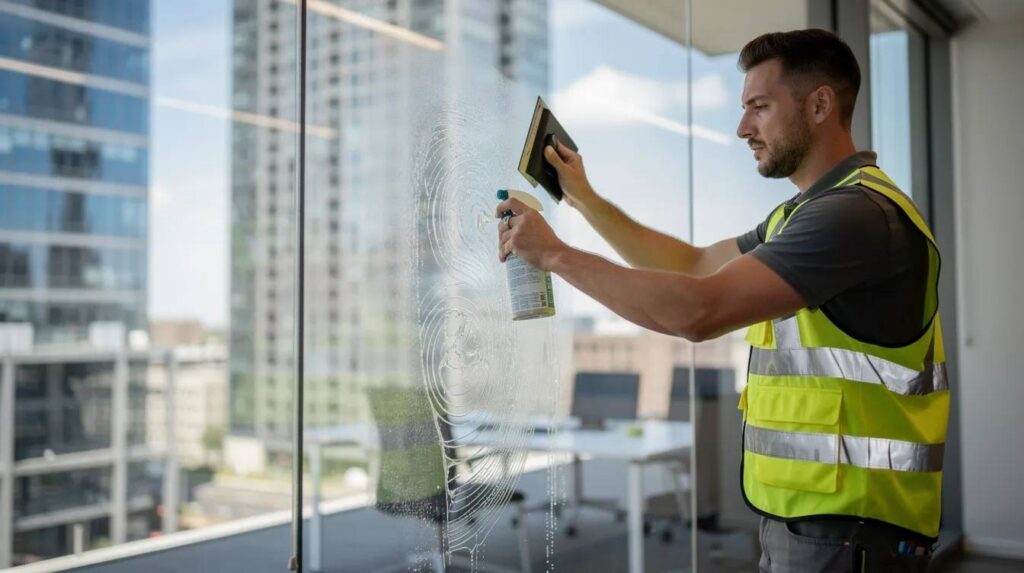
- Step 5 – Installation day(s): The process includes surface cleaning, precise film application, squeegeeing, edge finishing, and quality checks. Most office and retail sites stay open during the job with minimal disruption to daily operations.
- Step 6 – Curing, warranty, and maintenance: Curing typically takes a few days to a few weeks depending on climate and humidity. Warranty coverage protects against bubbling, peeling, and discoloration. Maintenance is simple-non-abrasive cleaners and soft cloths. Professional installation is recommended to ensure proper warranty coverage.
Cost, ROI, and Energy Savings: What Building Window Tinting Really Costs in 2026
Cost is typically the first question when people search “building window tinting near me.” Pricing varies by film type, glass condition, building height, and total square footage, but here are realistic 2026 benchmarks.
Typical per-square-foot price ranges: | Film Type | Installed Cost (per sq ft) | |—|—| | Standard solar control window film | $7–$12 | | Premium spectrally selective/ceramic solar films | $10–$15 | | Safety and security film | $12–$25+ | | Decorative film | $7–$14 | Premium spectrally selective options include 3M™ Sun Control Window Film Prestige Exterior Series, which delivers high solar heat rejection while maintaining a clear appearance.
Exact pricing comes from a site-specific free quote.
ROI and payback:
- Energy-focused projects typically pay back in 3–5 years, sometimes faster in hot climates or older buildings with single-pane glass. Buildings with LLumar film save 5–15% on energy annually, and similar results are achievable with comparable high-performance window film brands such as 3M™ Sun Control Window Films, Ceramic Series.
- A mid-sized office building can save money year after year once the initial investment is recovered, while also extending HVAC equipment life.
Utility rebates and incentives:
- Many states and utility providers offer rebate programs for energy efficient building envelope upgrades. Tax credits may be available for energy-efficient window films under programs like Section 179D.
Indirect savings:
- Reduced UV damage to floors, furniture, and finishes means longer replacement cycles. Security and anti-graffiti films lower the cost of vandalism and glass replacement. Your air conditioner runs fewer hours, cutting maintenance and extending its lifespan.
Treat film as a building performance upgrade, not just a tint. Ask providers for energy modeling or manufacturer performance data so you can forward the business case to stakeholders with confidence.
How to Choose the Right “Building Window Tinting Near Me” Provider
Film quality and installation quality both matter equally. A provider with national experience and local crews is a strong combination.
- Credentials and experience: Verify years in business, manufacturer certifications (e.g., 3M Authorized Dealer), and experience with similar building types-hospitals, schools, multi-site retail, government, or Class A office towers. If film is installed incorrectly, you risk voided warranties and poor performance.
- Project portfolio and references: Ask for recent projects in the same region or climate, with before/after photos and references from facility managers or property owners. This is the fastest way to hear real-world results and verify that your installer has nationwide experience retrofitting high-performance films on buildings similar to yours.
- Product lines and warranties: Choose providers who offer high-performance commercial window film from established window film brands and who can provide written warranties on both film and labor.
- Coverage area and scalability: A partner like Window Film Depot can handle single-building jobs as well as multi-location national roll-outs with consistent specs, pricing, and expert installation quality, supported by nationwide window film service locations across all 50 states.
- Consultation quality: Look for transparent, educational consultations-no pressure sales, clear explanation of options, and honest discussion of what film can and cannot do for your building.
Common Questions About Commercial Window Tinting and Building Films
Will window film make my office too dark?
No. High-performance solar films preserve natural sunlight while cutting heat and glare. Many options maintain 50–70% visible light transmission, so your space stays bright. You don’t need to sacrifice visibility or rely on dark shades to control heat.
Can commercial window tinting be installed on double-pane or low-E glass?
Yes, but not every film is compatible with every glass type. Installers should evaluate glass compatibility before applying films. Using manufacturer-approved films avoids thermal stress or seal failure. Installing unauthorized films might void window manufacturer warranties.
How long does building window film last?
Quality commercial window film typically lasts 10–20+ years depending on film type, sun exposure, and installation quality. 3M commercial sun control films carry warranties of 10–15 years for commercial use, and residential-focused options like 3M™ Sun Control Window Films, Night Vision™ Series offer similar long-term performance for homeowners.
Is window film removable if we remodel or change branding?
Yes. Most films can be professionally removed without damaging or replacing the glass, making them ideal for tenants, rebranding, or evolving privacy needs.
Do we need to empty offices or close our business during installation?
No. Most commercial window tinting services work is completed with minimal disruption. Installers often schedule around business hours, nights, or weekends so your building stays fully operational.
What’s the difference between residential window tinting and commercial window tinting?
Commercial projects involve larger glass areas, stricter building codes, higher performance requirements, and coordination with facilities teams. Residential window tinting for a house focuses on home windows and typically involves smaller-scale film selection and simpler logistics, though the core film technologies overlap.
Why Choose Window Film Depot for Building Window Tinting Near You
Window Film Depot is a family-owned company founded in 1992, headquartered in Marietta, GA, and focused exclusively on window film and architectural surface solutions. Here’s what sets us apart:
- National reach with local service: Turnkey project management across the U.S., from single facilities to nationwide retail and institutional roll-outs, with local installation teams familiar with your city’s climate and codes.
- Complete product offering: 3M solar control window film, safety and security glazing, decorative film, privacy film, anti-graffiti protective film, and commercial graphics-all tailored to each site’s needs.
- Deep institutional expertise: We serve facility managers, architects, school districts, government agencies, healthcare systems, and corporate real estate teams daily. We understand the world of commercial building performance.
- Reliability and support: Manufacturer-backed warranties, detailed proposals, clear timelines, and post-installation support for maintenance, expansions, or additional project phases.
Window Film Depot combines top-tier products, experienced installers, and consultative guidance to help clients save money, upgrade building performance, and improve occupant comfort at every location.
Ready to Upgrade Your Building Glass? Next Steps & How to Get a Free Quote
The fastest way to move forward from research to results is a brief call or online inquiry. Here’s how to get started:
- Gather basic information: Your address and location, approximate glass area or floor count, and your primary concerns-whether that’s heat, glare, security, privacy, or fading.
- Contact Window Film Depot: Reach out by phone or web form to request a free quote for commercial window tinting services. Let us know whether you’re planning a single-building project or a multi-site portfolio.
- Request energy savings estimates: We’ll provide product samples, energy modeling, and project timelines tailored to your city and building type so you can make a confident, informed decision.
- No obligation, just expertise: An expert from our team will walk you through every option, answer your questions, and help you choose the right commercial window film solution for your building. Reach out today and take the first step toward a more energy efficient, comfortable, and protected space.