Table of Contents:
- How One Way Window Film Works: The Science Behind the Mirror Effect
- Daytime vs Nighttime Privacy: What One Way Film Can and Cannot Do
- Types of Privacy Films: One Way vs Frosted, Blackout, and Decorative
- Best Use Cases for One Way Window Film in Commercial and Residential Buildings
- How the Installation Process Works with Window Film Depot
- Common Mistakes and Misconceptions About One Way Mirror Window Film
- FAQs: One Way Window Tint and Privacy Film
- Why Choose Window Film Depot for Privacy Window Film One Way
What Is One Way Privacy Window Film and When Does It Make Sense?
Can you really get a privacy window you can see out of while outside people can’t see in? Yes, but with a critical caveat. One-way window film is a reflective window film that creates a mirror effect on the brighter side of the glass, letting you maintain an outward view while keeping the interior hidden. One-way privacy window film provides daytime privacy while allowing exterior views, and it is suitable for homes and offices alike.
The catch: this film delivers daytime privacy, not 24/7 protection. The technology relies entirely on a light imbalance between the two sides of your glass, meaning its performance shifts with the sun. In 2026, common applications include street-facing storefronts, glass-walled conference rooms, school admin offices, lobbies, home offices, and residential windows exposed to sidewalk traffic.
Window Film Depot is a family-owned, 3M-authorized national dealer and installer headquartered in Marietta, Georgia, with experience dating back to 1992. We specialize in commercial, institutional, and multi-site projects, so the guidance in this article comes from thousands of real-world installations rather than generic product descriptions.
How One-Way Window Film Works: The Science Behind the Mirror Effect
A typical one-way window film starts with a polyester base layered with a thin reflective coating, either metallized (silver, aluminum) or nano-ceramic. A darker substrate sits behind the reflective layer. The film operates on the principle of light imbalance and reflection: whichever side of the glass receives more light becomes reflective, while the darker side stays see-through.
The one-way effect requires the exterior to be brighter than the interior. Most professional sources describe a minimum 3:1 to 4:1 brightness ratio between the outside and inside for a strong mirror effect. Picture a downtown Atlanta office at 2 p.m. with full sun hitting the west-facing windows. The metallic layer reflects sunlight outward, creating a way mirror that hides the room. Inside, occupants see through the tint with reasonable clarity because transmitted light still passes through the film.
The film creates a mirror effect during the day, but it does far more than just provide privacy. High-performance films can reject up to 82% of solar heat, and one-way films block up to 99% of UV rays. They also reduce solar infrared rays by 81%, and one-way window films block 93% of harmful UV rays. On top of that, one-way privacy window films reduce glare by up to 93%, making a measurable difference for glare reduction on screens and interior comfort. These films also reduce fading of furniture, flooring, and merchandise by blocking the sunlight wavelengths that cause damage.

Daytime vs Nighttime Privacy: What One Way Film Can and Cannot Do
The “see out, not in” promise applies only during daylight hours when the exterior is brighter than your interior. Here is how performance changes across three common scenarios:
- Sunny day: The outside of the glass acts like a strong mirror. The interior is well hidden while occupants maintain a clear view out. This is the film’s ideal operating condition, and it provides privacy at a high level with minimal compromise on natural light.
- Cloudy day: The mirror effect softens. The reflection is still present, but silhouettes and movement may become slightly visible from the other side, especially at close range or from a steep angle. Privacy remains adequate for most commercial applications but is noticeably weaker.
- Night time privacy concern: At night, the one-way effect reverses, requiring additional privacy measures like curtains. With interior light sources on, outside people can see into the room clearly. The film is effective only when indoor lights are off at night. You will need to close curtains, lower blinds, or add a supplemental privacy film solution for any space that needs night time privacy.
Facility managers should account for this reversal when specifying film for sensitive spaces like patient rooms, school admin offices, and residential bedrooms. Plan supplemental window treatments from the beginning rather than discovering the limitation after installation.
Types of Privacy Films: One Way vs Frosted, Blackout, and Decorative
Privacy window film is a broad category. One way is just one option, and choosing the wrong type is a common and expensive mistake. Here is how the main types compare:
| Film Type | Daytime Privacy | Night Privacy | Light Transmission | Best For |
|---|---|---|---|---|
| One way / mirror window film | High | Low (reverses) | Medium-low | Storefronts, exterior office glass, street-facing rooms |
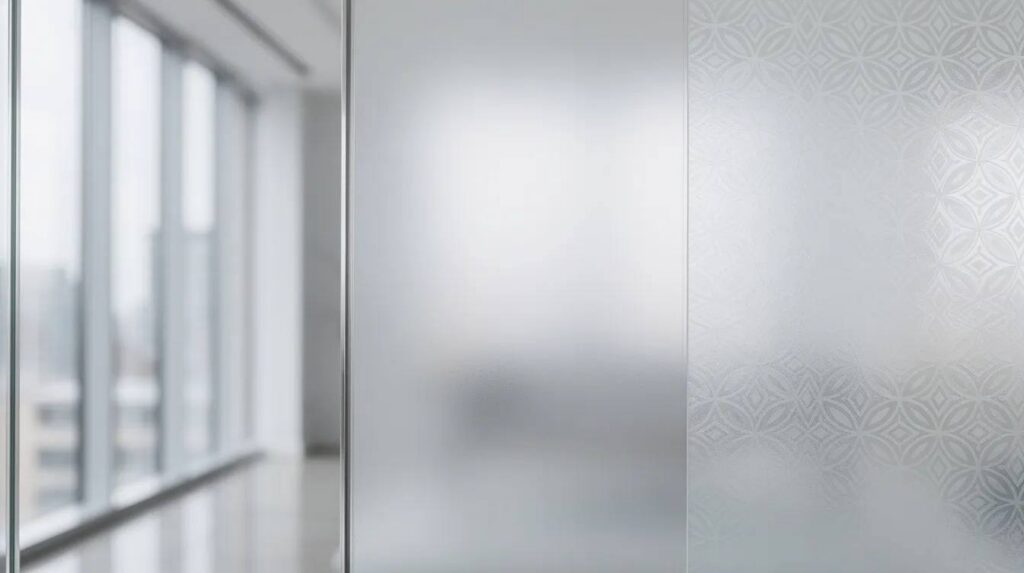
| Frosted / etched film | Moderate | Consistent | High (diffused) | Restrooms, conference room partitions, interior glass, door sidelites |
| Blackout / opaque film | Complete | Complete | None | Security zones, media rooms, storage |
| Decorative patterned film | Variable | Variable | Depends on pattern | Branding, architectural interest, partial privacy in a store or lobby |
| One way window tint is the best fit when you need daytime privacy combined with heat reduction, uv blocking, and a maintained view. Frosted or opaque privacy film is more appropriate when confidentiality must hold around the clock, such as in medical offices or restrooms. |
Window Film Depot often combines solutions. For example, dual-reflective solar film on exterior windows paired with frosted film on interior sidelites and door glass creates a complete privacy window strategy that functions in every lighting condition and every room.
Best Use Cases for One Way Window Film in Commercial and Residential Buildings
Proper use-case alignment is the point that separates a successful project from a disappointing one. Here is where one-way privacy film work delivers real value:
- Commercial exteriors: Street-level storefronts, bank lobbies, and corporate campuses where the film provides a pleasing uniform look from the outside while controlling solar gain. One way window films can be a cost-effective alternative to specialized glass, saving significant money on new glazing. In one documented project, Window Film Depot installed exterior silver reflective film on a Newport Beach office building, delivering an estimated $19,000 per year in AC cost savings alongside strong daytime privacy.
- Institutional and education: School administrative offices and security control rooms where staff need to observe without being observed. The film eliminates the “fishbowl” effect without sacrificing natural light, and in spaces that demand consistent privacy after dark, the best window film for nighttime privacy may be a frosted or opaque alternative instead of a standard one-way mirror film.
- Offices and interiors: Glass conference rooms facing corridors benefit from mirror film, but indoor lighting must be carefully managed. One way films reduce glare on screens significantly, which improves productivity in open-plan office layouts. The film also adds tensile strength to glass, enhancing safety in high-traffic areas.
- Residential: Living rooms and home offices facing sidewalks or neighboring driveways gain privacy during the day. These films keep homes cooler during summer months and help save energy costs by reducing cooling expenses. But homeowners must maintain realistic expectations and plan for blinds or shades after dark.
How the Installation Process Works with Window Film Depot
Professional installation delivers better performance, longevity, and warranty protection than any DIY peel-and-stick film. As America’s leading 3M window film installation company, Window Film Depot follows a proven process. Here is what the process looks like with Window Film Depot:
- Site assessment and glazing audit: We survey glass type (single pane, dual pane, Low-E), window orientation, sun path, and interior lighting conditions. This step determines which film grade matches your space.
- Film selection and mock-up: We install a sample on a representative window so you can evaluate appearance, privacy level, and light transmission during different times of day before committing to the full project.
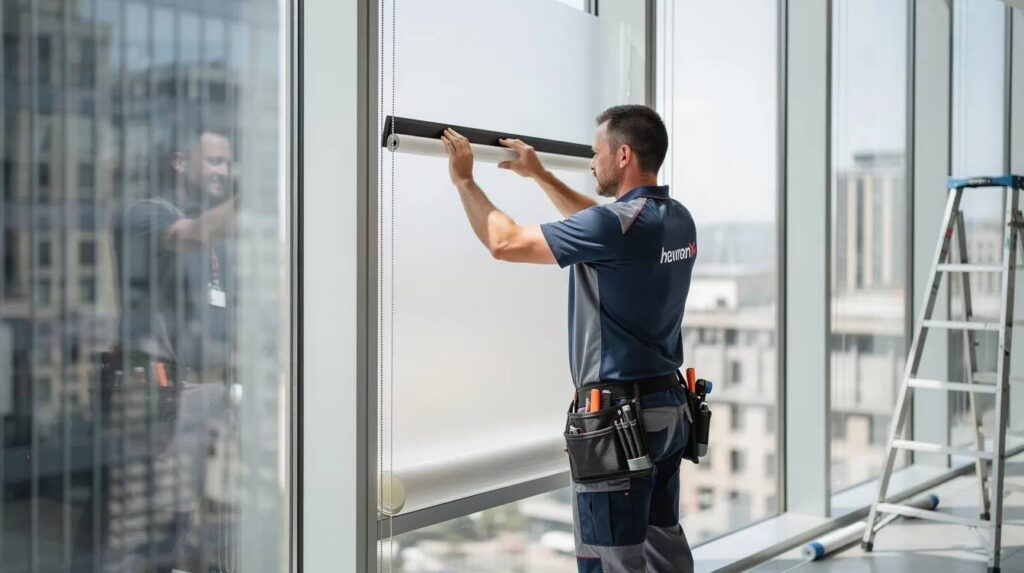
- Installation day: Installation requires thorough cleaning of the glass. The surface must be smooth, flat, and free of damage. Installation requires spraying water on smooth glass surfaces for the wet application method, then the film is precisely cut, positioned, and finished with a squeegee to remove bubbles and ensure flat adhesion.
- Timelines: Single-site projects typically take one to three days. Multi-site national roll-outs are phased over weeks with staging to minimize disruption. Weekend or off-hours work is available for schools, healthcare, and government facilities.
Window Film Depot’s installers are 3M-certified and background-checked where required. This matters when the install happens inside a school, a government building, or a healthcare facility where security clearance is non-negotiable, and it ensures eligibility for the full 3M residential and commercial window film warranty coverage.
Common Mistakes and Misconceptions About One Way Mirror Window Film
Many buyers misunderstand how privacy film functions, and the result is frustration. Here are the mistakes we see most often:
- Expecting 24/7 one-way privacy. This is the single biggest misconception. The mirror effect depends entirely on the power of exterior light sources exceeding interior brightness. No reflective film can change that physics.
- Ignoring glass compatibility. Applying highly reflective films to dual-pane glass can risk thermal cracking. The reflective layer traps heat between panes, and if the glass or frame cannot handle thermal expansion, cracks appear. Always verify compatibility before you install.
- Over-relying on cheap consumer films. Static cling technology requires no glue for installation, and static cling window films can be easily removed without residue, making them ideal for DIY projects and rentals. But static cling films lack the adhesive bond, durability, and reflectivity of professional-grade products. They are rarely suitable for large commercial façades or stuff that needs to perform for years compared with professional 3M window film products and installation.
- Skipping code and HOA checks. Some jurisdictions limit exterior reflectivity to control glare and light pollution. Historic districts and HOAs may restrict the appearance of mirror finishes. Check compliance before ordering film.
- No lighting plan. If you do not account for interior task lighting, street lamps, and signage, the privacy result may surprise you at dusk. Involve Window Film Depot early in design so the film selection is integrated with your blinds, curtains, and lighting strategy rather than treated as an afterthought.
FAQs: One Way Window Tint and Privacy Film
Does one way window film work at night?
No. When interior lights are on and the outside is dark, the one-way effect reverses. People outside can see in clearly. You will need blinds, shades, or room-darkening curtains for nighttime privacy.
Can I still see out clearly through privacy window film one way?
Yes, during daylight hours. The film transmits enough visible light for a functional outward view. Darker tint levels reduce interior brightness more, so film selection should balance privacy against natural light needs.
Will mirror window film make my building too dark inside?
It can reduce interior brightness, especially on cloudy days. Spectrally selective and dual-reflective films mitigate this by maintaining higher visible light transmission while still delivering a strong mirror effect. Proper interior lighting design helps maintain comfort.
How long does professional window film last on commercial glass?
Commercially installed, quality adhesive-based films typically last 10 to 15 years, with manufacturer warranties ranging from 5 to 10 years depending on exposure and film line.
Is one-way window tint allowed by local building codes or HOA rules?
It depends on your jurisdiction. Some cities restrict exterior reflectivity to prevent glare toward traffic or neighboring properties. HOAs and historic preservation districts often require appearance approval. Always verify before installation.
What’s the difference between one-way window films and regular solar control films?
Regular solar control films prioritize heat rejection and UV blocking but may not have strong reflectivity. One-way films emphasize a visible mirror finish for privacy. Dual-reflective and spectrally selective films describe a middle line, offering solar control with moderate privacy, and they are part of the broader window glass film products and brands that Window Film Depot can specify for different performance goals.
How do I maintain one way window film after installation?
Use standard non-ammonia glass cleaners and soft, non-abrasive cloths. Avoid razor blades or harsh chemicals. Periodically inspect edge seals. The maintenance is super easy and requires no special products beyond what you already use to clean glass.
Why Choose Window Film Depot for One Way Privacy Window Film
Window Film Depot has been a family-owned, 3M-authorized dealer and installer since 1992. We are headquartered in Marietta, Georgia, and we handle projects from single-location buildings to nationwide portfolio roll-outs across every U.S. region.
Our differentiators are specific: nationwide commercial window film installation coverage, turnkey project management, and deep experience across government, education, retail, and healthcare. We sell and install the full 3M window film portfolio, including solar control, security glazing, privacy, decorative, anti-graffiti, and architectural finishes. That breadth means we recommend the right solution for each window in your building rather than forcing a one-size-fits-all product. We also support trade partners and glass companies with wholesale film supply across North America through our family-owned national window film company and dedicated window film installation services in Washington, DC and beyond. Our recommendations are backed by documented performance data, manufacturer warranties, and real energy savings, not hope or vague marketing.
Next Steps: Schedule a Window Film Assessment or Request a Quote
Contact Window Film Depot for a site visit, sample installation, or remote consultation using your photos and plans. Whether you need a budget estimate for one way privacy film, a comparison against frosted or security alternatives, or coordination with your architect and general contractor on a multi-site roll-out, we can help.
If one-way window tint is not the right answer for your space, we will tell you honestly and recommend frosted, blackout, or security films instead. The goal is the right solution for your building and your life inside it, not just a film sale. Reach out today to get started.