Table of Contents:
- When a Client Asks for ‘Unbreakable Glass,’ Here Is What They Actually Mean
- Why Full Glass Replacement Is Rarely the Right Answer for Commercial Retrofit Projects
- How Safety and Security Window Film Delivers the Outcomes Clients Actually Want
- Performance Metrics: What 3M Safety Film Can and Cannot Do
- Where High-Performance Window Film Outperforms Laminated or Tempered Glass Replacements
- Selecting and Specifying the Right Film for Your Project’s Threat Profile
- How to Scope, Specify, and Execute Safety Film Across a Large-Scale Commercial or Institutional Project
- Conclusion: Translating ‘Unbreakable Glass’ Into a Specification You Can Deliver with Confidence
- Frequently Asked Questions
When a Client Asks for ‘Unbreakable Glass,’ Here Is What They Actually Mean
Unbreakable Glass is one of the most common phrases building owners use after security incidents, insurance reviews, or vulnerability audits. This guide explains why unbreakable glass is not a true commercial product category, how modern glazing systems actually perform under impact and forced-entry conditions, and why professionally installed security film often delivers the protection commercial retrofit projects really need.
The Scenario Every Construction Manager Recognizes
The request arrives after a smash-and-grab at a retail tenant, a security audit at a school district, or an insurance renewal that flagged glazing vulnerability. The building owner sends a single sentence: “We need unbreakable glass on all exterior-facing windows.” They provide no specification, no defined threat profile, and no budget range. Just a term pulled from a product brochure or a news headline, and now it is your job to turn it into a scope of work.
Every construction manager who has managed a commercial security upgrade recognizes this moment. The client knows what they want to feel — secure — but they have handed you a product description that does not correspond to any single, commercially available solution.
Decoding the Request: Outcome vs. Product
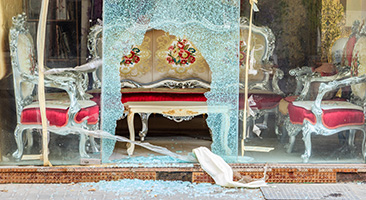
The phrase “unbreakable glass” describes an outcome, not a product. What the client is really asking for is glazing that does not let an intruder through, does not shower occupants with shards during a blast or impact event, and does not become a liability after a forced-entry attempt. That outcome is achievable. The product category implied by the name is not.
Treating the request as a literal product specification leads directly to scope creep, budget overruns, and structural complications. Treating it as a description of a performance requirement opens up a much broader and far more practical set of solutions.
What ‘Unbreakable Glass’ Actually Means in Industry Terms
No glass product marketed to the commercial construction industry is certified as “unbreakable.” What the industry offers are glazing systems with graduated levels of impact resistance, fragment retention, and forced-entry delay. Three products get conflated under the unbreakable glass label more often than any others.
Tempered Glass: High Impact Resistance, Not Unbreakable
Tempered glass is manufactured through a controlled thermal process that increases its surface compression strength to roughly four times that of standard annealed glass. It resists impact better than untreated glass, and when it does fail, it fractures into small, relatively blunt granules rather than long, razor-edged shards. That characteristic makes it a safety glazing product under ANSI Z97.1 and the International Building Code. It does not make it unbreakable. A center punch or a focused strike to a corner will cause tempered glass to disintegrate almost instantaneously. It offers no meaningful forced-entry delay.
Laminated Glass: Fragment Retention by Design
Laminated glass bonds two or more glass lites around a polyvinyl butyral (PVB) or ethylene-vinyl acetate (EVA) interlayer. When the glass fractures, the interlayer holds the fragments in place. This is the mechanism used in automotive windshields and the same principle that governs performance-rated security glazing. Laminated glass can be engineered to meet ASTM F1233 forced-entry classifications, and thicker multi-lite assemblies achieve blast mitigation ratings under GSA TS01-2003. It will crack under sufficient force. The interlayer continues to hold the assembly together and delay penetration even after the glass itself has failed.
Polycarbonate Glazing: The Closest Thing to the Claim
Polycarbonate is a thermoplastic, not glass. It is significantly more impact-resistant than standard glass by weight and is the substrate used in ballistic-resistant glazing assemblies. For applications requiring true bullet resistance, polycarbonate composite systems, sometimes laminated with glass lites, are the specification-grade solution. They are also heavier, more expensive, thermally and optically different from glass, and subject to surface abrasion over time. They are the right answer for a specific threat profile, not a universal upgrade.
The Practical Distinction Between These Three Products
Tempered glass resists breakage but fails completely when it does break. Laminated glass breaks but retains its fragments and delays penetration. Polycarbonate resists penetration at levels no standard glass product can match. “Unbreakable glass” is not a product category with a corresponding ASTM or ANSI standard. It is a marketing term that maps loosely onto the performance characteristics of laminated or polycarbonate assemblies depending on context.
Can Unbreakable Glass Actually Break?
Yes. Every glazing product currently available in the commercial market can be defeated under the right conditions. Laminated glass rated to ASTM F1233 Class 4 will eventually yield to sustained attack with a sledgehammer or pry bar. Polycarbonate composites can be defeated with sufficient dwell time and the right cutting tools. The relevant question for a security specification is never “can this be broken?” The correct question is: how long does it delay a determined attacker, and is that delay sufficient for a law enforcement response or occupant evacuation?
Why ‘Shatterproof’ and ‘Unbreakable’ Are Not Interchangeable in a Specification
“Shatterproof” has a defined meaning in a glazing specification: the glazing assembly retains its fragments after impact rather than scattering dangerous shards. This is a testable, codifiable characteristic governed by ANSI Z97.1 and CPSC 16 CFR Part 1201. “Unbreakable” has no corresponding standard. Using it in a specification document creates ambiguity that can expose the project manager to liability if the installed product fails to meet an implied but undefined performance level. Use precise language. Specify fragment retention class, forced-entry resistance category, or blast mitigation level as appropriate to the threat profile. The standard, not the marketing term, is what gets enforced.
Why Full Glass Replacement Is Rarely the Right Answer for Commercial Retrofit Projects
Full replacement with performance-rated security glazing sounds like the definitive solution. In practice, it introduces a set of constraints that disqualify it as the default approach for most commercial retrofit projects.
The Hidden Costs of Specifying True High-Security Glazing
The material cost of laminated security glass runs several times that of standard commercial glazing at equivalent dimensions. Ballistic-resistant polycarbonate composite assemblies run significantly higher. Neither figure accounts for the full project cost. Frame modification, structural reinforcement, disposal of existing glazing, re-glazing labor, and the downtime associated with open or boarded openings all add to the line item. For a school district retrofitting dozens of buildings or a retail chain addressing multiple locations, the budget exposure of a full glass replacement program is rarely compatible with what the building owner actually approved.
Structural Load, Framing, and Code Compliance Complications
Thicker, heavier security glazing assemblies change the dead load on the framing system. Standard commercial aluminum curtain wall and storefront framing is not always engineered for the additional weight of multi-lite laminated glass or polycarbonate composites. Confirming frame compatibility requires structural engineering review. In older buildings, that review frequently triggers additional work: frame replacement, anchoring upgrades, or lintel reinforcement. What started as a glazing project becomes a structural project.
What Building Codes and Safety Standards Apply to Security Glass
ANSI Z97.1 and the IBC Safety Glazing Baseline
ANSI Z97.1 and CPSC 16 CFR Part 1201 establish the minimum safety glazing requirements for hazardous locations, including doors, sidelights, floor-level glazing, and areas where human impact is probable.
The International Building Code (IBC) adopts these standards by reference. Any glazing installed in a regulated location must meet these baselines regardless of whether the project goal is safety or security.
For most commercial buildings, existing tempered or laminated glass already meets this minimum threshold. The security specification question begins above this floor.
Where ASTM F1233 and GSA TS01-2003 Enter the Specification
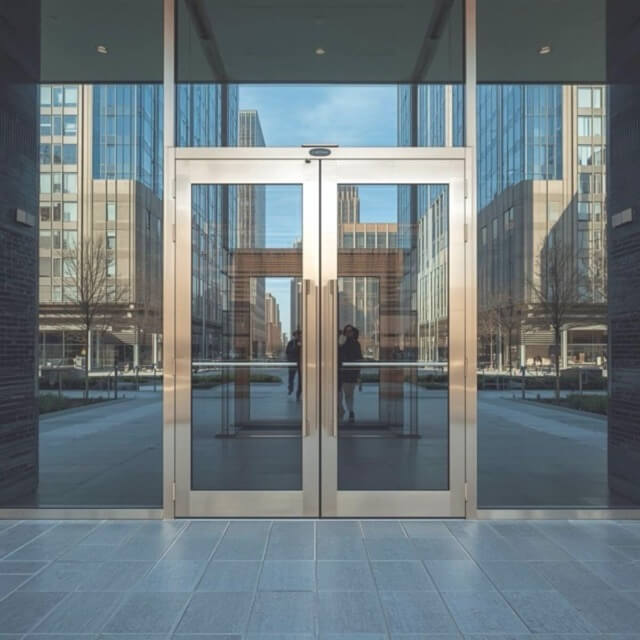
ASTM F1233 is the standard test method for security glazing in forced-entry applications. It classifies glazing assemblies from Class 1 (basic) through Class 4 (high security) based on resistance to attack with progressively more aggressive tools and techniques. For government and institutional buildings, GSA TS01-2003 governs blast-resistance requirements for glazing systems, specifying hazard ratings based on fragment retention and frame attachment behavior under blast load. Both standards apply to the complete glazing assembly, including glass, interlayer, frame, and attachment system, not to the glass product alone. A project manager specifying to ASTM F1233 Class 3 or GSA TS01-2003 must confirm that every component in the assembly contributes to the rated performance.
Lead Times, Disruption, and the Multi-Location Logistics Problem
Custom-fabricated security glazing carries lead times of eight to sixteen weeks depending on specification and supplier. For a multi-location project — a school district, a municipal building portfolio, a retail chain — sequencing fabrication and installation across dozens of sites while keeping buildings operational is a genuine logistics challenge. Each building faces a period of temporary vulnerability during glass removal and replacement. Coordinating that exposure across 20 or 40 locations simultaneously is a project management problem with real security and liability dimensions.
When Full Glass Replacement Is the Correct Call
There are scenarios where full replacement is the right specification. Glazing that is already compromised, cracked, or failing its thermal seal is a candidate for replacement on maintenance grounds alone, and upgrading to a performance-rated assembly during that replacement cycle is logical. New construction always has the advantage of designing the glazing system to the threat profile from the outset. Facilities with ballistic threat profiles, including financial institutions, government facilities with specific hardening requirements, and correctional environments, may require polycarbonate or glass-clad polycarbonate assemblies that film cannot replicate. Outside these scenarios, replacement is frequently the more expensive, more disruptive, and longer-lead option for an outcome that a properly specified retrofit can achieve at a fraction of the cost.
Glass Replacement vs. Safety Window Film Retrofit: A Specification Decision Matrix
Use this matrix to identify the recommended approach based on threat profile, applicable standard, relative cost, typical lead time, and whether structural modification is likely required.
| Threat Profile / Project Type | Recommended Approach | Applicable Standard | Relative Cost | Typical Lead Time | Structural Modification Required |
|---|---|---|---|---|---|
| Smash-and-grab, retail storefront, occupied building | Safety window film retrofit | ASTM F1233 Class 1-2 | Low | 1-5 days per location | No |
| Forced-entry delay, school or institutional building | Safety window film retrofit with attachment system | ASTM F1233 Class 2-3 | Low-Medium | 3-7 days per location | Typically no |
| Existing glazing failed or thermally compromised | Full glass replacement with laminated upgrade | ANSI Z97.1, ASTM F1233 | Medium-High | 8-16 weeks fabrication | Possible |
| Blast mitigation, government or high-value commercial | Safety window film with anchored attachment system | GSA TS01-2003 | Medium | 2-4 weeks | Anchor system installation required |
| Ballistic resistance, financial or correctional | Polycarbonate composite replacement glazing | UL 752 Level 1-8 | High | 12-20 weeks | Yes, frame and structural review required |
| New construction, security-forward design | Specify laminated or polycarbonate from design phase | ASTM F1233, UL 752, GSA TS01-2003 | Variable | N/A (design phase) | Designed in — no retrofit required |
| Multi-location portfolio, operational continuity required | Safety window film retrofit, phased rollout | ASTM F1233 Class 1-3 | Low-Medium | Scalable, 1-5 days per site | No |
This matrix is a starting point, not a final specification. Glazing condition, frame type, existing glass composition, and the specific threat profile for each facility all influence the final recommendation. The cases where film is the appropriate answer represent the large majority of commercial retrofit projects, and that is where the specification conversation should begin.
How Safety and Security Window Film Delivers the Outcomes Clients Actually Want
Fragment Retention: The Core Mechanism Explained
Security window film works by bonding directly to the interior glass surface using a pressure-sensitive adhesive system engineered to maintain adhesion under impact stress. When the glass fractures, the film absorbs the kinetic energy that would otherwise scatter fragments across the room. The glass breaks — that part is unavoidable — but the film holds the broken assembly in the frame rather than allowing it to become a projectile hazard or an immediate point of entry.
The film itself is a polyester substrate, typically multi-layered, with tensile strength and tear resistance properties calibrated to the threat profile. The adhesive layer is as critical as the film. A film that delaminates on impact provides no fragment retention, which is why film specification and installation quality are not separable performance variables.
Does Window Film Really Hold Glass Together After Impact?
The skepticism is understandable, and the honest answer is yes, with important qualifications. Fragment retention performance depends on film thickness, adhesive specification, glass condition, and whether the installation includes an anchored attachment system that connects the film to the window frame.
A film applied to a clean, intact glass surface with a proper wet-seal or mechanical attachment system will hold the glass assembly together through impact events that would otherwise produce dangerous fragmentation. Testing under ANSI Z97.1 and CPSC 16 CFR Part 1201 confirms fragment retention performance for safety glazing classification.
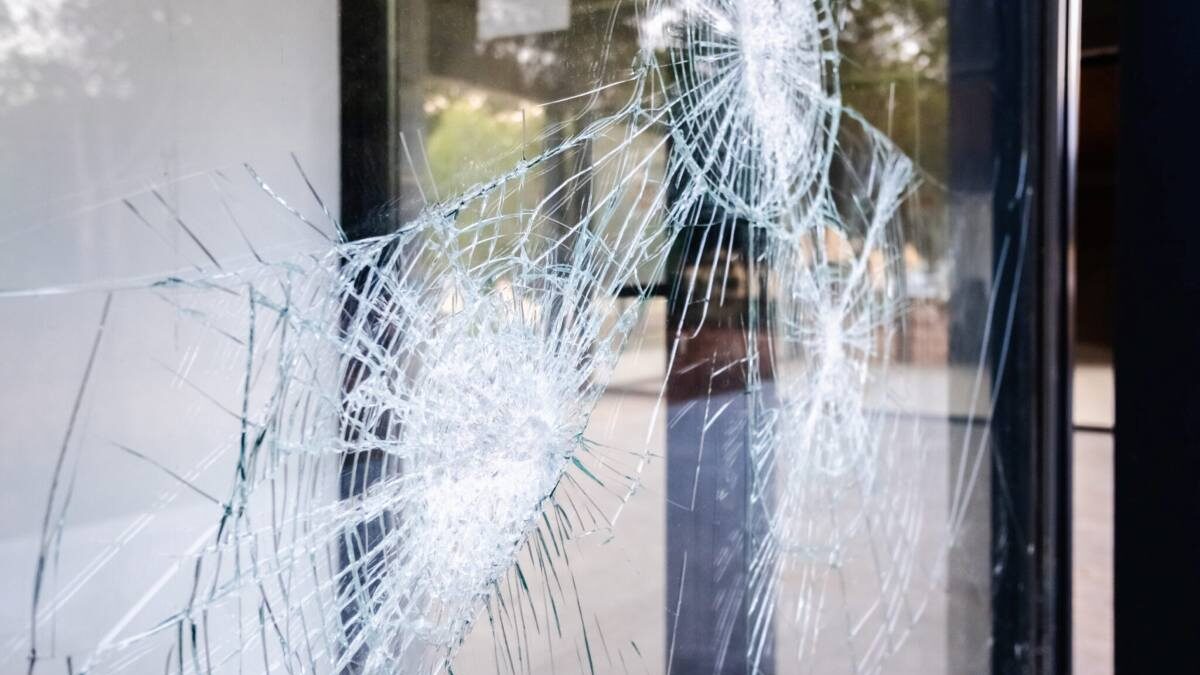
Without an attachment system, the glass-and-film assembly may stay intact but drop out of the frame as a unit. For forced-entry delay applications, the attachment system is not optional. It is the mechanism that keeps the opening closed.
Forced-Entry Delay: What the Performance Data Shows
ASTM F1233 test data for security film with attachment systems shows meaningful forced-entry delay at Class 2 and Class 3 performance levels. Class 2 testing involves attack with a pick-axe, sledgehammer, and fireman’s axe over a defined attack period. Class 3 adds a claw bar and demonstrates resistance to more sustained assault. Film assemblies that achieve these classifications are not preventing entry indefinitely — that is not the performance claim. They are buying time, typically 60 to 90 seconds of delay at Class 2 and longer at Class 3, which is the interval that determines whether a smash-and-grab succeeds or an active-threat response has time to activate.
Blast Pressure Mitigation and GSA-Tested Performance
In blast events, the primary casualty mechanism from glazing is not the glass breaking. It is the glass fragments accelerating into the occupied space at high velocity. Security film tested to GSA TS01-2003 keeps fragments bonded to the film substrate during the positive pressure phase of a blast, then holds the assembly in the frame through the negative pressure phase that follows. The GSA hazard rating system classifies performance from “minimal” through “none.” Film assemblies with engineered attachment systems achieve GSA “low” and “minimal” hazard ratings at standoff distances relevant to vehicle-borne and pedestrian-borne threat scenarios. This is the same performance requirement applied to federal building glazing upgrades under the ISC Security Design Criteria.
What Is the Difference Between Window Film and Replacement Glass for Security Upgrades?
The functional difference is where the performance mechanism lives. In laminated glass, the interlayer is bonded between glass lites during manufacturing — the assembly is a monolithic unit that ships pre-rated from the fabricator. In a film retrofit, the performance mechanism is applied to existing glass in the field. Both approaches achieve fragment retention and forced-entry delay. The laminated glass assembly arrives rated. The film assembly achieves its rating through the combination of film specification, adhesive system, and attachment method, all of which must be correctly executed at the installation level.
For a project manager, the practical implication is that film performance is installation-dependent in a way that pre-rated laminated glass is not. Correct film specification matters. Installer qualification matters. A film system that is correctly specified and professionally installed performs as rated.
Can Existing Windows Be Retrofitted with Security Film Instead of Replacement?
In the large majority of commercial retrofit scenarios, yes. Security film applies to the interior surface of existing single-pane, tempered, or standard laminated glazing. The existing glass must be structurally intact, with no edge chips, delamination, or thermal seal failures. Frame condition matters, particularly if an attachment system is required for the threat profile. A pre-installation glazing assessment confirms compatibility and identifies any glass that should be replaced before film is applied.
The retrofit approach eliminates the lead time, structural review, and operational disruption associated with full glass replacement. Buildings stay occupied. Windows stay in place. The performance upgrade happens from the interior surface outward.
Shatter-Resistant Window Film as a Code-Compliant Safety Glazing Upgrade
Film applied to existing glass and tested to ANSI Z97.1 or CPSC 16 CFR Part 1201 converts that glazing to a code-compliant safety glazing assembly. This matters for building owners managing facilities where the existing glazing predates current safety codes, or where a renovation trigger requires bringing glazing up to current IBC standards. The film upgrade path is less disruptive and less expensive than replacing the glass, and it produces a documented, tested safety glazing assembly with a certification trail the building owner can present to an authority having jurisdiction (AHJ) or an insurer.
Performance Metrics: What 3M Safety Film Can and Cannot Do
Understanding Film Thickness, Tensile Strength, and Tear Resistance
Film thickness is measured in mils (thousandths of an inch). Security films range from 4 mil at the entry level to 14 mil and above for high-security applications. Thickness correlates with tensile strength — the load the film can carry before it tears — and tear resistance, which governs how the film behaves once an impact initiates a failure point. A 4 mil film provides meaningful safety glazing performance. An 8 mil film offers substantially higher forced-entry resistance. A 14 mil film anchored to the frame is a fundamentally different assembly than either.
These ratings interact. A thick film with poor tear resistance propagates failure faster than a thinner film with high tear resistance. Specifying by mil thickness alone is insufficient. Tensile and tear specifications must accompany the thickness number.
What Is the Strongest Window Film Available?
3M Scotchshield Ultra series represents the upper tier of commercially available security film. The Scotchshield Ultra 14 is a 14 mil film engineered for high forced-entry resistance and blast mitigation. It achieves ASTM F1233 Class 3 performance when installed with an appropriate attachment system and has been tested under GSA TS01-2003 blast protocols. For most commercial retrofit applications, it is the specification-grade ceiling below which everything else is a trade-off against threat profile and budget.
3M Safety Series and Scotchshield Ultra: Tested Standards and Verified Performance
ASTM F1233 Forced-Entry Classifications
3M’s safety film product line covers the full ASTM F1233 classification range. The Safety Series films — S40, S70, S80 — address Class 1 and Class 2 forced-entry requirements suitable for smash-and-grab protection and basic fragment retention in schools and commercial buildings. Scotchshield Ultra products address Class 3 requirements where sustained attack resistance is the specification driver. Each product carries documented test data, not marketing claims. A project manager can reference the specific film product and its ASTM F1233 classification in a specification document with confidence that the performance claim is verifiable.
GSA TS01-2003 and Blast Mitigation Benchmarks
3M Scotchshield Ultra 14 has been tested under GSA TS01-2003 and achieves “low” hazard ratings at threat-relevant standoff distances when installed with an anchored attachment system. DoD facilities using UFC 4-010-01 (Unified Facilities Criteria for Minimum Antiterrorism Standards for Buildings) reference similar blast mitigation performance requirements. The film does not need to be rated for the full range of blast scenarios to provide meaningful protection. The specification should match the assessed threat, not the theoretical maximum.
What Safety Film Does Not Do: Setting Honest Client Expectations
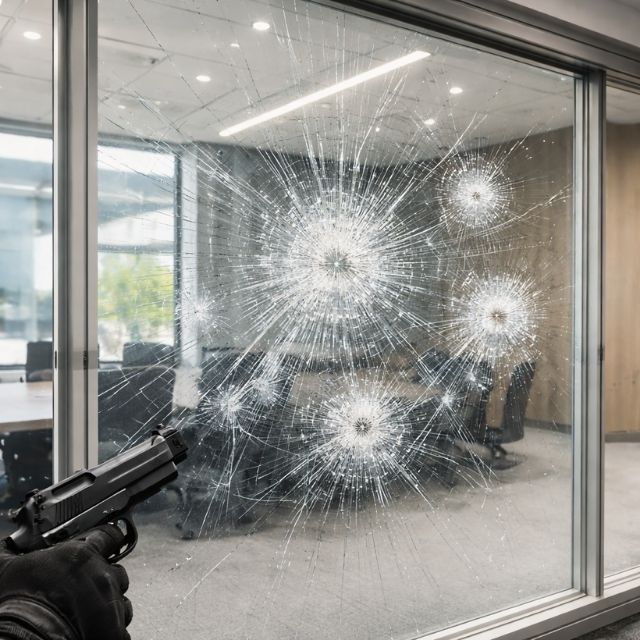
Security film does not stop a bullet. Security film also cannot match the sustained ballistic resistance of glass-clad polycarbonate or UL 752-rated glazing assemblies. Rather than stopping glass from breaking, it controls what happens after the glass fractures.
Existing frame failures, damaged edges, or compromised thermal seals will also undermine performance regardless of film specification. And it does not perform as rated if incorrectly installed, applied over incompatible surface coatings, or specified below the threshold required for the threat profile.
These are not product failures. They are the boundaries of the solution, and being clear about them with the building owner at the specification stage prevents a much harder conversation after installation.
Anti-Shatter Film vs. Ballistic-Resistant Glass: Where the Boundary Sits
The performance boundary between security film and ballistic-resistant glazing is defined by the threat, not by preference. Security film addresses fragment retention, forced-entry delay, and blast mitigation. Ballistic-resistant glazing — glass-clad polycarbonate assemblies rated to UL 752 Levels 1 through 8 — addresses projectile penetration. A building requiring UL 752 Level 3 performance needs ballistic glazing. A building requiring forced-entry delay and blast mitigation in a non-ballistic threat environment is a film application. These are different specifications addressing different threat profiles, and conflating them leads to either over-specification or under-specification, both of which create problems after the project closes.
Where High-Performance Window Film Outperforms Laminated or Tempered Glass Replacements
Speed of Deployment Across Multiple Building Locations
A trained installation crew applies security film to a standard commercial storefront or classroom window in 30 to 90 minutes per opening. A full floor of a commercial building is typically completed in one to three days. There is no fabrication lead time, no structural review requirement, and no period during which the opening is unprotected. The building operates normally during installation.
This matters most on multi-location projects, where replacement glazing’s eight-to-sixteen-week fabrication cycle multiplies across every site. A 40-school district retrofit with full glass replacement is a multi-year program. The same district with security film is a matter of weeks.
Putting the Multi-Site Scenario Into Perspective: A School District Retrofit
A school district with 35 buildings and an average of 80 windows per building is managing 2,800 individual glazing units. With film, that district can phase installation over one or two academic years, working through each building during low-occupancy periods such as weekends, breaks, and summer. Each building is complete in two to four days. Total program timeline: 12 to 18 months from contract to completion, with buildings remaining fully operational throughout.
The same district specifying laminated glass replacement must manage fabrication orders, sequenced installation windows, temporary boarding, disposal logistics, and structural confirmation at each site. The timeline extends significantly, and the budget exposure per opening is substantially higher.
Budget Preservation Without Compromising the Threat Profile
Security film costs a fraction of replacement laminated glass per square foot — roughly 10 to 20 percent of the installed cost of a performance-rated laminated glass assembly at equivalent dimensions. For a building owner allocating a fixed security budget, that cost differential translates directly into threat profile coverage. A budget that covers 30 windows with laminated glass replacement covers the full building envelope with security film and still leaves capital for complementary security measures such as access control, camera systems, or door hardware upgrades.
The threat profile does not change because the budget is constrained. The question is whether the specified solution addresses the actual threat within the available resources.
How Long Does It Take to Install Security Glazing Across Multiple Building Locations?
For film retrofit programs, typical timelines break down as follows:
- Single retail location or small commercial building: 1 to 3 days
- Mid-size school or institutional building: 3 to 7 days
- Large commercial or campus building: 1 to 2 weeks
- Multi-location portfolio rollout: scalable, typically 2 to 5 days per site with a mobilized installation team
Need More Info?
The Window Film Depot team is happy to help.
For comparison, a single building undergoing full laminated glass replacement typically requires 8 to 16 weeks from fabrication order to completed installation, plus additional structural review time if frame upgrades are needed.
Insurance, Liability, and the Documentation Advantage of Certified Film Specifications
A security film installation backed by ASTM F1233 test data, GSA performance documentation, and a manufacturer’s certification trail creates a documented record of due diligence. For building owners facing insurance requirements that mandate safety glazing upgrades, documented film specifications satisfy the same compliance threshold as glass replacement when the applicable standard is met.
The documentation value compounds over time. A building owner who has specified, installed, and documented a security film upgrade to ASTM F1233 Class 2 or Class 3 has a defensible position in a premises liability claim following a forced-entry event. That same documentation supports insurance premium conversations, because carriers underwriting commercial property increasingly recognize tested security glazing as a loss-control measure. The conversation with the carrier requires the test standard and classification, not the product brochure.
Selecting and Specifying the Right Film for Your Project’s Threat Profile
Threat profile is the specification input that determines everything else. The building type tells you the likely attack scenario. The attack scenario determines the performance class. The performance class maps to a specific film product and attachment system. Start there, and the rest of the specification follows logically.
Smash-and-Grab Protection for Retail Environments
Retail storefronts face a specific, well-documented threat: a vehicle or hand tool used to breach a glass entrance in under 60 seconds, followed by rapid grab-and-exit. The attacker is not trying to defeat a security system. They are exploiting the fact that standard tempered glass offers no resistance after the first strike.
The specification response is 3M Safety Series film — S70 or S80 — applied to the interior surface of existing storefront glass with a wet-seal attachment at the frame perimeter. This assembly achieves ASTM F1233 Class 1 to Class 2 performance. It does not prevent the glass from breaking on impact. It defeats the attack by holding the broken assembly in the frame long enough that the grab-and-exit scenario fails on time. Most smash-and-grab attempts abort when the opening does not clear quickly.
School Security Glazing: Forced-Entry Delay and Fragment Retention Requirements
School security specifications address two simultaneous requirements: keeping an active threat outside the building envelope while protecting occupants from fragment injury if glass in occupied spaces is breached. These requirements point to different film specifications depending on the glazing location.
Perimeter entry points — sidelights, lobby glass, vestibule panels — are the forced-entry delay priority. These openings require 3M Scotchshield Ultra series film with a mechanically anchored attachment system, targeting ASTM F1233 Class 2 or Class 3 performance. Classroom and corridor windows where fragment retention is the primary concern are appropriately addressed with S70 or S80 film, which achieves ANSI Z97.1 safety glazing classification. Specifying the same film across every opening in a school is rarely correct. The threat at each location is different, and the specification should reflect that.
Blast Mitigation for Government, Institutional, and High-Value Commercial Buildings
Blast mitigation specifications follow GSA TS01-2003 or UFC 4-010-01 requirements and demand the highest film specification tier. The governing product is 3M Scotchshield Ultra 14, installed with an anchored attachment system that connects the film-and-glass assembly to the structural frame. This connection is load-critical. Without it, a blast-rated film assembly can still drop out of the frame as a unit during the negative pressure phase, defeating the fragment retention objective.
The attachment system design — wet-seal, mechanical anchor, or structural silicone — must be specified to the glazing frame type and verified against the blast hazard level for the facility. This is not a field decision. It belongs in the specification document before the project goes to bid.
Matching Film Specification to Glazing Condition, Frame Type, and Existing Glass Composition
Film performance is only as reliable as the substrate it adheres to. Before specifying any film, assess the existing glazing for edge chips, delamination, thermal seal failures, and surface contamination. Film applied to compromised glass does not perform to specification.
Frame type governs attachment system options. Standard aluminum storefront frames accept wet-seal and mechanical attachment systems readily. Older wood or steel frames may require additional preparation. Tempered glass accepts film adhesion normally. Existing laminated glass can accept a film overlay, but the combined assembly behaves differently than film on tempered or annealed glass, and the installer must confirm compatibility. These are pre-installation assessments, not installation-day discoveries.
Addressing Common Objections From Skeptical Building Owners
Three objections appear consistently in commercial security glazing conversations.
First: “Film is not the same as real security glass.” The response is that ASTM F1233 Class 3 performance is ASTM F1233 Class 3 performance regardless of whether it is achieved by a laminated glass assembly or a film retrofit. The standard governs, not the product category.
Second: “What happens when the film needs to be replaced?” Security film carries a manufacturer warranty of 10 to 15 years depending on product and exposure. End-of-life replacement is a single-day operation per building and costs a fraction of glass replacement.
Third: “Will it affect the appearance of the building?” Modern security films are optically clear. A professionally installed film is not distinguishable from untreated glass at normal viewing distances. This is a legitimate question with a straightforward answer, and it should not reach the building owner as an unaddressed concern.
Threat-Profile Quick Selector
| Project Type | Recommended 3M Film | Governing Standard |
|---|---|---|
| Retail storefront, smash-and-grab protection | 3M Safety Series S70 / S80 with wet-seal attachment | ASTM F1233 Class 1-2 |
| School security, forced-entry delay | 3M Scotchshield Ultra series with anchored attachment | ASTM F1233 Class 2-3 |
| School / commercial, fragment retention only | 3M Safety Series S40 / S70 | ANSI Z97.1 |
| Government / institutional, blast mitigation | 3M Scotchshield Ultra 14 with anchored attachment | GSA TS01-2003 |
| Corporate campus, general security upgrade | 3M Scotchshield Ultra series, threat-matched specification | ASTM F1233 Class 2-3 |
Film tier and attachment method should be confirmed against a glazing assessment at each facility. This table is a starting-point reference, not a substitution for a project-specific specification review.
How to Scope, Specify, and Execute Safety Film Across a Large-Scale Commercial or Institutional Project
Building the Specification Document a Building Owner Can Approve
A specification document that a building owner can approve contains four things: the film product and thickness, the applicable test standard and performance classification, the attachment system type, and the installer qualification requirement. Everything else is supporting material. The specification should be written so that the performance requirement is verifiable — an inspector or an insurer can confirm that the installed system matches the documented specification.
Reference the film by manufacturer product name and ASTM or GSA classification. Specify the attachment system type explicitly. Do not leave attachment method as a field decision. Name the installer qualification requirement — 3M Authorized Dealer status — as a bid requirement, not a preference.
How Much Does It Cost to Install Security Window Film in a Commercial Building?
Installed cost for safety and security window film in a commercial building typically ranges from $8 to $20 per square foot depending on film specification, attachment system complexity, and project scale. A standard storefront retail application with S80 film and wet-seal attachment runs toward the lower end of that range. A government facility installation with Scotchshield Ultra 14 and a full mechanical anchor system runs toward the upper end.
For comparison, performance-rated laminated glass replacement with installation typically runs substantially higher on a per-square-foot basis depending on specification and structural requirements. On a per-opening basis, the cost differential between film retrofit and glass replacement is the reason most commercial retrofit budgets favor film — and why the two solutions serve different points on the threat and budget matrix.
Managing Multi-Location Rollouts: Consistency, Scheduling, and Quality Control
Multi-location projects require a standardized specification that travels across every site without variation. The risk in a portfolio rollout is specification drift — a site superintendent or a local subcontractor substituting a lower-tier film or omitting the attachment system because the right product is not on the truck. The solution is a single-source installation partner with a documented quality control process and the inventory depth to supply the correct product across every site.
Scheduling discipline matters as much as specification consistency. Each facility needs a pre-installation glazing assessment, a confirmed installation window, and a post-installation inspection tied to the specification document. Build these checkpoints into the project schedule at contract execution, not after mobilization starts.
Why Installer Credentials and 3M Authorization Matter at the Specification Stage
Film performance is installation-dependent, and installer qualification is the variable that determines whether a rated film assembly performs as specified. 3M Authorized Dealer status requires training in 3M installation methodology, surface preparation standards, and attachment system execution. It is not a marketing credential. It is a performance prerequisite.
Specifying 3M Authorization as a bid requirement also creates liability protection for the project manager. If an installed system underperforms, the question of whether it was correctly installed is answerable by reference to the installer’s authorization status and the installation documentation. That record matters in a claim scenario.
Window Film Depot’s Role as the #1 U.S. 3M Window Film Installer for Commercial Projects
Window Film Depot operates as the largest 3M Authorized commercial window film installer in the United States, with the national coverage, inventory infrastructure, and installation capacity to execute multi-location portfolio projects under a single contract. For a project manager handling a school district, a retail chain, or a municipal building portfolio, that means a single specification, a single point of accountability, and a consistent installation standard across every site.
Window Film Depot’s commercial team provides pre-installation glazing assessments, specification development support, and post-installation documentation packages — the full chain of custody from threat profile to certified installation record that building owners and insurers require.
Conclusion: Translating ‘Unbreakable Glass’ Into a Specification You Can Deliver with Confidence
Outcome Over Product
No commercially available glazing product is unbreakable. Tempered glass shatters under focused impact. Laminated glass fractures while retaining its fragments. Polycarbonate resists penetration but introduces structural, optical, and cost constraints that disqualify it as a general-purpose retrofit solution. The term “unbreakable glass” describes what a building owner wants to feel — secure — not a product they can point to in a catalog.
What delivers the outcome is a correctly specified and professionally installed security film assembly: fragment retention, forced-entry delay, and blast mitigation at verified performance levels, without the fabrication lead times, structural complications, or budget exposure of full glass replacement.
The performance standards exist. The test data is documented. The specification path is clear.
The Practical Takeaway for Construction and Renovation Managers
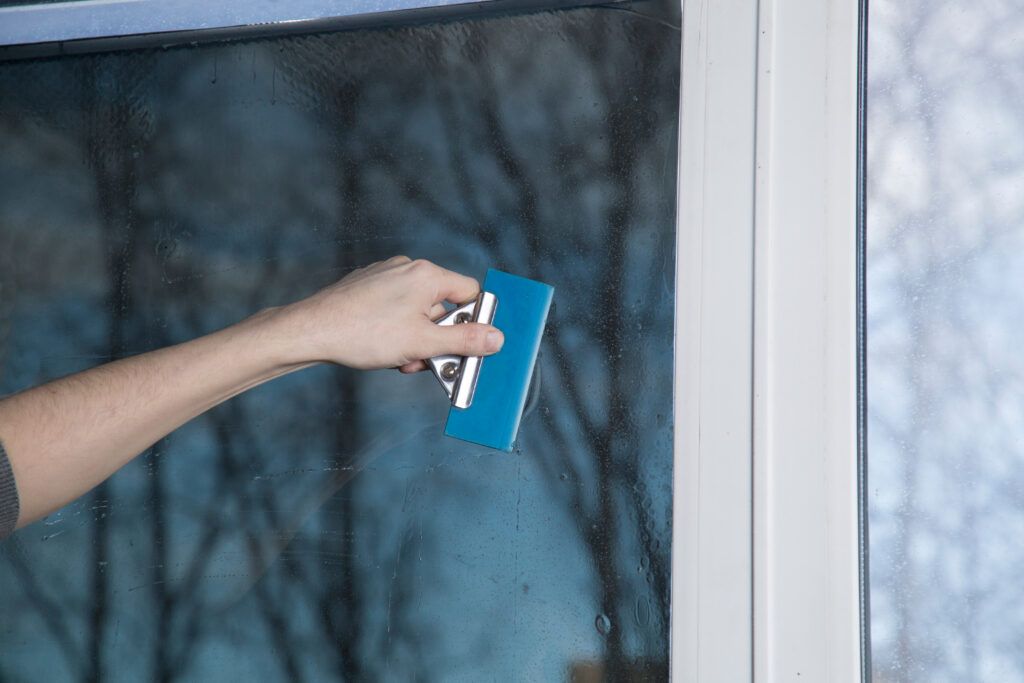
When a building owner asks for unbreakable glass, your job is to translate the request into a specification that addresses the actual threat. Identify the threat profile. Match it to the appropriate film tier and attachment system. Reference the governing standard. Confirm glazing and frame compatibility through a pre-installation assessment. Specify installer authorization as a bid requirement. Document everything.
That process produces a deliverable the building owner can approve, the insurer can verify, and the authority having jurisdiction can inspect. It also produces a result that protects occupants and meets the outcome the client was asking for, which is the only standard that matters once the project is complete.
Next Step: Request a Project-Specific Specification Assessment From Window Film Depot
If you are managing a security glazing upgrade and need to move from a building owner’s request to a defensible specification, the starting point is a project assessment tied to your specific facilities, threat profile, and glazing inventory. Window Film Depot’s commercial team works with construction managers and facility directors to develop site-specific specifications, estimate installed costs, and structure multi-location rollout programs that hold to schedule and budget.
Contact Window Film Depot to request a specification assessment for your project. Bring the building owner’s requirement. Leave with a specification you can deliver.
Frequently Asked Questions
What is the difference between tempered glass, laminated glass, and unbreakable glass?
Tempered glass is heat-treated to increase impact resistance, but it shatters completely when it fails. Laminated glass bonds glass lites around an interlayer that holds fragments in place after breakage, providing meaningful forced-entry delay. “Unbreakable glass” is not a recognized product category or a codified standard — it is a marketing term that loosely describes the performance characteristics of laminated or polycarbonate assemblies. For specification purposes, the relevant terms are fragment retention class, forced-entry resistance category, and blast mitigation rating.
Can unbreakable glass actually break, and under what conditions?
Yes. Every commercially available glazing product can be defeated given sufficient time, force, and the right tools. Laminated glass rated to ASTM F1233 Class 4 will eventually yield to sustained attack with a sledgehammer or pry bar. Polycarbonate composites can be cut through with the right equipment. The correct specification question is not whether the glazing can be broken, but how long it delays a determined attacker — because that delay is what determines whether an alarm response or evacuation succeeds.
What building codes and safety standards apply to security glass in schools and commercial buildings?
The baseline requirements for safety glazing in hazardous locations are set by ANSI Z97.1 and CPSC 16 CFR Part 1201, both adopted by reference in the International Building Code. Security performance above that baseline is governed by ASTM F1233 for forced-entry resistance, GSA TS01-2003 for blast mitigation in government and institutional buildings, and UL 752 for ballistic-resistant glazing. Each standard applies to the complete glazing assembly, not the glass or film product alone.
How much does it cost to install security glass or window film in a commercial building?
Installed cost for safety and security window film typically ranges from $8 to $20 per square foot depending on film specification, attachment system, and project scale. Performance-rated laminated glass replacement with installation runs considerably higher per square foot, with the gap widening further when structural frame review or modification is required. For most commercial retrofit budgets, the cost differential makes film the practical starting point for any project that does not involve a ballistic threat profile.
What insurance or liability benefits come with upgrading to security glass?
A documented security film upgrade to a tested standard such as ASTM F1233 Class 2 or Class 3 creates a verifiable record of due diligence that supports both premises liability defense and insurance conversations. Property insurers increasingly recognize tested security glazing as a loss-control measure, and the certification trail from a rated film installation — product specification, test standard, installer authorization — gives the building owner a defensible position that a non-documented upgrade cannot provide.
Can existing windows be retrofitted with security film instead of replacement?
In the large majority of commercial retrofit scenarios, yes. Impact-resistant window film applies to the interior surface of existing single-pane, tempered, or standard laminated glazing without requiring frame modification or structural review in most cases. The existing glass must be structurally sound, with no edge chips, delamination, or failed thermal seals. A pre-installation glazing assessment confirms compatibility at each facility and identifies any units that require replacement before film is applied.