Table of Contents:
- What the Marketing Gets Wrong and What Project Managers Actually Need
- How Break-Resistant Glass Actually Works: Material Science and Strengthening Methods
- Comparing Your Options: Tempered, Laminated, Polycarbonate, and Security Window Film
- Safety Certifications and Building Code Compliance for Security Glazing
- Retrofit vs. Replacement: When Security Window Film Outperforms a Full Glass Swap
- Total Cost of Ownership: A Decision Framework for Construction and Renovation Managers
- How to Specify and Source Break-Resistant Glazing Systems for Large-Scale Projects
- Conclusion: Matching the Right Glazing System to the Right Project
- Frequently Asked Questions
What the Marketing Gets Wrong and What Project Managers Actually Need
The Myth of Glass That Doesn’t Break—What Actually Works is the starting point for any serious glazing discussion. Project teams often chase the idea of “unbreakable” glass, but real-world performance depends on how a system behaves under impact. In commercial and institutional settings, the goal is not to prevent breakage entirely, but to control failure, contain hazards, and delay entry. This blog breaks down what actually works, from material science to specification strategy, so you can make decisions grounded in performance, not marketing claims.
Why No Glazing System Is Truly Unbreakable
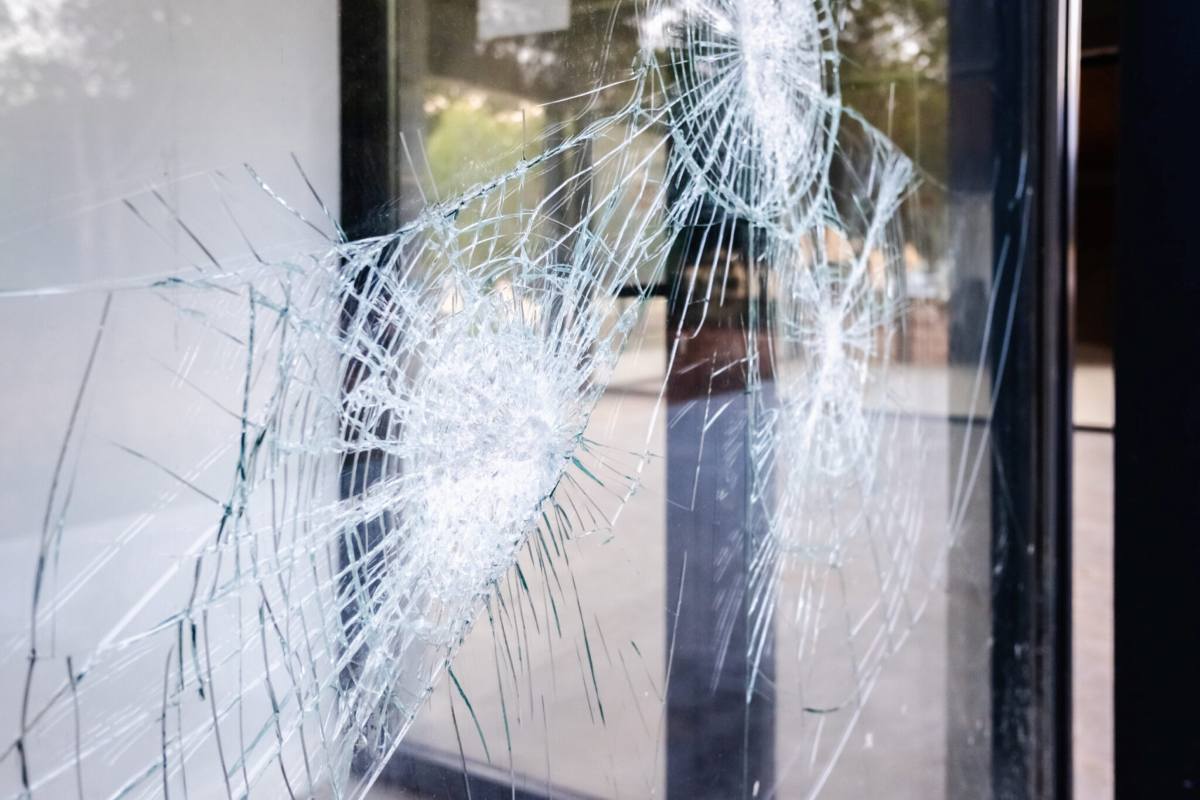
Every glazing material breaks under sufficient force. Tempered glass shatters into granular fragments. Laminated glass cracks but holds its shape. Polycarbonate scratches, crazes, and eventually fractures under repeated impact. The question is never whether a system will fail. It is how it fails, under what conditions, and what the consequences are for occupants and project liability when it does.
That distinction is not semantic. On a job site, specifying a material based on marketing language rather than tested failure behavior creates real exposure: failed inspections, rework costs, and in a worst-case scenario, a post-incident finding that the specified product did not meet the applicable safety standard. The phrase “glass that doesn’t break” is a consumer headline, not a performance specification. Project managers who treat it as one will eventually face a client conversation they would rather avoid.
The Gap Between Consumer Claims and Specification-Grade Requirements
Search for “unbreakable glass” and the results are dominated by drinkware, residential window products, and retail-grade polycarbonate panels. None of that content addresses what a construction manager actually needs: ASTM and ANSI certification requirements, forced-entry resistance classifications, blast mitigation standards, or the installation logistics of deploying a glazing system across a multi-building campus.
The consumer market optimizes for perceived toughness. The commercial and institutional market requires documented performance against defined threat conditions, whether that is a 400-foot-per-second windborne debris strike, a sustained forced-entry attempt measured in attack time, or a blast overpressure rating for a government facility. These are not the same requirements, and the products that satisfy one do not automatically satisfy the other. Specification-grade procurement starts by rejecting the consumer framing entirely.
Reframing the Decision: From ‘Will It Break?’ to ‘What Happens When Force Is Applied?’
The right question for any commercial glazing evaluation is behavioral. After force is applied, does the system contain the hazard, delay entry long enough to trigger a response, or prevent secondary injury from fragmentation? A material that fractures but remains in the frame can outperform a material that resists initial impact but then catastrophically fails on the second strike.
This reframe has direct implications for how you evaluate options. Tempered glass resists breakage better than standard annealed glass under most conditions, but when it fails, it fails completely and immediately. Laminated glass may crack on the first impact but remain an effective barrier for several additional minutes. Security window film applied to existing glazing can fundamentally change the post-breakage behavior of an otherwise standard window without replacing the glazing unit at all. Matching the right failure profile to the threat scenario is the core decision. Everything else follows from that.
Need More Info?
The Window Film Depot team is happy to help.
How Break-Resistant Glass Actually Works: Material Science and Strengthening Methods
Annealed Glass as the Baseline
Standard annealed glass is the default commercial glazing material and the baseline against which every strengthening method is measured. It is produced by allowing molten glass to cool slowly under controlled conditions, which relieves internal stress and produces a stable, optically clear product. That stability comes at a cost: annealed glass has no compressive stress layer to resist surface damage, and when it fractures, it produces large, sharp shards that represent a serious laceration hazard.
In commercial construction, annealed glass appears in interior partitions, low-risk storefront applications, and any location where the building code does not mandate safety glazing. Understanding its failure characteristics is the practical starting point for any upgrade conversation, because the strengthening methods below each address a specific weakness of the annealed baseline.
Heat Treatment and Compressive Stress: How Strengthening Changes Failure Behavior
Both thermal tempering and chemical strengthening work by the same fundamental mechanism: placing the glass surface under compressive stress. An applied force must first overcome that compression before it can propagate a crack through the material. The result is a glass that resists breakage more effectively than annealed glass, but the two methods achieve that compression differently, and the difference matters for application selection.
Thermally Tempered Glass: The Heat-and-Quench Method
Thermal tempering heats annealed glass to approximately 620°C and then rapidly quenches it with forced air. The surface cools and contracts faster than the interior, which remains hot and plastic. When the interior finally cools and contracts, it pulls against the already-rigid surface layer, placing the surface in compression and the interior in tension. The resulting product is typically four to five times stronger than annealed glass under uniform load.
The critical trade-off is that tempering is irreversible and must be completed before fabrication. A tempered lite cannot be cut, drilled, or edge-worked after the fact. Any attempt to do so releases the stored stress and shatters the panel. This has direct project implications: field modifications are not possible, and every piece must be ordered to final dimension. Errors discovered at installation become replacement orders, not field corrections.
Chemically Strengthened Glass: The Ion-Exchange Process
Chemical strengthening submerges glass in a molten potassium salt bath, typically at around 400°C. Sodium ions near the surface migrate out of the glass. Larger potassium ions replace them and create a compressive stress layer through mechanical crowding rather than thermal contraction.
This process produces a thinner, lighter compressive layer than tempered glass. It also allows fabricators to cut and shape the glass after treatment, which benefits retrofit and custom-dimension applications.
Designers commonly use chemically strengthened glass in institutional settings that require thin, lightweight glazing, including school security applications and electronic display cases. It resists scratching and minor impact better than annealed glass. Under severe impact, however, it produces larger fragments than tempered glass. For that reason, specifiers rarely use it alone in high-security applications without an interlayer.

The Role of Interlayers: How PVB and SGP Laminates Hold the System Together After Impact
A laminated glass unit bonds two or more glass lites together with an interlayer, most commonly polyvinyl butyral (PVB) or the stiffer, higher-performance SentryGlas Plus (SGP). The interlayer does not prevent the glass from breaking. It controls what happens after the glass breaks.
When a laminated unit fractures, the interlayer holds the broken fragments in place. The opening remains physically obstructed. An attacker must continue working against the collapsed but intact assembly rather than stepping through a cleared opening. For forced-entry applications, this dwell time is the performance metric that matters. PVB performs well in standard safety glazing applications. SGP is specified where higher blast resistance or structural post-breakage integrity is required, such as government buildings and high-value institutional facilities.
Why Strengthening Method Determines Post-Breakage Behavior
The practical takeaway from the material science above is that break threshold and post-breakage behavior are separate performance dimensions. A thermally tempered lite has a high break threshold but a complete and immediate failure mode. A laminated unit with a standard PVB interlayer may have a lower break threshold than tempered glass, but it maintains barrier function after fracture. A chemically strengthened glass with an SGP interlayer can combine manageable weight and custom fabrication flexibility with strong post-breakage performance.
Specifying for break threshold alone misses the half of the problem that determines occupant safety outcomes and compliance with forced-entry and blast standards. The sections that follow build on this framework to compare the full option set available to commercial and institutional project teams.
Break-Resistant Glazing System Selection Framework
A Step-by-Step Decision Checklist for Commercial and Institutional Projects
Use this checklist before writing a glazing specification or evaluating vendor proposals.
Step 1: Define the Threat Profile
- Step 1: Define the Threat Profile
- Identify the primary threat: opportunistic forced entry, sustained attack, blast overpressure, windborne debris, or a combination.
- Confirm whether the threat profile is driven by building code, client security policy, or insurance requirements.
- Step 2: Establish the Applicable Standards
- Confirm which safety glazing standards apply: ANSI Z97.1, CPSC 16 CFR 1201, ASTM F1233, or GSA/DoD blast standards.
- Identify occupancy-specific requirements for educational facilities, government buildings, and retail.
- Step 3: Evaluate Post-Breakage Behavior Requirements
- Confirm which safety glazing standards apply: ANSI Z97.1, CPSC 16 CFR 1201, ASTM F1233, or GSA/DoD blast standards.
- Identify occupancy-specific requirements for educational facilities, government buildings, and retail.
- Step 4: Assess the Existing Glazing Condition
- Inspect frame integrity, glass age, and current performance rating of existing units.
- Identify any lites that require full replacement regardless of retrofit options.
- Step 5: Compare Retrofit vs. Replacement Economics
- Obtain cost-per-square-foot estimates for security film retrofit and full glass replacement.
- Factor in labor, disposal, downtime, and inspection costs, not material cost alone.
- Step 6: Confirm Installer Qualifications
- Verify that the installer holds relevant certifications for the specified product.
- Confirm project references at comparable scale and occupancy type.
- Step 7: Document the Specification
- Write the glazing specification to reference the applicable standard and certification, not the product name.
- Confirm that the specification survives substitution requests during bidding
Comparing Your Options: Tempered, Laminated, Polycarbonate, and Security Window Film
Tempered Glass: Where It Excels and Where Its Failure Mode Creates Risk
Tempered glass is the right answer for a specific set of problems and the wrong answer for security applications where post-breakage barrier function matters. Its strength profile, four to five times the resistance of annealed glass under uniform load, makes it the standard choice for doors, sidelites, and locations where thermal stress and human impact are the primary concerns. Building codes mandate it in those locations for good reason.
The risk emerges from how tempered glass fails. When an impact breaches the compressive stress layer, the entire lite shatters into small granular fragments. The breakage occurs instantly and completely. The opening clears immediately.
In a forced-entry scenario, a single strike that defeats the glass defeats the system. The system provides no dwell time, no residual barrier, and no second line of resistance.
Project teams often make a costly category error when they specify tempered glass for code-required safety glazing in applications that require access delay.

Laminated Glass: The Forced-Entry and Blast-Mitigation Workhorse
Laminated glass is the workhorse of commercial security glazing because it separates break threshold from barrier function. The glass lites fracture under impact, which is expected and acceptable, but the interlayer holds the assembly in place. The opening remains obstructed. An attacker must continue working against a sagging but physically present barrier rather than a cleared frame.
For blast applications, the interlayer performs a second function: it absorbs and distributes the energy of an overpressure wave, reducing the velocity of glass fragments that would otherwise become projectiles. This fragment retention is the mechanism behind the GSA and DoD blast mitigation standards covered in the next section, and it is why laminated glass, not tempered, is the default specification for government and high-security institutional facilities.
Laminated vs. Tempered for Security Applications: A Direct Performance Comparison
The performance gap between laminated and tempered glass in security applications comes down to one variable: what happens after the first impact.
- Tempered glass under a sustained forced-entry attempt: one successful strike clears the opening.
- Laminated glass with a PVB interlayer: the glass fractures but the assembly holds. An attacker using a standard tool must work for additional minutes to defeat the system, enough time for an alarm response in most commercial security protocols.
- Laminated glass with an SGP interlayer: higher stiffness and tensile strength provide meaningfully greater blast resistance and post-breakage structural integrity, at a cost premium over PVB.
For most educational and commercial security applications, PVB laminated glass satisfies ASTM F1233 forced-entry requirements. SGP is typically reserved for facilities with blast mitigation requirements under GSA or DoD standards.
Polycarbonate Panels: Impact Resistance Metrics vs. Practical Trade-Offs at Commercial Scale
Polycarbonate is genuinely difficult to break through with hand tools. Its impact resistance exceeds glass by a significant margin; it is the material used in riot shields and certain ballistic applications. In a pure break-resistance test, it outperforms every glass product in this comparison. That performance comes with trade-offs that make it a poor general-purpose choice for large commercial or institutional projects.
Polycarbonate scratches easily and is susceptible to UV-induced hazing over time. In high-traffic institutional environments such as schools, transit facilities, and retail locations, surface degradation typically becomes visible within three to five years, requiring costly panel replacement. It also has a thermal expansion coefficient significantly higher than aluminum framing systems, which creates frame stress and seal failure issues in temperature-variable climates if not properly specified.
What the Impact Resistance Ratings for Polycarbonate Actually Measure
Impact resistance ratings for polycarbonate are typically derived from ASTM D256 (Izod impact) and ASTM D6110 (Charpy impact) tests, which measure resistance to a controlled pendulum strike under laboratory conditions. Those tests establish the material’s intrinsic toughness but do not replicate a sustained forced-entry attack, a blast overpressure event, or the multi-strike scenario that real-world security threats present.
A polycarbonate panel that defeats a single-strike test may still fail under repeated blows because the material fatigues and crazes. For specification purposes, require testing under ASTM F1233 or an equivalent forced-entry protocol rather than single-strike impact ratings before accepting polycarbonate as a security glazing solution for any occupied commercial facility.
Security Window Film: Performance Against Forced Entry, Blast Pressure, and Projectile Impact
Security window film changes the failure behavior of existing glass without replacing the glazing unit, transforming it into a “bulletproof shield“. Applied to the interior surface of an existing window, a high-performance security film holds fractured glass fragments in place after impact, converting an otherwise standard annealed or tempered unit into a system that retains its barrier function post-breakage. The mechanism is the same as a laminated glass interlayer, applied as a retrofit rather than a manufacturing process.
Performance-grade security films, including 3M Scotchshield, are tested under GSA TS01-2003 for blast fragment retention and under ASTM F1233 for forced-entry resistance. Films that carry those certifications are not consumer window tinting products. They are specification-grade materials with documented performance profiles applicable to the same threat scenarios that drive laminated glass specifications. The critical distinction for procurement purposes: film certification is product-specific and installation-method-specific. A certified applicator must install the film using the manufacturer’s approved process. This ensures the installed system delivers the tested performance.
Side-by-Side Comparison: Glazing Performance, Lifespan, and Installation Complexity
| Factor | Tempered Glass | Laminated Glass | Polycarbonate | Security Window Film |
|---|---|---|---|---|
| Post-breakage barrier | None | Yes (interlayer holds) | Partial (crazes, deforms) | Yes (film holds fragments) |
| Forced-entry dwell time | Minimal | Moderate to high | Moderate | Moderate to high |
| Blast fragment retention | No | Yes (PVB/SGP) | No | Yes (certified films) |
| Lifespan | 20+ years | 20+ years | 7-12 years (surface degradation) | 10-15 years |
| Field modification | Not possible | Limited | Cuttable | Cuttable |
| Installation complexity | High (full replacement) | High (full replacement) | Moderate | Low (retrofit) |
| Relative material cost | Moderate | High | Moderate | Low |
This table is a simplified framework. Real project selection depends on the applicable standard, occupancy type, and existing glazing condition, all of which are addressed in the specification process covered below.
Safety Certifications and Building Code Compliance for Security Glazing
The Standards That Govern Commercial and Institutional Glazing Decisions
Glazing specifications for commercial and institutional projects operate within a layered standards framework. No single standard covers every application. Understanding which standards apply to a specific project and how they interact with local building code requirements is a prerequisite for writing a specification that holds up through bidding and inspection.
ANSI Z97.1 and CPSC 16 CFR 1201: Safety Glazing Certification Basics
ANSI Z97.1 and CPSC 16 CFR 1201 are the foundational safety glazing standards in the United States. Both govern the same basic requirement: glazing in hazardous locations must not produce injurious laceration hazards when it breaks. Products certified to these standards are tested with a 100-pound bag dropped from specified heights and must either not break or break in a manner that does not cause injury.
These standards establish minimum safety requirements for doors, sidelites, shower enclosures, and other high-human-impact locations. They are necessary baseline certifications but do not address forced-entry resistance, blast mitigation, or any security threat scenario. A glazing product can carry ANSI Z97.1 certification and fail completely under a security threat evaluation.
ASTM F1233: The Forced-Entry Resistance Standard
ASTM F1233 is the standard that matters for security glazing specifications. It tests glazing assemblies, not just the glass material, against a range of attack tools and methods including hammers, pry bars, and saws, applied for defined time intervals. Products are classified by class (type of opening attempted) and level (attack duration survived).
The assembly-level nature of F1233 testing has a direct project implication: the glass or film tested with one frame system does not automatically carry that rating when installed with a different frame. A specification written to reference F1233 compliance must confirm that the tested assembly, glazing material plus frame, matches the installation condition. Substitutions that change the frame but retain the glass can void the certification.
GSA and DoD Blast Mitigation Standards for High-Risk Facilities
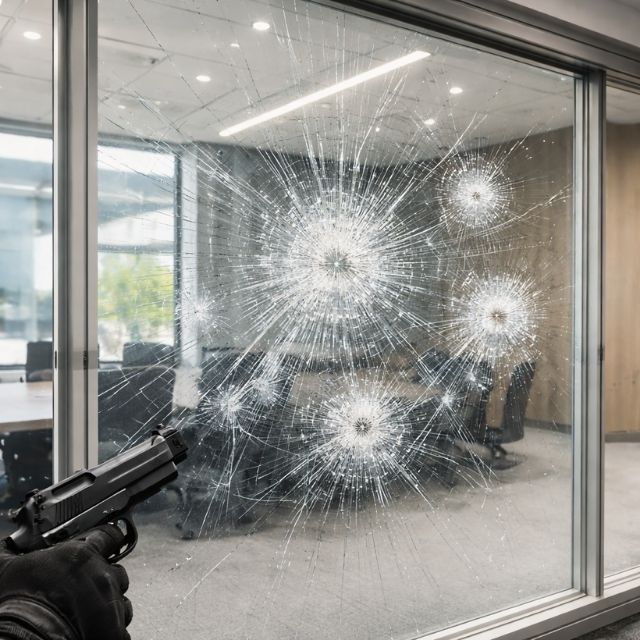
The GSA TS01-2003 and the DoD Unified Facilities Criteria (UFC 4-010-01) establish blast mitigation requirements for federal and defense facilities. GSA TS01 tests fragment retention under blast overpressure events using arena testing. UFC provides prescriptive standoff distance and glazing specifications.
Both standards require blast hazard ratings, typically expressed as the ASTM F1642 “safe” or “very safe” fragment hazard levels, to be met by the complete glazing assembly.
These standards apply directly to federal buildings and DoD installations, but they also function as de facto reference standards for high-security private facilities, including financial institutions and certain critical infrastructure sites where blast threat is relevant.
How Building Codes Translate These Standards into Project Requirements
The International Building Code (IBC) references ANSI Z97.1 and CPSC 16 CFR 1201 for mandatory safety glazing locations. Facility-specific security design criteria typically drive security glazing specifications beyond baseline requirements. These criteria reference ASTM F1233 classification levels based on occupancy and threat assessment. Educational facilities in most jurisdictions now operate under additional state-level requirements for school security glazing that impose specific F1233 class and level minimums for exterior doors and entry vestibules.
Local amendments matter. Several states and municipalities have adopted security glazing requirements for schools and government facilities that exceed the IBC baseline. Confirming the local amendment status before writing a specification avoids the scenario of specifying to the national code only to discover a more stringent local requirement during permit review.
Compliance Requirements for Educational Facilities
School security glazing requirements represent the most active area of regulatory change in commercial glazing compliance. Following a series of high-profile incidents, state legislatures in multiple jurisdictions have enacted school safety laws that impose specific glazing requirements for entry points, classroom doors, and sidelites. These requirements typically mandate either ASTM F1233-rated glazing or an equivalent standard verified by third-party testing.
The practical difference from a standard commercial project: the authority having jurisdiction (AHJ) for a school project often includes a state education department or school safety board in addition to the local building official. Both may have review authority over the glazing specification. Projects that discover this late in the design process face specification rewrites and potential delays to the permit timeline.
What Happens When Glazing Fails Inspection
A failed glazing inspection on a commercial project creates a specific and painful sequence. The installation must be corrected before the certificate of occupancy issues, which means the building cannot be occupied, and the general contractor’s schedule collapses toward the glazing contractor’s correction timeline. If the failed product has been installed across multiple lites or buildings, the correction scope multiplies accordingly.
The most common failure scenarios are product substitution (a bidder installs a product not specified), installation method deviation (a certified product installed without following the tested assembly protocol), and missing documentation (a product that meets the standard but arrives on site without certification paperwork). Each of these is avoidable with specification language that requires certifications to be submitted and verified before installation begins, not after.
How to Verify That a Glazing Product Carries the Right Certifications
Certification verification requires more than reviewing the product data sheet. The steps that protect the project are:
- Confirm the certification body. Products claiming ANSI Z97.1 or F1233 compliance should be certified by a recognized third-party laboratory. Safety Glazing Certification Council certifications are publicly searchable.
- Confirm the tested assembly. Request the test report, not just the certificate, and verify that the frame and installation method in the report match the project conditions.
- Confirm the film certification for retrofit applications. For security window film, the manufacturer must provide documentation. It must confirm that the specific film product, applied to the project’s substrate, meets the claimed rating. The installation protocol used must match the tested standard.
- Confirm installer qualification. For film applications, the installer should hold manufacturer certification, and the project documentation should name the certified installer, not just the product.
A glazing contractor who cannot produce test reports on request is a procurement risk, regardless of what the product data sheet claims.
Retrofit vs. Replacement: When Security Window Film Outperforms a Full Glass Swap
The Procurement Case for Retrofit
Full glass replacement carries a risk profile that project managers often underestimate. It requires removing functional existing glazing, procuring and delivering custom-dimensioned replacement units, coordinating a glazing crew across all affected openings, and managing building envelope exposure during the replacement window. On a multi-building campus with hundreds of openings, that sequence compounds into a substantial schedule risk and a real weather and security exposure period during installation.
A security film retrofit eliminates most of that complexity. The existing glazing stays in place. The building envelope remains intact. The installation is additive rather than disruptive.
For projects where the existing glass is structurally sound and the frames are in good condition, the retrofit path can achieve equivalent or superior certified performance at a fraction of the installation complexity and a significant reduction in cost. The procurement case for retrofit starts with one question. Does the existing glazing condition require replacement, or did the team fail to challenge that assumption?
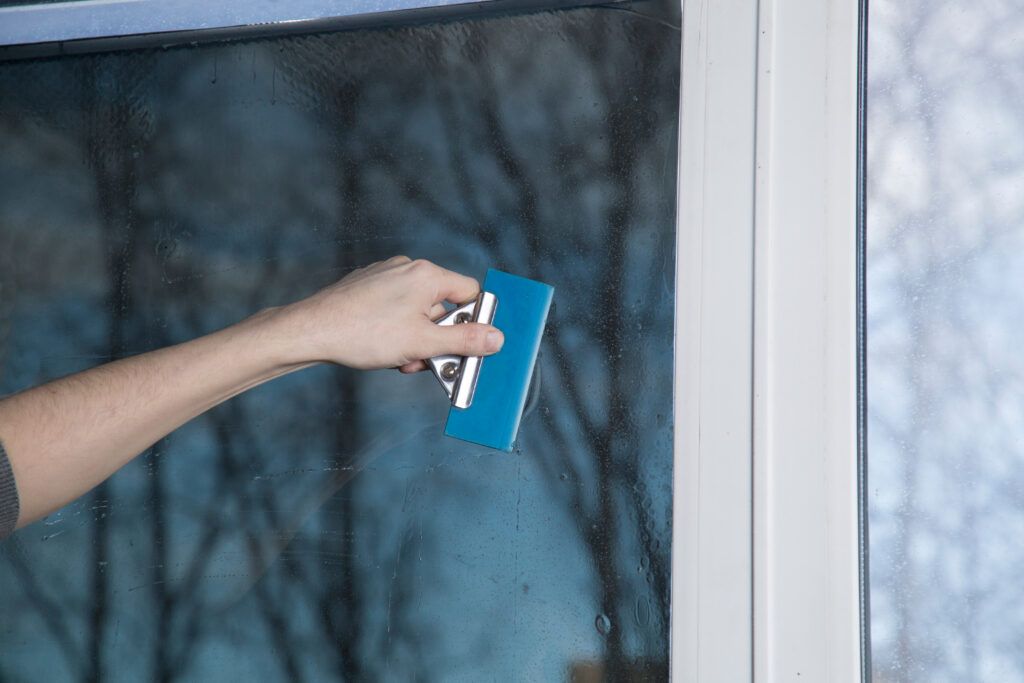
How 3M Security Window Film Performs Against Forced Entry and Blast Standards
3M Scotchshield safety and security films are available in multiple grades, with the higher-specification products tested and rated under GSA TS01-2003 for blast fragment retention and applicable ASTM F1233 class and level designations for forced-entry resistance. The system holds fractured glass fragments in the frame after impact. This performance mechanism mirrors the laminated glass interlayer approach described earlier. The key difference is that installers apply the film to existing glass instead of manufacturing it into a laminated unit.
Scotchshield Ultra series films are the specification-grade products for security applications. They are distinct from solar control or decorative films in both material thickness and interlayer construction. When paired with an attachment system that anchors the film to the frame rather than relying on glass-to-film adhesion alone, the assembly can meet fragment retention requirements that bring existing windows into compliance with blast hazard standards. The attachment system is a meaningful specification detail: film applied without frame attachment performs differently than film with it, and the certification reflects the tested assembly.
Assessing Which Existing Windows Can Be Retrofitted
Security film is not a universal retrofit solution. Before specifying a film retrofit, a field assessment of the existing glazing condition is required.
Windows suitable for security film retrofit must meet several conditions. The glass must be intact and free of existing cracks or significant edge damage. The frame must remain structurally sound and support the film attachment system if the project requires blast performance. Double-pane insulated glass units (IGUs) can accept interior-surface film. You must check the thermal performance implications against the IGU manufacturer’s guidelines. This ensures the film specification does not void the insulated unit warranty.
Windows that typically require replacement rather than retrofit include those with frame deterioration that would prevent secure film attachment, lites with existing impact damage, and original single-pane installations in locations where current code requires a minimum glazing thickness that the existing glass does not meet. In practice, a thorough field assessment of a multi-building campus will typically identify a mix: the majority of openings suitable for film retrofit and a smaller subset requiring full replacement. Accurate field assessment is what prevents budget surprises mid-project.
Installation Timeline Differential: Film Retrofit vs. Full Glazing Replacement at Commercial Scale
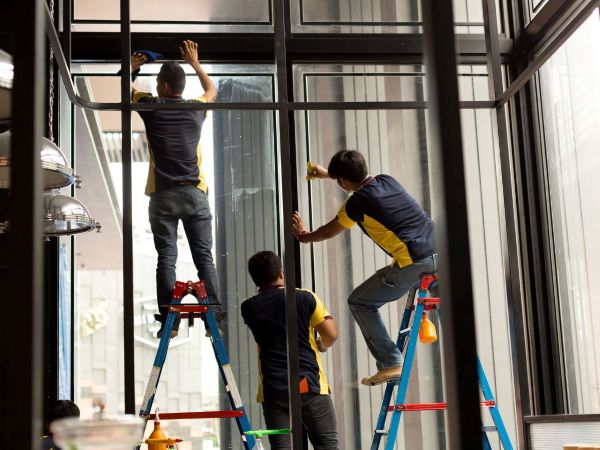
At commercial scale, the timeline differential between film retrofit and full glass replacement is significant. A trained two-person film installation crew can apply security film to approximately 20 to 30 standard window openings per day, depending on access conditions and window configuration. The installation requires no building envelope breach, no structural work, and no lead time for custom-fabricated glass units.
Full glazing replacement involves factory order lead times, typically four to eight weeks for custom-tempered or laminated units, plus staging and delivery logistics, frame preparation, glazing installation, and cure time for setting compound. On a 200-window school security project, a film retrofit can realistically complete in one to two weeks of installation time. An equivalent full replacement project, accounting for procurement lead time and installation, typically runs three to five months from specification to punch list. For projects on academic calendars or occupancy deadlines, that difference is often the deciding factor.
Lifespan Considerations for Film vs. Replacement Glass
Laminated replacement glass has a functional lifespan of 20 years or more under normal commercial conditions, with the primary degradation risk being edge delamination of the interlayer over time in high-humidity environments. Security window film has a shorter service life, typically 10 to 15 years for interior applications under manufacturer warranties, after which re-application is required to maintain certified performance.
The lifespan difference is real and belongs in any honest total cost of ownership comparison. The practical counterpoint is that re-application of security film is a low-disruption, relatively low-cost maintenance event compared to a second cycle of full glass replacement. For a facility manager planning a 20-year maintenance schedule, two cycles of film application over that period typically remain cost-competitive with a single full glass replacement, even before factoring in the lower initial installation cost of the first film application.
Illustrative Scenario: Applying the Retrofit vs. Replacement Decision on a Multi-Building Educational Campus
Consider a school district with six buildings, each containing approximately 150 window openings, 900 total lites, that need to meet state-mandated security glazing requirements for exterior access points and classroom sidelites. The existing windows use aluminum frames and are 10 to 15 years old. They remain structurally sound. Older buildings use mostly single-pane glass, while newer construction uses IGUs.
A field assessment identifies 820 of the 900 openings as suitable for security film retrofit. The remaining 80 require full replacement due to frame deterioration or existing glass damage. The hybrid specification, film retrofit on the 820 suitable openings and targeted replacement on the 80 deteriorated openings, produces a system where the entire campus meets the applicable F1233 forced-entry standard and the GSA blast fragment retention requirement for the critical entry points.
The retrofit-first approach reduces the glazing replacement scope by roughly 90 percent. It compresses the installation timeline from a multi-semester project to a summer-break schedule that keeps schools operational. And it produces a documented, certified security glazing system across the full campus rather than a phased replacement project that leaves the majority of openings unaddressed while budget is consumed by the first building. That is the procurement argument for retrofit: not that film is always the right answer, but that it is the right starting assumption before full replacement is specified by default.
Total Cost of Ownership: A Decision Framework for Construction and Renovation Managers
Why Material Cost Alone Misleads the Budget Conversation
Material cost is the number that appears on the bid tab. It is rarely the number that determines what a glazing project actually costs. For any security glazing decision, whether you are evaluating break-resistant glass options, laminated replacement units, or a film retrofit, the gap between material cost and total installed cost is large enough to reverse the apparent ranking of your options.
The project manager who selects a glazing system based on cost-per-lite is optimizing for the wrong variable. The variables that actually drive project cost are labor intensity, procurement lead time, building exposure duration, disposal requirements, and rework probability. Each of these correlates with the installation method, not the material price.
Cost-Per-Square-Foot Benchmarks Across Glazing Options
The following ranges are illustrative benchmarks, not binding estimates. Actual costs vary by region, project scale, and site conditions. Use these figures to understand the relative order of magnitude across options, not as a substitute for vendor quotes.
- Annealed glass (baseline, no security value): $8 to $15 per square foot installed
- Thermally tempered glass: $15 to $25 per square foot installed
- Laminated glass with PVB interlayer: $25 to $45 per square foot installed
- Laminated glass with SGP interlayer: $40 to $70 per square foot installed
- Security window film retrofit (interior application, certified product): $8 to $20 per square foot installed
The film retrofit range is the figure that typically surprises project teams. A certified security film applied to existing glass delivers post-breakage barrier performance comparable to PVB laminated glass at a fraction of the installed cost, before accounting for the disposal, labor, and downtime costs that full replacement adds on top of the material price.
Hidden Variables That Inflate Full Replacement Costs
Four cost categories consistently inflate full replacement budgets beyond the line items on the initial estimate.
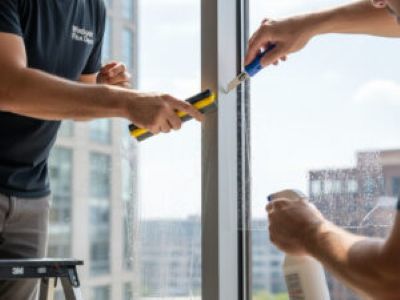
Labor accounts for the largest gap. A full glazing replacement requires a skilled glazing crew to remove existing units, prepare frames, handle and set custom-fabricated lites, and install setting blocks and sealant. Film installation requires surface preparation and application, a meaningfully less labor-intensive process that does not require a union glazing crew in most jurisdictions.
Downtime costs accumulate on projects where the building must remain operational during installation. A school that cannot vacate classrooms, a retail facility that cannot close, or an office building where tenants expect continuous occupancy will absorb indirect costs from glazing replacement that never appear on the contractor’s invoice: lost productivity, temporary weather barriers, and security exposure while openings are unglazed.
Disposal adds a line item that most initial estimates omit. Existing glass removed during replacement must be handled as a construction waste stream, often requiring special handling depending on whether it is laminated or contains compounds in older coatings. Film retrofit generates no glass disposal requirement.
Rework risk is a probabilistic cost, but it is real. Custom-fabricated glass ordered to the wrong dimension, damaged in delivery, or installed with a frame mismatch becomes a replacement order with a four-to-eight-week lead time. Film cut on-site from roll stock does not carry the same fabrication error exposure.
What Is the Cost Difference Between Replacing Windows and Retrofitting With Security Film?
On a representative 500-window commercial project using the benchmark ranges above, a full laminated replacement at $35 per square foot average (assuming a 24-by-36-inch average window) produces a material-and-labor estimate in the range of $1.5 to $2 million. An equivalent film retrofit at $14 per square foot average produces an estimate in the range of $600,000 to $800,000, before the disposal, downtime, and rework variables are added to the replacement side of the ledger.
The cost differential typically ranges from 40 to 60 percent in favor of the film retrofit for projects where the existing glazing condition supports it. On a school or municipal facility project with a fixed budget and multi-building scope, that differential determines the outcome. It allows teams to complete the full project in one phase. It also prevents deferring half the buildings to a second budget cycle.
Building a TCO Model Your Client Can Review
A total cost of ownership model for a glazing decision should contain four components: initial installed cost, maintenance cost over the analysis period, end-of-life replacement cost, and any quantifiable downtime or operational impact cost. Running the model over a 20-year horizon reflects a typical facility planning cycle.
For laminated glass replacement, the 20-year model shows a single high initial cost, minimal maintenance, and no end-of-life replacement within the period. For security film, the model shows a lower initial cost, a re-application event at year 10 to 15, and a total lifecycle cost that, in most scenarios, remains below the single laminated replacement cost even after accounting for the second film application.
Present this model as a range, not a point estimate. Clients who see a single number will negotiate it. Clients who see a range with labeled assumptions will engage with the assumptions, which is where the conversation needs to be. The goal is a shared understanding of the cost structure, not a commitment to a specific figure before field conditions are assessed.
How to Specify and Source Break-Resistant Glazing Systems for Large-Scale Projects
Writing a Glazing Specification That Holds Up Through Bidding and Inspection
A glazing specification that survives competitive bidding is written to reference tested assemblies and certification standards, not product names. Specify the required ASTM F1233 class and level, the applicable safety glazing certification, and the installation protocol the certification requires. Then add a substitution clause that requires any proposed alternate to demonstrate equivalent performance under the same test standard using documentation from a recognized third-party laboratory.
This approach closes the substitution loophole that most failed inspection scenarios exploit. A contractor who wants to substitute a lower-cost product must produce test documentation that meets the specification standard rather than simply assert equivalency. The specification language does the screening work before installation begins.
What to Look for When Selecting a Glazing Installer for a Multi-Building Project
Installer qualification is a procurement decision, not an administrative step. For security film applications, the installer must hold current manufacturer certification for the specific product specified. Manufacturer certification confirms that the installer has been trained on the application protocol that the test performance reflects. An uncertified installer applying a certified product does not transfer the certification to the installed system.
Beyond certification, evaluate the installer’s reference projects by occupancy type and scale. A firm with strong residential film volume but limited commercial project delivery experience will struggle with the access coordination, phasing requirements, and documentation demands of a multi-building institutional project. Ask for references on projects of comparable window count and occupancy, and contact those references before finalizing the selection.
Setting Realistic Schedule Expectations for Commercial-Scale Security Glazing
Film retrofit installation at commercial scale runs at approximately 20 to 30 standard openings per day per two-person crew, with no lead time for material procurement beyond the film roll stock order. A 300-window project can realistically complete installation in two to three weeks of field time, with material on hand from the start of mobilization.
Full glass replacement requires factoring in fabrication lead time of four to eight weeks for tempered or laminated custom units, plus delivery coordination and the installation rate of a glazing crew, typically eight to fifteen lites per day for laminated units depending on size and access. A 300-window replacement project from specification approval to punch list is realistically a four-to-six-month timeline. Both timelines assume no rework. The replacement timeline is more sensitive to rework events.
Vendor Evaluation Criteria Beyond Price
Price is the last evaluation criterion, not the first. The criteria that determine whether a glazing vendor can execute a large-scale project without creating schedule or compliance risk are:
- Manufacturer authorization for the specified product, current and verifiable
- Documented project history at comparable scale, with contactable references
- Ability to provide test reports, not just product data sheets, for the specified assembly
- Capacity to staff the project timeline without subcontracting to uncertified crews
- Familiarity with the documentation requirements for the applicable building department and AHJ
A vendor who meets these criteria and quotes a higher price than an unqualified competitor represents lower total project risk and lower expected total project cost once rework, schedule delay, and failed inspection scenarios are priced into the comparison.
How Window Film Depot Supports Specification-Grade Procurement at Scale
Window Film Depot operates as a specification-grade distributor and project partner for commercial and institutional glazing projects, with direct access to the 3M Scotchshield product line and a network of manufacturer-certified installation contractors. For project managers running multi-building deployments, that combination addresses the two procurement risks that most commonly derail security glazing projects: product authenticity and installer qualification.
Window Film Depot can support the specification process by providing product-specific test documentation, confirming the applicable assembly certifications for a given project condition, and coordinating certified installers with demonstrated institutional project experience. For construction managers who need to move from evaluation to specification without building that vendor network from scratch, that support structure shortens the procurement timeline and reduces the documentation risk at inspection.
Key Decision Criteria Summary: Break-Resistant Glazing Selection for Commercial and Institutional Projects
Use this summary as a specification readiness checklist before issuing glazing documents for bid.
Performance criteria confirmed:
- Threat profile defined (forced entry, blast, windborne debris, or combination)
- Post-breakage barrier requirement established (yes or no)
- Applicable standard identified (ANSI Z97.1, ASTM F1233 class and level, GSA TS01, or other)
Existing condition assessment complete:
- Frame condition evaluated for retrofit suitability
- IGU warranty implications reviewed for film specifications
- Lites requiring full replacement identified and scoped separately
Specification language verified:
- Specification references tested assembly, not product name
- Substitution clause requires equivalent test documentation
- Installer certification requirement named in the specification
Vendor qualifications confirmed:
- Manufacturer authorization current and documented
- Project references at comparable scale contacted
- Test reports (not data sheets) obtained for the specified assembly
TCO model reviewed:
- 20-year lifecycle cost modeled for retrofit and replacement options
- Disposal, downtime, and rework variables included on replacement side
- Re-application cycle costed on film side
Conclusion: Matching the Right Glazing System to the Right Project
The Core Decision Hierarchy: Performance, Compliance, Logistics, and Cost
The decision hierarchy that holds across every glazing selection scenario in this guide runs in a fixed order: define the performance requirement first, confirm compliance with the applicable standard second, evaluate installation logistics third, and compare costs last.
Projects that invert this sequence, starting with the material cost comparison and working backward, routinely produce glazing specifications that pass the budget review and fail the inspection.
Performance means post-breakage behavior under the relevant threat scenario, not break threshold alone. Compliance means tested assembly certification against the specific standard the project requires, not a product data sheet claim. Logistics means installation timeline, crew qualification, and building exposure risk. Cost, evaluated in that sequence, becomes a meaningful comparison rather than a misleading one.

The Strategic Case for Treating Retrofit Film as a Primary Option
Security window film earns consideration as the primary specification option on most commercial renovation and institutional security projects because it addresses the dominant constraint in those projects: budget and schedule pressure against a defined compliance requirement. It is not a compromise solution. Certified 3M Scotchshield film applied by a qualified installer meets the same forced-entry and blast fragment retention standards as laminated glass replacement at a significantly lower installed cost and a fraction of the installation timeline.
The case for retrofit is strongest where the existing glazing condition supports it, the project timeline is constrained, and the compliance requirement can be met by the film assembly. Those conditions describe the majority of school security projects, commercial office renovations, and retail hardening projects that land on a construction manager’s desk. Treating full glass replacement as the default and film as the fallback reverses the economics without improving the outcome.
Next Steps for Project Managers Ready to Move From Evaluation to Specification
The transition from evaluation to specification requires four concrete actions. First, complete a field assessment of existing glazing conditions to determine which openings support retrofit and which require replacement. Second, confirm the applicable standard and AHJ requirements for the specific occupancy and jurisdiction, including any state-level amendments to the baseline code. Third, obtain test documentation for the proposed glazing assembly, film or glass, that confirms the installation configuration matches the tested condition. Fourth, verify installer qualifications before issuing the specification, not after bids are returned.
Window Film Depot supports each of these steps for projects specifying 3M security film. Engaging early in the specification process, before bid documents are issued, produces better-defined scope, fewer substitution disputes, and a documented compliance path that holds through inspection. The glazing decision that looks straightforward on a product comparison matrix is almost always more nuanced in field conditions, and the project teams that close that gap early avoid the difficult conversations that come at certificate of occupancy.
Frequently Asked Questions
What is the difference between tempered, laminated, and polycarbonate glazing for commercial buildings?
Tempered glass is four to five times stronger than standard annealed glass and is required by code in high-human-impact locations, but when it fails, it clears the opening entirely, offering no residual barrier. Laminated glass fractures under impact but the interlayer holds the assembly in place, maintaining barrier function and making it the standard choice for forced-entry and blast mitigation applications. Polycarbonate offers the highest raw impact resistance of the three but is prone to surface scratching, UV hazing, and long-term degradation that makes it a poor fit for most commercial and institutional projects at scale.
Can existing windows be retrofitted with security film, or do they need replacement?
In many commercial and institutional projects, the majority of existing windows are suitable for security film retrofit, provided the glass is intact, the frames are structurally sound, and the installation can be matched to the certified assembly configuration. Windows with frame deterioration, existing glass damage, or code-mandated thickness requirements that the existing glass cannot meet will require full replacement. A thorough field assessment before specifying any retrofit scope is the step that determines which openings fall into each category and prevents budget surprises during installation.
What is the cost difference between replacing windows and retrofitting with security film?
On a representative large-scale commercial project, security window film retrofit typically costs 40 to 60 percent less than full laminated glass replacement on a per-square-foot installed basis, before accounting for the additional costs that replacement projects carry: glass disposal, extended labor, downtime impacts on building occupants, and rework exposure from custom-fabricated units. For projects where the existing glazing condition supports a retrofit, the cost differential is often large enough to determine whether the full scope can be completed in a single budget cycle or must be phased across multiple years.
How do building codes and safety standards affect glazing selection for schools and offices?
The International Building Code establishes baseline safety glazing requirements referencing ANSI Z97.1 and CPSC 16 CFR 1201 for hazardous locations, but those standards address laceration hazard only, not forced-entry or blast resistance. ASTM F1233 forced-entry classifications govern security glazing for schools and high-risk commercial facilities. Many jurisdictions now impose additional state-level requirements on educational facilities. These requirements mandate specific F1233 class and level minimums. Confirming both the national code baseline and any local amendments before writing the specification is essential; discovering a more stringent local requirement during permit review is a common and avoidable cause of schedule delays.
What are the compliance and certification requirements for security glazing in educational facilities?
Educational facility security glazing typically requires compliance with ASTM F1233 for forced-entry resistance, with the specific class and level determined by the application (exterior entry points, classroom sidelites, corridor glazing). Many states have enacted school safety legislation that goes beyond the IBC baseline and names specific performance thresholds. The authority having jurisdiction for a school project often includes a state education or school safety board in addition to the local building official, both of which may review the glazing specification. Installer certification is also a compliance factor for film applications: the tested assembly performance transfers to the installed system only when the certified applicator follows the manufacturer’s approved installation protocol.
How long does it take to install security glazing at commercial scale?
A two-person security film installation crew can typically complete 20 to 30 standard window openings per day, with no fabrication lead time required. A 300-window retrofit project can realistically reach punch list in two to three weeks of field time. Full glass replacement operates on a fundamentally different timeline: custom-tempered or laminated units carry four-to-eight-week fabrication lead times, and a glazing crew installs roughly eight to fifteen laminated lites per day depending on size and site access. A 300-window replacement project from specification approval to completion typically runs four to six months. For projects with academic calendar constraints or firm occupancy deadlines, that timeline difference is often the deciding factor in the specification approach.